

Global Industrial Refrigeration Market Size and Forecast – 2026 To 2033
The global industrial refrigeration market is expected to grow from USD 25.00 Bn in 2026 to USD 36.00 Bn by 2033, registering a compound annual growth rate (CAGR) of 5% from 2026 to 2033. The global industrial refrigeration market is driven by growth in pharmaceutical cold chains. On May 5, 2026, Kuehne+Nagel expanded its healthcare logistics footprint in India with the opening of a new temperature-controlled airfreight cross dock facility in Hyderabad. The investment strengthens the company’s ability to support the safe, compliant and reliable movement of healthcare products.
Key Takeaways of the Global Industrial Refrigeration Market
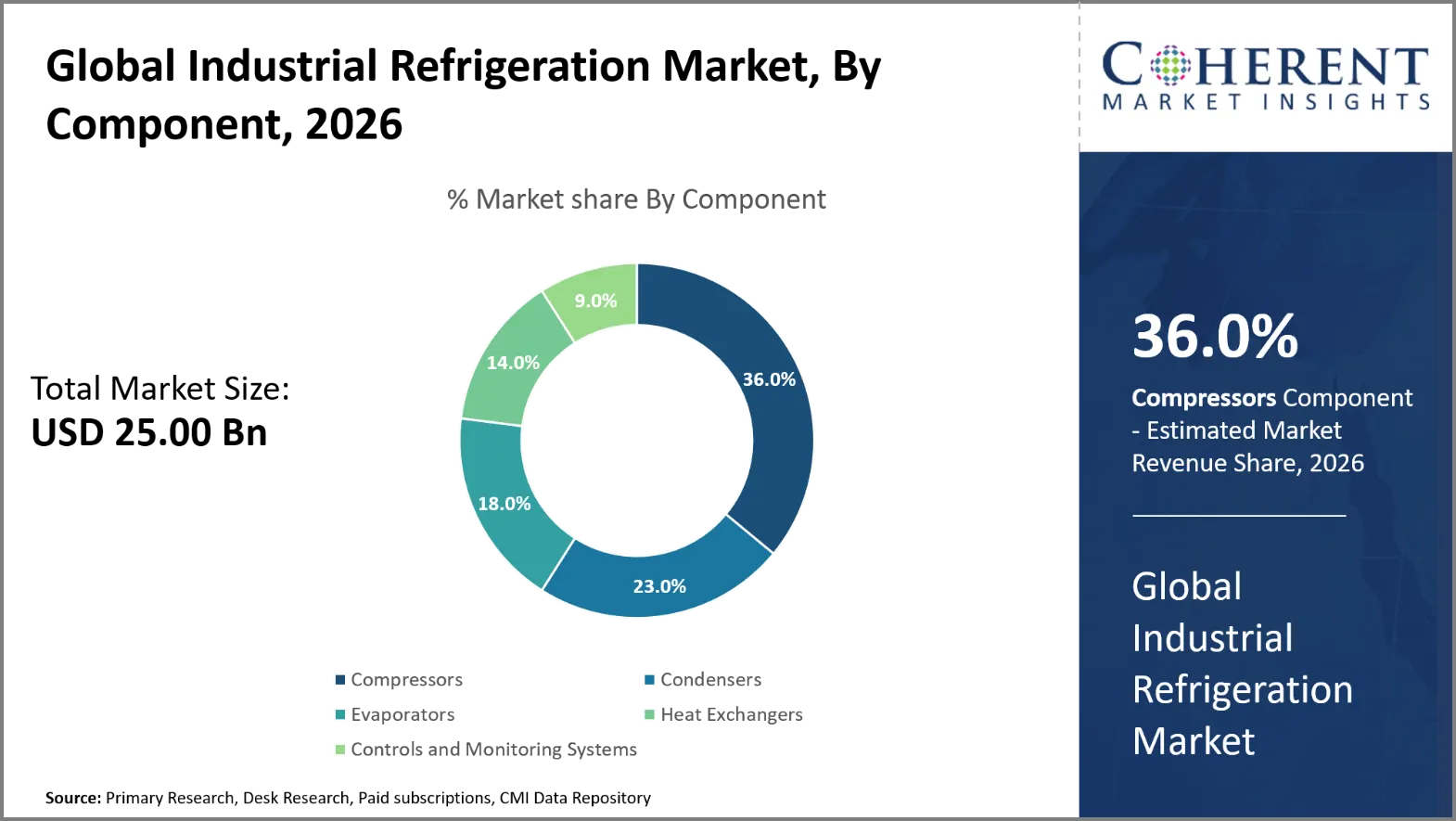
- The Compressors segment is expected to account for 36.0% of the global industrial refrigeration market share in 2026. Adoption of energy-efficient cooling systems is driving the growth of the segment. On March 4, 2026, Copeland introduced its ZF and ZFI 10–20 horsepower scroll compressor range for low-temperature cold-chain applications.
- The Ammonia segment is estimated to capture 32.0% of the market share in 2026. Transition toward natural refrigerants is majorly driving the growth of the segment. On January 8, 2026, Hillphoenix introduced AdvansorUltra, its first standardized industrial carbon dioxide refrigeration rack. The platform offers capacities reaching 450 refrigeration tons per rack and supports demanding low-temperature applications.
- The Compression Refrigeration Systems segment is estimated to capture 41.0% of the market share in 2026. Expansion of automated cold storage facilities is majorly driving the growth of the segment. On February 27, 2026, NewCold announced an investment exceeding USD 500 million to expand its Lebanon, Indiana, campus. The project follows more than USD 300 million invested across the campus's first two phases.
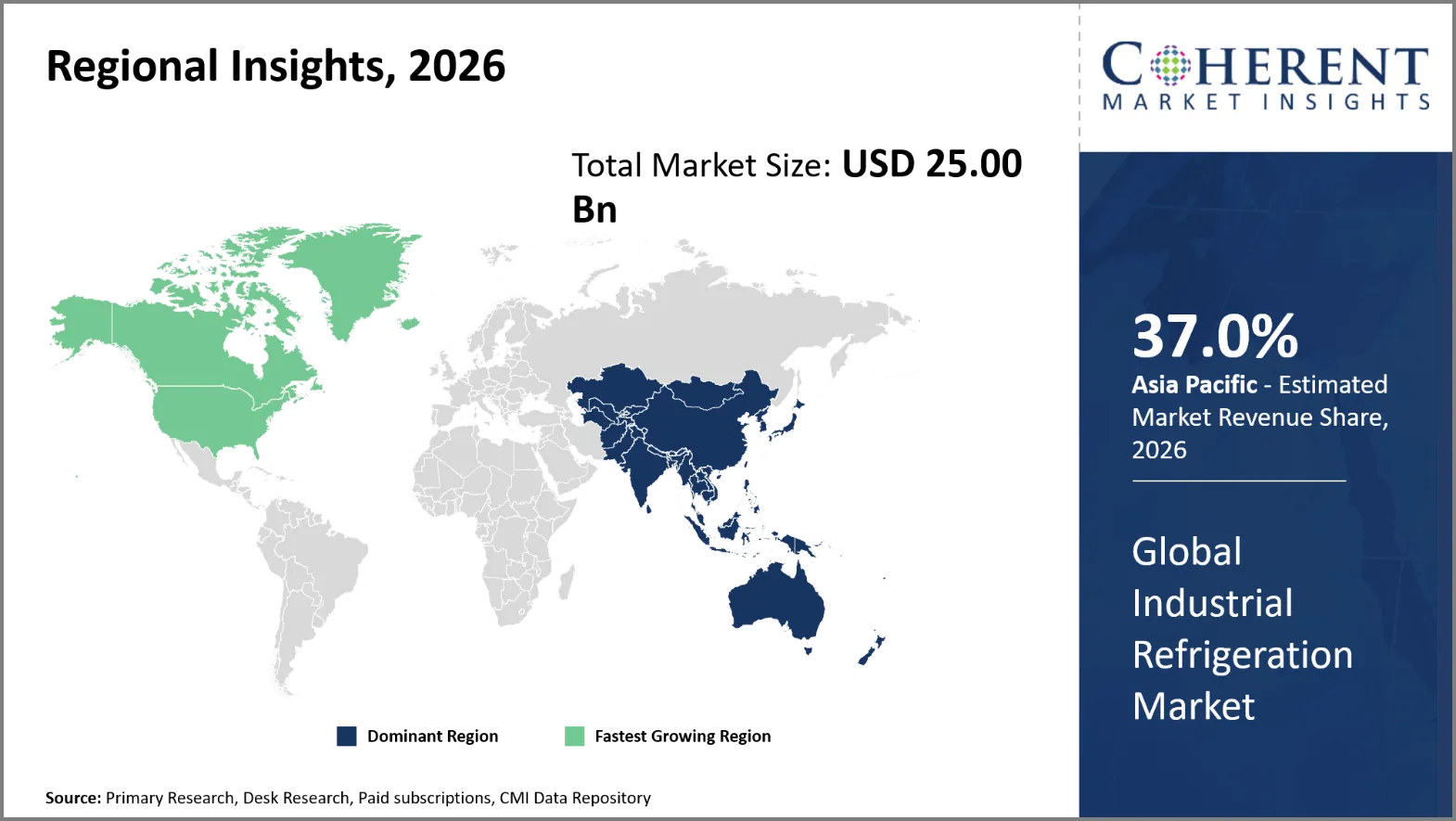
- Asia Pacific is expected to dominate the industrial refrigeration market in 2026 with a market share of 37.0%. Adoption of advanced heat recovery technologies in Asia Pacific is driving the growth of the regional market. On October 3, 2025, Mitsubishi Heavy Industries Thermal Systems launched its ETI-W centrifugal heat pump in Japan. The system recovers low-temperature waste heat from factory processes and produces hot water reaching 90°C.
- North America is expected to account for 24.0% share in 2026 and is projected to record the fastest growth over the forecast period. Pharmaceutical cold chain expansion in North America is driving the growth of the regional market. On November 5, 2025, Cencora announced plans to invest USD 1 billion through 2030 to strengthen its U.S. pharmaceutical distribution network. The investment includes a second national distribution center in Ohio and expanded operations in Alabama and California.
Segmental Insights
Why Does Compressors Dominate the Global Industrial Refrigeration Market?
The compressors segment is expected to account for 36.0% of the global industrial refrigeration market share in 2026. Compressors dominate because they maintain refrigerant circulation and enable continuous heat removal across industrial operations. Their performance directly affects the cooling capacity, energy consumption, temperature stability and the overall reliability of the system. Screw and reciprocating compressors serve demanding refrigeration applications in food processing, cold storage, pharmaceuticals and chemical manufacture. Modern compressor technologies provide variable-capacity control, automatic operation and better performance under varying thermal loads. These skills assist industrial facilities to manage electricity costs and avoid production disruptions.
On October 1, 2025, Danfoss acquired Palladio Compressors in a strategic move to extend its product offering with screw compressors. The purchase of Palladio Compressors is a substantial expansion of Danfoss’ comprehensive compressor offering, from light commercial comfort to big process cooling, heating and refrigeration applications, in accordance with the Danfoss LEAP 2030 strategy.
- Current Industry Events of 2026
- Market Size Estimation
- Regional Breakdown
- Competitive Landscape
- Customer Intelligence
- Segmental Analysis
- Pricing Analysis
- Key Market Drivers, Challenges & Future Trends
- Customized Insights Section
Why is Ammonia the Most Preferred Refrigerant Type?
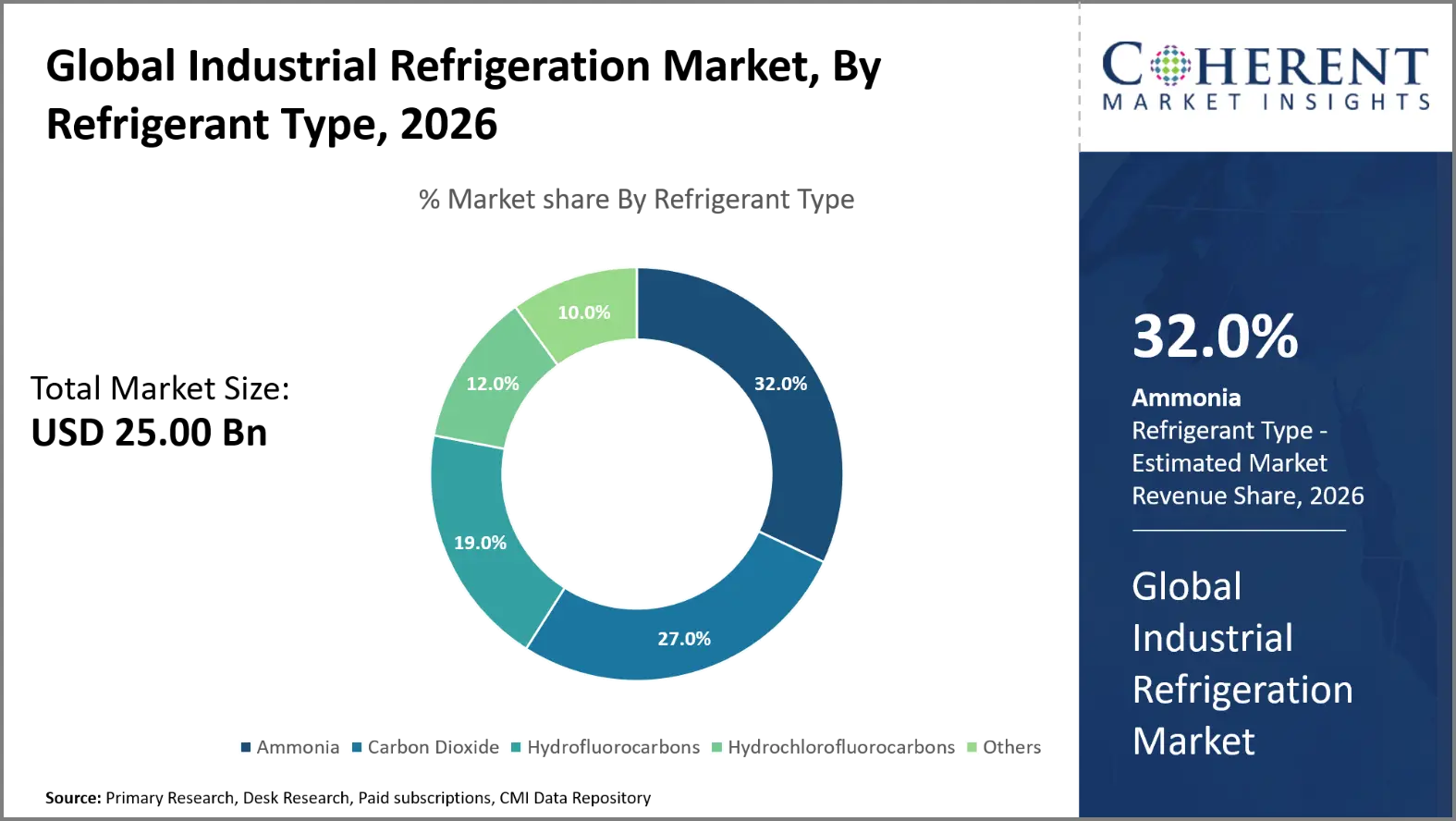
The ammonia segment is expected to account for 32.0% of the global industrial refrigeration market share in 2026. Ammonia still persists as a favored refrigerant in industrial refrigeration due to its good thermodynamic features, great energy efficiency and low environmental impact. Zero ozone depletion potential and a global-warming potential of around zero based on the study of the refrigerants most often employed. It has good heat transfer properties and is excellent for large scale chilling, freezing and low temperature processes. Ammonia is utilized extensively in food manufacturing, meat processing, dairy operations and refrigerated warehouses. However, it is poisonous and needs suitable leak detection, ventilation, equipment design and skilled workers.
On February 11, 2025, Star Refrigeration announced the latest iteration of its award-winning Azanechiller, which continues to set the benchmark in the industry for efficiency, safety, durability and sustainability. The new Azanechiller 3.0 is the best quality industrial air-cooled ammonia chiller. It’s made to provide better performance while minimizing the environmental effect.
Compression Refrigeration Systems Dominates the Global Industrial Refrigeration Market
The compression refrigeration systems segment is expected to account for 41.0% of the global industrial refrigeration market share in 2026. Compression refrigeration systems are the leading choice, supplying consistent cooling in various industrial capacities and temperature needs. These systems are part of a continuous refrigeration cycle that transfers heat through a compressor, condenser, expansion device and evaporator. Their scalable layouts are ideal for applications from food preservation and pharmaceutical storage to chemical processing and huge distribution warehouses. Improvements in compressor controls, variable-speed operation and heat recovery improve energy management and operating flexibility. Their engineering infrastructure is well established, they can work with a wide range of refrigerants and their maintenance experience is vast, all of which further strengthens industrial adoption. In February 2026, BITZER presented the latest innovations for reciprocating and screw compressors at the AHR Expo 2026. The company presented eight-cylinder ECOLINE reciprocating compressors for subcritical and transcritical carbon dioxide refrigeration. Its exhibit also included compact screw compressors for industrial refrigeration and data-center cooling.
Current Events and their Impact
Current Events | Description and its Impact |
European Union F-Gas Regulation (EU) 2024/573 |
|
European Union Refrigeration Technician Certification Requirements |
|
Industrial Refrigeration Market Dynamics
Market Drivers
Expansion of cold storage infrastructure
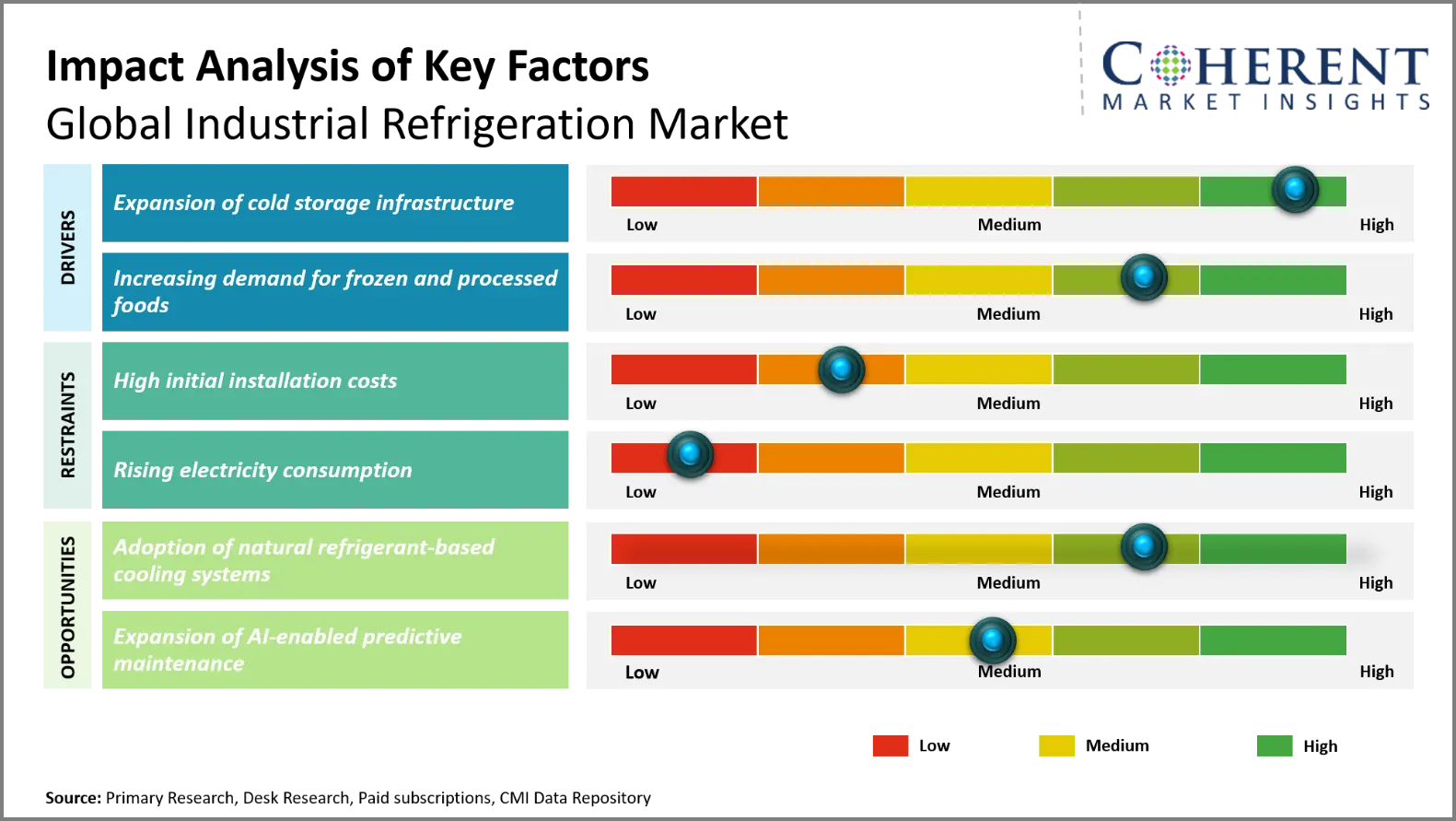
The expansion of cold storage infrastructure is increasing the need for industrial refrigeration systems across global supply chains. Governments and private investors are building climate-controlled warehouses near food production centers, ports, distribution hubs and urban marketplaces. Such facilities need reliable refrigeration equipment for storing perishable products and minimizing post-harvest losses. The need for precise temperature management is also driven by growing pharmaceutical distribution and the need to store biologics. Modern warehouses are increasingly using computerized refrigeration controls, energy efficient compressors and natural refrigerants. These investments fuel demand for scalable industrial refrigeration systems in both growing and existing markets.
On February 4, 2026, DHL Supply Chain and RLCold, a real estate developer specializing in cold storage warehousing and processing for the food and beverage industry, signed a memorandum of agreement. The partners will construct over five million square feet of leading-edge temperature-controlled facilities in North America and will jointly pursue multi-temperature distribution centers.
Increasing demand for frozen and processed foods
Increasing demand for frozen and processed foods is driving the use of industrial refrigeration across the food manufacturing and delivery networks. Urbanization, shifts in dietary habits and busy lifestyles are leading customers to buy handy, ready-to-cook and longer-lasting food products. Reliable freezing, chilling and temperature-controlled storage are essential for food makers during manufacturing and transit. Industrial refrigeration systems provide product quality, food safety and shelf life. Producers are also putting money into blast freezers, spiral freezing systems and automated cool rooms to boost processing efficiency. Such trends also boost demand for refrigeration in the meat, seafood, dairy, bread and prepared-food businesses.
On June 11, 2025, Conagra Brands, Inc. introduced more than 50 new frozen foods, single-serve and multi-serve meals, vegetable side dishes, gluten-free and plant-based meals. Conagra Brands is a pace setter in the frozen foods business with net sales in excess of USD 1 billion in net quarterly sales.
Emerging Trends
- Adoption of Natural Refrigerants: Industrial refrigeration operators are increasingly using ammonia, carbon dioxide and hydrocarbons to minimize environmental concerns. These refrigerants enable compliance with regulations and can offer good energy performance. Their use fosters investments in retooled systems, improved safety controls and dedicated maintenance capabilities.
- Integration of Artificial Intelligence and Predictive Maintenance: Integration of artificial intelligence, connected sensors and predictive maintenance software into refrigeration equipment by industrial refrigeration manufacturers. These devices track compressor performance, refrigerant pressure, temperature changes and energy use. Early problem detection can assist save unplanned downtime, maintenance costs and the danger of product deterioration.
- Development of Energy-Efficient Refrigeration Systems: Due to rising electricity prices, industrial facilities are investing in high-efficiency compressors, variable-speed drives, and modern heat exchangers. Better insulation and automatic temperature controls decrease wasted energy. These solutions assist operators save operating costs while delivering reliable cooling performance in challenging industrial applications.
- Expansion of Thermal Energy Storage Solutions: Industrial users are turning to thermal energy storage to increase flexibility in refrigeration and to manage power consumption. Chilled-fluid and ice-based storage devices can create cooling during cheaper electricity periods. Stored cooling helps manage peak demand, enhances operational resilience, and enables the integration of renewable energy.
Regional Insights
Why is Asia Pacific a Strong Market for Industrial Refrigeration?
Asia Pacific is expected to account for a market share of 37.0% in 2026. Seafood exports, pharmaceutical industry and big scale food processing lead Asia Pacific industrial refrigeration demand. China, Japan, India, South Korea and Australia have diverse temperature-sensitive supply chains that need specific systems. Thailand and Vietnam use industrial freezing systems in seafood processing plants to freeze shrimp, tuna and other products for export markets. Precision cooling is also used in the manufacture of semiconductors and pharmaceuticals in South Korea. Refrigeration is critical for meat processing and dairy exports in Australia. Regional investments are shifting toward ammonia and carbon dioxide systems, automatic temperature monitoring, and energy-efficient compressors. Expanding cross-border cold chains also encourage modern refrigerated warehouses near ports and major food distribution centers.
Why Does North America Industrial Refrigeration Market Exhibit High Growth?
North America is expected to register the fastest growth with a CAGR of 5.5% over the forecast period. North America is projected to account for 24.0% of the global industrial refrigeration market in 2026. North America industrial refrigeration demand is strongly supported by large meatpacking facilities, poultry processors, and beverage manufacturing plants. Ammonia refrigeration is largely reliant in the region for industrial freezing, chilled processing and temperature-controlled warehousing. Some of the key applications the U.S. Occupational Safety and Health Administration lists include meat, poultry, dairy, seafood and beverage plants. Canadian food producers also need dependable refrigeration for meat exports, seafood processing and dairy manufacturing. Investment in refrigerant management and industrial energy efficiency is another critical growth factor. Facilities are increasingly evaluating compressor optimization, heat recovery, and automated leak detection and maintenance technologies to help minimize operating costs and increase equipment reliability.
Global Industrial Refrigeration Market Outlook for Key Countries
Why is China Emerging as a Major Hub in the Industrial Refrigeration Market?
China’s large seafood processing industry and expanding temperature-controlled distribution networks are supporting the industrial refrigeration market. Coastal provinces rely on industrial freezing equipment to preserve fish, shrimp and processed seafood for domestic consumption and export markets. Frozen dumplings are also made in large food production centers which require refrigeration to handle meat, prepare meals and make dairy goods. The demand for refrigerated fulfillment centers and temperature-controlled food handling is being driven by the country’s growing online grocery market. Industrial refrigeration companies may satisfy these demands with high-capacity freezing systems, computerized warehouse management and centralized refrigeration plants. Safety inspections of ammonia refrigeration plants also drive demand for reliable equipment and proper operating practices.
Is U.S. the Next Growth Engine for the Industrial Refrigeration Market?
Large food processing factories have stringent workplace safety standards and operating requirements, which have a significant impact on the U.S. industrial refrigeration market. The Occupational Safety and Health Administration’s Process Safety Management standard applies to covered ammonia refrigeration processes holding at least 10,000 pounds of ammonia. This level also incentivizes concerned facilities to have rigorous hazard analyzes, mechanical integrity programs, and emergency procedures. Reliable refrigeration infrastructure is essential for large poultry processors, meatpacking operations, dairy facilities, and frozen food makers. Industrial operators also want to optimize energy at the system level, for example by reducing condensing pressures and optimizing compressor sequencing. These goals drive demand for safety instrumentation, preventive maintenance and energy efficient refrigeration retrofits.
Germany Industrial Refrigeration Market Analysis and Trends
Germany is one of the leading industrial refrigeration markets due to environmental regulations and financial incentives for natural refrigerant technologies. Industrial applications are food shock freezing, chemical processing and production of plastics, the Federal Environment Agency said. Germany’s finance directive for refrigeration and air-conditioning has come into force on 1 March 2024. Eligible businesses can apply for support for eligible energy efficient stationary systems employing natural refrigerants. This promotes investment in ammonia, carbon dioxide and hydrocarbon-based equipment where technically appropriate. Food factories, refrigerated warehouses and plastics manufacturing can see lower refrigerant climate impacts and greater system efficiency. Suppliers with experience in compliance system designing and industrial heat recovery are ideally suited to meet these requirements.
Japan Industrial Refrigeration Market Analysis and Trends
In Japan, the market for industrial refrigeration is affected by the need to decarbonize cold-chain equipment and the need to preserve seafood. Fish markets, seafood processors, frozen food producers and refrigerated distribution centers all need accurate temperature control to maintain quality and minimize spoiling. In April 2026, the Ministry of the Environment of Japan announced a subsidy program to encourage the use of natural refrigerants in refrigerated warehouses and food processing facilities. The program aims to reduce emissions of fluorocarbons and energy-related carbon dioxide emissions. This presents chances for ammonia and carbon dioxide refrigeration systems, especially for replacement of aging equipment. Industrial vendors also can provide small systems, dependable monitoring and effective refrigeration to fulfill demand in space-constrained locations.
India Industrial Refrigeration Market Analysis and Trends
Government-supported cold-chain development connecting processors, farms and consumers is driving the industrial refrigeration business in India. Under the Integrated Cold Chain and Value Addition Infrastructure scheme, the Ministry of Food Processing Industries gives support to pre-cooling, multi-temperature storage, individual quick freezing (IQF), blast freezing and refrigerated transport. By June 2025, 395 projects had been approved, out of which 291 were finished and functioning projects. These active projects have established a preservation capacity of 25.52 lakh metric tons per year. Each of the dairy processing, seafood export, fruit storage, meat processing and frozen food production industries has specific equipment needs. These needs can be met by suppliers of modular cold rooms, industrial freezers, ammonia systems and refrigeration equipment optimized for operation under changing conditions.
Global Industrial Refrigeration Market - Energy Efficiency and Lifecycle Operating Costs
Energy Efficiency Measure | Data Point | Reported Value | Lifecycle Cost Implication |
Variable-speed compressor controls | Typical energy savings | 15–20% | Lower electricity expenditure |
Compressor optimization and thermal storage | Energy savings | 32.2–33.0% | Reduced annual energy costs |
Industrial refrigeration plant upgrades | Potential energy cost savings | Up to 46% | Lower operating costs after upgrades |
Refrigeration compressor share | Share of system energy use | More than 50% | Compressor efficiency strongly affects total costs |
Ammonia and carbon dioxide cascade system | Reduction in electrical power | 35.2% | Lower electricity consumption |
Ammonia and carbon dioxide cascade system | Improvement in coefficient of performance | From 2.11 to 3.26 | More cooling per unit of electricity |
Refrigeration system lifecycle cost | Electricity share | Facility-specific; calculate from actual expenditure | Often a major long-term cost component |
Preventive maintenance | Recommended monitoring | Oil quality, filters, leakage, bearings, and compressor wear | Helps prevent efficiency losses and unplanned downtime |
How is Adoption of Natural Refrigerant-Based Cooling Systems Creating New Growth Opportunities in the Industrial Refrigeration Market?
The rise of natural refrigerant-based cooling systems is opening up new avenues in the industrial refrigeration sector, as manufacturers can comply with environmental requirements and manage long-term running costs. Ammonia is the most thermodynamically efficient choice for major food processing factories, meatpacking plants and refrigerated warehouses, while carbon dioxide is better suited for supermarket distribution centers and industrial freezing applications. Germany’s financial schemes assist the replacement of equipment and technology upgrades for eligible energy-efficient refrigeration systems that use natural refrigerants. Japan also has government subsidy programs to boost natural-refrigerant equipment in refrigerated warehouses and food production facilities. These improvements present opportunity for makers of ammonia screw compressors, carbon dioxide cascade systems, enhanced leak detection, and automated safety controls. The growing demand for low-emission refrigeration is also good news for engineering businesses that specialize in system retrofits, refrigerant conversion and operator training.
On June 25, 2025, Enex Technologies launched its R290 Indirect System, an All-In-One Solution that meets refrigeration needs in a sustainable, safe and dependable way. The R290 Indirect System employs only natural refrigerants R290 (GWP=0.02) and if low temperature needs are required, CO2 (GWP=1), in compliance with F-gas laws and free of PFAS.
Market Players, Key Development, and Competitive Landscape
Key Developments
- On September 30, 2026, GEA announced it is moving ahead with the expansion of its Janesville campus in Wisconsin, U.S., strengthening local production and technology capabilities for food, beverage and nutrition customers in North America. The new building will add around 70,000 square feet of office, manufacturing, research and industrial space, representing an investment of about USD 25 million in construction, machinery and equipment.
- On October 8, 2024, Johnson Controls, the global leader for smart, healthy and sustainable buildings, announced the launch of the new PENN System 550, a modular electronic control solution that provides temperature, humidity and/or pressure control. The user-friendly and intuitive System 550 is the first of its kind to include A2L refrigerant leak sensing and mitigation functionality and optional two-way cloud connectivity.
Competitive Landscape
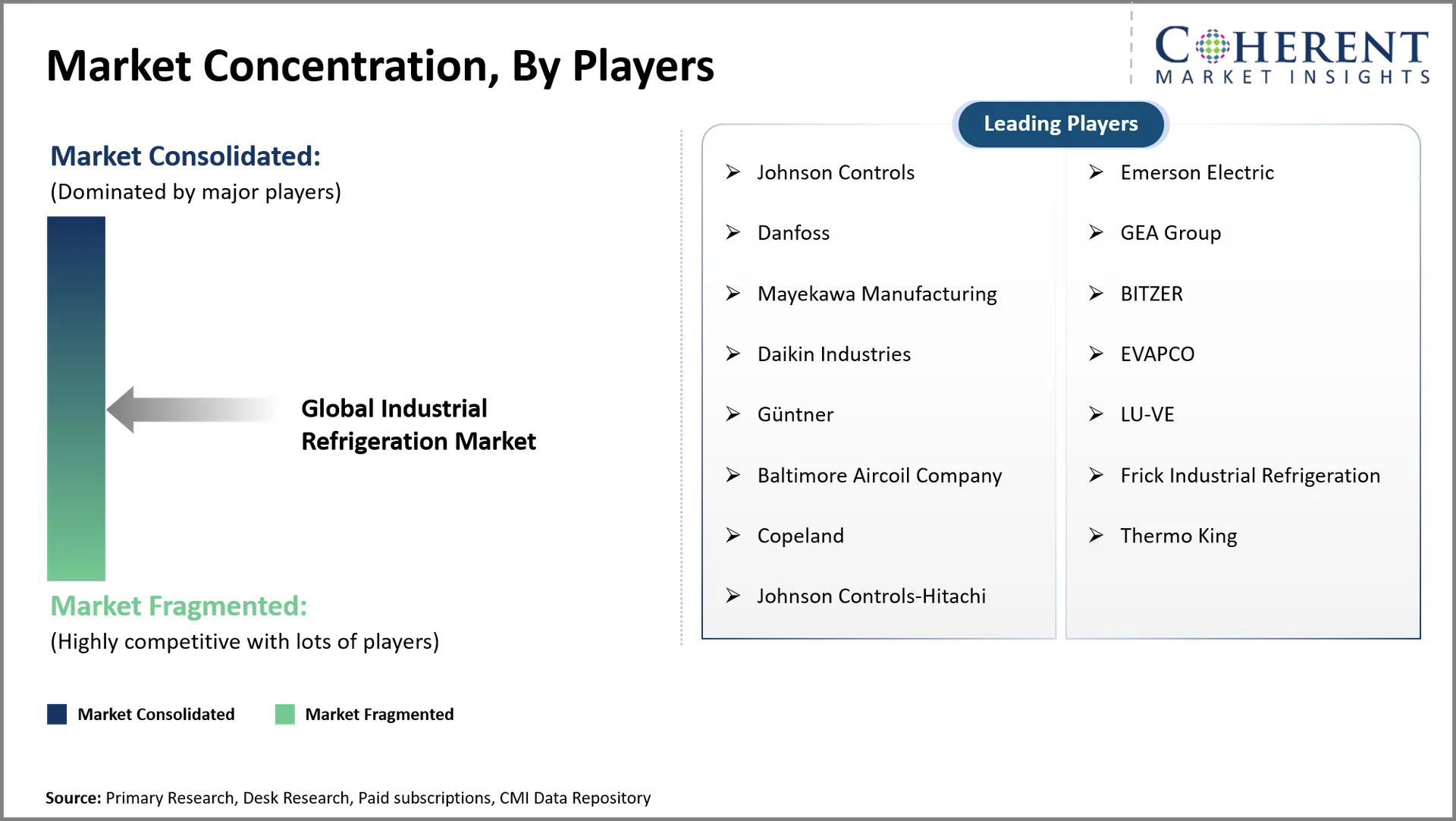
The worldwide industrial refrigeration market comprises the established engineering organizations that compete with each other using natural refrigerants, energy efficient compressors, packaged systems and life cycle services. FRICK ammonia compressors, packaged refrigeration systems and digital controls are supplied by Johnson Controls to food processing and industrial establishments. GEA provides ammonia chillers, such as its Blu line, for food freezing, dairy processing, beverage and chemical process cooling. Mayekawa is developing NewTon ammonia and carbon dioxide systems for cold storage, food freezing and ice-making. Danfoss focuses on industrial valves, system controls, and carbon dioxide components, including ejector technology for critical refrigeration systems. Competitive differentiation increasingly depends on reducing refrigerant charge, improving system efficiency, simplifying installation, and providing reliable maintenance support.
Top Manufacturers and Notable Products in the Industrial Refrigeration Market
Manufacturer | Notable Product | Key features |
Johnson Controls | FRICK RWF II Rotary Screw Compressor Package | Variable-speed operation, adjustable capacity control, ammonia refrigeration compatibility, energy-efficient compressor design |
GEA Group | GEA Grasso SPduo Screw Compressor Package | Two parallel-mounted compressors, efficient operation across varying loads, industrial cooling and heating applications |
Mayekawa | NewTon NH₃/CO₂ Refrigeration System | Natural refrigerants, energy-efficient operation, integrated compressors and controls, applications in cold storage and freezing |
BITZER | Ammonia Compressor Packs | Designed for ammonia refrigeration, industrial screw compression, configurable equipment options, support for high-efficiency refrigeration systems |
Danfoss | BOCK HG Semi-Hermetic Compressor Series | Semi-hermetic construction, refrigerant flexibility across supported models, serviceability, applications in refrigeration and process cooling |
Market Report Scope
Report Coverage | Details | ||
Base Year | 2025 | Market Size in 2026: | USD 25.00 Bn |
Historical Data For: | 2020 To 2024 | Forecast Period: | 2026 To 2033 |
Forecast Period 2026 To 2033 CAGR: | 5% | 2033 Value Projection: | USD 36.00 Bn |
Geographies covered: |
| ||
Segments covered: |
| ||
Companies covered: | Johnson Controls, Emerson Electric, Danfoss, GEA Group, Mayekawa Manufacturing, BITZER, Daikin Industries, EVAPCO, Güntner, LU-VE, Baltimore Aircoil Company, Frick Industrial Refrigeration, Copeland, Thermo King, Johnson Controls-Hitachi | ||
Growth Drivers: |
| ||
Restraints & Challenges: |
| ||
Analyst Opinion (Expert Opinion)
- The future of the industrial refrigeration market will increasingly center on natural refrigerants, low-charge ammonia systems, and digitally controlled refrigeration plants. Ammonia will remain important for large food processing facilities, while carbon dioxide systems will attract applications requiring lower toxicity concerns. Air-cycle refrigeration could serve specialized ultra-low-temperature applications, including pharmaceutical storage and freeze-drying. Manufacturers should develop equipment that combines refrigerant efficiency with practical safety features, heat recovery, and remote diagnostics.
- The strongest opportunities will emerge in industrial freezing, refrigerated warehouses, pharmaceutical cold storage, and food processing. India offers opportunities for modular cold rooms, blast freezers, and efficient refrigeration plants serving dairy, seafood, and agricultural supply chains. Germany presents opportunities for natural-refrigerant retrofits, while Japan offers potential in refrigerated warehouses and seafood processing. In the United States, operators of large ammonia refrigeration facilities need solutions that strengthen process safety and improve equipment performance. Suppliers should tailor system configurations to local refrigerant regulations, operating temperatures, facility sizes, and maintenance capabilities.
- Market participants should differentiate themselves through application-specific engineering rather than competing solely on equipment prices. Compressor manufacturers should improve part-load efficiency, variable-speed operation, and compatibility with ammonia and carbon dioxide systems. System integrators should offer leak detection, automated fault monitoring, heat recovery, and measurable commissioning procedures. Companies entering emerging markets should build regional service networks and train technicians in natural-refrigerant handling. Equipment suppliers can also develop retrofit packages that replace outdated components without requiring complete plant reconstruction. These strategies can strengthen customer retention, reduce operational disruption, and create recurring revenue from maintenance and system optimization.
Speak to the analyst
Want personalized insights?
Take the findings above to one of our principal consultants, or have the report rebuilt around the segments, geographies and competitors you actually track.
Market Segmentation
- Component Insights (Revenue, USD Billion, 2021 - 2033)
- Compressors
- Condensers
- Evaporators
- Heat Exchangers
- Controls and Monitoring Systems
- Refrigerant Type Insights (Revenue, USD Billion, 2021 - 2033)
- Ammonia
- Carbon Dioxide
- Hydrofluorocarbons
- Hydrochlorofluorocarbons
- Others
- System Type Insights (Revenue, USD Billion, 2021 - 2033)
- Compression Refrigeration Systems
- Cascade Refrigeration Systems
- Centralized Refrigeration Systems
- Distributed Refrigeration Systems
- Application Insights (Revenue, USD Billion, 2021 - 2033)
- Food and Beverage Processing
- Cold Storage and Warehousing
- Chemicals and Petrochemicals
- Pharmaceuticals
- Refrigerated Transportation
- Others
- Regional Insights (Revenue, USD Billion, 2021 - 2033)
- North America
- U.S.
- Canada
- Latin America
- Brazil
- Argentina
- Mexico
- Rest of Latin America
- Europe
- Germany
- U.K.
- Spain
- France
- Italy
- Russia
- Rest of Europe
- Asia Pacific
- China
- India
- Japan
- Australia
- South Korea
- ASEAN
- Rest of Asia Pacific
- Middle East
- GCC Countries
- Israel
- Rest of Middle East
- Africa
- South Africa
- North Africa
- Central Africa
- North America
- Key Players Insights
- Johnson Controls
- Emerson Electric
- Danfoss
- GEA Group
- Mayekawa Manufacturing
- BITZER
- Daikin Industries
- EVAPCO
- Güntner
- LU-VE
- Baltimore Aircoil Company
- Frick Industrial Refrigeration
- Copeland
- Thermo King
- Johnson Controls-Hitachi
Sources
Primary Research Interviews
- Refrigeration System Manufacturers
- Cold Chain Logistics Providers
- Food & Beverage Processing Industry Executives
- Industrial Facility & Plant Managers
Magazines
- Refrigeration & Air Conditioning Magazine (RAC)
- ASHRAE Journal
- Cold Chain Magazine
- Food Engineering Magazine
Journals
- International Journal of Refrigeration (Elsevier)
- Applied Thermal Engineering Journal
- Journal of Food Engineering
Associations
- International Institute of Refrigeration (IIR)
- American Society of Heating, Refrigerating and Air-Conditioning Engineers (ASHRAE)
- European Committee for Standardization – Refrigeration Division (CEN/TC 182)
- Global Cold Chain Alliance (GCCA)
Public Domain Sources
- U.S. Environmental Protection Agency (EPA) – Refrigerant Regulations & Reports
- International Energy Agency (IEA) – Industrial Energy Efficiency Reports
- United Nations Environment Program (UNEP) – F-Gas & Refrigerant Data
- European Commission – Industrial Cooling & Energy Policy Documents
Proprietary Elements
- CMI Data Analytics Tool
- Proprietary CMI Existing Repository of Information for Last 10 Years
Get access to 250+ pages report
Every segment, forecast, competitor profile and data table behind the analysis above — available for instant download.
- ESOMAR Member
- ISO 9001:2015 Certified
- D-U-N-S Registered
- GDPR & CCPA Compliant
Frequently Asked Questions
The global industrial refrigeration market is expected to stand at USD 25.00 Bn in 2026 and is expected to reach USD 36.00 Bn by 2033.
The CAGR of the global Industrial Refrigeration market is projected to be 5% from 2026 to 2033.
Expansion of cold storage infrastructure and Increasing demand for frozen and processed foods are the major factors driving the growth of the global industrial refrigeration market.
High initial installation costs and Rising electricity consumption are the major factors hampering the growth of the global industrial refrigeration market.
In terms of component, compressors segment is estimated to dominate the market revenue share in 2026.
Industrial refrigeration removes heat from large-scale processes, storage facilities, and manufacturing environments requiring controlled temperatures.
Compressors circulate refrigerant and establish the pressure differences necessary for continuous heat transfer.