

Global IV Therapy Products Market Size and Forecast – 2026 To 2033
The global IV therapy products market is expected to grow from USD 24.86 Bn in 2026 to USD 37.51 Bn by 2033, registering a compound annual growth rate (CAGR) of 6.1% from 2026 to 2033. The market for global IV therapy products is poised for significant expansion, fueled by the rising prevalence of chronic diseases requiring prolonged medication, nutritional, and supportive therapies.
According to the World Health Organization (WHO), noncommunicable diseases account for approximately 41 million deaths annually, with cardiovascular diseases, cancers, chronic respiratory diseases, and diabetes accounting for more than 80% of premature NCD deaths. The growing chronic disease burden is expected to increase demand for IV medication, hydration, and nutritional therapies across healthcare settings.
Key Takeaways of the Global IV Therapy Products Market
- IV Fluids are projected to hold 33.1% of the global IV therapy products market share in 2026, making it dominant product type segment, across North America due to the high utilization of intravenous solutions in acute and inpatient care. For instance, the U.S. Food and Drug Administration (FDA) has treated IV saline as a critical medical supply, including regulatory actions to address shortages of 0.9% sodium chloride injection. Such regulatory attention reflects the essential role of IV fluids in hospital care and supports sustained demand for the segment.
- Medication/Drug Infusion is projected to hold 39.7% of the global IV therapy products market share in 2026, making it dominant therapy type segment, across Europe due to the region's strong focus on medication safety and controlled drug administration. For instance, the European Medicines Agency (EMA) emphasizes medication-error prevention and safe administration practices as part of its broader medication-safety framework. These regulatory priorities support the adoption of controlled infusion systems and safety-focused IV drug-delivery technologies.
- Hospitals are projected to hold 61.8% of the global IV therapy products market share in 2026, making it dominant end user segment, across Asia Pacific due to expanding hospital infrastructure and increasing access to inpatient healthcare services. For instance, China's National Health Commission strengthen the country's hospital service capacity and healthcare delivery system through national healthcare development policies. Such investments in hospital-based care create a broader clinical environment for the utilization of IV fluids, infusion pumps, vascular-access devices, and administration sets.
- North America market maintains dominance with an expected share of 39.2% in 2026, bolstered by well-established hospital infrastructure, high utilization of IV therapies, and stringent medical-device safety requirements. For instance, Health Canada’s April 2026 guidance strengthened regulatory oversight of Class II–IV medical devices through pre-market scrutiny, post-market surveillance, and compliance requirements, while its recognized standards specifically include safety and performance requirements for infusion pumps.
- Asia Pacific is expected to exhibit the fastest growth in the global IV therapy products market, registering an estimated CAGR of 8.3% during 2026–2033, propelled by expanding healthcare infrastructure, improving medical-device regulation, and increasing access to essential technologies. For instance, in September 2026, the WHO South-East Asia Region adopted a resolution to strengthen national systems for planning, regulating, procuring, maintaining, and monitoring medical devices, with emphasis on quality assurance, supply continuity, and access across underserved areas.
Segmental Insights
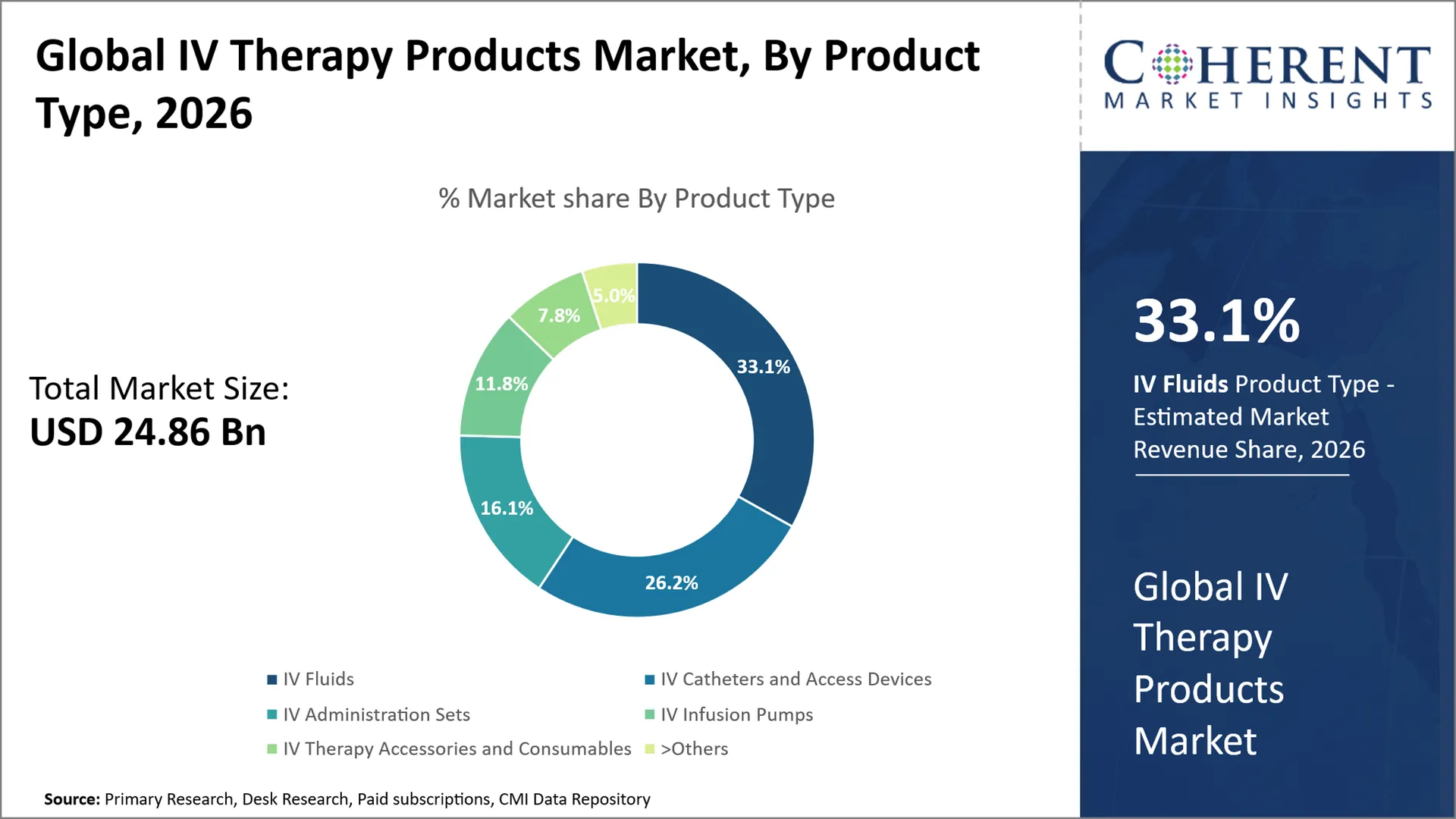
Why Do IV Fluids Dominate the Global IV Therapy Products Market?
IV Fluids are projected to hold the market share of 33.1% in 2026, as they are widely used in hydration, electrolyte balance, medication delivery and fluid resuscitation purposes in the acute and critical-care settings. Their use becomes crucial in instances of shock, severe dehydration, surgery and in instances of fast fluid resuscitation. For instance, the World Health Organization (WHO) recommends IV fluids for patients with severe dehydration or shock when oral rehydration is inadequate, including the use of Ringer’s lactate or other appropriate isotonic solutions.
- Current Industry Events of 2026
- Market Size Estimation
- Regional Breakdown
- Competitive Landscape
- Customer Intelligence
- Segmental Analysis
- Pricing Analysis
- Key Market Drivers, Challenges & Future Trends
- Customized Insights Section
Why Does Medication/Drug Infusion Represent the Largest Therapy Type Segment in the IV Therapy Products Market?
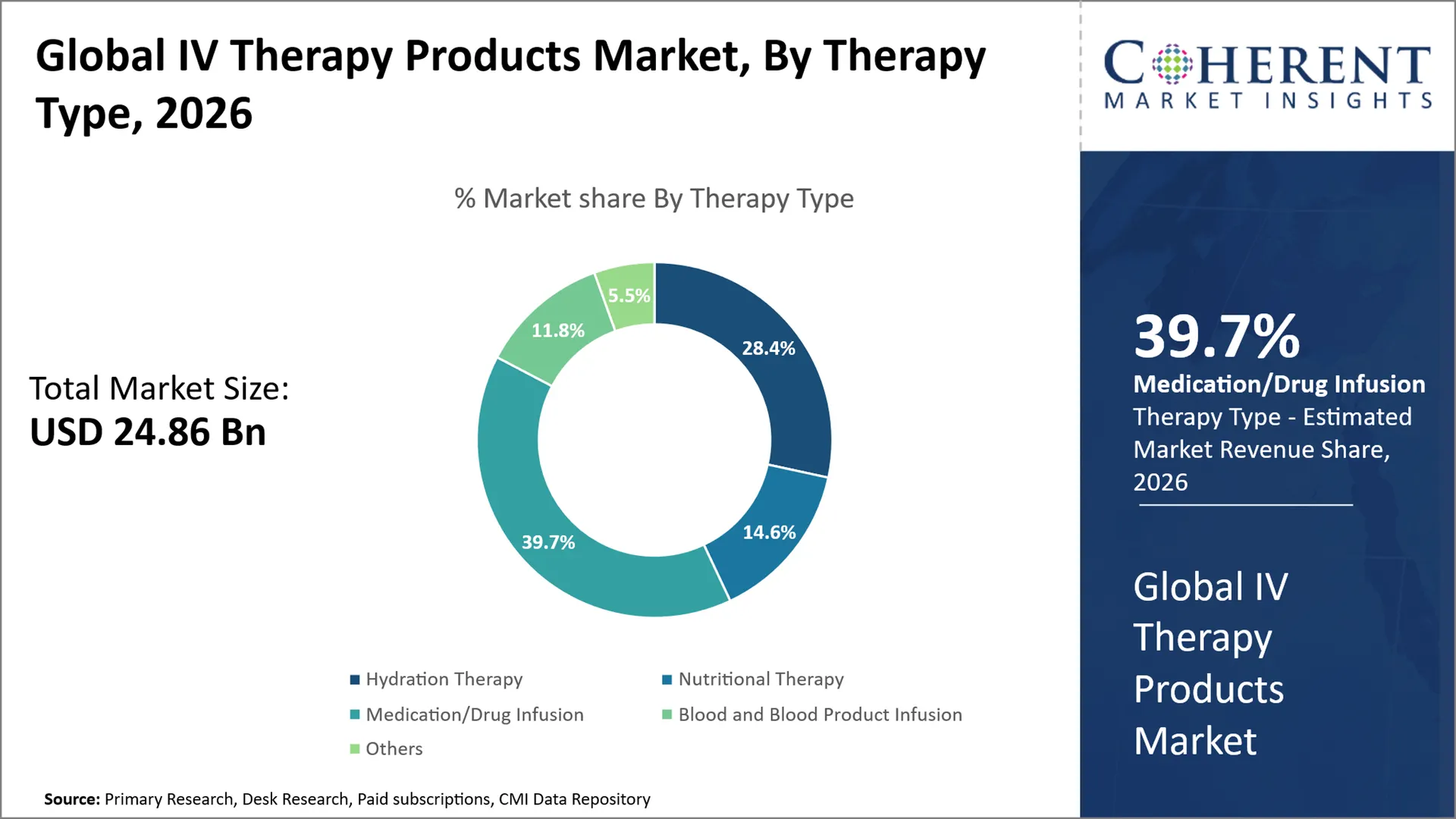
Medication/Drug Infusion is projected to hold a market share of 39.7% in 2026, owing to the rising requirement of accurate and controlled infusion of vital medicines at the hospital and the outpatient setting. Furthermore, infusion system is integrating software-based safety features which insinuates an enhancement in dosing accuracy and reduction in therapy interruptions. For instance, in July 2025, the U.S. Food and Drug Administration (FDA) granted 510(k) clearance to Baxter Healthcare Corporation’s Spectrum IQ Infusion System with Dose IQ Safety Software, supporting the use of advanced safety software in infusion-pump technology.
Hospitals Segment Dominates the Global IV Therapy Products Market
The hospitals segment is projected to hold a market share of 61.8% in 2026, due to the high volume of IV therapy used in inpatient care, surgery, emergency medicine and critical care. There is a continued requirement for IV fluids, infusion pumps, vascular-access devices and administration sets in hospitals for the continuous infusion of medication & fluid. For instance, NHS England reported more than 22.6 million hospital admissions in England during 2025-26, demonstrating the significant number of hospital care episodes that involve IV therapy products.
Current Events and their Impact
Current Events | Description and its Impact |
WHO Issues Guidelines on Central Venous Catheter Infection Prevention (May 2026) |
|
U.K. MHRA Issues Safety Alert on Incorrect IV Administration Sets (May 2026) |
|
IV Therapy Products Market Dynamics
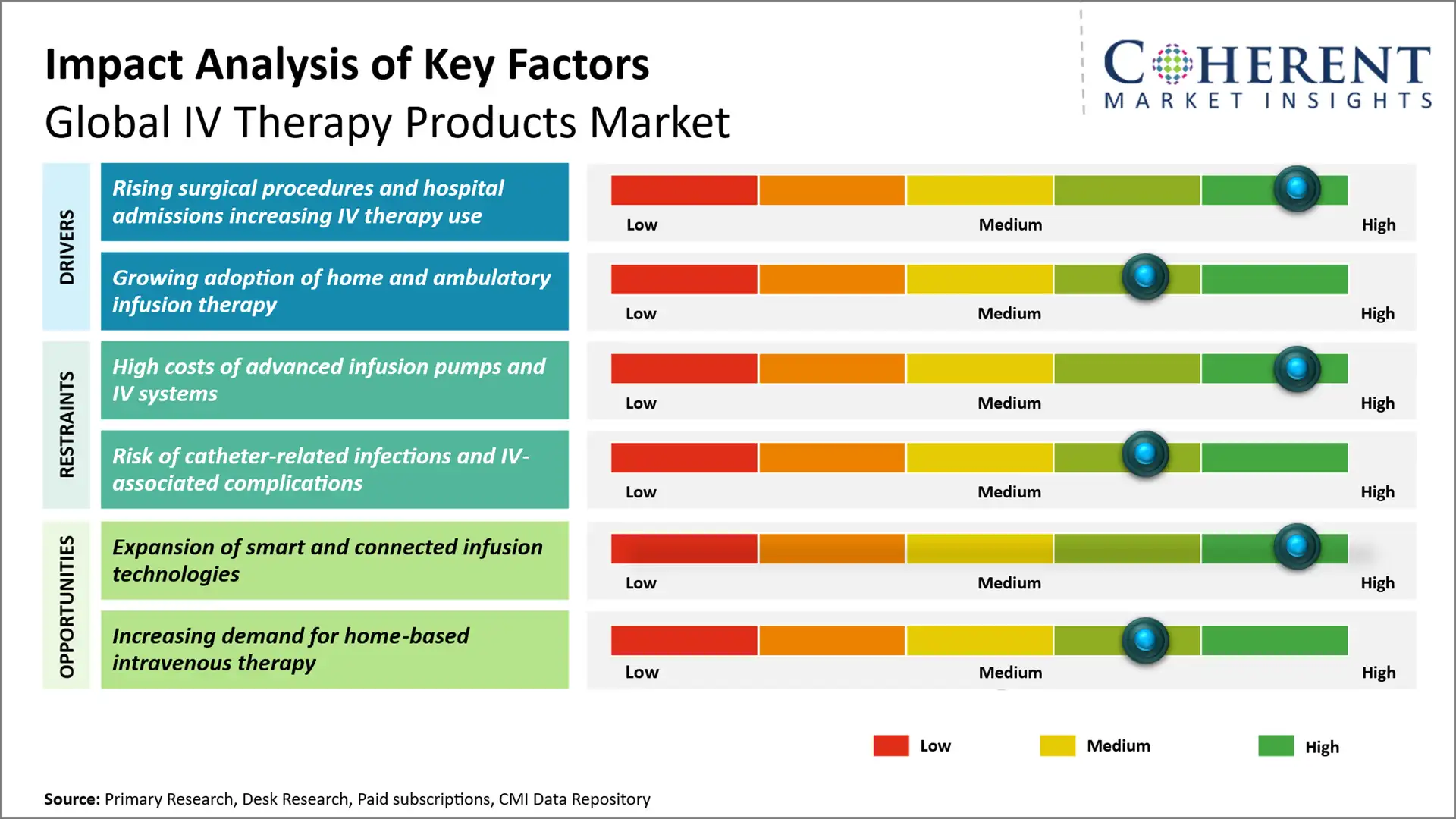
Market Drivers
- Rising surgical procedures and hospital admissions increasing IV therapy use: The growing volume of surgical procedures and hospital-based care is increasing the need for IV fluids, medication infusion, vascular-access devices, and administration sets throughout perioperative and inpatient care. IV therapy is widely used to maintain hydration, deliver medications, and support patients before, during, and after procedures. For instance, the WHO reports that more than 300 million surgical procedures are performed globally each year, highlighting the substantial clinical setting for IV therapy products.
- Growing adoption of home and ambulatory infusion therapy: The shift toward decentralized healthcare is increasing demand for portable infusion pumps, IV catheters, tubing, and other products that enable treatment outside hospitals. Home infusion allows patients to receive intravenous therapies with professional nursing support and remote monitoring, reducing dependence on inpatient care. For instance, the U.S. Centers for Medicare & Medicaid Services (CMS) established a Medicare home infusion therapy benefit covering professional services, training, and remote monitoring for certain IV-administered drugs in the home.
- Rising prevalence of chronic diseases requiring long-term IV therapies: The increasing prevalence of chronic diseases is expanding the patient population requiring intravenous medications, fluids, biologics, and nutritional therapies. Conditions such as cancer, cardiovascular diseases, and severe infections often require repeated or prolonged IV administration, supporting sustained demand for vascular-access devices and infusion systems. For instance, the WHO estimates that noncommunicable diseases account for approximately 41 million deaths annually, underscoring the growing need for long-term disease management and supportive therapies.
Emerging Trends
- Rising adoption of smart and connected infusion systems: The adoption of smart infusion pumps with dose-error reduction, real-time monitoring, interoperability, and data connectivity is increasing. These technologies are enabling more precise infusion management and improving medication safety.
- Shift toward home-based IV therapy: IV therapy is increasingly moving beyond hospitals as home healthcare and outpatient treatment expand. Portable infusion pumps, compact vascular-access devices, and remote monitoring technologies are supporting safer and more convenient home-based treatment.
- Growing focus on infection prevention and safety: Manufacturers are increasingly developing closed IV systems, antimicrobial catheters, needleless connectors, and safety-engineered access devices. These innovations aim to reduce catheter-related bloodstream infections, needlestick injuries, and other IV-associated complications.
Regional Insights
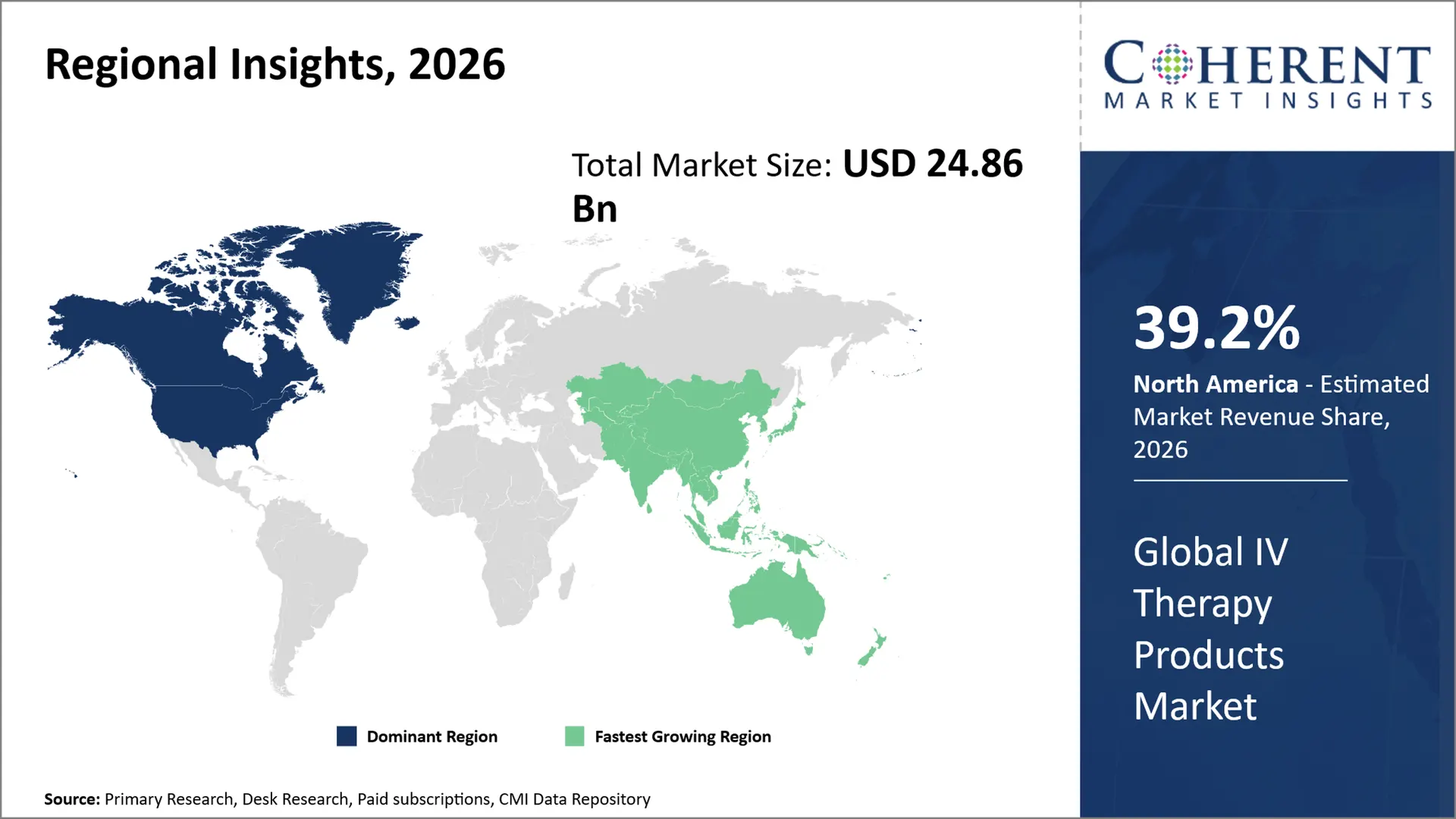
Why is North America a Strong Market for IV Therapy Products?
North America leads the global IV therapy products market, accounting for an estimated 39.2% share in 2026, driven by increasing adoption of advanced infusion products, substantial presence of the infrastructure, and focus on the quality of care. Rising government focus on improving patient care and pressure to ensure the safety with IV devices coupled with increased regulatory oversight of IV therapy products are projected to propel the market in this region.
For instance, in 2024, the U.S. Food and Drug Administration (FDA) updated its guidance for infusion pumps as part of the Total Product Life Cycle guidance to provide information related to device design, risk management, software, cybersecurity and performance testing to promote the safe use of infusion pumps. Additionally, the rising awareness about the management of chronic diseases and increasing healthcare expenditure are likely to support the increased use of IV solutions and infusion products in the region.
Why Does Asia Pacific IV Therapy Products Market Exhibit High Growth?
Asia Pacific is expected to exhibit the fastest growth in the global IV therapy products market, registering an estimated CAGR of 8.3% during 2026–2033. The region is projected to account for approximately 24.3% of the global market in 2026, attributed to the growing access to better healthcare facilities, rising health care spending and the next generation hospital infrastructure. Government initiatives for driving low-cost healthcare practices and local manufacturing of devices in the countries such as in India and China have created scope for widespread deployment of IV therapy products.
For instance, India’s Department of Pharmaceuticals implemented the Production Linked Incentive (PLI) Scheme for Promoting Domestic Manufacturing of Medical Devices, targeting critical devices and reducing import dependence through domestic production incentives. (Source: Press Information Bureau) Also, growing healthcare needs of high population density markets with increased access to best treatment options will likely create increased regional demand.
Global IV Therapy Products Market Outlook for Key Countries
Why is the U.S. Leading Innovation and Adoption in the IV Therapy Products Market?
The U.S is at the forefront of innovation and adoption due to high penetration of smart infusion pumps, vascular-access products and connected devices within the acute-care space. Furthermore, the market has been shifting toward infusion systems that provide dose-error reduction features, interoperability and real-time monitoring of infusion delivery, and the current presence of pathways for approved advanced infusion devices supports the continued development and commercialization of next-generation intravenous products.
Is the UK a Favorable Market for IV Therapy Products Market?
The UK market for IV therapy products remains attractive supported by the widespread use of infusion products in NHS hospitals and the continued demand for IV fluids, catheters, administration sets and pumps. The IV market is also supported by the regulation of Medical Devices by the MHRA and the NHS emphasis on safe drug administration via the IV route and on preventing the associated risk of infection. Additionally, the has a well-developed healthcare structure that provides an ideal environment for the adoption of new and emerging IV products.
Is China Emerging as a Key Growth Hub for the IV Therapy Products Market?
As hospital capacity expands, IV-based treatments are in greater demand, and medical-device infrastructure is modernized, China is positioning itself as a key growth market. A greater focus on the quality and standardization of medical devices and the proliferation of local medical technology is also helping the country roll out more advanced IV therapies. Moreover, expansion of healthcare services in lower-tier cities provides new demand for IV fluids, vascular access devices, administration sets and infusion pumps.
Why Does Germany Top the European IV Therapy Products Market?
Germany leads the European IV therapy products market due to the presence of well-established healthcare structure and high use of infusion and inpatient based therapy. Germany is known for its large medical-device manufacturing industry. In addition, the country has a well-established regulatory and reimbursement policy for easy adoption of infusion pumps, vascular-access devices, intravenous fluids & infusion administration systems. The country is modernizing hospital infrastructure and improving quality parameters to promote use of intravenous therapy product.
Is IV Therapy Products Market Developing in Japan?
Japan is a developing market for IVs therapy products driven by large aging population, extensive hospital usage and a long history of injectable therapies. The growing demand for the products is also driven by the use of sophisticated infusion devices, vascular-access systems and safety intravenous technology in acute hospitals and long-term care settings.
Competitive Edge: Product Portfolio & Differentiation of Leading IV Therapy Players
Company | Key IV Therapy Products / Product Areas | Key Product Advantage / Differentiation |
BD | BD Nexiva closed IV catheter system, BD Vialon catheters, Groshong PICCs | Strong focus on closed vascular access, longer catheter dwell time, blood-control features, and reduced catheter-related complications. BD Nexiva integrates the catheter, extension set, stabilization device, and needle-free connector into one system. |
Baxter International Inc. | SIGMA Spectrum Infusion System, IV solutions, MINI-BAG Plus System, IV administration products | Combines infusion pumps with a broad IV solutions portfolio, enabling hospitals to source both fluid-delivery systems and essential IV products from one supplier. |
B. Braun Melsungen AG | Space/Spaceplus infusion systems, Perfusor syringe pumps, Infusomat pumps, IV administration sets, Introcan Safety 3 | Differentiated by a broad integrated infusion ecosystem, including smart pumps, dedicated disposables, IT connectivity, and safety-engineered vascular-access products. Spaceplus supports hospital IT/EHR interoperability and real-time reporting. |
Fresenius SE & Co. KGaA | Infusion therapy systems, infusion pumps, IV solutions and related therapy products | Advantage lies in its integrated infusion and clinical nutrition/therapy capabilities, supporting a broad range of hospital-based infusion requirements. |
ICU Medical, Inc. | Plum 360, Plum Solo, Plum Duo, CADD ambulatory pumps, Medfusion pumps, MedNet software, IV sets | Strong differentiation in smart and interoperable infusion technology. Plum systems support medication safety, EHR connectivity, and advanced infusion workflows, while CADD supports ambulatory IV therapy. |
Terumo Corporation | IV catheters, vascular-access products, infusion-related devices and consumables | Differentiates through vascular-access expertise and device design focused on ease of insertion, reliability, and patient/clinician safety. |
Nipro Corporation | IV catheters, infusion and injection products, vascular-access devices and medical consumables | Advantage lies in its broad medical-device and consumables portfolio, enabling integrated supply across vascular access and infusion-related applications. |
Teleflex Incorporated | Arrow PICCs, central venous catheters, midline/peripheral IV products, vascular-access accessories | Particularly strong in vascular access, with extensive PICC, CVC, midline, peripheral IV, and catheter-positioning technologies designed to improve procedural efficiency and reduce vascular-related complications. |
Medtronic plc | Infusion therapy products, vascular catheters and peripheral vascular products | Differentiated by its combination of infusion-related products with a broad vascular and interventional portfolio, supporting complex vascular procedures and access requirements. |
Vygon SAS | Peripheral IV catheters, PICCs, CVCs, midlines, needle-free connectors, extension lines, stopcocks and infusion accessories | Strong differentiation in specialized vascular access and IV-line management, with products spanning peripheral/central access, neonatal care, oncology, and infusion-line accessories. |
How is the expansion of smart and connected infusion technologies creating new growth opportunities in the IV therapy products market?
Smart and connected infusion systems are likely to offer substantial growth opportunities seemingly through improved infusion accuracy, real-time monitoring, and patient safety benefits. Connected systems enable data sharing with infusion pumps between other device-based or computer-based systems to support greater efficiencies in and data-driven use of intravenous therapy, especially in hospitals and, increasingly decentralized care settings. For instance, in May 2025, U.S. Food and Drug Administration (FDA) recognized IEEE 11073-10419:2023 standard on digital health devices for insulin infusion pumps that assists in the regulation of connected infusion devices helping to bring and advance product maturity.
Market Players, Key Development, and Competitive Landscape
Key Developments
- In December 2025, BD Indonesia launched the BD Nexiva Closed IV Catheter System in Jakarta, an integrated peripheral IV catheter designed to support safer vascular access and reduce complications associated with IV therapy. The launch was accompanied by a national webinar on standardized IV therapy and vascular access management involving approximately 1,100 healthcare professionals.
- In April 2025, the U.S. Food and Drug Administration (FDA) granted 510(k) clearance for ICU Medical’s Plum Solo Precision IV Pump, while also clearing updated versions of the Plum Duo pump and LifeShield infusion safety software. The regulatory clearance supports the expansion of precision and safety-focused infusion pump technologies within IV therapy.
Competitive Landscape
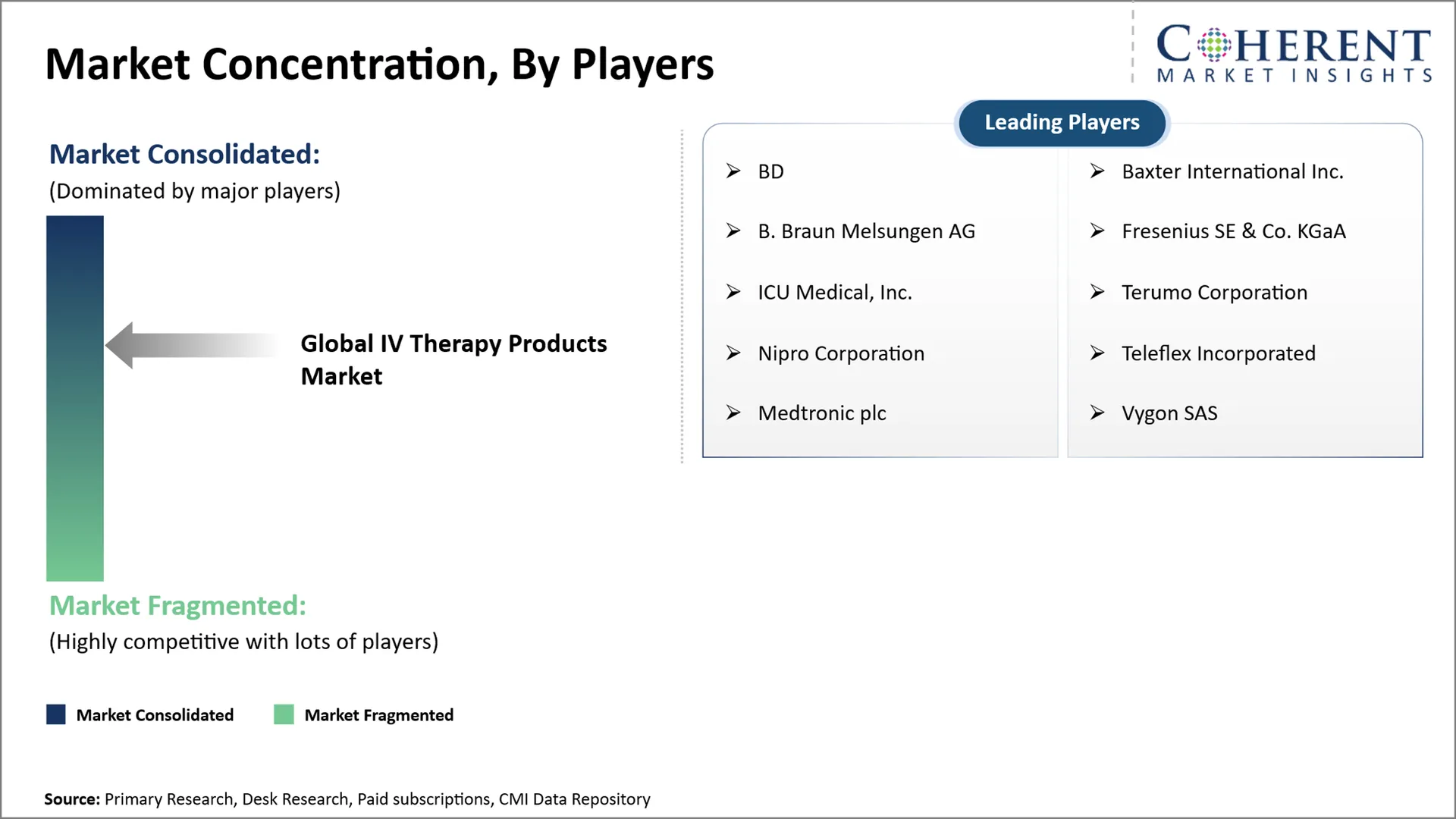
The global IV therapy products market is moderately competitive, with competition increasingly centered on product safety, infusion accuracy, infection prevention, technological integration, and cost efficiency. Market participants are differentiating through smart infusion systems, advanced vascular-access technologies, antimicrobial solutions, and improved product ergonomics. The competitive environment is also shaped by regulatory compliance, manufacturing capabilities, hospital procurement requirements, and the ability to improve IV therapy outcomes while reducing complications. Key focus areas include:
- Development of smart and connected infusion pumps
- Advancement of closed and safety-engineered IV catheter systems
- Expansion of antimicrobial and infection-prevention technologies
- Development of next-generation IV administration sets and needleless connectors
- Expansion of home-infusion and portable IV therapy solutions
- Strengthening of product quality, regulatory compliance, and manufacturing resilience
Market Report Scope
IV Therapy Products Market Report Coverage | |||
Report Coverage | Details | ||
Base Year | 2025 | Market Size in 2026: | USD 24.86 Bn |
Historical Data For: | 2020 To 2024 | Forecast Period: | 2026 To 2033 |
Forecast Period 2026 To 2033 CAGR: | 6.1% | 2033 Value Projection: | USD 37.51 Bn |
Geographies covered: |
| ||
Segments covered: |
| ||
Companies covered: | BD, Baxter International Inc., B. Braun Melsungen AG, Fresenius SE & Co. KGaA, ICU Medical, Inc., Terumo Corporation, Nipro Corporation, Teleflex Incorporated, Medtronic plc, Vygon SAS | ||
Growth Drivers: |
| ||
Restraints & Challenges: |
| ||
Analyst Opinion (Expert Opinion)
- In the coming years, the global IV therapy products market is expected to move toward smarter, safer, and more connected infusion solutions, with greater integration of automation, real-time monitoring, and dose-error prevention. Home-based and ambulatory IV therapy is also likely to gain importance as treatment delivery shifts beyond traditional hospital settings.
- The maximum opportunities are foreseen within smart infusion pumps for medication/drug infusion in China, where rising healthcare capacity and increasing demand for precise medication delivery can support adoption of advanced infusion technologies. A parallel opportunity exists in IV catheters and access devices for home infusion in the U.S., driven by the shift toward decentralized care.
- In order to gain a competitive advantage market players should prioritize connected and safety-focused products, combining infusion accuracy, monitoring, interoperability, and infection prevention rather than competing primarily on price. They should also develop flexible product portfolios for hospitals and home-care settings, while strengthening local manufacturing and distribution capabilities in high-growth emerging markets.
Speak to the analyst
Want personalized insights?
Take the findings above to one of our principal consultants, or have the report rebuilt around the segments, geographies and competitors you actually track.
Market Segmentation
- Product Type Insights (Revenue, USD Bn, 2021 - 2033)
- IV Fluids
- IV Catheters and Access Devices
- IV Administration Sets
- IV Infusion Pumps
- IV Therapy Accessories and Consumables
- Others
- Therapy Type Insights (Revenue, USD Bn, 2021 - 2033)
- Hydration Therapy
- Nutritional Therapy
- Medication/Drug Infusion
- Blood and Blood Product Infusion
- Others
- End User Insights (Revenue, USD Bn, 2021 - 2033)
- Hospitals
- Ambulatory Surgical Centers
- Clinics and Physician Offices
- Home Healthcare Settings
- Others
- Regional Insights (Revenue, USD Bn, 2021 - 2033)
- North America
- U.S.
- Canada
- Latin America
- Brazil
- Argentina
- Mexico
- Rest of Latin America
- Europe
- Germany
- U.K.
- Spain
- France
- Italy
- Russia
- Rest of Europe
- Asia Pacific
- China
- India
- Japan
- Australia
- South Korea
- ASEAN
- Rest of Asia Pacific
- Middle East
- GCC Countries
- Israel
- Rest of Middle East
- Africa
- South Africa
- North Africa
- Central Africa
- North America
- Key Players Insights
- BD
- Baxter International Inc.
- B. Braun Melsungen AG
- Fresenius SE & Co. KGaA
- ICU Medical, Inc.
- Terumo Corporation
- Nipro Corporation
- Teleflex Incorporated
- Medtronic plc
- Vygon SAS
Sources
Primary Research Interviews
- Infusion therapy nurses and vascular-access specialists – assessment of IV therapy practices, catheter selection, infusion protocols, device adoption, and infection-prevention measures.
- Hospital pharmacists and medication-safety specialists – evaluation of infusion drug delivery, smart-pump utilization, medication safety, and procurement requirements.
- Clinical engineers and biomedical equipment managers – assessment of infusion pump performance, device integration, maintenance, and technology adoption.
- Hospital procurement and supply-chain managers – insights into product selection, pricing, supplier evaluation, inventory management, and purchasing patterns.
- Home infusion clinicians and care providers – assessment of portable infusion systems, home-based IV therapy, patient monitoring, and product requirements.
Stakeholders
- IV therapy and medical-device manufacturers – development and commercialization of IV fluids, catheters, administration sets, infusion pumps, and accessories.
- Hospitals and healthcare systems – procurement, utilization, and clinical implementation of IV therapy products.
- Home healthcare and home infusion providers – delivery and management of intravenous therapies outside hospital settings.
- Specialty pharmacies and pharmaceutical distributors – distribution, procurement, and availability of IV therapy products and infusion-related supplies.
- Vascular-access and infusion-care providers – catheter placement, maintenance, infusion management, and infection prevention.
- Contract manufacturers and medical-device suppliers – manufacturing, component supply, and product-scale-up support.
- Healthcare procurement organizations and group purchasing organizations (GPOs) – product contracting, pricing, supplier selection, and bulk procurement.
- End-use Sectors
- Hospitals and Healthcare Systems
- Home Healthcare and Home Infusion
- Ambulatory Surgical Centers and Clinics
- Specialty and Long-Term Care Facilities
- Emergency and Critical Care Settings
- Other Healthcare Facilities
- Regulatory & Health Bodies
- U.S. Food and Drug Administration (FDA) – regulatory oversight of infusion pumps, IV administration sets, vascular-access devices, and other IV products.
- European Medicines Agency (EMA) – regulatory and safety oversight relevant to medical products used in infusion therapy.
- Medicines and Healthcare products Regulatory Agency (MHRA), U.K. – regulation and post-market surveillance of medical devices and IV therapy products.
- Pharmaceuticals and Medical Devices Agency (PMDA), Japan – regulatory review and safety oversight of medical devices, including infusion systems.
- National Medical Products Administration (NMPA), China – regulatory review and oversight of medical devices and infusion-related products.
- Central Drugs Standard Control Organisation (CDSCO), India – regulation and oversight of medical devices, including IV therapy products.
Databases
- FDA 510(k) Database – regulatory clearances and product information for IV administration sets, infusion pumps, and related devices.
- FDA Manufacturer and User Facility Device Experience (MAUDE) – adverse-event and device safety information relevant to infusion products.
- FDA AccessGUDID – device identification and registration information for medical devices.
- ClinicalTrials.gov – clinical studies involving infusion technologies, vascular-access devices, and IV therapy applications.
- EUDAMED – European database providing information on medical devices, manufacturers, and regulatory activities.
- WHO Medical Devices Database and Technical Specifications – technical and procurement information for infusion devices and related medical equipment.
Associations
- Infusion Nurses Society (INS) – infusion therapy standards, education, clinical practice, and professional resources.
- Association for Vascular Access (AVA) – vascular-access research, education, and clinical practice resources.
- Association for the Advancement of Medical Instrumentation (AAMI) – standards, safety guidance, and technical resources for infusion devices and medical equipment.
- Association for Professionals in Infection Control and Epidemiology (APIC) – infection-prevention resources relevant to IV catheters and healthcare-associated infections.
- European Society for Clinical Nutrition and Metabolism (ESPEN) – clinical guidance and resources relevant to parenteral nutrition and IV nutritional therapy.
- International Federation of Infection Control (IFIC) – infection-prevention resources relevant to vascular access and IV therapy.
Public Domain Sources
- U.S. Food and Drug Administration (FDA) – infusion-pump guidance, device classifications, safety communications, and regulatory information.
- World Health Organization (WHO) – technical specifications for infusion devices and guidelines for prevention of infections associated with intravascular catheters.
- Centers for Disease Control and Prevention (CDC) – infection-prevention guidance and healthcare-associated infection resources related to vascular access.
- National Institutes of Health (NIH) – publicly available biomedical research and healthcare technology information.
- National Library of Medicine (NLM) – biomedical literature, clinical evidence, and research resources related to IV therapy and vascular access.
- European Centre for Disease Prevention and Control (ECDC) – European healthcare-associated infection surveillance and infection-prevention resources.
- Centers for Medicare & Medicaid Services (CMS) – U.S. healthcare utilization, reimbursement, and healthcare-system data relevant to IV therapy.
Proprietary Elements
- CMI Data Analytics Tool, Proprietary CMI Existing Repository of information for last 10 years.
Get access to 250+ pages report
Every segment, forecast, competitor profile and data table behind the analysis above — available for instant download.
- ESOMAR Member
- ISO 9001:2015 Certified
- D-U-N-S Registered
- GDPR & CCPA Compliant
Frequently Asked Questions
The global IV therapy products market is estimated to be valued at USD 24.86 Bn in 2026 and is expected to reach USD 37.51 Bn by 2033.
IV Fluids dominate due to their widespread use for hydration, medication delivery, nutritional support, and perioperative care.
IV therapy products are medical devices and consumables used to safely administer fluids, medications, nutrients, and blood products directly into the bloodstream.
The CAGR of global IV therapy products market is projected to be 6.1% from 2026 to 2033.
Rising surgical procedures and hospital admissions increasing IV therapy use, and growing adoption of home and ambulatory infusion therapy are the major factors driving the growth of the global IV Therapy Products market.
High costs of advanced infusion pumps and IV systems, and risk of catheter-related infections and IV-associated complications are the major factors hampering the growth of the global IV therapy products market.
In terms of therapy type, medication/drug infusion is estimated to dominate the market revenue share in 2026.