

Global Master Data Management Market Size and Forecast – 2026 To 2033
The global master data management market is expected to grow from USD 22 Bn in 2026 to USD 63 Bn by 2033, registering a compound annual growth rate (CAGR) of 12% from 2026 to 2033. The global master data management market is driven by increasing regulatory compliance and data governance requirements. On August 11, 2025, Profisee introduced Aisey, an AI-driven assistant that automates data stewardship, governance workflows, and compliance-related master data management tasks, enabling organizations to strengthen regulatory controls while reducing manual governance efforts. (Source: Profisee)
Key Takeaways of the Global Master Data Management Market
- The solutions segment is expected to account for 54.0 % of the global master data management market share in 2026. Increasing demand for customer 360 and product information management is driving the growth of the segment. On September 25, 2025, Stibo Systems announced the availability of MDM SmartSync for Salesforce, a solution that brings governed, AI-ready customer data from Stibo Systems MDM platform directly into Salesforce. (Source: Stibo Systems)
- The cloud segment is estimated to capture 62.0 % of the market share in 2026. Rapid growth in multi-cloud IT environments is majorly driving the growth of the segment. On May 20, 2026, Informatica expanded its partnerships with Databricks and Snowflake to enable governed data management and master data services across multi-cloud environments.
- The customer data segment is estimated to capture 29.0 % of the market share in 2026. Expansion of AI and analytics to manage and safeguard sensitive information is driving the growth of the segment. On June 2, 2026, Snowflake announced major enhancements to Horizon Catalog, introducing AI context management, governance, and security controls that protect sensitive enterprise information used by AI agents.
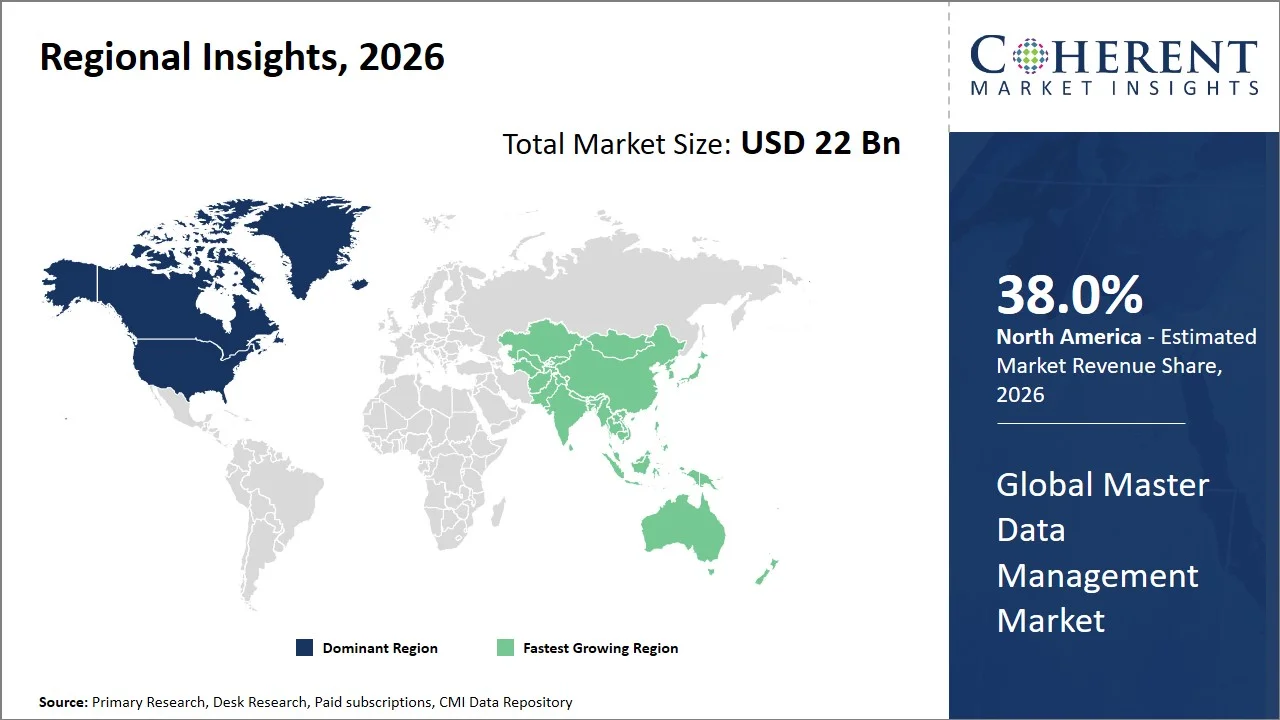
- North America is expected to dominate the master data management market in 2026 with a market share of 38.0 %. Expansion of IoT-generated enterprise data in North America is driving the growth of the regional market. On March 16, 2026, PTC announced that it has completed the previously announced sale of the company’s Kepware industrial connectivity and ThingWorx Internet of Things (IoT) businesses to TPG, a leading global alternative asset management firm. (Source: PTC)
- Asia Pacific is expected to account for 29.0 % share in 2026 and is projected to record the fastest growth over the forecast period. Growth in AI-powered automated data stewardship in Asia Pacific is driving the growth of the regional market. On April 6, 2026, Fujitsu enhanced its Kozuchi AI platform by introducing automated data preparation, governance, and lifecycle management capabilities for enterprise AI applications.
- Growing Adoption of AI-Driven Master Data Management: Artificial intelligence and machine learning are often integrated into modern MDM solutions to aid automate data matching, duplication detection, data classification, and anomaly detection. These cognitive capabilities do away with the need for human intervention, improve accuracy of the data, speed up data stewardship processes and allow real-time decision making in enterprise activities.
- Rapid Shift Toward Cloud-Native and SaaS-Based MDM Solutions: Organizations are quickly moving to cloud-based MDM solutions to obtain scalability, agility, and cost savings on infrastructure. With cloud-native designs users get faster deployments, easy integration with enterprise systems and continuous software updates. They are especially appealing to companies looking to pursue digital transformation and hybrid cloud strategies.
Segmental Insights
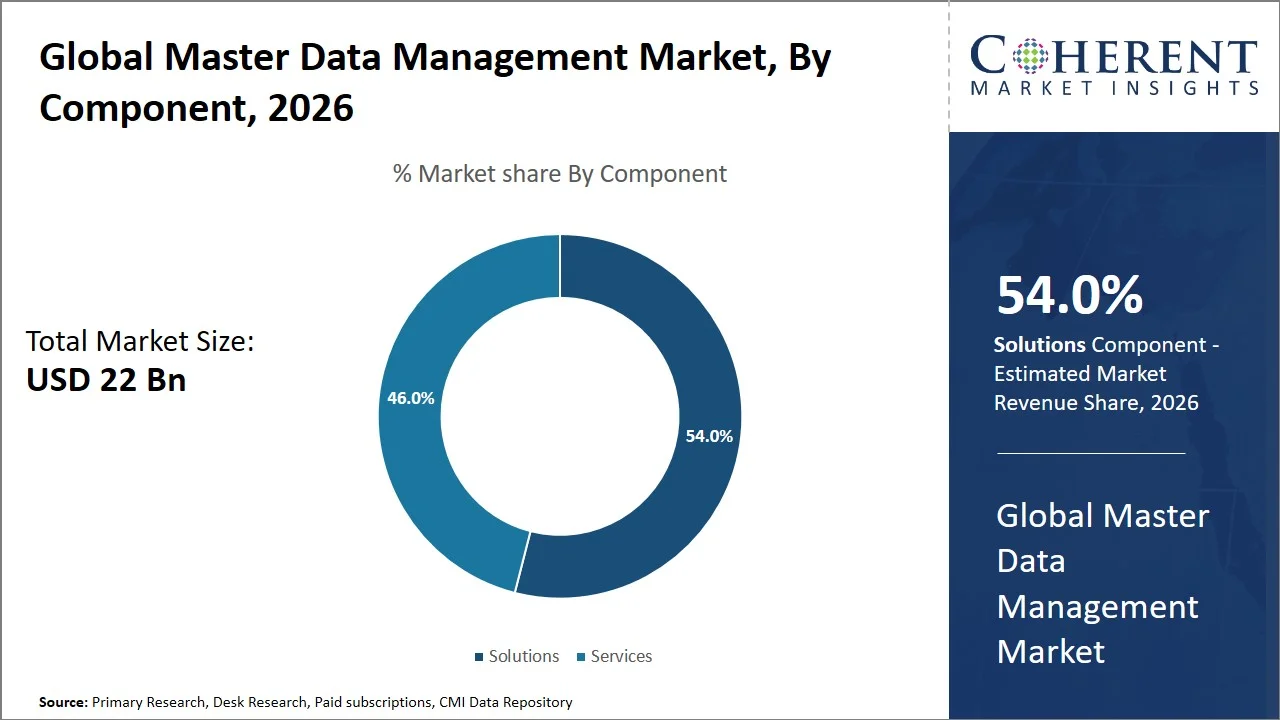
Why Do Solutions Dominate the Global Master Data Management Market?
The solutions segment is expected to account for 54.0% of the global master data management market share in 2026. The solutions category accounts for the biggest market share of the worldwide master data management market owing to the fact that enterprises require robust platforms to centralize, standardize, and administer key enterprise data across numerous business functions. Modern MDM solutions deliver data integration, data quality management, metadata management, governance and real-time synchronization on a single platform, helping companies to improve operational efficiencies and support analytics, artificial intelligence and regulatory compliance initiatives. With organizations building out their digital ecosystems and dealing with more complicated data environments, investment in advanced MDM solutions has expanded considerably, creating a continuous demand for software platforms over single service offerings. For example, companies like Semarchy continuously keep improving and updating solutions such as Semarchy Data Platform, a comprehensive portfolio of AI-powered features designed for DataOps.
- Current Industry Events of 2026
- Market Size Estimation
- Regional Breakdown
- Competitive Landscape
- Customer Intelligence
- Segmental Analysis
- Pricing Analysis
- Key Market Drivers, Challenges & Future Trends
- Customized Insights Section
Why is Cloud the Most Preferred Deployment Type?
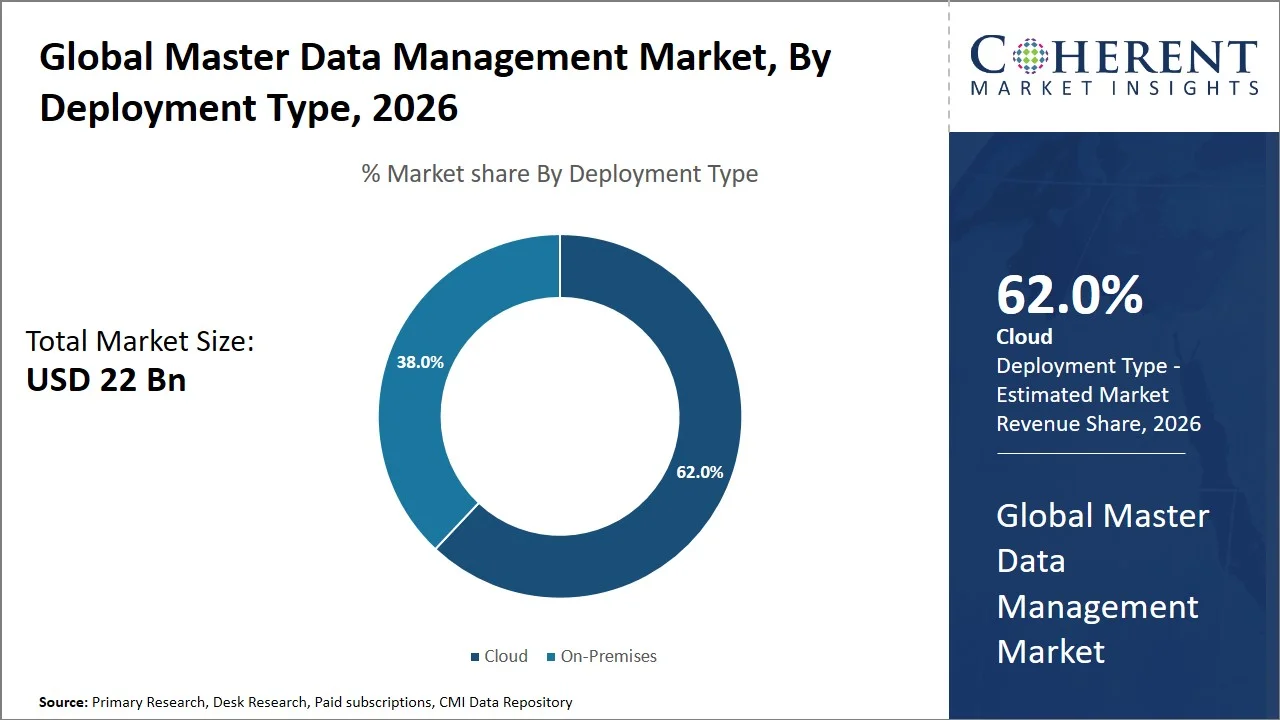
The cloud segment is expected to account for 62.0% of the global master data management market share in 2026. The cloud deployment segment is highly preferred, as it enables enterprises to extend their master data management capabilities with minimum upfront investment in infrastructure. Cloud-based platforms offer speedier implementation, automated software updates, easy interaction with enterprise applications and remote access for geographically spread operations. In addition, this style of deployment also answers the call for increased data volumes and changing business needs in a more efficient manner than traditional on-premises systems, making it an appealing paradigm for companies pursuing digital transformation, hybrid work environments and cost-effective IT modernization. On November 18, 2025, Salesforce announced that it has completed its acquisition of Informatica, a leader in enterprise AI-powered cloud data management. The close of the acquisition brings Informatica’s rich data catalog, integration, governance, quality and privacy, metadata management, and master data management services to the Salesforce platform. (Source: Salesforce)
Customer Data Dominates the Global Master Data Management Market
The customer data segment is expected to account for 29.0% of the global master data management market share in 2026 The customer data category makes up the largest percentage of the global master data management market. Organizations are increasingly focusing on delivering personalized customer experiences and consistent consumer information across many touchpoints. Centralized customer master data enables organizations to eliminate duplicate information, improve data accuracy, better customer relationship management and facilitate advanced analytics, marketing automation and omnichannel engagement strategies. As enterprises continue to increase their digital consumer engagement, the requirement for trusted customer data management solutions across industries is only increasing. On May 17, 2026, Publicis Groupe announced an agreement to acquire LiveRamp, a worldwide data collaboration platform. With LiveRamp, Publicis will be a leader in data co-creation, an important capability in the age of artificial intelligence and an enabler of agentic business transformation.
Currents Events and their Impact
Current Events | Description and its Impact |
European Union Artificial Intelligence Act (EU AI Act) |
|
India Digital Personal Data Protection Act (DPDP Act) |
|
Global Master Data Management Market - Product Information Management (PIM) Integration Trends
Throughout 2025-2026, organizations endeavored to establish a unified version of product data across ERP, CRM, e-commerce, and supply chain platforms, resulting in a rapid convergence of Product Information Management (PIM) and Master Data Management (MDM). In order to facilitate omnichannel commerce, AI-driven product content generation, and compliance with evolving digital product regulations, organizations are increasingly implementing cloud-native and API-first architectures in real time to synchronize product attributes, digital assets, and product lifecycle information. In the retail, manufacturing, consumer goods, and distribution sectors, the integration of MDM and PIM has become increasingly critical due to the direct influence of consistent product data on operational efficiency and customer experience. Key points include:
- 2025: Product information enrichment propelled by AI will be a standard feature of next-generation PIM platforms, thereby reducing the necessity for manual product data management tasks.
- By 2027, enterprises will rapidly integrate PIM and MDM to establish a unified source of truth for product data across ERP, CRM, and e-commerce ecosystems.
- 2026: In order to facilitate real-time product data synchronization across hundreds of digital channels, enterprises will adopt composable and API-first PIM systems.
- In 2026, combined PIM-MDM solutions will require AI-powered validation, automatic product categorization, and clever attribute management.
- In 2026, there will be a rise in enterprise investment in centralized PIM related to MDM platforms, as well as stricter regulatory requirements for digital product conformity, such as Digital Product Passport initiatives.
- 2026: The use of unified PIM-MDM systems by retailers and manufacturers to ensure the integrity of product data across marketplaces, direct-to-consumer websites, mobile applications, and distributor networks has continued to grow.
Global Master Data Management Market - API-First and Headless MDM platform Adoption
The adoption of API-first and autonomous Master Data Management (MDM) solutions experienced a significant increase in 2025-2026 as companies modernized legacy data structures and implemented composable business applications. The integration of master data with ERP, CRM, e-commerce, analytics, AI, and low-code platforms is facilitated by API-first MDM, which features standardized interfaces. The disembodied designs facilitate greater agility in omnichannel operations by decoupling the data administration layer from the user-facing applications. This has become increasingly critical for organizations that are establishing cloud-native ecosystems, agentic AI, and real-time data integration across remote corporate settings. Key points include:
- In 2025, Informatica introduced autonomous data management capabilities in its Intelligent Data Management Cloud, which enables APIs for enterprise applications and AI workflows to utilize master data services.
- In 2025, Semarchy added new event-driven integration capabilities and REST APIs to its xDM platform to facilitate composable enterprise architectures and cloud-native deployments.
- 2025: Boomi integrated Thru, Inc. into its API Management and Integration Platform to expedite the synchronization of master data across hybrid cloud, ERP, and SaaS environments.
- In 2026, Informatica introduced Agentic Master Data Management, which allows AI agents to access protected master data through the use of API-first and headless architectures, thereby enabling autonomous enterprise workflows.
- In 2026, Stibo Systems introduced its Model Context Protocol (MCP) Server, which allows AI agents to securely consume controlled product and master data through APIs, without the need for traditional application interfaces.
- In 2026, SAP incorporated Reltio's cloud-native MDM capabilities into SAP Business Data Cloud, prioritizing API-first connectivity to unify trusted master data across SAP and third-party enterprise applications.
Global Master Data Management Market - Manufacturing digital twin integration with MDM
The convergence of Master Data Management (MDM) and manufacturing digital twins gained major traction in 2025-2026 as industrial businesses tried to build synchronized digital representations of products, assets, production lines, and supply networks. MDM delivers the trusted master data needed for digital twins, assuring consistent product, supplier, asset, engineering and maintenance data across MES, ERP, PLM, IoT platforms and analytics applications. The integration allows manufacturers to enhance predictive maintenance, production planning, quality control and lifecycle management and also drives AI-driven operational decision making. Key points include:
- 2025: Siemens enhanced its digital twin capabilities across the Siemens Xcelerator portfolio, enabling the convergence of product lifecycle, engineering and operational data for better production visibility and data consistency.
- 2025: PTC integrated product and asset master data into the ThingWorx industrial IoT platform to support smart manufacturing operations and further develop digital twin technology.
- 2025: Dassault Systèmes augmented the 3DEXPERIENCE platform with AI-enabled virtual twin technologies to align engineering and manufacturing master data across the product lifecycle.
- 2026: Hitachi Digital increased industrial AI and digital twin capabilities by combining operational technology data with centralized business master data, resulting in better predictive maintenance and manufacturing optimization.
- 2026: Rockwell Automation enhanced its FactoryTalk digital transformation solutions to give more accurate digital twin models and real-time production insight through improved communication between industrial automation systems and business master data.
Master Data Management Market Dynamics
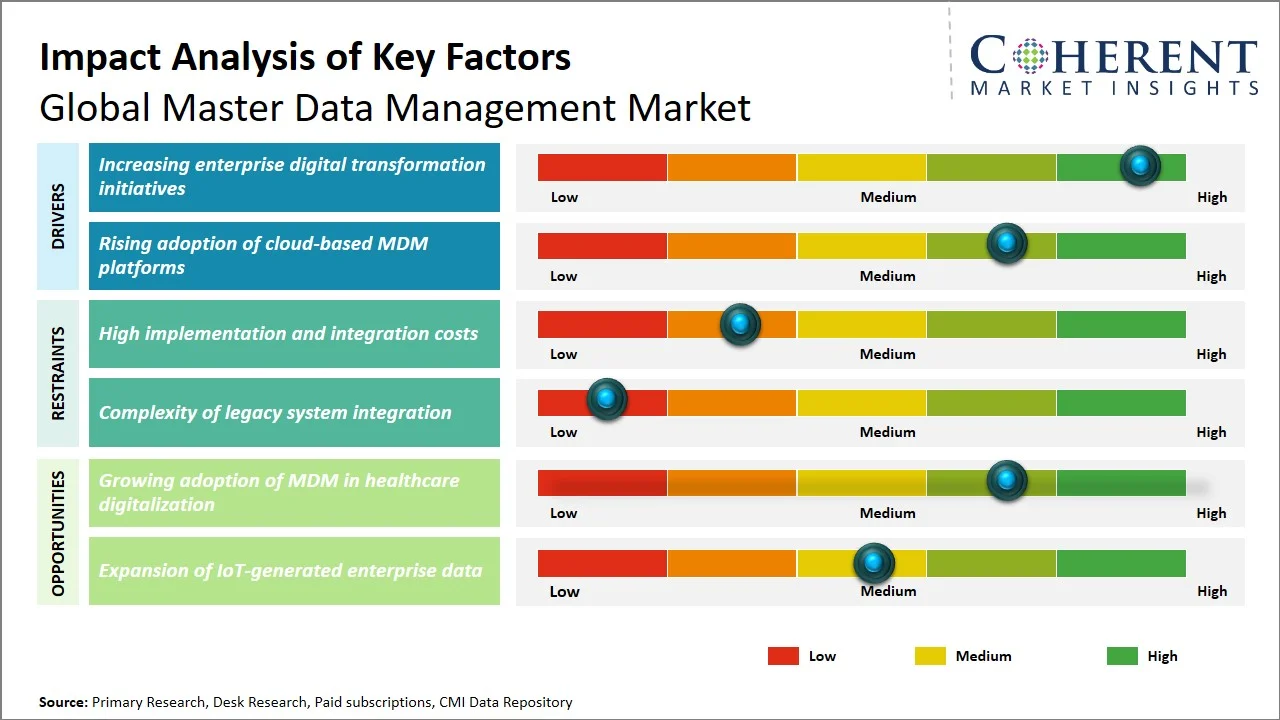
Market Drivers
- Increasing enterprise digital transformation initiatives: Organizations are upgrading their IT infrastructure and implementing cloud computing, enterprise resource planning, customer relationship management, artificial intelligence, and advanced analytics platforms, which are major growth drivers for the global master data management market. These digital transformation programs necessitate seamless integration across business systems, enhanced operational efficiency, real-time decision-making, and enhanced customer experiences. This is exclusively achievable through the use of consistent, accurate, and centralized master data. Organizations are investing in master data management solutions to establish trusted data foundations that enhance governance, interoperability, and overall business performance as they digitize fundamental business processes and scale data-driven operations. On March 14, 2024, Microsoft Corporation and Oracle announced an extension of their collaboration to meet growing customer demand for Oracle Database@Azure around the world. Oracle Database@Azure will expand to five more regions, which brings the total planned multicloud availability footprint to 15 regions globally. (Source: Microsoft)
- Rising adoption of cloud-based MDM platforms: The market is experiencing growth due to the increasing adoption of cloud-based master data management platforms. These platforms offer businesses cost-effective, scalable, and adaptable solutions for managing critical enterprise data. Cloud-based MDM facilitates the secure access to master data, automated software updates, seamless integration with cloud-native applications, and quicker deployment for globally distributed companies. Cloud-based MDM platforms are facilitating the transition of companies to hybrid and multi-cloud environments, thereby simplifying data governance, improving collaboration, reducing infrastructure costs, and providing consistent, high-quality data for business decision-making and analytics. On June 17, 2026, Bosch and Stibo Systems entered into a partnership, to expedite SAP S/4HANA migrations by utilizing Stibo's cloud-based MDM platform to ensure consistent enterprise master data across global operations and cloud applications.
Emerging Trends
- Expansion of Multi-Domain Master Data Management: Organizations are transitioning from the management of data in isolation to the utilization of multi-domain MDM platforms that consolidate financial, asset, product, supplier, and customer data under a unified governance framework. This comprehensive strategy fosters a 360-degree perspective on company data for operational efficiency and analytics, as well as cross-functional collaboration and data consistency.
- Integration of MDM with Data Governance and Data Fabric Architectures: There is a growing trend to connect master data management with enterprise data governance models and data fabric technologies to provide real-time access to trusted data in remote environments. This emerging trend simplifies regulatory compliance, enhances interoperability between cloud and on-premises systems, enhances data quality management, and enables organizations to capitalize on connected, enterprise-wide data for advanced AI and analytics applications.
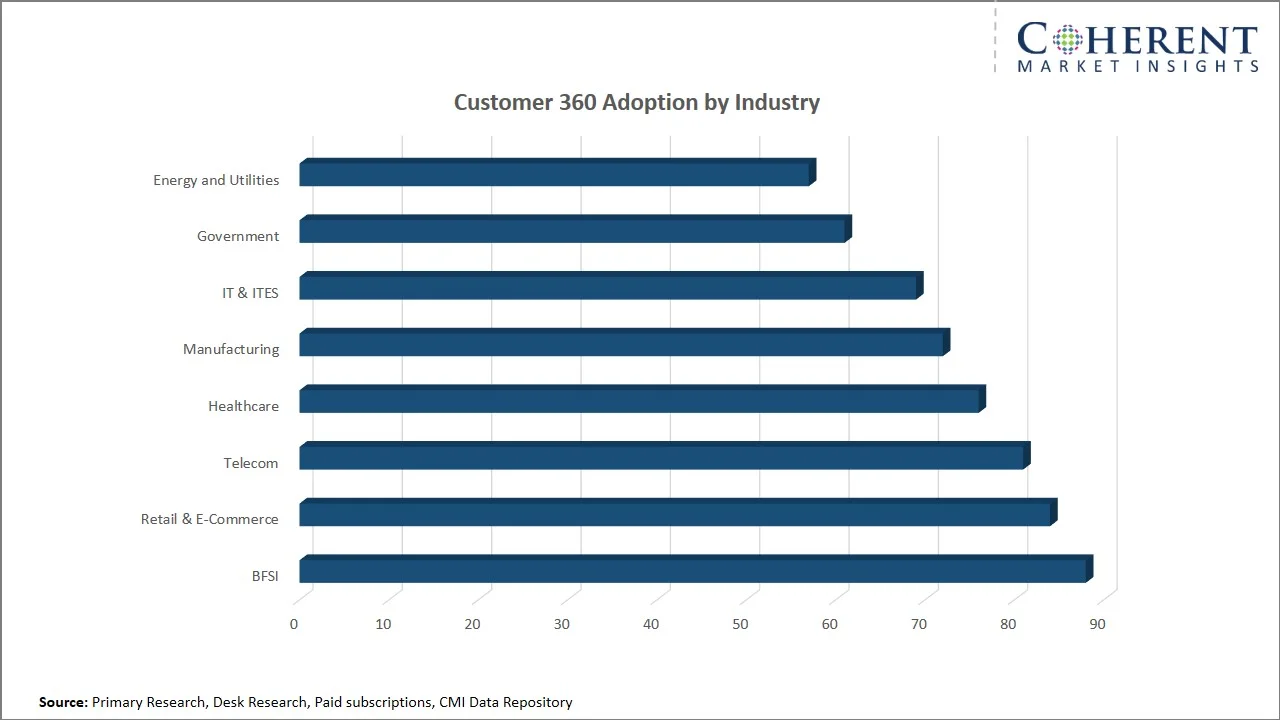
Global Master Data Management Market - Customer 360 Adoption by Industry (2025)
Regional Insights
Why is North America a Strong Market for Master Data Management?
North America is expected to account for a market share of 38.0% in 2026. North America is the leading regional market for master data management with extensive organizational usage of AI, cloud computing and advanced data governance frameworks fueling growth. Major technology suppliers such as Microsoft, Oracle, IBM and Informatica are expanding AI-powered MDM capabilities with integration into platforms such as Microsoft Fabric, Oracle Fusion Cloud Applications and IBM watsonx.
The North American region also benefits from broad usage of master data management in healthcare, finance and retail where firms are deploying projects like as customer 360, product information management and regulatory compliance that demand centralized and trusted master data. On February 12, 2025, Ataccama announced the debut of Ataccama Lineage, a new module within its Ataccama ONE unified data trust platform (V16). Ataccama Lineage delivers enterprise-wide visibility of data flows, giving enterprises a clear view of their data’s journey from source to consumption.
Why Does the Asia Pacific Master Data Management Market Exhibit High Growth?
Asia Pacific is projected to account for 29.0% of the global master data management market share in 2026 and is expected to register the fastest growth. The usage of master data management is rapidly increasing in the Asia Pacific region, as organizations are fast-tracking their digital transformation and cloud migration initiatives. Countries such as China, India, Japan, Singapore and South Korea are implementing enterprise-wide data governance initiatives to power smart manufacturing, digital banking and e-commerce ecosystems. Regional cloud providers and hyperscalers such as Alibaba Cloud, Huawei Cloud, AWS and Microsoft Azure are improving enterprise data platforms while multinational manufacturers are leveraging centralized product and supplier master data across cross-border supply chains to improve operational visibility and regulatory compliance. On August 19, 2025, Boomi and DXC Technology announced a strategic agreement that will create a dedicated Boomi Center of Excellence to assist enterprises around Asia Pacific in modernizing enterprise applications, integrating cloud data and improving master data management for AI adoption
Global Master Data Management Market Outlook for Key Countries
Why is the U.S. Emerging as a Major Hub in the Master Data Management Market?
The U.S. is the biggest master data management market, driven by increasing investment in business AI, cloud-native apps and data governance modernization. Multi-domain MDM platforms from vendors such as Informatica, Reltio, Profisee, IBM and Oracle are being used by Fortune 500 firms in financial services, health care, retail and manufacturing to unify customer, product, supplier and financial data. Demand for scalable MDM solutions from both private organizations and federal agencies is growing, driven by the expanding adoption of AI-enabled analytics, data fabric architectures, and customer 360 activities.
Is China the Next Growth Engine for the Master Data Management Market?
The China master data management market is growing fast as businesses update their digital infrastructure through national digital economy initiatives. Centralized master data platforms are being implemented by large industrial, telecoms, financial services and e-commerce firms to enable intelligent factories, AI applications and integrated supply chain operations. Huawei, Alibaba Group, Tencent and other state-owned companies are all investing substantially in cloud-based enterprise data management systems that increase data consistency across many business units and enable large-scale digital transformation initiatives.
Germany Master Data Management Market Analysis and Trends
Germany is a key European master data management market, fueled by the country’s developed manufacturing industry and a significant emphasis on industrial digitization. Automotive manufacturers, industrial equipment makers and chemical firms use enterprise MDM platforms to ensure consistent engineering, product, supplier and asset data across worldwide production locations. Organizations such as SAP, Siemens, Bosch and BMW Group continue to leverage Industry 4.0, digital twins, predictive maintenance and integrated enterprise resource planning environments to bolster data governance frameworks.
Japan Master Data Management Market Analysis and Trends
Japan continues to see steady increase in master data management usage as companies upgrade outdated IT systems and expand cloud-based business operations. Leading manufacturers, electronics businesses and financial institutions are embracing centralized MDM solutions to enhance product lifecycle management, collaboration with suppliers and enterprise analytics. Companies such as Toyota, Hitachi, Fujitsu and NEC are integrating master data governance with AI, industrial IoT and smart manufacturing projects to drive operational efficiency and worldwide commercial growth.
U.K. Master Data Management Market Analysis and Trends
The U.K. is one of Europe’s most mature markets for master data management, driven by strong demand from the banking, insurance, healthcare and retail industries. Financial institutions are investing in enterprise-wide customer data management and governance platforms to improve regulatory compliance, fraud detection and digital consumer interaction. Retailers are adopting product master data solutions to facilitate omnichannel commerce. The rapid adoption of cloud-first initiatives and AI-enabled analytics in both the public and commercial sectors is fueling the speedy implementation of modern MDM platforms across the country.
Master Data Management Market - Master Data Records Managed Annually (2025)
Region | Estimated Annual Master Data Records Managed (Billions) |
North America | 450 - 520 billion records |
Asia Pacific | 520 - 610 billion records |
Europe | 380 - 450 billion records |
Latin America | 120 - 160 billion records |
Middle East & Africa | 140 - 190 billion records |
Master Data Management Market - MDM Integrations with ERP and CRM Systems (2025)
Region | MDM–ERP Integration Intensity (% of enterprises using MDM with ERP) | MDM–CRM Integration Intensity (% of enterprises using MDM with CRM) |
North America | 78 | 82 |
Asia Pacific | 72 | 75 |
Europe | 75 | 77 |
Latin America | 58 | 62 |
Middle East & Africa | 55 | 60 |
How is the Growing Adoption of MDM in Healthcare Digitalization Creating New Growth Opportunities in the Master Data Management Market?
The market for master data management is growing fast with increasing use of healthcare digitization. This trend presents substantial development opportunities in satisfying the demand for precise, standardized, and interoperable patient, provider, medical device and clinical data across healthcare ecosystems. Hospitals, healthcare networks, pharmaceutical companies and insurers are deploying electronic health records, telemedicine platforms, digital diagnostics and AI-powered clinical decision support systems, making consistent master data a prerequisite for better patient outcomes and operational efficiency. As the global digital healthcare infrastructure continues to evolve, healthcare companies are approaching investments in master data management solutions with a more strategic approach. These solutions assist minimize duplicate records, improve data quality, enable regulatory compliance, facilitate safe data interchange between systems and provide a single view of vital healthcare information.
On May 19, 2026, Verato, the identity intelligence firm, said it will unveil Verato Identity Network (VIN) at the 2026 Reuters Digital Health Summit. Verato Identity Network (VIN) is a common identity infrastructure that allows healthcare businesses to safely identify the same individual across partners without the need to re-implement identification logic or develop new integrations for each connection.
Market Players, Key Development, and Competitive Intelligence
Key Developments
- On May 7, 2026, SAP SE announced that it has completed the acquisition of Reltio, a leading master data management (MDM) software provider. The acquisition will help customers make their SAP and non-SAP enterprise data AI-ready and will provide customers with the tools they need to unify, cleanse and harmonize data across sources for superior enterprise-wide agentic AI.
- On May 14, 2025, Informatica announced its comprehensive strategy for Agentic AI, building on the company's position as the industry's first AI-powered cloud data management platform. Informatica's strategic approach to Agentic AI expands on the company's AI innovation history, which includes the launch of CLAIRE GPT, CLAIRE Copilot and GenAI blueprints for major cloud ecosystem partners.
Competitive Landscape
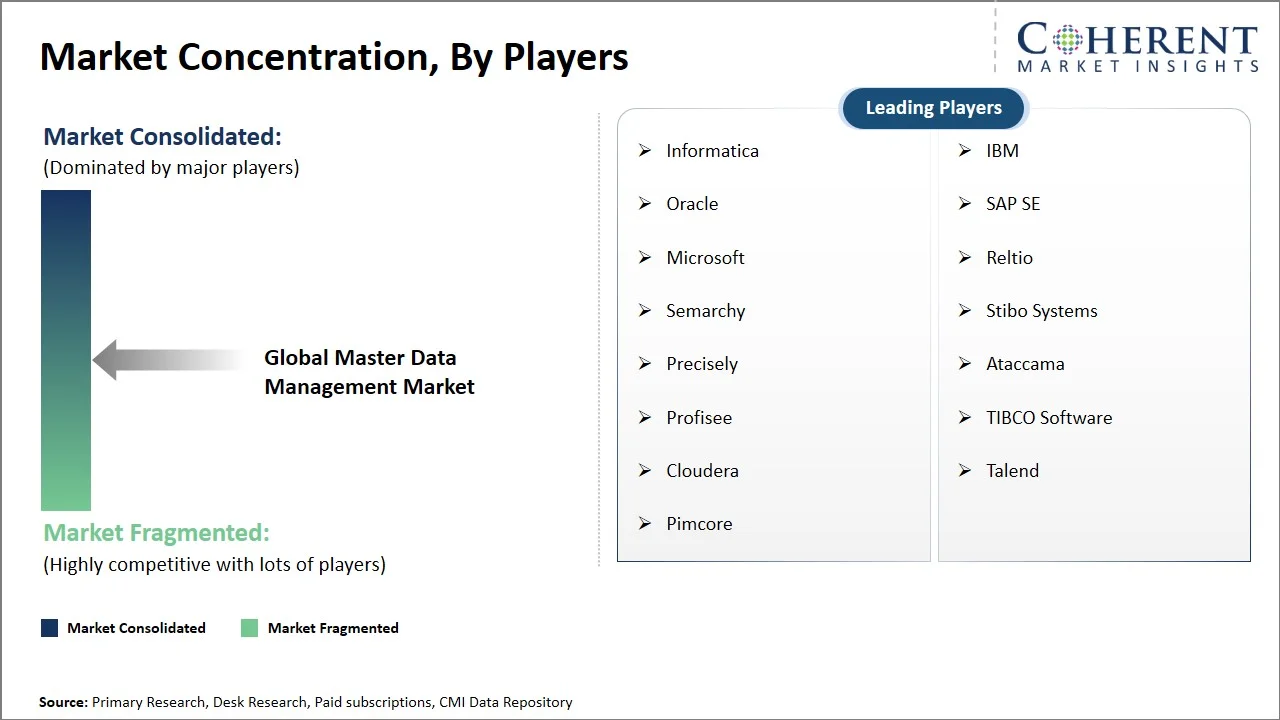
The global master data management market is becoming more competitive with vendors increaasingly investing on platform intelligence, cloud-native architecture, multi-domain capabilities, and ecosystem integration rather than traditional data management capability. Leading vendors such as Informatica, IBM, Oracle, SAP, Microsoft, Reltio, Ataccama, Semarchy, Stibo Systems and Profisee are increasing their offerings with AI-enabled data stewardship, metadata management, knowledge graph technologies and low-code configuration tools. Strategic partnerships with hyperscale cloud providers, enterprise application vendors and systems integrators have become a key competitive differentiator, while acquisitions of data quality and governance and catalog solution providers are being used to bolster end-to-end enterprise data management offerings. There is also growing focus on industry-specific MDM solutions designed for healthcare, financial services, retail, manufacturing and life sciences to meet complicated regulatory and operational needs.
Market Report Scope
Master Data Management Market Report Coverage
| Report Coverage | Details | ||
|---|---|---|---|
| Base Year: | 2025 | Market Size in 2026: | USD 22 Bn |
| Historical Data for: | 2020 To 2024 | Forecast Period: | 2026 To 2033 |
| Forecast Period 2026 to 2033 CAGR: | 12% | 2033 Value Projection: | USD 63 Bn |
| Geographies covered: |
| ||
| Segments covered: |
| ||
| Companies covered: | Informatica, IBM, Oracle, SAP SE, Microsoft, Reltio, Semarchy, Stibo Systems, Precisely, Ataccama, Profisee, TIBCO Software, Cloudera, Talend, and Pimcore | ||
| Growth Drivers: |
| ||
| Restraints & Challenges: |
| ||
Analyst Opinion (Expert Opinion)
- Standalone MDM deployments are predicted to be less common and the industry is projected to be more affected by the convergence of master data management with artificial intelligence, data fabric, and enterprise governance platforms. Higher value is expected to be created by unified data ecosystems where master data, metadata and governance processes are managed inside a single intelligent framework. Investment is likely to be stronger towards cloud-native multi-domain platforms, with competitive differentiation likely to be determined by automation capabilities, interoperability with enterprise applications and the ability to deliver trusted data for advanced analytics, generative AI and real-time business operations.
- The global master data management market is predicted to grow due to the rising integration of AI agents, autonomous data governance, and real-time enterprise data synchronization across hybrid and multi-cloud systems. Organizations adopting composable corporate architectures, digital twins, intelligent supply chains and next-generation customer experience platforms that require continually controlled master data are expected to drive demand. It is expected that wider adoption of industry-specific cloud platforms and ESG reporting frameworks, and cross-enterprise data sharing ecosystems, will drive faster innovation, turning master data management into a foundational capability for enterprise-wide digital operations, rather than a data quality and governance tool.
Speak to the analyst
Want personalized insights?
Take the findings above to one of our principal consultants, or have the report rebuilt around the segments, geographies and competitors you actually track.
Market Segmentation
- Component Insights (Revenue, USD Billion, 2021 - 2033)
- Solutions
- Services
- Deployment Type Insights (Revenue, USD Billion, 2021 - 2033)
- Cloud
- On-Premises
- Domain Insights (Revenue, USD Billion, 2021 - 2033)
- Customer Data
- Product Data
- Supplier Data
- Financial Data
- Asset Data
- Employee Data
- Multi-Domain MDM
- End User Insights (Revenue, USD Billion, 2021 - 2033)
- BFSI
- Healthcare
- Retail & E-commerce
- Manufacturing
- IT and Telecommunications
- Government
- Energy and Utilities
- Transportation and Logistics
- Others
- Regional Insights (Revenue, USD Billion, 2021 - 2033)
- North America
- U.S.
- Canada
- Latin America
- Brazil
- Argentina
- Mexico
- Rest of Latin America
- Europe
- Germany
- U.K.
- Spain
- France
- Italy
- Russia
- Rest of Europe
- Asia Pacific
- China
- India
- Japan
- Australia
- South Korea
- ASEAN
- Rest of Asia Pacific
- Middle East
- GCC Countries
- Israel
- Rest of Middle East
- Africa
- South Africa
- North Africa
- Central Africa
- North America
- Key Players Insights
- Informatica
- IBM
- Oracle
- SAP SE
- Microsoft
- Reltio
- Semarchy
- Stibo Systems
- Precisely
- Ataccama
- Profisee
- TIBCO Software
- Cloudera
- Talend
- Pimcore
Sources
Primary Research Interviews
- Retail & E-commerce Data Managers
- Manufacturing Digital Transformation Heads
- System Integrators & Consulting Firms
Magazines
- Security Business Magazine
- Security Technology Executive
- SDM (Security Dealer & Integrator) Magazine
- Buildings Magazine
Journals
- Journal of Security Engineering
- International Journal of Smart Home Technology
- IEEE Transactions on Consumer Electronics
Associations
- Security Industry Association (SIA)
- Electronic Security Association (ESA)
- International Association of Professional Security Consultants (IAPSC)
- Building Industry Association (BIA)
Public Domain Sources
- U.S. Department of Homeland Security (DHS) - Security Technology Reports
- European Union Agency for Cybersecurity (ENISA)
- International Electrotechnical Commission (IEC) Standards
- U.S. Census Bureau - Construction & Housing Dat
Proprietary Elements
- CMI Data Analytics Tool
- Proprietary CMI Existing Repository of information for last 10 years
Get access to 250+ pages report
Every segment, forecast, competitor profile and data table behind the analysis above — available for instant download.
- ESOMAR Member
- ISO 9001:2015 Certified
- D-U-N-S Registered
- GDPR & CCPA Compliant
Missing comfort of reading report in your local language? Find your preferred language:
Transform your Strategy with Exclusive Trending Reports
Frequently Asked Questions
The global master data management market is expected to stand at USD 22 Bn in 2026 and is expected to reach USD 63 Bn by 2033.
The CAGR of the global master data management market is projected to be 12% from 2026 to 2033.
Increasing enterprise digital transformation initiatives and rising adoption of cloud-based MDM platforms are the major factors driving the growth of the global master data management market.
It provides a unified customer view that enables personalized interactions and consistent service across multiple channels.
It helps organizations maintain accurate, traceable, and well-governed data to meet regulatory requirements.
High implementation and integration costs and complexity of legacy system integration are the major factors hampering the growth of the global master data management market.
In terms of component, the solutions segment is estimated to dominate the market revenue share in 2026.