

Global Microalgae Biotechnology Market Size and Forecast – 2026 To 2033
The global microalgae biotechnology market is expected to grow from USD 3,850.0 Mn in 2026 to USD 7,083.3 Mn by 2033, registering a compound annual growth rate (CAGR) of 9.1% from 2026 to 2033. The market for global microalgae biotechnology is poised for significant expansion, fueled by the rising demand for sustainable, algae-derived nutritional and functional ingredients across food, nutraceuticals, and animal feed applications.
In July 2026, India’s Technology Development Board (TDB), under the Department of Science & Technology, provided financial assistance to K. N. Biosciences for commercializing indigenous C-phycocyanin production technology from Spirulina. The project will establish commercial-scale production of the high-value algal pigment for food, nutraceutical, agriculture, aquaculture, and feed applications, supporting the expansion of India’s microalgae biotechnology value chain.
Key Takeaways of the Global Microalgae Biotechnology Market
- Spirulina is projected to hold 38.6% of the global microalgae biotechnology market share in 2026, making it dominant microalgae type segment across North America due to established applications of Spirulina in functional foods, dietary supplements, and natural food colors. In February 2026, the U.S. Food and Drug Administration (FDA) issued a final order expanding the permitted use of Spirulina extract as a color additive in human foods, while also establishing tighter heavy-metal specifications. This regulatory action supports the broader incorporation of Spirulina-derived ingredients into food and beverage applications.
- Open pond systems are projected to hold 51.2% of the global microalgae biotechnology market share in 2026, making it dominant cultivation method segment across Europe due to their relatively lower capital requirements and suitability for large-scale biomass production. The European Commission identifies open ponds as a lower-cost and readily scalable cultivation approach, particularly for Spirulina production, reinforcing their importance in the region’s microalgae cultivation landscape.
- Food and Beverages are projected to hold 25.8% of the global microalgae biotechnology market share in 2026, making it dominant end-use industry segment across Europe specifically UK, where regulatory authorization is supporting the incorporation of microalgae-derived ingredients into mainstream food products. In March 2026, the UK Food Standards Agency authorized DHA- and EPA-rich oil from Schizochytrium sp. for use in food categories including bakery products, breakfast cereals, nutrition bars, cooking fats, and dairy analogues, expanding the permitted applications of microalgae-derived ingredients in food products.
- Asia Pacific market maintains dominance with an expected share of 48.2% in 2026, bolstered by established microalgae cultivation capabilities, strong demand for algae-derived nutritional ingredients, and increasing government support for biotechnology commercialization. For instance, Japan’s New Energy and Industrial Technology Development Organization (NEDO) is developing microalgae cultivation technologies for carbon recycling and bio jet-fuel production, including species selection, breeding, and large-scale cultivation, supporting the region’s expanding microalgae biotechnology ecosystem.
- Middle East & Africa is expected to exhibit the fastest growth in the global microalgae biotechnology market, registering an estimated CAGR of 11.8% during 2026–2033, driven by increasing investment in sustainable food production, water treatment, carbon management, and domestic biotechnology capabilities. For instance, Saudi Arabia’s Ministry of Environment, Water and Agriculture (MEWA) has adopted algae-based treatment technology as one of 40 innovative technologies for water treatment and reuse, creating additional opportunities for microalgae applications beyond traditional food and nutraceutical markets.
Segmental Insights
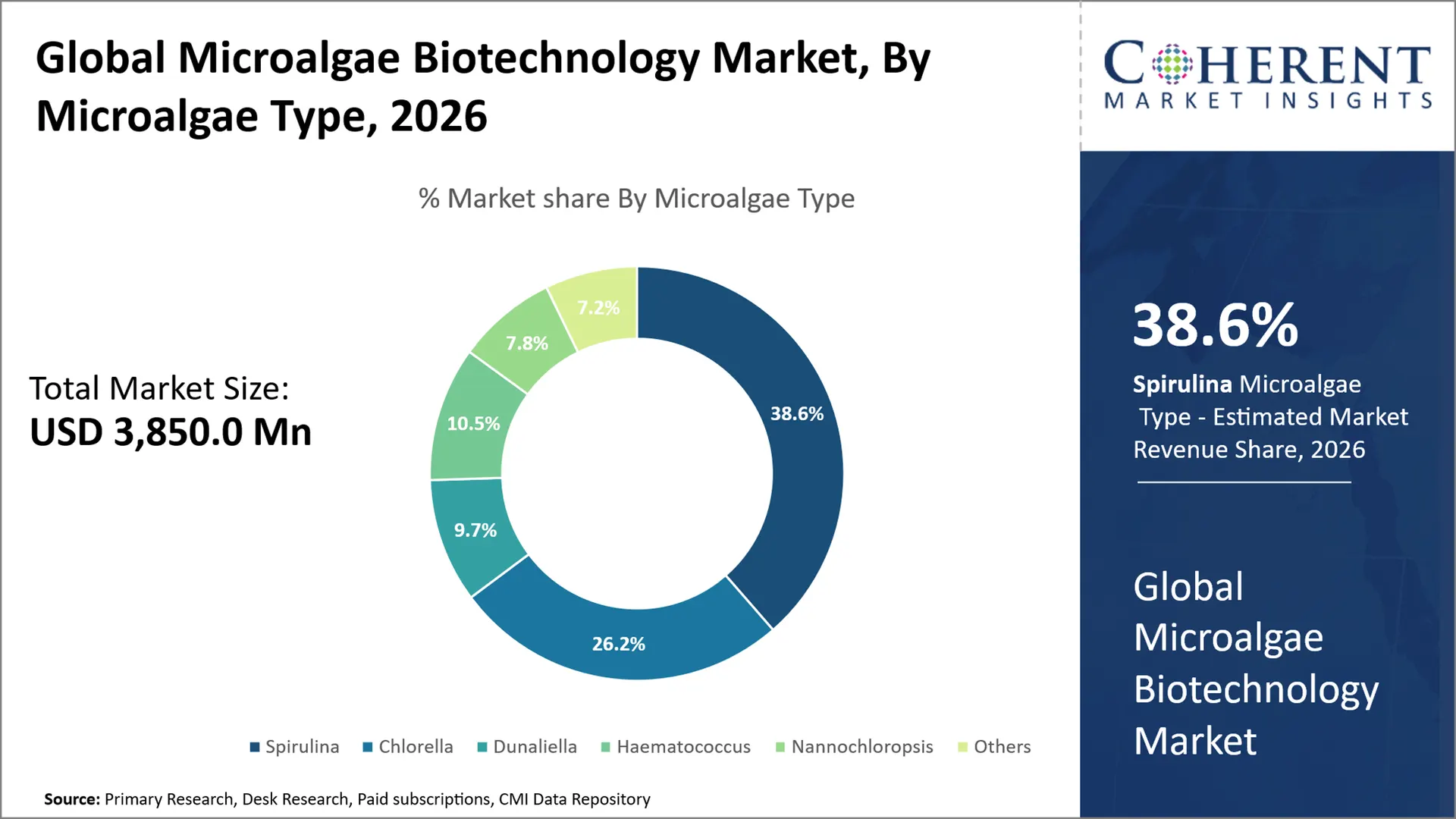
Why Do Spirulina Dominate the Global Microalgae Biotechnology Market?
Spirulina is projected to hold the market share of 38.6% in 2026, due to its higher protein and micronutrients content as well as its wide range of uses in food, nutraceuticals, animal feed, aquaculture and functional foods. Its existing capital base and suitability of the strains to produce nutritional and bioactive compounds makes it a favorable choice. For instance, India’s CSIR - Institute of Himalayan Bioresource Technology (IHBT) has developed spirulina-based food products fortified with iron and zinc, explicating its potential for value-added nutritional applications.
- Current Industry Events of 2026
- Market Size Estimation
- Regional Breakdown
- Competitive Landscape
- Customer Intelligence
- Segmental Analysis
- Pricing Analysis
- Key Market Drivers, Challenges & Future Trends
- Customized Insights Section
Why Does Open Pond Systems Represent the Largest Cultivation Method Segment in the Microalgae Biotechnology Market?
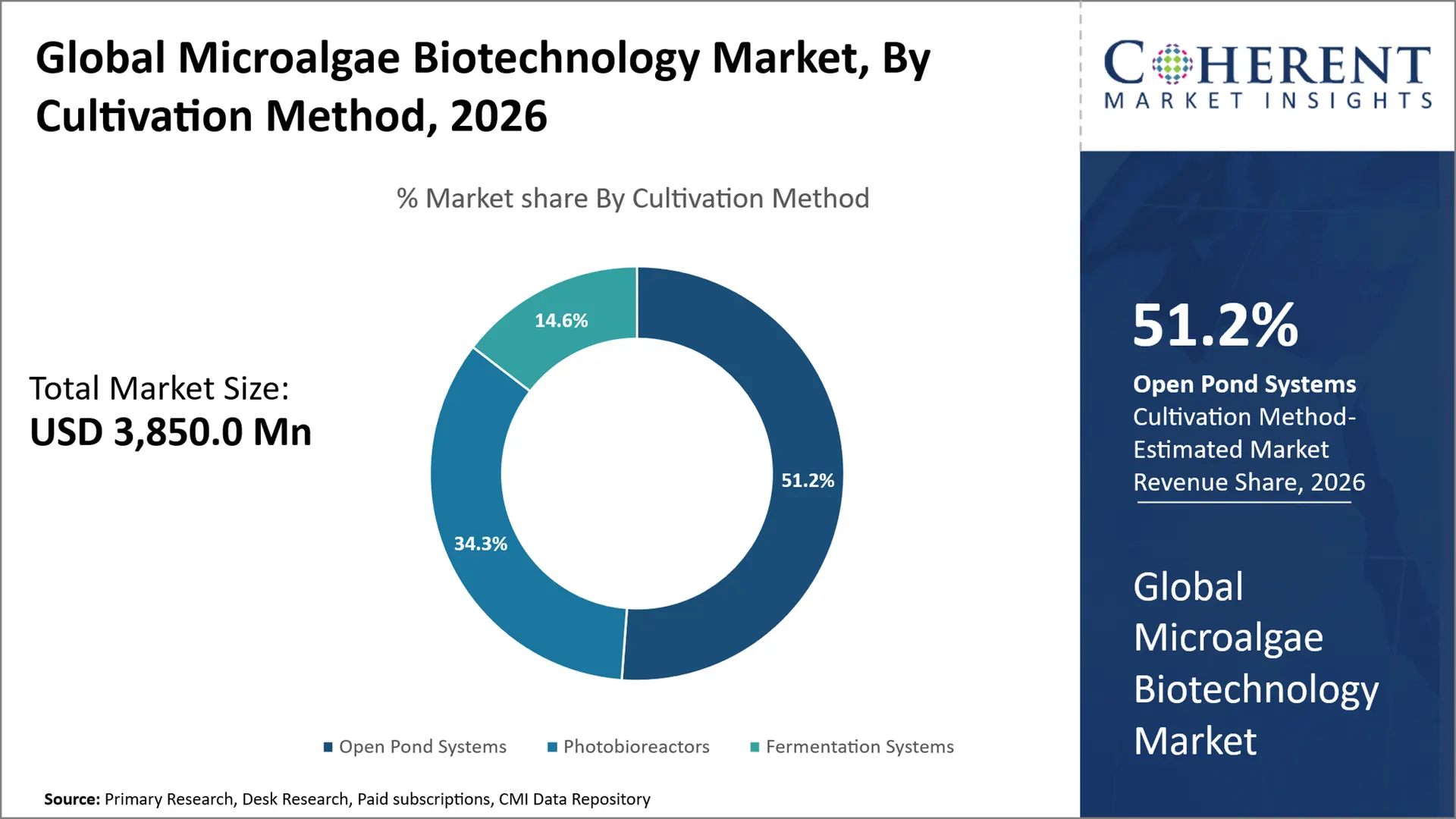
Open pond systems are projected to hold a market share of 51.2% in 2026, due to their low capital investments, simple infrastructure, scalability and ability to grow high biomass quantities. Additionally, the use of natural sunlight and potential to work with robust microalgae strains favor the commercial use of open pond systems. For instance, Indian Council of Agricultural Research (ICAR)- Central Marine Fisheries Research Institute (CMFRI) has evolved technology for the mass culture and harvesting of Nannochloropsis gaditana, an important PUFA (polyunsaturated fatty acid) rich microalgae through land-based open raceways bringing out the suitability of open-pond system for commercial microalgae production.
Food and Beverages Segment Dominates the Global Microalgae Biotechnology Market
The food and beverages segment is projected to hold a market share of 25.8% in 2026, driven by the rising consumption of natural, plant-based, nutritious and functional ingredients. Microalgae offer proteins, pigments, vitamins, omega-3 fatty acids and other bioactive components that can be added to beverages, snacking, fortified foods and alternative foods. For instance, the U.S. Food and Drug Administration (FDA)'s GRAS Notice 1280 seeks to add Chlorella vulgaris, a sustainably produced microalgae to bread, pizza dough, crackers, tortillas, pasta, noodles, meat, seafood and dairy alternatives-existing and new, reinforcing its expanding application across food categories.
Currents Events and their Impact
Current Events | Description and its Impact |
Codex Advanced Work on Microalgae Food Safety and Quality Considerations (May 2026) |
|
India’s BioE3 Policy Advanced Microalgae-Based Biomanufacturing Projects (April 2026) |
|
U.S. FDA Expanded Permitted Uses of Spirulina Extract in Foods (February 2026) |
|
Microalgae Biotechnology Market Dynamics
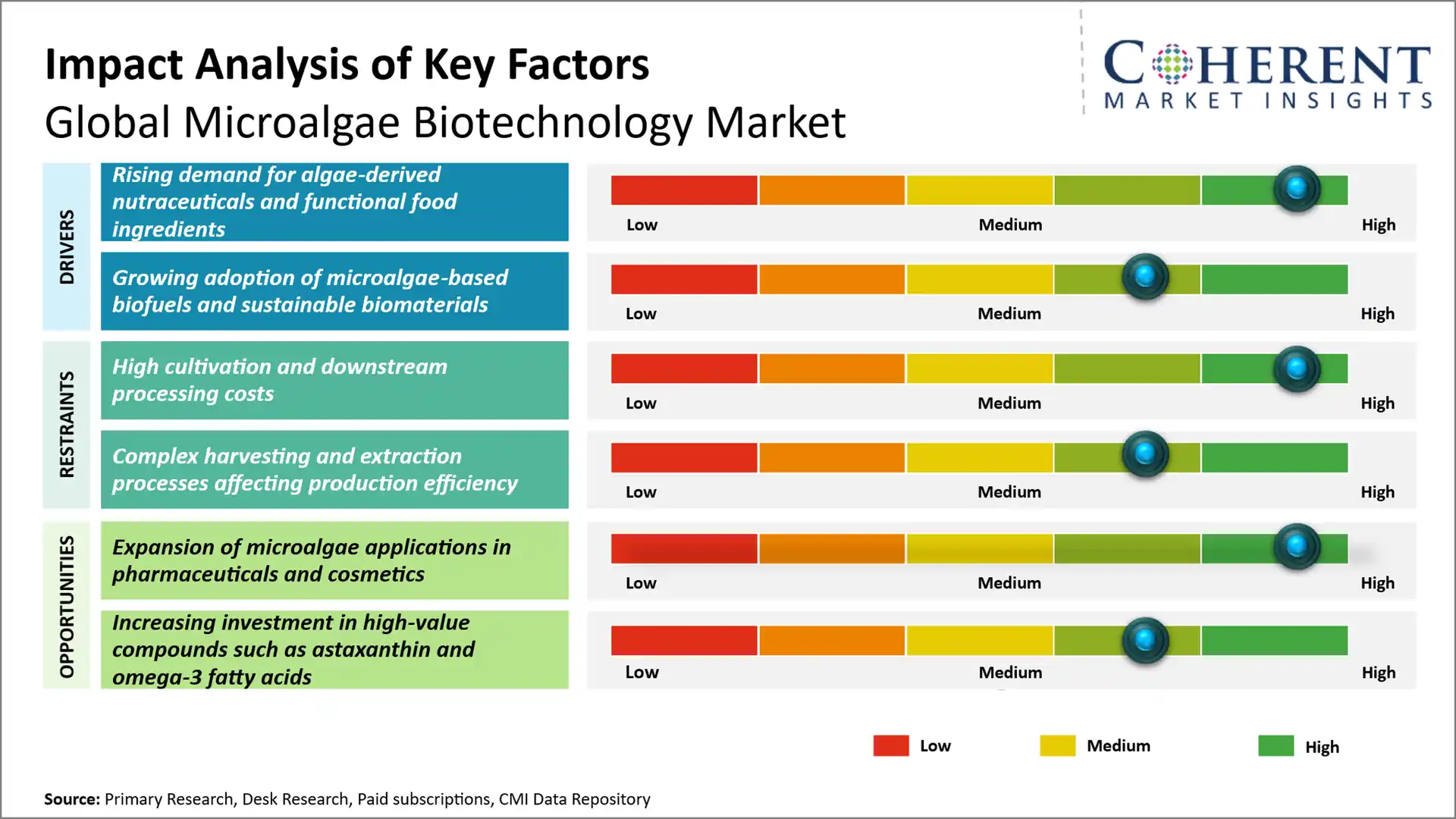
Market Drivers
- Rising demand for algae-derived nutraceuticals and functional food ingredients: Rising consumer interest in nutrient-dense, plant-based, and functional foods is increasing demand for microalgae-derived proteins, vitamins, antioxidants, omega-3 fatty acids, and natural pigments. Spirulina and Chlorella are increasingly incorporated into dietary supplements, functional foods, beverages, and other health-oriented products, strengthening demand for microalgae-based ingredients. For instance, in January 2025, India’s ICAR-Indian Agricultural Research Institute conducted a government-supported program on Spirulina cultivation, processing, and value addition, specifically covering the development of dietary supplements and functional foods.
- Growing adoption of microalgae-based biofuels and sustainable biomaterials: Growing adoption of microalgae-based biofuels and sustainable biomaterials is creating new commercial opportunities as industries seek low-carbon alternatives to fossil-based fuels and materials. Microalgae can be converted into biodiesel, bioethanol, biohydrogen, renewable aviation fuels, and bio-based products, while their ability to utilize CO₂ and waste streams strengthens their role in circular production systems. For instance, the European Commission’s SusAlgaeFuel project is developing a circular production model for microalgae-based sustainable aviation fuel by integrating direct CO₂ capture and waste-derived nutrients with algae cultivation. The project targets a 49% reduction in fuel production costs, from USD 12.3/kg to USD 6.3/kg, demonstrating efforts to improve the commercial viability of microalgae-based fuels.
- Increasing investment in microalgae-based functional foods and smart proteins: Increasing investment in microalgae-based functional foods and alternative protein ingredients is creating new growth opportunities as demand rises for sustainable, nutrient-rich food sources. Microalgae offer proteins and bioactive compounds that can be incorporated into functional foods, dietary supplements, and other nutrition-focused products. For instance, in July 2026, India’s Department of Biotechnology reported that more than 270 projects had been recommended for funding under the BioE3 Policy, including initiatives under its Smart Proteins and Functional Foods vertical. The policy specifically supports algae-based biomass fermentation and scale-up of innovative food and protein technologies.
Emerging Trends
- AI-Enabled Microalgae Cultivation and Process Optimization: AI and machine learning are increasingly being integrated with photobioreactors to optimize light, nutrients, CO₂ supply, and cultivation conditions. These technologies can improve biomass productivity, reduce energy consumption, and enable more consistent large-scale production.
- Integration of Microalgae with Carbon Capture and Circular Bioeconomy Systems: Microalgae cultivation is increasingly being integrated with CO₂ capture, wastewater treatment, and nutrient recovery to convert waste streams into valuable biomass and bio-based products. This integrated approach is strengthening the economic and environmental potential of microalgae biotechnology.
- Shift Toward High-Value Microalgal Bioproducts: The industry is moving beyond bulk biomass toward high-value compounds such as carotenoids, omega-3 fatty acids, phycobiliproteins, and polysaccharides for food, nutraceutical, pharmaceutical, and cosmetic applications. Advances in strain engineering, multi-omics, and downstream processing are improving metabolite yields and commercial scalability.
Regional Insights
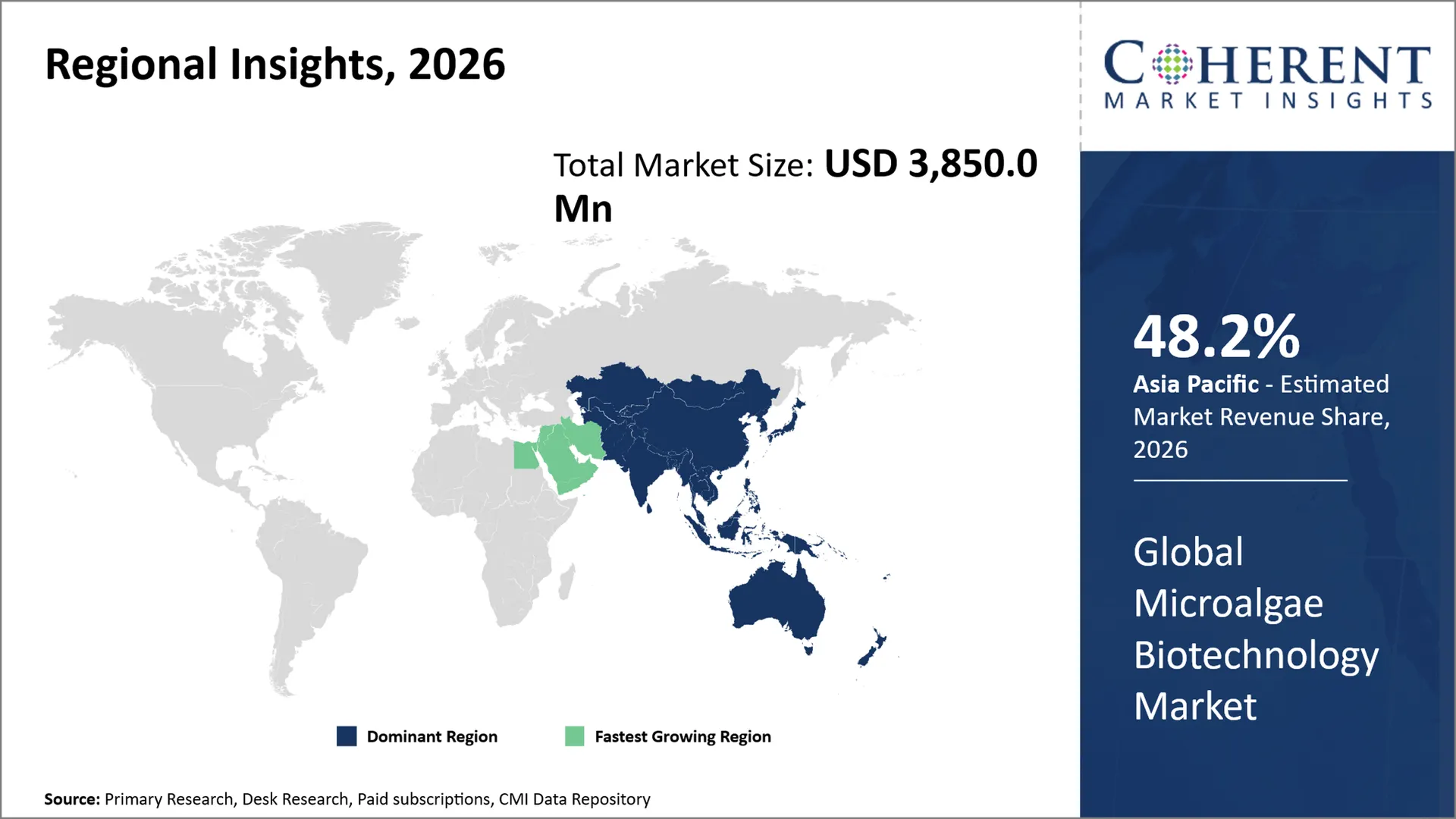
Why is Asia Pacific a Strong Market for Microalgae Biotechnology?
Asia Pacific leads the global microalgae biotechnology market, accounting for an estimated 48.2% share in 2026, owing to rising health supplement consumption, increased microalgae utilization, fast-paced industrialization, growing bio-based industries, and increasing adoption of environment-friendly technologies. The uptrend in the number of microalgae biotech commercialization initiatives has enabled the thriving regional macroalgae biotech industry. Additionally, favorable government policies, such as the provision to reduce carbon emissions and environmental pollution, are promoting the development of the biotechnology industry in the region.
For instance, The India BioE3 Policy encourages sustainable biomanufacturing, carbon utilization & capture, and bio-based product development that supports microalgae-based biotech applications. (Source: Press Information Bureau) Furthermore, increasing investments in sustainable biomanufacturing and marine biotech for the utilization of carbon, and public-private cooperation, as well as the scalable Biotech infrastructure, have positively benefited the microalgae-based applications.
Why Does Middle East & Africa Microalgae Biotechnology Market Exhibit High Growth?
Middle East & Africa is expected to exhibit the fastest growth in the global microalgae biotechnology market, registering an estimated CAGR of 11.8% during 2026–2033. The region is projected to account for 5.1% of the global market in 2026, owing to high availability of sunlight and non-arable land, increasing demand for sustainable food & feed applications, water-efficient biotechnology, and rising awareness among water security water enhancement programmes in the region. Besides, government initiatives and schemes are seen to improve water security, lower carbon emissions and help develop the algae-based products in the middle east and African nations.
For instance, in January 2024, the Ministry of Environment, Water and Agriculture in Saudi Arabia partnered with KAUST to launch Algnor in Phase II of the Algae & Aquaculture Technologies Development Project, which aims to establish and localize algae technologies in the Kingdom as well as to mitigate carbon emissions and foster a sustainable aquaculture. Furthermore, increasing investments in sustainability, resource-efficient production systems and carbon utilization are anticipated to open up more growth opportunities for microalgae cultivation and commercialization.
Global Microalgae Biotechnology Market Outlook for Key Countries
Why is the U.S. Leading Innovation and Adoption in the Microalgae Biotechnology Market?
The U.S. is at the forefront of innovation and commercialization via superior research & development of microalgae farming, optimized biomass, and conversion to biofuel and bioproducts. The U.S. Department of Energy is funding integrated research in strain development, cultivation systems, resource utilization, and downstream processing, and its national labs are evaluating commercial-scale microalgae production on non-arable land and saline water with industrial CO₂ sources.
Is Japan a Favorable Market for Microalgae Biotechnology Market?
Japan is an attractive market for microalgae biotechnology supported by extensive government-driven microalgae research and development on microalgal cultivation, CO₂ fixation and high-value ingredients production. New Energy and Industrial Technology Development Organization (NEDO) has made progresses on strain selection and high-density cultivation technologies for EPA, fucoxanthin and other product lines as well as assessing CO₂ from industry.
Is China Emerging as a Key Growth Hub for the Microalgae Biotechnology Market?
China's microalgae industry is gaining momentum due to the presence of high-volume production and huge cultivation base for microalgae. The country has gained prominence due to the high demand for high-value algal ingredients like astaxanthin. The country also has growing applications across nutraceuticals, food and animal feed, strengthening its position in the regional market.
Why Does India Top the Asia Pacific Microalgae Biotechnology Market?
India remains an important Asia Pacific market driven by its mature Spirulina growing base and increasing indigenous production of high value microalgal ingredients. Several government-led initiatives are translating to commercialization; TDB in July 2026 funded the indigenous C-phycocyanin production from Spirulina for use in food, nutraceutical, agriculture and aquaculture industries.
Is Microalgae Biotechnology Market Developing in South Korea?
South Korea is emerging as a microalgae biotechnology market, as national policies focus on the promotion of marine biotechnology and commercialization of bio-based products. The framework by the Ministry of Oceans and Fisheries supports development of new marine-bio industries and high-value marine biological resources, and national legislation on the sustainable utilization of marine biological resources.
Microalgae Biotechnology Applications by End-Use Industry
End-Use Industry | Key Microalgae Applications |
Food & Beverages | Functional foods, natural colors, proteins, omega-3 ingredients |
Nutraceuticals | Dietary supplements, antioxidants, carotenoids, vitamins |
Pharmaceuticals | Bioactive compounds, therapeutic molecules, drug-development research |
Animal Feed & Aquaculture | Protein-rich feed, omega-3 enrichment, aquaculture nutrition |
Cosmetics & Personal Care | Astaxanthin, antioxidants, moisturizing and UV-protective ingredients |
Biofuels & Energy | Biodiesel, renewable fuels, biogas and bioenergy |
Agriculture | Bio stimulants, biofertilizers and biopesticides |
Environmental Applications | CO₂ capture, wastewater treatment and nutrient recovery |
How is the expansion of microalgae applications in pharmaceuticals and cosmetics creating new growth opportunities in the microalgae biotechnology market?
The global market for microalgae-derived bioactives, in the new-and-emerging areas of cosmetics and pharma, is experiencing encouraging demand increase. This stems from an increased demand for natural antioxidant products, natural colorants, fatty acids and other functional products with health, pharma and skin-care actions. New harvesting, extraction and formulation technologies are facilitating the industrial scale-up and commercialization. Furthermore, cosmetics and skin-care field is quickly adopting algae-derived bioactive ingredients. For instance, the European Commission-funded VOPSA2.0 project on extraction technology uses microalgae to create high-purity omega-3 fatty acids and astaxanthin for use in cosmetics and nutritional supplements, underpinning the market for higher-value ingredients based on microalgae.
Market Players, Key Development, and Competitive Intelligence
Key Developments
- In July 2026, DN Group AG announced that its subsidiary Algene Holding SE had successfully completed its first harvest of 4,500 liters of high-purity microalgae, marking the start of series production following successful scale-up. The microalgae are intended for applications in cosmetics, food, pharmaceuticals, and other industries
- In July 2026, NXW Nutrition from Water agreed to take an equity stake in PhycoFerm, a microalgae strain development and biotechnology company based in Portugal’s Algarve region, to establish a joint R&D strategy focused on accelerating high-yield, non-GMO microalgae strains. The collaboration aims to improve strain productivity, robustness, and scalability for microalgae-based protein and fiber production.
Competitive Landscape
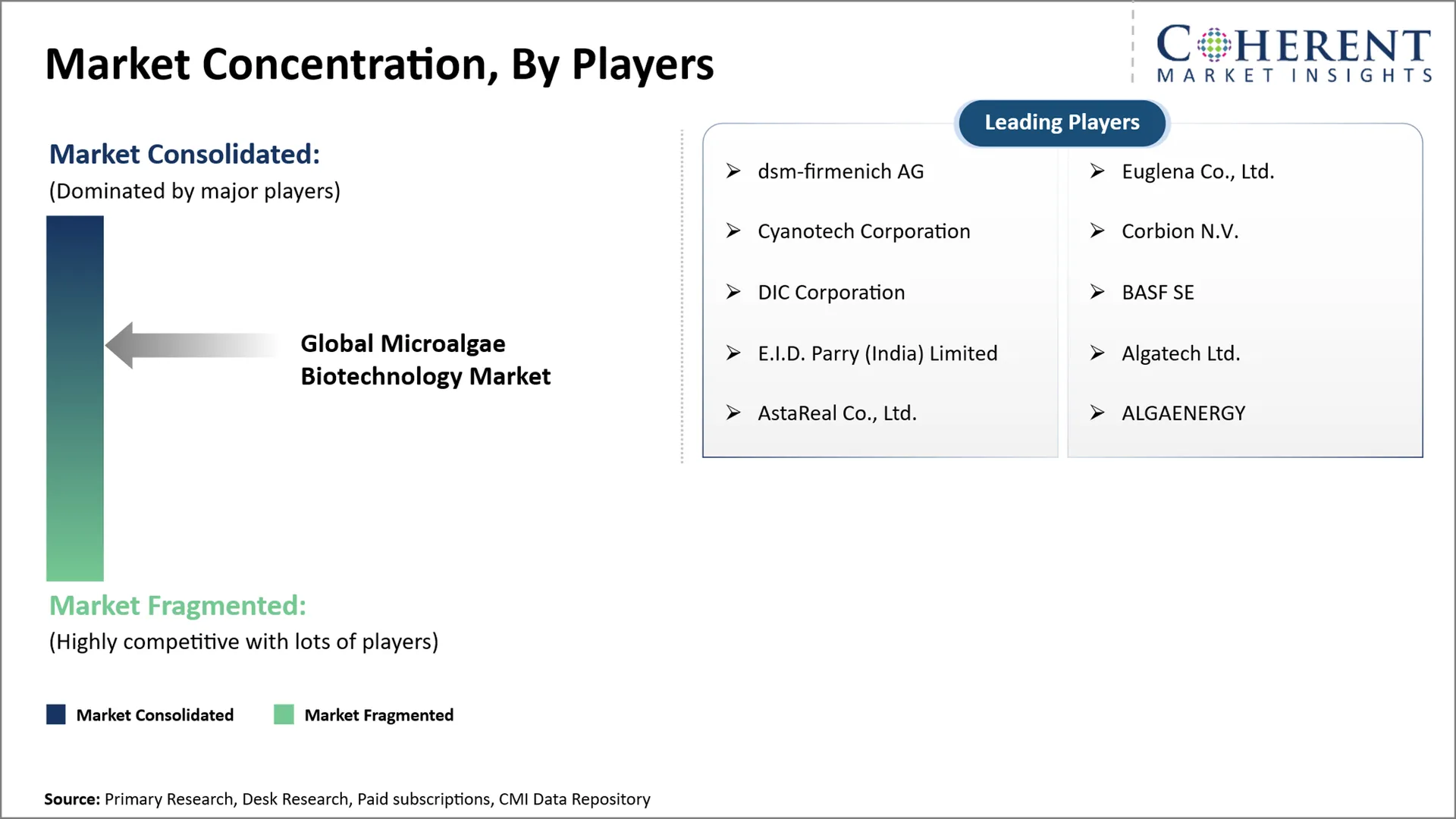
The global microalgae biotechnology market is highly competitive, with competition centered on strain development, cultivation efficiency, production scalability, downstream processing, product quality, and application diversification. Market participants are increasingly investing in advanced cultivation systems, genetic and metabolic engineering, high-value bioactive compounds, and integrated biorefinery technologies to improve productivity and expand commercial applications.
Key focus areas include
- Development and optimization of high-yield microalgae strains
- Expansion of scalable open-pond and photobioreactor cultivation systems
- Improvement of harvesting, extraction, purification, and downstream processing
- Production of high-value compounds such as carotenoids, omega-3 fatty acids, phycobiliproteins, and polysaccharides
- Integration of microalgae cultivation with carbon capture, wastewater treatment, and circular bioeconomy systems
Market Report Scope
Global Microalgae Biotechnology Market Report Coverage | |||
Report Coverage | Details | ||
Base Year | 2025 | Market Size in 2026: | USD 3,850.0 Mn |
Historical Data For: | 2020 To 2024 | Forecast Period: | 2026 To 2033 |
Forecast Period 2026 To 2033 CAGR: | 9.1% | 2033 Value Projection: | USD 7,083.3 Mn |
Geographies covered: |
| ||
Segments covered: |
| ||
Companies covered: | dsm-firmenich AG, Euglena Co., Ltd., Cyanotech Corporation, Corbion N.V., DIC Corporation, BASF SE, E.I.D. Parry (India) Limited, Algatech Ltd., AstaReal Co., Ltd., ALGAENERGY | ||
Growth Drivers: |
| ||
Restraints & Challenges: |
| ||
Analyst Opinion (Expert Opinion)
- In the coming years, the global microalgae biotechnology market will shift from commodity biomass production toward higher-value, application-specific bioproducts. Advances in strain optimization, controlled cultivation, fermentation, downstream processing, and biorefinery integration are expected to improve productivity and enable broader commercialization across food, nutraceuticals, pharmaceuticals, cosmetics, and environmental applications. The industry is also expected to increasingly integrate microalgae cultivation with carbon utilization, wastewater treatment, and resource recovery, creating more diversified and economically viable production models.
- The maximum opportunities will probably exist within spirulina for food & beverages in India, supported by Spirulina's established commercial use, strong nutritional profile, scalability through relatively cost-efficient cultivation, and increasing potential for incorporation into functional foods, protein-rich products, natural ingredients, and beverages. India provides an attractive opportunity for expanding domestic cultivation, processing, value-added formulations, and commercialization across the food and nutrition value chain.
- In order to obtain a competitive advantage, market participants should focus on improving cultivation productivity while moving toward higher-value, differentiated microalgal products rather than relying primarily on bulk biomass sales. Competitive advantage can be strengthened through proprietary strain optimization, automated cultivation and process monitoring, efficient harvesting and extraction, consistent product quality, and integrated production systems that utilize CO₂, nutrients, and waste streams. Developing application-specific products for food, nutraceutical, pharmaceutical, and cosmetic markets can further improve value realization and create stronger commercialization opportunities.
Speak to the analyst
Want personalized insights?
Take the findings above to one of our principal consultants, or have the report rebuilt around the segments, geographies and competitors you actually track.
Market Segmentation
- Microalgae Type Insights (Revenue, USD Mn, 2021 - 2033)
- Spirulina
- Chlorella
- Dunaliella
- Haematococcus
- Nannochloropsis
- Others
- Cultivation Method Insights (Revenue, USD Mn, 2021 - 2033)
- Open Pond Systems
- Photobioreactors
- Fermentation Systems
- End-Use Industry Insights (Revenue, USD Mn, 2021 - 2033)
- Food and Beverages
- Nutraceuticals
- Pharmaceuticals
- Animal Feed and Aquaculture
- Cosmetics and Personal Care
- Biofuels and Energy
- Agriculture
- Others
- Regional Insights (Revenue, USD Mn, 2021 - 2033)
- North America
- U.S.
- Canada
- Latin America
- Brazil
- Argentina
- Mexico
- Rest of Latin America
- Europe
- Germany
- U.K.
- Spain
- France
- Italy
- Russia
- Rest of Europe
- Asia Pacific
- China
- India
- Japan
- Australia
- South Korea
- ASEAN
- Rest of Asia Pacific
- Middle East
- GCC Countries
- Israel
- Rest of Middle East
- Africa
- South Africa
- North Africa
- Central Africa
- North America
Sources
Primary Research Interviews
- Microalgae cultivation and production specialists involved in strain selection, cultivation systems, biomass productivity, and production-scale operations
- Biotechnology and algal research professionals involved in strain optimization, genetic engineering, metabolic engineering, and development of high-value microalgal compounds
- Downstream processing specialists involved in harvesting, dewatering, extraction, purification, and formulation of microalgae-derived products
- Food, nutraceutical, and functional ingredient specialists involved in the development and commercialization of microalgae-based nutritional products
- Biofuel, biorefinery, and sustainability professionals involved in microalgae-based biofuels, carbon utilization, wastewater treatment, and circular bioeconomy applications
Stakeholders
- Microalgae cultivation and biotechnology companies
- Microalgae strain developers and research organizations
- Food, nutraceutical, and functional ingredient manufacturers
- Pharmaceutical and biotechnology companies using microalgae-derived bioactive compounds
- Animal feed and aquaculture producers
- Cosmetics and personal care manufacturers
- Biofuel, biorefinery, and renewable-energy organizations
- Agricultural and environmental biotechnology organizations
- End-use Sectors
- Food and beverages
- Nutraceuticals and dietary supplements
- Pharmaceuticals and biotechnology
- Animal feed and aquaculture
- Cosmetics and personal care
- Biofuels and renewable energy
- Agriculture and biofertilizers
- Carbon capture, wastewater treatment, and environmental applications
- Regulatory & Health Bodies
- U.S. Food and Drug Administration (FDA), U.S.
- U.S. Department of Energy (DOE), U.S.
- U.S. Environmental Protection Agency (EPA), U.S.
- European Food Safety Authority (EFSA), Europe
- European Commission, European Union
- Food and Agriculture Organization of the United Nations (FAO)
- Codex Alimentarius Commission
- Food Standards Agency (FSA), U.K.
- National Institute of Advanced Industrial Science and Technology (AIST), Japan
- Department of Biotechnology (DBT), India
Databases
- FAOSTAT – Algae production, aquaculture, fisheries, food, and agricultural statistics
- U.S. Department of Energy Algal Production Data and Research Resources – Algal biomass, cultivation systems, resource utilization, and bioenergy research
- European Commission EU Aquaculture Knowledge Base – Algae and microalgae production, cultivation, aquaculture, and blue-bioeconomy information
- AlgaeBase – Taxonomic and biodiversity information on algae and microalgae
- NCBI GenBank – Genetic and genomic data for microalgae and related microorganisms
- U.S. National Renewable Energy Laboratory (NREL) Algal Research Data – Microalgae cultivation, biomass, biofuels, and bioproduct research
Journals
- Journal of Applied Phycology
- Journal of Environmental Management
- Biotechnology for Biofuels and Bioproducts
- Applied Microbiology and Biotechnology
- Biotechnology Advances
- Renewable and Sustainable Energy Reviews
- Frontiers in Bioengineering and Biotechnology
Associations
- Algae Biomass Organization (ABO)
- European Algae Biomass Association (EABA)
- International Phycological Society (IPS)
- European Aquaculture Society (EAS)
- World Aquaculture Society (WAS)
- International Society for Applied Phycology (ISAP)
- Bioenergy Europe
- International Biofuels Association
Public Domain Sources
- U.S. Department of Energy (DOE) – Algal cultivation, biomass development, biofuels, resource utilization, and cultivation technologies
- Food and Agriculture Organization of the United Nations (FAO) – Algae cultivation, aquaculture, production, sustainability, and value-chain development
- European Commission – Microalgae production, algae cultivation, blue biotechnology, and sustainable algae industry development
- U.S. Food and Drug Administration (FDA) – Food ingredients, food safety, and regulatory information relevant to microalgae-derived products
- European Food Safety Authority (EFSA) – Novel foods, food safety assessments, and scientific opinions relevant to algae-derived ingredients
- Codex Alimentarius Commission – International food safety, quality, contaminants, and labeling standards
- Department of Biotechnology (DBT), India – Biotechnology research, biomanufacturing, algae-based biotechnology, and bioeconomy initiatives
- National Renewable Energy Laboratory (NREL) – Algal biomass, cultivation, biofuels, and bioproduct research
- National Center for Biotechnology Information (NCBI) – Microalgae genomic and molecular biology data
Proprietary Elements
- CMI Data Analytics Tool
- Proprietary CMI Existing Repository of information for last 10 years.
Get access to 250+ pages report
Every segment, forecast, competitor profile and data table behind the analysis above — available for instant download.
- ESOMAR Member
- ISO 9001:2015 Certified
- D-U-N-S Registered
- GDPR & CCPA Compliant
Missing comfort of reading report in your local language? Find your preferred language:
Frequently Asked Questions
The global microalgae biotechnology market is estimated to be valued at USD 3,850.0 Mn in 2026 and is expected to reach USD 7,083.3 Mn by 2033.
Spirulina dominates due to its high nutritional value, established commercial applications, and widespread use in food, nutraceutical, and functional food products.
Microalgae biotechnology is the use of microalgae to produce valuable products and biomolecules for applications across food, nutraceuticals, pharmaceuticals, cosmetics, feed, and biofuels.
The CAGR of global microalgae biotechnology market is projected to be 9.1% from 2026 to 2033.
Rising demand for algae-derived nutraceuticals and functional food ingredients, and growing adoption of microalgae-based biofuels and sustainable biomaterials are the major factors driving the growth of the global microalgae biotechnology market.
High cultivation and downstream processing costs, and complex harvesting and extraction processes affecting production efficiency are the major factors hampering the growth of the global microalgae biotechnology market.
In terms of cultivation method, open pond systems are estimated to dominate the market revenue share in 2026.