

Global Functional Food Market Size and Forecast – 2026-2033
According to Coherent Market Insights, the global functional food market is estimated to be valued at USD 249.94 Bn in 2026 and is expected to reach USD 403.98 Bn by 2033, expanding at a compound annual growth rate (CAGR) of 4.6% from 2026 to 2033.
Key Takeaways of the Functional Food Market
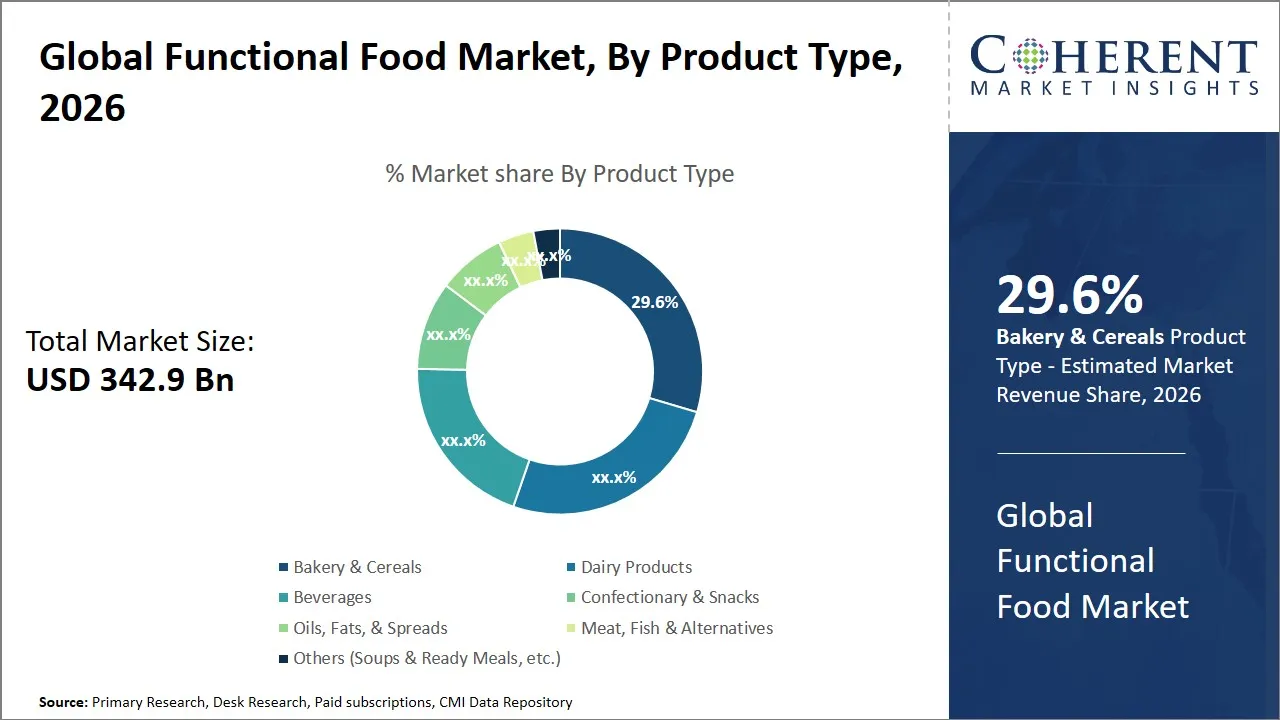
- The bakery & cereals segment is expected to hold 30.6% of the market share in 2026.
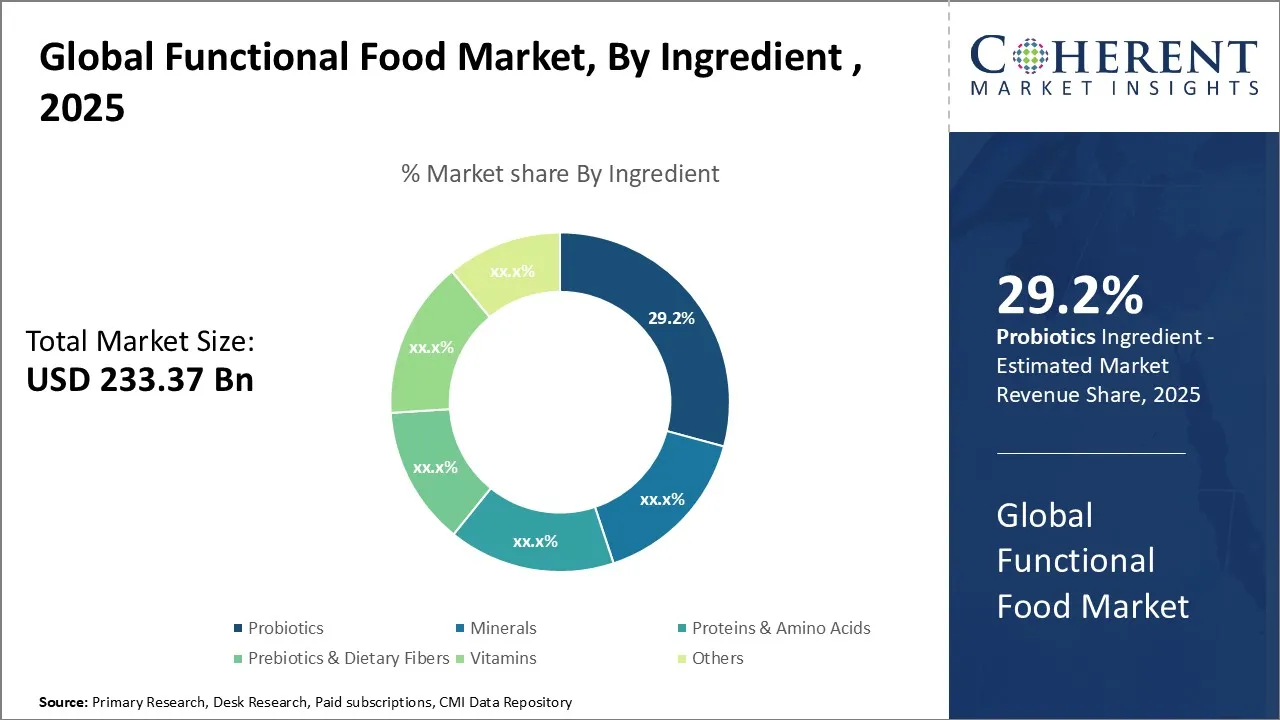
- Carotenoids segments is estimated to capture 25.1% of the global functional food market share in 2026.
- The sports nutrition segment is projected to hold 31.7% of the functional food market share in 2026.
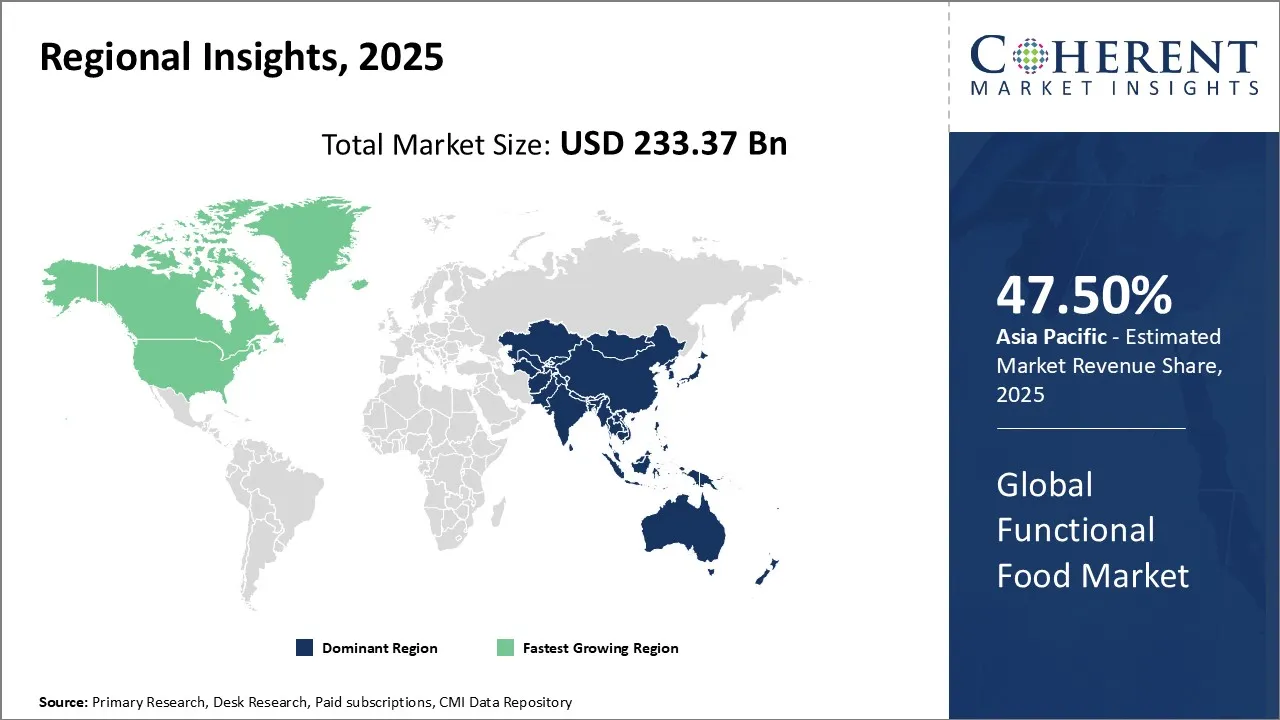
- The Asia Pacific region is expected to lead the functional food market with a 47.5% share in 2026.
- North America is expected to see the fastest market growth, contributing a 16.3% share in 2026.
Market Overview
- Current market trends indicate a strong shift towards natural and organic functional foods, fueled by consumer demand for clean-label and sustainably sourced ingredients.
- Additionally, the integration of probiotics, prebiotics, and plant-based functional proteins into products aligns with rising health-conscious lifestyles and gut health awareness.
- Personalization of functional foods through digital health insights and e-commerce proliferation are also gaining traction, enabling targeted nutrition solutions.
- Overall, these trends are set to redefine the functional food landscape and sustain robust market growth over the forecast period.
Current Events and Its Impacts on the Functional Food Market
Current Events | Description and its Impact |
Shift in Consumer Demand Toward Holistic Wellness Products |
|
Regulatory Enforcement and Safety Policy Shifts |
|
Segmental Insights
- Current Industry Events of 2026
- Market Size Estimation
- Regional Breakdown
- Competitive Landscape
- Customer Intelligence
- Segmental Analysis
- Pricing Analysis
- Key Market Drivers, Challenges & Future Trends
- Customized Insights Section
Why is the Bakery & Cereals Segment Leading the Global Functional Food Market in 2026?
Bakery & cereals segment is expected to hold 30.6% of the market share in 2026, due to rising demand by the consumers for easy and healthy food products. Bakery and cereal products are habitual parts of the diet of the different populations in the world and therefore their functional differences are naturally placed to gain attention of the consumers. Adding functional ingredients to bakery and cereal products enables manufacturers to increase the nutritional content of foods that people consume daily as the health conscious lifestyles continue to rise. Consumers are proactively demanding foods that have more than just nutritional benefit like better digestion, heart health, brain work and long-lasting energy delivery.
A notable instance is the launch of General Mills' "Cheerios Heart Health" cereal in 2023, which was fortified with soluble fiber to promote heart health. This cereal has successfully appealed to health-conscious consumers looking for convenient, nutritious breakfast options that go beyond basic food value, aligning with the broader trends in the functional food sector.
Why is Carotenoid-Enriched Functional Food Gaining Popularity in the Market?
Carotenoids segment is projected to contribute 25.1% of the global functional food market share in 2026, due to their well-documented health benefits and growing consumer awareness about natural antioxidants. Carotenoids have also been known to lower oxidative stress, promote immune performance, and enhance the health of the eye, including such compounds as beta-carotene, lycopene, lutein, and zeaxanthin. The demand on carotenoid-enriched functional foods is only getting faster as scientific studies continue to authenticate their protective properties in the prevention of chronic diseases.
The move towards natural colorants and the supplementation also contributes to the carotenoid absorption. In contrast to synthetic additives, carotenoids can be used as dual purpose additives as they can serve as a nutrient enhancer in addition to a natural pigment to enhance the appeal of food products to consumers. This is a two-fold benefit that has made carotenoids very popular among manufacturers seeking to address clean label and natural ingredients demands. Vegetarians and people pursuing the idea of plant-based cuisine and holistic health are likely to be attracted to the carotenoid-based food, and this tendency is manifested in the fortification of various food matrices with a combination of these substances.
Why is the Sports Nutrition Segment Dominating the Functional Food Market?
Sports nutrition segment is anticipated to hold 31.7% of the global functional food market share in 2026, due to a surge in active lifestyles and growing emphasis on physical fitness worldwide. The popularity of gym culture, athletic activities, and sports in general has, tremendously, led to greater demand in the use of nutritional products that can be used to boost performance, endurance, and recovery. Sports nutrition functional foods often include protein enrichment, electrolytes, carbohydrates, amino acids, all designed to meet the optimum energy metabolism and muscle repair requirements.
Amateur and professional athletes consume sports-oriented functional foods and beverages due to increasing awareness of the need to customize their nutrition and optimize their performance. These products are not just desirable to the high level athletes, but also to the rising group of health conscious people who have included exercise and sports as part of their daily activity. In addition, younger generations, such as millennials and Gen z prefer wellness and preventive health care, which is why they consume conveniently and nutrient-rich functional items aimed at active lifestyles.
APAC: Regulatory Themes & Market Access Implications
Parameter | India | China | Thailand |
Regulator + Core framework | FSSAI Functional Food Regs, 2016 (Compendium) | SAMR regulates Health Foods as a district regime (Blue Hat) | Thai FDA/MOPH with targeted notifications for claims & labeling |
Pre-market route (What triggers extra approval) | Novel/non-specified ingredients need prior approval route (non-specified foods/ingredients) | Registration OR filling required before “Blue Hat” label use: path depends on ingredient/function scope | Annex claim statements: usable without submitting documents (fast-track): other claims: Submit assessment to Thai FDA registered bodies |
Regional Insights
Asia Pacific Functional Food Market Analysis and Trends
The Asia Pacific region is projected to lead the market with a 47.5% share in 2026, owing to the fact that it is rapidly urbanizing, continues to grow its disposable incomes, and more people in the region are increasingly health conscious. The ecosystem of the market in China, India, Japan and South Korea is changing as it invests a lot in the food sciences and nutraceutical research.
For instance, Patanjali Ayurved, a leading Indian brand, has successfully launched a range of functional foods, such as honey fortified with herbs like tulsi (holy basil) and ashwagandha, which are known for their stress-reducing and immunity-boosting properties.
North America Functional Food Market Analysis and Trends
The North America region is expected to exhibit the fastest growth in the market contributing 15.3% share in 2026, which is as a result of a number of interconnected factors. The market has a well-established market ecosystem of a high level of consumer awareness of health and wellness, good industry research and development facilities, and a high level of presence in the industry. The United States and Canada have government policies that actively encourage the use of innovation in food technology and the fortification of foods with health-benefiting substances.
Approaches of administrative bodies like FDA have simplified product approvals, driving market growth. Existence of major multinational companies like General Mills, PepsiCo and Danone increases the leadership of the region due to constant innovation of the company and large distribution channels. North America is also at an advantage of the trade dynamics with a strong aspect of import-export which makes them reach a wide variety of raw materials and diversify consumer choice.
Global Functional Food Market Outlook for Key Countries
Why is the U.S. Functional Food Market a Leader in Innovation and Consumer Demand?
U.S. functional food market is a complex market with consumers who are highly educated and perceive high quality functional foods that are scientifically proven. The leading companies such as General Mills, Kelloggs and Danone are able to take advantage of their strong research and development and marketing capabilities to launch innovative products, such as probiotics, fortified cereals, and health beverages. The retail infrastructure is good and product penetration is facilitated by regulatory clarity. The attempts of these companies to comply with changing dietary habits like vegetarian and clean-label products reinforce the U.S. dominance in this market.
Why is China Becoming a Key Player in the Functional Food Market?
The market of functional foods in China is booming with a rising population of the middle classes and increasing attention to preventive medicine. Domestic firms, such as BY-HEALTH and Angel Yeast Co., combine the idea of traditional Chinese medicine with modern technology in order to create culturally relevant products. Simultaneously, foreign companies such as Nestle and Amway base on proactive partnerships with local companies to hasten the market penetration and localization. The health food standards and digital retail promoted by the governments also increase consumer access and product diversification even more.
Japan Functional Food Market Trends
Japan has been on the forefront of the functional food industry with well-established regulatory policies like the Foods for Specified Health Uses (FOSHU) program, which gives the functional food products credibility and confidence of customers. Established companies like Yakult Honsha and Meiji Holdings pioneer novel probiotic and dietary supplement products, underpinning strong consumer loyalty. Japan’s market emphasizes quality, innovation, and safety, which sets benchmarks for the region and influences neighboring markets.
India Functional Food Market Trends
The rising demand for lifestyle-related health problems and the renewed interest in the traditional wellness systems such as Ayurveda are the two factors that are leading to the growth of the India functional food market. Industries like Dabur, Patanjali Ayurved and amway India are focusing on natural and herbal functional foods which are among the urban and rural consumers. Nutrition and health government programs coupled with the increase in retail and e-commerce platforms offer favorable environments to market growth. This is also done through trade facilitation and joint ventures with international businesses to promote product innovation and market penetration.
Germany Functional Food Market Trends
Germany is a crucial market center in Europe where the functional food market operates and where a high regulatory environment is in place to guarantee the effectiveness and safety of products. Such companies as Bayer and Nestle Health Science invest in their research and development and can be combined with academic institutions in order to generate innovation. Market products are shaped by consumer preference on high quality, organic and sustainable products. The fact that Germanys is a key trade and distribution hub in Europe enhances the spread of functional foods in the continent.
Market Players, Key Development, and Competitive Intelligence
Key Developments
- In February 2026, Olympic and World Boxing Champion, Ms. Katie Taylor partnered with Irish wellness brand, SiSú, as the company enters its next phase of growth and expands beyond beverages with its new Prebiotic Overnight Oats range
- In September 2023, Yoplait, a dairy product manufacturing company, expanded its product offering by launching high protein yogurt products under its SKYR Energy brand. The new product contains real fruit pieces, vitamin B6 and vitamin D, and is available in two different flavors – Strawberry & Blackcurrant and Mango & Passion fruit.
- In May 2023, Javo Beverage, one of the emerging beverage companies, introduced its new all-natural functional energy lemonades and flavored teas for food service operators. The company aimed to meet consumer demand for functional beverage products through this launch.
- In April 2023, Hangobi, a U.S.-based beverage manufacturer, launched fortified beverages in three basic flavors: Wake, Essential, and Calm. The company collaborates with several distributors, including KeHE, UNFI Supervalu, and C&S Wholesale, to distribute the products across New York.
Top Strategies Followed by Global Functional Food Market Players
Player Type | Strategic Focus | Example |
Established Market Leaders | Heavy investment in R&D and innovation | For instance, Nestle Health Science has gone the extra mile in personalized nutrition with its products, such as Peptamen, a nutritionally-enhanced drink to boost the immune system of persons with gastrointestinal complications, and Boost, a meal replacement drink to aid immune system. |
Mid-Level Players | Balance cost and sustainability | For example, Abbotts Ensure offers good nutritional shakes that are ready-to-drink, containing added nutrients and minerals, and serves both elderly and those with dietary limitations. The company provides products that have health benefits like enhancing the immune system or digestion but at non-premium prices. |
Small-Scale Players | Niche specialization & innovative variants | For example, Kuli is a company dedicated to moringa-based products, and Health Warrior focuses on plant-based products with some of the most innovative ingredients and unique product formulations. These companies frequently focus on certain lifestyle health trends, including plant-based diets, superfoods, or adaptogens to offer custom solutions to a specific group of consumers. |
Market Report Scope
Functional Food Market Report Coverage
| Report Coverage | Details | ||
|---|---|---|---|
| Base Year: | 2025 | Market Size in 2026: | USD 249.94 Bn |
| Historical Data for: | 2020 To 2024 | Forecast Period: | 2026 To 2033 |
| Forecast Period 2026 to 2033 CAGR: | 4.6% | 2033 Value Projection: | USD 403.98 Bn |
| Geographies covered: |
| ||
| Segments covered: |
| ||
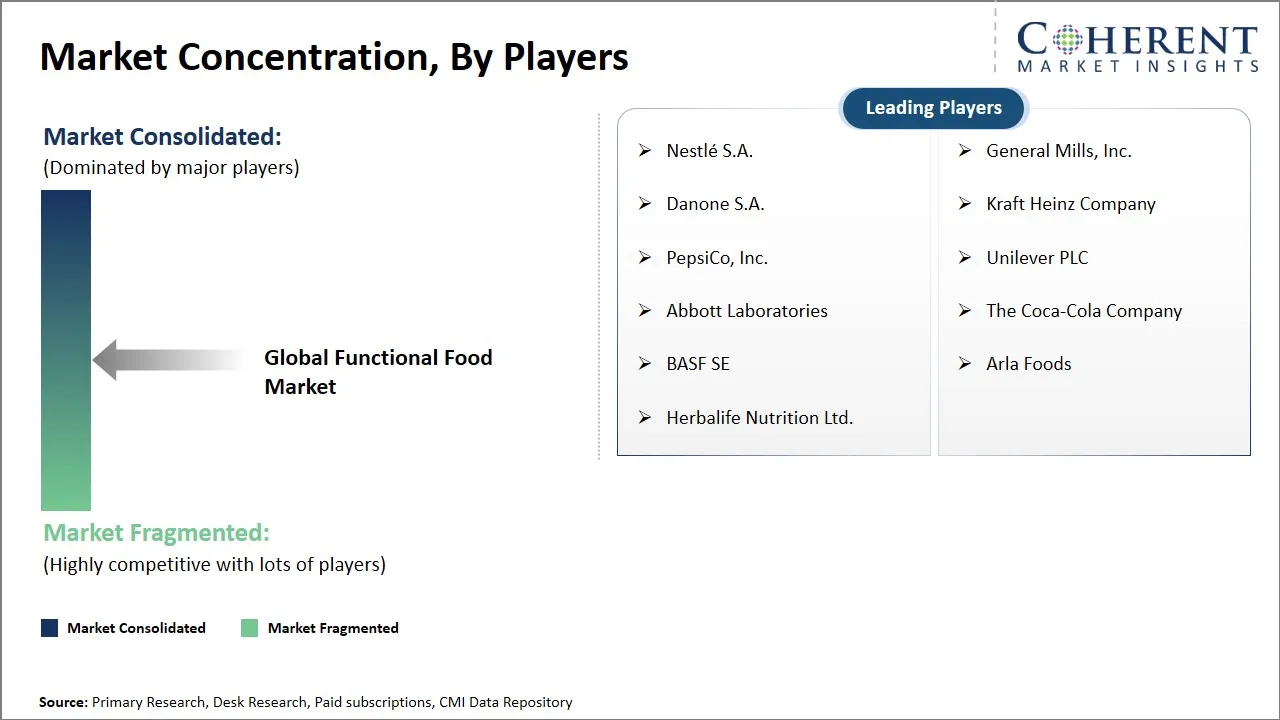
| Companies covered: | Nestlé S.A., General Mills, Inc., Danone S.A., Kraft Heinz Company, PepsiCo, Inc., Unilever PLC, Abbott Laboratories, The Coca-Cola Company, BASF SE, Arla Foods, and Herbalife Nutrition Ltd | ||
| Growth Drivers: |
| ||
| Restraints & Challenges: |
| ||
Functional Food Market Dynamics
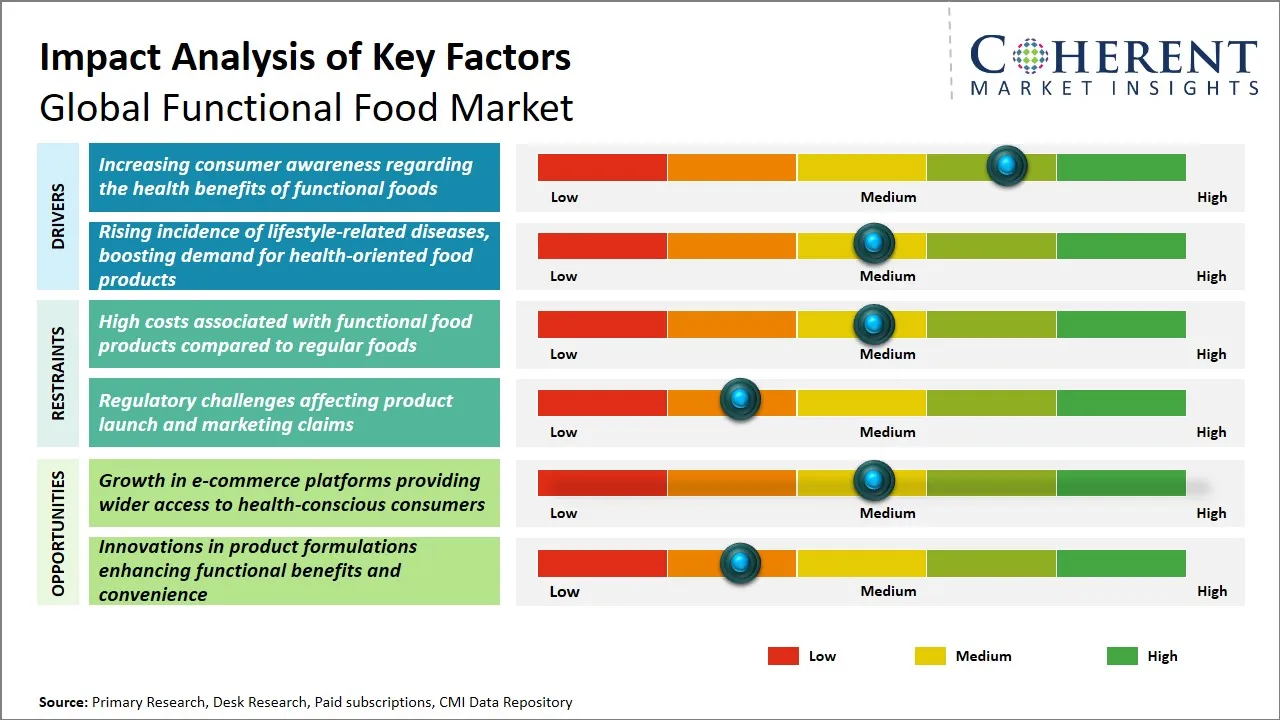
Functional Food Market Driver - Increasing Consumer Awareness Regarding the Health Benefits of Functional Foods
The rising consumer sensitivity regarding the beneficial effect of diet towards the general health has greatly catalyzed the demand of the functional foods in the international market. As the problems with lifestyle-related ailments like obesity, diabetes, cardiovascular diseases, and digestive disorders are growing, the consumers are increasingly aware of the nutritional content of their food intake beyond the basic sustenance. The trend is keeping people actively seeking out foods that are enriched with vitamins, minerals, probiotics, antioxidants, and other bioactive substances that induce particular health benefits, including boosted immune systems, better digestive systems and improved metabolic processes. More so, this trend has been exacerbated by the extensive spread of health-related information via digital platforms, nutritionists, and wellness influencers, who have informed a wider audience on the use of functional foods as a preventive healthcare measure and health promotion.
For example, the growth in probiotic demands has influenced the mainstream brands such as Yakult and Danone to diversify product ranges to meet increasing gut health demand. Moreover, there is the current rise in popularity of fortified commodities e.g. Nestles Milo and Coca-Colas Smartwater due to the added vitamins and electrolytes that are responding to the demand of functional beverages. Consumption of products fortified with omega-3 including fish oils and fortified eggs has also increased as awareness of its cardiovascular benefit increases.
(Source: https://www.danone.com/)
Functional Food Market Opportunity - Expansion of E-Commerce Platforms Enhancing Market Accessibility
The high rate of e-commerce systems development is an important chance to the global functional food market as it offers a wide and more effective reach to a wide range of health-conscious customers. With the growing impact of digitalization across the globe, the online shopping method has gained more popularity among consumers due to the convenience, selection, and the possibility of providing them with a highly personalized experience. E-commerce can help functional food companies overcome geographical restrictions and access consumers in distant or underserved regions who might otherwise have a difficult time accessing specialized health products through conventional retailers.
An example Amazon and Alibaba that are currently leading the e-commerce market and sell a variety of functional foods, including protein powders, superfood powders, and snacks with vitamins. The availability of health-oriented foods that would otherwise be unavailable to consumers in their local supermarkets has greatly increased thanks to the presence of Amazon platform that targets global markets.
Analyst Opinion (Expert Opinion)
- The market of functional foods has been growing strongly, driven by the increased health awareness and the need to purchase products with extra health benefits on top of the nutritional value. The insights of Global Functional Foods Summit (2023) and the Nutrition & Health Conference (2022) have shed light on the great innovations made by companies, such as Nestle and Danone, to create fortified foods that are enriched with probiotics, omega-3s, and vitamins.
- The recent introduction of protein-enriched snacks by Nestle shows the effort of the industries to respond to the needs of consumers to convenient and healthy products. Conferences highlighted that there is an increasing trend toward efficiency in ingredient sourcing and the need to build trust with consumers in terms of health claims.
- But such issues as regulatory investigation and the necessity of extensive clinical trials to prove the health benefits were often cited as obstacles to market growth. It is possible that the companies involved in effective marketing through educating consumers by concentrating on the development of evidence-based products through R&D will reach the competitive advantage. As soon as the functional food market will be developed, its further development will be based on its capacity to constantly innovate and keep in tune with the changing consumer needs regarding health, wellness, and transparency.
Speak to the analyst
Want personalized insights?
Take the findings above to one of our principal consultants, or have the report rebuilt around the segments, geographies and competitors you actually track.
Market Segmentation
- Product Type Insights (Revenue, USD Bn, 2022 - 2033)
- Bakery & Cereals
- Dairy Products
- Beverages
- Confectionary & Snacks
- Oils, Fats, & Spreads
- Meat, Fish & Alternatives
- Others (Soups & Ready Meals, etc.)
- Ingredient Insights (Revenue, USD Bn, 2022 - 2033)
- Carotenoids
- Dietary Fibers
- Fatty Acids
- Minerals
- Prebiotics & Probiotics
- Vitamins
- Others
- Application Insights (Revenue, USD Bn, 2022 - 2033)
- Sports Nutrition
- Weight Management
- Immunity
- Digestive Health
- Clinical Nutrition
- Cardio Health
- Others
- Regional Insights (Revenue, USD Bn, 2022 - 2033)
- North America
- U.S.
- Canada
- Latin America
- Brazil
- Argentina
- Mexico
- Rest of Latin America
- Europe
- Germany
- U.K.
- Spain
- France
- Italy
- Russia
- Rest of Europe
- Asia Pacific
- China
- India
- Japan
- Australia
- South Korea
- ASEAN
- Rest of Asia Pacific
- Middle East
- GCC Countries
- Israel
- Rest of Middle East
- Africa
- South Africa
- North Africa
- Central Africa
- North America
- Key Players Insights (Revenue, USD Bn, 2021 - 2033)
- Nestlé S.A.
- General Mills, Inc.
- Danone S.A.
- Kraft Heinz Company
- PepsiCo, Inc.
- Unilever PLC
- Abbott Laboratories
- The Coca-Cola Company
- BASF SE
- Arla Foods
- Herbalife Nutrition Ltd.
Sources
Primary Research Interviews
- CEO – Leading Functional Food Producer (e.g., Nestlé or Danone equivalent)
- Supply Chain Director – Major Functional Ingredients Distributor
- Production Lead – Probiotics and Nutraceuticals Manufacturer
- Sustainability Officer – Functional Food Certification Authority (e.g., ASFFBC)
Stakeholders
- Manufacturers
- End-use Sectors
- Dairy and Beverages (Probiotic Yogurts, Fortified Drinks)
- Bakery and Snacks (High-Protein, Fiber-Enriched)
- Dietary Supplements and Nutraceuticals
- Regulatory & Certification Bodies (e.g., FDA for health claims, EFSA for novel foods, FSSAI in India)
- E-commerce Platforms and Retailers (Amazon, Alibaba, Supermarkets/Hypermarkets, Sigma-Aldrich equivalents)
- Technology Integration Players: Bioactive ingredient developers and fortification specialists
Databases
- UN Comtrade Database (HS codes for food preparations, vitamins, probiotics)
- India Import Export (EXIM) Database (functional ingredients imports)
- USDA/FAO Food Balance Sheets (functional food components like omega-3s)
- Eurostat Trade Statistics for Food Products
Magazines
- New Food Magazine – Trends in functional ingredients and innovation
- Choices Magazine (AAEA) – Functional food market dynamics
- Food Navigator – Functional food regulations and launches
- Nutraceuticals World – Bioactives and market growth
- Beverage Industry – Fortified beverages trends
Journals
- Journal of Functional Foods – Bioactive compounds and health effects
- Functional Food Science – Mechanisms and applications
- Trends in Food Science & Technology – Sustainable functional foods
- Nutrients – Clinical trials on functional ingredients
- Foods – Processing and sustainability
Newspapers
- The Wall Street Journal – Global nutraceutical demand
- Business Standard (India) – Functional food imports and Asia growth
- Reuters – Supply chain disruptions in ingredients
- Food Dive – Market expansions and consumer trends
- NutraIngredients – Price volatility in probiotics and fortificants
Associations
- Academic Society for Functional Foods and Bioactive Compounds (ASFFBC)
- International Functional Foods Association (IFFA)
- Food Production Solutions Association (FPSA)
- Institute of Food Technologists (IFT) – Functional foods division
- European Food Safety Authority (EFSA) stakeholder groups
- International Life Sciences Institute (ILSI) – Nutrition and functional foods
Public Domain Sources
- FDA – Guidelines for health claims on functional foods
- EFSA – Novel foods and health claims approvals
- WHO/FAO – Codex standards for food fortification
- USDA – Functional foods research summaries
- OECD – Food systems and sustainability reports
Proprietary Elements
- CMI Data Analytics Tool, Proprietary CMI Existing Repository of information for last 8 years.
Get access to 250+ pages report
Every segment, forecast, competitor profile and data table behind the analysis above — available for instant download.
- ESOMAR Member
- ISO 9001:2015 Certified
- D-U-N-S Registered
- GDPR & CCPA Compliant
Missing comfort of reading report in your local language? Find your preferred language:
Transform your Strategy with Exclusive Trending Reports
Frequently Asked Questions
The global functional food market is estimated to be valued at USD 249.94 Bn in 2026 and is expected to reach USD 403.98 Bn by 2033.
Foods that provide health benefits beyond basic nutrition by delivering added nutrients or bioactive compounds (e.g., probiotics, prebiotics, omega‑3s, plant extracts).
The CAGR of global functional food market is projected to be 4.6% from 2026 to 2033.
Novel ingredients, advanced delivery formats, and tech-enabled personalization are shaping the market.
Increasing consumer awareness regarding the health benefits of functional foods and rising incidence of lifestyle-related diseases, boosting demand for health-oriented food products are the major factors driving the growth of the global functional food market.
High costs associated with functional food products compared to regular foods and regulatory challenges affecting product launch and marketing claims are the major factors hampering the growth of the global functional food market.
In terms of product type, bakery & cereals are estimated to dominate the market revenue share in 2026.