

Probiotics Market Size and Forecast — 2026-2033
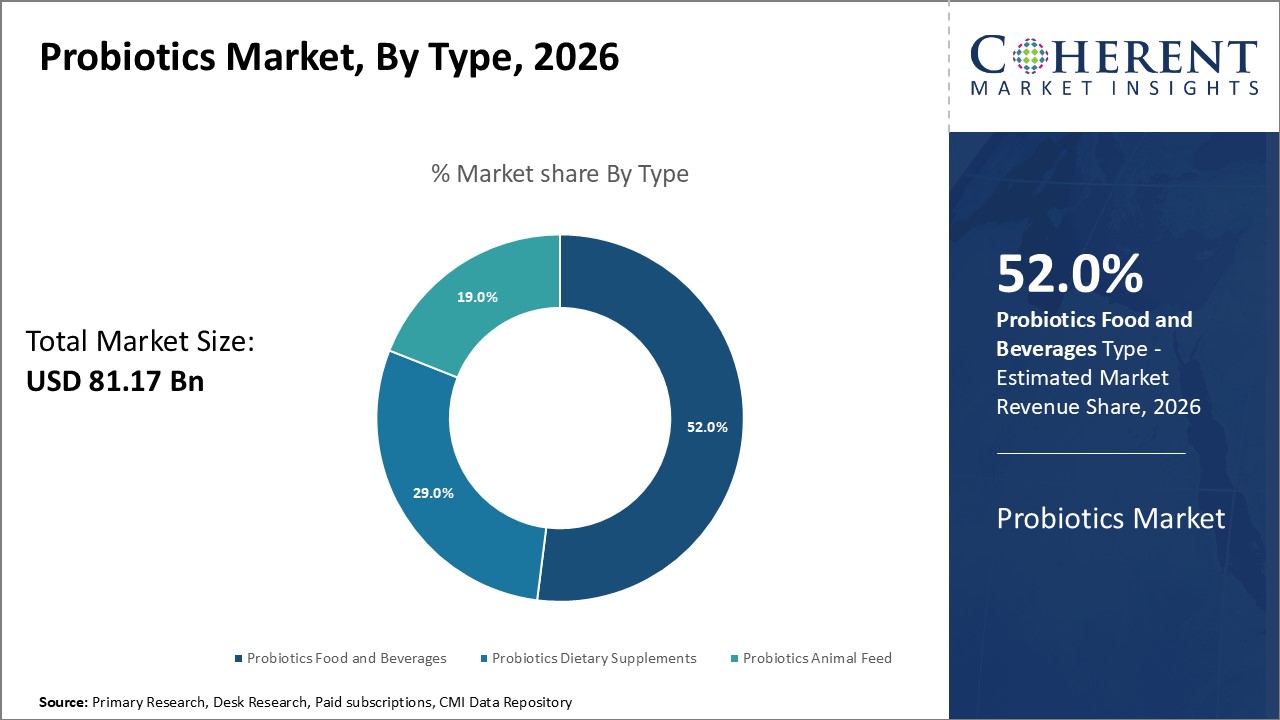
Probiotics Market is estimated to be valued at USD 81.17 Bn in 2026 and is expected to reach USD 143.68 Bn in 2033, exhibiting a compound annual growth rate (CAGR) of 8.5% from 2026 to 2033. Probiotics are living microorganisms that have been shown to improve health when taken or administered in the body. They can be found in yoghurt and other fermented food items, as well as nutritional supplements and cosmetics. Probiotics are created by first selecting the strain of microbe, then growing it on medium, fermenting it, concentrating it in a centrifuge, and finally combining it into a powder. The International Scientific Association for Probiotics and Prebiotics defines "probiotics" as "live microorganisms that confer a health benefit on the host when administered in adequate amounts." Probiotics can replenish the digestive system with beneficial microorganisms while neutralizing toxic ones. Beneficial microorganisms appropriately ferment meals and boost health.
Consumers choose high-nutritional-value products to junk or processed foods. In the United States, sales of the product have increased significantly as consumers seek nutritional boosters to stay healthy and immune. Probiotics in various forms have been available in pharmacies and retail stores since then. Fear of infection has led in the adoption of healthy lifestyles, creating demand for the sector. Due to the risk of viral infection across all age groups, manufacturers are developing probiotics that can have positive results for everyone.
Probiotics Market: Growth Drivers
Growth in the consumption of functional and dietary supplements that have probiotics
Increasing consumption of functional and dietary supplements that have probiotics is expected to foster the market growth. Yogurt products are gaining huge demand for which manufacturer are continuously introducing a variety of products, thereby fueling the market growth of probiotics. Numerous scientific evidences suggest the use of probiotics in diet as a technique of obtaining health advantages. The greatest proven effects in humans are for bowel diseases such as lactose intolerance, antibiotic-associated diarrhoea, and infectious allergies and a vast number of evidences about their potential significance in numerous other ailments are still developing. For instance, in March 2023, Nutrazee, an India-based startup, launched Nutrazee Probiotic Gummies for digestive and immune health. It contains prebiotic fibers to nourish the good bacteria in the gut.
Growth in the food and beverages industry
Growth in the food and beverages industry due to increasing consumer spending and favorable government support is expected to serve as one of the major factors driving the market growth. The growing demand for fortified food among health-conscious consumers is again expected to propel the market growth of the probiotics market. The rising importance of food safety is further projected to bolster the market growth over the forecast timeframe. For instance, according to Invest India, a National Investment Promotion and Facilitation Agency, India’s food processing sector is one of the largest in the world and its output is expected to reach $535 Bn by 2026-26.
- Current Industry Events of 2026
- Market Size Estimation
- Regional Breakdown
- Competitive Landscape
- Customer Intelligence
- Segmental Analysis
- Pricing Analysis
- Key Market Drivers, Challenges & Future Trends
- Customized Insights Section
Probiotics Market Report Coverage
| Report Coverage | Details | ||
|---|---|---|---|
| Base Year: | 2025 | Market Size in 2026: | USD 81.17 Bn |
| Historical Data for: | 2020 To 2024 | Forecast Period: | 2026 To 2033 |
| Forecast Period 2026 to 2033 CAGR: | 8.5% | 2033 Value Projection: | USD 143.68 Bn |
| Geographies covered: |
| ||
| Segments covered: |
| ||
| Companies covered: | BioGaia AB, Chr. Hansen, Groupe Danone S.A., Nestle S.A., PROBI AB, Lifeway Foods, Inc., Mother Dairy, General Mills, Inc., China-Biotics, Inc., Yakult Honsha Co., Ltd., and E. I. du Pont de Nemours and Company | ||
| Growth Drivers: |
| ||
| Restraints & Challenges: |
| ||
Probiotics Market: Market Restraints
Lack of awareness regarding the health benefits of probiotics among consumers
Consumer awareness of healthier eating habits and the influence of nutrition on health has increased the development and marketing of foods with health claims. As defined by the International Scientific Association for Probiotics and Prebiotics, prebiotics are substrates that are preferentially used by host bacteria to offer a health advantage. Before being authorized and put on the market, health claims related to food items are evaluated in the European Union and must be substantiated by rigorous scientific evidence. The different players involved impact consumers' perceptions of this problem. The current study sought to investigate consumers' perceptions and interests as well as measure awareness of the prebiotic concept in Romania. The degree of consumer interest was quantified by using the web-based data tool Google Trends, and a questionnaire-based investigation was designed. Hence, the lack of knowledge about probiotics among consumer can hamper the Probiotics Market. Never the less the people are getting aware about probiotics hence it is anticipated that the demand for probiotics market will grow in future.
Lack of Rules and Regulations
Lack of adequate regulations in the probiotics business is projected to limit the market growth. Moreover, probiotics require suitable storage facility as they are extremely sensitive organisms that may quickly be weakened by various environmental variables. Most of the probiotics are unstable at room temperature. All these reasons are hindering the market expansion. Lack of understanding regarding the health advantages of probiotics among consumers of emerging areas is projected to impede the market growth of probiotics market.
Probiotics Market: Regional Analysis
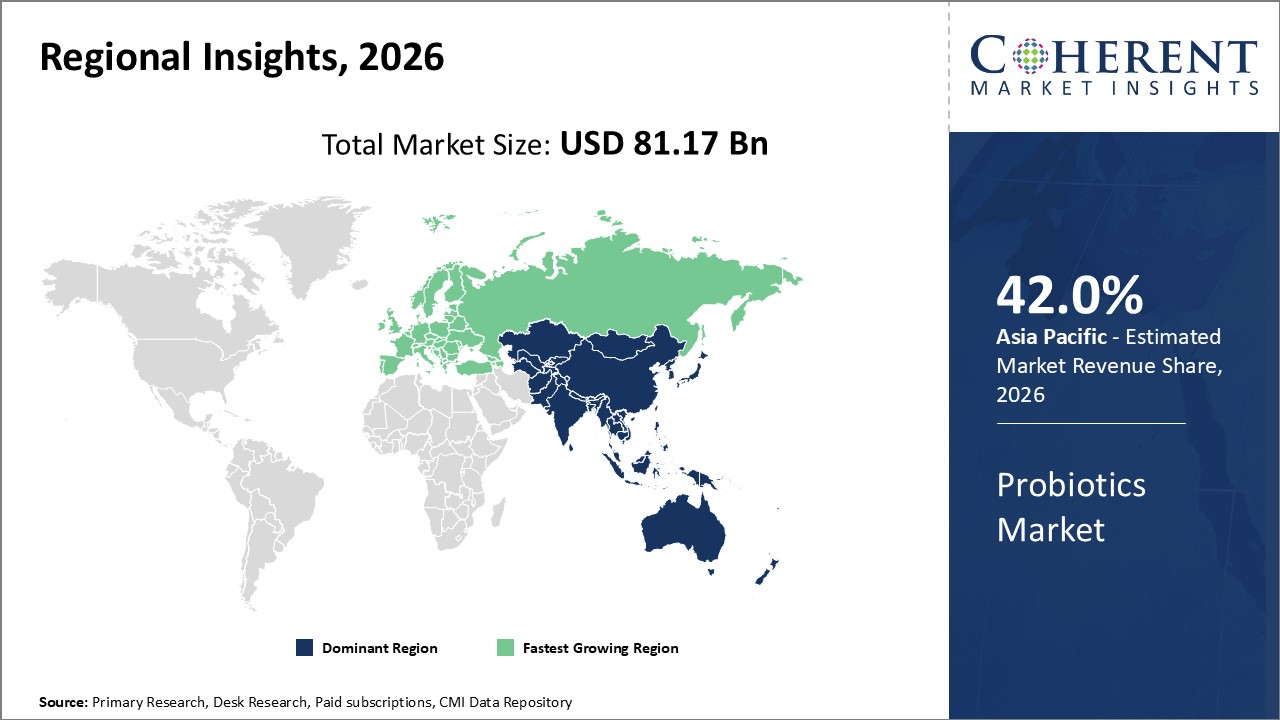
On the basis of region in the global probiotics market in 2026 Asia Pacific held around 42% covered by Asia Pacific, followed by Europe, North America respectively. The expanding number of health-conscious consumers along with the growing need for gut health products, is the primary driver of probiotic supplement demand in North America. To meet the increased demand, manufacturers in the region are developing novel supplements. Furthermore, numerous producers provide customized probiotic supplements based on the demands of their customers. Consumers value gut health and are aware of the health advantages of probiotic supplements. The Middle East and Africa are developing as potentially lucrative markets for probiotic dietary supplements. The region is experiencing a huge demographic transition, with an increasingly young and working population that values health and well-being. This younger group prioritizes spending on things that improve their health and well-being.
Figure 1. Global Probiotics Market Value Share (%), By Region, 2026
Probiotics Market: Segmentation
On the basis of ingredients, lactobacillus dominated the global probiotics market in 2026 with around 66% of market share in terms of revenue, followed by streptococcus and bifidobacterium. Lactobacillus acidophilus (L. acidophilus) is a probiotic ("good" bacterium) present in the human stomach, mouth, and vagina, as well as in some foods. "Good" bacteria, such as L. acidophilus, can aid in the breakdown of food, the absorption of nutrients, and the defence against "bad" organisms that may cause disease. Streptococcus salivarius, an oral commensal bacteria, has been demonstrated to release antimicrobial peptides and can be employed as a probiotic. Bifidobacterium is a Gram-positive, anaerobic probiotic actinobacterium that is typically found in the intestines of babies and the uterine area of pregnant women.
Figure 2. Global Probiotics Market Value Share (%), By Ingredients, 2026
Probiotics Market: Key Developments
- On April 27, 2023, BioGaia a Swedish biotechnology company that develops, markets and sells a range of probiotic products has launched a probiotic food supplement for that can be used women before and during pregnancy. This supplement contains good bacteria, minerals, and vitamins that are useful before and during pregnancy.
- On March 31, 2023, BioGaia launched its new cosmetic probiotic product. The product is called probiotic skin ointment for infants and children.
- On July 5, 2022, Groupe Danone S.A a French multinational food-products corporation based in Paris launched dairy- and plant-blend baby formula which contains 61% plant-based and 41% dairy-based protein - combining nutrients found in plants and breast milk
- On August 31, 2021, Hansen the Company is a supplier of bacteria cultures, probiotics, enzymes and human milk oligosaccharides.has launched science-based probiotics for pets. This can be used in pet foods and supplements, empowering every pet’s life stage with good bacteria.
Probiotics Market: Key Companies
The major players operating in the market include BioGaia AB, Chr. Hansen, Groupe Danone S.A., Nestle S.A., PROBI AB, Lifeway Foods, Inc., Mother Dairy, General Mills, Inc., China-Biotics, Inc., Yakult Honsha Co., Ltd., and E. I. du Pont de Nemours and Company.
*Definition: The World Health Organization (WHO) defines probiotics as "live microorganisms that confer a health benefit on the host when administered in adequate amounts.” Following this concept, the Food and Agriculture Organization established a working group in May 2002 and released the Guidelines for the Evaluation of Probiotics in Food. Following the aforementioned collaborative expert consultation between the FAO of the United Nations and the WHO, a consensual definition of the word probiotics was chosen based on existing information and scientific data. This endeavor was accompanied by mandates from local governmental and supra-governmental regulatory authorities to better characterize health claim substantiation.
Sources
Primary Research Interviews
- Probiotic strain developers and suppliers (e.g., Chr. Hansen/Novonesis, DuPont Nutrition/IFF, Probi, Lallemand, Yakult)
- Dietary supplement, dairy and functional food formulators
- Clinical researchers on gut microbiome
Databases
- ISAPP probiotic database
- U.S. FDA GRAS notifications
- EFSA QPS list
Magazines
- NutraIngredients
- Nutraceuticals World
Journals
- Beneficial Microbes (Wageningen Academic)
- Gut Microbes (Taylor & Francis)
Newspapers
- Reuters Food
- Financial Times – Consumer
Associations
- International Scientific Association for Probiotics and Prebiotics (ISAPP)
- International Probiotics Association (IPA)
- Council for Responsible Nutrition (CRN)
Public Domain Sources
- FAO/WHO probiotics guidelines
- EFSA health claim opinions
- ResearchGate publications on probiotics
Proprietary Elements
- CMI Data Analytics Tool, Proprietary CMI Existing Repository of information for last 10 years.
Get access to 250+ pages report
Every segment, forecast, competitor profile and data table behind the analysis above — available for instant download.
- ESOMAR Member
- ISO 9001:2015 Certified
- D-U-N-S Registered
- GDPR & CCPA Compliant
Missing comfort of reading report in your local language? Find your preferred language:
Transform your Strategy with Exclusive Trending Reports
Frequently Asked Questions
The Probiotics Market is estimated to be valued at USD 81.17 Bn in 2026, and is expected to reach USD 143.68 Bn by 2033.
Global probiotics market was valued at around US$ 54.9 Billion in 2026.
Increasing consumption of functional and dietary supplements that have probiotics is expected to foster the market growth.
Growing health wellness trends around the globe are projected to augment the market growth.
Lack of awareness regarding the health benefits of probiotics among consumers is expected to hinder the market growth .
The major players operating in the market include BioGaia AB, Chr. Hansen, Groupe Danone S.A., Nestle S.A., PROBI AB, Lifeway Foods, Inc., Mother Dairy, General Mills, Inc., China-Biotics, Inc., Yakult Honsha Co., Ltd., and E. I. du Pont de Nemours and Company.
The CAGR of the Probiotics Market is projected to be 8.5% from 2026 to 2033.