

Global Mineral Fertilizers Market Size and Forecast – 2026 To 2033
The Global Mineral Fertilizers Market is estimated to be valued at USD 126.46 Bn in 2026 and is expected to reach USD 175.58 Bn by 2033, growing at a compound annual growth rate (CAGR) of 4.8% from 2026 to 2033. The rising food demand globally, enhanced improvements in nutrient-efficient fertilizer formulations and the expansion of agricultural activities across emerging economies are supporting market expansion.
Demand is supported by government-backed fertilizer access programs and investments in sustainable farming practices. In February 2026, the World Bank said Zambia’s Farmer Input Support Program was scaling up its fertilizer and seed e-voucher system nationwide, targeting more than one million farmers in the 2025-2026 farming season. The initiative enhances access to farm inputs through local agro-dealers thereby promoting fertilizer utilization and crop productivity.
Key Takeaways of the Global Mineral Fertilizers Market
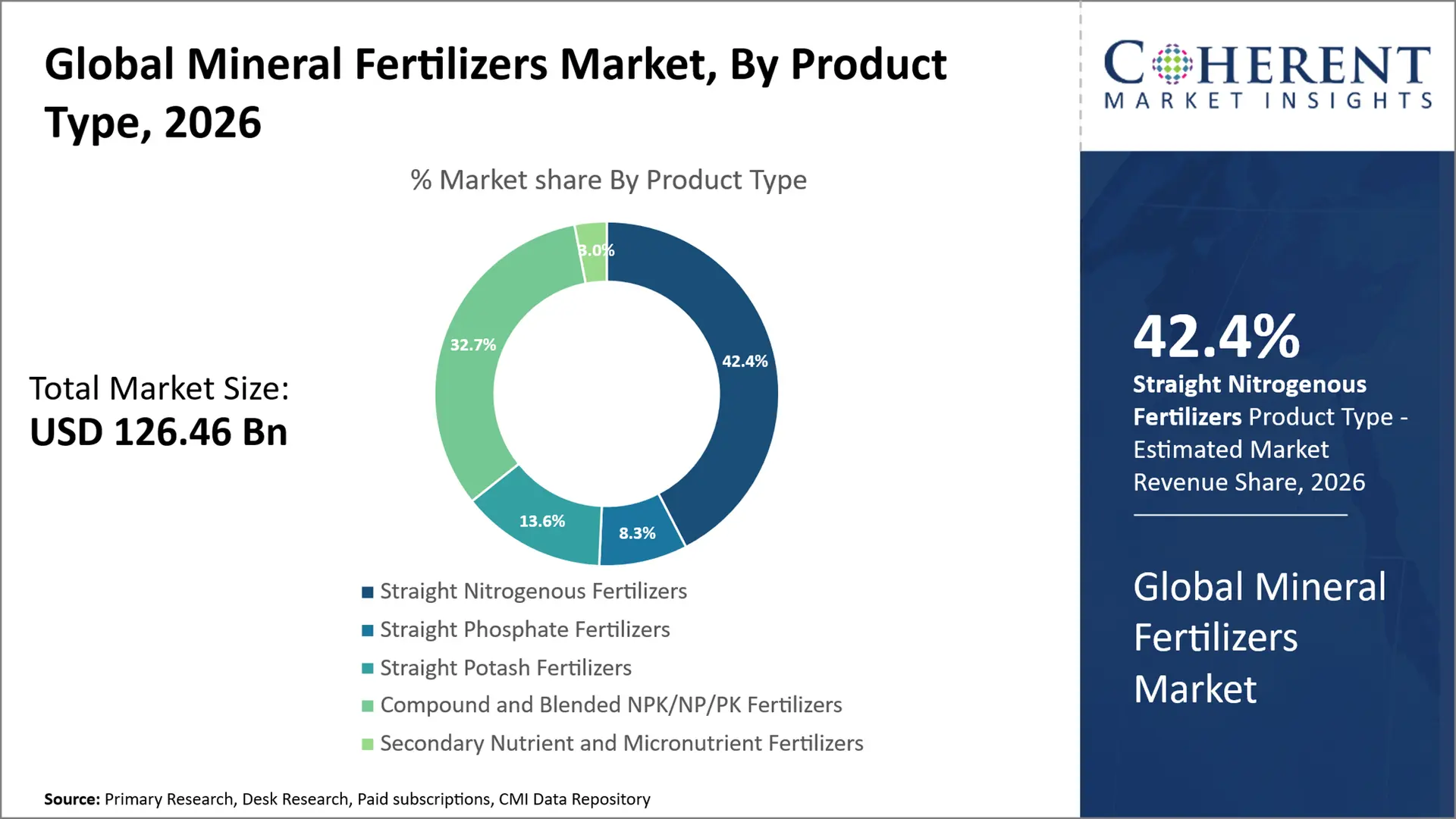
- Straight nitrogenous fertilizers are projected to account for 42.4% of the global mineral fertilizers market revenue by 2026, growing at a CAGR of 4.6%. The recurring demand for nitrogen for maize, wheat and rice in every crop cycle necessitates the recurring demand for urea. In January 2026, CF Industries launched a pilot for low-carbon nitrogen fertilizer with POET and farm cooperatives that support corn growers in the U.S..
- Granules and prills are expected to grow at a CAGR of 4.4% and account for 79.5% of the global mineral fertilizers market revenue in 2026. Uniform particle size allows for mechanized spreading, bulk handling and efficient use on large farms. Coromandel International announced progress on a brownfield fertilizer granulation project in July 2026 which will add an annual production capacity of 750,000 tons and bolster its manufacturing infrastructure.
- Soil application is expected to record a CAGR of 4.5% and is estimated to constitute 80.7% of the market revenue by 2026. It continues to be a practical choice for basal nutrient placement and large-acreage fertilization, with modern spreading equipment improving application accuracy. AMAZONE launched its ZA-TS 01 AutoSpread system, which measures fertilizer spreading patterns and automatically adjusts distribution settings, in September 2025.
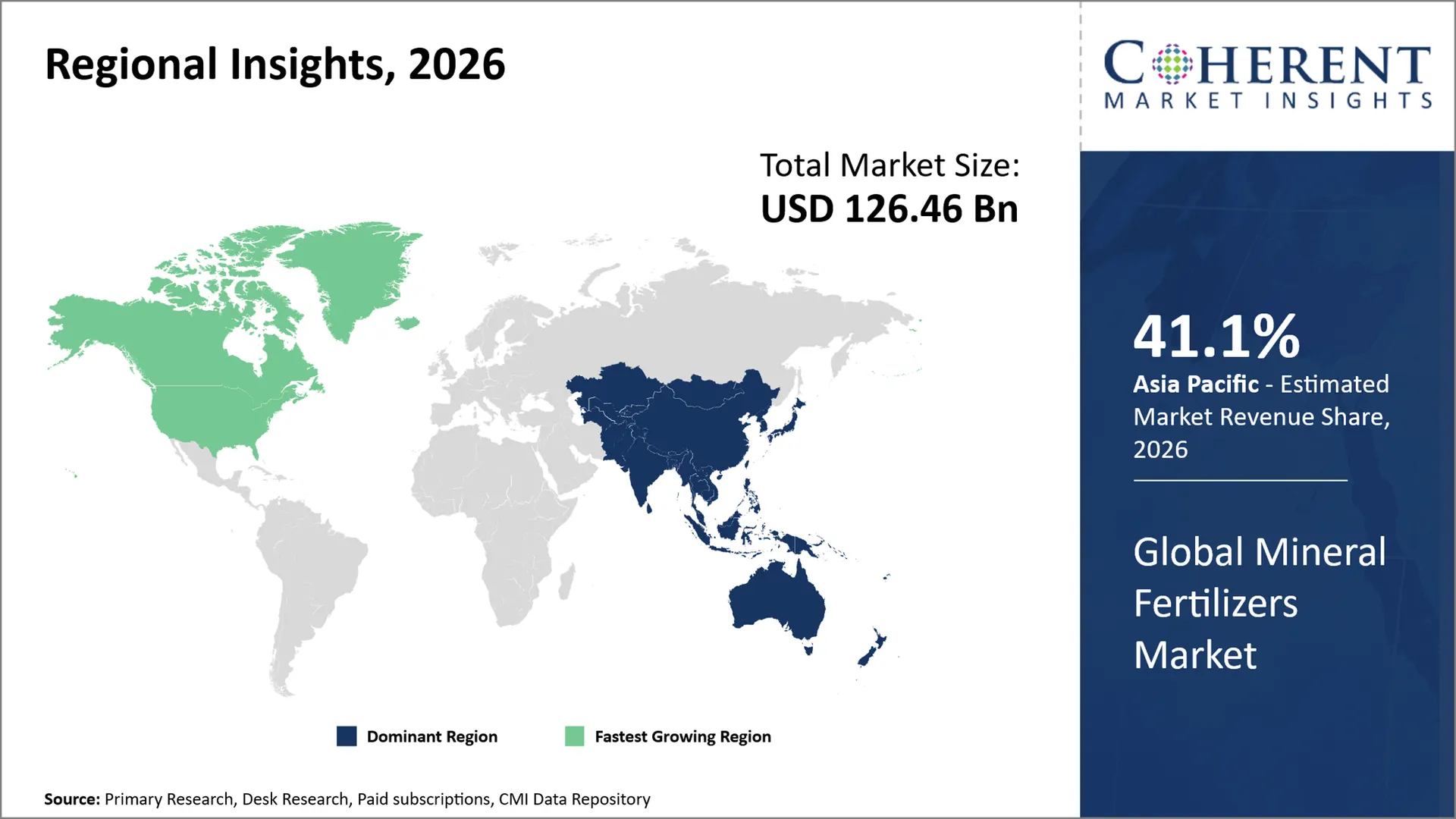
- Asia Pacific is expected to register the fastest growth with a CAGR of 4.9% during the forecast period and accounted for 41.1% of the global revenue of the mineral fertilizers market in 2026. It has a large consumption base with intensive multiple cropping, extensive cereal cultivation and organized procurement of fertilizers. India’s Department of Fertilizers said in July 2026 that it had procured 42.7 lakh metric tons of urea through tenders floated in April and June to ensure the availability of seasonal fertilizers.
- North America is expected to record the fastest regional growth with an estimated CAGR of 6.1% in 2026, and is expected to hold a 17.8% share of the global mineral fertilizers market revenue in 2026. Consumption is supported by established commercial farming and fertilizer infrastructure. Upstream investments underpin regional supply prospects. BHP said in October 2026 its Saskatchewan Jansen Stage 1 potash project was 87% complete with first production expected in mid-2027.
Segmental Insights
Why Do Straight Nitrogenous Fertilizers Dominate the Global Mineral Fertilizers Market?
Straight nitrogenous fertilizers are expected to account for 42.4% of the market by product type in 2026. Agronomists can time urea and nitrate fertilizer application to crop growth stages, soil tests and rainfall conditions without buying unnecessary nutrients in fixed compound formulations. Producers have well-established routes for processing ammonia into urea, while importers can tap internationally traded grades for domestic fertilizer programs. In September 2024, Stamicarbon won a licensing and process-design deal to boost El Delta’s urea plant in Egypt to 2,250 metric tons per day from 1,725. The proposed ultra-low-energy technology would reduce steam and cooling-water use. This investment shows how the production efficiency of straight nitrogenous fertilizers can make them competitive in price sensitive agricultural markets.
- Current Industry Events of 2026
- Market Size Estimation
- Regional Breakdown
- Competitive Landscape
- Customer Intelligence
- Segmental Analysis
- Pricing Analysis
- Key Market Drivers, Challenges & Future Trends
- Customized Insights Section
Why Do Granules and Prills Represent the Largest Fertilizer Form in the Global Mineral Fertilizers Market?
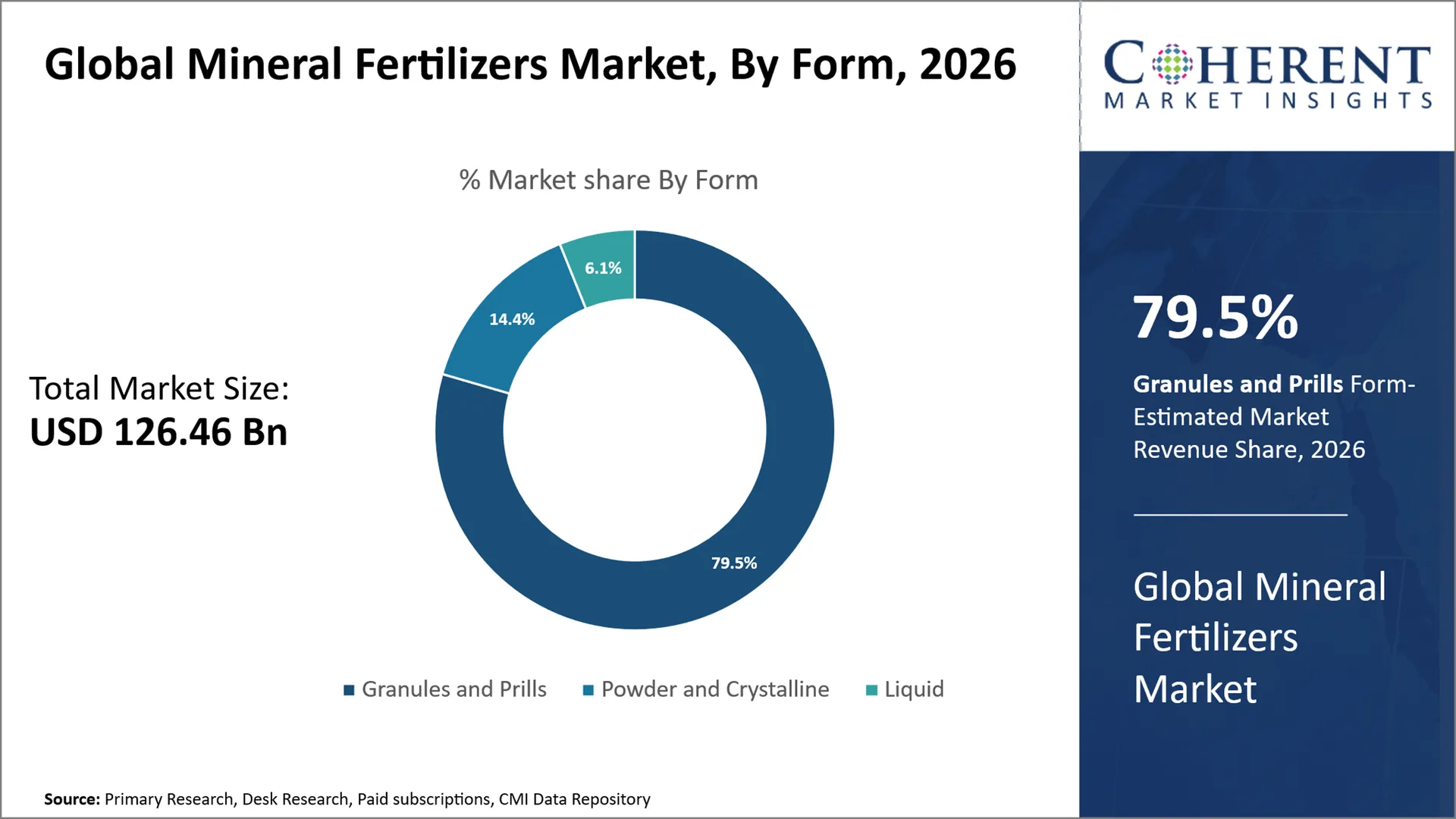
Granules and prills are anticipated to hold a share of 79.5% in the global mineral fertilizers market in 2026 by form. Their commercial strength does not stop with handling in the field, for granulation allows the manufacturer to produce uniform grades of fertilizer that will maintain their specifications through storage and shipment, thus minimizing product deterioration and quality arguments. Durable finished particles are compatible with existing solid-fertilizer distribution infrastructure as well as seasonal buying practices for agricultural buyers. In June 2025, Casale signed a process design contract with Daewoo Engineering & Construction for two fertilizer plants to be located in Turkmenabat, Turkmenistan. The project comprises annual capacities of 350,000 tons of granular single superphosphate and 100,000 tons of ammonium sulfate. This development highlights the commercial significance for suppliers of standardized mineral nutrient products in regional agricultural markets of having a dedicated granulation technology.
Why Does Soil Application Dominate the Application Methods of the Global Mineral Fertilizers Market?
Soil application is anticipated to account for 80.7% of the global mineral fertilizers market by application method in 2026. Its leadership reflects the agronomic importance of delivering nutrients directly into the cultivated soil profile, where developing roots can access them. Incorporation and in-row placement also allow growers to tailor fertilizer positioning to tillage practices and planting equipment without relying on irrigation infrastructure. Equipment suppliers can therefore address a wider base of conventional and conservation-tillage farms. In February 2025, Kinze Manufacturing introduced a dual-product fertilizer system for its model-year 2026 5900 planter, allowing different fertilizer products to be delivered simultaneously at independently controlled rates. This integration strengthens the commercial appeal of planting-time soil fertilization by combining nutrient placement with existing field operations.
Current Events and their Impact
Current Event | Description and Its Impact |
January 2026 – EU Carbon Border Adjustment Mechanism Enters Definitive Phase |
|
June 2025 – EU Approves Additional Tariffs on Russian and Belarusian Fertilizers |
|
July 2026 – USDA Opens USD 500 Million Fertilizer Investment Program |
|
Global Mineral Fertilizers Market Dynamics
Key Market Drivers
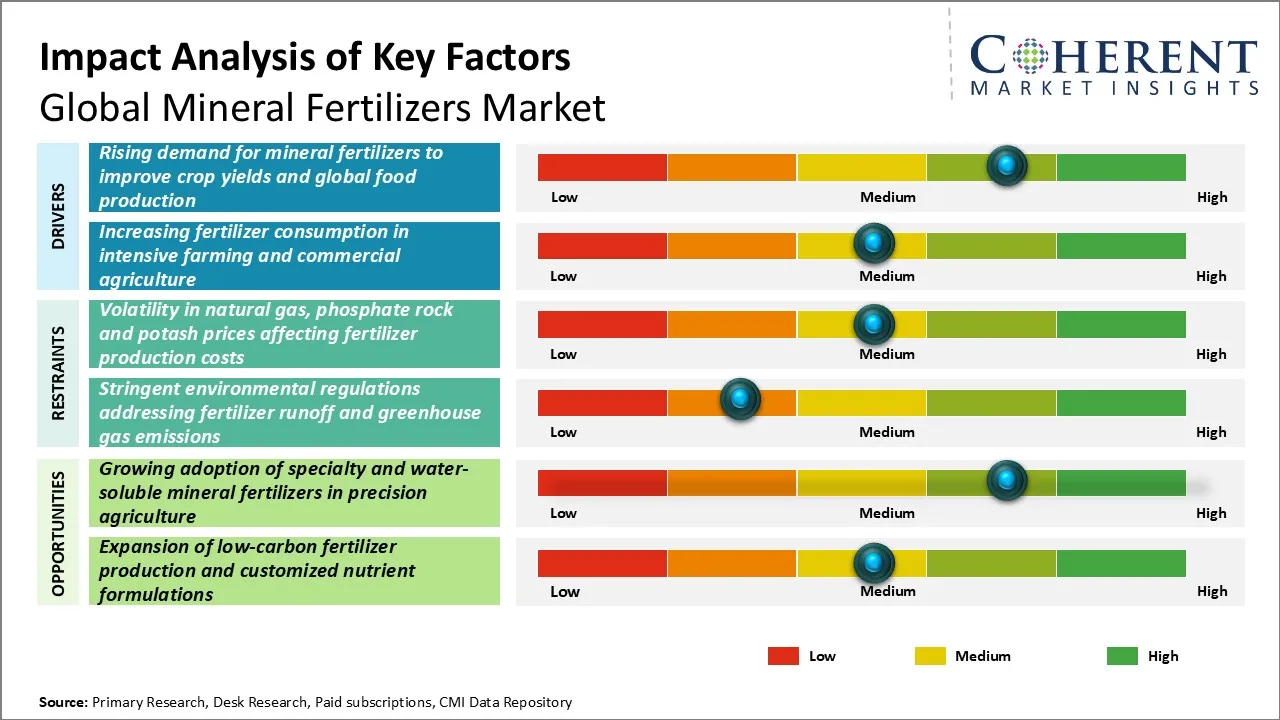
- Rising demand for mineral fertilizers to improve crop yields and global food production: Mineral nutrient replenishment is becoming increasingly necessary as a way to maintain agricultural productivity, especially in areas where the soil's nitrogen, phosphorus and potassium are depleted by successive harvests. Government-supported procurement programs safeguard the crop production during the period of supply uncertainty, which is advantageous to fertilizer manufacturers and importers. In June 2026, the World Bank approved a USD 300 million food security project in Bangladesh. The project is expected to fund the import of 600,000 metric tons of fertilizers for the Aman and Boro rice seasons. This type of financing reduces the risk of production losses due to fertilizer shortages and timely access to nutrients.
- Increasing fertilizer consumption in intensive farming and commercial agriculture: Large-scale commercial farming creates substantial fertilizer requirements because the purchases of nutrients are directly linked to the planned yields, crop selection and cultivated acreage in large-scale commercial farming. As growers extend their fertilizer-intensive crops, producers of nitrogen and phosphate fertilizers gain, while distributors have to align inventories with planting schedules. In March 2025, the USDA’s National Agricultural Statistics Service reported U.S. farmers intended to plant 95.3 million acres of corn, a 5% increase from 2024. Such increases in acreage provide added opportunities for fertilizer sales, but actual consumption depends on farm economics and application rates.
Emerging Market Trends
- Growing Preference for Crop-Specific Nutrient Release and Fertilizer Efficiency: Controlled-release and stabilized nitrogen formulations that deliver nutrients in line with crop growth stages and soil conditions are increasingly being looked at by fertilizer purchasers. Producers are increasing product differentiation through better consistency of nutrient release, field trials and crop-specific fertilizer recommendations.
- Impact: Assists premium fertilizer positioning; enhances nutrient-use efficiency; offers opportunities for manufacturers with validated crop-specific formulations.
- Relevance to Market: Encourages the adoption of specialty mineral fertilizers, while decreasing dependence on traditional commodity grade products. It also drives demand for agronomic advisory services and performance based product differentiation.
- Shift Toward Flexible Fertilizer Procurement and Energy-Linked Pricing: The way fertilizer is purchased is being increasingly impacted by the price of natural gas, the cost of shipping things around the world, and the seasonal needs of farmers when they buy things. Importers and distributors are using flexible contracts, diversified sourcing and adjustable purchasing schedules to cope with price volatility.
- Impact: Greater buying flexibility, less vulnerability to supply interruptions, and more efficient management of inventory and working capital.
- Relevance to Market: Makes manufacturers more competitive by providing them with access to a range of feedstocks and reliable export channels. It also encourages agricultural distributors to put a premium on supply security, landed cost and contract flexibility when choosing fertilizer suppliers.
Regional Insights
Why Does Asia Pacific Dominate the Global Mineral Fertilizers Market?
Asia Pacific is projected to account for 41.1% of the global mineral fertilizers market in 2026, owing to the extensive rice cultivation, intensive agricultural production and significant fertilizer manufacturing capacity in major agricultural economies. Regional ammonia and urea production facilities enhance fertilizer availability, and seasonal cropping patterns lead to recurring nutrient requirements. Manufacturers are increasingly seeing the importance of production efficiency as they try to maintain affordable supplies. In February 2026, Indonesia's Pupuk Kalimantan Timur announced the inauguration of its modernized Ammonia Plant-2, with improvements expected to reduce natural gas consumption by more than 10% per tonne of ammonia. The investment shows how upgrading existing production infrastructure can improve the cost competitiveness and reliability of fertilizer supply in the Asia Pacific region.
Why Is North America Emerging as the Fastest-Growing Region in the Global Mineral Fertilizers Market?
North America is estimated to hold a 17.8% share of the global mineral fertilizers market revenue in 2026 and is expected to register the fastest regional growth during the forecast period. Canadian reserves of potash are large, there is established fertilizer export infrastructure and investment has been made in transportation capacity, all of which support its market position. Regional producers can improve their sales by improving access to international agricultural markets rather than being dependent on domestic consumption. The Government of Saskatchewan announced in September 2026 a CAD 500 million Canpotex investment in infrastructure at Vancouver’s Neptune Bulk Terminals. Project is replacement and upgrade of equipment to improve the reliability of potash handling and exports. These investments will enhance North America’s competitive position in the international supply of potassium fertilizers.
Global Mineral Fertilizers Market Outlook for Key Countries
Why Is the U.S. a Key Market for the Global Mineral Fertilizers Market?
The U.S. is still a significant mineral fertilizer market as corn, soybean, and wheat farmers need to get phosphorus and nitrogen inputs prior to the closing of their planting windows. Domestic phosphate supply is a top investment priority in the face of fertilizer buyers’ quest for shorter supply chains and greater sourcing flexibility. In August 2026, CHS and OCP North America announced plans to form a joint venture to build a phosphate fertilizer plant in Waggaman, Louisiana, with an investment of up to USD 450 million. The facility is expected to produce over one million metric tons per year, subject to all required approvals. The proposed distribution through CHS cooperatives would provide a direct link from agricultural retailers to farmers and manufacturing capacity which could reduce reliance on imported phosphate fertilizers.
Why Is China Important in the Global Mineral Fertilizers Market?
China’s role in the world market of mineral fertilizers is indicative of the volumes of grain production in the country and the need to coordinate the stocks of fertilizers and the seasons of their application at geographically dispersed territories. Reliable last mile distribution is important because delays in the delivery of urea, phosphate or potash can affect nutrient application decisions. In August 2026, the Chinese government released a five-year plan to build or upgrade more than 100 strategic fertilizer depots and around 1,000 county-level distribution centers by 2030 for the national supply and marketing cooperative system. This effort is intended to improve the prospects of fertilizer wholesalers, warehousing operators, and manufacturers capable of servicing coordinated procurement networks across regions by providing a steady supply of fertilizer in major grain-producing countie..
Why Does India Support Growth in the Global Mineral Fertilizers Market?
India is a large market for mineral fertilizers due to the high nutrient demands from rice, wheat, sugarcane and horticultural crops under diverse soil and rainfall conditions. Manufacturers of NPK fertilizer and phosphate fertilizer are under pressure to keep supplying their products through existing agricultural retail networks while dealing with the cost of imported raw materials. Paradeep Phosphates announced an expansion program of INR 3,600 crore in November 2025 to further integrate phosphoric and sulfuric acid production at its Paradeep and Mangalore operations and add one million tons of granulation capacity. The proposed investment points to a strategic shift toward the procurement of upstream inputs to improve manufacturing margins and broaden the range of domestic fertilizer grades available to Indian agricultural buyers.
Why Is Brazil an Important Growth Market for the Global Mineral Fertilizers Market?
Brazil is strategically important to the mineral fertilizers market because of the large demand for nutrients coming from the extensive cultivation of soybeans, maize and sugarcane. At the same time, producers are vulnerable to international prices and freight volatility due to the dependence on imported fertilizers. Therefore, local production of nitrogen can make the supply chain more flexible although imported potash and other nutrients will still be needed. Petrobras said in April 2026 that its Araucária Nitrogenados plant in Paraná had restarted operations and resumed urea production. The plant has a capacity of about 720,000 tons of urea per year. The development provides another sourcing option for Brazilian distributors and reinforces the country’s push to diversify away from imported nitrogen fertilizer supplies.
Why Is Russia a Strategic Country in the Global Mineral Fertilizers Market?
Integrated production of ammonia, phosphate and complex fertilizers in Russia provides it with a strategic position in the world mineral fertilizer market. Natural gas and mineral feedstocks are abundant, allowing for large scale production. Russian suppliers reach out to agricultural customers beyond the domestic market via export distribution. Acron Group said in January 2026 that it produced about seven million tons of commercial mineral fertilizers in 2025, up 5% from 2024, a consequence of improvements including the renovation of its Ammonia-3 unit. The higher figures for production show that it is possible to increase the supply of nutrients by investing in existing plants and not only by building new manufacturing sites. Realized sales are still subject to market access and export logistics.
Mineral Fertilizer Supply Chain and Commercial Landscape
Market Factor | Market Relevance | Commercial Significance | Key Considerations |
Raw Material Availability | Natural gas, phosphate rock, sulfur, and potash determine the production and supply of major mineral fertilizers. | Access to secure feedstock enables manufacturers to manage their production costs and maintain a consistent supply of fertilizer. | Resource concentration Import dependence Feedstock prices Long term supply agreements. |
Fertilizer Production Capacity | Availability of urea, phosphate, potash and compound fertilizers depend on domestic manufacturing and integrated production facilities. | Higher operating efficiency helps to maintain cost competitiveness and reduces dependence on imported finished fertilizers. | Use of capacity. Operating costs of the plant. Availability of energy. Integration of production. |
International Fertilizer Trade | Farm-level fertilizer purchases are a function of nutrient prices, crop profitability, and seasonal agricultural budgets. | Competitive pricing affects purchase volumes, nutrient selection, and distributor sales performance. | Crops to fertilizer price ratio, subsidy structure, currency fluctuations, working capital. |
Fertilizer Pricing and Affordability | Mineral fertilizers are sold to agricultural customers by cooperatives, agrochemical retailers, wholesalers and direct suppliers. | A good distribution coverage helps in better market access, availability of inventory during season and customer retention. | Warehouse capacity, transportation costs, dealer networks and regional delivery schedules. |
Crop-Specific Nutrient Requirements | Cereals, oilseeds, pulses, fruits, vegetables and plantation crops require different nitrogen, phosphorus and potash application programs. | Suppliers can meet differentiated nutrient requirements and improve their product positioning through crop-specific product portfolios. | Fertility of soil, cropping pattern, rates of application of nutrients and farmers preference of purchase. |
How Are Sulfur- and Micronutrient-Fortified Mineral Fertilizers Creating New Growth Opportunities in the Global Mineral Fertilizers Market?
Secondary nutrient and micronutrient deficiencies offer an unexploited opportunity for mineral fertilizer suppliers to extend beyond the standard nitrogen, phosphorus and potassium formulations. In regions of Africa and Latin America with patchy soil fertility, and where conventional fertilizer programs do not address local nutrient imbalances, crop-specific fortification of sulfur, zinc and boron may also benefit growers.
This is an opportunity for manufacturers to provide compatible co-granulated formulations rather than stand-alone micronutrient packs, ensuring reliable dispersion of nutrients and field-tested application recommendations. Soil-testing partnerships, locally calibrated agronomic trials, small-pack distribution and quality controls to prevent nutrient segregation during transport will be required for commercial success.
Pricing should be based on measurable crop response, but not priced out of reach of cost-conscious farmers. Existing fertilizer producers have scale and established distribution. Specialist formulators may compete on targeted grades and technical support. The best market entrants will be those that can link soil deficiencies to actionable, affordable fertilizer recommendations, and repeatable results at the farm level.
Market Players, Key Development, and Competitive Landscape
Key Developments
- In July 2026, GAIL (India) Limited signed a memorandum of understanding with Rashtriya Chemicals and Fertilizers Limited to develop a proposed gas-based urea facility in Maharashtra. The planned 1.27 million metric tonnes annual capacity could strengthen domestic nitrogen fertilizer supply and natural gas utilization if the project proceeds.
- In March 2026, ICL Group opened a specialty fertilizer manufacturing facility in Maharashtra, India, for local production of water-soluble fertilizers. The development supports manufacturing localization, reduces reliance on imported finished products, and improves the company's ability to serve Indian growers requiring specialized mineral nutrient formulations.
- In February 2026, Nutrien Ltd. reported that 49% of its potash ore tonnes were mined using automation during 2025, more than double its 2023 level. This operational development illustrates how mining automation can strengthen extraction efficiency, support production reliability, and improve cost competitiveness within mineral fertilizer manufacturing.
Competitive Landscape
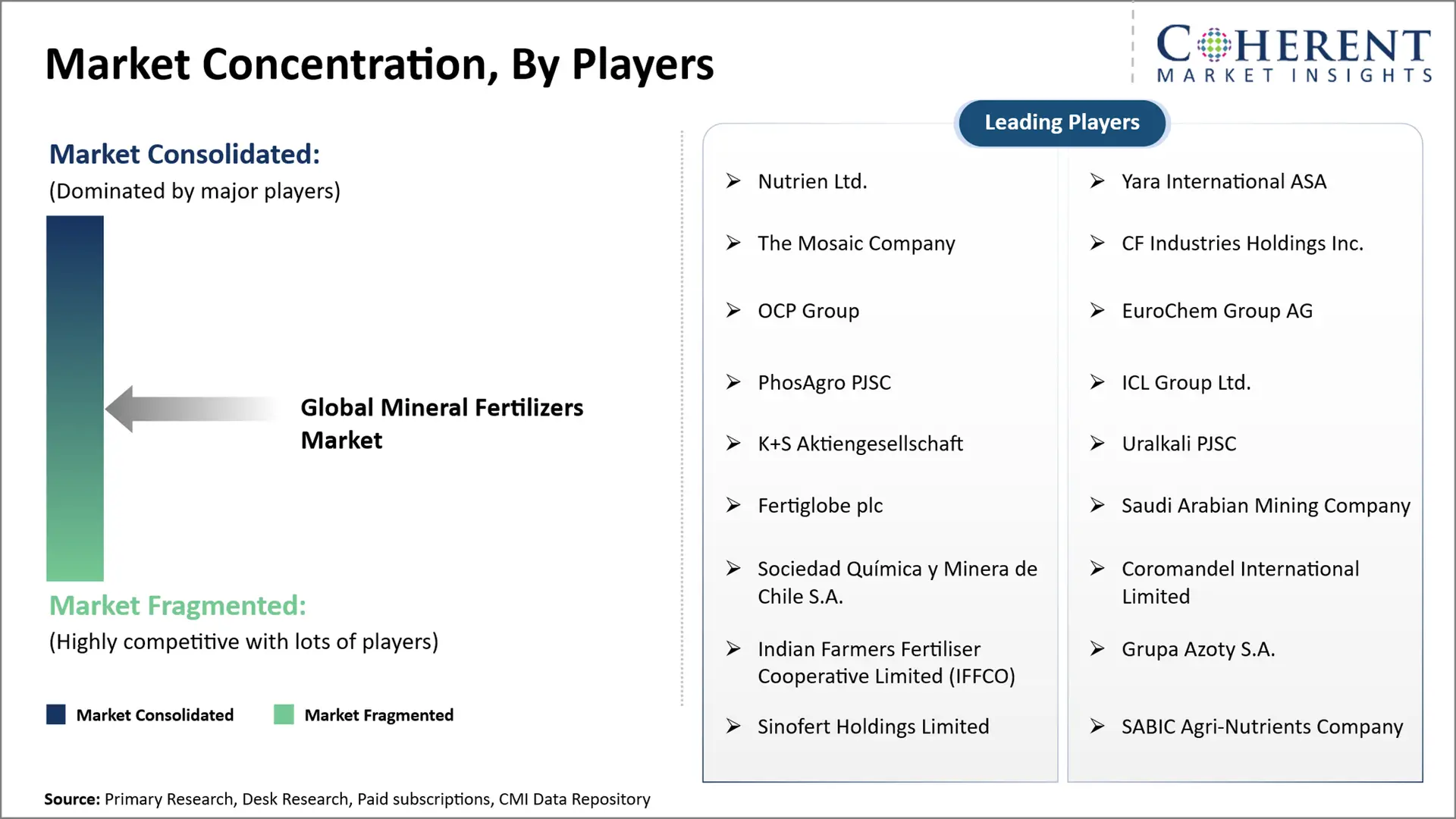
The global mineral fertilizers market is moderately consolidated at the primary production level but fragmented across regional blending and distribution activities. The main competitive issues for integrated producers of nitrogen, phosphate and potash are access to resources, manufacturing efficiency and worldwide supply capability. Regional manufacturers and fertilizer blenders compete on customer relationships and product adaptability. Feedstock economics, regulatory compliance, product consistency and distribution coverage are all important drivers of commercial competitiveness.
Key docus areas include
- Raw Material Integration Availability of natural gas, phosphate rock and potash reserves influences the economics of production and the extent to which the company relies on outside suppliers.
- Cost-Effective Manufacturing: Efficient processes for ammonia synthesis, acid production, and fertilizer processing allow manufacturers to preserve their margins in times of price volatility.
- Flexibility in Nutrient Grades The ability to manufacture different grades of fertilizers like NPK, NP, PK and straight fertilizer, ensures that the diverse agricultural needs are met.
- Product Quality Control. The product is accepted if it has uniform nutrient composition, granule strength, moisture resistance and controlled impurities.
- Regulatory compliance: Contaminant standards, environmental permits, product registration, and documentation requirements affect manufacturing and market access.
- International Logistics: The delivered price of fertilizer is affected by port access, bulk shipping arrangements and inland transportation capabilities.
- Regional Market Relationships: Customer retention is aided by existing agricultural distribution networks, crop advisory services, and dependable supply agreements.
Market Report Scope
Mineral Fertilizers Market Report Coverage | |||
Report Coverage | Details | ||
Base Year | 2025 | Market Size in 2026: | USD 126.46 Bn |
Historical Data For: | 2020 To 2024 | Forecast Period: | 2026 To 2033 |
Forecast Period 2026 To 2033 CAGR: | 4.8% | 2033 Value Projection: | USD 175.58 Bn |
Geographies covered: |
| ||
Segments covered: |
| ||
Companies covered: | Nutrien Ltd., Yara International ASA, The Mosaic Company, CF Industries Holdings Inc., OCP Group, EuroChem Group AG, PhosAgro PJSC, ICL Group Ltd., K+S Aktiengesellschaft, Uralkali PJSC, Fertiglobe plc, Saudi Arabian Mining Company, Sociedad Química y Minera de Chile S.A., Coromandel International Limited, Indian Farmers Fertiliser Cooperative Limited (IFFCO), Grupa Azoty S.A., Sinofert Holdings Limited, SABIC Agri-Nutrients Company | ||
Growth Drivers: |
| ||
Restraints & Challenges: |
| ||
Analyst Opinion (Expert Opinion)
- The global mineral fertilizers market leadership is likely to depend increasingly on a producer's ability to manage the entire nutrient supply chain rather than maximize fertilizer output alone. Companies combining upstream resource security with flexible production networks and disciplined capital allocation should be better positioned to preserve profitability across different commodity cycles.
- Fertilizer suppliers could gradually face purchasing influence from downstream food processors and agricultural supply-chain buyers seeking verifiable nutrient-management records. This would challenge traditional commodity-selling models by introducing additional expectations for product traceability and documented farm-level performance. Suppliers capable of integrating these requirements into commercial agreements may gain differentiated customer access.
- Manufacturers should prioritize feedstock security, energy efficiency, flexible processing capacity, and resilient export logistics. Investment decisions must account for volatile natural gas costs, phosphate availability, evolving environmental standards, and farmer affordability. Companies should avoid excessive investment in undifferentiated capacity without secured raw materials, credible customer demand, and sustainable distribution economics.
Speak to the analyst
Want personalized insights?
Take the findings above to one of our principal consultants, or have the report rebuilt around the segments, geographies and competitors you actually track.
Market Segmentation
- Product Type Insights (Revenue, USD Bn, 2021 - 2033)
- Straight Nitrogenous Fertilizers
- Straight Phosphate Fertilizers
- Straight Potash Fertilizers
- Compound and Blended NPK/NP/PK Fertilizers
- Secondary Nutrient and Micronutrient Fertilizers
- Form Insights (Revenue, USD Bn, 2021 - 2033)
- Granules and Prills
- Powder and Crystalline
- Liquid
- Application Method Insights (Revenue, USD Bn, 2021 - 2033)
- Soil Application
- Fertigation
- Foliar Application
- Crop Type Insights (Revenue, USD Bn, 2021 - 2033)
- Cereals and Grains
- Oilseeds and Pulses
- Fruits and Vegetables
- Plantation Crops
- Other Crops
- Sales Channel Insights (Revenue, USD Bn, 2021 - 2033)
- Direct Manufacturer Sales
- Agricultural Cooperatives
- Agrochemical Retailers
- Wholesalers and Distributors
- Online Sales
- Regional Insights (Revenue, USD Bn, 2021 - 2033)
- North America
- U.S.
- Canada
- Latin America
- Brazil
- Argentina
- Mexico
- Rest of Latin America
- Europe
- Germany
- U.K.
- Spain
- France
- Italy
- Russia
- Rest of Europe
- Asia Pacific
- China
- India
- Japan
- Australia
- South Korea
- ASEAN
- Rest of Asia Pacific
- Middle East
- GCC Countries
- Israel
- Rest of Middle East
- Africa
- South Africa
- North Africa
- Central Africa
- North America
- Key Players Insights
- Nutrien Ltd.
- Yara International ASA
- The Mosaic Company
- CF Industries Holdings Inc.
- OCP Group
- EuroChem Group AG
- PhosAgro PJSC
- ICL Group Ltd.
- K+S Aktiengesellschaft
- Uralkali PJSC
- Fertiglobe plc
- Saudi Arabian Mining Company
- Sociedad Química y Minera de Chile S.A.
- Coromandel International Limited
- Indian Farmers Fertiliser Cooperative Limited (IFFCO)
- Grupa Azoty S.A.
- Sinofert Holdings Limited
- SABIC Agri-Nutrients Company
Sources
Primary Research Interviews
- Mineral fertilizer manufacturers, NPK formulators, and raw material suppliers
- Agricultural procurement managers, agronomists, fertilizer distributors, and soil nutrition experts
Stakeholders
- Nitrogen, phosphate, and potash producers, importers, and agricultural cooperatives
- Agrochemical retailers, wholesalers, commercial farmers, and fertilizer exporters
End-use Sectors
- Cereals and grains, oilseeds and pulses, and fruits and vegetables
- Plantation crops, commercial farming, and horticultural cultivation
Regulatory and Industry Bodies
- Food and Agriculture Organization (FAO), European Commission, and U.S. Environmental Protection Agency (EPA)
- USDA, India's Department of Fertilizers, and national fertilizer regulatory authorities
Databases
- FAOSTAT, IFASTAT, USDA Economic Research Service, and Eurostat
- UN Comtrade, World Bank, and International Trade Centre (ITC) Trade Map
Magazines and Journals
- World Fertilizer, Fertilizer International, and International Journal of Agricultural Sustainability
- Journal of Plant Nutrition and Soil Science and Nutrient Cycling in Agroecosystems
Associations
- International Fertilizer Association (IFA) and The Fertilizer Institute (TFI)
- Fertilizers Europe, Fertiliser Association of India (FAI), and AAPFCO
Public Domain Sources
- Fertilizer production capacities, agricultural consumption, import-export statistics, and crop nutrient requirements
- Fertilizer pricing, raw material costs, capacity expansions, government subsidies, and company annual reports
Key Standards and Regulations
- Regulation (EU) 2019/1009 – EU Fertilising Products Regulation
- Fertiliser (Control) Order, 1985 – India
- EU Nitrates Directive (91/676/EEC) – Agricultural Nitrate Pollution Control
- EU Carbon Border Adjustment Mechanism (CBAM) – Fertilizer Import Compliance
Proprietary Elements
- CMI Data Analytics Tool and proprietary research repository, supplemented by primary interviews, fertilizer pricing analysis, production capacity assessments, agricultural procurement intelligence, trade-flow analysis, and competitive benchmarking.Top of Form
Get access to 250+ pages report
Every segment, forecast, competitor profile and data table behind the analysis above — available for instant download.
- ESOMAR Member
- ISO 9001:2015 Certified
- D-U-N-S Registered
- GDPR & CCPA Compliant
Frequently Asked Questions
The CAGR of global mineral fertilizers market is projected to be 4.8% from 2026 to 2033.
The global mineral fertilizers market is estimated to be valued at USD 126.46 billion in 2026 and is expected to reach USD 175.58 billion by 2033.
Mineral fertilizer prices are affected by raw material prices, energy prices, production costs, international trade conditions, transport costs and seasonal agricultural buying patterns.
Agriculture buyers assess suppliers on the basis of nutrient specifications, product quality, price competitiveness, supply reliability, delivery timelines and technical support.
International trade links large fertilizer producing and resource supplying countries with fertilizer-deficient agricultural markets with implications for supply availability, procurement strategies and fertilizer prices delivered.
Manufacturers and investors assess production capacities, manufacturing costs, raw material integration, pricing strategies, distribution networks, supplier positioning, and planned capacity expansions to support strategic decisions.
The major factors driving growth in the global mineral fertilizers market are the need to improve crop yields to meet global food demand and increasing fertilizer use in intensive farming and commercial agriculture.