

Global Fertilizer Market Size and Forecast – 2026-2033
The Global Fertilizer Market is estimated to be valued at USD 195.43 Bn in 2026 and is expected to reach USD 247.47 Bn by 2033, exhibiting a compound annual growth rate (CAGR) of 3.4% from 2026 to 2033.
Key Takeaways of the Fertilizer Market
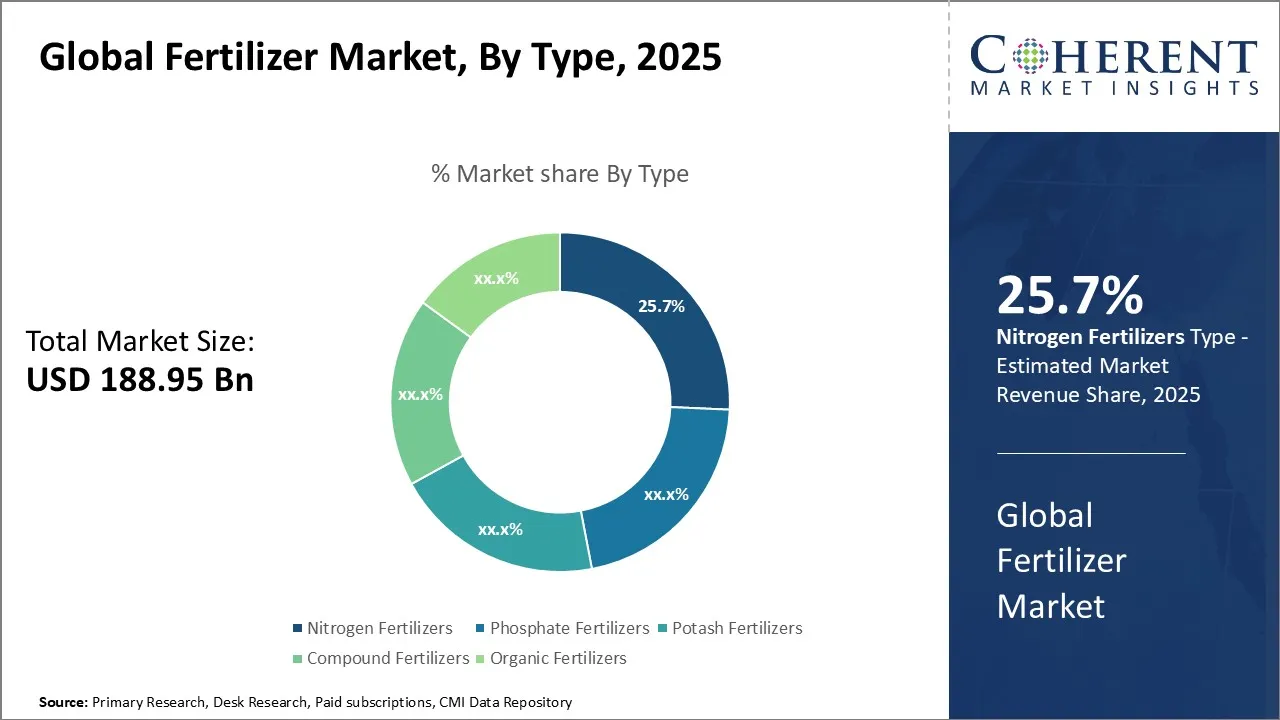
- The nitrogen fertilizers segment is expected to account for 26.7 % of the global fertilizer market in 2026, driven by their essential role in improving crop yield and soil fertility.
- The agriculture segment is projected to represent 35.8 % of the global fertilizer market in 2026, due to its critical role in supporting global food production systems.
- Granular are expected to capture 43.2 % of the market in 2026, driven by their convenient handling, storage, and application features, which make them popular among both large-scale commercial farmers and smallholders.
- Asia Pacific is expected to lead the global fertilizer market in 2026 with a 43.8 % share, driven by the increasing demand for agricultural productivity and growing adoption of modern farming techniques. North America, with a 21.5% share, will be the fastest-growing region, fueled by technological advancements in fertilizer application and government initiatives to support sustainable agriculture.
Market Overview
Market trends indicate a strong shift towards environment-friendly and precision fertilizers, driven by advancements in technology and regulatory pressures to reduce carbon footprints. Additionally, there is a growing emphasis on organic and bio-based fertilizers, or biofertilizers to enhance soil health and reduce chemical dependency. These trends, coupled with expanding agricultural activities in developing regions, are shaping the future trajectory of the fertilizer market.
Current Events and Its Impact
Current Events | Description and its impact |
Shift Toward Sustainable and Specialty Fertilizers |
|
U.S. Fertilizer Tariffs Under Trump Administration |
|
Segmental Insights
- Current Industry Events of 2026
- Market Size Estimation
- Regional Breakdown
- Competitive Landscape
- Customer Intelligence
- Segmental Analysis
- Pricing Analysis
- Key Market Drivers, Challenges & Future Trends
- Customized Insights Section
Fertilizer Market Insights, By Type - Nitrogen Fertilizers Segment Dominates the Market Driven by Crop Demand and Soil Health Needs
The nitrogen fertilizers segment is expected to contribute 26.7% share of the global fertilizer market in 2026, owing to their critical role in enhancing crop yields and soil fertility. Nitrogen is one of the key macronutrients required by plants, fundamental for the synthesis of proteins, nucleic acids, and chlorophyll. The widespread cultivation of staple crops such as wheat, rice, and maize, which have high nitrogen nutrient demands, generates consistent demand for nitrogen fertilizers. This is especially pronounced in regions focused on intensive agriculture to meet growing food requirements for expanding populations.
For example, India relies heavily on nitrogen-based fertilizers to meet domestic food demand and ensure food security due to its large-scale wheat and rice production. In recent years, the government has increased subsidies for nitrogen fertilizers to encourage usage among farmers, leading to sustained growth in the segment.
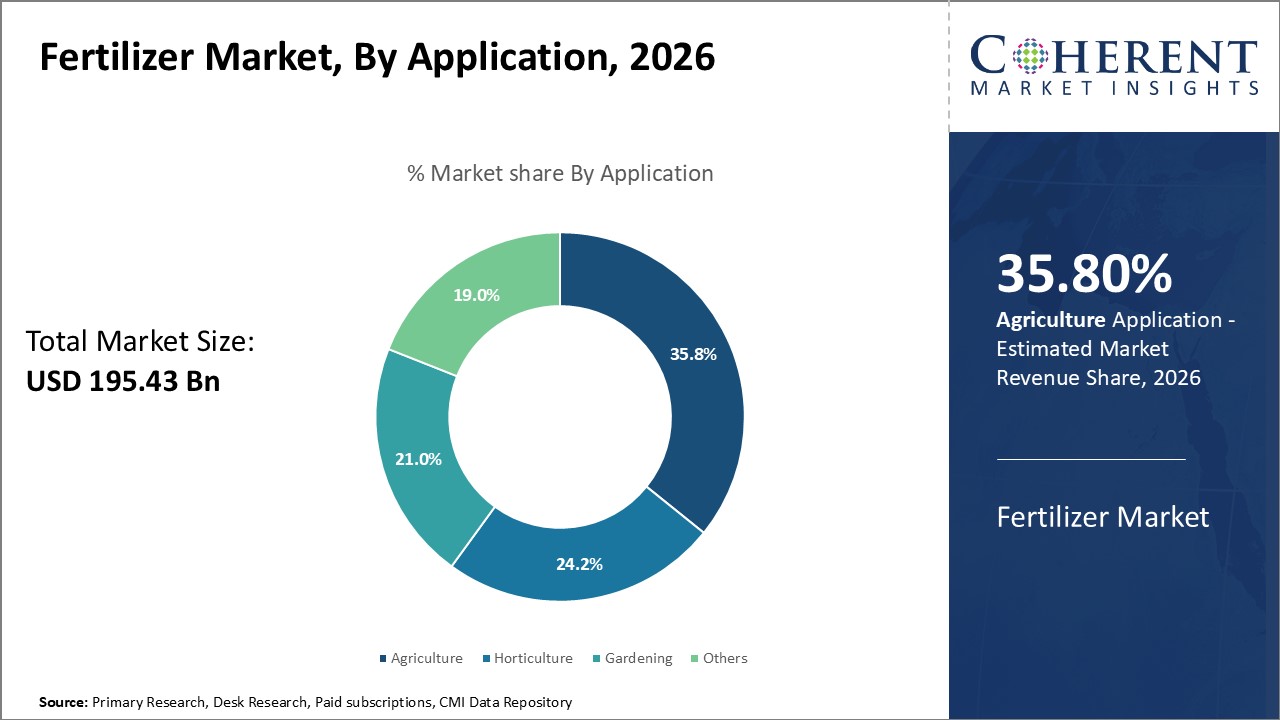
Fertilizer Market Insights, By Application - Agriculture Segment Dominates the Market due to their Predominance Fueled by Global Food Production Demands
The agriculture segment is projected to hold 35.8% share of the global fertilizer market in 2026, attributed to its foundational role in global food production systems. The vast expanse of arable land cultivated for cereals, pulses, vegetables, and other crops requires significant nutrient inputs to maintain soil fertility and optimize yields. As global population growth drives increased food demand, agricultural fertilizer consumption continues to rise correspondingly, underscoring this segment’s commanding market share.
Farmers’ emphasis on improving crop productivity while reducing potential losses from pests, diseases, and adverse weather conditions has heightened reliance on fertilizers. Balanced fertilization not only ensures healthier crops but also contributes to sustainable agricultural practices by enabling efficient nutrient use. Furthermore, mechanization and adoption of precision farming technologies allow for better application rates aligned with crop nutrient requirements, which reinforces the role of fertilizers in achieving optimal output.
Fertilizer Market Insights, By Form – Granular Segment Dominates the Market due to Leadership Driven by Convenience and Controlled Nutrient Release
Granular segment holds an estimated 43.2% share of the market in 2026, owing to their ease of handling, storage, and application characteristics, which appeal to both large-scale commercial farmers and smallholders. Granular fertilizers are generally more stable than liquid or powder forms, reducing risks related to moisture and caking during transportation and storage. This robustness makes them highly suitable for diverse agricultural environments ranging from expansive grain farms to horticultural operations.
Regional Insights
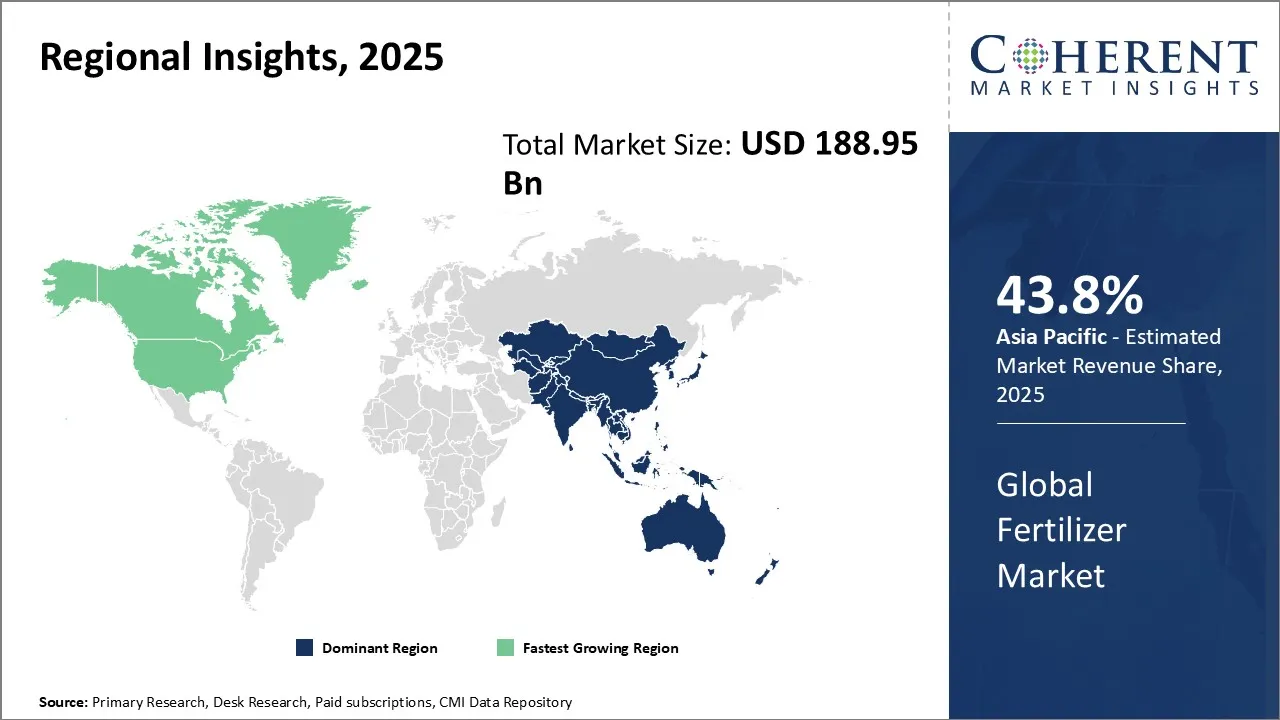
Asia Pacific Fertilizer Market Analysis and Trends
The Asia Pacific region is projected to lead the market with a 43.8% share in 2026, primarily from the region’s extensive agricultural base, supporting a large population that demands high agricultural productivity. Countries like China and India drive substantial fertilizer consumption due to intensive farming practices and government initiatives aimed at enhancing food security.
The presence of major fertilizer manufacturers such as India’s Chambal Fertilisers and Chemicals Ltd., China National Chemical Corporation (ChemChina), and Yara International’s robust operations in the region reinforces strong industry presence. Furthermore, supportive government policies including subsidies, agricultural reforms, and infrastructure investments bolster fertilizer demand. Trade dynamics also favor Asia Pacific as the region imports raw materials like phosphate and potash from global suppliers, while exporting significant fertilizer quantities within Southeast Asia and to neighboring regions, maintaining a complex but highly active market ecosystem.
North America Fertilizer Market Analysis and Trends
The North America region is expected to exhibit the fastest growth in the market contributing 21.5% share in 2026, with significant growth potential, particularly driven by advanced agricultural practices and robust demand for fertilizers across various crops, including corn, wheat, and soybeans. The U.S., as one of the world’s largest agricultural producers, drives the demand for fertilizers, with a strong reliance on both synthetic and organic products to maintain soil health and optimize crop yield. Key market players, such as CF Industries, The Mosaic Company, and Nutrien dominate the region, offering a wide range of fertilizer products.
Factors such as increasing government initiatives to promote sustainable farming, including subsidies and tax incentives for adopting environment-friendly fertilizers, and advancements in precision agriculture and fertilizer application technologies, are driving growth. In addition, there is a rising demand for biofertilizers and slow-release fertilizers as farmers increasingly focus on reducing environmental impact while maintaining productivity.
Global Fertilizer Market Outlook for Key Countries
India Fertilizer Market Trends
India’s fertilizer market remains critical in the global fertilizer market due to the country’s vast agricultural sector. Government policies such as fertilizer subsidies, promotion of balanced fertilization, and initiatives like Soil Health Cards encourage efficient fertilizer use. Local manufacturers like Coromandel International and Rashtriya Chemicals & Fertilizers Ltd. play pivotal roles in meeting domestic demand. Additionally, import dependency on key raw materials shapes trade patterns, with India importing phosphate rock and potash primarily from Middle Eastern and African countries. The market is increasingly adopting newer formulations, promoting sustainability alongside productivity.
China Fertilizer Market Trends
China continues to lead fertilizer consumption and production driven by its large-scale agriculture and government focus on food security. The Chinese government supports fertilizer production through strategic investments and innovation in compound fertilizers and controlled-release technology. Key players such as Sinofert Holdings and ChemChina’s subsidiaries dominate the market, with integrated operations ranging from raw material mining to distribution. China's export of fertilizers to neighboring Asian countries and Africa assists in reinforcing its global role, while domestic reforms aim to optimize fertilizer use and minimize environmental impact.
Brazil Fertilizer Market Trends
Brazil’s fertilizer market growth is fueled by its status as an agricultural powerhouse, especially in soy, corn, and sugarcane production. Companies such as Vale Fertilizantes and Mosaic Company provide essential inputs to Brazilian farmers, while government policies incentivize increased agricultural productivity. Brazil imports significant quantities of phosphate and potash, mainly from Canada and Russia, reflecting trade dependencies despite strong local production of nitrogenous fertilizers. Sustainable agriculture initiatives and gradual adoption of precision farming techniques are shaping market dynamics, pushing for balanced and efficient fertilizer application.
U.S. Fertilizer Market Trends
The U.S. fertilizer market is characterized by advanced agricultural technology and well-established fertilizer supply chains. Key domestic producers include Nutrien, CF Industries, and The Mosaic Company, all contributing extensively to nitrogen, phosphate, and potash fertilizer production. Government policies focus on trade regulation, environmental compliance, and supporting sustainable agriculture practices. The U.S. also plays a significant role in global exports and imports of fertilizers, benefiting from robust infrastructure and logistics networks. The integration of digital farming tools enhances precise fertilizer use, improving crop yields and sustainability.
Russia Fertilizer Market Trends
Russia’s fertilizer market is a critical global player with substantial production of potash, phosphate, and nitrogen fertilizers, primarily due to its abundant natural resources. Major companies such as PhosAgro, Uralkali, and EuroChem dominate domestic and international markets, exporting large volumes worldwide. Government policies have historically emphasized resource development and export orientation, making Russia a key supplier in the global fertilizer ecosystem. Trade dynamics position Russia as a major competitor, influencing global pricing and availability.
Pricing Analysis of the Fertilizer Market
Fertilizer Type/Region or Country | 2024 Price (USD/ton) | 2025 Price (USD/ton) | Notes |
Urea (Global Avg.) | USD 325–USD 490 | USD 350–USD 663 | Sharp jumps due to demand/supply tightness |
Urea (U.S.) | USD 445 | USD 492 | Relatively stable vs. global volatility |
Urea (India) | USD 320 | USD 360 | Strong demand, import-dependent |
Nitrogen (Overall, U.S.) | USD 565 | USD 578 | Energy-driven price hikes |
Diammonium Phosphate (DAP) | USD 728 | USD 739 | Stable in US, sharply up globally |
Market Players, Key Development, and Competitive Intelligence
Key Developments
- In July 2025, Ondo State Government announced a partnership with Residents Group to develop a USD 2.6 billion fertilizer and petrochemical plant. The project aims to enhance the state's economy, with plans to establish the facilities within the next 12 months through a private company, 'Residents Group Cement.'
- In February 2025, KBR was awarded a Project Management Consultancy (PMC) contract by AMUFERT to oversee the development of a fertilizer plant in Soyo, Angola. This contract will support the growth of AMUFERT’s fertilizer production capabilities in the region.
- In July 2024, Brazilian manufacturer, Terraplant, introduced MinerOxi+, a 3-in-1 organomineral fertilizer that integrates essential minerals, organic fractions, and oxides. The product is designed to address environmental challenges while promoting sustainable agricultural practices.
- In 2024, ICL collaborated with entrepreneurs, manufacturers, and researchers to accelerate the development of sustainable technologies for next-generation fertilizers. The company is focusing on innovative solutions such as plant biostimulants, cost-effective slow-release granules, enhanced fertilizer efficiency, and biodegradable coatings for controlled-release fertilizers (CRF).
- In September 2023, SABIC Agri-Nutrients Company (SABIC AN) entered into partnerships with U.S.-based BiOWiSH Technologies and ADM to help farmers boost yields in an eco-friendly and cost-effective manner. BiOWiSH’s biologically enhanced urea fertilizer, considered a ‘green fertilizer,’ reduces greenhouse gas emissions compared to traditional fertilizers, enhances CO₂ capture and sequestration in soil, and supports improved agricultural productivity.
Top Strategies Followed by Global Fertilizer Market Players
- Established companies dominate the sector by making significant investments in research and development (R&D) to create high-performance, value-added fertilizer products that meet evolving agricultural demands. These market leaders continuously innovate to improve nutrient efficiency, reduce environmental impact, and tailor formulations for specific crops or soil conditions. Strategic partnerships with other industry giants or original equipment manufacturers (OEMs) further bolster their market presence by enabling integrated supply chains and collaborative product development.
- For example, Yara developed YaraLiva Calcinit, a calcium nitrate fertilizer that significantly enhances plant nutrient uptake while reducing environmental runoff.
- Mid-level fertilizer producers adopt a differentiated approach by focusing primarily on cost-effective product offerings that strike an optimal balance between quality and price, thus catering to the large segment of price-sensitive consumers, particularly smallholder farmers in developing regions. Their competitive edge often lies in providing reliable fertilizers at affordable rates without compromising essential performance metrics, making them indispensable in cost-conscious markets. To elevate their production capacities and upgrade technological capabilities, mid-tier players frequently engage in strategic collaborations and joint ventures with both larger firms and technology providers.
- For instance, OCI Nitrogen offers a range of nitrogen-based fertilizers that are cost-competitive yet efficient in various soil types, making them popular in markets where price sensitivity is a concern.
- Small-scale fertilizer companies carve out niche segments within the broader market by concentrating on specialized product features or pioneering innovative fertilizer types tailored for specific agricultural applications. These players leverage emerging technologies such as controlled-release formulations, biofertilizers, or organic nutrient sources to differentiate themselves from mass-market products. To gain footholds in local and regional markets, they often form partnerships with startups, local manufacturers, or agricultural cooperatives, benefiting from shared resources, localized market knowledge, and established distribution channels.
- For example, Biolchim offers a range of organic fertilizers that improve soil health and enhance crop yields without synthetic chemicals. Its focus on eco-friendly fertilizers has gained significant traction among organic farmers and environmentally conscious consumers.
Market Report Scope
Fertilizer Market Report Coverage
| Report Coverage | Details | ||
|---|---|---|---|
| Base Year: | 2025 | Market Size in 2026: | USD 195.43 Bn |
| Historical Data for: | 2020 To 2024 | Forecast Period: | 2026 To 2033 |
| Forecast Period 2026 to 2033 CAGR: | 3.4% | 2033 Value Projection: | USD 247.47 Bn |
| Geographies covered: |
| ||
| Segments covered: |
| ||
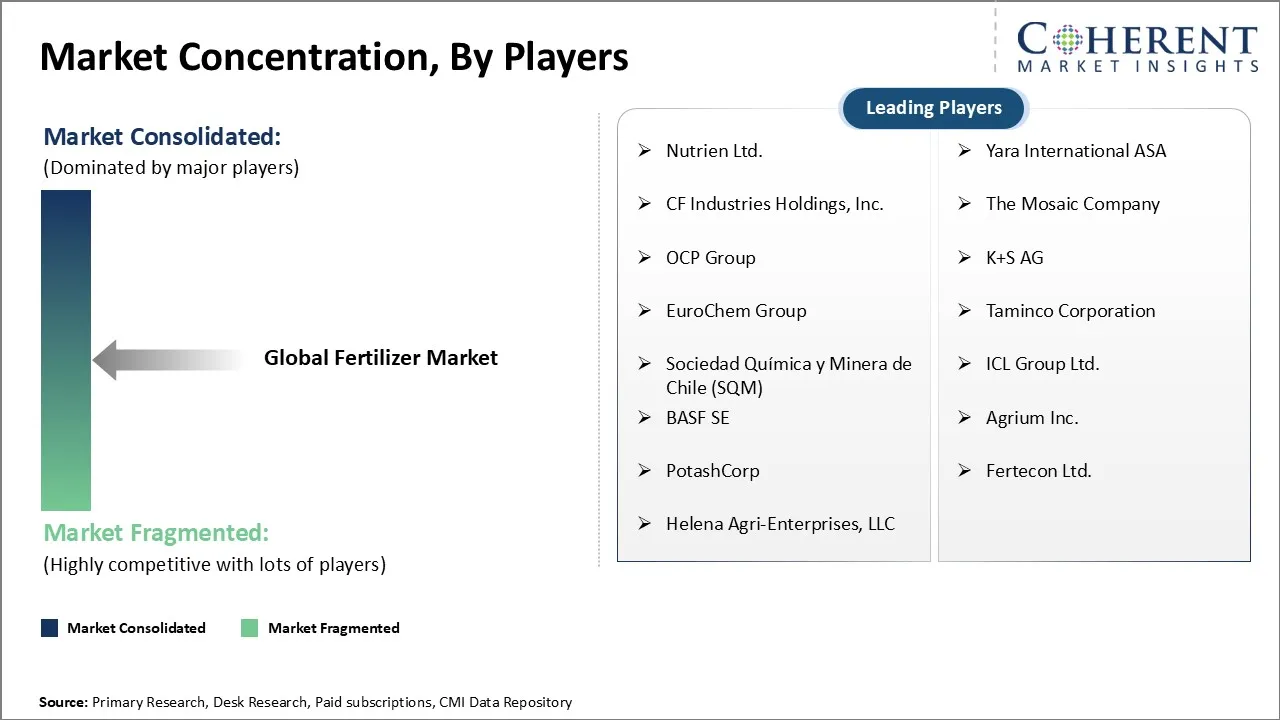
| Companies covered: | Nutrien Ltd., Yara International ASA, CF Industries Holdings, Inc., The Mosaic Company, OCP Group, K+S AG, EuroChem Group, Taminco Corporation, Sociedad Química y Minera de Chile (SQM), ICL Group Ltd., BASF SE, Agrium Inc., PotashCorp, Fertecon Ltd., and Helena Agri-Enterprises, LLC | ||
| Growth Drivers: |
| ||
| Restraints & Challenges: |
| ||
Fertilizer Market Dynamics
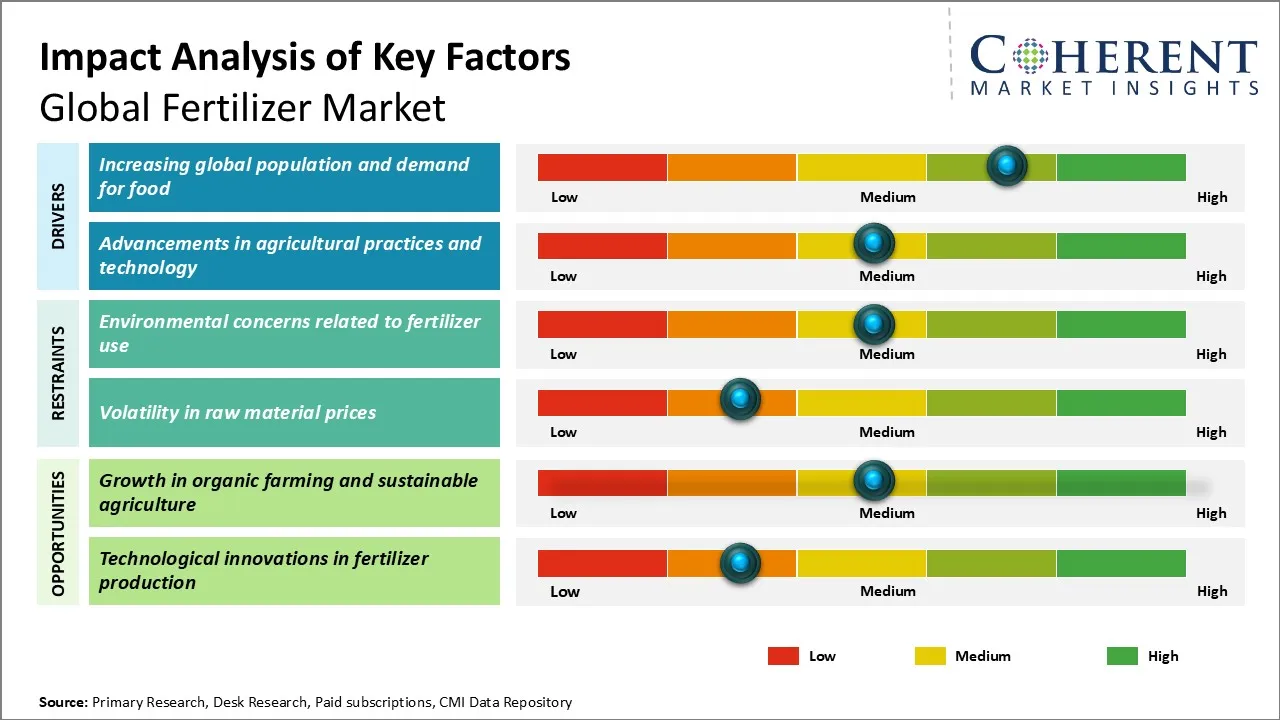
Fertilizer Market Driver - Increasing Global Population and Demand for Food
The rapidly increasing global population is a critical factor driving the demand for fertilizers worldwide, as it creates an urgent need to enhance agricultural productivity to ensure food security. With more mouths to feed, agricultural practices must intensify crop yields on limited arable land, making the use of fertilizers indispensable for replenishing soil nutrients and maximizing output. Additionally, dietary shifts towards more nutrient-rich foods further amplify the requirement for diverse fertilizer formulations to support various crop types. As urbanization continues to expand, arable land faces pressure, necessitating higher efficiency farming techniques reliant on fertilizers to meet global food demand.
For instance, International Fertilizer Industry Association (IFA) reported that global fertilizer consumption has been steadily increasing, with a projected demand rise of around 1-2% annually, driven by population growth and changes in dietary preferences, particularly with growing demand for protein-rich foods such as meat, which require additional feed crops.
Fertilizer Market Opportunity - Growth in Organic Farming and Sustainable Agriculture
The global fertilizer market is witnessing a significant opportunity driven by the rapid expansion of organic farming and sustainable agriculture practices. Increasing consumer awareness about health, environmental sustainability, and food safety is fueling demand for organically produced crops, which rely heavily on natural and bio-based fertilizers rather than synthetic alternatives. This shift towards organic farming is prompting fertilizer manufacturers to innovate and expand their product portfolios to include organic fertilizers, bio-fertilizers, and eco-friendly soil amendments that enhance soil fertility while minimizing environmental impact. Governments worldwide are also endorsing sustainability initiatives through subsidies, certifications, and stricter regulations on chemical fertilizer usage, further propelling market growth in this segment.
In the European Union, the Farm to Fork Strategy, part of the European Green Deal, aims to transition 25% of all farmland to organic farming by 2030. This transition has prompted significant growth in the organic fertilizer market, as European governments provide financial incentives for farmers to adopt organic practices. Companies like Biobest Group and AgroFresh are leading the way in providing organic and bio-based fertilizers to support sustainable agriculture, further supporting the market's expansion.
Analyst Opinion (Expert Opinion)
- The global fertilizer market is undergoing significant shifts, driven by increasing demand for sustainable agricultural practices and innovations in nutrient delivery. Insights from the Fertilizer Outlook Conference (2023) and the International Fertilizer Association Meeting (2022) highlighted key advancements, with companies like Nutrien and Yara International spearheading efforts to develop eco-friendly fertilizers.
- Nutrien's recent launch of its carbon-neutral fertilizer line underscores a strong commitment to sustainability, addressing both regulatory pressures and consumer preferences. Conferences emphasized the crucial role of precision agriculture technologies, which enable targeted application of fertilizers, thereby optimizing yields while minimizing environmental impact. However, challenges such as volatile raw material prices and supply chain disruptions remain significant concerns.
- Companies that invest in research and development of alternative fertilizers, such as bio-based options, will likely capture a larger market share. Furthermore, partnerships with technology firms to enhance efficiency and reduce waste are essential for future growth. Ultimately, the fertilizer market's trajectory will depend on its ability to innovate and align with global sustainability goals while meeting the increasing food production demands.
Speak to the analyst
Want personalized insights?
Take the findings above to one of our principal consultants, or have the report rebuilt around the segments, geographies and competitors you actually track.
Market Segmentation
- Type Insights (Revenue, USD Bn, 2021 - 2033)
- Nitrogen Fertilizers
- Phosphate Fertilizers
- Potash Fertilizers
- Compound Fertilizers
- Organic Fertilizers
- Application Insights (Revenue, USD Bn, 2021 - 2033)
- Agriculture
- Horticulture
- Gardening
- Others
- Form Insights (Revenue, USD Bn, 2021 - 2033)
- Granular
- Liquid
- Powder
- Regional Insights (Revenue, USD Bn, 2021 - 2033)
- North America
- U.S.
- Canada
- Latin America
- Brazil
- Argentina
- Mexico
- Rest of Latin America
- Europe
- Germany
- U.K.
- Spain
- France
- Italy
- Russia
- Rest of Europe
- Asia Pacific
- China
- India
- Japan
- Australia
- South Korea
- ASEAN
- Rest of Asia Pacific
- Middle East
- GCC Countries
- Israel
- Rest of Middle East
- Africa
- South Africa
- North Africa
- Central Africa
- North America
- Key Players Insights
- Nutrien Ltd.
- Yara International ASA
- CF Industries Holdings, Inc.
- The Mosaic Company
- OCP Group
- K+S AG
- EuroChem Group
- Taminco Corporation
- Sociedad Química y Minera de Chile (SQM)
- ICL Group Ltd.
- BASF SE
- Agrium Inc.
- PotashCorp
- Fertecon Ltd.
- Helena Agri-Enterprises, LLC
Sources
Primary Research Interviews
- Chief Strategy Officer – Leading International Fertilizer Manufacturer
- Procurement Head – Major Global Agrochemical Distributor
- Product Innovation Lead – Top Global Fertilizer Brand
- Sustainability Director – Fertilizer Industry Trade Organization
Stakeholders
- Manufacturers (Chemical and Organic Fertilizer Producers)
- End-use Sectors:
- Agriculture (Grains, Cereals, Fruits & Vegetables, Industrial Crops)
- Horticulture, Greenhouse, and Hydroponics Markets
- Regulatory & Certification Bodies
- Distributors, Agrochemical Dealers, and Retailers
- Technology Providers (Precision AgriTech, Smart Fertilization Solutions)
Databases
- FAOSTAT – Food and Agriculture Organization Statistics Database (Global fertilizer production, consumption, trade data)
- UN Comtrade Database (International fertilizer trade flows)
- World Bank Open Data (Agricultural inputs & fertilizer usage trends)
- India Import Export (EXIM) Database (for India-centric fertilizer trade)
Magazines
- Fertilizer Focus Magazine – Global market trends and fertilizer innovations
- AgriBusiness Global – Technology, sustainability, and market growth in fertilizers
- CropLife International – Supply chain and regulatory updates for agri-inputs
- World Fertilizer Magazine – Production, technology, and sustainability features
Journals
- Nutrient Cycling in Agroecosystems – Research on fertilizer impact and efficiency
- Journal of Fertilizer Issues – Advances in fertilizer production and usage
- Journal of Plant Nutrition and Soil Science – Fertilizer bioavailability and crop yield
- International Journal of Agricultural Sustainability – Fertilizer sustainability practices
- Agronomy Journal – Innovations in fertilizer formulation and application
Newspapers
- The Financial Times – Fertilizer market growth and trade dynamics
- The Wall Street Journal – Price volatility and raw material availability for fertilizers
- AgriBusiness Daily – Fertilizer policy and import/export trends
- The Economic Times – Fertilizer subsidy policies and regional trends
Associations
- International Fertilizer Association (IFA)
- Fertilizer Institute (TFI)
- European Fertilizer Manufacturers Association (Fertilizers Europe)
- International Plant Nutrition Institute (IPNI)
- Indian Fertilizer Association (IFA India)
Public Domain Sources
- Food and Agriculture Organization (FAO) – Guidelines for Fertilizer Use and Safety
- U.S. Environmental Protection Agency (EPA) – Fertilizer regulations and environmental standards
- European Commission – Fertilizers Regulation (Regulation (EU) 2019/1009)
- Organization for Economic Co-operation and Development (OECD) – Fertilizer market and safety assessments
Proprietary Elements
- CMI Data Analytics Tool, Proprietary CMI Existing Repository of information for last 8 years.
Get access to 250+ pages report
Every segment, forecast, competitor profile and data table behind the analysis above — available for instant download.
- ESOMAR Member
- ISO 9001:2015 Certified
- D-U-N-S Registered
- GDPR & CCPA Compliant
Missing comfort of reading report in your local language? Find your preferred language:
Transform your Strategy with Exclusive Trending Reports
Frequently Asked Questions
The global fertilizer market is estimated to be valued at USD 195.43 Bn in 2026 and is expected to reach USD 247.47 Bn by 2033.
The CAGR of global fertilizer market is projected to be 3.4% from 2026 to 2033.
Increasing global population and demand for food and advancements in agricultural practices and technology are the major factors driving the growth of the global fertilizer market.
Environmental concerns related to fertilizer use and volatility in raw material prices are the major factors hampering the growth of the global fertilizer market.
In terms of type, nitrogen fertilizers are estimated to dominate the market revenue share in 2026.
Nutrien Ltd., Yara International ASA, CF Industries Holdings, Inc., The Mosaic Company, OCP Group, K+S AG, EuroChem Group, Taminco Corporation, Sociedad Química y Minera de Chile (SQM), ICL Group Ltd., BASF SE, Agrium Inc., PotashCorp, Fertecon Ltd., and Helena Agri-Enterprises, LLC are the major players.
Asia Pacific is expected to lead the global fertilizer market in 2026.