

Seed Coating Materials Market Size and Forecast — 2026-2033
Seed coating materials market is estimated to be valued at USD 2.70 Bn in 2026 and is expected to reach USD 4.51 Bn by 2033, exhibiting a compound annual growth rate (CAGR) of 7.6% from 2026 to 2033. Seed coating helps improve seed germination, establish early seedling vigor, and protect seeds from various diseases. Coated seeds aid precision farming and support higher yields. New technologies and formulations are expected to drive higher seed coating across major crops.
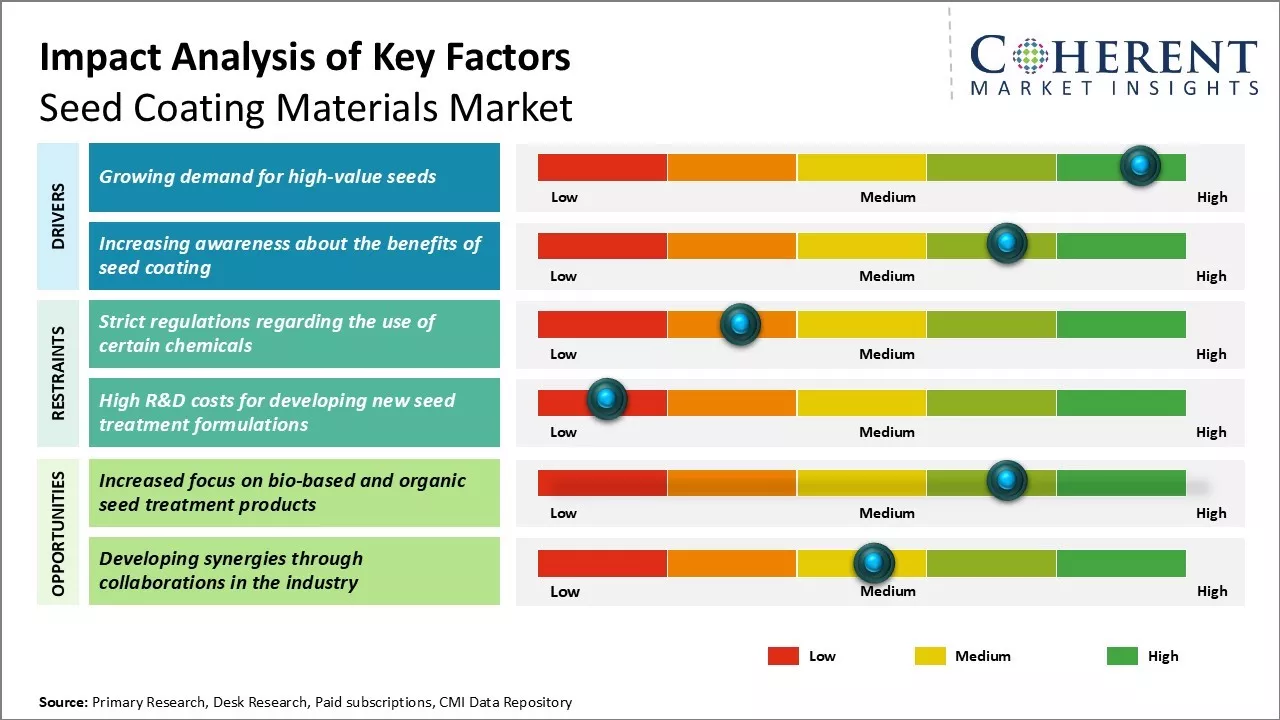
Seed coating not only protects seeds and seedlings but also enables precision planting and application of treatments. Advancements in seed coating formulations are further expected to boost controlled release of nutrients and farm inputs.
Insights, By Crop Type
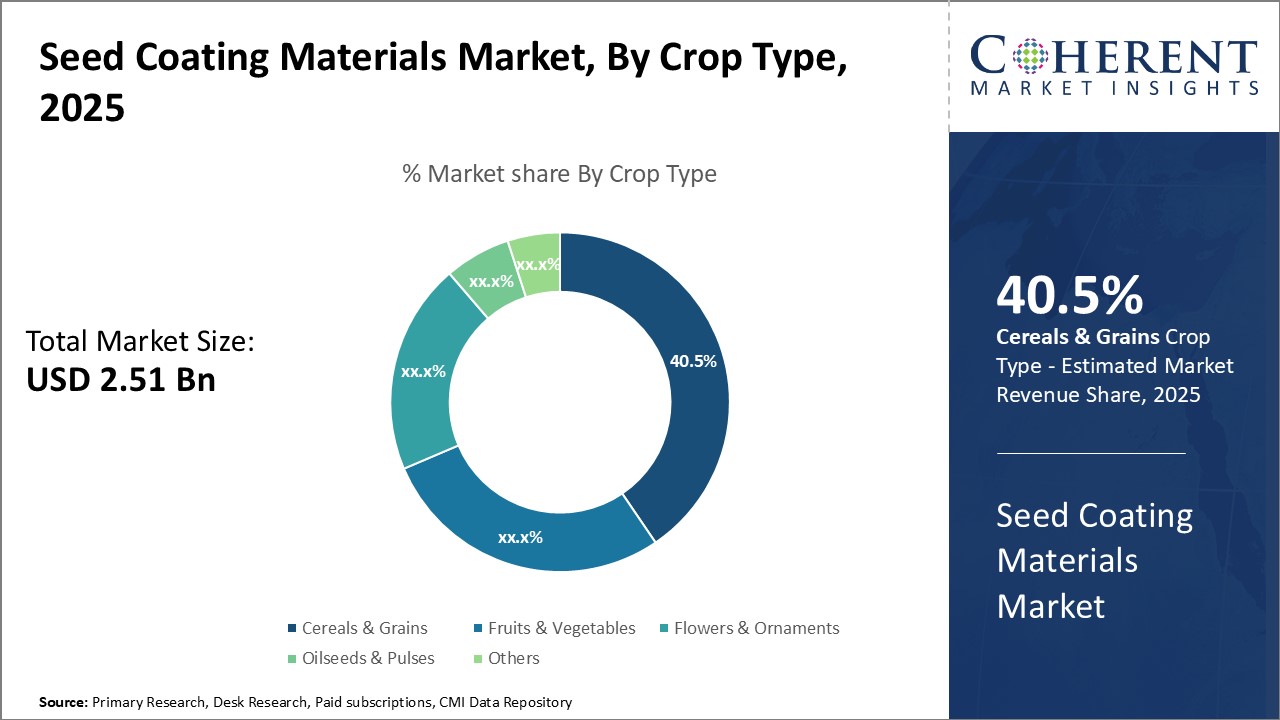
Insights, By Crop Type: Cereals & Grains Drive Seed Coating Growth
The cereals & grains segment is estimated to hold 41.5% market share of the market in 2026, due to their widespread cultivation around the world. Cereal crops such as wheat, corn, rice, and other grains occupy vast swathes of farmland globally and are dietary staples for Bn of people. Seed coating provides an effective solution to boost germination rates and overall crop productivity for cereals and grains.
Insights, By Product Type
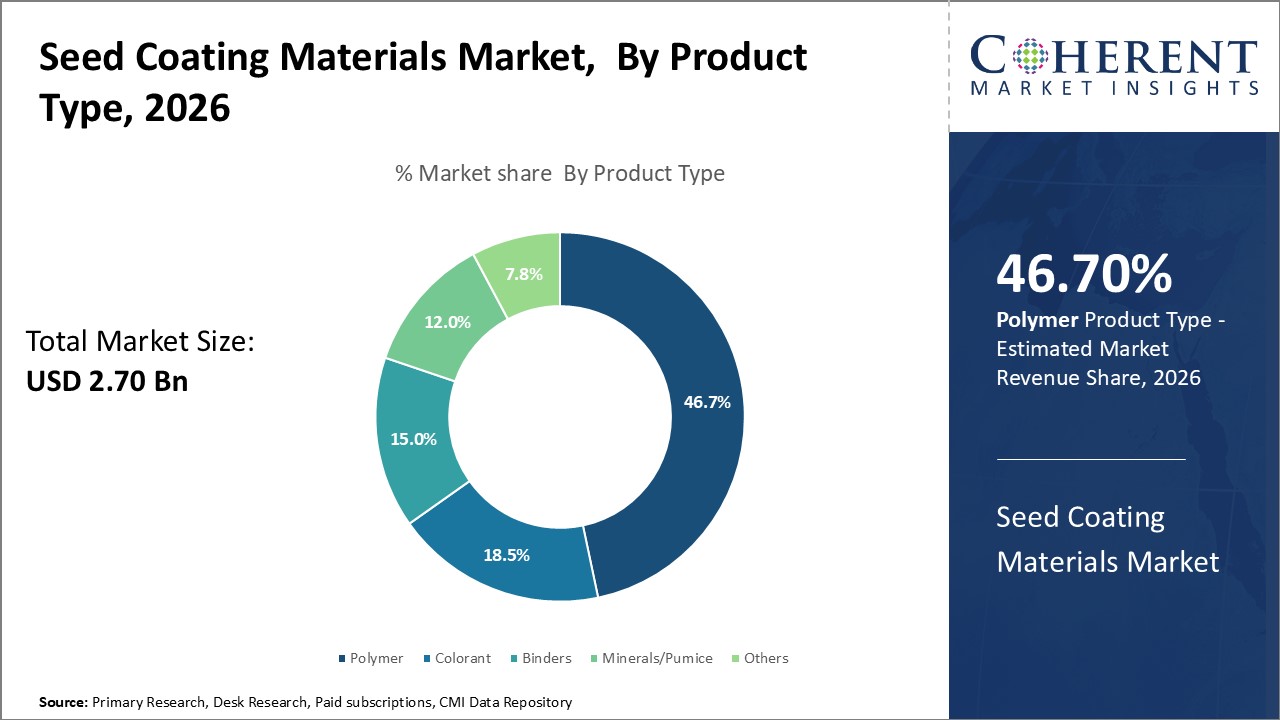
Insights, By Product Type: Polymers Usher Growth in Seed Coating Materials Market
The polymer segment is estimated to hold 46.7% market share of the market in 2026. Polymers form the core substrate layer of most seed coatings that are used today. They provide an elastic yet durable encasement to the seed, serving multiple functions. Polymers allow for precise application and adhesion of other active ingredients to the seed surface. They control the release rate of water, nutrients, and agrochemicals from the seed coating into the growing media.
Regional Insights
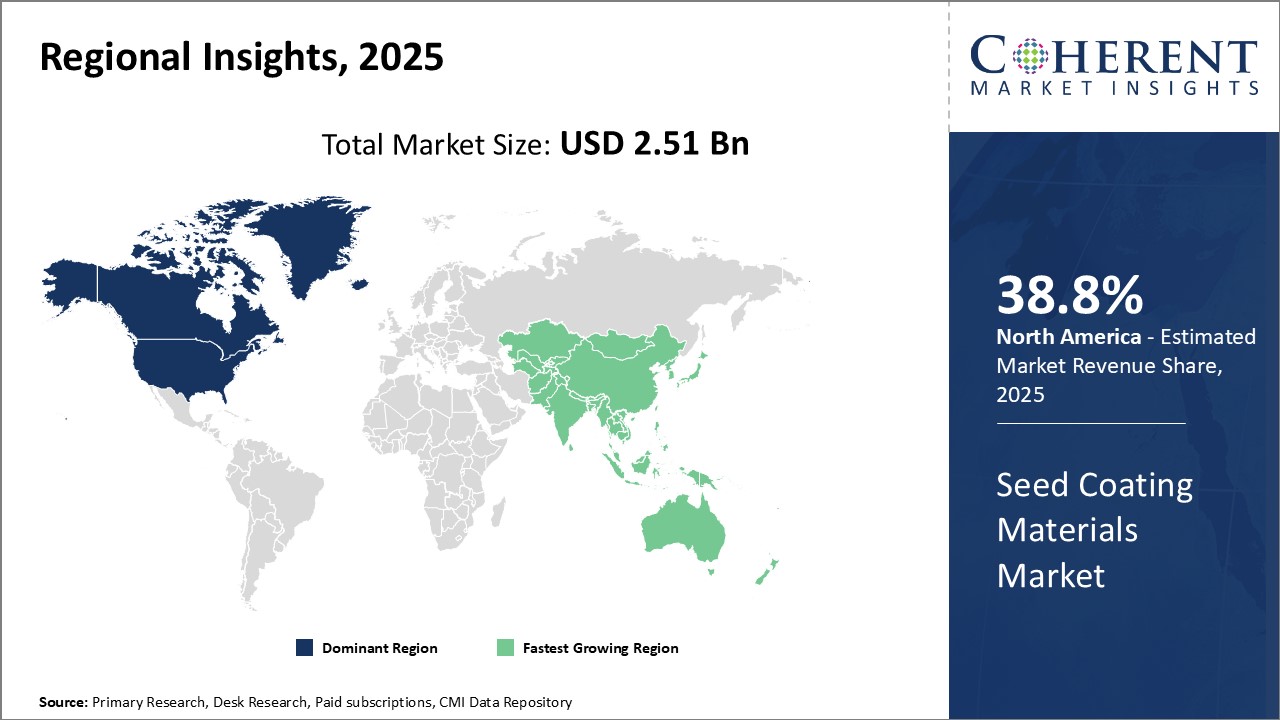
Regional Analysis: Seed Coating Materials Market
Dominating Region: North America
North America accounted for the greatest revenue share of 38.8% in 2026. North America’s dominance in the market can be attributed to the well-established agriculture industry and favorable government initiatives promoting sustainable farming practices. Major players in the region have significantly contributed to technological advancements enabling precision farming and stress-resistant crop varieties.
Fastest-Growing Region: Asia Pacific
The Asia Pacific region exhibits the fastest growth, driven by a growing population, rising disposable incomes, and government support for agriculture development. Countries like China and India are focusing on boosting agricultural yields to ensure food security.
Seed Coating Materials Market Outlook for Key Countries
China - The market in China is led by domestic giants focusing on value-added products. Recent free trade agreements are also expanding export opportunities.
India - Supported by farm subsidies and irrigation projects, Indian farmers are increasingly adopting commercial hybrids and coated seeds. Local players are strengthening distribution networks in rural areas.
U.S.- The market in the U.S. continues to lead with research in biologicals and novel seed treatments. Collaboration between industry and public institutions has accelerated innovations.
Brazil - A recovering economy and investments in infrastructure are propelling growth for Brazilian agriculture. Leading global brands see potential in the country's diverse climate and crops.
Market Players, Key Development, and Competitive Intelligence
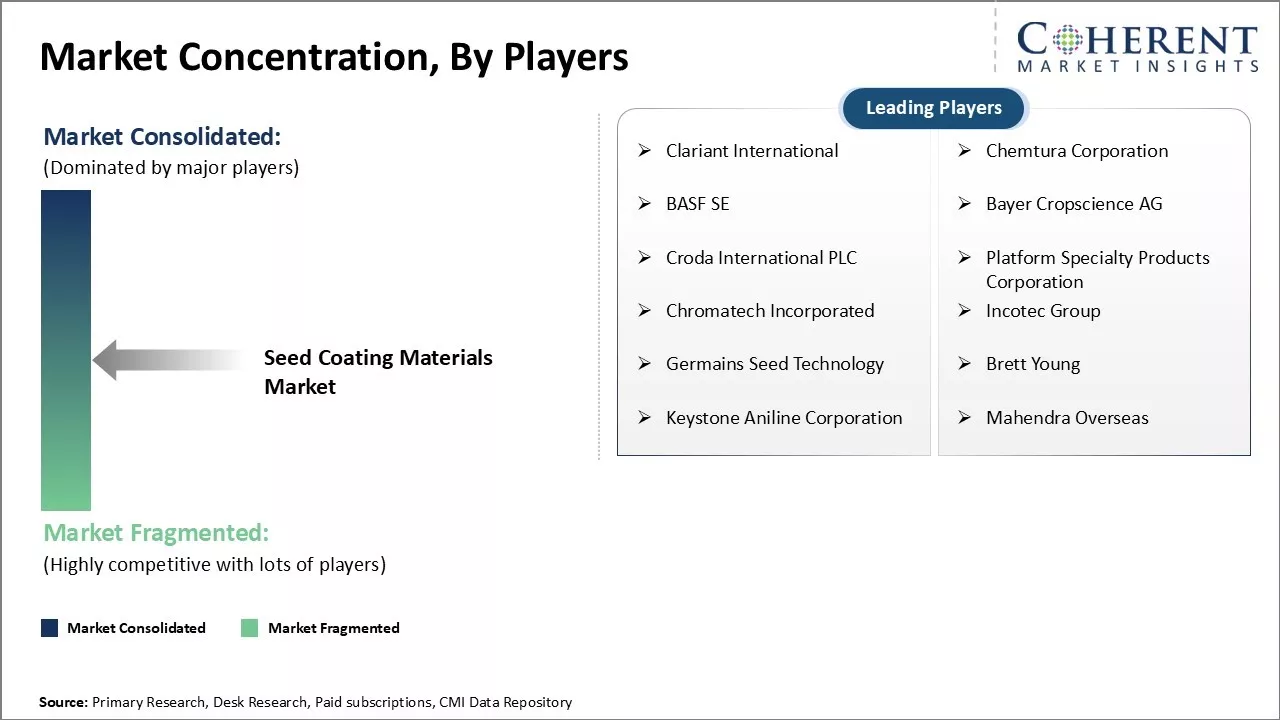
Top Strategies Followed by Seed Coating Materials Market Players
- Established players in the seed coating materials market focus extensively on research and development to drive innovation. Companies like Bayer, Syngenta, and Corteva Agriscience invest over 10% of their annual revenues in research & development. Their efforts are focused on developing high-performance formulations that improve seed germination rates, protect against diseases and pests, and boost yields. These companies also pursue strategic partnerships with major seed companies and equipment manufacturers. Alliances help gain access to new technologies, customers, and geographic regions to amplify their market presence globally.
- Mid-level players compete through cost-effective product portfolios. Companies such as Clariant, BASF, and Sensient Technologies tailor their offerings to price-sensitive customers in developing markets. They ensure affordable access to seed treatment solutions without compromising on quality.
- Small-scale manufacturers leverage niche specialization and tech adoption. Firms concentrate on specialized formulations for certain crops or soil and climate conditions. They gain expertise in narrow application segments like vegetable seeds or controlled-release nutrients. To counter size disadvantages, small entrants increasingly employ digital and analytical tools. Precision farming technologies like artificial intelligence and Internet of things IoT sensors help optimize seed treatment processes and product performance. Local partnerships with agricultural enterprises also aid market penetration.
Emerging Startups in the Seed Coating Materials Market
Several startups are pioneering innovative technologies for seed enhancement. Companies like Indigo AG and Precision Biosciences apply gene editing, robotics, and computer vision. Their advanced solutions develop seeds specially tailored to withstand extreme weather events and resist new pathogens.
Sustainable startups focus on eco-friendly products and recycled materials. Companies like Benson Hill and Vestaron develop biopesticides from food and plant waste. Their renewable solutions provide natural disease and pest protection alternatives. Firms like Triton Bioproducts upcycle forestry residues into biodegradable seed coatings, reducing agricultural plastics pollution. Startup innovations mainstream circular economy practices and help farms shrink their carbon footprints.
Emerging firms further drive industry progress through collaborations. They partner with leading agritech institutions on research projects. Joint efforts accelerate the development and adoption of novel seed enhancement methods involving gene-editing, polymer nanocomposites, and alternate substrates.
Key Developments
- In February 2022, Croda International, a U.K.-based specialty chemicals company, partnered with Xampla, a company engaged in the creation of plant protein material for commercial use to contrive a completely biodegradable seed coating that is microplastic-free in nature. This partnership is helping Croda International lead this market. This will also help Croda International offer enduring solutions in compliance with the microplastic ban in a few countries.
- In September 2021, Croda International announced the opening of crop product validation center in Holambra, Brazil. It prepares plant growth mediums based on regions climatic conditions.
- In July 2021, Solvay, a global leader in materials, chemicals and solutions, acquired The Bayer Seed coating, a company engaged in seed coating and seed enhancement products business. With this acquisition, Solvay will be able to expand its product portfolio and research & development capabilities for seed-based products.
- Current Industry Events of 2026
- Market Size Estimation
- Regional Breakdown
- Competitive Landscape
- Customer Intelligence
- Segmental Analysis
- Pricing Analysis
- Key Market Drivers, Challenges & Future Trends
- Customized Insights Section
Market Report Scope
Seed Coating Materials Market Report Coverage
| Report Coverage | Details | ||
|---|---|---|---|
| Base Year: | 2025 | Market Size in 2026: | USD 2.70 Bn |
| Historical Data for: | 2020 To 2024 | Forecast Period: | 2026 To 2033 |
| Forecast Period 2026 to 2033 CAGR: | 7.6% | 2033 Value Projection: | USD 4.51 Bn |
| Geographies covered: |
| ||
| Segments covered: |
| ||
| Companies covered: | Clariant International, Chemtura Corporation, BASF SE, Bayer Cropscience AG, Croda International PLC, Platform Specialty Products Corporation, Chromatech Incorporated, Incotec Group, Germains Seed Technology, Brett Young, Keystone Aniline Corporation, and Mahendra Overseas | ||
| Growth Drivers: |
| ||
| Restraints & Challenges: |
| ||
Market Dynamics
Market Driver - Growing demand for high-value seeds
The demand for high-value seeds is increasing substantially across major countries globally. With increasing population and need for food security, farmers are looking for seeds that can give higher yields per hectare so they opt for hybrid and genetically modified seeds. Seed coating helps address these limitations effectively. As per reports by World Bank, around 60% of world's cereals, oils, and protein production between now and 2050 will have to come from increased yields not expanded crop land. Coated seeds have shown to perform better even under adverse weather and soil conditions.
Market Challenge - Strict regulations regarding the use of certain chemicals
One of the key challenges for this market is strict regulations regarding the use of certain chemicals. Various governments across the world are implementing stringent norms to curb the use of environmentally hazardous chemicals in seed treatment. This is exerting pressure on market players to replace toxic ingredients in their seed coating formulations. Regulatory bans and phase outs of hazardous substances such as neonicotinoids is a major roadblock. Companies need to invest heavily in research and development of bio-based and eco-friendly alternatives to substitute banned chemicals. Compliance with the evolving stringent legislation also increases the production costs. These regulatory challenges are restricting the growth prospects of major players operating in this market.
Market Opportunity - Increased focus on bio-based and organic seed treatment products
The seed coating materials market is presented with bright opportunities for bio-based and organic products. With growing health and environmental concerns, farmers are displaying greater inclination towards using agricultural inputs which are natural and cause minimal or no harm. They are willing to pay premium prices for seed treatment options that are derived from natural sources and free from synthetic chemicals. Major players in the seed coating materials industry are cognizant of this shifting demand and innovating novel bio-based and organic formulations. The development of bio-polymers, plant extracts, and other sustainable ingredients for seed coating is gaining tremendous traction. The rising focus on promoting sustainably produced crops is encouraging more manufacturers to develop green alternatives. This growing demand for natural and eco-friendly seed treatment solutions will likely open lucrative growth avenues for participants in this market.
Analyst Opinion (Expert Opinion)
Key Takeaways from Analyst
The seed coating materials market is expected to witness significant growth over the forecast period driven by the increasing demand for crops with higher yields. Farmers around the world are adopting seed coating techniques to protect seeds and boost germination rates. This trend is likely to continue supporting the market expansion.
North America currently accounts for the largest share of the market owing to established agricultural practices and growing awareness among farmers regarding the benefits of seed coatings. The Asia Pacific region is predicted to emerge as the fastest growing market in the coming years backed by rising seed replacement rates and growth in protected agriculture.
However, pricing pressures from cheap substitutes may restrain the market to some extent. Furthermore, lengthy regulatory approval procedures associated with new formulations pose challenges. But developments in bio-based and environment-friendly coating solutions present an opportunity for vendors to tap the increasing consumer preference for sustainable products.
Speak to the analyst
Want personalized insights?
Take the findings above to one of our principal consultants, or have the report rebuilt around the segments, geographies and competitors you actually track.
Market Segmentation
- By Crop Type Insights (Revenue, USD, 2021 - 2033)
- Cereals & Grains
- Fruits & Vegetables
- Flowers & Ornaments
- Oilseeds & Pulses
- Others
- By Product Type Insights (Revenue, USD, 2021 - 2033)
- Polymer
- Colorant
- Binders
- Minerals/Pumice
- Others
- Regional Insights (Revenue, USD, 2021 - 2033)
- North America
- U.S.
- Canada
- Latin America
- Brazil
- Argentina
- Mexico
- Rest of Latin America
- Europe
- Germany
- U.K.
- Spain
- France
- Italy
- Russia
- Rest of Europe
- Asia Pacific
- China
- India
- Japan
- Australia
- South Korea
- ASEAN
- Rest of Asia Pacific
- Middle East
- GCC Countries
- Israel
- Rest of Middle East
- Africa
- South Africa
- North Africa
- Central Africa
- North America
- Key Players Insights
- Clariant International
- Chemtura Corporation
- BASF SE
- Bayer Cropscience AG
- Croda International PLC
- Platform Specialty Products Corporation
- Chromatech Incorporated
- Incotec Group
- Germains Seed Technology
- Brett Young
- Keystone Aniline Corporation
- Mahendra Overseas
Get access to 250+ pages report
Every segment, forecast, competitor profile and data table behind the analysis above — available for instant download.
- ESOMAR Member
- ISO 9001:2015 Certified
- D-U-N-S Registered
- GDPR & CCPA Compliant
Missing comfort of reading report in your local language? Find your preferred language:
Transform your Strategy with Exclusive Trending Reports
Frequently Asked Questions
The Seed Coating Materials Market is estimated to be valued at USD 2.70 Bn in 2026, and is expected to reach USD 4.51 Bn by 2033.
The CAGR of the Seed Coating Materials Market is projected to be 7.6% from 2026 to 2033.
Growing demand for high-value seeds and increasing awareness about the benefits of seed coating are the major factors driving the growth of seed coating materials market.
Strict regulations regarding the use of certain chemicals and high R&D costs for developing new seed treatment formulations are the major factors hampering the growth of seed coating materials market.
In terms of crop type, the cereals & grains segment is estimated to dominate the market revenue share in 2026.
Clariant International, Chemtura Corporation, BASF SE, Bayer Cropscience AG, Croda International PLC, Platform Specialty Products Corporation, Chromatech Incorporated, Incotec Group, Germains Seed Technology, Brett Young, Keystone Aniline Corporation, and Mahendra Overseas are the major players.
North America is expected to lead the seed coating materials market.