

Global Mock Meat Market Size and Forecast – 2026 To 2033
The Global Mock Meat Market is estimated to be valued at USD 12.42 Bn in 2026 and is expected to reach USD 36.17 Bn by 2033, growing at a compound annual growth rate (CAGR) of 16.5% from 2026 to 2033. This strong expansion is supported by increasing consumer interest in healthier protein choices, sustainability-focused diets, animal welfare considerations, and continuous improvements in plant-based product quality.
The market is also benefiting from investments in alternative protein processing infrastructure, improved ingredient functionality, and broader retail and foodservice availability. In July 2025, GEA opened its New Food Application and Technology Center in Wisconsin, U.S., with a USD 20 million investment focused on scaling alternative protein technologies, including plant-based processing solutions, strengthening the commercial ecosystem supporting next-generation mock meat production.
Key Takeaways of the Global Mock Meat Market
- Plant based Burgers is expected to record a CAGR of 15.2% and capture 32.8% of the global mock meat market in 2026, supported by consumer familiarity, menu versatility, and strong retail acceptance. In March 2025, Impossible Foods introduced Impossible Steak Bites, expanding its meat-like portfolio beyond conventional burger formats.
- Soy Protein is projected to achieve a CAGR of 8% and represent 42.6% of the global mock meat market in 2026, as manufacturers continue using soy for its functional performance, protein quality, and meat-texture compatibility. In July 2024, Nestlé launched Maggi Rindecarne in Chile, utilizing soy-based formulation to provide an affordable plant protein alternative.
- Frozen products are estimated to register a CAGR of 16.0% and account for 46.8% of the global mock meat market in 2026, benefiting from longer shelf life, convenience, and established frozen food purchasing habits. In May 2024, Impossible Foods expanded impossible chicken nuggets and patties availability through whole foods market locations, strengthening frozen plant-based product accessibility.
- North America is expected to grow at a CAGR of 14.9% and hold 36.8% of the global mock meat market in 2026, supported by mature retail networks, established brands, and high consumer familiarity with alternative proteins. In June 2026, the Plant Based Foods Association reported continued household adoption of plant-based foods across U.S. markets, reinforcing regional category expansion.
- Europe is forecast to achieve a CAGR of 18.1% and contribute 30.6% of the global mock meat market in 2026, supported by protein diversification initiatives, improving affordability, and expanding consumer acceptance. In June 2026, the Good Food Institute Europe highlighted growth in European plant-based retail sales across major markets, with plant-based meat remaining a key category.
Segmental Insights
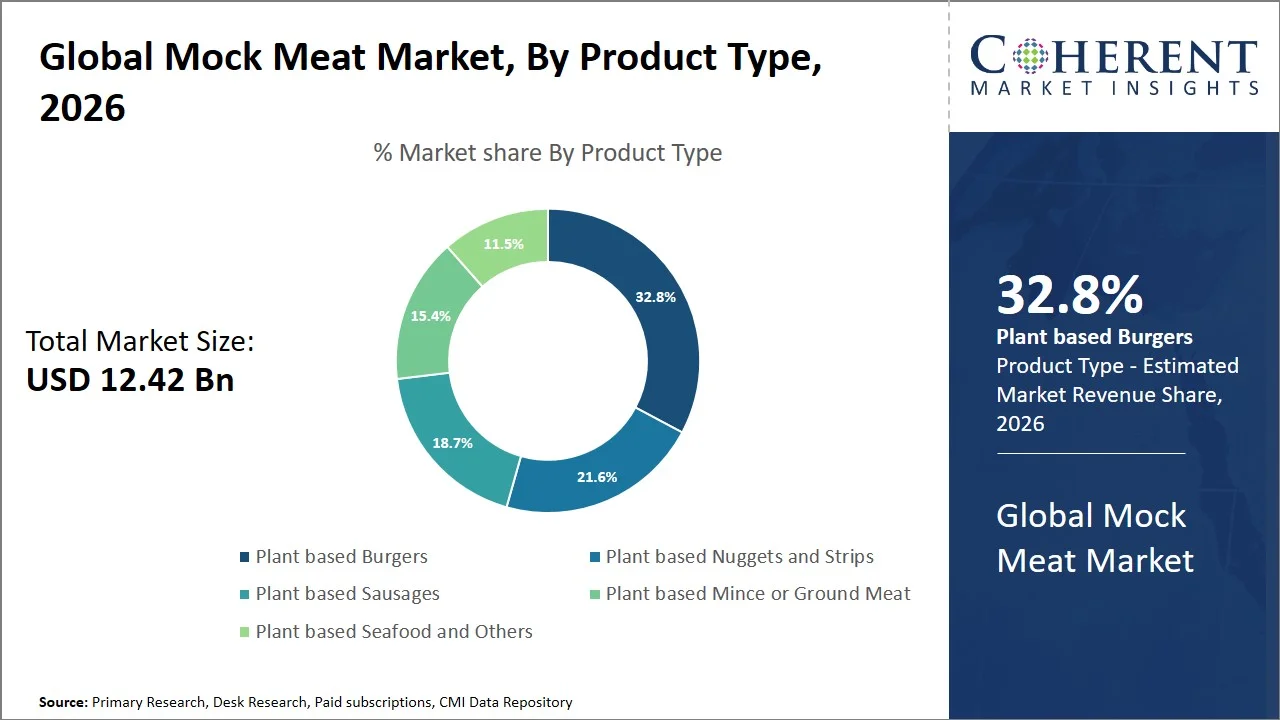
Why Do Plant Based Burgers Dominate the Global Mock Meat Market?
Plant based Burgers are expected to account for 32.8% of the global mock meat market in 2026, leading the product category due to their strong resemblance to traditional beef burgers, broad consumer familiarity, and compatibility with established quick-service restaurant and retail formats. The segment benefits from standardized production processes, widespread frozen distribution networks, and high menu adaptability across restaurants, cafeterias, and household consumption. Manufacturers continue improving protein blends, flavor systems, and cooking performance to attract flexitarian consumers seeking convenient alternatives rather than complete dietary replacement. In January 2025, Burger King Brazil expanded its plant-based burger offerings through continued availability of its Rebel Whopper line, demonstrating foodservice integration of meat alternative burgers in mainstream restaurant channels.
- Current Industry Events of 2026
- Market Size Estimation
- Regional Breakdown
- Competitive Landscape
- Customer Intelligence
- Segmental Analysis
- Pricing Analysis
- Key Market Drivers, Challenges & Future Trends
- Customized Insights Section
Why Does Soy Protein Represent the Largest Protein Source Category in the Global Mock Meat Market?
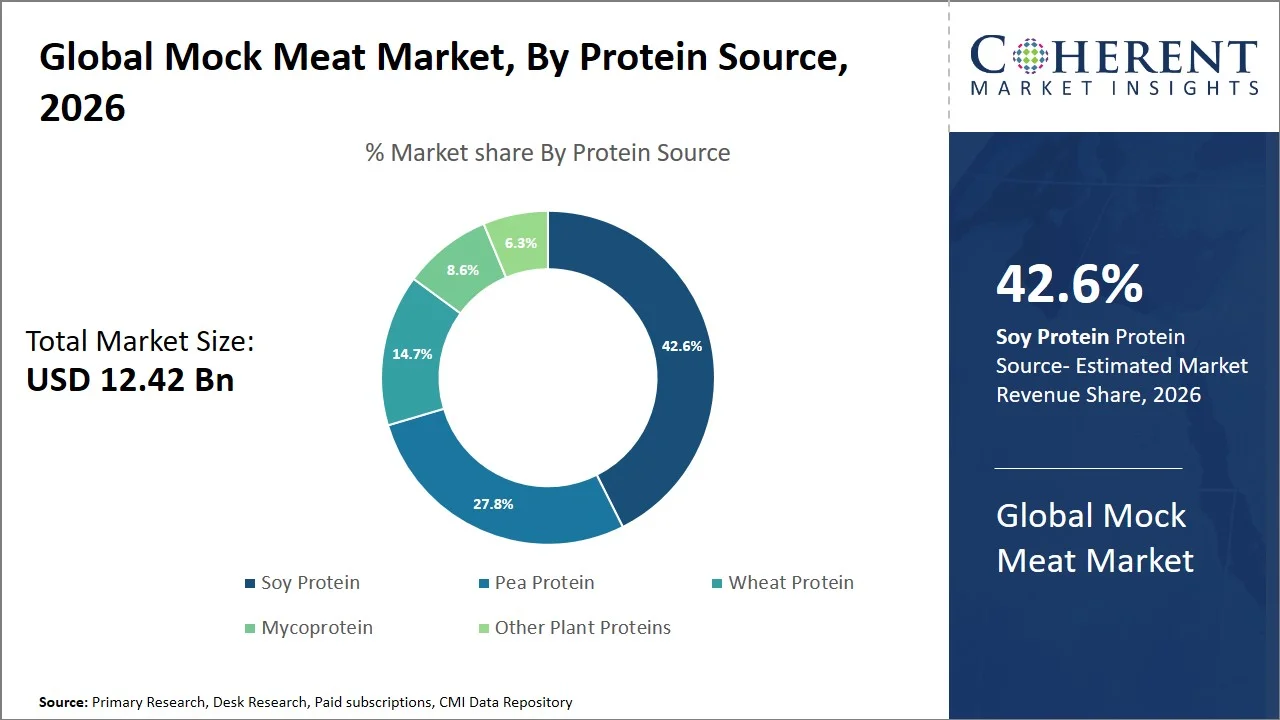
Soy Protein is expected to represent 42.6% of the global mock meat market in 2026, maintaining leadership within protein sources due to its functional properties, established supply chain, cost efficiency, and ability to deliver desirable texture characteristics in meat analogue formulations. Soy-based ingredients provide manufacturers with reliable protein concentration, binding performance, and scalability for producing burgers, nuggets, sausages, and processed meat alternatives. The segment benefits from mature soybean processing infrastructure and availability across major agricultural markets, supporting consistent raw material supply. In October 2024, ADM announced expansion of its alternative protein ingredient capabilities in Europe, strengthening its ability to supply functional plant protein solutions for food manufacturers.
Why Does Frozen Dominate the Form Category of the Global Mock Meat Market?
Frozen mock meat products are expected to capture 46.8% of the global mock meat market in 2026, leading the form category due to longer shelf stability, efficient logistics, reduced food waste, and compatibility with established frozen food purchasing behavior. Frozen formats allow manufacturers to maintain product quality during transportation while enabling retailers and foodservice operators to manage inventory effectively. The segment is particularly relevant for burgers, nuggets, and prepared meat alternatives where consumers prioritize convenience and easy meal preparation. Strong cold-chain infrastructure across developed markets further supports wider availability. In June 2025, McCain Foods expanded its plant-based food portfolio through investments in alternative food solutions, reflecting continued industry interest in frozen-format innovation.
Current Events and their Impact
Current Event | Description and Its Impact |
March 2026 – European Union Debate on Meat-Related Terms for Plant-Based Foods |
|
2025 – Food Standards Australia New Zealand (FSANZ) Alternative Protein Regulatory Developments |
|
2025 – United States Regulatory Discussions Around Alternative Protein Labeling |
|
Global Mock Meat Market Dynamics
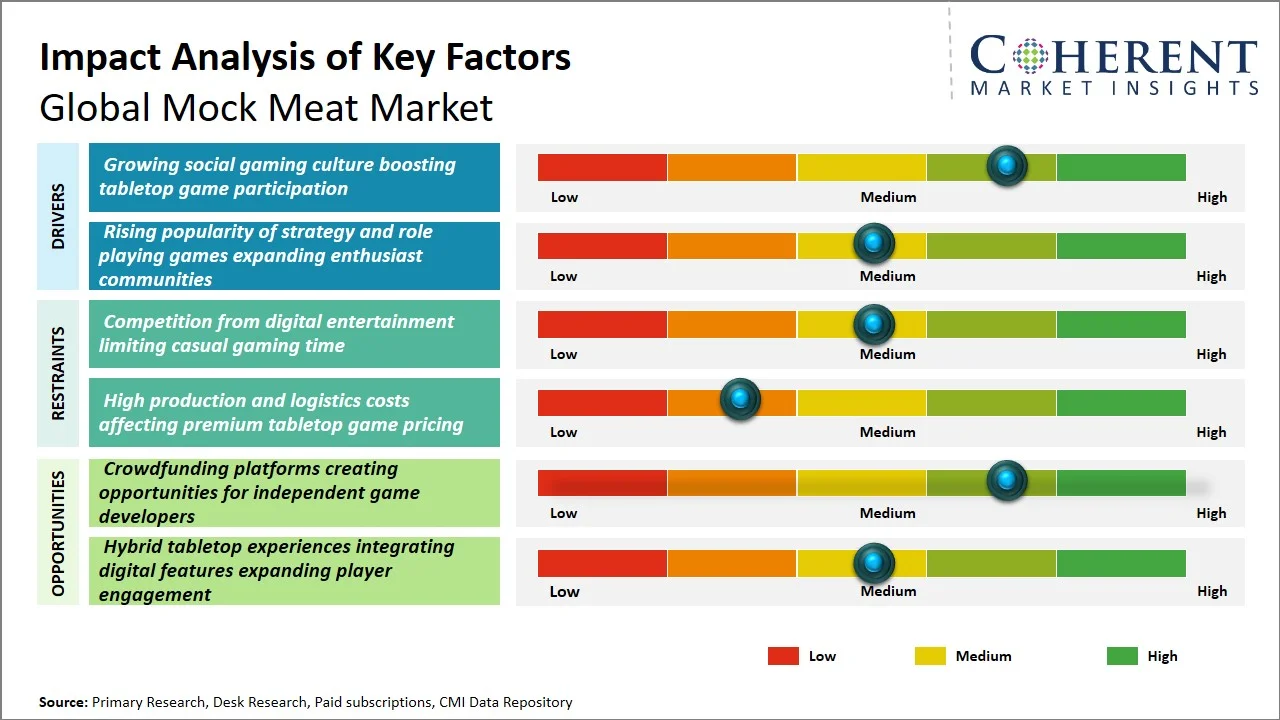
Key Market Drivers
- Rising Flexitarian Diets Expanding Demand for Meat Alternative Products: The shift toward flexitarian eating patterns is increasing adoption of the global mock meat market as consumers seek products that reduce animal meat consumption without eliminating familiar food experiences. Burger, nugget, sausage, and mince manufacturers benefit as flexitarian buyers prioritize taste, convenience, and protein variety. This shift encourages food companies to improve sensory quality, expand retail availability, and develop products suitable for mainstream consumers. In September 2025, the Good Food Institute highlighted continued consumer interest in plant-based meat alternatives through its global industry analysis.
- Sustainability and Animal Welfare Priorities Strengthening Plant-Based Meat Adoption: Environmental concerns, resource efficiency goals, and animal welfare considerations are influencing purchasing decisions and encouraging investment across the global mock meat market. Ingredient suppliers, food manufacturers, retailers, and foodservice operators benefit as sustainable protein alternatives become integrated into broader menu strategies. Companies are focusing on improved formulations, efficient production systems, and clearer consumer communication to overcome adoption barriers. In November 2024, the European Parliament highlighted the importance of sustainable food systems and reducing environmental impacts associated with food production through continued policy discussions under the Farm to Fork strategy.
Emerging Market Trends
- Premiumization Through Improved Taste and Texture Engineering: The global mock meat market is moving toward premium product development where companies compete through sensory performance rather than only sustainability positioning. Manufacturers are investing in advanced formulation approaches that improve juiciness, bite, flavor release, and cooking behavior to attract mainstream meat consumers. This trend benefits ingredient innovators, food technology developers, and brands capable of delivering realistic alternatives across burgers, seafood, poultry substitutes, and prepared meals. Over the forecast period, competitive differentiation is expected to shift toward superior eating experiences, nutritional profiles, and customized product formats.
- Expansion of Diverse Protein Platforms Beyond Traditional Soy-Based Products: The market is gradually diversifying its ingredient base as manufacturers explore pea, wheat, mycoprotein, fermentation-derived ingredients, and blended protein systems. This transition allows producers to address allergen concerns, improve nutritional positioning, and create differentiated product lines for specific consumer groups. Ingredient companies and manufacturers with flexible processing capabilities are likely to gain advantages as buyers seek cleaner labels and broader protein choices. The trend will reshape supply chains by increasing demand for specialized protein processing, formulation expertise, and scalable alternative ingredient production.
Regional Insights
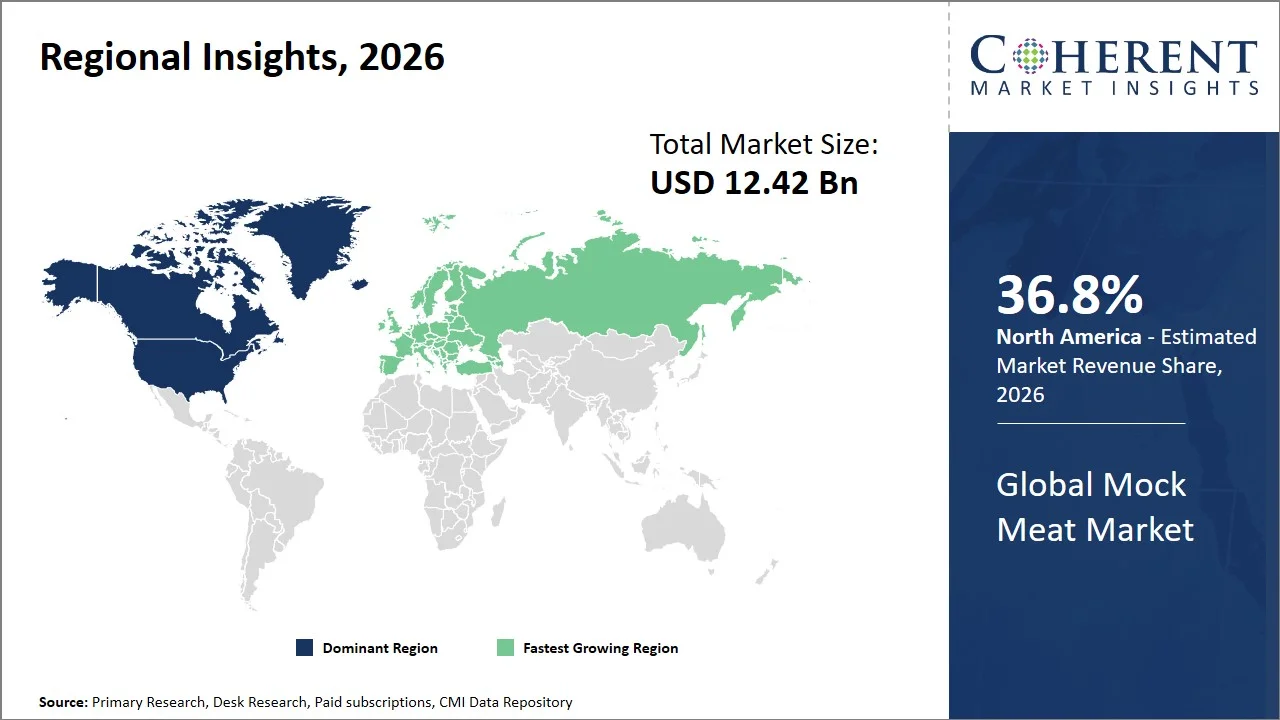
Why Does North America Dominate the Global Mock Meat Market?
North America is expected to maintain its leading position in the global mock meat market with a 36.8% share in 2026, supported by strong consumer acceptance of plant-based alternatives, established alternative protein companies, advanced food processing capabilities, and extensive retail and foodservice penetration. The region benefits from a mature innovation ecosystem involving ingredient suppliers, food manufacturers, restaurants, and technology developers focused on improving taste, texture, and nutritional performance. The presence of large-scale protein processors and established cold-chain infrastructure enables wider availability of frozen and chilled mock meat products. In April 2025, the U.S. Food and Drug Administration (FDA) issued updated guidance supporting clearer regulatory pathways for plant-based food labeling, helping manufacturers improve compliance strategies and consumer communication.
Why Is Europe Emerging as the Fastest-Growing Region in the Global Mock Meat Market?
Europe is projected to become the fastest-growing region in the global mock meat market, accounting for 30.6% share in 2026, driven by sustainability-focused food policies, increasing flexitarian adoption, strong plant-based innovation, and growing retailer commitments toward alternative proteins. European consumers are increasingly seeking products that align with environmental objectives while maintaining familiar eating experiences. The region’s developed food manufacturing base and focus on clean-label formulations encourage companies to invest in improved plant-based meat technologies. In February 2025, the European Commission continued advancing initiatives under the Sustainable Food System framework, supporting broader transformation toward environmentally responsible food production models.
Global Mock Meat Market Outlook for Key Countries
Why Is the U.S. a Key Market for the Global Mock Meat Market?
The U.S. is expected to remain the largest country-level market within the global mock meat market owing to its strong consumer awareness, established alternative protein brands, extensive supermarket availability, and high foodservice adoption. The country has developed a strong ecosystem covering protein ingredient suppliers, food technology companies, manufacturers, and restaurant chains, enabling continuous product innovation. Demand is increasingly influenced by flexitarian consumers seeking convenient protein alternatives rather than only vegetarian-focused products. In January 2025, the Plant Based Foods Association highlighted continued expansion of plant-based food categories across U.S. retail channels, reinforcing the country’s importance as a commercialization hub for alternative protein products.
Why Is India Important in the Global Mock Meat Market?
India is becoming an important market for the global mock meat market. It has a large vegetarian consumer base, increasing urbanization, rising interest in protein-rich foods, and expanding modern retail and online food channels. The country provides opportunities for plant-based meat manufacturers to develop affordable products tailored to local tastes, cuisines, and dietary preferences. Domestic food companies are increasingly exploring alternative proteins to address changing consumer expectations around health, sustainability, and convenience. In August 2025, the Good Food Institute India highlighted continued growth of India’s alternative protein ecosystem through industry collaboration and innovation initiatives aimed at strengthening domestic capabilities.
Why Does China Support Growth in the Global Mock Meat Market?
China is expected to support expansion of the global mock meat market. The country’s growth is driven by large food manufacturing base, extensive soy-processing capabilities, growing interest in healthier diets, and strong supply-chain infrastructure. The country’s established ingredient ecosystem provides advantages in protein sourcing, processing efficiency, and scalable production of plant-based food products. Increasing urban consumer demand for convenient and sustainable protein options is encouraging domestic brands and international companies to expand their presence. In March 2025, China’s National Health Commission continued promoting nutrition improvement initiatives through national dietary guidelines, supporting broader consumer awareness around balanced protein consumption.
Why Is Germany a Strategic Country in the Global Mock Meat Market?
Germany is expected to hold strategic importance in the global mock meat market and supported by advanced food manufacturing capabilities, strong sustainability priorities, developed retail networks, and high acceptance of plant-based alternatives. The country serves as a major innovation center for European food technology, with manufacturers focusing on improved formulations, clean-label ingredients, and premium meat substitute products. Germany’s regulatory focus on sustainable food systems and its strong processing industry create favorable conditions for market development. In March 2025, Germany’s Federal Ministry of Food and Agriculture continued supporting transformation toward sustainable food systems through policy initiatives focused on environmentally responsible production.
Why Is Brazil an Important Growth Market for the Global Mock Meat Market?
Brazil is emerging as an important growth market for the global mock meat market, supported by its strong agricultural base, soybean production capabilities, expanding food processing sector, and increasing consumer interest in diversified protein options. The country offers strategic advantages for plant-based meat production due to access to key raw materials and established food manufacturing infrastructure. Brazilian companies are exploring alternative proteins to address domestic consumption trends and export opportunities across Latin America. In September 2025, Embrapa continued research initiatives focused on developing innovative food solutions using Brazil’s agricultural resources, supporting future alternative protein development potential.
Product Innovation and Consumer Acceptance Landscape in the Global Mock Meat Market
Innovation Area | Market Development Focus | Commercial Impact |
Texture and Meat-Like Performance | Manufacturers are improving fibrous structure, juiciness, and cooking behavior to replicate conventional meat experiences. | Strengthens consumer acceptance and repeat purchases among flexitarian buyers. |
Protein Formulation Innovation | Companies are optimizing soy, pea, wheat, and blended protein systems for better nutrition, functionality, and taste. | Enables differentiated products across burgers, nuggets, sausages, and mince categories. |
Clean-Label Product Development | Brands are focusing on simpler ingredients, improved nutrition profiles, and reduced processing concerns. | Supports premium positioning and addresses evolving consumer expectations. |
Format Diversification | Manufacturers are expanding beyond burgers into seafood alternatives, poultry substitutes, ready meals, and foodservice products. | Creates new applications and increases market penetration opportunities. |
Flavor Optimization | Food technology providers are enhancing taste, aroma, and sensory performance of plant-based products. | Reduces adoption barriers by improving similarity with traditional meat. |
How Are Advanced Protein Formulation Technologies Creating New Growth Opportunities in the Global Mock Meat Market?
Advanced protein formulation technologies are creating opportunities for manufacturers to move beyond basic meat substitutes toward highly differentiated products designed for mainstream consumption. The opportunity lies in developing products with improved taste, texture, nutritional balance, and cooking performance that can compete more effectively with conventional meat categories. Ingredient suppliers, food technology companies, and established food manufacturers can capture value by investing in specialized protein blends, fermentation-derived ingredients, and customized formulations. Foodservice operators and retailers also represent important expansion channels as they seek broader sustainable menu options. Companies with strong research capabilities, scalable processing infrastructure, and consumer-focused innovation strategies are likely to achieve stronger market positioning. However, success will depend on balancing product quality improvements with affordability, supply reliability, and regulatory compliance requirements.
Market Players, Key Development, and Competitive Landscape
Key Developments
- In October 2025, Beyond Meat introduced updated Beyond Burger and Beyond Beef products featuring revised formulations focused on improved nutrition and consumer appeal. This development is important for the global mock meat market because it reflects the industry’s shift toward better-performing products targeting mainstream consumers.
- In June 2025, Nestlé expanded its plant-based food initiatives through continued development of alternative protein offerings under its food brands. This is important for the global mock meat market because large food manufacturers are increasing category participation through established retail networks and global distribution capabilities.
- In April 2025, Impossible Foods continued expanding its plant-based product portfolio and market availability across retail and foodservice channels. This is important for the global mock meat market because broader accessibility supports consumer trial and strengthens alternative protein adoption beyond niche audiences.
Competitive Landscape
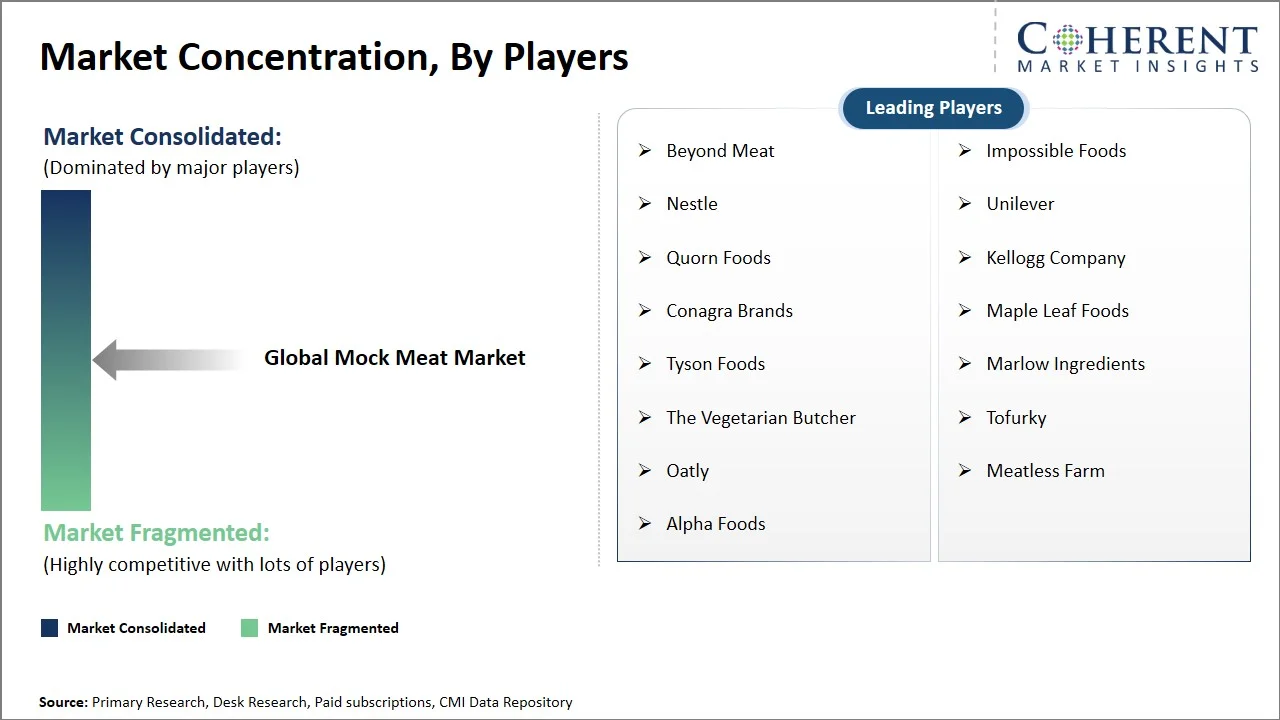
The global mock meat market is moderately consolidated, with competition involving multinational food companies, alternative protein specialists, ingredient suppliers, and emerging food technology firms. Market positioning depends on product taste, texture performance, pricing, manufacturing scale, distribution access, and brand recognition. Regional companies continue gaining importance by developing localized flavors, affordable formulations, and targeted consumer offerings.
Key focus areas include
- Product taste, texture, and sensory similarity to conventional meat
- Protein ingredient sourcing and formulation capabilities
- Manufacturing scalability and supply reliability
- Retail and foodservice distribution network expansion
- Pricing competitiveness compared with animal-based proteins
- Clean-label positioning and nutritional differentiation
- Regulatory compliance and labeling adaptability
- Innovation capability in new product formats
Market Report Scope
Mock Meat Market Report Coverage
| Report Coverage | Details | ||
|---|---|---|---|
| Base Year: | 2025 | Market Size in 2026: | USD 12.42 Bn |
| Historical Data for: | 2020 To 2024 | Forecast Period: | 2026 To 2033 |
| Forecast Period 2026 to 2033 CAGR: | 16.5% | 2033 Value Projection: | USD 36.17 Bn |
| Geographies covered: |
| ||
| Segments covered: |
| ||
| Companies covered: | Beyond Meat, Impossible Foods, Nestle, Unilever, Quorn Foods, Kellogg Company, Conagra Brands, Maple Leaf Foods, Tyson Foods, Marlow Ingredients, The Vegetarian Butcher, Tofurky, Oatly, Meatless Farm, Alpha Foods | ||
| Growth Drivers: |
| ||
| Restraints & Challenges: |
| ||
Analyst Opinion (Expert Opinion)
- The global mock meat market is likely to transition from competing mainly on sustainability messaging toward competing on product superiority. Future market leaders will be companies capable of delivering affordable products that match conventional meat expectations in taste, cooking performance, and convenience while maintaining strong ingredient transparency.
- A major transformation will come from convergence between plant-based proteins, fermentation technologies, and advanced food processing techniques. Companies that successfully combine multiple technology platforms may reshape category boundaries by creating products that appeal to broader consumer groups rather than only vegetarian or vegan buyers.
- Market participants should prioritize formulation capabilities, supply-chain efficiency, and consumer education while avoiding excessive investment in products without clear differentiation. Companies that build strong partnerships across ingredient suppliers, retailers, and foodservice channels will be better positioned to manage pricing pressure and changing consumer expectations.
Speak to the analyst
Want personalized insights?
Take the findings above to one of our principal consultants, or have the report rebuilt around the segments, geographies and competitors you actually track.
Market Segmentation
- Product Type Insights (Revenue, USD Bn, 2021 - 2033)
- Plant based Burgers
- Plant based Nuggets and Strips
- Plant based Sausages
- Plant based Mince or Ground Meat
- Plant based Seafood and Others
- Protein Source Insights (Revenue, USD Bn, 2021 - 2033)
- Soy Protein
- Pea Protein
- Wheat Protein
- Mycoprotein
- Other Plant Proteins
- Form Insights (Revenue, USD Bn, 2021 - 2033)
- Frozen
- Chilled
- Shelf stable
- Distribution Channel Insights (Revenue, USD Bn, 2021 - 2033)
- Supermarkets and Hypermarkets
- Online Retail
- Foodservice
- Specialty Stores
- Others
- Regional Insights (Revenue, USD Bn, 2021 - 2033)
- North America
- U.S.
- Canada
- Latin America
- Brazil
- Argentina
- Mexico
- Rest of Latin America
- Europe
- Germany
- U.K.
- Spain
- France
- Italy
- Russia
- Rest of Europe
- Asia Pacific
- China
- India
- Japan
- Australia
- South Korea
- ASEAN
- Rest of Asia Pacific
- Middle East
- GCC Countries
- Israel
- Rest of Middle East
- Africa
- South Africa
- North Africa
- Central Africa
- North America
- Key Players Insights
- Beyond Meat
- Impossible Foods
- Nestle
- Unilever
- Quorn Foods
- Kellogg Company
- Conagra Brands
- Maple Leaf Foods
- Tyson Foods
- Marlow Ingredients
- The Vegetarian Butcher
- Tofurky
- Oatly
- Meatless Farm
- Alpha Foods
Sources
Primary Research Interviews
- Plant-based meat manufacturers, alternative protein companies, ingredient suppliers, food processors, retailers, foodservice operators, and distributors
- Food technology experts, product developers, nutrition specialists, sustainability consultants, and industry professionals
Stakeholders
- Mock meat manufacturers, plant protein suppliers, flavor and ingredient companies, packaging providers, retail chains, restaurants, and foodservice companies
- Alternative protein investors, supply chain partners, e-commerce platforms, and specialty food distributors
End-use Sectors
- Retail and packaged food industry
- Foodservice and restaurant sector
- Household and consumer food applications
- Institutional catering and commercial kitchens
- Online food delivery and grocery platforms
Regulatory and Industry Bodies
- Food safety authorities
- Food labeling and consumer protection agencies
- Alternative protein and food innovation organizations
- Sustainability and environmental regulatory bodies
- International food standards organizations
Databases
- UN Comtrade and ITC Trade Map – Plant-based protein, processed food, and alternative protein trade analysis
- Government import-export databases and customs records
- Company annual reports, investor presentations, product portfolios, and corporate disclosures
- Food industry databases, alternative protein platforms, and consumer trend sources
Magazines and Journals
- Food Navigator
- Food Business News
- The Good Food Institute Publications
- New Food Magazine
- Food Technology Magazine
Associations
- Good Food Institute (GFI)
- Plant Based Foods Association (PBFA)
- Food and Agriculture Organization (FAO)
- International Food Information Council (IFIC)
- Food Industry Asia and regional food associations
Public Domain Sources
- Alternative protein industry reports and sustainability publications
- Plant-based product launches, formulation developments, and manufacturing updates
- Food safety guidelines, labeling updates, and regulatory developments
- Trade statistics and food industry publications related to plant-based proteins
Key Standards and Regulations
- Food safety and quality standards
- Food labeling and nutritional declaration requirements
- Novel food approval and regulatory compliance frameworks
- Sustainable packaging and environmental compliance standards
- Quality management standards for food manufacturing processes
Proprietary Elements
- CMI Data Analytics Tool, Proprietary CMI Existing Repository of information for the last 10 years
Get access to 250+ pages report
Every segment, forecast, competitor profile and data table behind the analysis above — available for instant download.
- ESOMAR Member
- ISO 9001:2015 Certified
- D-U-N-S Registered
- GDPR & CCPA Compliant
Missing comfort of reading report in your local language? Find your preferred language:
Frequently Asked Questions
The global mock meat market is estimated to be valued at USD 12.42 billion in 2026 and is expected to reach USD 36.17 billion by 2033
Mock meat products are widely used in burgers, nuggets, sausages, mince alternatives, ready-to-eat meals, restaurant menus, and packaged food products to provide sustainable protein options similar to traditional meat.
The CAGR of global mock meat market is projected to be 16.5% from 2026 to 2033.
Manufacturers are focusing on improving taste, texture, nutritional value, ingredient quality, and cooking performance through advanced formulation techniques and innovative protein processing approaches.
Food companies are investing in mock meat production to address changing consumer preferences, expand sustainable food portfolios, strengthen alternative protein offerings, and capture opportunities across retail and foodservice channels.
Companies entering the mock meat market should evaluate consumer preferences, product differentiation, supply chain capabilities, ingredient sourcing, regulatory requirements, and distribution strategies to build commercially viable offerings.
Competition from digital entertainment limiting casual gaming time and high production and logistics costs affecting premium tabletop game pricing are the major factor hampering the growth of global mock meat market.