

Global Neurostimulator Market Size and Forecast – 2026 to 2033
The global neurostimulator market is estimated to be valued at USD 10.4 Bn in 2026 and is expected to reach USD 19.8 Bn by 2033, exhibiting a compound annual growth rate (CAGR) of 9.63% from 2026 to 2033. This significant growth can be attributed to the growing rate of neurological disorders, improvements in neurostimulator technologies, and the growing awareness among patients and medical practitioners regarding minimally invasive treatments.
Key Takeaways of the Global Neurostimulator Market
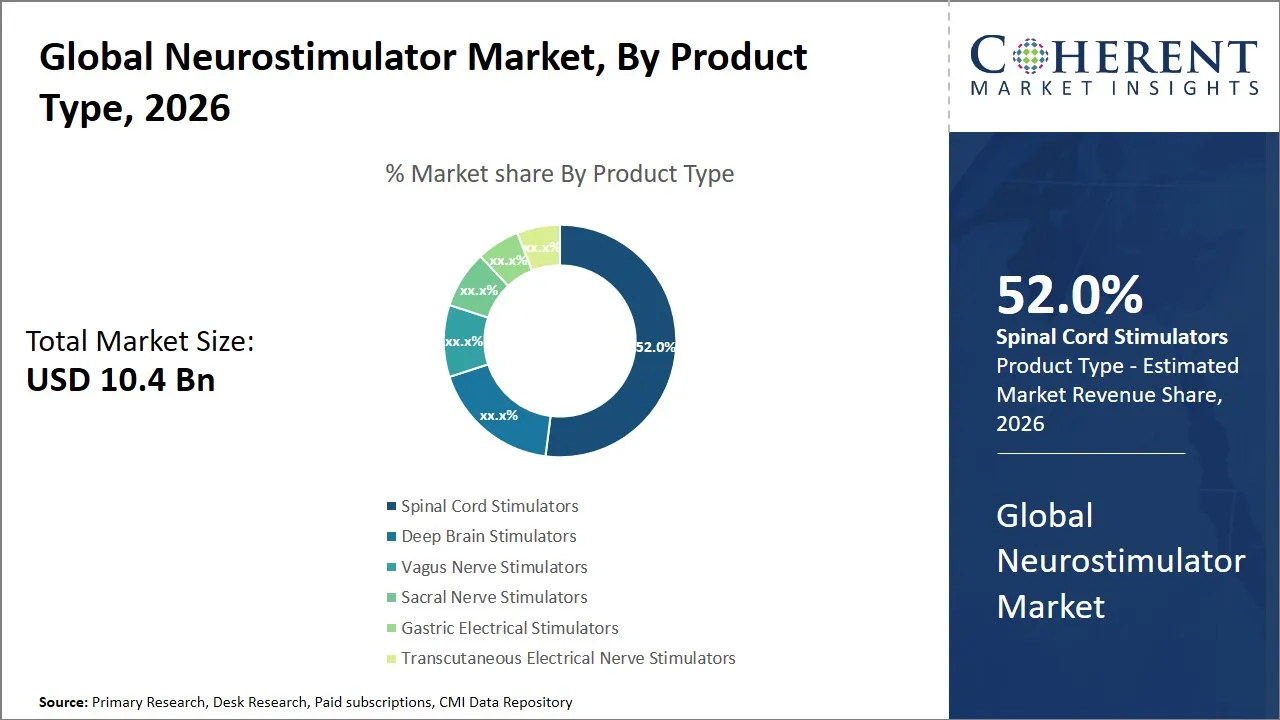
- The spinal cord stimulators segment is expected to dominate the global neurostimulator market by product type, accounting for approximately 52.0% of the total market share in 2026.
- The implantable neurostimulators segment is expected to dominate the global neurostimulator market by technology, accounting for approximately 63.0% of the total market share in 2026.
- The chronic pain management segment is expected to dominate the global neurostimulator market by application, accounting for approximately 45.0% of the total market share in 2026.
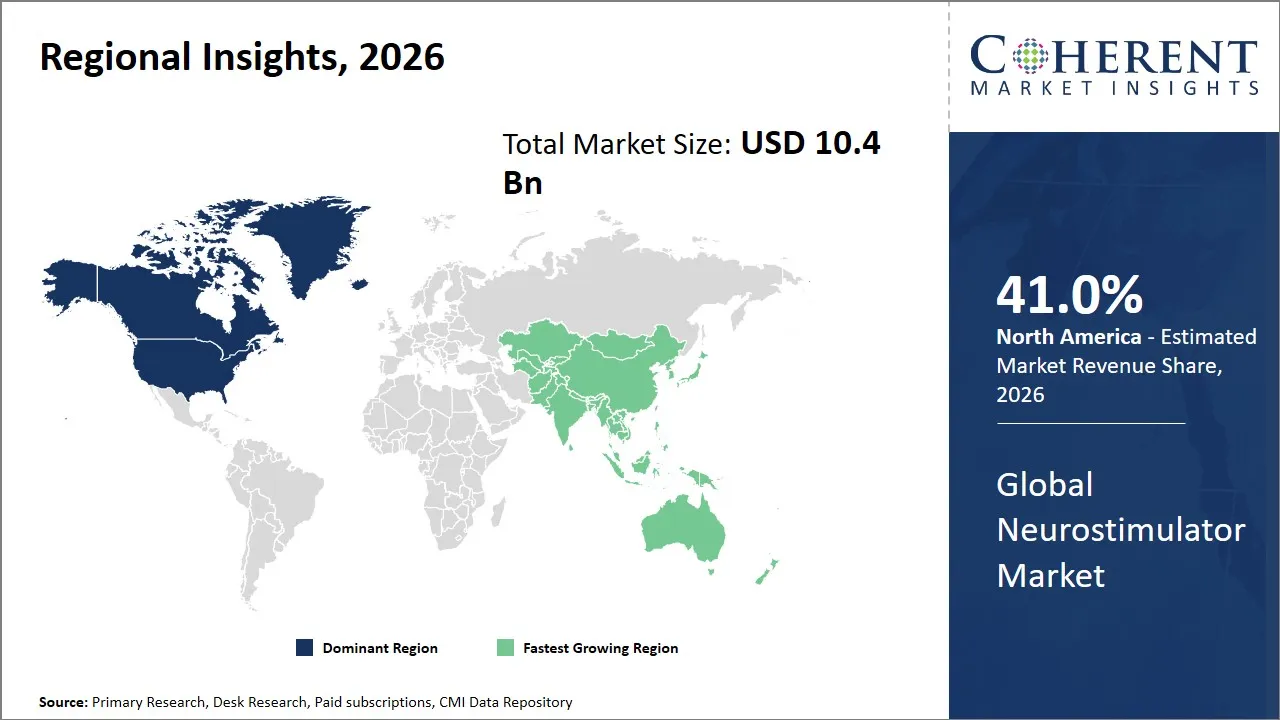
- North America is expected to dominate the global neurostimulator market in 2026, accounting for approximately 41.0% of the total market share.
- Asia Pacific is anticipated to witness the fastest growth, holding a market share of 24.0% in 2026.
Market Overview
- Neurostimulators can be referred to as any type of medical device that is utilized in the management of chronic pain and other neurological conditions such as Parkinson’s disease, epilepsy, and depression through the process of nervous system stimulation. These devices have an essential role in the management of pain and the improvement of the quality of life of patients through the process of neuromodulation therapy.
- The neurostimulator market is expanding globally owing to the rising prevalence of neurological conditions, the rising geriatric population, and the increased adoption of minimally invasive procedures. In addition, the rising number of neurostimulators’ applications in pain management and psychiatric conditions are driving the market’s growth.
- Furthermore, the rising innovations in neurostimulators’ devices are enhancing the accuracy and the level of convenience of the devices. In addition, the rising investments in healthcare infrastructure and the awareness of neuromodulation therapy are also driving the market’s growth in the coming years.
Currents Events and their Impact
Current Events | Description and its Impact |
Advancements in Neurostimulation Technologies |
|
Rising Prevalence of Neurological Disorders |
|
Segmental Insights
- Current Industry Events of 2026
- Market Size Estimation
- Regional Breakdown
- Competitive Landscape
- Customer Intelligence
- Segmental Analysis
- Pricing Analysis
- Key Market Drivers, Challenges & Future Trends
- Customized Insights Section
Why Does the Spinal Cord Stimulators Segment Dominate the Global Neurostimulator Market in 2026?
The spinal cord stimulators segment is anticipated to hold a market share of 52.0% in 2026, primarily due to the rise in chronic pain conditions such as failed back surgery syndrome, complex regional pain syndrome, and neuropathic pain. These conditions have a large patient base that is looking for alternatives to conventional drug-based therapies.
Spinal cord stimulators provide a minimally invasive, highly effective, and long-term solution for chronic pain conditions by stimulating the spinal cord, thus controlling pain signals before they are sent to the brain. Clinical acceptance, high efficacy, and increasing reimbursements are further contributing to the popularity of spinal cord stimulators in the healthcare industry.
In addition, advancements in technology are further contributing significantly to the growth of the spinal cord stimulators segment in the world neurostimulator market. Advances in spinal cord stimulators include advancements in rechargeable battery technology, programmable stimulation, MRI-compatible technology, and closed-loop stimulation. Furthermore, the need for opioid dependency prevention and the rise in degenerative spinal problems in the population are further contributing to the growth of the spinal cord stimulators segment in the neurostimulator market.
For instance, in July 2025, Boston Scientific received approval from the U.S. FDA for new leads for its Precision Plus Spinal Cord Stimulator System, offering more configuration possibilities for physicians to treat chronic pain. This is a significant development in customization of therapy and further enhances Boston Scientific's neuromodulation portfolio, including spinal cord stimulators.
Why Does the Implantable Neurostimulators Segment Dominate the Global Neurostimulator Market in 2026?
The implantable neurostimulators segment is anticipated to hold a market share of 63.0% in 2026, due to their ability to provide precise, continuous, and targeted electrical stimulation, which helps in the management of various complicated neurological disorders. The most significant advantage of this segment is the ability to provide continuous therapeutic results without requiring the patients to make significant adjustments. Moreover, the fact that the stimulation parameters can be customized according to the response of the patients helps in providing better results compared to the use of external devices.
The segment has also benefited because of the various technological advancements made in the market, especially in the miniaturization of the devices, the longer battery life, and the use of rechargeable devices, which helps in reducing the need for replacement surgeries. In addition, the fact that the use of neurostimulators is being promoted by the various regulatory bodies is also a significant factor in the growth of this segment. Moreover, the fact that it is being integrated into the digital health technologies helps in providing better optimization for the patients. Therefore, the segment is considered the most dominant in the neurostimulator market.
The Chronic Pain Management Segment Dominates the Global Neurostimulator Market
The chronic pain management segment is projected to hold a market share of 45.0% in 2026, owing to the increasing incidence of neuropathic pain, musculoskeletal disorders, and failed back surgery syndrome. These conditions are a major clinical and socioeconomic burden, and conventional therapies such as opioids and NSAIDs offer inadequate relief, causing side effects and potential for dependency. Neurostimulators provide a promising non-pharmacological intervention for chronic pain, acting on pain transmission, providing long-term pain relief, and functional benefits, thus increasing acceptance among both healthcare practitioners and patients.
This segment is further driven by the increased awareness of neuromodulation therapies, pain-specific technological innovations such as burst and paresthesia-free stimulation modes, and the clinical evidence of long-term therapeutic effectiveness. Supportive reimbursement environment and the cost-effectiveness of the therapy over long-term drug therapy and multiple surgeries are also driving the adoption of neurostimulators in this segment.
Moreover, the increased prevalence of lifestyle-related conditions such as diabetes and arthritis among the aging population is also driving the market. In conjunction with the multidisciplinary pain management approaches incorporating neurostimulation therapies, chronic pain management is the largest segment in the neurostimulator market.
Key Regulatory Frameworks and Compliance Standards Driving the Global Neurostimulator Market
Regulatory Body | Focus Area | Impact on Neurostimulator Market |
U.S. Food and Drug Administration (FDA) | Premarket Approval (PMA) and 510(k) pathways for neurostimulator devices | Ensures safety and efficacy while enabling faster approvals for innovative neurostimulation technologies |
European Commission – Medical Device Regulation (MDR) | Strict clinical evaluation and post-market surveillance requirements | Improves product quality and patient safety, increasing trust and adoption across Europe |
Central Drugs Standard Control Organization (CDSCO) | Regulation of medical devices under Medical Device Rules, 2017 | Expands market access in India and supports growth of advanced neurostimulation devices |
Pharmaceuticals and Medical Devices Agency (PMDA) | Approval and monitoring of medical devices in Japan | Facilitates entry of innovative neurostimulators while maintaining strict safety standards |
National Medical Products Administration (NMPA) | Device registration and compliance for imported and domestic products | Drives market expansion in China with improved regulatory transparency |
Health Canada | Licensing and safety compliance for medical devices | Supports safe commercialization and adoption of neurostimulation technologies |
Regional Insights
North America Neurostimulator Market Analysis and Trends
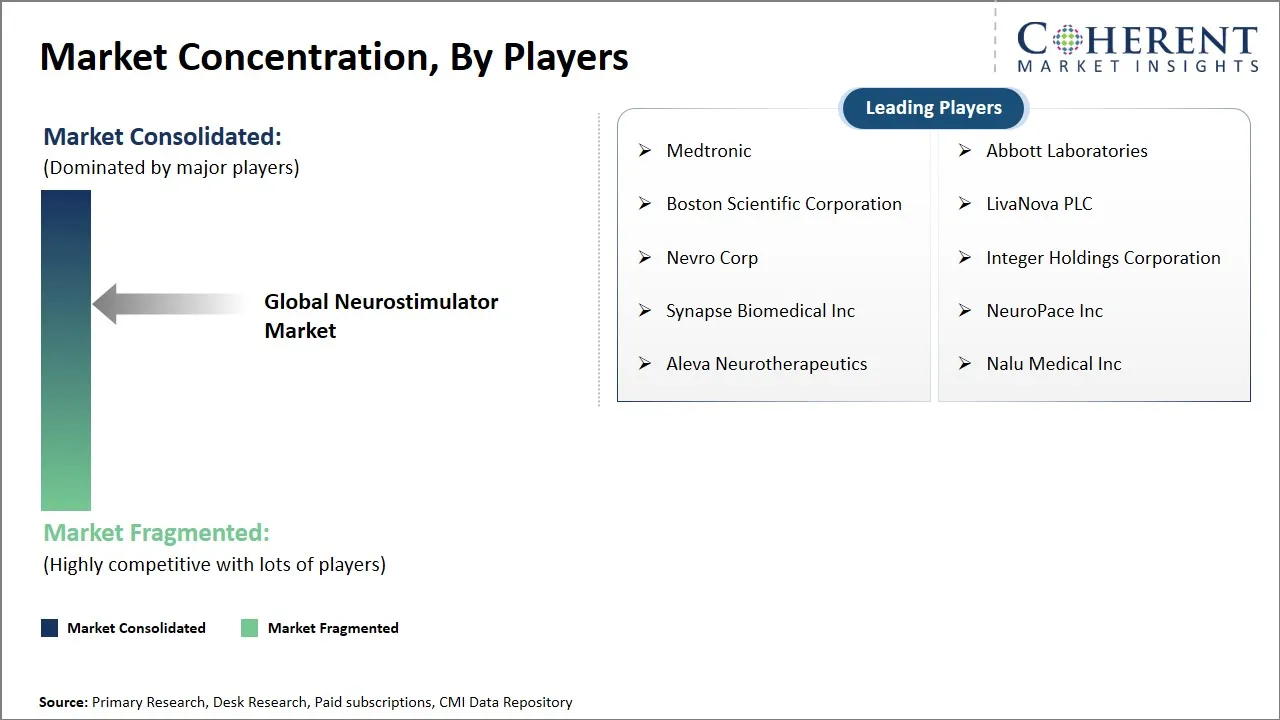
The North America region is projected to lead the market with a 41.0% share in 2026, attributed to the well- developed infrastructure in the region, high R&D spending, and favorable regulatory policies. The market in the region has benefited from the presence of prominent medical device manufacturers such as Medtronic, Abbott Laboratories, and Boston Scientific, which have bolstered market growth by providing the best neurostimulation devices.
Government policies promoting the development of innovative neurostimulation devices for the treatment of various neurological disorders have also contributed to the growth of the market in the region. In addition, the favorable environment in the region, which comprises numerous research centers and hospitals, has accelerated the growth of the market. Trade policies in the region, which allow the import and export of high-tech medical devices, have also bolstered the market growth in the region.
For instance, in April 2023, Neuronetics made TMS therapy more accessible by partnering with UnitedHealthcare. This partnership helped in increasing the reimbursement coverage of TMS therapy in the U.S. This helped in making the therapy more accessible for patients and also increased the usage of the therapy in North America.
Asia Pacific Neurostimulator Market Analysis and Trends
Asia Pacific is anticipated to witness the fastest growth, holding a market share of 24.0% in 2026, attributed to the higher healthcare awareness and infrastructure development. In addition, there is a higher need for non-invasive treatments for neurological disorders. In this region, countries like China, Japan, and India are investing heavily in modernization and innovation in healthcare infrastructure. They are also benefiting from favorable government initiatives and a favorable regulatory environment for medical devices.
In this region, companies like Abbott and Medtronic are investing heavily in strengthening their footprint through strategic partnerships and local manufacturing facilities. In addition, favorable trade agreements and a more favorable ecosystem for doing business are making this region more favorable for foreign direct investments.
Neurostimulator Market Outlook for Key Countries
How is the U.S. Helping in the Growth of the Neurostimulator Market?
The U.S. is a leader in the neurostimulator market on a global scale, attributed to the high spending on healthcare and the expertise of healthcare providers. Companies such as Medtronic and Boston Scientific are leaders in this market. They launch advanced neurostimulation technology for pain management, epilepsy, and Parkinson’s. Additionally, there is adequate regulatory support in terms of the FDA and IP protection. Moreover, a large number of healthcare providers is actively engaged in testing and using advanced therapies.
For instance, in December 2025, the U.S. Food & Drug Administration approved its first at-home brain stimulation device for depression treatment. It is a major step forward in neurostimulation treatments. It is a reflection of the increased trend toward non-invasive and at-home treatment solutions and will increase the adoption rate of neurostimulators in the U.S.
How is Germany Helping in the Growth of the Neurostimulator Market?
The neurostimulator market in Germany is growing owing to its well-developed healthcare system and high level of engineering expertise. It is one of Europe's largest centers for medical technology. Companies like B. Braun and St. Jude Medical (now Abbott) are contributing to the advancement of neurostimulators. Its well-developed export-oriented economy is also helpful in spreading neurostimulation technology developed in this country across Europe. In addition, favorable reimbursement policies for neurostimulator procedures are in place, that drives the market in the country.
Key Drivers for the Growth of the China Neurostimulator Market
The neurostimulator market in China is driven by the healthcare reforms initiated by the government in the healthcare sector and the growing investments in medical technology. The government’s emphasis on the availability of neurological treatments and local manufacturing capabilities makes it a destination for multinational corporations such as Abbott and Medtronic to set up joint ventures. Furthermore, the growing rate of chronic neurological conditions and healthcare awareness in the country also add to the market’s growth.
Japan Neurostimulator Market Trends
The Asia Pacific neurostimulator market is dominated by Japan, owing to the high number of geriatric patients in the country and the well-developed medical infrastructure. Companies such as Otsuka Pharmaceutical and Boston Scientific have a significant market share in the region, particularly in Japan, as they are focused on neurodegenerative diseases as well as pain therapy. The regulatory environment in the country is conducive for the development of neurostimulator devices, as the government is focused on the adoption of advanced medical devices. The geriatric care facilities in the country are also driving the market for neurostimulators.
Regional Reimbursement Structures and Their Impact on the Neurostimulator Market
Region | Reimbursement Scenario | Coverage Level | Impact on Market |
North America | Well-established reimbursement systems with broad coverage for neurostimulation procedures (e.g., SCS, DBS) through public and private insurers | High
| Drives strong adoption, high procedure volumes, and market leadership |
Europe | Universal healthcare systems provide reimbursement for approved neurostimulation therapies, supported by clinical guidelines | High | Ensures widespread accessibility and steady market growth |
Asia Pacific | Reimbursement varies by country; strong in Japan and Australia, limited but improving in China and India | Moderate | Growing adoption with significant future potential |
Latin America | Limited reimbursement coverage; mostly private insurance-driven with partial public support | Low-Moderate | Slower adoption due to affordability constraints |
Middle East & Africa | Emerging reimbursement frameworks with reliance on private healthcare and government initiatives in select countries | Low | Restricted access but gradual market development |
Market Players, Key Developments, and Competitive Intelligence
Key Developments
- On March 26, 2026, BrainsWay Ltd. finalized a further US$6 million investment in NeuroliEF Ltd., contingent on reaching specific milestones. This came after the U.S. FDA greenlit the Proliv Rx system for major depressive disorder (MDD). The approval underscores the growing clinical reach of neurostimulation technologies within mental health care. This move signals a surge in both investment and regulatory activity within the worldwide neurostimulator market.
- In August 2025, Nalu Medical Inc.unveiled a new Therapy Disc for its neurostimulation system. This updated version is 39% smaller than its predecessor. The design tweaks were made to boost both patient comfort and portability, all while keeping the therapy’s effectiveness intact. This release underscores the industry’s increasing interest in smaller, more wearable neurostimulation technologies. It also signals a broader trend a move toward putting the patient experience at the forefront of neurostimulator design.
- In January 2024, Medtronic got the green light from the U.S. FDA for its Percept RC neurostimulator, equipped with BrainSense technology. This device allows for real-time monitoring of brain signals, which is designed to tailor neurostimulation therapy to the individual. This new development promises to improve the accuracy of treatments for neurological disorders, including Parkinson’s disease.
Top Strategies Followed by Global Neurostimulator Market Players
Player Type | Strategic Focus | Examples |
Established Market Leaders | Established market leaders emphasize conducting extensive R&D to develop highly sophisticated, high-performance neurostimulation devices with better clinical results and patient comfort. More emphasis is given on developing strategic partnerships, expanding globally, and incorporating digital technologies and AI technologies. | In January 2024, Medtronic received U.S. FDA approval for its closed-loop spinal cord stimulator, which enables real-time adjustment of stimulation based on patient neural signals, significantly improving pain management outcomes and reinforcing its leadership in advanced neuromodulation technologies. |
Mid-Level Players | Mid-level players adopt cost-optimization strategies to provide cost-effective yet reliable devices. More emphasis is given on manufacturing, partnerships, and contract manufacturing to enhance capabilities to enter emerging markets. | In March 2024, Nevro Corp. expanded the commercialization of its high-frequency spinal cord stimulation (HF10) therapy, providing opioid-free chronic pain relief with improved patient comfort, thereby strengthening its position in value-driven neurostimulation solutions. |
Small-Scale Players | Small-scale players emphasize conducting niche innovations with highly sophisticated technologies like miniaturization, wireless technologies, and AI technologies. Further, they emphasize on regional partnerships to enter markets. | In May 2025, Nalu Medical advanced its miniaturized neurostimulation system featuring a micro-implant and external power source, offering less invasive treatment with enhanced patient convenience, positioning the company as an innovator in next-generation neuromodulation devices. |
Market Report Scope
Global Neurostimulator Market Report Coverage
| Report Coverage | Details | ||
|---|---|---|---|
| Base Year: | 2025 | Market Size in 2026: | USD 10.4 Bn |
| Historical Data for: | 2020 To 2024 | Forecast Period: | 2026 To 2033 |
| Forecast Period 2026 to 2033 CAGR: | 9.63% | 2033 Value Projection: | USD 19.8 Bn |
| Geographies covered: |
| ||
| Segments covered: |
| ||
| Companies covered: | Medtronic, Abbott Laboratories, Boston Scientific Corporation, LivaNova PLC, Nevro Corp, Integer Holdings Corporation, Synapse Biomedical Inc, NeuroPace Inc, Aleva Neurotherapeutics, and Nalu Medical Inc | ||
| Growth Drivers: |
| ||
| Restraints & Challenges: |
| ||
Global Neurostimulator Market Dynamics
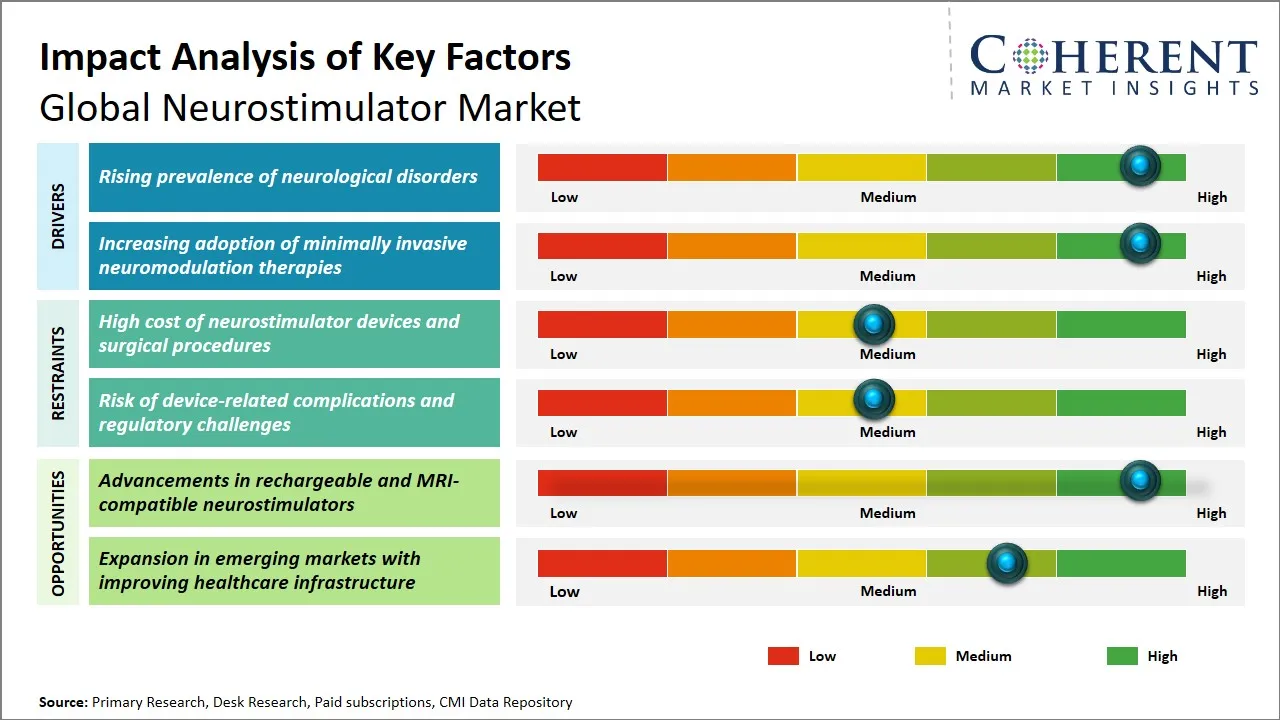
Global Neurostimulator Market Driver – Rising Prevalence of Neurological Disorders
The increasing incidence of neurological disorders such as Parkinson’s disease, epilepsy, multiple sclerosis, chronic pain syndrome, and stroke complications are one of the key growth drivers for the neurostimulator market. The primary reason for this is the increasing age factor and changes in lifestyles. In addition, the fact that neurostimulators can offer greater relief compared to other treatments have made it an attractive solution for managing such conditions. The primary reason for this is that it can offer greater relief by stimulating the nervous system through electrical signals.
Additionally, the increasing awareness regarding neurostimulators among both healthcare professionals and patients, along with technological advancements in the field of neurostimulators, are also boosting the neurostimulator market owing to the fact that technological advancements in the field of neurostimulators have enabled it to be used for managing various neurological disorders.
For instance, according to the Centers for Disease Control and Prevention, in its 2024 report based on the National Health Interview Survey (NHIS) conducted in 2023, it was estimated that about 20.4% of adults in the U.S. suffered from chronic pain, while 7.4% had high-impact chronic pain that interfered with daily activities. This demonstrates the enormity of the problem, further emphasizing the need for innovative treatment solutions such as neurostimulation.
Global Neurostimulator Market Opportunity - Advancements in Rechargeable and MRI-Compatible Neurostimulators
The global neurostimulator market is growing at a rapid pace with the development of rechargeable neurostimulators and MRI-compatible neurostimulators. These neurostimulators are proving to be extremely beneficial in terms of their convenience and effectiveness. Rechargeable neurostimulators are helpful in utilizing neurostimulators for a long time and also minimize the need for replacement procedures. This helps in cutting down healthcare expenses and also offers uninterrupted therapy for chronic conditions like Parkinson’s disease, epilepsy, and chronic pain.
On the other hand, the development of MRI-compatible neurostimulators has removed a major drawback of neurostimulators and has opened the doors for patients using neurostimulators to undergo MRI imaging procedures without affecting the effectiveness of neurostimulators. Thus, the development of MRI-compatible neurostimulators is proving to be extremely beneficial in terms of personalization and utility of neurostimulators for managing chronic conditions.
For instance, in January 2024, Abbott Laboratories got approval from U.S. FDA to broaden the MRI labeling for its Proclaim DRG neurostimulation system. This means patients can now safely have full-body MRI scans. It's a significant step forward, offering more diagnostic options while keeping neurostimulation therapy going strong for those managing chronic pain.
Analyst Opinion (Expert Opinion)
- The neurostimulator market has a positive outlook, with increasing cases of chronic pain, Parkinson’s disease, epilepsy, and other neurological conditions fueling the growth of the market. The increasing need for non-pharmacological and long-term treatment options is also contributing significantly to the growth of the neurostimulator market.
- Advances in technology, including miniaturized implantable devices, rechargeable devices, and AI-based technology, are contributing to the growth of the neurostimulator market.
- The increasing preference for minimally invasive procedures and the growing awareness of neuromodulation procedures are contributing to the growth of the neurostimulator market, especially in the developed healthcare sector.
- In addition, the positive reimbursement environment and the increasing product innovations by the major players in the market are contributing to the growth of the neurostimulator market globally.
Speak to the analyst
Want personalized insights?
Take the findings above to one of our principal consultants, or have the report rebuilt around the segments, geographies and competitors you actually track.
Market Segmentation
- Product Type Insights (Revenue, USD Bn, 2021 - 2033)
- Spinal Cord Stimulators
- Deep Brain Stimulators
- Vagus Nerve Stimulators
- Sacral Nerve Stimulators
- Gastric Electrical Stimulators
- Transcutaneous Electrical Nerve Stimulators
- Technology Insights (Revenue, USD Bn, 2021 - 2033)
- Implantable Neurostimulators
- External Neurostimulators
- Application Insights (Revenue, USD Bn, 2021 - 2033)
- Chronic Pain Management
- Parkinson’s Disease
- Epilepsy
- Depression
- Urinary and Fecal Incontinence
- Gastroparesis
- End User Insights (Revenue, USD Bn, 2021 - 2033)
- Hospitals
- Specialty Clinics
- Ambulatory Surgical Centers (ASCs)
- Research Institutes
- Regional Insights (Revenue, USD Bn, 2021 - 2033)
- North America
- U.S.
- Canada
- Latin America
- Brazil
- Argentina
- Mexico
- Rest of Latin America
- Europe
- Germany
- U.K.
- Spain
- France
- Italy
- Russia
- Rest of Europe
- Asia Pacific
- China
- India
- Japan
- Australia
- South Korea
- ASEAN
- Rest of Asia Pacific
- Middle East
- GCC Countries
- Israel
- Rest of Middle East
- Africa
- South Africa
- North Africa
- Central Africa
- North America
- Key Players Insights
- Medtronic
- Abbott Laboratories
- Boston Scientific Corporation
- LivaNova PLC
- Nevro Corp
- Integer Holdings Corporation
- Synapse Biomedical Inc
- NeuroPace Inc
- Aleva Neurotherapeutics
- Nalu Medical Inc
Sources
Primary Research Interviews
Industry Stakeholders
- Neurostimulator Device Manufacturers
- Medical Device Component Suppliers
- Healthcare Providers (Hospitals & Neurology Clinics)
- Distributors & Service Providers
- Regulatory & Compliance Experts
End Users
- Hospitals & Specialty Clinics
- Neurology & Pain Management Centers
- Ambulatory Surgical Centers (ASCs)
- Rehabilitation Centers
Government and International Databases
- U.S. Food and Drug Administration (FDA) – Medical device approvals & safety data
- European Medicines Agency (EMA) – Medical device and clinical evaluation frameworks
- World Health Organization (WHO) – Neurological disorder burden & healthcare insights
Trade Publications
- Medical Device Network
- MedTech Dive
- Fierce Biotech (Medical Devices section)
- Neurotech Reports
Academic Journals
- Neuromodulation: Technology at the Neural Interface
- Journal of Neurosurgery
- Brain Stimulation Journal
- Journal of Neural Engineering
- The Lancet Neurology
Reputable Newspapers
- Financial Times – Global healthcare technology trends
- The Wall Street Journal – Medical technology investments and innovations
Industry Associations
- International Neuromodulation Society (INS)
- North American Neuromodulation Society (NANS)
- Advanced Medical Technology Association (AdvaMed)
Public Domain Resources
- World Health Organization (WHO) – Neurological disorder prevalence and treatment guidelines
- Centers for Disease Control and Prevention (CDC) – Data on chronic pain and neurological conditions
- National Institutes of Health (NIH) – Research on neuromodulation and brain disorders
- National Institute of Neurological Disorders and Stroke (NINDS) – Clinical and research insights on neurological diseases
- European Commission – Healthcare and medical device regulatory frameworks
Proprietary Elements
- CMI Data Analytics Tool: Proprietary analytics tool to analyze real-time market trends, consumer behavior, and technology adoption in market
- Proprietary CMI Existing Repository of Information for Last 10 Years
Get access to 250+ pages report
Every segment, forecast, competitor profile and data table behind the analysis above — available for instant download.
- ESOMAR Member
- ISO 9001:2015 Certified
- D-U-N-S Registered
- GDPR & CCPA Compliant
Missing comfort of reading report in your local language? Find your preferred language:
Transform your Strategy with Exclusive Trending Reports
Frequently Asked Questions
The global neurostimulator market is estimated to be valued at USD 10.4 Bn in 2026 and is expected to reach USD 19.8 Bn by 2033.
The CAGR of the global neurostimulator market is projected to be 9.63% from 2026 to 2033.
Rising prevalence of neurological disorders and increasing adoption of minimally invasive neuromodulation therapies are the major factors driving the growth of the global neurostimulator market.
Neurostimulators are devices that are employed in the transmission of electrical impulses to targeted nerves in the brain. Neurostimulators are employed in the management of conditions such as chronic pain, Parkinson’s disease, and epilepsy.
Some of the recent developments include rechargeable implantable devices, closed-loop systems with real-time feedback, MRI-compatible devices, and miniaturized electrodes.
High cost of neurostimulator devices and surgical procedures and risk of device-related complications and regulatory challenges are the major factors hampering the growth of the global neurostimulator market.
In terms of product type, the spinal cord stimulators segment is estimated to dominate the market revenue share in 2026.