

Global Medical Device Security Market Size and Forecast – 2026 to 2033
The Global Medical Device Security Market is estimated to be valued at USD 9.07 Bn in 2026 and is expected to reach USD 16.58 Bn by 2033, exhibiting a compound annual growth rate (CAGR) of 9.0% from 2026 to 2033. This significant growth highlights the increasing emphasis on securing medical devices amid rising cyber threats, regulatory pressures, and the integration of connected technologies in healthcare.
Key Takeaways of the Global Medical Device Security Market
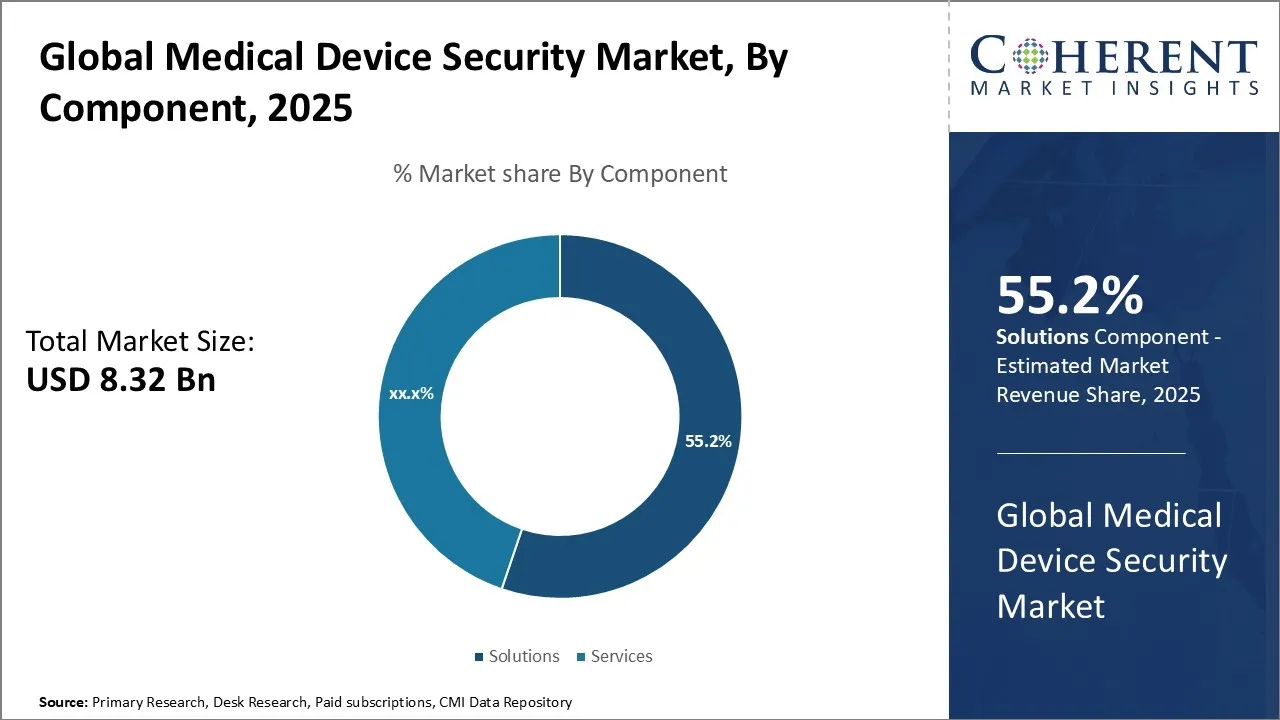
- The solutions segment is expected to dominate the global medical device security market, holding a share of 56.2% in 2026.
- The wearable devices segment is projected to be the fastest-growing, capturing 35.5% of the market share in 2026.
- Within the security type segmentation, network security is anticipated to lead with a share of 26.7% in 2026.
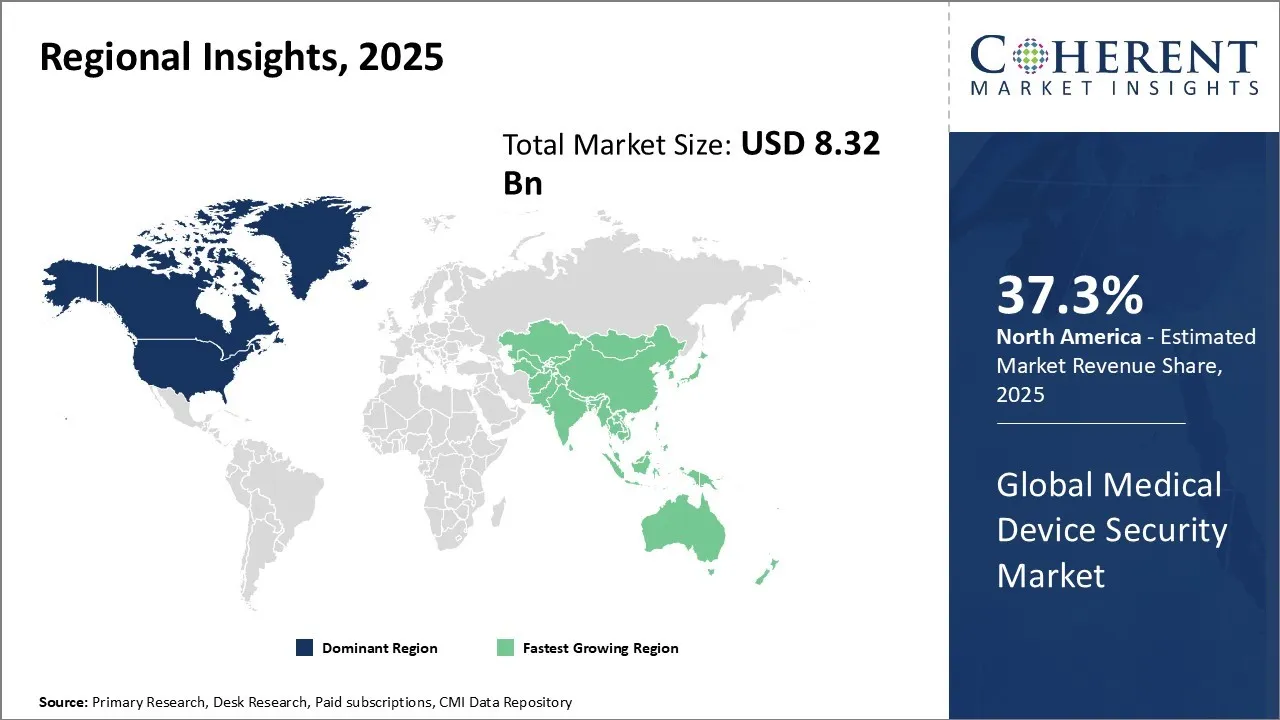
- North America is expected to lead the market, holding a share of 37. 3% in 2026. Asia Pacific is anticipated to be the fastest-growing region, with a market share of 23.4% in 2026.
Market Overview
A key market trend is the growing adoption of IoT-enabled medical devices, which, while enhancing patient care, also elevate security risks, driving the demand for advanced cybersecurity solutions. Additionally, stringent regulations and the rise of data privacy concerns are pushing healthcare providers and manufacturers to invest heavily in robust medical device security frameworks, fostering innovation and expanding market opportunities throughout the forecast period.
Currents Events and their Impact
Current Events | Description and its impact |
U.S. FDA Issues Updated Cybersecurity Guidance for Medical Devices |
|
Introduction of AI-Based Security Solutions in Medical Devices |
|
Segmental Insights
- Current Industry Events of 2026
- Market Size Estimation
- Regional Breakdown
- Competitive Landscape
- Customer Intelligence
- Segmental Analysis
- Pricing Analysis
- Key Market Drivers, Challenges & Future Trends
- Customized Insights Section
Medical Device Security Market Insights, By Component - Solutions lead owing to the critical need for integrated protection and real-time threat mitigation within medical device ecosystems
The dominance of the solutions segment within the global medical device security market with an estimated share of 56.2% in 2026 is largely attributed to the comprehensive nature of security challenges faced by healthcare providers and device manufacturers. Medical devices, ranging from implantables to diagnostic equipment, are increasingly interconnected within hospital networks and often integrated with larger electronic health record systems. This interconnectivity exposes devices to a broad spectrum of cyber threats, necessitating multifaceted protection solutions.
Security solutions, including encryption, identity and access management (IAM), antivirus and anti-malware, as well as intrusion detection/prevention systems (IDS/IPS), address diverse vulnerabilities within medical devices and their network environments. Encryption solutions ensure that sensitive patient data transmitted or stored by devices cannot be intercepted or deciphered by unauthorized entities. IAM solutions help enforce strict user authentication, limiting device access exclusively to authorized personnel and thereby reducing insider threats and unauthorized manipulation. Antivirus and anti-malware tools are indispensable for detecting and neutralizing malicious software targeting vulnerable device firmware or connected systems.
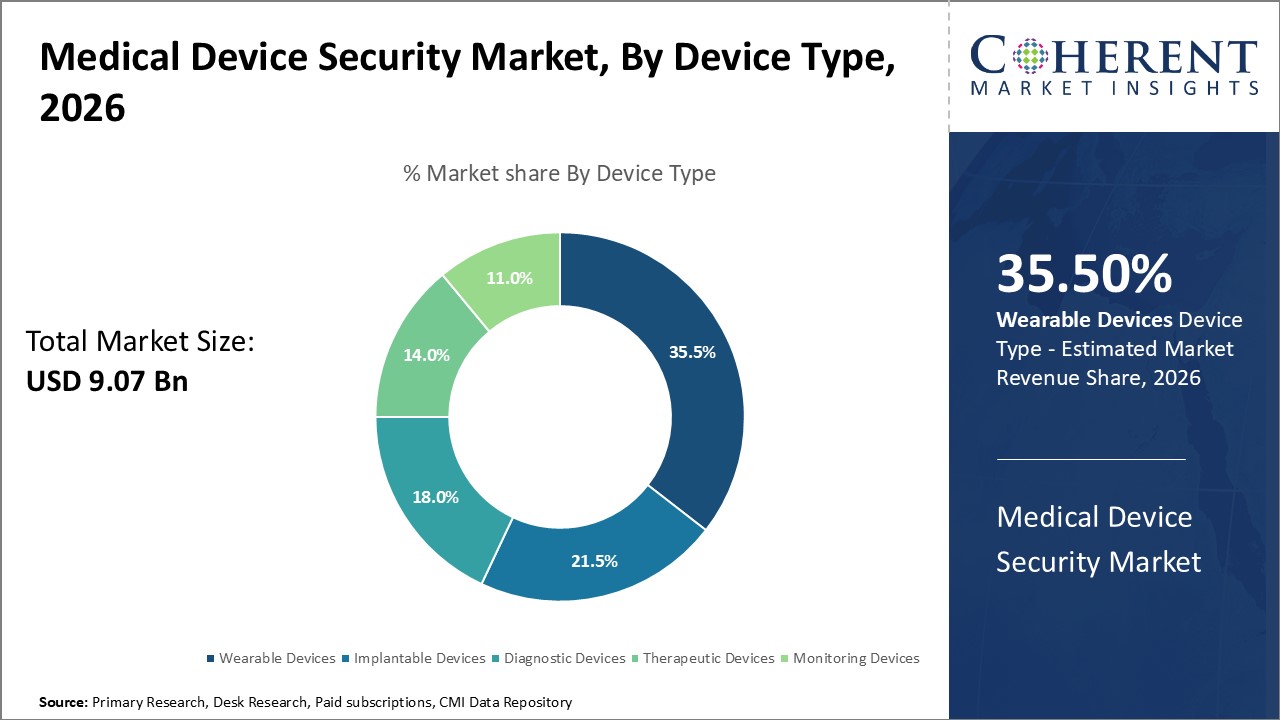
Medical Device Security Market Insights, By Device Type - Wearable devices dominate driven by their rapid adoption, mobility requirements, and continuous biometric data monitoring
Wearable devices represent the fastest expanding segment within the global medical device security market with an estimated share of 35.5% in 2026 due to several intertwined factors that emphasize both their clinical importance and inherent security risks. These devices, including fitness trackers, smartwatches, continuous glucose monitors, and cardiac monitoring devices, perform constant monitoring of vital signs and patient health parameters outside traditional clinical settings, enabling remote patient management and proactive care.
The pervasive adoption of wearable devices in managing chronic diseases, post-operative care, and preventive health escalates demand for robust security mechanisms specifically tailored to protect sensitive biometric and health data. Unlike other medical devices confined to clinical environments, wearables operate across various unsecured networks, such as public Wi-Fi and cellular systems, which significantly enlarges the attack surface. This necessitates comprehensive endpoint and network security strategies to guard against data interception, unauthorized access, and potential manipulation that could compromise patient safety.
Medical Device Security Market Insights, By Security Type - Network security leads owing to the critical need to safeguard interconnected medical devices and ensure secure data transmission across healthcare infrastructures
Network security occupies the leading position within the security type segmentation of the global medical device security market with an estimated share of 26.7% in 2026, primarily because of the increasingly networked nature of modern medical devices and healthcare information systems. Medical devices today rarely operate in isolation; instead, they are embedded within hospital networks, cloud platforms, and Internet of Medical Things (IoMT) ecosystems to facilitate data sharing, remote monitoring, and integrated patient care pathways.
This interconnectedness, while enabling advanced functionalities, also exposes devices and sensitive health data to cyber threats originating from external networks and internal communication channels. Network security measures are essential to defend these digital corridors where threats such as man-in-the-middle attacks, ransomware, data interception, and unauthorized access attempts can severely disrupt medical operations and endanger patient health.
Role of Artificial Intelligence in Medical Device Security Market
- Artificial Intelligence (AI) is playing a transformative role in the global medical device security market by driving efficiency, cost reduction, and operational improvements. One of the key contributions of AI in this sector is predictive analytics, which helps in identifying potential security threats before they become critical, thereby minimizing downtime and mitigating risks. AI-powered algorithms can analyze large volumes of data in real-time, enabling rapid detection of unusual patterns or vulnerabilities in medical devices, reducing manual oversight, and enhancing response times. Automation of routine tasks, such as device monitoring and vulnerability patching, not only cuts down operational costs but also frees up resources for more complex tasks.
- One notable example In June 2024, Darktrace, a leading provider of AI-driven cybersecurity solutions, has introduced its Managed Detection & Response (MDR) service. The new offering combines AI-powered threat detection with expert analyst support to help organizations optimize security operations.
- The rise of AI also creates significant opportunities for innovation and new business models in the medical device security space. With the ability to continuously learn and adapt to new threats, AI can help companies stay ahead of evolving security challenges. AI can be leveraged to design more resilient devices with built-in self-healing capabilities, ensuring that even if a breach occurs, the system can recover autonomously.. However, the widespread adoption of AI is not without potential drawbacks, including concerns around data privacy, the risk of adversarial attacks on AI models, and the high initial costs of implementation. While AI promises substantial benefits, it is essential for companies to balance its advantages with caution to ensure long-term, sustainable growth in this rapidly evolving market.
Regional Insights
North America Medical Device Security Market Analysis and Trends
North America’s dominance in the global medical device security market, with an estimated share of 37.3% in 2026, is driven by the region's robust healthcare infrastructure, highly developed digital health ecosystem, and stringent regulatory environment. The presence of leading regulatory agencies such as the FDA ensures rigorous cybersecurity standards for medical devices, fostering widespread adoption of security solutions. The ecosystem is bolstered by substantial R&D investments and the concentration of global medical device manufacturers and technology innovators in the U.S. and Canada. Companies like Medtronic, Abbott Laboratories, and Philips Healthcare have intensified focus on integrating advanced cybersecurity measures into their devices.
In November 2023, NYU Langone Health, a renowned healthcare provider, teamed up with Philips, a global leader in health technology, to enhance patient safety, quality, and outcomes. The collaboration focuses on unlocking patient data for precision diagnosis and treatment, incorporating digital pathology, clinical informatics, and AI-enabled diagnostics, all within an enterprise monitoring-as-a-service model.
Asia Pacific Medical Device Security Market Analysis and Trends
The Asia Pacific region is expected to exhibit the fastest growth in the medical device security market with a share of 23.4% in 2026 primarily due to expanding healthcare infrastructure, rapid digital transformation, and increasing adoption of IoT-enabled medical devices across emerging economies such as China, India, Japan, and South Korea. Government policies encouraging the adoption of smart healthcare systems and investments in cybersecurity frameworks are progressively strengthening market dynamics. The presence of numerous local and multinational companies investing in cybersecurity solutions, such as Samsung, Toshiba, and GE Healthcare’s regional units, is catalyzing market expansion. The region also benefits from growing awareness of medical device vulnerabilities, increasing demand for safe and secure connected health solutions, and rising healthcare expenditures.
Global Medical Device Security Market Outlook for Key Countries
U.S. Medical Device Security Market Trends
The U.S. remains a critical hub for innovation and development in medical device security. Its mature healthcare ecosystem combined with stringent regulatory requirements from agencies like the FDA mandates robust cybersecurity compliance, pushing companies to continuously innovate. Major players such as Medtronic, Abbott, and Boston Scientific have pioneered the incorporation of cybersecurity features as part of device lifecycles.
In December 2022, Cylera, a leader in healthcare IoT and medical device cybersecurity, announced a deep integration with Cisco’s Identity Services Engine (ISE) to improve the security of medical devices and IoT networks. This collaboration addresses gaps in traditional Network Access Control (NAC) solutions, which often struggle to identify the wide variety of IoT and medical devices in healthcare settings. The Cylera MedCommand platform provides unique device discovery, risk details, and threat intelligence, enabling better security policies for healthcare devices.
Canada Medical Device Security Market Trends
The Canada medical device security market is witnessing significant growth, driven by the increasing adoption of connected medical devices and the growing need to safeguard sensitive patient data. As the healthcare sector becomes more digitized, the demand for robust cybersecurity solutions to protect against cyber threats and data breaches has surged. Healthcare providers are increasingly investing in securing their medical devices, ensuring compliance with stringent regulatory standards, such as the Health Canada guidelines and U.S. FDA recommendations.
In November 2023 — Cybeats Technologies Corp., a Canada based leader in cybersecurity solutions for medical devices, announced a strategic partnership with the Health Information Sharing and Analysis Center (Health-ISAC). The collaboration focuses on enhancing cyber and physical security in the healthcare industry, with a joint Software Bill of Materials (SBOM) management solution tailored for Medical Device Manufacturers (MDMs) and Healthcare Delivery Organizations (HDOs).
Germany Medical Device Security Market Trends
Germany stands as a central force within Europe’s medical device security market due to its strong medical technology manufacturing base and well-established healthcare system. The country’s rigorous regulatory landscape, shaped by EU cybersecurity directives and national standards, compels companies to uphold stringent security protocols. Siemens Healthineers and B. Braun Melsungen are notable contributors advancing device security with a focus on interoperability and compliance. Growing investments in Industry 4.0 and digital health initiatives further encourage innovation in secure medical device technologies.
In June 2024, IEEE, technical professional organization, announced the first medical devices certified under its new IEEE Medical Device Cybersecurity Certification Program, including products from Ascensia, a leading provider of diabetes management solutions. Test facilities with locations in Sweden, Germany, and the U.S., have also been officially recognized. The program, launched in 2023, helps manufacturers ensure their devices comply with the IEEE 2621 standard, addressing cybersecurity risks in medical devices. Certification expedites approval by regulatory bodies and enhances the safety and security of devices managing user bio data.
India Medical Device Security Market Trends
India’s medical device security market is emerging rapidly due to increased digital healthcare adoption and government initiatives like Digital India and National Digital Health Mission aimed at improving health IT and data security. The expanding medical device manufacturing sector and growing partnerships with global technology providers accelerate market penetration. Additionally, rising awareness of cybersecurity risks among healthcare providers fuels demand for secure devices suitable for both urban and rural healthcare setups.
In July 2023, the Indian government launched the National Medical Device Policy, aiming to foster growth and development in the country’s medical device sector. The policy seeks to help India achieve a 10-12% global market share over the next 25 years and reduce reliance on imports. It outlines strategies for streamlining regulations, enhancing infrastructure, promoting R&D, attracting investments, and developing human resources, all while ensuring safety and quality in medical devices.
Market Players, Key Developments, and Competitive Intelligence
Key Developments
- In July 2025, Open Worldwide Application Security Project, OWASP released the "Securing Agentic Applications Guide v1.0" to help developers secure autonomous AI applications, including those used in medical devices. The new guidance offers technical recommendations for AI/ML engineers and security professionals, addressing security challenges in AI agents, which operate autonomously and adapt to changing environments. The resource highlights the growing need for secure AI in healthcare applications to ensure patient safety and data integrity.
- In May 2025, Medcrypt, a leading provider of proactive cybersecurity solutions for medical devices, has announced the launch of its new Medical Device Product Security Intelligence Platform. Designed to help manufacturers assess security risks, identify gaps, and generate remediation plans quickly, the platform is aimed at both premarket and postmarket teams. This innovation comes as regulatory pressure grows for secure-by-design technologies. Medcrypt’s integrated approach combines scalable software with expert consulting to ensure compliance and accelerate time-to-market, reflecting the growing demand for robust cybersecurity solutions in the medical device industry.
- In October 2024, Synapxe, Singapore's national HealthTech agency, in collaboration with the Global Digital Health Partnership, Cyber Security Workstream, launched the GDHP Guidance for Medical Device Cybersecurity (GMDC). Unveiled during Singapore’s GovWare Healthcare Forum 2024, the GMDC provides a standardized cybersecurity framework for medical device manufacturers (MDMs) and healthcare organizations worldwide. The framework, adapted from Singapore’s Cybersecurity Labelling Scheme for Medical Devices, offers essential guidelines for ensuring the security of medical devices handling personal and clinical data.
- In January 2023, Palo Alto Networks, a global leader in cybersecurity, launched a dedicated medical device security product. Previously part of its IoT portfolio, this new product focuses solely on securing medical devices, addressing the growing need for specialized protection in the Internet of Medical Things (IoMT) sector. The spin-off marks a significant step in the company's commitment to enhancing the security of healthcare technologies.
Top Strategies Followed by Global Medical Device Security Market Players
- Established players, typically leading multinational corporations, concentrate heavily on research and development (R&D) to drive innovation in high-performance and technologically advanced security solutions. Their substantial R&D investments enable the creation of cutting-edge products that meet stringent regulatory requirements and adapt to the evolving cybersecurity challenges inherent to connected medical devices. Additionally, these market leaders actively pursue strategic partnerships and collaborations with other industry giants, original equipment manufacturers (OEMs), and healthcare providers. Such alliances not only enhance product integration and interoperability but also help consolidate their market dominance.
- In March 2024, Claroty, a leading provider of cyber-physical systems protection, unveiled the Advanced Anomaly Threat Detection (ATD) Module within the Medigate Platform at the HIMSS24 conference. This new feature offers healthcare organizations clinically-aware threat detection, enabling them to identify, assess, and prioritize risks to connected medical devices, IoT, and building management systems. The module provides agentless, continuous monitoring of device communication and compliance controls.
- Mid-level players in the medical device security sector often adopt a different set of strategies focused on balancing quality with cost-effectiveness to appeal to price-sensitive customer segments, including smaller healthcare facilities and developing economies. These companies emphasize the development of affordable yet reliable security solutions that cater to a wider audience without compromising essential safety standards. To strengthen their capabilities and market reach, mid-tier firms commonly engage in collaborations with technology providers, component manufacturers, and even regional distributors.
- In November 2023 — Ostium Group, a global leader in orthopedic surgical instrumentation, partnered with Eastman, a renowned specialty materials company, to integrate Eastman’s sustainable packaging solution, Eastar 6763 Renew copolyester, into Ostium’s innovative CILLAR Acetabular and Femoral kits for total hip replacements. This collaboration aims to enhance sustainability in medical device packaging.
- Small-scale players occupy a unique niche in the global medical device security market by focusing on specialized product features or innovative technological breakthroughs that differentiate them from larger competitors. These companies often pioneer cutting-edge solutions—such as AI-driven threat detection, biometric authentication, or blockchain-based security measures—that address specific security concerns within sub-segments of the healthcare industry. To remain competitive despite limited resources, small players actively adopt emerging technologies and cultivate strong relationships with local startups, manufacturers, and regional healthcare providers.
- In October 2022, Indiana University Health partnered with TRIMEDX to create a cybersecurity lab focused on assessing and testing the security of medical devices. TRIMEDX, a leader in clinical engineering and asset management, will leverage its expertise to evaluate medical devices for security vulnerabilities and interoperability. The lab aims to identify and mitigate cybersecurity risks before equipment is deployed in patient care settings.
Market Report Scope
Medical Device Security Market Report Coverage
| Report Coverage | Details | ||
|---|---|---|---|
| Base Year: | 2025 | Market Size in 2026: | USD 9.07 Bn |
| Historical Data for: | 2020 To 2024 | Forecast Period: | 2026 To 2033 |
| Forecast Period 2026 to 2033 CAGR: | 9.0% | 2033 Value Projection: | USD 16.58 Bn |
| Geographies covered: |
| ||
| Segments covered: |
| ||
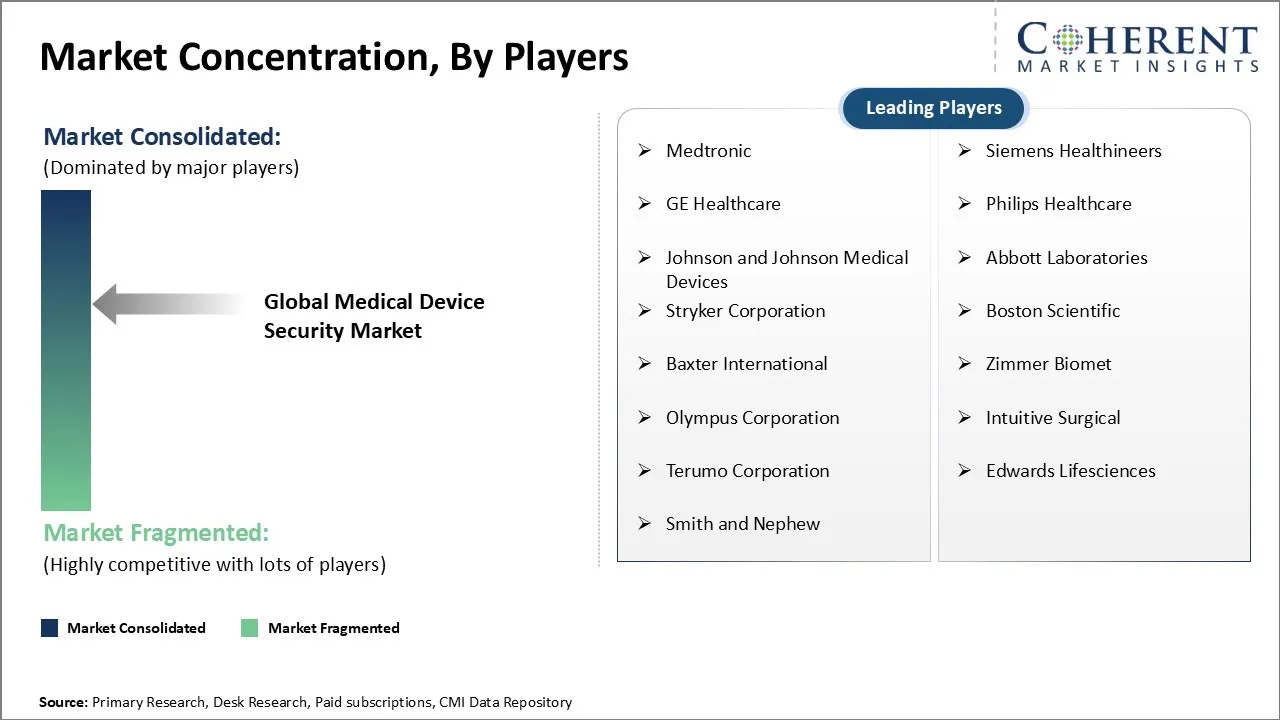
| Companies covered: | Medtronic, Siemens Healthineers, GE Healthcare, Philips Healthcare, Johnson and Johnson Medical Devices, Abbott Laboratories, Stryker Corporation, Boston Scientific, Baxter International, Zimmer Biomet, Olympus Corporation, Intuitive Surgical, Terumo Corporation, Edwards Lifesciences, and Smith and Nephew | ||
| Growth Drivers: |
| ||
| Restraints & Challenges: |
| ||
Medical Device Security Market Dynamics
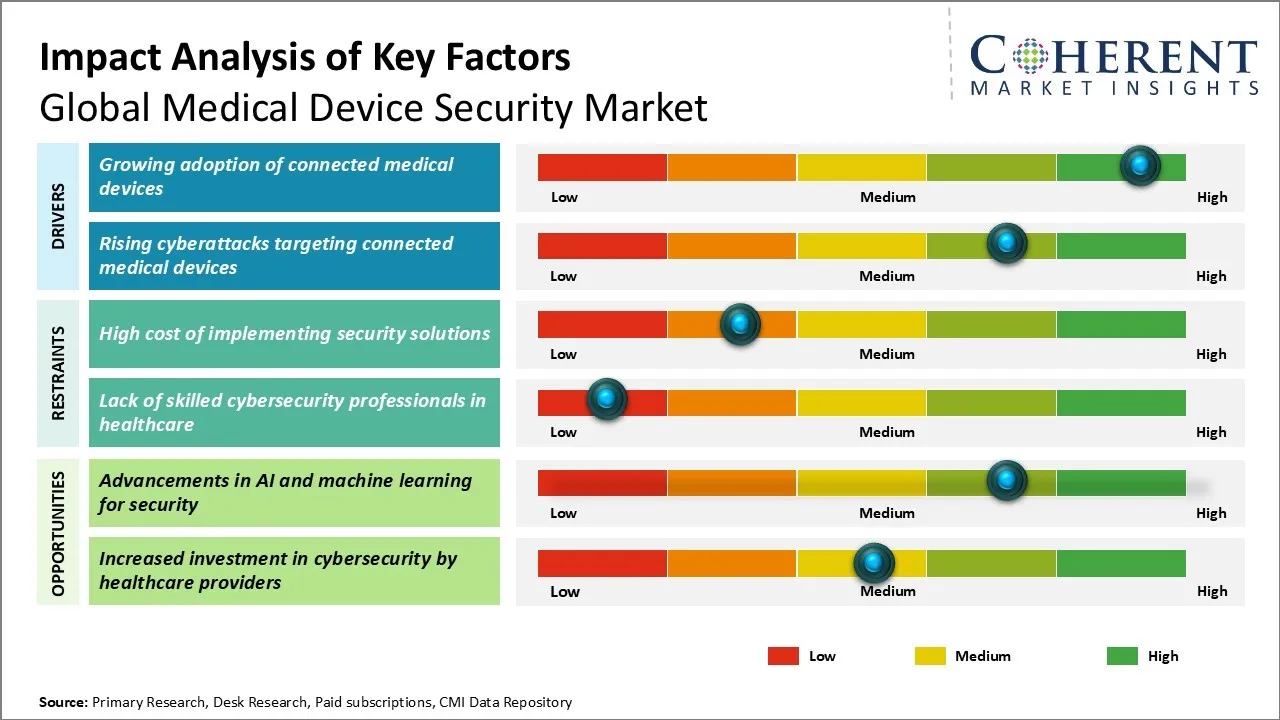
Medical Device Security Market Driver - Growing Adoption of Connected Medical Devices
The expanding use of connected medical devices in healthcare settings is a critical driver propelling the demand for robust medical device security solutions globally. These devices, which include wearable health monitors, implantable cardiac devices, and remote patient monitoring systems, rely heavily on wireless connectivity and network integration to provide real-time data and improved patient outcomes. However, this connectivity also introduces vulnerabilities that can be exploited by cyber threats, making security an essential consideration. As healthcare providers increasingly adopt Internet of Medical Things (IoMT) technologies to enable seamless communication and data exchange, the complexity of managing device security intensifies. Ensuring the confidentiality, integrity, and availability of sensitive patient data while maintaining device functionality necessitates advanced cybersecurity measures.
In August 2023, MedCrypt Inc., a provider of proactive cybersecurity solutions for medical device manufacturers (MDMs), joined forces with Netrise, a company specializing in providing granular visibility into the global XIoT security landscape. This partnership aims to address critical cybersecurity challenges in healthcare by offering MDMs a comprehensive Software Bill of Materials (SBOM) lifecycle management solution. The collaboration will enable device manufacturers to proactively identify, mitigate security risks, and ensure the safety and integrity of their medical devices.
Medical Device Security Market Opportunity - Advancements in AI and Machine Learning for Medical Device Security
The integration of artificial intelligence (AI) and machine learning (ML) technologies presents a significant opportunity for strengthening the security framework within the global medical device market. As medical devices increasingly become interconnected through the Internet of Medical Things (IoMT), the complexity and volume of data generated escalate, exposing these devices to heightened cybersecurity risks. AI and ML algorithms offer the capability to proactively detect, analyze, and respond to cyber threats in real-time, enabling continuous monitoring and anomaly detection that surpass traditional security methods. These technologies can identify patterns indicative of potential breaches or unauthorized access, thereby minimizing vulnerability windows and preventing large-scale attacks. Additionally, AI-driven predictive analytics empower healthcare providers to anticipate emerging threats by analyzing evolving attack vectors, which allows for preemptive security measures. The automation of threat detection and response via AI not only optimizes operational efficiency but also reduces the burden on human security teams, who are often overwhelmed by the sheer scale of cyber threats.
In December 2023, Cisco, a global leader in enterprise networking and security, introduced the Cisco AI Assistant for Security, marking a significant advancement in AI integration within the Security Cloud platform. This AI-driven tool is designed to assist customers in making informed decisions, augmenting tool capabilities, and automating complex tasks, further enhancing Cisco's unified, cross-domain security platform.
Analyst Opinion (Expert Opinion)
- The global medical device security market is experiencing rapid growth, driven by advancements in technology, increasing regulatory support, and the rising demand for connected healthcare solutions. With the proliferation of IoT-enabled medical devices, the need for robust cybersecurity measures has intensified, fostering a market shift towards secure, integrated healthcare systems. Government regulations like the FDA's cybersecurity guidelines and the EU's Medical Device Regulation (MDR) are further accelerating adoption. Additionally, the demand for real-time data analytics and remote monitoring is creating new opportunities for security solutions that address potential vulnerabilities in medical devices.
- Notable challenges persist, including the integration of legacy systems with new technologies, and concerns regarding the interoperability of security protocols. Key industry events, such as the HIMSS Global Health Conference and the Medical Device Cybersecurity Summit, have played crucial roles in fostering knowledge exchange and shaping industry standards. Real-world initiatives like MedCrypt's partnership with healthcare organizations to assess medical device vulnerabilities demonstrate the growing commitment to enhancing cybersecurity measures. These efforts are expected to shape the market, ensuring both the security and efficiency of future medical technologies.
Speak to the analyst
Want personalized insights?
Take the findings above to one of our principal consultants, or have the report rebuilt around the segments, geographies and competitors you actually track.
Market Segmentation
- Component Insights (Revenue, USD Bn, 2021 - 2033)
- Solutions
- Encryption Solutions
- Identity and Access Management (IAM)
- Antivirus and Anti-Malware
- Risk and Compliance Management
- Intrusion Detection/Prevention Systems (IDS/IPS)
- Data Loss Prevention
- Disaster Recovery Solutions
- Services
- Professional Services (Consulting, Training, Integration)
- Managed Security Services (24/7 Monitoring, Incident Response)
- Solutions
- Device Type Insights (Revenue, USD Bn, 2021 - 2033)
- Wearable Devices
- Implantable Devices
- Diagnostic Devices
- Therapeutic Devices
- Monitoring Devices
- Security Type Insights (Revenue, USD Bn, 2021 - 2033)
- Network Security
- Endpoint Security
- Application Security
- Cloud Security
- Deployment Mode Insights (Revenue, USD Bn, 2021 - 2033)
- Cloud-based
- On-premises
- End User Insights (Revenue, USD Bn, 2021 - 2033)
- Healthcare Providers (Hospitals, Clinics, etc.)
- Medical Device Manufacturers
- Home Healthcare
- Healthcare IT Companies
- Diagnostic Centers
- Others (Government and Regulatory Bodies)
- Regional Insights (Revenue, USD Bn, 2021 - 2033)
- North America
- U.S.
- Canada
- Latin America
- Brazil
- Argentina
- Mexico
- Rest of Latin America
- Europe
- Germany
- U.K.
- Spain
- France
- Italy
- Russia
- Rest of Europe
- Asia Pacific
- China
- India
- Japan
- Australia
- South Korea
- ASEAN
- Rest of Asia Pacific
- Middle East
- GCC Countries
- Israel
- Rest of Middle East
- Africa
- South Africa
- North Africa
- Central Africa
- North America
- Key Players Insights
- Medtronic
- Siemens Healthineers
- GE Healthcare
- Philips Healthcare
- Johnson and Johnson Medical Devices
- Abbott Laboratories
- Stryker Corporation
- Boston Scientific
- Baxter International
- Zimmer Biomet
- Olympus Corporation
- Intuitive Surgical
- Terumo Corporation
- Edwards Lifesciences
- Smith and Nephew
Sources
Primary Research Interviews
- Industry Stakeholders
- Healthcare providers and hospital IT departments
- Medical device manufacturers
- End Users
- Clinical staff and medical technicians
- Patients utilizing connected medical devices
Government and International Databases
- U.S. Food and Drug Administration (FDA) Medical Device Databases
- Global Health Digital Partnership (GDHP) Guidance for Medical Device Cybersecurity
- European Medicines Agency (EMA) Medical Device Regulations
- World Health Organization (WHO) Global Health Observatory
- International Medical Device Regulators Forum (IMDRF)
Trade Publications
- Journal of Medical Internet Research
- Journal of Science Policy & Governance
- PharmaTimes
- MedTech Intelligence
- Healthcare IT News
Academic Journals
- ScienceDirect: A Survey on Security Issues in Modern Implantable Devices
- ScienceDirect: Global Harmonization of Artificial Intelligence-Enabled Software as a Medical Device
- Journal of Medical Systems
- IEEE Transactions on Biomedical Engineering
- Journal of Healthcare Engineering
Reputable Newspapers
- Financial Times: Networked Devices Help Head Off Medical Woes and Speed Recovery
- Wired: China's Hackers Are Ransacking Databases for Your Health Data
- The New York Times: Medical Device Cybersecurity Concerns Grow
- The Guardian: Protecting Patient Data in the Digital Age
- BBC News: Advances in Medical Device Security
Industry Associations
- Healthcare and Public Health Sector Coordinating Council (HSCC)
- Global Digital Health Partnership (GDHP)
- Medical Device Innovation Consortium (MDIC)
- International Society of Automation (ISA)
- Health Information and Management Systems Society (HIMSS)
Public Domain Resources
- U.S. FDA’s Global Unique Device Identification Database (GUDID)
- Open-Source Intelligence (OSINT) Tools for Medical Device Cybersecurity
- National Institute of Standards and Technology (NIST) Cybersecurity Framework
- European Union Agency for Cybersecurity (ENISA)
- U.S. Department of Homeland Security (DHS) Cybersecurity and Infrastructure Security Agency (CISA)
Proprietary Elements
- CMI Data Analytics Tool: Proprietary analytics tool to analyze real-time market trends, consumer behavior, and technology adoption in market
- Proprietary CMI Existing Repository of Information for Last 8 Years
Get access to 250+ pages report
Every segment, forecast, competitor profile and data table behind the analysis above — available for instant download.
- ESOMAR Member
- ISO 9001:2015 Certified
- D-U-N-S Registered
- GDPR & CCPA Compliant
Missing comfort of reading report in your local language? Find your preferred language:
Transform your Strategy with Exclusive Trending Reports
Frequently Asked Questions
The global medical device security market is estimated to be valued at USD 9.07 Bn in 2026 and is expected to reach USD 16.58 Bn by 2033.
The CAGR of the global medical device security market is projected to be 9.0% from 2026 to 2033.
Growing adoption of connected medical devices and rising cyberattacks targeting connected medical devices are the major factors driving the growth of the global medical device security market.
High cost of implementing security solutions and lack of skilled cybersecurity professionals in healthcare are the major factors hampering the growth of the global medical device security market.
In terms of component, solutions segment is estimated to dominate the market revenue share in 2026.
Medtronic, Siemens Healthineers, GE Healthcare, Philips Healthcare, Johnson and Johnson Medical Devices, Abbott Laboratories, Stryker Corporation, Boston Scientific, Baxter International, Zimmer Biomet, Olympus Corporation, Intuitive Surgical, Terumo Corporation, Edwards Lifesciences, and Smith and Nephew are the major players.
North America is expected to lead the global medical device security market in 2026.