

Cardiac Monitoring Devices Market Size and Share Analysis - 2026 To 2033
The Cardiac Monitoring Devices Market size is anticipated to grow at a CAGR of 4.3%, from USD 23.52 Bn in 2026 to approximately USD 31.70 Bn by 2033. The market growth is primarily driven by the rising global burden of cardiovascular diseases, increasing demand for continuous and early cardiac diagnosis, rapid expansion of remote and ambulatory patient monitoring, and growing adoption of AI-enabled, wearable, and wireless cardiac monitoring technologies. Integration of cardiac monitoring equipment with digital-health and telehealth platforms is improving data transmission, supporting timely clinical intervention, and expanding adoption across hospitals, outpatient clinics, diagnostic centers, and home-care settings. According to the latest report by the World Health Organization in July 2025, cardiovascular diseases are responsible for 19.8 million deaths in 2022, which is 32% of the world’s total mortality.
Key Takeaways
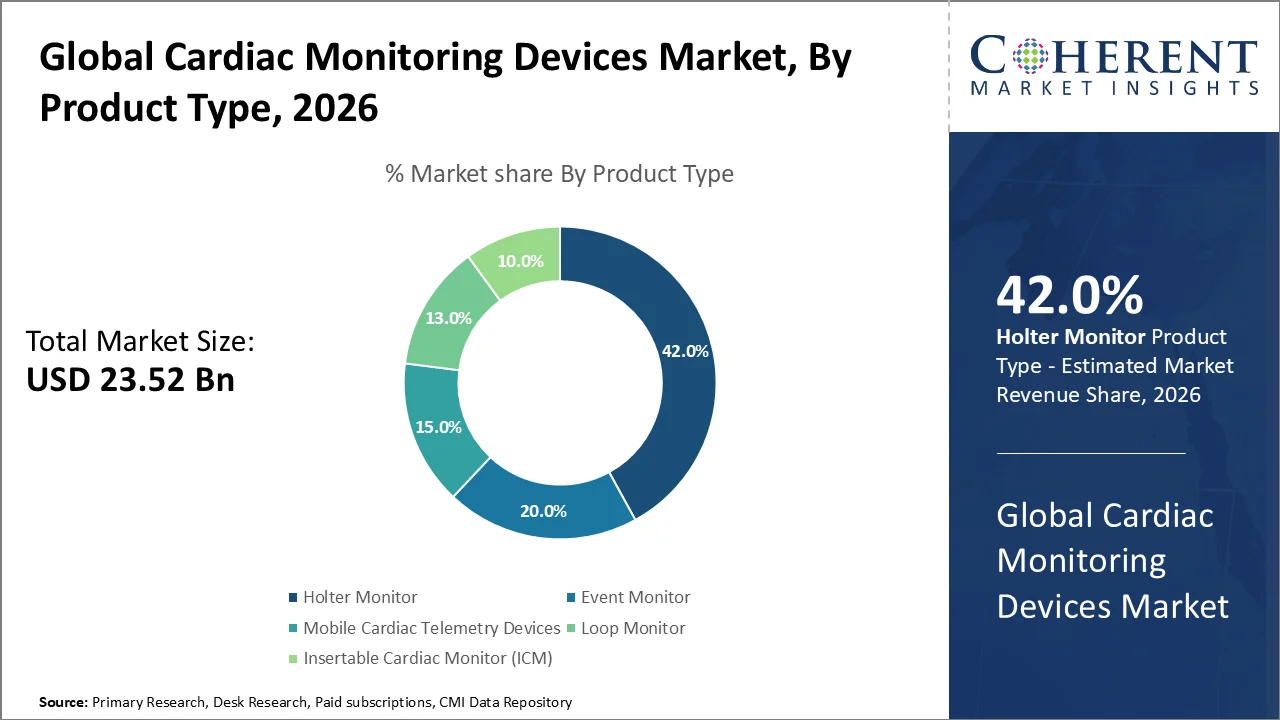
- Holter Monitor segment is expected to lead the cardiac monitoring devices market in terms of highest share in 2026, contributing more than 42.0%. This is due to the use of Holter monitor to record ECG continuously, availability in hospitals and diagnostic centers, comparatively low costs when compared with other mobile cardiac telemetry and implantable monitoring devices, and ability to detect common rhythm disturbances. A study called “Fitbit Heart Study” in 2025 conducted on 455,699 participants found that a 24-hour continuous ECG monitor will detect atrial fibrillation in 17.4% of individuals after a rhythm disturbance alert.
- The Arrhythmia segment is likely to lead in the market for cardiac monitoring devices with a share of around 46.2% in 2026. The growth of the segment is fueled by the rising incidence of atrial fibrillation, bradycardia, tachycardia, and other arrhythmias, in addition to the increased adoption of holter monitors, event monitors, mobile cardiac telemetry devices, and implantable cardiac monitors for arrhythmia evaluation. As per the data provided by the American Heart Association in 2025, the number of cases of atrial fibrillation exceeds 6 million in the United States. Additionally, the European Society of Cardiology forecasts that the number of cases of atrial fibrillation will double by 2050.
- The Hospital segment is expected to lead the cardiac monitoring devices market with about 58.5% share in 2026. Hospitals contribute the largest share owing to their higher number of emergency cases involving cardiac patients, presence of intensive care units and electrophysiology units, procurement of sophisticated cardiac monitoring equipment, and capacity to conduct insertable cardiac monitor procedures. According to the 2025 statistical update of American Heart Association, there are an estimated 805,000 heart attacks each year in the United States, out of which 605,000 are first heart attacks and 200,000 are repeat attacks.
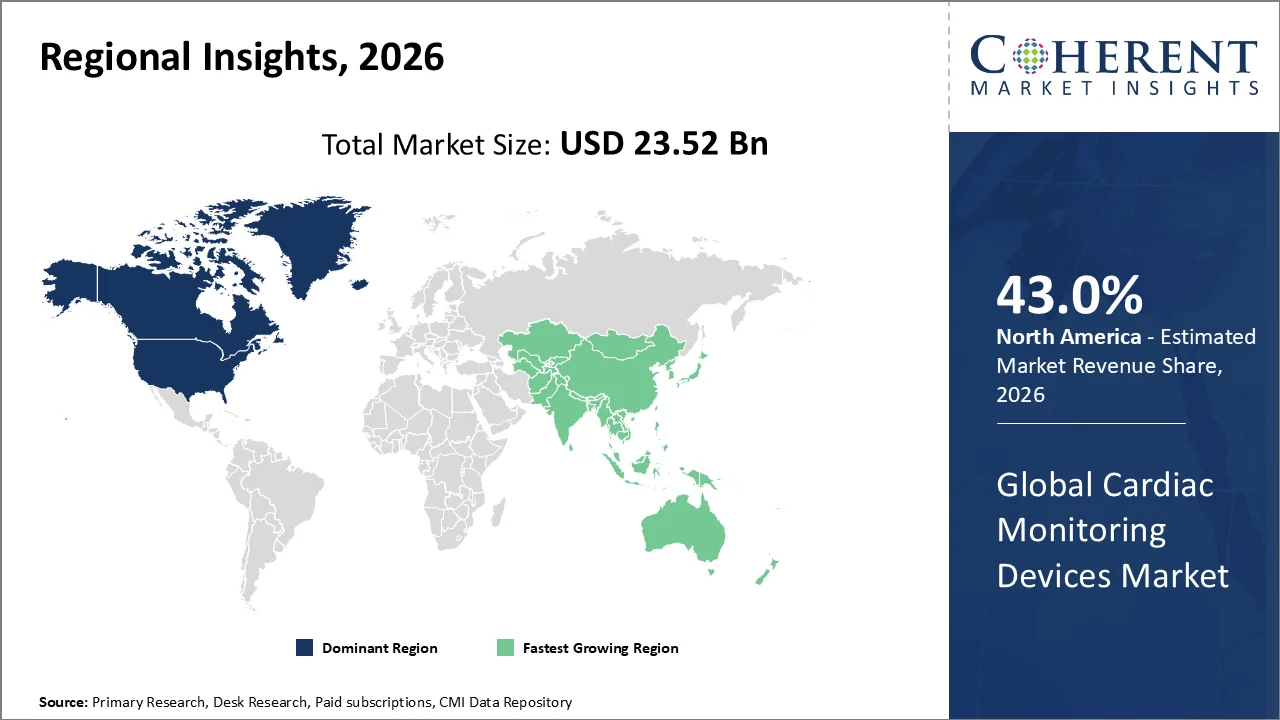
- North America is anticipated to dominate the cardiac monitoring devices market with approximately 43.0% share in 2026. The region’s dominance is attributed to its high cardiovascular disease burden, large aging population, advanced hospital and diagnostic infrastructure, established reimbursement pathways, and strong adoption of Holter monitors, mobile cardiac telemetry systems, wearable ECG patches, and insertable cardiac monitors. According to the U.S. CDC, heart disease caused 683,491 deaths in the U.S. in 2024 and remained the country’s leading cause of death.
Market Drivers
Rapid Expansion of Remote and Ambulatory Monitoring is Accelerating Market Demand
The cardiac monitoring devices market is gaining momentum as healthcare delivery shifts from episodic, hospital-based ECG testing toward continuous and remote monitoring. Holter monitors, event monitors, mobile cardiac telemetry devices, and insertable cardiac monitors allow physicians to evaluate rhythm abnormalities during patients’ normal daily activities and capture intermittent events that may not appear during a conventional clinical examination.
In September 2025, the U.S. Department of Health & Human Services Office of Inspector General found that remote patient monitoring payments through Medicare amounted to more than USD 500 million in 2024. The rising trends in payments made for remote monitoring indicate the increasing use of connected devices in chronic conditions management, which encourages further development of cardiac monitoring devices' remote transmission capabilities.
Long-Duration Wearable ECG Monitoring is Improving Arrhythmia Detection
The growing preference for lightweight, wireless, and patch-type ECG monitors will boost the cardiac monitoring devices market. Contrary to conventional short-term monitoring, the use of ECG patches allows continuous collection of heart rhythm information for days, making it likely to detect episodes of atrial fibrillation, tachycardia, bradycardia, and other arrhythmias.
A clinical study that used 147 patients was conducted in July 2025 where patch ECG test for 14 days was compared to one-day Holter monitoring. Major arrhythmias were detected in 75.5% of the subjects using patch ECG as opposed to 48.3% of the subjects using Holter monitoring. Detection rates of atrial fibrillation were found to be higher for patch ECG (23.8%) than Holter (11.6%).
Current Events and Their Impact on the Cardiac Monitoring Devices Market
Current Event | Description and its Impact |
CMS Expands and Revises Medicare Remote-Monitoring Reimbursement Policies (2026) |
|
FDA Introduces Updated Cybersecurity Requirements for Connected Medical Devices (2026) |
|
- Current Industry Events of 2026
- Market Size Estimation
- Regional Breakdown
- Competitive Landscape
- Customer Intelligence
- Segmental Analysis
- Pricing Analysis
- Key Market Drivers, Challenges & Future Trends
- Customized Insights Section
Segmental Insights
Why is the Holter Monitor Acquiring the Largest Share?
On the basis of product type, the Holter Monitor segment is projected to account for the largest cardiac monitoring devices market share of approximately 42.0% in 2026. The segment’s growth is owing to its established clinical use, non-invasive operation, relatively affordable cost, and ability to continuously record cardiac activity during patients’ routine daily activities. Holter monitors are widely used for detecting intermittent atrial fibrillation, premature contractions, bradycardia, tachycardia, and conduction abnormalities that may not be captured during a standard ECG examination.
A 2026 study involving 300 high-risk patients found that high-channel 12-lead Holter monitoring detected arrhythmias in 35.0% of patients, compared with 20.0% through routine 12-lead ECG examinations. Holter monitoring also detected atrial fibrillation in 11.7% of patients, nearly twice the 6.0% detection rate obtained through routine ECG testing.
In April 2026, RhythMedix launched its next-generation RhythmStar SL wearable cardiac monitor, one day after the device received U.S. FDA 510(k) clearance on April 21, 2026.
Arrhythmia Holds the Largest Application Share
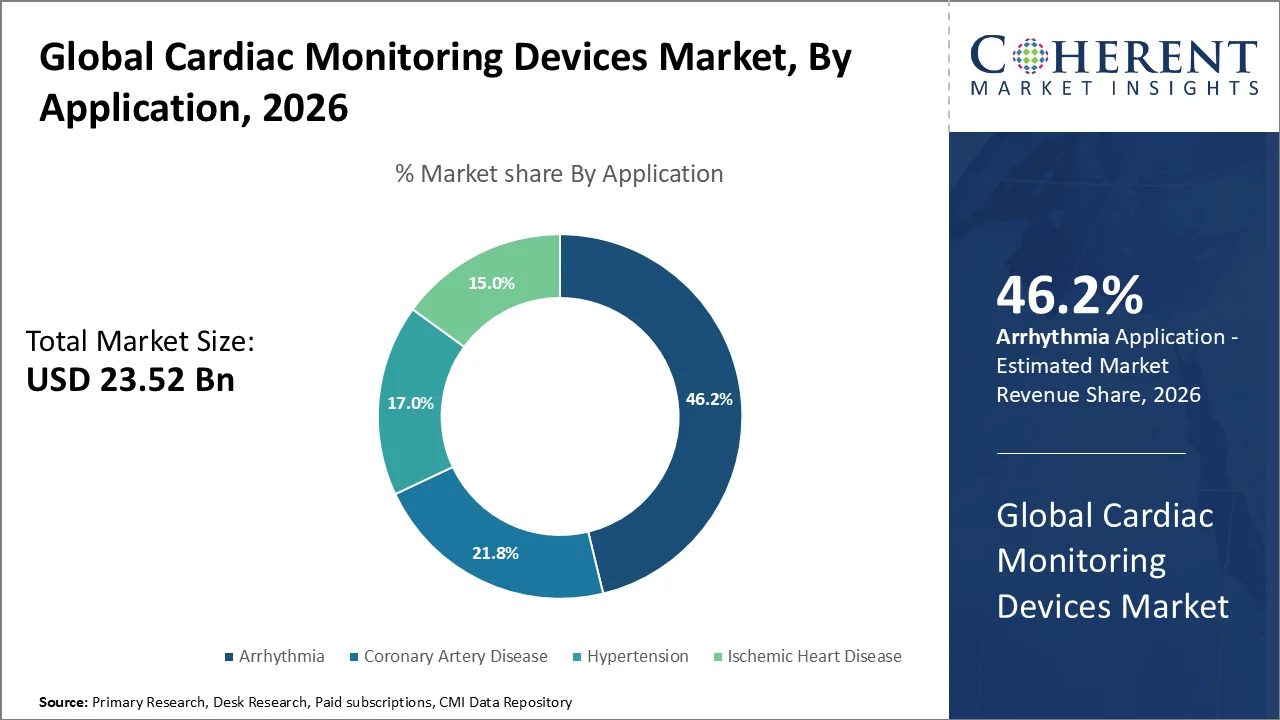
On the basis of application, the Arrhythmia segment is anticipated to lead the cardiac monitoring devices market with approximately 46.2% share in 2026. The segment’s dominance is owing to the episodic and frequently asymptomatic nature of cardiac rhythm disorders, which creates a strong requirement for continuous and extended monitoring through Holter monitors, event monitors, mobile cardiac telemetry devices, and insertable cardiac monitors. A 2026 study analyzing continuous ECG data from 65,244 emergency-department patients identified previously undiagnosed atrial fibrillation in approximately 3% of patients.
In April 2026, AliveCor commercially launched its AI-powered Kardia 12L ECG System in Europe after receiving CE Mark approval. The portable 12-lead ECG system uses a single-cable and five-electrode configuration to provide diagnostic-quality cardiac recordings at hospitals, clinics, emergency departments, and other point-of-care settings.
Hospitals Hold the Largest End-User Share
On the basis of end user, the Hospital segment is projected to account for the largest cardiac monitoring devices market share of approximately 58.5% in 2026. The segment’s growth is owing to the high concentration of emergency cardiac cases, critically ill patients, inpatient procedures, intensive-care monitoring, electrophysiology services, and implantable cardiac monitor procedures within hospital settings. According to the National Cardiac Audit Programme’s 2025 report, hospitals in England and Wales recorded just under 82,000 confirmed heart-attack admissions during 2023–2024.
In September 2025, Philips introduced a new smart telemetry platform for continuous cardiac monitoring across hospital networks. The platform includes the next-generation Telemetry Monitor 5500, a compact, patient-worn device designed to maintain continuous cardiac surveillance while allowing patients to move within the hospital.
Cardiac Monitoring Devices Market Trends
- The rising adoption of wearable ECG patches and smartwatches is shifting cardiac monitoring from short, facility-based examinations toward continuous rhythm assessment during patients’ daily activities. A 2025 systematic review and meta-analysis covering 15 studies found that ECG chest patches achieved pooled sensitivity of 96.1%, while PPG-enabled smartwatches recorded sensitivity of 97.4% and specificity of 96.6% for atrial fibrillation detection.
- Artificial intelligence is increasingly automating ECG interpretation and enabling faster analysis of large ambulatory ECG datasets. In December 2025, the U.S. FDA approved the upgraded DeepRhythmAI system to analyze ECGs produced using Holter monitoring, event monitoring, and outpatient cardiac telemetry equipment. The system, which operates through cloud computing, detects supraventricular and ventricular arrhythmias, second- and third-degree atrioventricular blocks, premature ventricular contractions, heart rate and RR intervals.
- The increase in the use of insertable cardiac monitoring post-ischemic stroke will lead to a widening of long-term monitoring to individuals without a pre-existing arrhythmia. In a systematic review conducted in 2026, a total of 4,563 people from 12 studies were identified to have developed atrial fibrillation in 25.9% following an ischemic stroke/transient ischemic attack.
Regional Insights
North America Dominates Owing to its High Cardiovascular Disease Burden and Advanced Monitoring Infrastructure
North America is estimated to capture around 43.0% of the global cardiac monitoring devices market by 2026. Factors contributing to the leading share of the region include the large number of patients suffering from cardiovascular diseases, advanced hospital facilities, reimbursements available for ambulatory monitoring, and adoption of ECG patches, mobile cardiac telemetry, AI-based ECG software, and insertable cardiac monitors. As per the 2025 Statistical Update of the American Heart Association, about 127.9 million adults in the U.S., or 48.6% of the adult population, were suffering from CVD.
In March 2026, U.S.-based iRhythm Technologies launched iRhythm Academy, a digital education platform offering interactive courses, webinars, scientific publications, and short learning modules for healthcare professionals using ambulatory cardiac monitoring technologies.
Asia Pacific is Expected to be the Fastest-Growing Regional Market
Asia Pacific is expected to witness the fastest growth in the cardiac monitoring devices market during 2026–2033. The region’s growth is attributed to its rapidly aging population, increasing cardiovascular and metabolic disease burden, expanding hospital infrastructure, and rising adoption of digital-health, telemedicine, and remote patient-monitoring systems across India, China, Japan, South Korea, and Southeast Asia.
According to the World Health Organization’s September 2025 update, cardiovascular diseases cause approximately eight deaths every minute in the WHO South-East Asia Region, and nearly half of these deaths occur prematurely among people below 70 years of age.
In April 2026, OMRON Healthcare and Tricog Health launched the Tricog CardioCheck system in healthcare centers across India. It is a combination of the OMRON upper arm blood pressure device with ECG and Tricog Health’s AI-based cardiac triaging service, which has been proven to be clinically validated.
Advanced Remote-Care Adoption and Rapid Device Innovation are Accelerating the Cardiac Monitoring Devices Market in the U.S.
The U.S. cardiac monitoring devices market is witnessing strong growth owing to the country’s advanced hospital infrastructure, broad use of ambulatory ECG services, established Medicare coverage pathways, and rapid adoption of wearable, wireless, and insertable cardiac monitoring systems. Hospitals and cardiology practices are increasingly integrating monitoring devices with smartphones, cloud platforms, electronic medical records, and centralized clinical-review systems.
In September 2025, the U.S. FDA cleared Boston Scientific’s LUX-Dx II and LUX-Dx II+ Insertable Cardiac Monitor systems. The devices continuously record subcutaneous ECG signals for patients with known cardiac conditions or symptoms such as palpitations, dizziness, syncope, chest pain, and shortness of breath. The systems support Bluetooth-based data transfer, smartphone connectivity, remote clinical monitoring, and arrhythmia detection for conditions including atrial fibrillation, bradycardia, pauses, and tachycardia.
Aging Population and Digitally Connected Hospitals are Supporting China’s Cardiac Monitoring Devices Market
China is expected to witness strong growth in the cardiac monitoring devices market over the forecast period. The country’s growth is attributed to its rapidly aging population, substantial cardiovascular disease burden, expanding hospital infrastructure, and increasing deployment of artificial intelligence, connected patient monitors, wearable ECG technologies, and centralized hospital information platforms.
In May 2025, China-based Mindray introduced its next-generation BeneVision V Series patient-monitoring platform. The system includes wireless, cable-lite monitoring capabilities and connects multiple vital-sign and clinical data streams to support continuous monitoring, patient mobility, and centralized decision-making in critical-care and hospital settings.
Who are the Major Companies in Cardiac Monitoring Devices Industry
Some of the major key players in Cardiac Monitoring Devices Market are Philips Healthcare, Medtronic, Boston Scientific, Cardiac Science, LifeWatch, CareTaker Medical, Spacelabs, St. Jude Medical, Kohden, CardioNet, and Mortara Instrument.
Key News
- In July 2025, Philips launched the Philips ECG AI Marketplace in the U.S., providing hospitals and cardiac-care teams with centralized access to validated third-party artificial-intelligence algorithms within Philips’ ECG infrastructure.
- In June 2026, Medtronic announced the expansion of its U.S. wearable monitoring portfolio through an exclusive distribution agreement with Corsano Health. Under the agreement, Medtronic will distribute the FDA-cleared Corsano multiparameter wearable for use in hospitals and hospital-to-home monitoring programs.
Market Report Scope
Cardiac Monitoring Devices Market Report Coverage
| Report Coverage | Details | ||
|---|---|---|---|
| Base Year: | 2025 | Market Size in 2026: | USD 23.52 Bn |
| Historical Data for: | 2020 To 2024 | Forecast Period: | 2026 To 2033 |
| Forecast Period 2026 to 2033 CAGR: | 4.3% | 2033 Value Projection: | USD 31.70 Bn |
| Geographies covered: |
| ||
| Segments covered: |
| ||
| Companies covered: | Philips Healthcare, Medtronic, Boston Scientific, Cardiac Science, LifeWatch, CareTaker Medical, Spacelabs, St. Jude Medical, Kohden, CardioNet, and Mortara Instrument. | ||
| Growth Drivers: |
| ||
| Restraints & Challenges: |
| ||
Analyst Opinion
- The cardiac monitoring devices market is moving toward longer-duration ambulatory monitoring because extended recording substantially improves the detection of intermittent arrhythmias. The 2026 AVANT-GARDE multicenter trial found that a 72-hour adhesive ECG patch detected atrial fibrillation in 16.7% of embolic-stroke patients, compared with 5.6% using a 24-hour Holter monitor. Across the complete study population, detection reached 14.2% with patch monitoring versus 4.4% with Holter monitoring. This evidence is expected to accelerate demand for wearable ECG patches, event monitors, mobile cardiac telemetry devices, and insertable monitors, while conventional Holter devices remain the primary first-line ambulatory monitoring option.
- Artificial intelligence is expected to become a central purchasing criterion as hospitals and diagnostic providers seek to process expanding volumes of continuous ECG data without proportionally increasing clinical-review workloads. A 2026 study developed an AI model using public and clinical data from more than 15,000 patients and independently tested it on 1,010 patients undergoing long-term ambulatory ECG monitoring. The model achieved 96.4% sensitivity and more than 99.99% specificity for time-level atrial fibrillation and atrial flutter detection. At the complete-recording level, sensitivity reached 100%, while specificity was 98.77%. This supports stronger commercial positioning for monitoring platforms that combine validated AI classification, automated episode prioritization, and clinician-review workflows.
- Regulatory activity indicates that competition is shifting from standalone monitoring hardware toward connected, software-enabled cardiac-care ecosystems. The FDA’s AI-Enabled Medical Device List records at least 10 cardiovascular-panel devices receiving decisions between January 9 and March 28, 2026. These included the BodyGuardian Remote Monitoring System, SafeBeat Rx, PreemptiveAI Clinical SDK, Tyto Stethoscope, Corvair Monza, and an ECG-AI pulmonary-hypertension algorithm. This active authorization pipeline suggests that future market differentiation will increasingly depend on algorithm validation, cloud connectivity, interoperability, cybersecurity, and the ability to generate actionable clinical notifications rather than merely record ECG signals.
Speak to the analyst
Want personalized insights?
Take the findings above to one of our principal consultants, or have the report rebuilt around the segments, geographies and competitors you actually track.
Market Segmentation
- By Product Type (Revenue, USD Bn, 2021-2033)
- Holter Monitor
- Event Monitor
- Loop Monitor
- Insertable Cardiac Monitor (ICM)
- Mobile Cardiac Telemetry Devices
- By Application (Revenue, USD Bn, 2021-2033)
- Arrhythmia
- Coronary Artery disease
- Hypertension
- Ischemic Heart Disease
- By End User (Revenue, USD Bn, 2021-2033)
- Hospital
- Diagnostic Centers
- Ambulatory Surgical Centers
- By Region (Revenue, USD Bn, 2021-2033)
- North America
- U.S.
- Canada
- Latin America
- Brazil
- Mexico
- Argentina
- Rest of Latin America
- Europe
- Germany
- U.K.
- France
- Italy
- Spain
- Russia
- Rest of Europe
- Asia Pacific
- China
- India
- Japan
- Australia
- South Korea
- ASEAN
- Rest of Asia Pacific
- Middle East
- GCC
- Israel
- Rest of Middle East
- Africa
- South Africa
- Central Africa
- North Africa
- North America
Sources
Primary Research Interviews
- Cardiologists and cardiac electrophysiologists
- Hospital intensive-care and emergency physicians
- Ambulatory ECG and telemetry specialists
- Cardiac diagnostic laboratory managers
- Biomedical and clinical engineering teams
- Cardiac monitoring device manufacturers
- Remote cardiac monitoring service providers
- Hospital procurement and supply-chain managers
- Cardiology nurses and device technicians
- Key opinion leaders in cardiac diagnostics
Databases
- World Health Organization Global Health Observatory
- World Bank Open Data
- OECD Health Statistics
- Centers for Disease Control and Prevention
- National Center for Health Statistics
- Centers for Medicare & Medicaid Services
- U.S. FDA 510(k) and PMA Databases
- U.S. FDA MAUDE Database
- European Commission EUDAMED
- ClinicalTrials.gov
- PubMed and MEDLINE
- Eurostat Health Database
Magazines
- Cardiovascular Business
- Diagnostic and Interventional Cardiology
- MedTech Dive
- Medical Device and Diagnostic Industry
- Medical Device Network
- Healthcare IT News
- Cardiology Today
- European Medical Journal
Journals
- Circulation
- Journal of the American College of Cardiology
- Heart Rhythm
- Europace
- Journal of Electrocardiology
- European Heart Journal
- Journal of Cardiovascular Electrophysiology
- Journal of Medical Internet Research
- Frontiers in Cardiovascular Medicine
- American Heart Journal
Newspapers
- Reuters
- The Wall Street Journal
- Financial Times
- The New York Times
- The Guardian
- The Economic Times
- Nikkei Asia
- South China Morning Post
Associations
- American Heart Association
- American College of Cardiology
- Heart Rhythm Society
- European Society of Cardiology
- European Heart Rhythm Association
- Asia Pacific Heart Rhythm Society
- World Heart Federation
- Association for the Advancement of Medical Instrumentation
- Medical Device Manufacturers Association
- Healthcare Information and Management Systems Society
Public Domain Sources
- Company annual reports and investor presentations
- Medical-device regulatory clearance databases
- Government cardiovascular disease statistics
- Hospital admission and procedure databases
- Clinical guidelines from cardiology associations
- Peer-reviewed clinical study publications
- Public reimbursement and coverage policies
- Patent databases such as WIPO and USPTO
- Product brochures and technical documentation
- Government digital-health policy publications
- Public procurement and tender databases
- Company press releases and product announcements
Proprietary Elements
- CMI Data Analytics Tool
- Proprietary CMI existing repository of information for the last 10 years
Get access to 250+ pages report
Every segment, forecast, competitor profile and data table behind the analysis above — available for instant download.
- ESOMAR Member
- ISO 9001:2015 Certified
- D-U-N-S Registered
- GDPR & CCPA Compliant
Missing comfort of reading report in your local language? Find your preferred language:
Transform your Strategy with Exclusive Trending Reports
Frequently Asked Questions
The Cardiac Monitoring Devices Market is expected to reach approximately USD 31.70 Bn by 2033, increasing from USD 23.52 Bn in 2026.
Major players operating in the global Cardiac Monitoring Devices Market include Philips Healthcare, Medtronic, Boston Scientific, Cardiac Science, LifeWatch, CareTaker Medical, Spacelabs, St. Jude Medical, Nihon Kohden, CardioNet, and Mortara Instrument.
High device and implementation costs, limited reimbursement in some markets, cybersecurity concerns, false-positive alerts, data overload, and limited interoperability with hospital information systems are the major factors hampering market growth.
The rising prevalence of cardiovascular diseases, growing adoption of remote cardiac monitoring, increasing use of wearable ECG devices, expansion of ambulatory monitoring, and integration of AI-enabled cardiac analysis are driving market growth.
The Cardiac Monitoring Devices Market is anticipated to grow at a CAGR of approximately 4.3% between 2026 and 2033.
North America is expected to dominate the global Cardiac Monitoring Devices Market with approximately 43.0% share in 2026, owing to its advanced healthcare infrastructure, established reimbursement pathways, high cardiovascular disease burden, and early adoption of connected cardiac monitoring technologies.
Asia Pacific is expected to be the fastest-growing regional market during 2026–2033, supported by its aging population, expanding healthcare infrastructure, increasing cardiovascular disease burden, and rising adoption of telemedicine and remote patient-monitoring systems.