

Global Patient-Centered Medical Home Market Size and Share Analysis – 2026 To 2033
The Global Patient-Centered Medical Home (PCMH) Market size is anticipated to grow at a CAGR of 15.6% with a value of USD 28.3 Bn in 2026 and is expected to reach approximately USD 81.3 Bn in 2033. The market growth is primarily driven by the global transition toward value-based healthcare delivery models, increasing emphasis on coordinated primary care, and rising prevalence of chronic diseases such as diabetes, cardiovascular disorders, and respiratory illnesses. According to the Agency for Healthcare Research and Quality (AHRQ), PCMH, or Patient-Centered Medical Home, represents a fundamental approach to transforming primary care through the provision of coordinated and collaborative care.
Key Takeaways
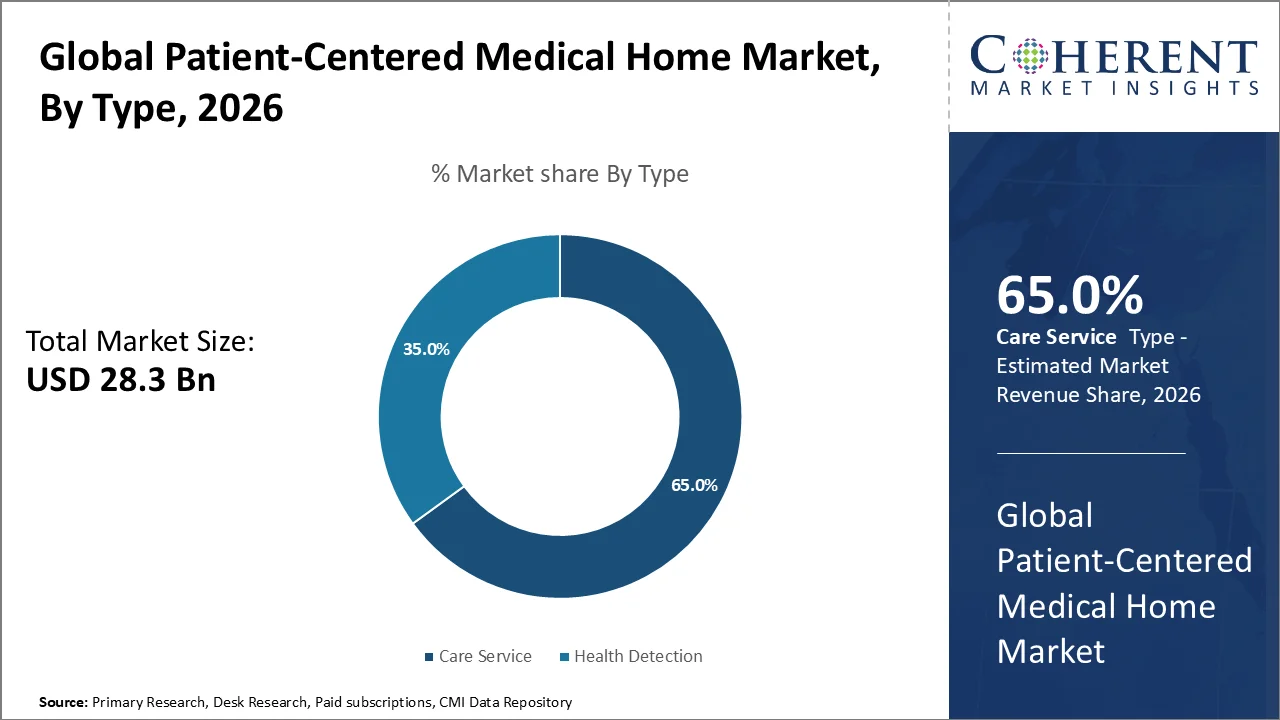
- The Care Service sector is expected to hold the major share in the market with around 65.0% in 2026. The segment is witnessing rise owing to the increased need for integrated primary care delivery, chronic disease management programs, preventative healthcare services and long-term patient engagement models. The World Health Organization (WHO) states that chronic diseases account for about 74% of all deaths worldwide every year, which greatly increases the need for continuous care coordination and structured
- Nursing Home segment is predicted to lead with about 45.0% share in 2026. This dominance can be attributed to the growing number of elderly individuals, the rising numbers of various chronic diseases, and the rising need for coordinated care services in such institutions. According to WHO, the total number of individuals above the age of 60 is expected to reach 2.1 Bn people in the year 2050, a situation that will require robust long-term care frameworks such as the PCMH model in nursing homes.
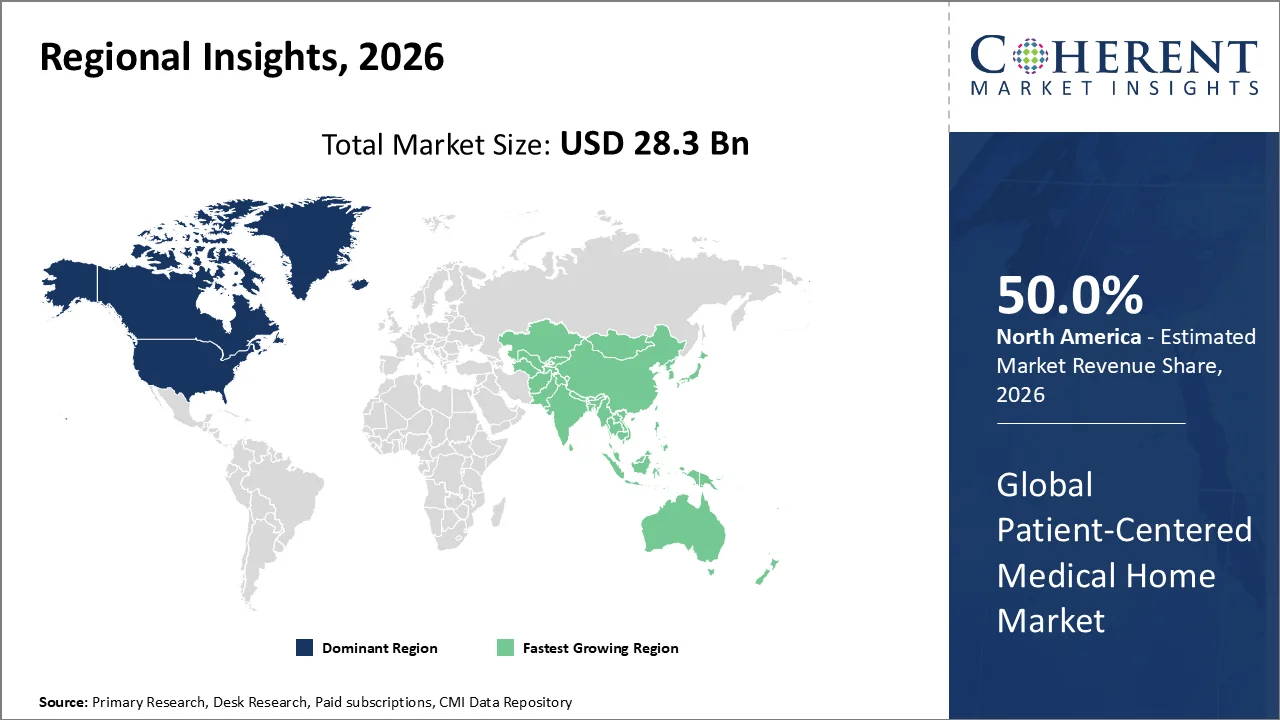
- North America is predicted to lead the PCMH market with a share of over 50.0% by 2026. High adoption of value-based care models, solid primary care infrastructure, significant healthcare spending and broad deployment of patient-centered delivery methods such as PCMH inside integrated healthcare networks drive the region’s leadership. The United States has the world’s largest healthcare expenditure system, reaching USD 5.3 trillion in 2024 (approximately 18% of gross domestic product, or GDP), which according to the Centers for Medicare & Medicaid Services (CMS), supports large-scale deployment of advanced primary care models including PCMH.
Segmental Insights
Why does the Care Service Segment Hold the Largest Share?
The Care Service category is expected to hold the largest share of 65.0% in the Patient-Centered Medical Home (PCMH) market in 2026. The expansion of the market is fueled by the increasing requirement for integrated delivery of primary care, chronic illness management programs, preventative healthcare services and long-term patient engagement strategies. PCMH frameworks emphasize multidisciplinary care teams, continuous patient monitoring, and coordinated care planning across providers.
According to the U.S. Centers for Disease Control and Prevention (CDC, 2024), where 6 in 10 adults have a chronic illness, and 4 in 10 adults have more than one, further stresses the significance of the PCMH-based approach to service-oriented primary care.
In March 2026, Ovatient launched Compass, a virtual-first care platform that provides comprehensive integrated care to remote areas. The platform is built on the Epic EHR system and is meant to serve as a virtual Patient-Centered Medical Home (PCMH).
- Current Industry Events of 2026
- Market Size Estimation
- Regional Breakdown
- Competitive Landscape
- Customer Intelligence
- Segmental Analysis
- Pricing Analysis
- Key Market Drivers, Challenges & Future Trends
- Customized Insights Section
Why does the Nursing Home Segment Lead the Market?
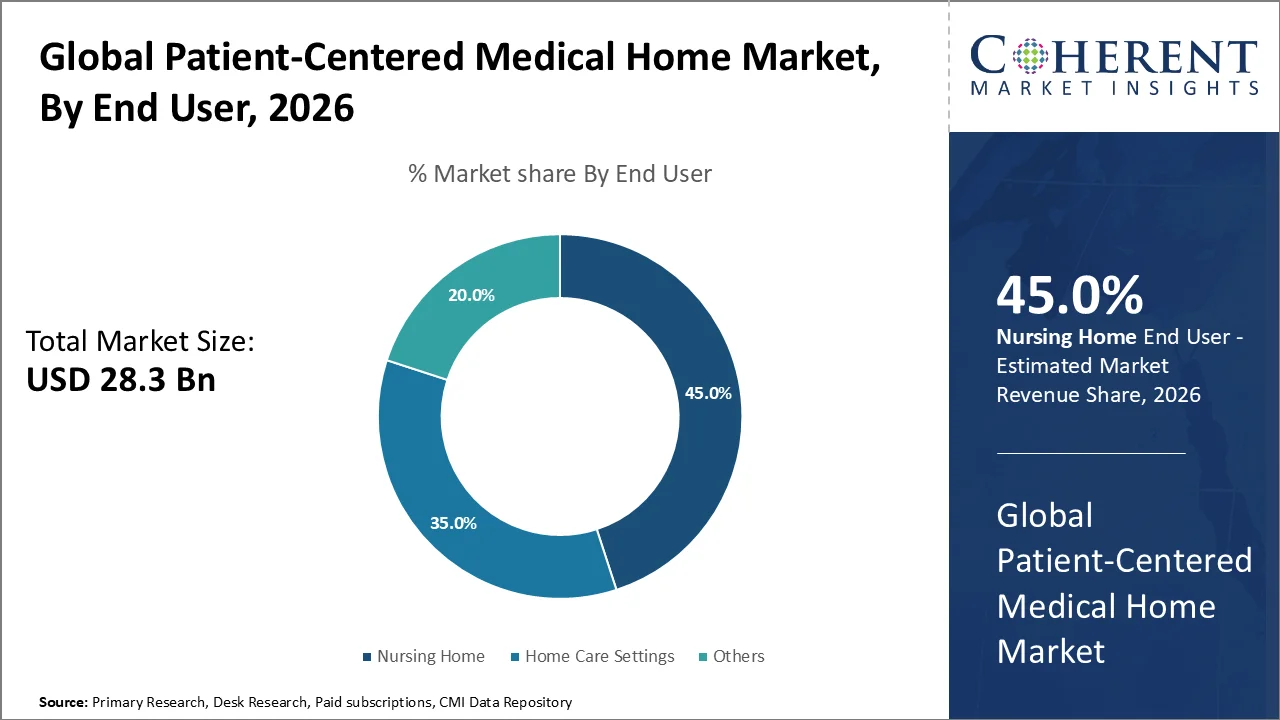
Based on end user, the Nursing Home category is expected to lead in terms of end user with a share of about 45.0% in 2026. The dominance is due to the growing elderly population, increasing prevalence of several chronic conditions, and increased demand for continuous care coordination in institutional senior care settings. Nursing homes are rapidly using PCMH principles to prevent hospital readmissions, improve medication administration, and improve long-term care outcomes for senior patients.
In February 2026, Oracle Health launched the Medical Device Validation Program, a structured framework designed to standardize how medical devices connect with electronic health records (EHRs).
Rising Burden of Chronic Diseases is Accelerating Adoption of Patient-Centered Medical Home (PCMH) Models
The growing burden of chronic diseases like cardiovascular diseases, diabetes, cancer, and respiratory diseases creates a considerable need for integrated, long-term care delivery systems such as the Patient-Centered Medical Home (PCMH) model. The PCMH framework enables continued surveillance of patients, coordination of care across several disciplines, and use of preventative interventions that are necessary to effectively manage the burden of chronic disease.
According to the World Health Organization (WHO), there are about 41 million deaths annually attributable to chronic diseases, hence showing the importance of adopting a model such as PCMH in health care management.
In March 2025, Teladoc Health, Inc. announced the expansion of its Connected Care Partnerships, integrating new digital health partners across specialty care areas including digestive health, fertility, and family-building services.
Digital Health Technology (EHRs, Telehealth & Interoperability) is Strengthening PCMH Implementation
The growing adoption of digital health technology such as EHRs, telemedicine and health information exchange is significantly improving the scalability of the PCMH framework. These tools permit the sharing of real-time information, optimal care planning and improved patient participation.
According to the Office-based physicians in the US using electronic health record (EHR) systems are about 95%, of which 83.6% are certified EHR systems (Office of the National Coordinator for Health Information Technology [ONC], 2024). This is a measure of the extent to which the digital health network is being used to support PCMH implementation.
Current Events and Their Impact on the Patient-Centered Medical Home Market
Current Event | Description and its Impact |
CMS Expands Interoperability and Digital Health Ecosystem Framework in the U.S. (2025–2026)
|
|
CMS Expansion of Value-Based Care Models in the U.S. (2024–2025) |
|
Patient-Centered Medical Home Market Trends
- Strong shift to value-based care is driving PCMH deployment worldwide. Healthcare systems are changing from fee-for-service to outcome-based reimbursement models to promote coordinated, preventative and patient-centered care delivery.
- The increased adoption of electronic health records (EHR), application programming interfaces (APIs), and interoperability standards is ensuring that information can easily move from one provider to another, an absolute requirement for the establishment of PCMH. In the United States, the usage of the EHR system in hospitals is at around 96% (ONC, 2024).
- The rising incidence of chronic diseases has necessitated the need for coordinated care strategies. The major reasons for the implementation of PCMH include the occurrence of diabetes, cardiovascular diseases, and pulmonary disorders, among others.
- Telehealth and hybrid care models will be a permanent part of primary care delivery going forward. With virtual care, access, continuity, and monitoring of patients with chronic diseases have become possible, making virtual care a major enabler for implementing the PCMH model. HHS reports Medicare telehealth flexibilities extended until December 31, 2027, to facilitate long-term hybrid care adoption.
Regional Insights
North America Dominates Owing to Advanced Healthcare Infrastructure and Strong Value-Based Care Adoption
North America is estimated to hold around 50.0% share in the PCMH market in 2026. The region's leadership is driven by significant acceptance of value-based care models, sophisticated primary care infrastructure, high healthcare spending, and high adoption of patient-centered delivery methods such as PCMH among integrated healthcare networks.
In May 2026, the North Dakota Department of Health and Human Services (HHS) announced a USD 40 million Rural Health Transformation Program grant opportunity aimed at helping rural hospitals upgrade clinical equipment and expand lifesaving care services closer to home
Asia Pacific Patient-Centered Medical Home (PCMH) Market
The Asia Pacific is estimated to be the fastest-growing region in the PCMH market during the forecast period. The region is witnessing growth due to government-driven digital health transformation, expansion of primary care infrastructure, increasing burden of chronic diseases, and growing adoption of telehealth and EHR systems in emerging economies such as India, China, Japan, and South Korea.
India is rapidly strengthening its digital healthcare ecosystem through the Ayushman Bharat Digital Mission (ABDM), which has enabled the creation of over 600+ million digital health IDs and growing nationwide electronic health record integration, significantly improving care coordination, interoperability and continuity of care across primary healthcare systems.
Value-Based Care Reforms and Digital Health Transformation are Accelerating the Patient-Centered Medical Home Market in the United States
The U.S. Patient-Centered Medical Home (PCMH) Market is expanding rapidly. The expansion is being fueled by the rise of value-based care programs, broad use of digital health and federal attempts to improve care coordination and interoperability. Such trends are contributing to the increasing popularity of integrated care delivery models that emphasize preventive care and management of chronic diseases.
According to the Centers for Medicare & Medicaid Services (CMS), an estimated 14.3 million Medicare enrollees are projected to receive care through Medicare Accountable Care Organization (ACO) initiatives in 2026.
China Patient-Centered Medical Home Market Trends
China's PCMH market is growing owing to widespread healthcare modernization initiatives, strengthening of primary healthcare institutions, and rising investment in digital health infrastructure. The development of coordinated care models similar to the Patient-Centered Medical Home (PCMH) is being influenced by national changes aimed at improving community-based healthcare and managing chronic diseases.
In June 2026, the Government of China through the China International Development Cooperation Agency (CIDCA) together with UNICEF and Kenya’s Ministry of Health launched a USD 4 million initiative to strengthen maternal and newborn health services in Garissa, Mandera and Wajir counties in Northeastern Kenya. The initiative supports PCMH by improving access, continuity, and quality of patient-centered primary healthcare delivery for mothers and newborns.
Who are the Major Companies in Patient-Centered Medical Home Industry
Some of the major key players in Patient-Centered Medical Home Market are Aetna, AmeriHealth, Lynn Community Health Center, CHAS Health, Cigna, Siemens Healthcare GmbH, NextGen Healthcare, Athena Healthcare, NextStep Solutions, and Genpact Limited.
Key News
- In March 2026, NCQA launched its Advanced Primary Care Pilot Program, building on its Patient-Centered Medical Home framework. The pilot includes Aledade, Bluegrass Community Health Center, Jefferson Health, and NYC Health + Hospitals to test outcome-focused standards covering population health, behavioral health integration, care-team coordination, and data-enabled primary care delivery.
- In October 2025, Aetna announced its 2026 Medicare Advantage plans featuring expanded preventive benefits, Healthy Home Visits, and ongoing investments in technology-enabled personalized care. The initiative reinforces coordinated, patient-centered care delivery models aligned with the PCMH framework.
Market Report Scope
Patient-Centered Medical Home Market Report Coverage
| Report Coverage | Details | ||
|---|---|---|---|
| Base Year: | 2025 | Market Size in 2026: | USD 28.3 Bn |
| Historical Data for: | 2020 To 2024 | Forecast Period: | 2026 To 2033 |
| Forecast Period 2026 to 2033 CAGR: | 15.6% | 2033 Value Projection: | USD 81.3 Bn |
| Geographies covered: |
| ||
| Segments covered: |
| ||
| Companies covered: |
| ||
| Growth Drivers: | Aetna, AmeriHealth, Lynn Community Health Center, CHAS Health, Cigna, Siemens Healthcare GmbH, NextGen Healthcare, Athena Healthcare, NextStep Solutions, and Genpact Limited | ||
| Restraints & Challenges: |
| ||
Analyst Opinion
- The trend towards value-based and coordinated care models is driving the Patient-Centered Medical Home (PCMH) market globally, as healthcare systems focus on preventative care, chronic disease management, and improving the patient experience to reduce needless healthcare costs.
- Growing awareness of the PCMH framework is driving faster market adoption. Over 10,000 practices and more than 50,000 clinicians have been recognized by the National Committee for Quality Assurance (NCQA) as patient-centered medical homes (PCMHs), and more than 95 organizations offer financial incentives or transformation support for PCMH implementation, indicating increased acceptance of the model among institutions.
- PCMH is increasingly recognized as a way to improve quality of healthcare and control costs. NCQA reports that “Evidence from PCMH implementation shows reductions in emergency department utilization and hospitalizations, and improvements in patient outcomes and experiences. This has encouraged payers and providers to increase investments in team-based, technology-enabled primary care models.
Speak to the analyst
Want personalized insights?
Take the findings above to one of our principal consultants, or have the report rebuilt around the segments, geographies and competitors you actually track.
Market Segmentation
- By Type (Revenue, USD Bn, 2021-2033)
- Health Detection
- Care Service
- By End User (Revenue, USD Bn, 2021-2033)
- Nursing Home
- Home Care Settings
- Others
- By Region (Revenue, USD Bn, 2021-2033)
- North America
- U.S.
- Canada
- Latin America
- Brazil
- Mexico
- Argentina
- Rest of Latin America
- Europe
- Germany
- U.K.
- France
- Italy
- Spain
- Russia
- Rest of Europe
- Asia Pacific
- China
- India
- Japan
- Australia
- South Korea
- ASEAN
- Rest of Asia Pacific
- Middle East
- GCC
- Israel
- Rest of Middle East
- Africa
- South Africa
- Central Africa
- North Africa
- North America
Sources
Primary Research Interviews
- Patient-Centered Medical Home (PCMH) Providers and Practice Administrators
- Primary Care Physicians and Family Medicine Specialists
- Healthcare Payers and Health Insurance Executives
- Care Coordination and Population Health Management Leaders
- Nursing Home and Home Care Administrators
- Health Information Technology (Health IT) Vendors
- Value-Based Care and Accountable Care Organization (ACO) Executives
Databases
- Bloomberg Terminal
- Thomson Reuters Eikon
- S&P Global Market Intelligence
- Gartner
- IDC
- D&B Hoovers
- Crunchbase
Magazines
- Healthcare IT News
- Modern Healthcare
- Managed Healthcare Executive
- Medical Economics
- Healthcare Finance News
- Becker's Hospital Review
- Others
Journals
- Journal of General Internal Medicine
- Health Affairs
- The New England Journal of Medicine (NEJM)
- JAMA Network Open
- BMC Health Services Research
- The American Journal of Managed Care (AJMC)
- Others
Newspapers
- Reuters
- Bloomberg News
- The Wall Street Journal
- Financial Times
- The New York Times
- The Economic Times
Associations
- National Committee for Quality Assurance (NCQA)
- Agency for Healthcare Research and Quality (AHRQ)
- American Academy of Family Physicians (AAFP)
- American Medical Association (AMA)
- American College of Physicians (ACP)
- Patient-Centered Primary Care Collaborative (PCPCC)
Public Domain Sources
- Centers for Medicare & Medicaid Services (CMS)
- Agency for Healthcare Research and Quality (AHRQ)
- Office of the National Coordinator for Health Information Technology (ONC)
- U.S. Centers for Disease Control and Prevention (CDC)
- World Health Organization (WHO)
- National Committee for Quality Assurance (NCQA)
- U.S. Department of Health and Human Services (HHS)
Proprietary Elements
- CMI Data Analytics Tool
- Proprietary CMI Existing Repository of Information for the Last 8 Years
- CMI Healthcare Provider and Payer Interview Database
- CMI Market Intelligence and Forecasting Model
- CMI Value-Based Care Adoption Tracker
- CMI PCMH Benchmarking Framework
Get access to 250+ pages report
Every segment, forecast, competitor profile and data table behind the analysis above — available for instant download.
- ESOMAR Member
- ISO 9001:2015 Certified
- D-U-N-S Registered
- GDPR & CCPA Compliant
Missing comfort of reading report in your local language? Find your preferred language:
Transform your Strategy with Exclusive Trending Reports
Frequently Asked Questions
The Patient-Centered Medical Home (PCMH) Market is expected to reach USD 81.3 Bn by 2033.
Major players operating in the global Patient-Centered Medical Home (PCMH) Market include Aetna, AmeriHealth, Lynn Community Health Center, CHAS Health, Cigna, Siemens Healthcare GmbH, NextGen Healthcare, Athena Healthcare, NextStep Solutions, and Genpact Limited.
The high implementation and operational costs associated with PCMH transformation, resistance to workflow changes and provider adoption challenges, limited interoperability among healthcare IT systems, and administrative burdens related to reporting and accreditation requirements are the key factors hampering market growth.
The increasing emphasis on value-based healthcare models, rising prevalence of chronic diseases requiring coordinated care, growing adoption of digital health technologies, expansion of reimbursement reforms, and increasing demand for patient-centered preventive care services are boosting the growth of the market.
The Patient-Centered Medical Home (PCMH) Market is anticipated to grow at a CAGR of 15.6% between 2026 and 2033.
Among regions, North America is expected to account for the largest share of the global Patient-Centered Medical Home (PCMH) Market over the forecast period.
Healthcare providers are adopting PCMH models to improve care coordination, enhance patient outcomes and experiences, manage chronic diseases more effectively, reduce hospital admissions and emergency department visits, and transition toward value-based reimbursement models.