

Laboratory Informatics Market Size and Forecast — 2026-2033
Global laboratory informatics market is estimated to be valued at USD 4.43 Bn in 2026 and is expected to reach USD 7.99 Bn by 2033, exhibiting a compound annual growth rate (CAGR) of 8.8% from 2026 to 2033.
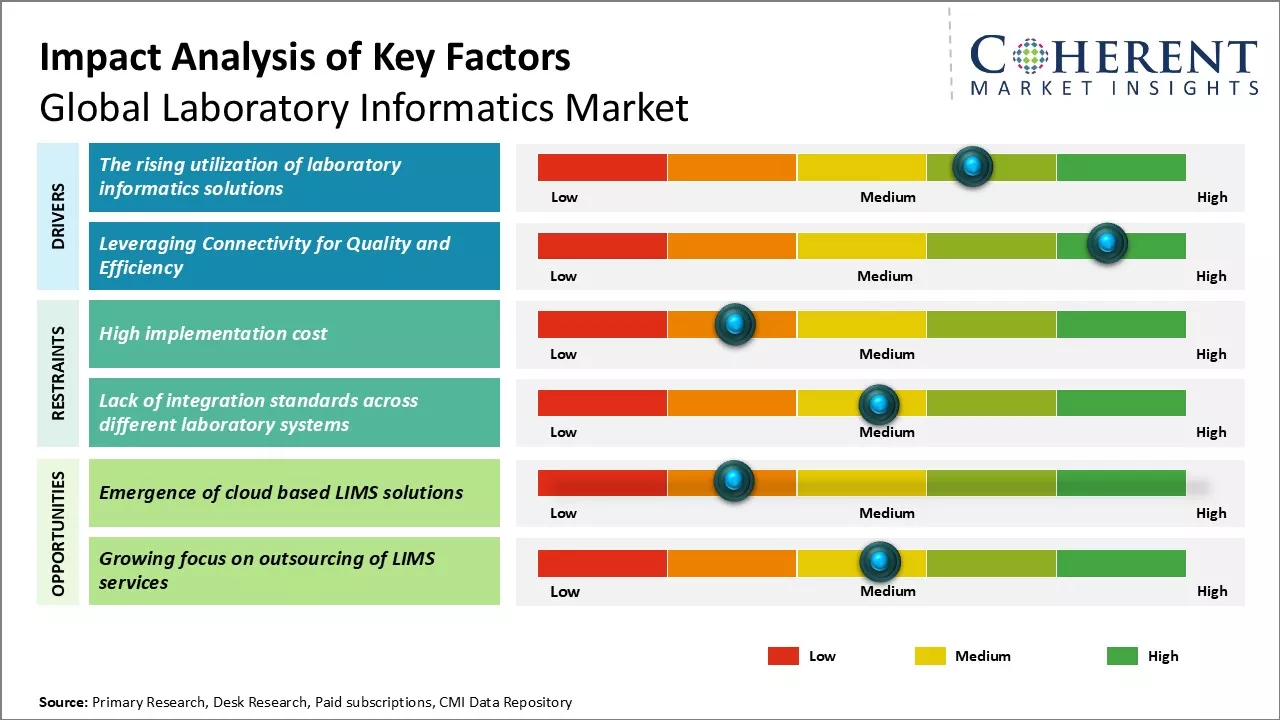
Increasing integration of laboratory information systems with other clinical and healthcare IT applications, rising need for laboratory automation to ensure efficient operations and minimize human errors, and growing demand for improved data standardization are expected to drive the market growth during the forecast period.
Trends in the market point to a continued focus on leveraging laboratory informatics solutions to improve lab workflow efficiency and provide better data access and analytics capabilities. There has been rising adoption of cloud-based LIMS and other connected solutions as labs look for flexible, scalable options to manage samples and equipment remotely. There has been increase in integration of artificial intelligence and machine learning functionalities within informatics platforms to enable more sophisticated data mining, equipment monitoring, and diagnostic assistance.
Rising utilization of laboratory informatics solutions
Increasing reliance on laboratory informatics solutions for diagnostic purposes can drive the laboratory informatics market growth. With rapid rise in chronic and infectious diseases worldwide over the past decade, clinical laboratories have faced significant workload and operational challenges to provide timely diagnoses for patients. Laboratory informatics systems allow laboratories to streamline workflows, integrate diverse diagnostic instruments, manage large volumes of samples and test results digitally and gain valuable insights into performance. This has helped improve efficiency, minimize errors and turnaround times for reporting test outcomes to physicians and patients. For instance, in March 2021, LabVantage Solutions, Inc., a laboratory informatics company, announced the launch of LabVantage Analytics, an advanced analytics solution that lets users easily explore, analyze, enterprise, and external data to gain business insights. Designed by analytics industry experts, LabVantage Analytics seamlessly integrates with all elements of the LabVantage LIMS platform, thus, providing a single user interface and workflow.
Insights, By Device Type
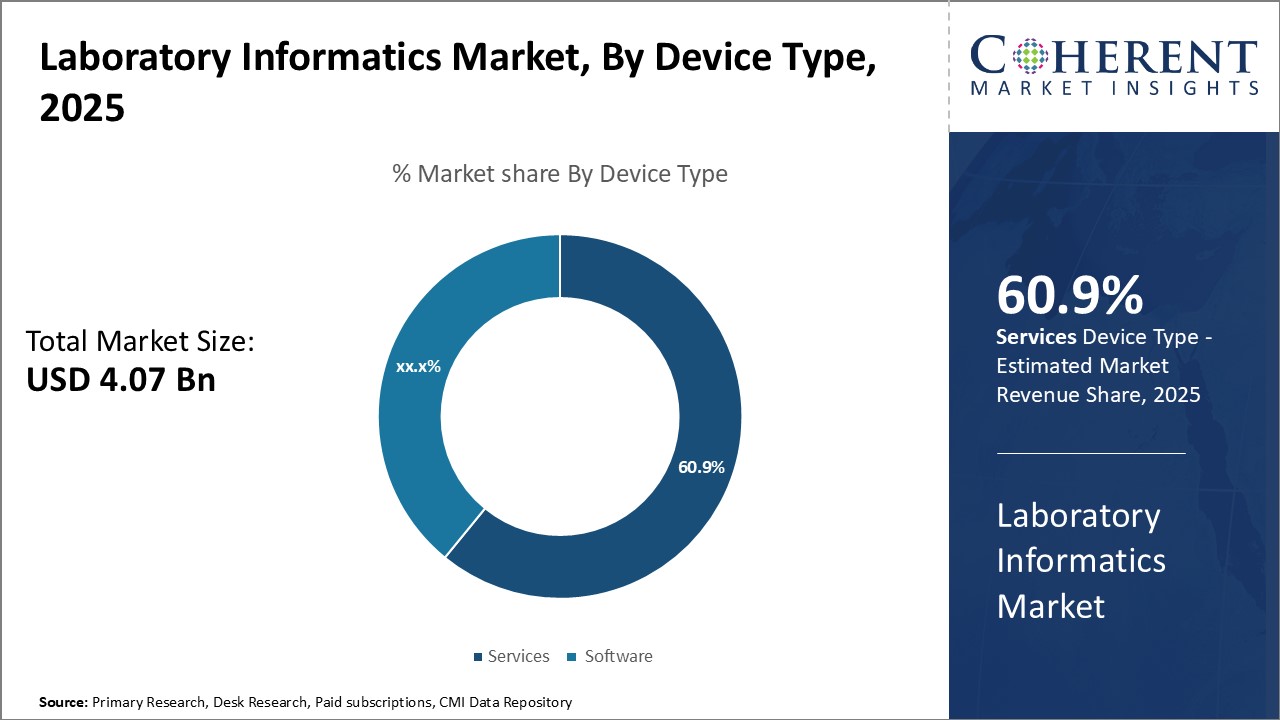
Insights, By Device Type: Growing adoption of laboratory automation and cloud computing can drive the services segment growth
In terms of device type, services segment is estimated to contribute the highest market share of 61.9% in 2026 owing to growing adoption of laboratory automation technologies and need for integration, validation, implementation and support services. Next-generation laboratories are increasingly automating standard operating processes and implementing software and devices to handle complex workloads efficiently. This boosts demand for consultancy, installation, integration, validation and training services that are required to design, develop and implement such automated laboratories. Furthermore, there has been increase in adoption of cloud-based laboratory informatics as cloud offers benefits like flexible scalability, collaboration and lower upfront costs. However, effective implementation and management of cloud solutions require specialized services, and this drives the segment growth.
Insights, By Product
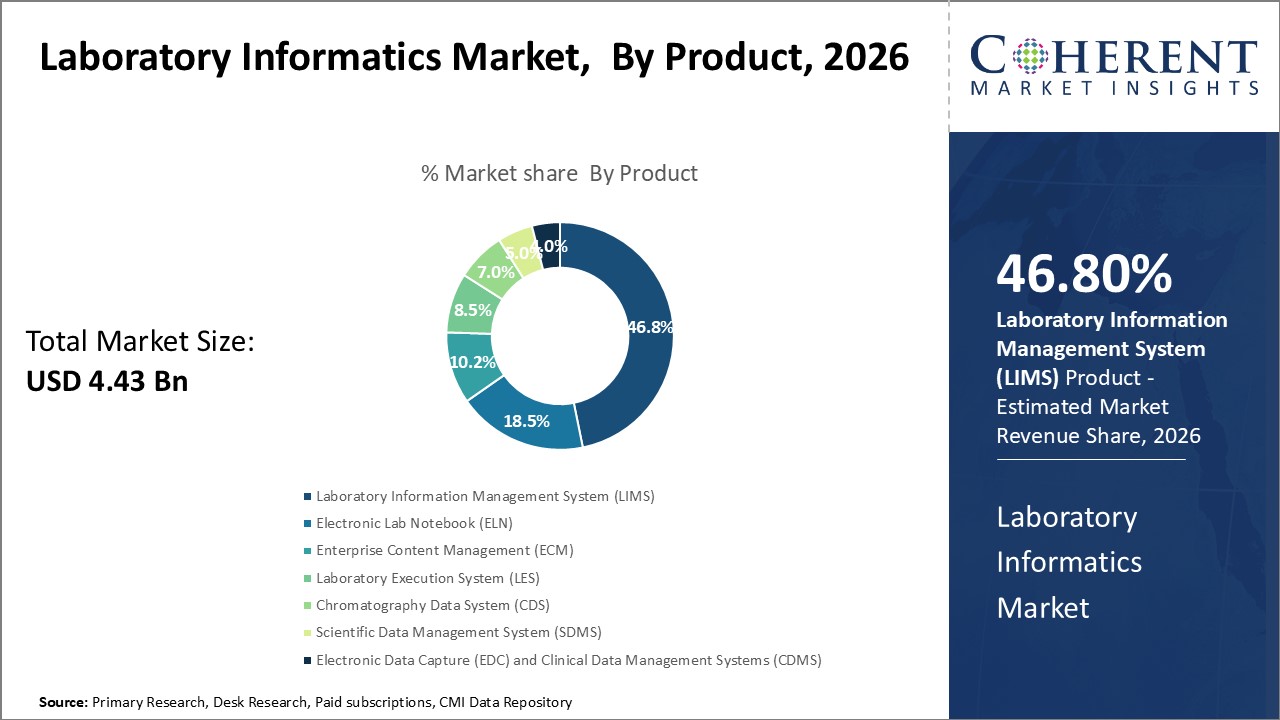
Insights, By Product: The need for integrated workflow and data management can drive the laboratory information management system segment growth
In terms of product, laboratory information management system segment is estimated to contribute the highest market share of 46.8% in 2026 IMS plays a pivotal role in managing workflows and data in modern laboratories. It offers functionalities for sample receiving, inventory maintenance, order management, result tracking and reporting. Growing focus on standardizing processes, integrating workflows and ensuring regulatory compliances has increased the demand for LIMS. With explosion of laboratory data due to various omics technologies, there is a need for integrated platforms that can capture, store, process and analyze large and complex datasets efficiently. LIMS addresses these challenges and proves to be a fundamental system for most laboratories.
Insights, Delivery Mode:
Insights, Delivery Mode: Efficiency and security advantages can drive the on-premise segment growth
In terms of delivery mode, on-premise segment is estimated to contribute the highest market share of 45.7% in 2026.raditionally, most laboratories have relied on locally installed on-premise informatics solutions due to security and compliance concerns with sensitive data. On-premise deployment offers laboratories high degree of control over their critical data infrastructure. It also ensures better performance since software and database is running on dedicated high-performance hardware within the organization's firewall. This becomes an important consideration for latency-sensitive laboratory applications. Although cloud-based solutions provide flexibility and scalability, their implementation requires alignment with organizational IT policies and regulatory approvals. For regulated environments like pharmaceutical industry, on-premise is the preferred approach due to advantages it provides in terms of security, customizability and compliance.
Regional Insights
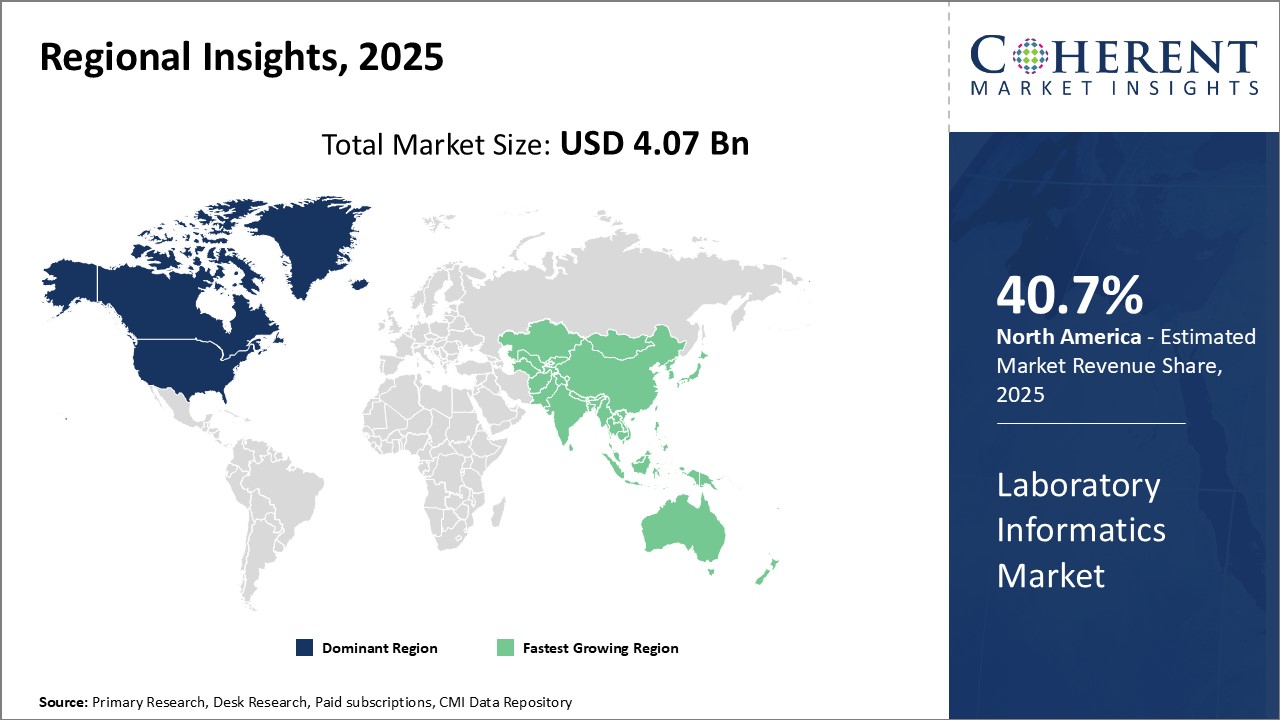
North America has established itself as the dominant regional market for laboratory informatics with estimated share of 40.7% in 2026. The region boasts a large concentration of leading life sciences companies and robust biomedical research infrastructure. There is strong government funding for research in the U.S. and Canada, has and this has boosted rapid technology adoption across academic and clinical laboratories. The regulatory mandates such as FDA's 21 CFR Part 11 have accelerated digitization efforts of laboratory processes.
The U.S. accounts for the largest share of the North America laboratory informatics market. Many major healthcare systems and national labs are based in the U.S., processing large volumes of sample analysis annually. This has driven technology vendors to prioritize partnerships and innovation to address the scale and complexity of U.S. laboratories. The presence of leading informatics solution providers has further strengthened the market position. Additionally, the advanced IT capabilities and higher in-house research & development budgets allow organizations to invest in cutting-edge platforms.
Market Players, Key Development, and Competitive Intelligence
Leveraging Connectivity for Quality and Efficiency
The need for enhanced connectivity to improve quality processes and lab workflows can drive the market growth. Modern life science labs house a complex ecosystem of intricate equipment, instruments, supply chains and people. Keeping this ecosystem running seamlessly requires strong integration and digital linkage between its different components. Traditional paper trails and disconnected systems have proved inefficient at tracking material movements, results, ensuring compliance and optimizing resource usage. Laboratory informatics addresses this by providing a centralized digital platform that can connect disparate lab devices, software applications, databases and manage associated workflows in a coordinated manner. Through its functionality for inventory management, sample tracking, electronic batch records, LIMS integration and remote monitoring capabilities - informatics helps bring visibility, standardization and automation to otherwise fragmented operations. This results in reduced errors, improved turnaround times, better regulatory management and higher throughput. Organizations are able to derive significant gains in quality, productivity and compliance when implementing laboratory informatics to enhance connectivity within their facilities.
Key Developments
- In February 2023, STARLIMS Laboratory Information Management System, an ultimate lab information management system project, was launched. This marked a significant milestone for the life sciences division of Waker Bioscience in Shanghai. Renowned for its expertise in Chinese gene therapy risk assessment, Shanghai Waker Bioscience Co., Ltd is a biotechnology company, strategically employed STARLIMS to streamline operations through automation, fulfilling its long-term digitization objectives and regulatory compliance requirements simultaneously.
- In October 2022, LabVantage Solutions, a laboratory information management system (LIMS) provider, announced its merger with Biomax Informatics, a software company, to amplify scientific discovery and product innovation while bolstering customer service offerings.
- In July 2022, LabWare, a laboratory informatics company, announcement of Yposkesi's selection of its 'LabWare Pharma Solution' LIMS for implementation at its Corbeil-Essonnes site in France. Yposkesi, a premier contract development and manufacturing organization (CDMO) for gene therapy viral vector production in Europe, seeks to bolster regulatory compliance and streamline analytical processes.
- In June 2022, LabVantage Solutions, a laboratory information management system (LIMS) provider, and Holo4Labs, a reality solution company, entered into a global cooperation agreement to integrate LabVantage LIMS with Holo4Labs' mixed reality software. Leveraging VR Microsoft HoloLens 2 goggles, this innovative integration equips lab technicians with holographic overlays, facilitating tasks such as reagent management, sample location identification, and instrument calibration guidance for improved experimental efficiency.
- In May 2022, LabLynx, a laboratory informatics company, introduced the 'CannaQA Standard Edition' LIMS solution, a component of its CannaQA suite that is tailored for startup and emerging cannabis testing labs. This solution is designed to enhance testing workflow efficiency and facilitate rapid turnaround times.
- In April 2022, Scitara, a software company, announced a partnership with PerkinElmer to integrate the PerkinElmer Signals Research Suite informatics platform with laboratory resources via the Scitara Scientific Integration Platform (SIP). This partnership aims to drive digital transformation by establishing a fully interconnected laboratory ecosystem characterized by standardized data integrity, enhanced mobility, user configurability, and system adaptability.
*Definition: Laboratory Informatics Market involves solutions, software, and systems designed specifically for managing data created within life science and clinical laboratories. These informatics tools automate workflows, capture data from instruments and lab devices, integrate with laboratory information management systems (LIMS), and provide analytics to help optimize operations. They enable laboratories to increase productivity, enhance regulatory compliance, improve data quality, and gain insights through analytics that advance research and development.
- Current Industry Events of 2026
- Market Size Estimation
- Regional Breakdown
- Competitive Landscape
- Customer Intelligence
- Segmental Analysis
- Pricing Analysis
- Key Market Drivers, Challenges & Future Trends
- Customized Insights Section
Market Report Scope
Laboratory Informatics Market Report Coverage
| Report Coverage | Details | ||
|---|---|---|---|
| Base Year: | 2025 | Market Size in 2026: | USD 4.43 Bn |
| Historical Data for: | 2020 To 2024 | Forecast Period: | 2026 To 2033 |
| Forecast Period 2026 to 2033 CAGR: | 8.8% | 2033 Value Projection: | USD 7.99 Bn |
| Geographies covered: |
| ||
| Segments covered: |
| ||
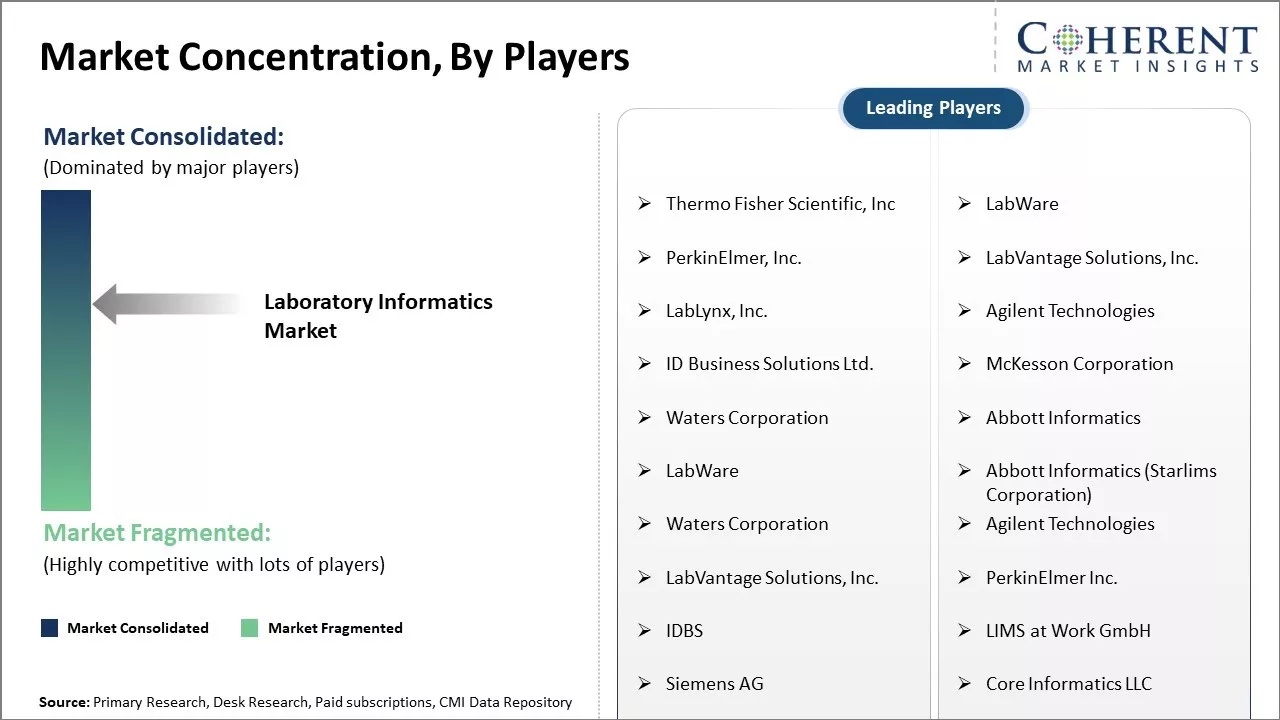
| Companies covered: | Thermo Fisher Scientific, Inc, LabWare, PerkinElmer, Inc., LabVantage Solutions, Inc., LabLynx, Inc., Agilent Technologies, ID Business Solutions Ltd., McKesson Corporation, Waters Corporation, Abbott Informatics, LabWare, Abbott Informatics (Starlims Corporation), Waters Corporation, Agilent Technologies, LabVantage Solutions, Inc., PerkinElmer Inc., IDBS, LIMS at Work GmbH, Siemens AG, Core Informatics LLC | ||
| Growth Drivers: |
| ||
| Restraints & Challenges: |
| ||
Analyst Opinion (Expert Opinion)
Key Takeaways of Analyst:
[Global laboratory informatics market is expected to witness growth in the near future. Life science research and development activities are rising globally due to increasing pharmaceutical research and development expenditure, and this is expected to boost adoption of laboratory informatics solutions. Moreover, stringent regulatory guidelines for lab documentation and data integrity also drives the market growth.
However, high installation and maintenance costs of laboratory informatics systems can limit their adoption, especially among small and medium-sized labs. Data integration challenges between informatics platforms and existing infrastructure can also hamper the market growth.
North America dominates the laboratory informatics market due to extensive R&D investments and stringent regulatory mandates. Asia Pacific region is expected to offer lucrative opportunities owing to rising biopharmaceutical research in China, India, and other emerging countries. Growth in biobanks and biorepositories will also boost regional market opportunities.
Pharmaceutical and biotechnology companies dominate end-use demand and this trend is projected to continue. Rising need for laboratory automation solutions and ELN/LIMS for improved documentation and data integrity can boost demand from these end users. Cloud-based delivery models could gain more acceptance versus on-premise systems due to economic and scalability advantages.]
Market Challenge – High cost associated with the maintenance and service
Global laboratory informatics market growth can be hampered due to significant expenses associated with maintenance and service. For example, the cost of a laboratory information system can vary between US$ 4,000 and US$ 100,000, with additional annual operating costs ranging from US$ 1000 to US$ 5000. These operating expenses encompass software licensing, healthcare personnel training, maintenance, and service costs. Thus, these laboratories often choose lower-cost versions of laboratory information systems.
Market Opportunity – Increasing favorability towards cloud-based laboratory informatic
Rising demand for cloud-based laboratory informatics can offer opportunities for participants in laboratory informatics market. Cloud-based technology enables the remote storage of vast data volumes, freeing up device space and facilitating customized data retrieval. In October 2021, PerkinElmer introduced its Signals Research Suite, a cloud-based solution hosted on Amazon Web Services. This secure informatics platform offers pharmaceutical and industrial clients integrated, comprehensive scientific data management and workflow capabilities.
Speak to the analyst
Want personalized insights?
Take the findings above to one of our principal consultants, or have the report rebuilt around the segments, geographies and competitors you actually track.
Market Segmentation
- Device Type Insights (Revenue, USD Bn, 2021 - 2033)
- Services
- Software
- Product Insights (Revenue, USD Bn, 2021 - 2033)
- Laboratory Information Management System (LIMS)
- Electronic Lab Notebook (ELN)
- Enterprise Content Management (ECM)
- Laboratory Execution System (LES)
- Chromatography Data System (CDS)
- Scientific Data Management System (SDMS)
- Electronic Data Capture (EDC) and Clinical Data Management Systems (CDMS)
- Delivery Mode Insights (Revenue, USD Bn, 2021 - 2033)
- On-premise
- Web-hosted
- Cloud-based
- Regional Insights (Revenue, USD Bn, 2021 - 2033)
- North America
- U.S.
- Canada
- Latin America
- Brazil
- Argentina
- Mexico
- Rest of Latin America
- Europe
- Germany
- U.K.
- Spain
- France
- Italy
- Russia
- Rest of Europe
- Asia Pacific
- China
- India
- Japan
- Australia
- South Korea
- ASEAN
- Rest of Asia Pacific
- Middle East
- GCC
- Israel
- Rest of Middle East
- Africa
- South Africa
- North Africa
- Central Africa
- North America
- Key Players Insights
- Thermo Fisher Scientific, Inc
- LabWare
- PerkinElmer, Inc.
- LabVantage Solutions, Inc.
- LabLynx, Inc.
- Agilent Technologies
- ID Business Solutions Ltd.
- McKesson Corporation
- Waters Corporation
- Abbott Informatics
- Abbott Informatics (Starlims Corporation)
- IDBS
- LIMS at Work GmbH
- Siemens AG
- Core Informatics LLC
Get access to 250+ pages report
Every segment, forecast, competitor profile and data table behind the analysis above — available for instant download.
- ESOMAR Member
- ISO 9001:2015 Certified
- D-U-N-S Registered
- GDPR & CCPA Compliant
Missing comfort of reading report in your local language? Find your preferred language:
Transform your Strategy with Exclusive Trending Reports
Frequently Asked Questions
The Laboratory Informatics Market is estimated to be valued at USD 4.43 Bn in 2026, and is expected to reach USD 7.99 Bn by 2033.
The CAGR of the Laboratory Informatics Market is projected to be 8.8% from 2026 to 2033.
Rising utilization of laboratory informatics solutions and leveraging connectivity for quality and efficiency are the major factors driving the growth of global laboratory informatics market.
Lack of integration standards and High maintenance and service costs are the major factors hampering the growth of global laboratory informatics market.
In terms of device type, services segment is estimated to dominate the market in 2026.
Thermo Fisher Scientific, Inc, LabWare, PerkinElmer, Inc., LabVantage Solutions, Inc., LabLynx, Inc., Agilent Technologies, ID Business Solutions Ltd., McKesson Corporation, Waters Corporation, Abbott Informatics, IDBS, LIMS at Work GmbH, Siemens AG, Core Informatics LLC are the major players.
North America is expected to lead the global laboratory informatics market in 2026.