

Digital Musculoskeletal (MSK) Care Market Size and Forecast – 2026-2033
The Global Digital Musculoskeletal (MSK) Care Market is estimated to be valued at USD 6.00 Bn in 2026 and expected to reach USD 18.96 Bn by 2033, exhibiting a compound annual growth rate (CAGR) of 17.8% from 2026 to 2033. The market's substantial growth can be attributed to the increasing prevalence of musculoskeletal disorders, the rising geriatric population, and the growing demand for non-invasive and cost-effective treatment options.
Key Takeaways of the Global Digital Musculoskeletal (MSK) Care Market:
- The knee & lower leg pain segment is projected to hold the largest market share among conditions, accounting for 33.1% in 2026.
- Within the solution category, online/virtual consultations segment is expected to lead with a 33.2% share in 2026.
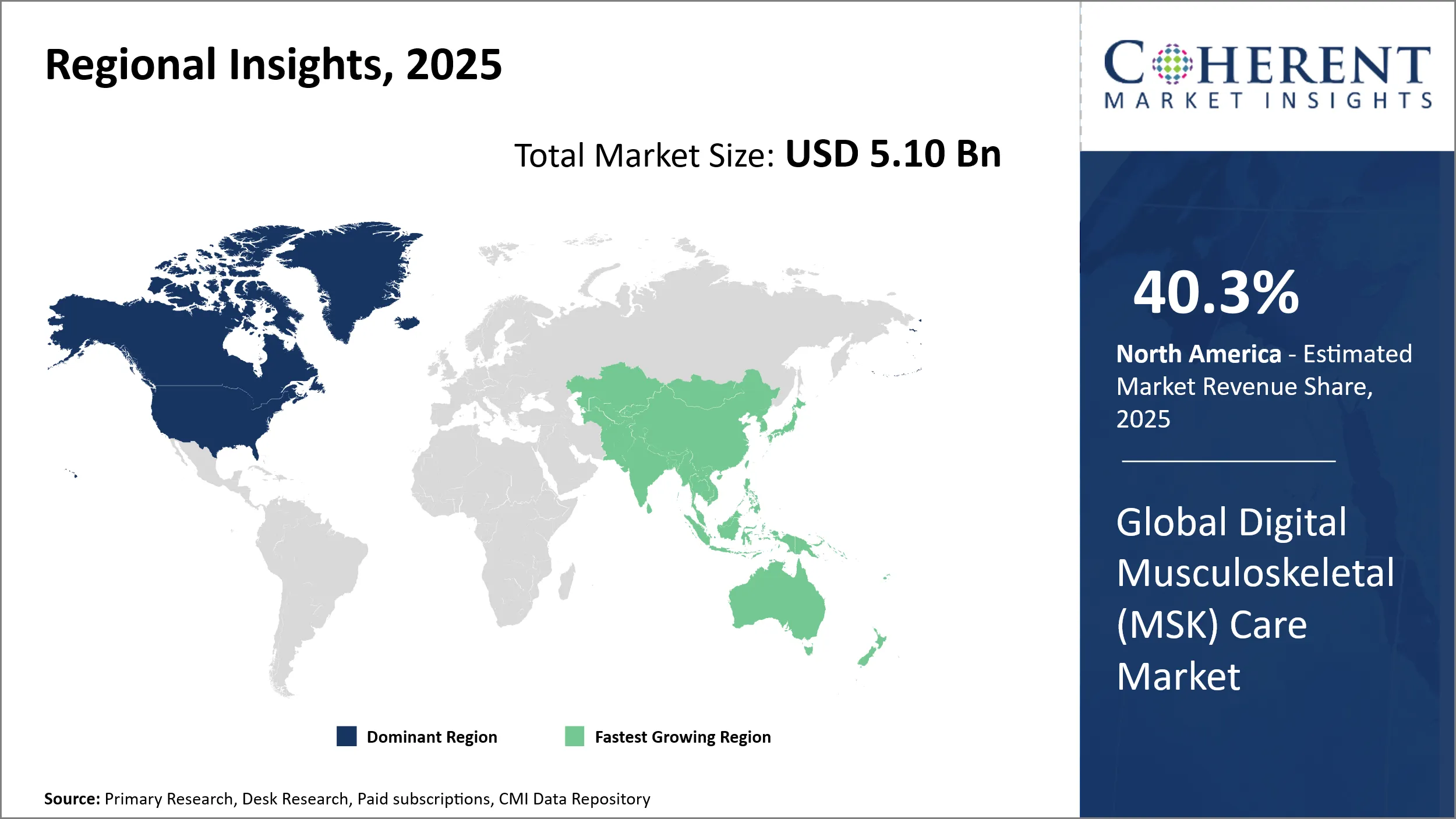
- North America is expected to lead with 40.3% in 2026 while Asia Pacific is expected to grow the fastest with a 35.2% share in 2026.
Market Overview:
The digital musculoskeletal (MSK) care market is witnessing a significant trend towards the adoption of telemedicine and remote monitoring solutions. Additionally, the integration of artificial intelligence and machine learning technologies is expected to revolutionize the market, enabling personalized treatment plans, improved patient outcomes, and reduced healthcare costs. As a result, digital musculoskeletal (MSK) care is poised to become an integral part of the healthcare ecosystem in the coming years.
Currents Events and Its Impact
Current Events | Description and its impact |
Expansion of Hybrid Care Models in MSK Treatment |
|
Advancements in Wearable Technology for MSK Monitoring |
|
Segmental Analysis
- Current Industry Events of 2026
- Market Size Estimation
- Regional Breakdown
- Competitive Landscape
- Customer Intelligence
- Segmental Analysis
- Pricing Analysis
- Key Market Drivers, Challenges & Future Trends
- Customized Insights Section
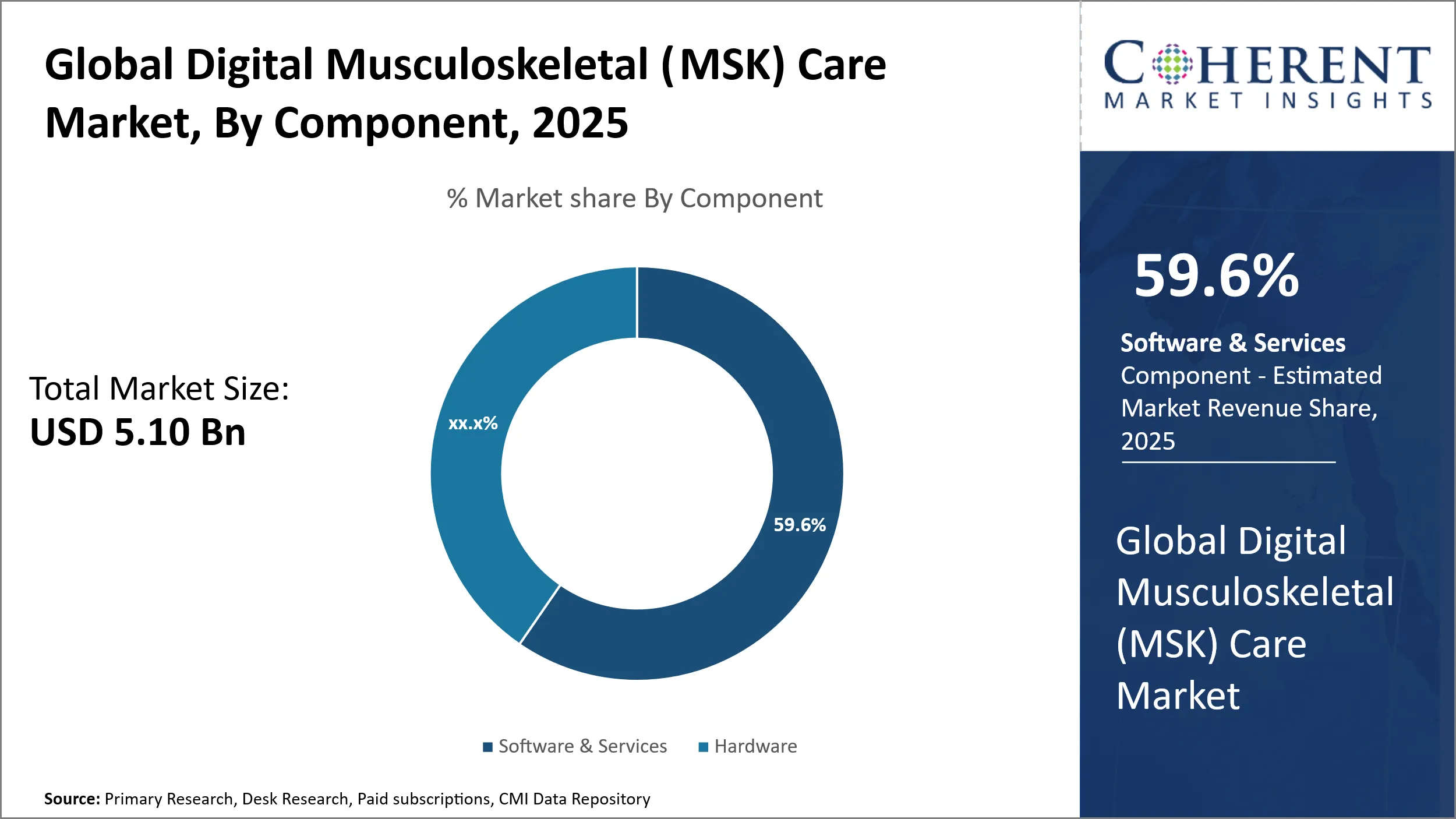
Digital Musculoskeletal (MSK) Care Market Insights, By Component - Software & Services Lead by Component Due to High Adoption of Digital Tools for Streamlined MSK Care
The software & services segment's dominance can be attributed to several factors with an estimated share of 60.6% in 2026. Firstly, the increasing adoption of digital solutions in the healthcare industry, particularly in the field of musculoskeletal care, has driven the demand for advanced software and services. These solutions enable healthcare providers to streamline their workflows, enhance patient engagement, and improve overall treatment outcomes.
Moreover, the rising prevalence of musculoskeletal conditions, such as osteoarthritis, rheumatoid arthritis, and lower back pain, has further fueled the demand for digital musculoskeletal (MSK) care solutions. The software & services segment offers a wide range of solutions, including telemedicine platforms, patient engagement tools, and remote monitoring systems, which help in the early detection, diagnosis, and management of these conditions.
-care-market-by-solution.webp "Digital Musculoskeletal (MSK) Care Market, By Solution")
Digital Musculoskeletal (MSK) Care Market Insights, By Solution - Online/Virtual Consultations Dominate by Solution Owing to Rising Telemedicine Use and Accessibility Needs
Among these sub-segments, online/virtual consultations segment is expected to hold the dominant position with a share of 33.2% in 2026, while pain management therapy programs exhibit the fastest growth rate. The prominence of online/virtual consultations can be attributed to the increasing adoption of telemedicine and the growing need for accessible healthcare services. The COVID-19 pandemic has significantly accelerated the demand for virtual consultations, as patients seek medical advice and care from the safety of their homes. Major healthcare providers, such as the National Health Service (NHS) in the U.K., have expanded their virtual consultation services to cater to the rising demand. The convenience, cost-effectiveness, and ability to reach underserved populations have further contributed to the growth of this segment.
Digital Musculoskeletal (MSK) Care Market Insights, By Condition - Knee & Lower Leg Pain Tops by Condition Driven by High Prevalence and Effective Digital Intervention Outcomes
Among these segments, the knee & lower leg pain segment is expected to contribute the highest share in the market with 33.1% in 2026 owing to several factors. Knee and lower leg pain are among the most common musculoskeletal complaints, affecting a significant portion of the global population. The increasing adoption of digital musculoskeletal (MSK) care solutions for knee and lower leg pain management has been a key driver for this segment's growth. These solutions offer remote monitoring, personalized exercise programs, and real-time feedback, enabling patients to manage their conditions effectively from the comfort of their homes. For example, Hinge Health, a leading digital musculoskeletal (MSK) care provider, has reported significant improvements in pain reduction and functional outcomes among patients with knee and lower leg conditions using their platform.
Regional Insights
North America Digital Musculoskeletal (MSK) Care Analysis and Trends
North America’s dominance in the digital musculoskeletal (MSK) care market can be attributed to several factors with an estimated share of 40.3% in 2026. The region boasts a well-established healthcare infrastructure, coupled with a high adoption rate of digital health technologies. The presence of key market players, such as Hinge Health, Sword Health, and Kaia Health, has significantly contributed to the growth of the digital musculoskeletal (MSK) care market in North America. These companies have been at the forefront of innovation, offering advanced digital solutions for the prevention, diagnosis, and treatment of musculoskeletal conditions.
Moreover, favorable government policies and initiatives aimed at promoting digital health adoption have further fueled the market growth in the region. The U.S., in particular, has witnessed a surge in demand for digital musculoskeletal (MSK) care solutions due to the rising prevalence of musculoskeletal disorders and the increasing emphasis on patient-centric care delivery models.
Asia Pacific Digital Musculoskeletal (MSK) Care Analysis and Trends
The Asia Pacific region is expected to exhibit the fastest growth in the digital musculoskeletal (MSK) care industry with share of 35.2% in 2026. The rapid growth can be attributed to several factors, including the increasing awareness about musculoskeletal health, rising disposable incomes, and the growing adoption of digital health technologies. Countries like China, India, and Japan have seen a significant surge in the prevalence of musculoskeletal disorders, driven by factors such as an aging population, sedentary lifestyles, and occupational hazards. This has led to a heightened demand for effective and accessible digital musculoskeletal (MSK) care solutions.
Additionally, governments in the region have been actively promoting digital health initiatives and investing in healthcare infrastructure, creating a conducive environment for market growth. Notable companies such as AiPT and MedRhythms have been expanding their presence in the Asia Pacific region, collaborating with local healthcare providers and leveraging the vast patient population to drive market growth.
Global Digital Musculoskeletal (MSK) Care Market Outlook for Key Countries:
U.S. Digital Musculoskeletal (MSK) Care Market Trends
The U.S. market for digital musculoskeletal (MSK) care is highly advanced, with a strong presence of key players and a receptive healthcare ecosystem. The country's focus on value-based care and the increasing adoption of digital health solutions have created a favorable environment for market growth. Companies like Hinge Health and Sword Health have been at the forefront of innovation, offering personalized digital musculoskeletal (MSK) care programs that integrate wearable sensors, telehealth consultations, and AI-powered exercise therapy. For instance, in August 2023, Omada Health, a virtual-first healthcare company based in the U.S. that focuses on chronic condition management, became the first digital musculoskeletal (MSK) care provider to earn the prestigious URAC telehealth accreditation. Its Omada for MSK program is designed to broaden access to high-quality MSK treatment through virtual platforms.
U.K. Digital Musculoskeletal (MSK) Care Market Trends
The U.K. digital musculoskeletal (MSK) care market is witnessing rapid growth driven by government-backed innovation, rising MSK condition prevalence, and increasing adoption of digital health solutions. With over 20 million people affected by MSK issues, platforms like get Better and AI-powered tools such as Scotland’s virtual physiotherapist “Kirsty” are enhancing access and efficiency. NHS initiatives and targeted funding are accelerating the integration of digital MSK solutions, aligning with the U.K.'s broader healthcare digitization goals. For instance, in April 2022, Central London Community Healthcare (CLCH) launched a suite of digital musculoskeletal (MSK) physiotherapy self-management resources to support patient care. Developed in response to increased virtual consultations during the COVID-19 pandemic, the tools aim to enhance patient engagement, health literacy, and self-management of long-term MSK conditions.
Germany Digital Musculoskeletal (MSK) Care Market Trends
Germany digital musculoskeletal (MSK) care market is characterized by a robust healthcare system, high technology adoption, and a focus on preventive care. Germany is witnessing rapid growth in digital MSK solutions, supported by government initiatives promoting digital health. The country’s healthcare system emphasizes integrated care models, which are increasingly adopting digital tools for MSK management. For example, according to data released by the National Library of Medicine, in September 2022, the German government announced funding for digital health startups, aiming to enhance patient care through innovative technologies. This initiative is expected to boost the adoption of digital MSK solutions.
Australia Digital Musculoskeletal (MSK) Care Market Trends
Australia is at the forefront of adopting digital musculoskeletal care, driven by a strong emphasis on preventive health and remote monitoring. The Australian government has been actively promoting telehealth services, particularly in rural areas. In June 2024, Australian Digital Health Agency announced new funding for digital health initiatives aimed at improving MSK care access This funding is expected to enhance the delivery of personalized care solutions.
End User Feedback and Unmet Needs – Global Digital Musculoskeletal (MSK) Care Market.
The global digital musculoskeletal (MSK) care market continues to gain traction across a range of stakeholders—including healthcare providers, employers, insurers, and government programs—owing to its potential to enhance access to care, reduce costs, and improve patient outcomes. Digital MSK platforms are increasingly used for managing chronic pain, facilitating post-operative recovery, and delivering physical therapy through virtual consultations and app-based interventions. A notable success story comes from a Fortune 500 manufacturing firm that deployed an AI-driven MSK platform for employees experiencing repetitive strain and lower back pain. The initiative led to a 35% drop in medical leave and boosted productivity, with employees citing the flexibility of on-demand, guided therapy sessions and the ability to track progress remotely as major benefits. This demonstrates how digital MSK tools can support workplace wellness by making musculoskeletal care more accessible and user-friendly.
However, the market faces notable barriers in public healthcare and underserved regions, particularly among aging or low-income populations. A regional health authority in Eastern Europe reported difficulties in scaling digital MSK services due to limited smartphone access, digital illiteracy, and weak internet infrastructure. These challenges were compounded by clinicians’ frustrations with the lack of integration between MSK platforms and existing electronic health records (EHRs), hindering seamless patient data management. Such limitations reduce the effectiveness of digital MSK solutions in rural settings and undermine healthcare professionals' confidence in their clinical utility. Addressing these disparities is crucial for ensuring equitable access and broader adoption across varying healthcare environments.
Market Players, Key Developments, and Competitive Intelligence
Key Developments:
- In February 2025, Airrosti, a U.S.-based national healthcare group specializing in outcome-driven MSK care, launched Flex, a digital wellness program focused on muscle and joint health. Offered as a first-dollar coverage benefit, Flex provides users with personalized, on-demand exercise plans via a self-guided app, aiming to reduce MSK treatment costs and improve mobility and pain relief with just 10 minutes of daily use.
- In July 2024, Sun Life, a leading Canadian financial services company offering insurance and health benefits, partnered with Hinge Health, a top digital musculoskeletal (MSK) care provider, to offer digital MSK interventions for its members. The collaboration aims to improve outcomes and manage rising healthcare costs, especially as MSK conditions were reported among the top five most expensive claims from 2020 to 2023 in Sun Life’s High-Cost Claims and Injectable report.
- In June 2024, Bardavon, a company focused on tech-enabled preventive and post-injury health solutions for risk management, introduced upgrades to its injury prevention platform, Preventure. The enhancements feature advanced wearable technology and a new kiosk app, aimed at revolutionizing workplace safety practices.
- In April 2024, Net Health, a U.S.-based provider of cloud-based software for specialized outpatient care, introduced its digital MSK leadership program titled Harnessing the Potential of Digital MSK Care. Developed in partnership with the American Physical Therapy Association (APTA), the initiative features expert-led on-demand webinars and editorial content tailored for rehab therapy professionals.
Top Strategies Followed by Global Digital Musculoskeletal (MSK) Care Market Players
- Established players in the global digital musculoskeletal (MSK) care market are focusing on extensive research and development to innovate high-performance products. These companies are investing heavily in R&D to develop cutting-edge technologies, such as AI-powered diagnostic tools and advanced wearable devices, to improve patient outcomes and streamline MSK care delivery.
- For instance, in April 2025, Hinge Health and Cigna Healthcare partnered to expand access to digital musculoskeletal (MSK) care. Cigna’s self-insured employer clients can now offer Hinge Health’s comprehensive digital MSK platform, which includes guided exercise therapy, real-time form correction, wearable pain relief devices, and support from physical therapists and health coaches. The platform integrates with Cigna’s Pathwell Bone & Joint Solution for coordinated MSK health management.
- Mid-level players in the global digital musculoskeletal (MSK) care market are focusing on delivering cost-effective solutions to target price-sensitive consumers. These companies are developing quality products that offer value for money, without compromising on essential features and functionality. By providing affordable alternatives, mid-level players aim to capture a significant share of the market and cater to the needs of budget-conscious customers.
- For instance, in March 2025, hybrid musculoskeletal care provider, Vori Health, secured USD 53 million in an oversubscribed Series B round led by New Enterprise Associates NEA, with support from Echo Health Ventures, Max Ventures, AlleyCorp, and Intermountain Ventures. The company offers virtual and in-person MSK care, including diagnoses, non-opioid prescriptions, physical therapy, imaging, lifestyle coaching, and second opinions.
- Small-scale players in the global digital musculoskeletal (MSK) care market are adopting niche specialization strategies to differentiate themselves from larger competitors. These companies are focusing on developing unique features or innovative products that cater to specific market segments or address unmet needs in the industry. By carving out a niche, small-scale players can establish a loyal customer base and gain a competitive edge in their targeted markets.
- In April 2025, ATI Physical Therapy, a physical therapy provider, is advancing patient access by integrating in-person care with digital tools and virtual MSK services. Key features include personalized treatment plans, real-time progress tracking, remote therapeutic monitoring (RTM), and on-demand virtual assessments. This hybrid model improves outcomes, increases engagement, and reduces costs through early intervention and streamlined access.
Market Report Scope
Digital Musculoskeletal (MSK) Care Report Coverage
| Report Coverage | Details | ||
|---|---|---|---|
| Base Year: | 2025 | Market Size in 2026: | USD 6.00 Bn |
| Historical Data for: | 2020 To 2024 | Forecast Period: | 2026 To 2033 |
| Forecast Period 2026 to 2033 CAGR: | 17.8% | 2033 Value Projection: | USD 18.96 Bn |
| Geographies covered: |
| ||
| Segments covered: |
| ||
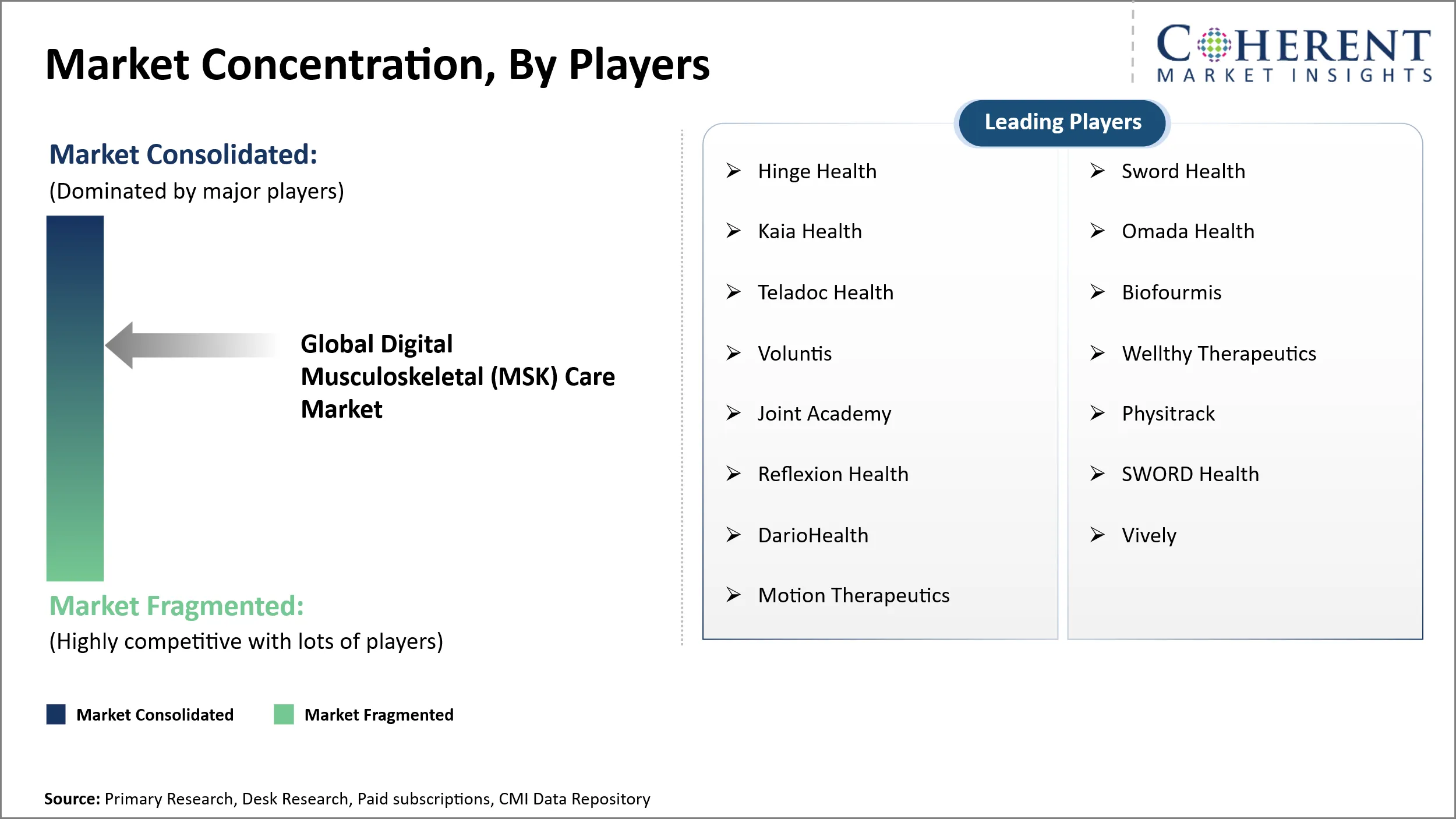
| Companies covered: | Hinge Health, Sword Health, Kaia Health, Omada Health, Teladoc Health, Biofourmis, Voluntis, Wellthy Therapeutics, Joint Academy, Physitrack, Reflexion Health, SWORD Health, DarioHealth, Vively, and Motion Therapeutics | ||
| Growth Drivers: |
| ||
| Restraints & Challenges: |
| ||
Digital Musculoskeletal (MSK) Care Market Dynamics
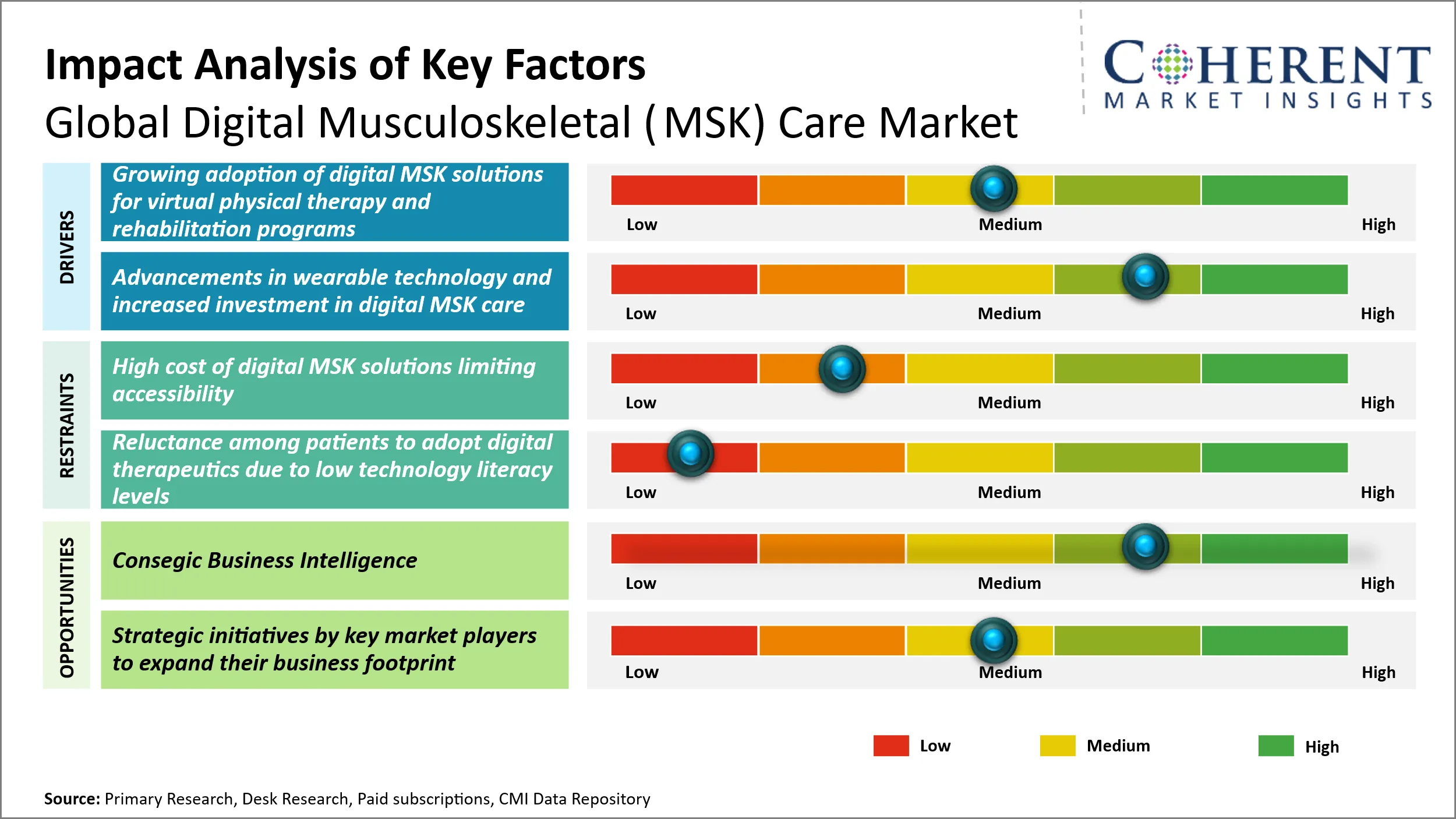
Digital Musculoskeletal (MSK) Care Market Driver - Growing adoption of digital MSK solutions for virtual physical therapy and rehabilitation programs
The growing adoption of digital musculoskeletal (MSK) solutions for virtual physical therapy and rehabilitation programs is a significant driver for this industry. As technology advances and becomes more accessible, healthcare providers and patients alike are increasingly turning to digital solutions to address MSK conditions. These digital platforms offer convenient, cost-effective, and personalized treatment options that can be accessed from the comfort of one's home. By leveraging telemedicine, wearable devices, and AI-powered algorithms, digital MSK solutions enable real-time monitoring, feedback, and guidance for patients undergoing physical therapy or rehabilitation. This not only improves patient engagement and adherence to treatment plans but also allows healthcare professionals to remotely track progress and adjust interventions as needed.
As more people become aware of the benefits of digital musculoskeletal (MSK) care, the demand for these solutions is expected to continue growing, driving the overall market growth in the coming years. For example, in September 2021, IncludeHealth, a digital health company, introduced its Musculoskeletal Operating System (MSOS), a virtual physical therapy platform powered by advanced computer vision technology. The system delivers real-time feedback and tailored guidance, enhancing remote consultations and therapy oversight, with the goal of improving accessibility and treatment outcomes in musculoskeletal care.
Digital Musculoskeletal (MSK) Care Market Opportunity - Consegic business intelligence
The global digital musculoskeletal (MSK) care market presents a promising opportunity for growth through the application of Consegic Business Intelligence. Consegic Business Intelligence involves the strategic integration of data analytics, market insights, and business acumen to drive informed decision-making and optimize market performance. By leveraging advanced data analytics tools and techniques, healthcare providers and digital MSK solution developers can gain valuable insights into patient needs, treatment efficacy, and market trends.
This intelligence can guide the development of more targeted and personalized digital MSK solutions, enhancing their effectiveness and appeal to specific patient segments. Furthermore, Consegic Business Intelligence can help identify untapped market niches, emerging technologies, and potential partnerships that can fuel innovation and expand market reach. For example, in June 2024, pain management startup, Sword Health, unveiled an AI-powered solution named Phoenix, designed to provide voice-guided support to patients during virtual physical therapy sessions, enhancing interactivity and patient engagement in remote care.
Analyst Opinion (Expert Opinion)
- The global digital musculoskeletal (MSK) care market is witnessing robust growth driven by technological advancements in wearable devices, AI-powered diagnostics, and virtual physical therapy platforms. Regulatory support for telehealth, rising prevalence of MSK conditions, and growing employer adoption of digital health benefits are accelerating market expansion. Emerging opportunities include the global rollout of personalized digital rehabilitation programs and AI-based movement tracking tools. However, industry challenges such as data privacy concerns, lack of digital infrastructure in developing regions, and patient adherence issues continue to hinder full-scale adoption.
- In recent years, events like the Digital Health Summit at CES (2023, 2024) and the World Health Summit (2022–2024) have played pivotal roles in advancing digital musculoskeletal (MSK) care, showcasing innovations and shaping policy. Real-world developments such as Hinge Health’s global platform launch, NHS’s AI-run physiotherapy pilot in the U.K., and partnerships like Amazon’s integration of Hinge Health into its Health Conditions Program are reshaping care delivery. These initiatives, along with government-backed telehealth expansion policies, are expected to significantly influence the market’s future trajectory.
Speak to the analyst
Want personalized insights?
Take the findings above to one of our principal consultants, or have the report rebuilt around the segments, geographies and competitors you actually track.
Market Segmentation
- Component Insights (Revenue, USD Bn, 2021 - 2033)
- Software & Services
- Digital Therapeutic Platforms
- Virtual Physical Therapy Solutions
- Remote Monitoring Services
- Data Analytics & Management Systems
- Hardware
- Wearable Devices
- Motion Sensors
- Smart Monitoring Tools
- Diagnostic Equipment
- Software & Services
- Solution Insights (Revenue, USD Bn, 2021 - 2033)
- Online/Virtual Consultations
- Telemedicine Platforms
- Virtual PT Sessions
- Expert Second Opinions
- Remote Monitoring
- Real-time Symptom Tracking
- Movement Analysis
- Progress Assessment
- Pain Management Therapy Programs
- Digital CBT
- Virtual Reality Therapy
- AI-guided Exercise Programs
- Self-Management Tools
- Educational Resources
- Mobile Applications
- Guided Exercise Platforms
- Online/Virtual Consultations
- Condition Insights (Revenue, USD Bn, 2021 - 2033)
- Knee & Lower Leg Pain
- Foot & Ankle Pain
- Back & Neck Pain
- Shoulder Pain
- Hip & Pelvic Disorders
- Arthritis Management
- Post-surgical Rehabilitation
- Others
- End User Insights (Revenue, USD Bn, 2021 - 2033)
- Patients
- Physicians
- Physical Therapists
- Occupational Therapists
- Chiropractors
- Employers
- Payers (Insurance Companies, etc.)
- Regional Insights (Revenue, USD Bn, 2021 - 2033)
- North America
- U.S.
- Canada
- Latin America
- Brazil
- Argentina
- Mexico
- Rest of Latin America
- Europe
- Germany
- U.K.
- Spain
- France
- Italy
- Russia
- Rest of Europe
- Asia Pacific
- China
- India
- Japan
- Australia
- South Korea
- ASEAN
- Rest of Asia Pacific
- Middle East
- GCC Countries
- Israel
- Rest of Middle East
- Africa
- South Africa
- North Africa
- Central Africa
- North America
- Key Players Insights (Revenue, USD Bn, 2021 - 2033)
- Hinge Health
- Sword Health
- Kaia Health
- Omada Health
- Teladoc Health
- Biofourmis
- Voluntis
- Wellthy Therapeutics
- Joint Academy
- Physitrack
- Reflexion Health
- SWORD Health
- DarioHealth
- Vively
- Motion Therapeutics
Sources
Primary Research Interviews:
- Healthcare Providers (Orthopedic Surgeons, Rheumatologists)
- Technology Developers (Wearable Devices, AI Solutions)
- Medical Device Manufacturers
- Hospitals and Clinics
Databases:
- World Health Organization (WHO) Global Health Observatory
- National Health Service (NHS) Research Database
- OECD Health Statistics
Magazines:
- Orthopedic Clinics of North America
- Musculoskeletal Journal of Hospital for Special Surgery
- Healthcare IT News
Journals:
- Journal of Digital Imaging
- The Journal of Rheumatology
- European Spine Journal
Newspapers:
- The Guardian (Health Section)
- Reuters Health
- The Financial Times (Health and Technology)
Associations:
- International Federation of Robotics (IFR)
- National Association of Manufacturers (NAM)
- Industrial Automation Society (IAS)
Public Domain Sources:
- U.S. Department of Health and Human Services (HHS)
- Centers for Disease Control and Prevention (CDC)
- National Institutes of Health Clinical Center
Proprietary Elements:
- CMI Data Analytics Tool: Proprietary analytics tool to analyze real-time market trends, consumer behavior, and technology adoption in dark factories.
- Proprietary CMI Existing Repository of Information for Last 8 Years
Get access to 250+ pages report
Every segment, forecast, competitor profile and data table behind the analysis above — available for instant download.
- ESOMAR Member
- ISO 9001:2015 Certified
- D-U-N-S Registered
- GDPR & CCPA Compliant
Missing comfort of reading report in your local language? Find your preferred language:
Transform your Strategy with Exclusive Trending Reports
Frequently Asked Questions
The digital musculoskeletal (MSK) care market is estimated to be valued at USD 5.10 Bn in 2025 and is expected to reach USD 15.92 Bn by 2032.
The CAGR of the global digital musculoskeletal (MSK) care market is projected to be 17.64% from 2025 to 2032.
Growing adoption of digital MSK solutions for virtual physical therapy and rehabilitation programs and advancements in wearable technology and increased investment in digital musculoskeletal (MSK) care are the major factor driving the growth of the Global Digital Musculoskeletal (MSK) Care Market.
High cost of digital MSK solutions limiting accessibility and reluctance among patients to adopt digital therapeutics due to low technology literacy levels are the major factors hampering the growth of the global digital musculoskeletal (MSK) care market.
In terms of component, software & services is estimated to dominate the market revenue share in 2025.
Hinge Health, Sword Health, Kaia Health, Omada Health, Teladoc Health, Biofourmis, Voluntis, Wellthy Therapeutics, Joint Academy, Physitrack, Reflexion Health, SWORD Health, DarioHealth, Vively, and Motion Therapeutics are the major players.
North America is expected to lead the global digital musculoskeletal (MSK) care market in 2025.