

North America Intraoperative Neuromonitoring Market Size and Forecast – 2026 To 2033
The North America intraoperative neuromonitoring market is expected to grow from USD 2,795.9 Mn in 2026 to USD 5,839.8 Mn by 2033, registering a compound annual growth rate (CAGR) of 11.1% from 2026 to 2033. The North America intraoperative neuromonitoring market is poised for significant expansion, fueled by the increasing volume of complex neurosurgical, spinal, orthopedic, and cardiovascular procedures requiring real-time neural monitoring.
According to the National Cancer Institute, brain tumors account for approximately 85%–90% of all primary central nervous system (CNS) tumors, and an estimated 24,820 new cases of brain tumors were diagnosed in the U.S. in 2025, highlighting the growing need for intraoperative neuromonitoring to preserve neurological function during surgery.
Key Takeaways of the North America Intraoperative Neuromonitoring Market
- Services are projected to hold 56.8 % of the North America intraoperative neuromonitoring market share in 2026, making it the dominant product and services segment due to favorable reimbursement for professional intraoperative neuromonitoring services. For instance, the U.S. Centers for Medicare & Medicaid Services (CMS) recognizes CPT code 95940 for continuous intraoperative neurophysiology monitoring performed in the operating room and HCPCS code G0453 for remote intraoperative neurophysiology monitoring, providing a standardized reimbursement framework for IONM services.
- Hospitals are projected to hold 39.3 % of the North America intraoperative neuromonitoring market share in 2026, making it the dominant end user segment due to stringent perioperative patient safety requirements for high-risk surgeries. For instance, the Joint Commission's Hospital Accreditation Standards require organizations to implement comprehensive surgical safety and intraoperative patient monitoring practices, supporting the adoption of advanced neuromonitoring technologies during complex neurological and spinal procedures.
- Increasing Adoption of Remote Intraoperative Neuromonitoring (Tele-IONM): The growing adoption of remote intraoperative neuromonitoring (Tele-IONM) is emerging as a key niche driver in North America. By enabling board-certified neurophysiologists to supervise multiple surgical procedures remotely in real time, Tele-IONM helps address workforce shortages while expanding access to specialized monitoring services for hospitals and ambulatory surgical centers. This model improves operational efficiency and supports broader utilization of IONM across diverse healthcare settings.
- Growing Demand for Intraoperative Monitoring Electrodes: The increasing demand for advanced intraoperative monitoring electrodes presents a significant growth opportunity for the North America intraoperative neuromonitoring market. Rising volumes of complex neurosurgical and spinal procedures are driving the need for high-performance disposable and reusable electrodes that deliver accurate neural signal acquisition. Continuous innovations in electrode design, signal quality, and biocompatible materials are expected to support broader adoption of next-generation intraoperative neuromonitoring systems.
Segmental Insights
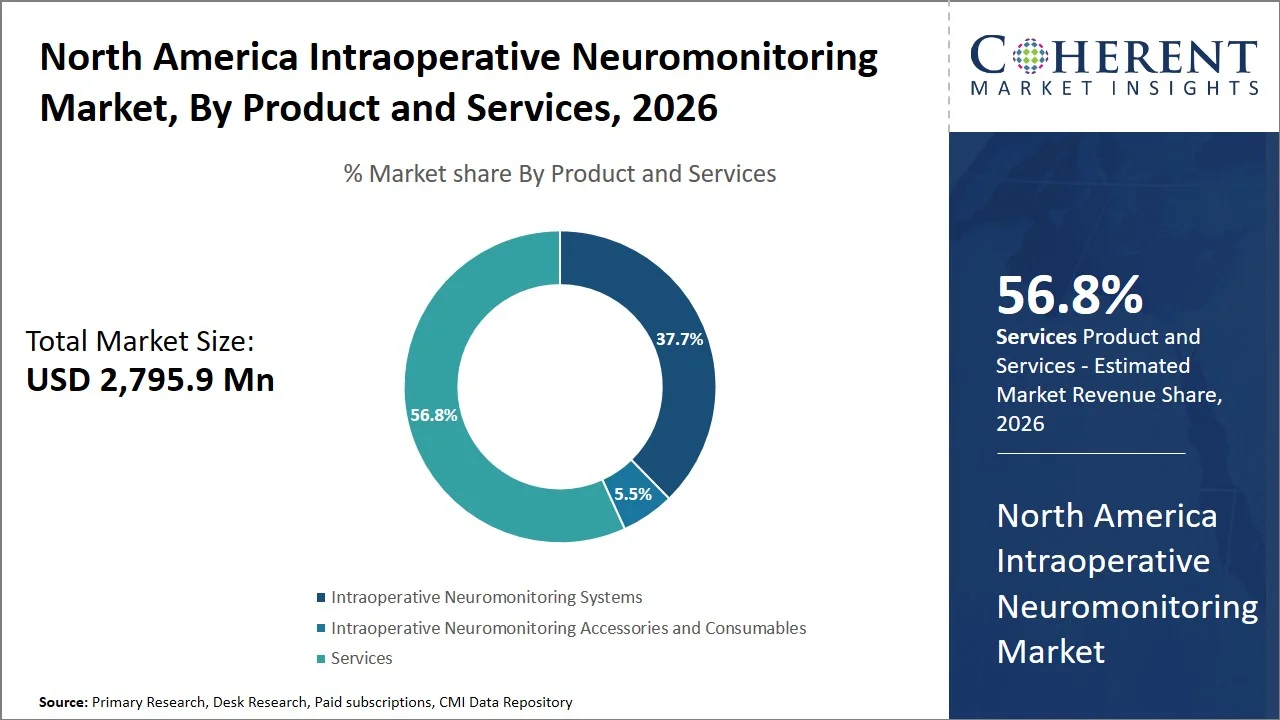
Why Do Services Dominate the North America Intraoperative Neuromonitoring Market?
Services are projected to hold a market share of 56.8% in 2026, owing to the mounting utilization of outsource neuromonitoring led by qualified board-certified neurologists and certified neurophysiologists. This empowers healthcare providers to streamline the operational costs along with the accessibility of real-time interpretation among sophisticated surgical interventions. The utilization of remote neuromonitoring expands the market due to extended accessibility to specialists in intraoperative neuromonitoring without requiring in-house clinical teams. For instance, SpecialtyCare, the largest provider of outsourced intraoperative neuromonitoring services in the U.S., currently supports more than 115,000 patients annually through its nationwide network of neurophysiologists and remote physician oversight, which shows the strong market preference for service-based delivery models.
- Current Industry Events of 2026
- Market Size Estimation
- Regional Breakdown
- Competitive Landscape
- Customer Intelligence
- Segmental Analysis
- Pricing Analysis
- Key Market Drivers, Challenges & Future Trends
- Customized Insights Section
Why Does the Hospitals Segment Represent the Largest End User Segment in the North America Intraoperative Neuromonitoring Market?
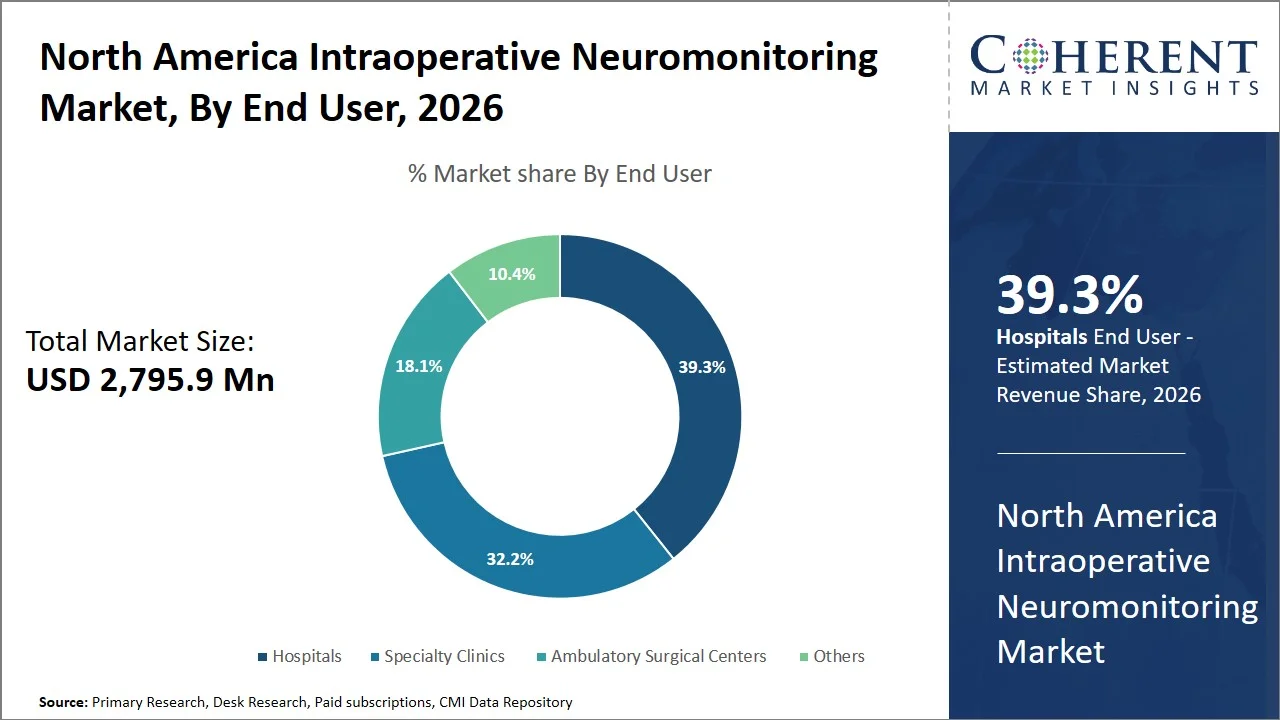
Hospitals are projected to hold 39.3% of the market share in 2026, owing to the increasing number of complex neurological, spinal, cardiovascular and orthopedic surgeries performed in these facilities. Sophisticated and equipped operating room infrastructure facilities of hospitals together with multidimensional surgical groups and accessibility to proficient neurologists give standard operating process of this surgical system within major surgical processes that may be at risk of patients. In addition, hospitals possess the additional fiscal and technical expertise required to utilize complex monitoring software. Consequently, these entities can keep in pace with new guidelines for treatment quality. For instance, the American Association of Neurological Surgeons’ Quality Outcomes database involves hundreds of surgeons and numerous hospital systems across the U.S. to elevate quality and outcomes for spine and neurosurgery, reinforcing hospitals' central role in adopting advanced intraoperative technologies.
Current Events and their Impact
Current Events | Description and its Impact |
U.S. Food and Drug Administration (FDA) Draft Guidance on AI-Enabled Device Software Functions (January 2025) |
|
U.S. Food and Drug Administration Recognizes IEC 80601-2-77 Standard for Robotically Assisted Surgical Equipment (May 2025) |
|
North America Intraoperative Neuromonitoring Market Dynamics
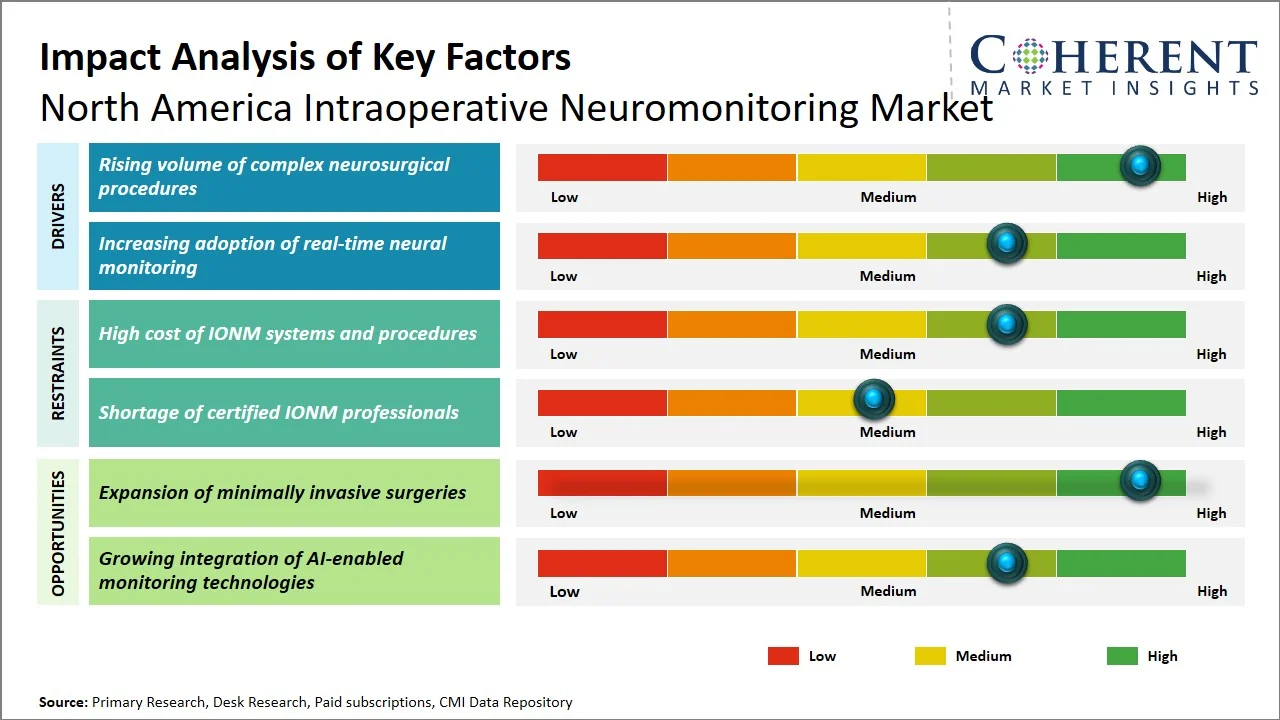
Market Drivers
- Rising volume of complex neurosurgical procedures: The increasing volume of complex neurosurgical and spinal procedures across North America is driving the adoption of intraoperative neuromonitoring (IONM) to enable real-time assessment of neural function and reduce the risk of neurological complications. Growing emphasis on surgical precision and improved patient outcomes is further strengthening the demand for advanced IONM technologies. For instance, in May 2025, MindTrace Technologies received a USD 1.2 million Phase II Small Business Innovation Research (SBIR) award from the U.S. National Science Foundation to advance its AI-powered neurosurgical decision-support platform, supporting safer brain tumor resections and enhanced intraoperative neurological preservation.
- Increasing adoption of real-time neural monitoring: The increasing adoption of real-time neural monitoring during complex neurosurgical, spinal, and head and neck procedures is driving the growth of the North America intraoperative neuromonitoring market. Continuous assessment of neural pathway integrity enables surgeons to detect potential neurological injury immediately, improving surgical precision and patient safety. For instance, in June 2025, the U.S. Food and Drug Administration (FDA) granted 510(k) clearance to the Neuralytix iD3 System (NTX-9001), a mechanomyography (MMG)-based nerve monitoring system designed to provide real-time motor nerve mapping and monitoring during surgical procedures, supporting the broader adoption of advanced intraoperative neural monitoring technologies.
Emerging Trends
- Increasing Adoption of Multimodal Intraoperative Neuromonitoring: Healthcare providers across North America are increasingly adopting multimodal intraoperative neuromonitoring, combining somatosensory evoked potentials (SSEPs), motor evoked potentials (MEPs), electromyography (EMG), and electroencephalography (EEG) into a single procedure. This integrated approach enhances real-time neurological assessment, improves surgical precision, and reduces the risk of intraoperative nerve injury during complex surgeries.
- Growing Integration of Intraoperative Neuromonitoring with Robotic-Assisted Surgery: The growing adoption of robotic-assisted neurosurgical and spinal procedures is driving the integration of advanced IONM systems with robotic surgical platforms. This trend enables continuous neural function assessment during highly precise minimally invasive procedures, improving patient safety and supporting the expansion of technology-enabled surgical workflows.
Regulatory and Reimbursement Factors Influencing the North America Intraoperative Neuromonitoring Market
Regulation/Guideline | Regulatory Body | Key Update (2025–2026) | Impact on North America Intraoperative Neuromonitoring Market |
AI-enabled Medical Device Guidance | U.S. Food and Drug Administration | Draft guidance for AI-enabled medical devices | Accelerates AI-integrated IONM development |
510(k) Medical Device Clearance | U.S. Food and Drug Administration | Streamlined pathway for neuromonitoring devices | Faster commercialization of innovative IONM systems |
Physician Reimbursement (CPT/HCPCS) | Centers for Medicare & Medicaid Services | Continued reimbursement for IONM professional services | Supports hospital adoption and service utilization |
Hospital Accreditation Standards | The Joint Commission | Updated perioperative patient safety requirements | Encourages use of advanced intraoperative monitoring |
Clinical Practice Guidelines | AO Spine / American Clinical Neurophysiology Society | Evidence-based recommendations for multimodal IONM | Increases utilization during complex spine surgery |
How is the expansion of minimally invasive surgeries creating new growth opportunities in the North America intraoperative neuromonitoring market?
The rising trend towards the adoption of minimally invasive procedures as well as robot-assisted surgeries in North America marks out a considerable opportunity for the intraoperative neuromonitoring market. Surgical procedures involving close navigation to vital nerve regions due to the trends of minimally invasive and robotic surgeries are increasingly demanding of intra-operative neural monitoring for improved safety and less neurological problems. For instance, in December 2025, the U.S Food and Drug Administration (FDA) gave 510(k) clearance to CMR Surgical for its Versius Plus robotic surgery system which offers advanced digital visualization and workflow benefits to increase the accessibility of next-generation robotic-assisted surgery.
Market Players, Key Development, and Competitive Landscape
Key Developments
- In May 2026, Cadwell Industries Inc. commercially launched the Cadwell Guardia Intraoperative Neuromonitoring (IONM) System in the U.S. The next-generation platform features a modular pod-based architecture, advanced recording and stimulation capabilities, and Cascade Surgical Studio 4.0 software to improve operating room efficiency and support a wide range of surgical procedures, strengthening innovation in the North America intraoperative neuromonitoring market.
- In November 2024, Nihon Kohden Corporation acquired Ad-Tech Medical Instrument Corporation, a U.S.-based manufacturer of electrodes used in epilepsy diagnosis and intraoperative neurophysiological monitoring. The acquisition expands Nihon Kohden's neurodiagnostic portfolio and strengthens its capabilities in advanced neurological monitoring, supporting growth in the North American intraoperative neuromonitoring market.
- In July 2024, Soterix Medical received U.S. Food and Drug Administration (FDA) 510(k) clearance for its MEGA-IOM Intraoperative Neuromonitoring System. The platform integrates motor evoked potentials (MEP), somatosensory evoked potentials (SSEP), electroencephalography (EEG), and direct nerve stimulation into a single system, enhancing intraoperative neural monitoring and improving surgical safety across neurosurgical and spinal procedures.
Competitive Landscape
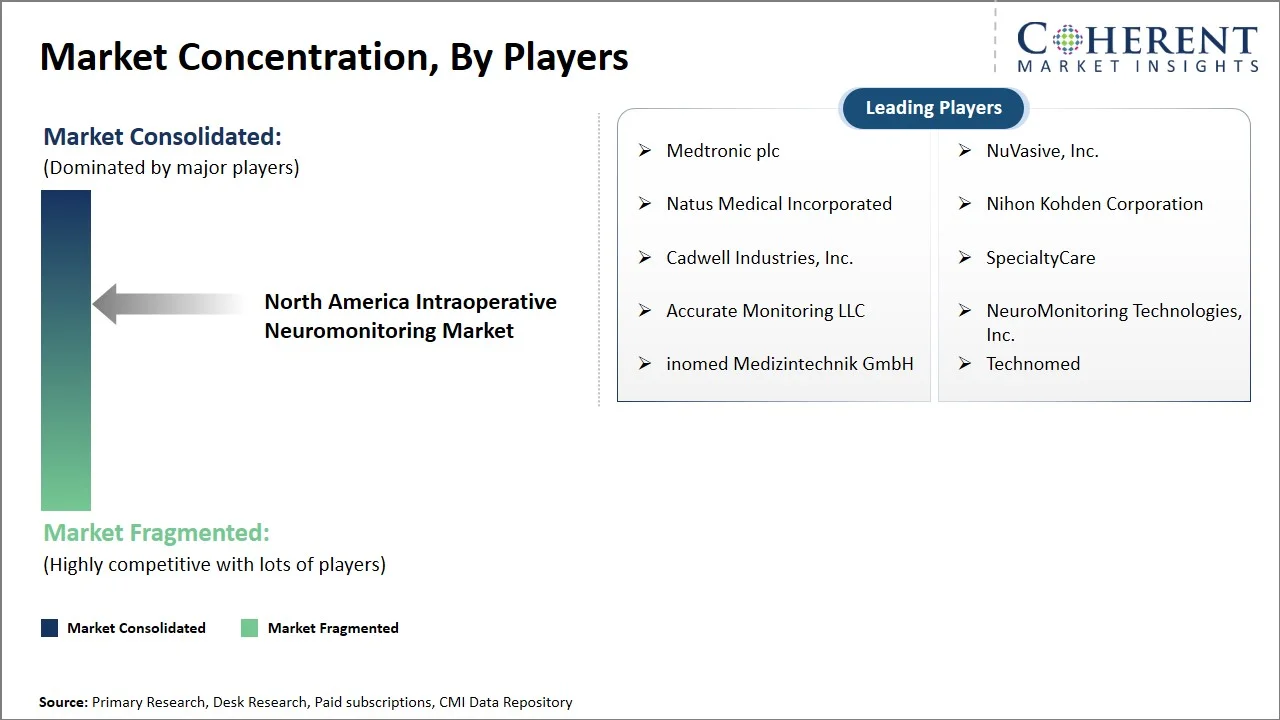
The North America intraoperative neuromonitoring market is moderately consolidated, with leading companies competing through technological innovation, regulatory approvals, and expansion of service capabilities. Market participants are focusing on enhancing real-time multimodal monitoring platforms, integrating advanced software solutions, and strengthening partnerships with hospitals and surgical centers to improve procedural safety and clinical outcomes. Continuous investment in next-generation IONM systems and service expansion remains a key competitive differentiator. Key focus areas include:
- Development of multimodal intraoperative neuromonitoring systems integrating somatosensory evoked potentials, motor evoked potentials, electromyography, electroencephalography, and direct nerve stimulation into a single platform.
- Expansion of remote intraoperative neuromonitoring services to improve access to board-certified neurophysiologists and support hospitals performing complex surgical procedures.
- Innovation in advanced monitoring electrodes, wireless neuromonitoring technologies, and artificial intelligence-assisted neurophysiological signal analysis to enhance monitoring accuracy and surgical workflow efficiency.
- Securing U.S. Food and Drug Administration approvals, strategic acquisitions, and partnerships to strengthen product portfolios and expand market presence across North America.
Market Report Scope
North America Intraoperative Neuromonitoring Market Report Coverage
| Report Coverage | Details | ||
|---|---|---|---|
| Base Year: | 2025 | Market Size in 2026: | USD 2,795.9 Mn |
| Historical Data for: | 2020 To 2024 | Forecast Period: | 2026 To 2033 |
| Forecast Period 2026 to 2033 CAGR: | 11.1% | 2033 Value Projection: | USD 5,839.8 Mn |
| Segments covered: |
| ||
| Companies covered: | Medtronic plc, NuVasive, Inc., Natus Medical Incorporated, Nihon Kohden Corporation, Cadwell Industries, Inc., SpecialtyCare, Accurate Monitoring LLC, NeuroMonitoring Technologies, Inc., inomed Medizintechnik GmbH, and Technomed | ||
| Growth Drivers: |
| ||
| Restraints & Challenges: |
| ||
Analyst Opinion (Expert Opinion)
- In the coming years, the North America intraoperative neuromonitoring market is expected to witness sustained growth, driven by the increasing volume of complex neurosurgical, spinal, and minimally invasive procedures, alongside continuous advancements in neuromonitoring technologies. Greater integration of artificial intelligence, multimodal monitoring platforms, and remote monitoring services is expected to improve clinical efficiency, surgical precision, and patient safety, making intraoperative neuromonitoring a standard of care for high-risk surgeries.
- The maximum growth opportunity lies within spinal surgery applications in the U.S., supported by the high procedural volume, increasing adoption of minimally invasive and robotic-assisted spine surgeries, and strong reimbursement and regulatory framework. Rising demand for real-time neurological monitoring during complex spinal procedures is expected to further accelerate market expansion.
- In order to create an advantage for themselves, the competitors should focus on developing multimodal intraoperative neuromonitoring platforms, expanding remote intraoperative neuromonitoring service networks, and incorporating artificial intelligence-enabled neurophysiological signal analysis to improve workflow efficiency and clinical decision-making. Strengthening collaborations with hospitals and academic medical centers while securing timely U.S. Food and Drug Administration approvals for next-generation systems will further reinforce market leadership.
Speak to the analyst
Want personalized insights?
Take the findings above to one of our principal consultants, or have the report rebuilt around the segments, geographies and competitors you actually track.
Market Segmentation
- Product and Services Insights (Revenue, USD Mn, 2021 - 2033)
- Intraoperative Neuromonitoring Systems
- Intraoperative Neuromonitoring Accessories and Consumables
- Services
- End User Insights (Revenue, USD Mn, 2021 - 2033)
- Hospitals
- Specialty Clinics
- Ambulatory Surgical Centers
- Others
- Key Players Insights
- Medtronic plc
- NuVasive, Inc.
- Natus Medical Incorporated
- Nihon Kohden Corporation
- Cadwell Industries, Inc.
- SpecialtyCare
- Accurate Monitoring LLC
- NeuroMonitoring Technologies, Inc.
- inomed Medizintechnik GmbH
- Technomed
Sources
Primary Research Interviews
- Neurosurgeons – utilization of intraoperative neuromonitoring during brain and spinal surgeries
- Orthopedic Spine Surgeons – adoption trends in complex spinal procedures and minimally invasive surgery
- Clinical Neurophysiologists – multimodal intraoperative neuromonitoring practices and remote monitoring adoption
- Intraoperative Neuromonitoring Technologists – workflow optimization, equipment utilization, and operational challenges
- Directors of Neurosurgery / Operating Room Managers – procurement strategies and integration of intraoperative neuromonitoring systems
- Ambulatory Surgical Center Administrators – adoption of intraoperative neuromonitoring in outpatient surgical settings
Stakeholders
- Intraoperative Neuromonitoring Device Manufacturers (e.g., Medtronic plc, Natus Medical Incorporated, Nihon Kohden Corporation, Cadwell Industries, Inc., NuVasive, Inc.)
- Intraoperative Neuromonitoring Service Providers
- End-use Sectors:
- Hospitals
- Ambulatory Surgical Centers
- Specialty Neurosurgery Centers
- Academic & Research Institutes
- Regulatory & Health Bodies
- U.S. Food and Drug Administration
- Health Canada
- Centers for Medicare & Medicaid Services
- The Joint Commission
- American Clinical Neurophysiology Society
Databases
- U.S. Food and Drug Administration 510(k) Premarket Notification Database – intraoperative neuromonitoring device clearances and approvals
- Centers for Medicare & Medicaid Services Physician Fee Schedule & HCPCS Database – reimbursement policies for intraoperative neurophysiology monitoring services
- ClinicalTrials.gov – ongoing clinical studies involving intraoperative neuromonitoring technologies and neurosurgical procedures
- National Institutes of Health RePORTER – federally funded neurological and intraoperative monitoring research projects
Magazines
- Medical Device and Diagnostic Industry (MD+DI)
- OR Manager
- NeuroNews International
- Medical Product Outsourcing
Journals
- Journal of Clinical Neurophysiology
- Clinical Neurophysiology
- Journal of Neurosurgery
- World Neurosurgery
Associations
- American Clinical Neurophysiology Society
- American Academy of Neurology
- American Association of Neurological Surgeons
- North American Spine Society
- Congress of Neurological Surgeons
Public Domain Sources
- U.S. Food and Drug Administration
- National Institutes of Health
- Centers for Disease Control and Prevention
- Agency for Healthcare Research and Quality
- Health Canada
Proprietary Elements
- CMI Data Analytics Tool, Proprietary CMI Existing Repository of information for last 10 years.
Get access to 250+ pages report
Every segment, forecast, competitor profile and data table behind the analysis above — available for instant download.
- ESOMAR Member
- ISO 9001:2015 Certified
- D-U-N-S Registered
- GDPR & CCPA Compliant
Missing comfort of reading report in your local language? Find your preferred language:
Transform your Strategy with Exclusive Trending Reports
Frequently Asked Questions
The North America intraoperative neuromonitoring market is estimated to be valued at USD 2,795.9 Mn in 2026 and is expected to reach USD 5,839.8 by 2033.
Services dominate due to the increasing demand for outsourced and remote monitoring by board-certified neurophysiologists, favorable reimbursement policies, and the growing volume of complex neurosurgical and spinal procedures requiring real-time neurophysiological interpretation.
Intraoperative neuromonitoring is the continuous assessment of the functional integrity of the nervous system during surgery using neurophysiological techniques to help prevent neurological injury.
The CAGR of the North America intraoperative neuromonitoring market is projected to be 11.1% from 2026 to 2033.
Rising volume of complex neurosurgical procedures, and increasing adoption of real-time neural monitoring are the major factors driving the growth of the North America intraoperative neuromonitoring market.
Intraoperative neuromonitoring is most commonly used during spinal, neurosurgical, vascular, otolaryngology, and orthopedic procedures where there is a risk of injury to the brain, spinal cord, or peripheral nerves.
The most commonly used modalities include somatosensory evoked potentials, motor evoked potentials, electromyography, electroencephalography, and brainstem auditory evoked potentials.