

Global Oncology Companion Diagnostics Market Size and Forecast – 2026 To 2033
The global oncology companion diagnostics market is expected to grow from USD 5.47 Bn in 2026 to USD 11.02 Bn by 2033, registering a compound annual growth rate (CAGR) of 10.6% from 2026 to 2033. The market for global oncology companion diagnostics is poised for significant expansion, fueled by the rising global cancer burden and increasing need for precision treatment selection.
According to the World Health Organization (WHO) Global Status Report on Cancer 2026, an estimated 20.6 million people were diagnosed with cancer worldwide in 2024, with the annual number of new cases projected to reach nearly 35 million by 2050. This expanding patient population is expected to strengthen demand for biomarker-based diagnostics that support targeted cancer treatment.
Key Takeaways of the Global Oncology Companion Diagnostics Market
- Kits and reagents are projected to hold 52.7% of the global oncology companion diagnostics market share in 2026, making it dominant product and service segment, across North America due to the region’s established regulatory pathway for biomarker-based oncology testing. The U.S. FDA authorized 12 companion diagnostic indications among 27 oncology IVD authorizations in 2024, reinforcing regulatory integration of diagnostic assays into oncology treatment decisions. This established authorization framework supports continued adoption of oncology CDx kits and reagents in clinical practice.
- Immunohistochemistry (IHC) is projected to hold 27.4% of the global oncology companion diagnostics market share in 2026, making it dominant technology segment, across Europe due to the region’s structured regulatory framework for companion diagnostics under the IVDR. For instance, the European Medicines Agency (EMA) maintained dedicated companion-diagnostic consultation procedures in 2026, with notified bodies required to seek an EMA scientific opinion for eligible diagnostics linked to centrally authorized medicines. This regulatory pathway supports the continued clinical adoption of IHC-based companion diagnostics across European oncology settings.
- Breast cancer is projected to hold 26.1% of the global oncology companion diagnostics market share in 2026, making it dominant cancer type segment, across North America due to the established regulatory integration of biomarker testing into breast cancer treatment pathways. The U.S. FDA’s 2026 companion-diagnostic authorization records include multiple breast cancer biomarker indications, reflecting continued regulatory expansion of diagnostic testing for treatment selection in this cancer type. This growing regulatory coverage supports broader use of companion diagnostics in breast cancer management.
- North America market maintains dominance with an expected share of 38.7% in 2026, bolstered by its mature oncology diagnostic regulatory ecosystem and strong integration of companion diagnostics into cancer treatment pathways. The U.S. FDA authorized 26 oncology in vitro diagnostic devices in 2025, including six new companion diagnostic indications and nine expanded indications, demonstrating continued regulatory activity in oncology diagnostics.
- Asia Pacific is expected to exhibit the fastest growth in the global oncology companion diagnostics market, registering an estimated CAGR of 12.9% during 2026–2033, driven by strengthening regulatory frameworks and wider adoption of precision oncology. For instance, Japan’s PMDA updated its approved companion-diagnostic list in August 2026 and introduced drug-agnostic CDx evaluations, including an assessment framework for EGFR mutations in non-small cell lung cancer. This regulatory expansion supports broader use of companion diagnostics across the region.
Segmental Insights
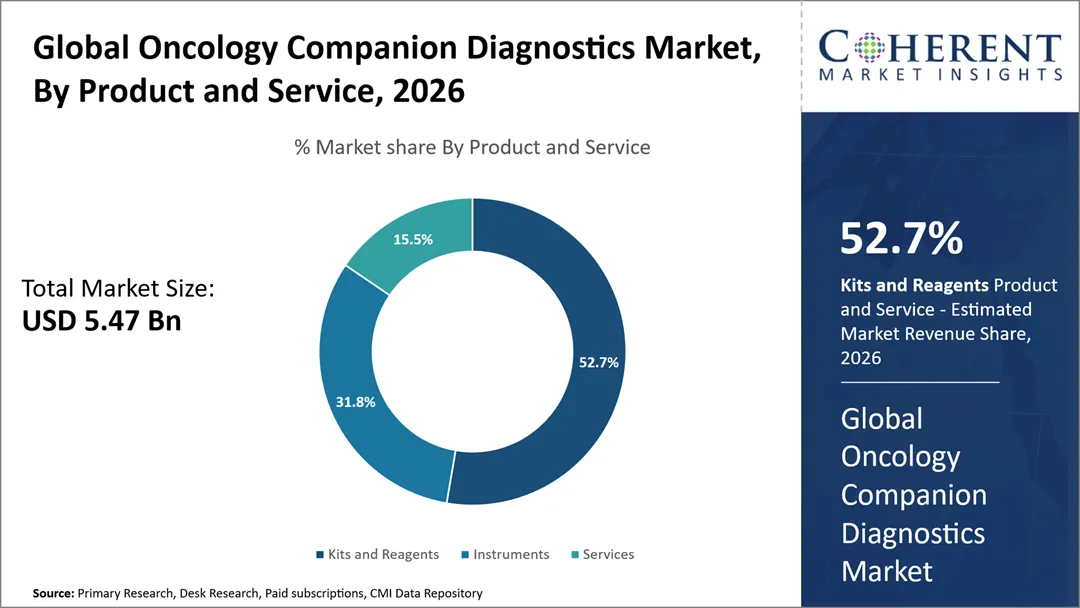
Why Do Kits and Reagents Dominate the Global Oncology Companion Diagnostics Market?
Kits and reagents are projected to hold the market share of 52.7% in 2026, as these consumables are indispensable for regulated workflow that addresses the need of standardized detection of biomarkers, patient stratification, and treatment selection. The prepackaged kits readily prepared for testing provide reproducible testing, allowing labs to easily detect genetic and protein biomarkers of clinical relevance. For instance, in February 2026, U.S. Food and Drug Administration (FDA) expanded companion diagnostic indication for PD-L1 IHC 22C3 pharmDx in esophageal and gastroesophageal junction carcinoma, solidifying routine biomarker testing using reagent based standardized tests in the clinical settings, and ensuring the on-going demand for authenticated test kits and reagents for oncology diagnoses.
- Current Industry Events of 2026
- Market Size Estimation
- Regional Breakdown
- Competitive Landscape
- Customer Intelligence
- Segmental Analysis
- Pricing Analysis
- Key Market Drivers, Challenges & Future Trends
- Customized Insights Section
Why Does Immunohistochemistry (IHC) Represent the Largest Technology Segment in the Oncology Companion Diagnostics Market?
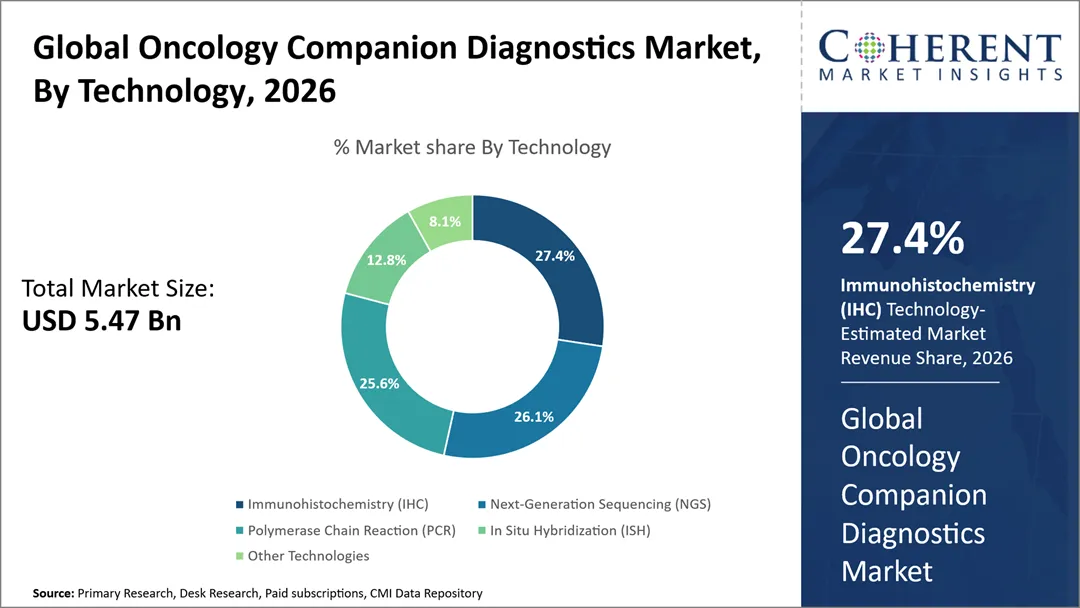 Immunohistochemistry (IHC) is projected to hold a market share of 27.4% in 2026, due to the speed and ability to detect protein biomarkers on tissue, and simplicity and interoperability with current pathology workup on treatment selection. The spatial localization and lack of sophisticated data analysis allow for greater clinical utility across numerous tumor types. For instance, in August 2026, U.S. Food and Drug Administration (FDA) approved PATHWAY anti-HER-2/neu (4B5) as a companion diagnostic assay for the detection of patients with gastroesophageal adenocarcinoma that would be suitable for zanidatamab therapy.
Breast Cancer Segment Dominates the Global Oncology Companion Diagnostics Market
The breast cancer segment is projected to hold a market share of 26.1% in 2026, owing to its widespread use of biomarker-directed therapy for alterations involving HER2, ESR1 and PIK3CA. The growing breadth of targeted and endocrine therapy necessitates an ever-growing range of companion diagnostics, to identify patients who are amenable to these treatment modalities. For instance, in May 2026, U.S Food and Drug Administration (FDA) approved two companion diagnostics for HER2-positive early stage breast cancer that detect HER2-positive patients eligible for trastuzumab deruxtecan.
Current Events and their Impact
Current Events | Description and its Impact |
U.S. FDA Expands Oncology Companion Diagnostic Authorizations (August 2026) |
|
U.S. FDA Expands NGS-Based Companion Diagnostic Use (August 2026) |
|
European Medicines Agency (EMA) Updates Companion Diagnostic Consultation Procedures (August 2026) |
|
Oncology Companion Diagnostics Market Dynamics
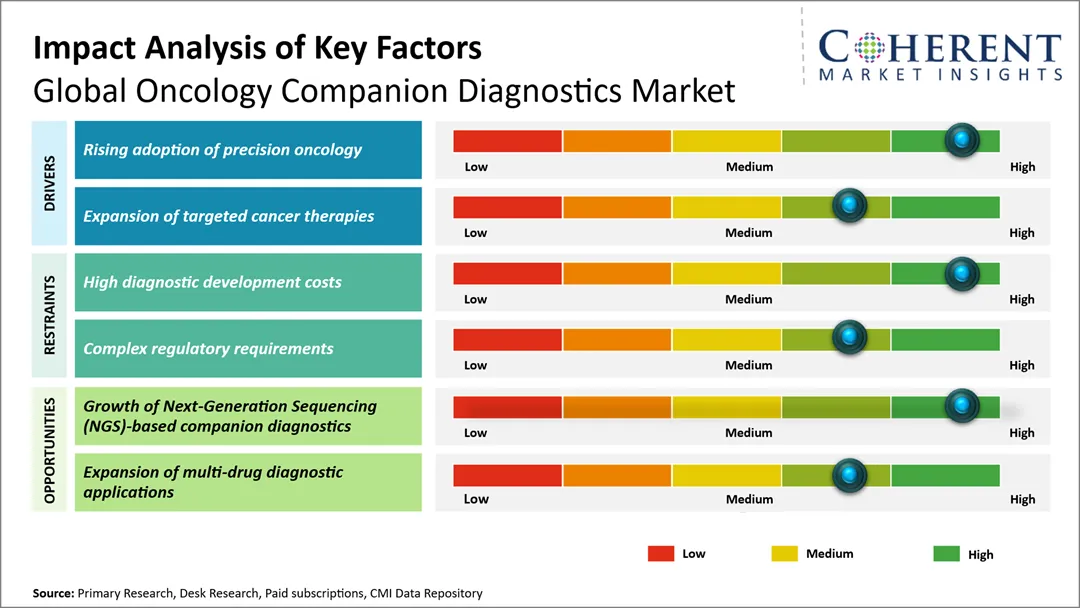
Market Drivers
- Rising adoption of precision oncology: The increasing use of biomarker-driven treatment strategies is enabling cancer therapies to be more closely aligned with the molecular characteristics of individual patients, strengthening demand for companion diagnostics. For instance, in August 2026, the U.S. FDA expanded the intended use of TruSight Oncology Comprehensive to identify RET alterations in thyroid and medullary thyroid cancer patients who may benefit from selpercatinib. This regulatory expansion demonstrates the growing integration of molecular profiling into precision oncology treatment decisions and supports broader adoption of companion diagnostics.
- Expansion of targeted cancer therapies: The growing availability of targeted therapies is increasing the need for companion diagnostics to identify biomarker-defined patients eligible for specific treatments. For instance, in May 2026, the U.S. FDA expanded the companion-diagnostic indication of FoundationOne Liquid CDx to detect HRR gene alterations in metastatic castration-resistant prostate cancer patients who may benefit from targeted therapy. This expansion demonstrates the increasing integration of biomarker testing into targeted oncology treatment pathways and supports demand for companion diagnostics.
- Growing use of biomarker-driven treatment selection: The increasing reliance on molecular biomarkers to guide oncology treatment is expanding the need for companion diagnostics that can accurately identify eligible patient populations. For instance, in August 2026, the U.S. FDA expanded the approved use of a next-generation sequencing oncology panel to detect RET alterations in thyroid and medullary thyroid cancers, supporting selection of patients for targeted treatment. This regulatory expansion demonstrates the broader integration of biomarker testing into precision oncology and supports continued demand for companion diagnostics.
Emerging Trends
- Shift toward liquid biopsy-based companion diagnostics: Liquid biopsy is emerging as a less-invasive approach for detecting circulating tumor DNA and supporting treatment selection and monitoring. Its ability to capture tumor changes over time is expanding its potential role in precision oncology.
- Increasing adoption of next-generation sequencing (NGS): NGS-based companion diagnostics are gaining traction because they can identify multiple genomic alterations from a single test, supporting broader biomarker profiling. This is expanding their application across targeted oncology therapies and complex biomarker-driven cancers.
- Integration of artificial intelligence in diagnostic interpretation: AI is increasingly being integrated with molecular and pathology-based diagnostics to improve biomarker interpretation, treatment-response assessment, and patient stratification. The convergence of AI with liquid biopsy and multi-omic data is emerging as a key direction for next-generation companion diagnostics.
Regional Insights
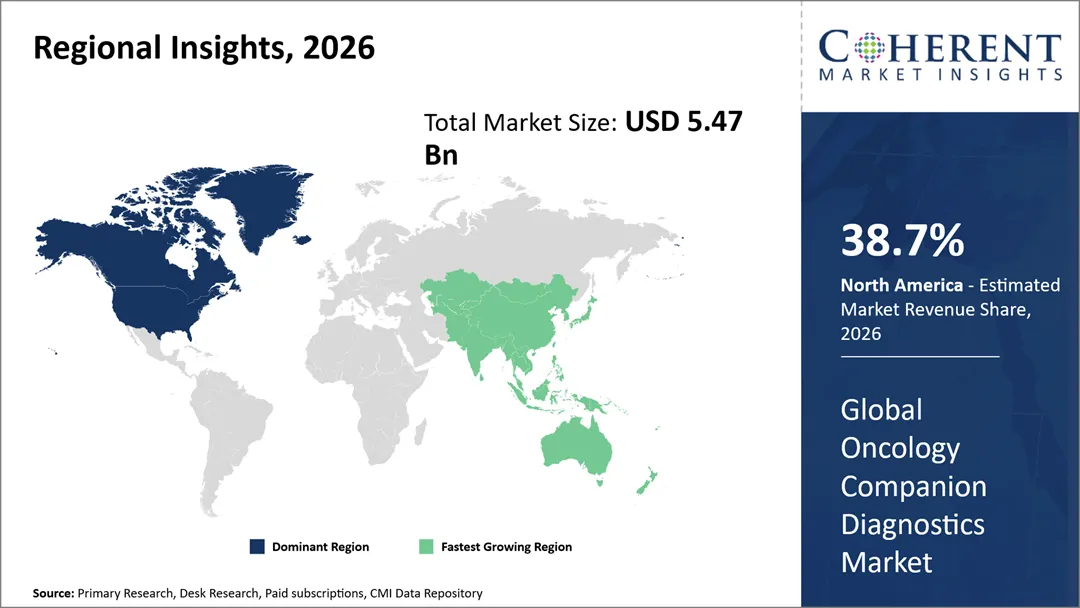
Why is North America a Strong Market for Oncology Companion Diagnostics?
North America leads the global oncology companion diagnostics market, accounting for an estimated 38.7% share in 2026, due to its sophisticated oncology ecosystem, robust regulatory approvals, and investments. The government efforts for the adoption of personalized oncology among health providers and inter-operability between oncology researchers, diagnostic developers, and clinicians help to integrate companion diagnostics quickly.
For instance, the U.S. National Institute of Health (NIH) All of Us Research Program combines clinicians, investigators, as well as technology and genomics partners in order to promote personalization of medicine, prevention, diagnosis and treatment through electronic health record and genomics information. Furthermore, the established regulatory environment and reimbursement landscape further support the demand for biomarker testing in the treatment-selection pathways.
Why Does Asia Pacific Oncology Companion Diagnostics Market Exhibit High Growth?
Asia Pacific is expected to exhibit the fastest growth in the global oncology companion diagnostics market, registering an estimated CAGR of 12.9% during 2026–2033. The region is projected to account for 24.1% of the global market in 2026, fueled by increased cancer burden, growing expenditure in healthcare and a widening base for high-level biomarker testing. Governmental reforms and efforts to foster biotech development and innovation in targeted therapy development within countries like China, India, Japan and South Korea provide the industry with an advantageous market.
For instance, in February 2026, Government of India emphasized GenomeIndia, bioE3 Policy to further advance and improve Genomics, Precision Diagnostics, and Precision biotherapeutics by strengthening India's ecosystem of developing personalized medicine and targeted therapeutics. (Source: Press Information Bureau) Furthermore, increasing adoption of molecular diagnostics and enhanced awareness of personalized treatment are broadening the testing market base in the region.
Global Oncology Companion Diagnostics Market Outlook for Key Countries
Why is the U.S. Leading Innovation and Adoption in the Oncology Companion Diagnostics Market?
The U.S. is at the vanguard of innovation and usage, with a well-established regulatory paradigm that closely links companion diagnostics with development and selection of oncology drugs. The U.S.FDA's precision oncology program aligns the regulatory science for drugs, biologics, and diagnostics, whereas its companion diagnostic paradigm enables co-development and expanding companion diagnostic labeling. This large number of U.S.FDA approved companion diagnostics that span genomic, and protein-based biomarkers facilitate broad clinical use in the U.S.
Is Japan a Favorable Market for Oncology Companion Diagnostics Market?
Japan has a highly promising market for oncology companion diagnostics because of the country's advanced regulatory system and growing use of genomic medicine in cancer therapy. Pharmaceuticals and Medical Devices Agency (PMDA) has specific pathways dedicated for companion diagnostic approval and has already expanded its system to cover drug-agnostic companion diagnostics such as EGFR mutation test for non-small cell lung cancer. Furthermore, the country is proactively promoting genomic medicine and conducts some government supported genomic cancer project involving cancer genomic analyses, genomic drug discovery and clinical application of precision medicine.
Is China Emerging as a Key Growth Hub for the Oncology Companion Diagnostics Market?
China is gaining significant growth potential in oncology companion diagnostics market owing to the initiatives undertaken by China’s government in harmonizing cancer genetic testing and bringing biomarker testing to the target-therapy paths. China’s National Health Commission mandates genetic testing prior to the use of certain target-therapies were indicated on label, or clinical guidelines, thus bolstering use of companion diagnostics. Furthermore, the country’s government is playing an active role in moving ahead precision medicine with various initiatives pertaining to genomic technologies, molecular diagnostics and target-therapies.
Why Does Germany Top the European Oncology Companion Diagnostics Market?
Germany leads the European Oncology Companion Diagnostics Market due to its orderly inclusion of genomic medicine into oncology treatment which is underpinned by the national genomDE strategy. The gov-supported genomic sequencing method implemented under Section 64e SGB V is limited to oncological disease-processes and supports standardized genomic diagnostics and optimized tumor-based therapeutic selection, reinforcing clinical prerequisites to biomarker-directed therapy and usage of companion diagnostics in Germany.
Is Oncology Companion Diagnostics Market Developing in India?
India is an emerging oncology companion diagnostics market due to several government-supported genomics and diagnostic development initiatives. Government sponsored National Biopharma Mission (Innovate in India) program facilitates the development of diagnostics, devices and biotherapeutics. It connects government, industry and academia creating an ecosystem capable of indigenous precision diagnostics and biomarker driven oncology.
U.S. FDA-Authorized Oncology Companion Diagnostics by Cancer Type and Technology
Cancer Type | Key Biomarkers | Predominant CDx Technology | Clinical Application |
Breast Cancer | HER2, ESR1, PIK3CA, BRCA/HRD | Immunohistochemistry, Next-Generation Sequencing, Polymerase Chain Reaction | Targeted and endocrine therapy selection |
Lung Cancer | EGFR, ALK, KRAS, MET, ROS1, RET, HER2 | Next-Generation Sequencing, Polymerase Chain Reaction | Targeted therapy selection |
Colorectal Cancer | BRAF, KRAS/NRAS, MSI/MMR | Polymerase Chain Reaction, Next-Generation Sequencing, Immunohistochemistry | Targeted and immunotherapy selection |
Prostate Cancer | HRR genes, BRCA1/2, PTEN | Next-Generation Sequencing, Immunohistochemistry | Targeted therapy selection |
Ovarian Cancer | BRCA1/2, HRD, PD-L1 | Next-Generation Sequencing, Immunohistochemistry | PARP inhibitor and immunotherapy selection |
Other Cancers | Tumor-specific biomarkers | Next-Generation Sequencing, Immunohistochemistry, Polymerase Chain Reaction, In Situ Hybridization | Biomarker-guided treatment selection |
How is the growth of next-generation sequencing (NGS)-based companion diagnostics creating new growth opportunities in the oncology companion diagnostics market?
Increasing versatility of NGS platforms in detecting multiple mutations and copy number variations along with a suite of mutations and fusions per test, offers promising opportunities for complete genomic analysis with the largest patient population stratification. Companion diagnostics driven by NGS have the potential to complement and diminish dependence on single biomarker sequentially tested for and can help facilitate therapy selection across multiple tumor types and targeted agents. For instance, in July 2025, U.S. Food and Drug Administration (FDA) approved the Oncomine Dx Express Test, an NGS-based oncology panel that identifies alterations in 42 genes, 10 genes CNVs, and 18 genes fusions or splice variants as a companion diagnostic. The proposed extension represents an ever-increasing importance of multiplex NGS in clinical care and offers the chance for increased utilization of broad companion diagnostics.
Market Players, Key Development, and Competitive Intelligence
Key Developments
- On September 4, 2026, Guardant Health, Inc. received U.S. FDA approval for Guardant360 CDx as a companion diagnostic to identify ESR1 mutations in advanced breast cancer patients eligible for camizestrant. The approval expands the use of liquid biopsy and Next-Generation Sequencing (NGS)-based companion diagnostics for biomarker-guided treatment selection.
- In July 2026, NeoGenomics, Inc. launched PTEN IHC CDx, the first FDA-approved immunohistochemistry (IHC) companion diagnostic for prostate adenocarcinoma. The test identifies PTEN protein loss in patients who may be eligible for TRUQAP (capivasertib). The launch expands the application of IHC-based companion diagnostics in prostate cancer and supports biomarker-guided treatment selection.
- In April 2026, Labcorp announced nationwide availability of Agilent Technologies’ PD-L1 IHC 22C3 pharmDx for identifying platinum-resistant ovarian cancer patients who may be eligible for KEYTRUDA. The expansion strengthens the use of IHC-based companion diagnostics for biomarker-guided treatment selection in ovarian cancer.
Competitive Landscape
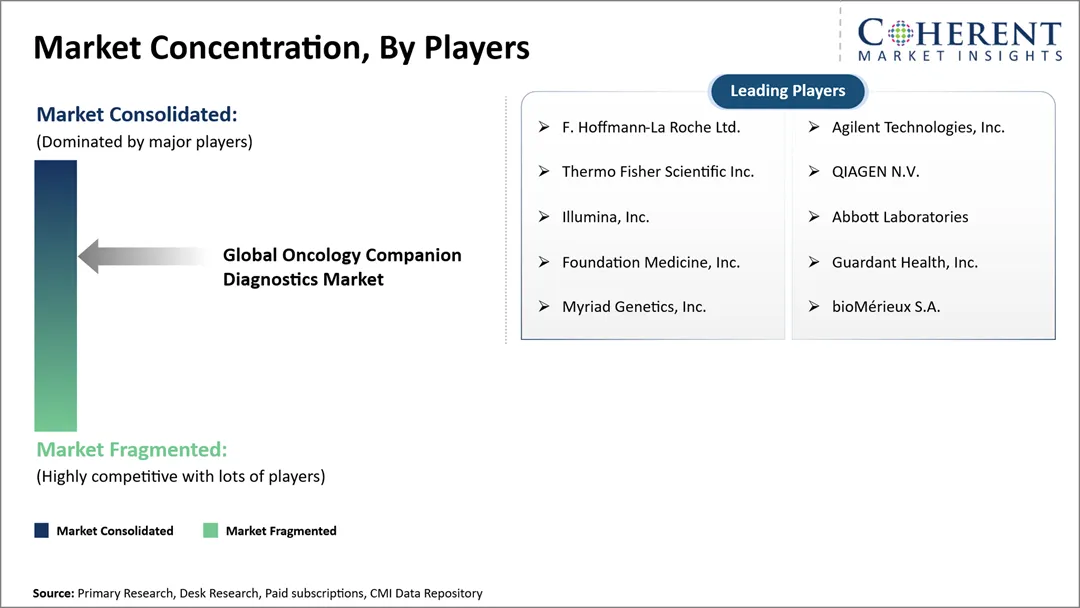
The global oncology companion diagnostics market is moderately competitive, with market dynamics shaped by advances in molecular profiling, biomarker identification, targeted therapies, and regulatory expansion of companion diagnostic applications. Market participants are increasingly focusing on broadening biomarker coverage, improving testing efficiency, and supporting treatment selection across diverse cancer types. Key focus areas include
- Expansion of multi-biomarker testing through Next-Generation Sequencing (NGS)
- Development of immunohistochemistry-based companion diagnostics for protein biomarkers
- Advancement of liquid biopsy and circulating tumor DNA-based companion diagnostics
- Integration of artificial intelligence and digital pathology for biomarker interpretation
- Expansion of companion-diagnostic applications across multiple oncology therapies through regulatory group-labeling frameworks
- Development of integrated diagnostic platforms combining genomic, molecular, and pathology-based testing
Market Report Scope
Global Oncology Companion Diagnostics Market Report Coverage | |||
Report Coverage | Details | ||
Base Year | 2025 | Market Size in 2026: | USD 5.47 Bn |
Historical Data For: | 2020 To 2024 | Forecast Period: | 2026 To 2033 |
Forecast Period 2026 To 2033 CAGR: | 10.6% | 2033 Value Projection: | USD 11.02 Bn |
Geographies covered: |
| ||
Segments covered: |
| ||
Companies covered: | F. Hoffmann-La Roche Ltd., Agilent Technologies, Inc., Thermo Fisher Scientific Inc., QIAGEN N.V., Illumina, Inc., Abbott Laboratories, Foundation Medicine, Inc., Guardant Health, Inc., Myriad Genetics, Inc., bioMérieux S.A. | ||
Growth Drivers: |
| ||
Restraints & Challenges: |
| ||
Analyst Opinion (Expert Opinion)
- In the coming years, global oncology companion diagnostics market is expected to move toward more comprehensive, multi-biomarker testing, with Next-Generation Sequencing, liquid biopsy, and integrated molecular profiling becoming increasingly important. Companion diagnostics are likely to become more closely integrated with drug development rather than being developed as standalone diagnostic products. The industry should also see broader use of diagnostics across multiple therapies targeting the same biomarker, creating a more scalable market opportunity.
- The maximum opportunities are foreseen within next-generation sequencing for targeted therapy selection in the U.S. This combination offers the greatest potential because NGS can evaluate multiple actionable biomarkers in a single workflow, while the U.S. has a mature precision-oncology ecosystem and an established regulatory pathway for companion diagnostics. The opportunity should increasingly extend toward liquid biopsy-based testing as minimally invasive molecular profiling becomes more clinically useful.
- In order to gain a competitive advantage, market players should prioritize broad-biomarker platforms, faster turnaround times, and flexible diagnostic indications rather than focusing narrowly on single-biomarker tests. Early coordination with pharmaceutical developers during therapy development can help secure companion-diagnostic positioning, while building capabilities in NGS, liquid biopsy, bioinformatics, and clinical evidence generation can create stronger differentiation. FDA's framework already supports co-development and broader group labeling where scientifically appropriate.
Speak to the analyst
Want personalized insights?
Take the findings above to one of our principal consultants, or have the report rebuilt around the segments, geographies and competitors you actually track.
Market Segmentation
- Product and Service Insights (Revenue, USD Bn, 2021 - 2033)
- Kits and Reagents
- Instruments
- Services
- Technology Insights (Revenue, USD Bn, 2021 - 2033)
- Immunohistochemistry (IHC)
- Next-Generation Sequencing (NGS)
- Polymerase Chain Reaction (PCR)
- In Situ Hybridization (ISH)
- Other Technologies
- Cancer Type Insights (Revenue, USD Bn, 2021 - 2033)
- Breast Cancer
- Lung Cancer
- Colorectal Cancer
- Prostate Cancer
- Others
- End User Insights (Revenue, USD Bn, 2021 - 2033)
- Hospitals and Cancer Centers
- Diagnostic Laboratories
- Pharmaceutical and Biotechnology Companies
- Research Institutes
- Others
- Regional Insights (Revenue, USD Bn, 2021 - 2033)
- North America
- U.S.
- Canada
- Latin America
- Brazil
- Argentina
- Mexico
- Rest of Latin America
- Europe
- Germany
- U.K.
- Spain
- France
- Italy
- Russia
- Rest of Europe
- Asia Pacific
- China
- India
- Japan
- Australia
- South Korea
- ASEAN
- Rest of Asia Pacific
- Middle East
- GCC Countries
- Israel
- Rest of Middle East
- Africa
- South Africa
- North Africa
- Central Africa
- North America
Sources
Primary Research Interviews
- Medical oncologists involved in biomarker-based cancer treatment selection and patient management
- Molecular pathologists involved in genomic profiling and tissue-based biomarker testing
- Laboratory directors overseeing oncology molecular diagnostic workflows
- Clinical investigators conducting precision-oncology and companion-diagnostic clinical trials
- Pharmaceutical and biotechnology professionals involved in targeted-therapy and companion-diagnostic co-development
- Diagnostic industry professionals involved in companion-diagnostic development, validation, regulatory submission, and commercialization
Stakeholders
- Pharmaceutical and biotechnology companies developing targeted therapies, immunotherapies, and biomarker-driven cancer treatments
- Companion diagnostic developers and in vitro diagnostic manufacturers developing oncology testing platforms
- Hospitals, cancer centers, and oncology clinics using biomarker testing for treatment selection
- Diagnostic and molecular pathology laboratories performing genomic and biomarker testing
- Clinical research organizations and academic medical centers conducting oncology clinical trials
- Healthcare payers and reimbursement organizations involved in coverage of biomarker testing and targeted therapies
- End-use Sectors
- Hospitals & Cancer Centers
- Diagnostic Laboratories
- Pharmaceutical & Biotechnology Companies
- Research Institutes
- Regulatory & Health Bodies
- U.S. Food and Drug Administration (FDA) – companion-diagnostic authorizations, oncology diagnostics, biomarker testing, and regulatory guidance
- European Medicines Agency (EMA) – companion-diagnostic consultation, scientific opinions, and In Vitro Diagnostic Regulation requirements
- Pharmaceuticals and Medical Devices Agency (PMDA), Japan – companion-diagnostic review, approval, and regulatory information
- National Cancer Institute (NCI), U.S. – precision oncology, cancer biomarkers, diagnostic research, and clinical studies
- World Health Organization (WHO) – global cancer burden, cancer-control programs, and health-system information
- International Agency for Research on Cancer (IARC) – global cancer incidence, mortality, and epidemiological statistics
Databases
- ClinicalTrials.gov – oncology clinical trials, interventions, sponsors, study status, and outcomes
- FDA List of Authorized Companion Diagnostic Devices – authorized companion diagnostics, biomarkers, and associated therapies
- NCI Clinical Trials Search – cancer treatment, biomarker, and precision-medicine clinical studies
- European Union Clinical Trials Information System (CTIS) – clinical trials for medicines investigated in the European Union and European Economic Area
- NCI Genomic Data Commons – cancer genomic, molecular, and clinical datasets
- IARC Global Cancer Observatory (GLOBOCAN) – international cancer incidence and mortality estimates
Journals
- Journal of Clinical Oncology – clinical oncology, biomarkers, precision medicine, and treatment research
- Clinical Cancer Research – translational oncology, biomarkers, targeted therapies, and companion diagnostics
- Journal of Molecular Diagnostics – molecular diagnostics, biomarker testing, and diagnostic technologies
- Cancer Discovery – cancer genomics, molecular oncology, and emerging therapeutic approaches
- Nature Reviews Cancer – cancer biology, molecular profiling, precision oncology, and therapeutic developments
- The Lancet Oncology – clinical cancer research, oncology diagnostics, and treatment developments
Associations
- American Society of Clinical Oncology (ASCO) – clinical oncology, biomarkers, precision medicine, and treatment guidelines
- Association for Molecular Pathology (AMP) – molecular diagnostics, genomic testing, and biomarker interpretation
- European Society for Medical Oncology (ESMO) – oncology research, biomarkers, precision medicine, and clinical practice
- College of American Pathologists (CAP) – pathology, laboratory testing, and biomarker-testing standards
- American Association for Cancer Research (AACR) – cancer research, molecular oncology, biomarkers, and therapeutic development
- Personalized Medicine Coalition (PMC) – precision medicine, biomarker-driven healthcare, and diagnostic development
Public Domain Sources
- U.S. Food and Drug Administration (FDA) – authorized companion diagnostics, oncology diagnostic regulation, and biomarker guidance
- National Cancer Institute (NCI) – cancer diagnosis, biomarkers, precision oncology, clinical research, and treatment information
- Surveillance, Epidemiology, and End Results (SEER) Program – U.S. cancer incidence, mortality, survival, and demographic statistics
- World Health Organization (WHO) – global cancer burden, cancer-control, and healthcare-system information
- International Agency for Research on Cancer (IARC) – global cancer statistics and epidemiological data
- European Medicines Agency (EMA) – European companion-diagnostic and oncology regulatory information
Proprietary Elements
- CMI Data Analytics Tool
- Proprietary CMI Existing Repository of information for last 10 years.
Get access to 250+ pages report
Every segment, forecast, competitor profile and data table behind the analysis above — available for instant download.
- ESOMAR Member
- ISO 9001:2015 Certified
- D-U-N-S Registered
- GDPR & CCPA Compliant
Missing comfort of reading report in your local language? Find your preferred language:
Frequently Asked Questions
The global oncology companion diagnostics market is estimated to be valued at USD 5.47 Bn in 2026 and is expected to reach USD 11.02 Bn by 2033.
Kits and reagents dominate due to their recurring use in biomarker testing, patient stratification, and treatment-selection workflows across oncology settings.
Oncology companion diagnostics are tests used to identify cancer patients who are most likely to benefit from, or face risks from, a specific therapy.
The CAGR of global oncology companion diagnostics market is projected to be 10.6% from 2026 to 2033.
Rising adoption of precision oncology, and expansion of targeted cancer therapies are the major factors driving the growth of the global oncology companion diagnostics market.
High diagnostic development costs, and complex regulatory requirements are the major factors hampering the growth of the global oncology companion diagnostics market.
In terms of end user, hospitals and cancer centers are estimated to dominate the market revenue share in 2026.