

Global Overactive Bladder Treatment Market Size and Forecast – 2026 To 2033
The global overactive bladder treatment market is expected to grow from USD 4.82 Bn in 2026 to USD 7.91 Bn by 2033, registering a compound annual growth rate (CAGR) of 7.3% from 2026 to 2033. The market for overactive bladder treatment is poised for significant expansion, fueled by the soaring burden of overactive bladder and urinary incontinence among the aging population.
According to a study published by the U.S. National Library of Medicine in February 2025, the prevalence of overactive bladder increased from 18.1% to 23.9% over the past 20 years. Among women, the prevalence of overactive bladder was 21.9%, indicating higher rates compared to men. The rising prevalence of overactive bladder in both men and women will intensify the need for novel pharmacological treatments, neuromodulation treatments, and other minimally invasive treatment options.
(Source: National Library of Medicine)
Key Takeaways of the Global Overactive Bladder Treatment Market
- Pharmacological treatment is projected to hold 61.5 % of the global overactive bladder treatment market share in 2026, making it the dominant treatment type segment, across North America due to the widespread availability of approved drug therapies and established treatment guidelines. For instance, in December 2024, the U.S. Food and Drug Administration approved a label expansion for Gemtesa (vibegron) to include male patients receiving pharmacological therapy for benign prostatic hyperplasia, broadening the eligible patient population for overactive bladder treatment. The expansion is expected to support the adoption of pharmacological therapies across the region.
- Overactive bladder wet is projected to hold 63.0 % of the global overactive bladder treatment market share in 2026, making it the dominant disease type segment, across Europe due to the high burden of urgency urinary incontinence and increasing emphasis on evidence-based disease management. For instance, the European Association of Urology (EAU) guidelines recommend structured interventions such as bladder training and other therapeutic approaches for managing overactive bladder symptoms and urgency urinary incontinence. The growing focus on early diagnosis and treatment is expected to support sustained demand for overactive bladder therapies across the region.
- Hospitals are projected to hold 46.0 % of the global overactive bladder treatment market share in 2026, making it the dominant end user segment across Asia Pacific due to the increasing availability of specialized urology and continence care services. For instance, Singapore General Hospital (SGH) operates a dedicated Pelvic Floor Disorders Service, providing comprehensive diagnostic and treatment options for urinary incontinence through a multidisciplinary team comprising urology, colorectal surgery, obstetrics & gynecology, and gastroenterology specialists. The growing availability of specialized hospital-based services for bladder and continence disorders is expected to support the adoption of overactive bladder treatments across the region.
- North America maintains its dominance with an expected share of 40.5 % in 2026, bolstered by high diagnosis rates, favorable reimbursement coverage, and the widespread adoption of advanced OAB therapies. For instance, in January 2025, the American Urological Association (AUA) and the Society of Urodynamics, Female Pelvic Medicine & Urogenital Reconstruction (SUFU) published updated clinical guidelines for the diagnosis and treatment of idiopathic overactive bladder, reinforcing evidence-based treatment pathways and supporting greater adoption of pharmacological and minimally invasive therapies across the region.
- Asia Pacific is expected to exhibit the fastest growth with an estimated contribution of 21.5 % share in 2026, driven by improving healthcare infrastructure, increasing awareness of urological disorders, and expanding access to specialized care. For instance, Australia's Department of Health, Disability, and Ageing continued funding the National Continence Program, which supports education, awareness, and access to continence care services for individuals affected by bladder and bowel disorders. Such initiatives are expected to improve diagnosis and treatment rates for overactive bladder across the region.
- Integration of Digital Therapeutics and Remote Bladder Monitoring: The integration of digital therapeutics, mobile health applications, and remote patient monitoring solutions is creating new opportunities in overactive bladder management. These technologies support symptom tracking, bladder training, treatment adherence, and physician-patient engagement. As healthcare providers increasingly adopt digital care models, technology-enabled overactive bladder management is expected to complement conventional therapies and improve patient outcomes.
- Expansion of Personalized Neuromodulation Therapies: Advancements in neuromodulation technologies are enabling more personalized treatment approaches for patients with refractory overactive bladder. Innovations in device miniaturization, rechargeable systems, and patient-specific stimulation settings are improving treatment effectiveness and patient convenience. The growing preference for minimally invasive therapies is expected to accelerate adoption and create significant opportunities for device manufacturers.
Segmental Insights
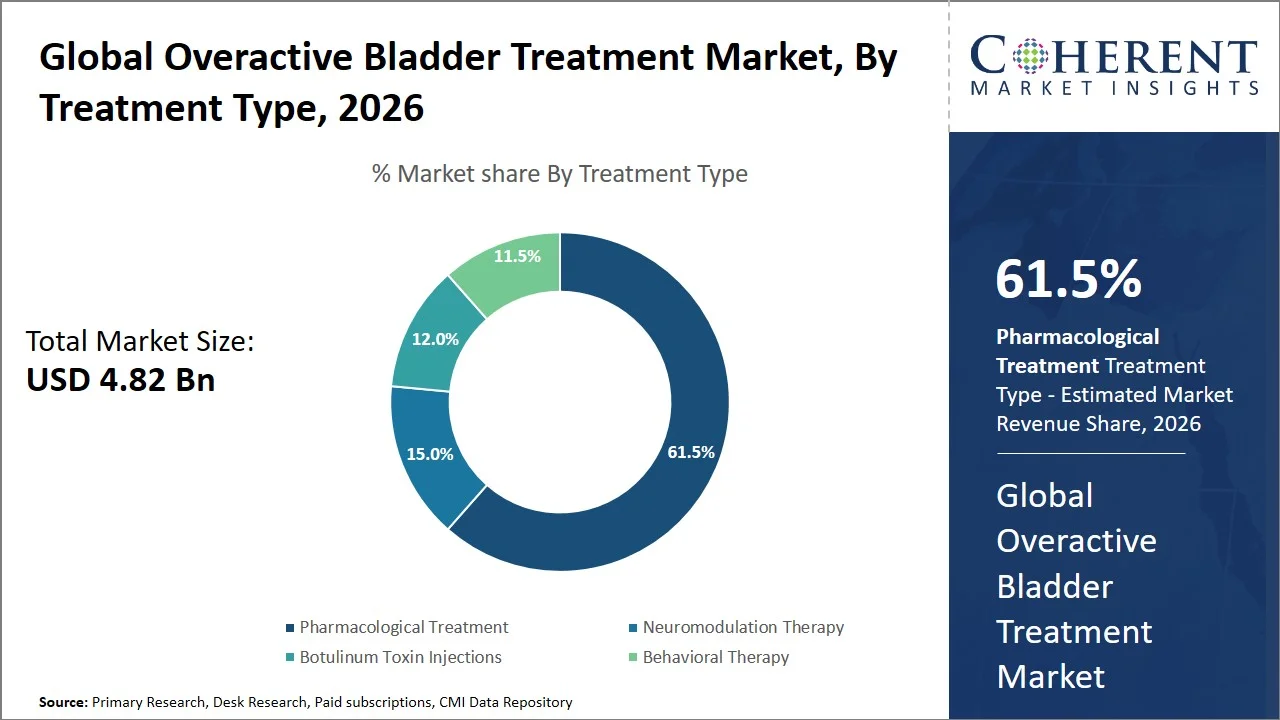
Why Does Pharmacological Treatment Dominate the Global Overactive Bladder Treatment Market?
Pharmacological treatment is projected to hold a market share of 61.5% in 2026, as it is easy to administer, provides effective outcomes in the clinical setting and can be used as a long-term management option for symptoms. With the range of available antimuscarinic and B3 adrenergic agonist agents’ clinicians have an array of treatment options that can be individually tailored to the patient. Ongoing refinements in drug development are aiding the maintenance of a broad implementation of pharmacological treatment. For instance, in August 2022, Astellas Pharma Inc. conducted a clinical study to assess the efficacy and tolerability of mirabegron 25 mg and 50 mg in Chinese patients with overactive bladder, where mirabegron 50 mg gave a statistically significant improvement in overactive bladder symptoms, demonstrating the tolerability profile. These positive outcomes support pharmacological therapy as an essential aspect of treatment for overactive bladder. (Source: Astellas Pharma Inc.)
- Current Industry Events of 2026
- Market Size Estimation
- Regional Breakdown
- Competitive Landscape
- Customer Intelligence
- Segmental Analysis
- Pricing Analysis
- Key Market Drivers, Challenges & Future Trends
- Customized Insights Section
Why Does Overactive Bladder Wet Represent the Largest Disease Type Segment in the Overactive Bladder Treatment Market?
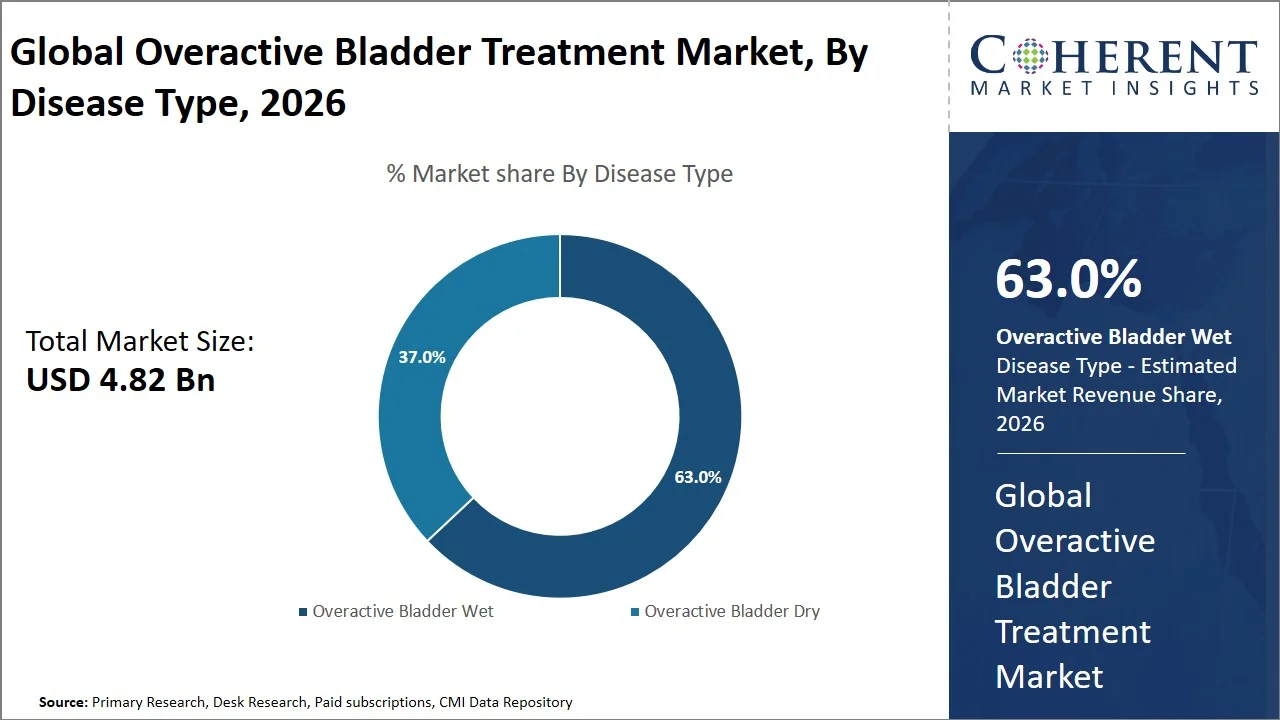
Overactive bladder wet is projected to hold a market share of 63.0% in 2026, due to a higher symptom burden and greater impact on quality of life than in overactive bladder dry patients. Patients with urgency urinary incontinence are more likely to seek attention due to the social, psychological and functional challenges associated with involuntary leakage. Symptom severity tends to be high in those who seek treatment, which in turn drove higher diagnosis and treatment rates. Increasing general awareness of urinary incontinence and an aging population also contributed to segment growth. For instance, in July 2024, a review article published by Wiley Online Library, highlights that urgency urinary incontinence (UUI), a cardinal symptom of overactive bladder wet, imposes significant detriments to quality of life, sleeping habits, psychological health, and social activities. The research also pointed out that symptoms of urgency and urgency urinary incontinence (UUI) are among the most bothersome for the population with overactive bladder, and should be diagnosed and treated timely. (Source: Wiley Online Library)
Hospitals Segment Dominates the Global Overactive Bladder Treatment Market
The hospitals segment is projected to hold a market share of 46.0% in 2026, owing to the presence of sophisticated diagnostic facilities, multidisciplinary approach, and wide range of treatment options like drug therapy, botulinum toxin injections, and neuromodulation procedure. Their evolving role as referral centers for complex cases and the availability of specialized urology services remains a contributory factor to their continued popularity. For instance, in February 2026, the University Hospital Urology Institute demonstrated its proficiency in offering empirically-supported solutions for urinary disorders such as overactive bladder and urge incontinence. The institute emphasized its pilot trials and advanced treatments for the dysfunction of bladder, thus indicating how hospitals were vital in offering the specialized overactive bladder treatment and promoting new therapies. (Source: University Hospitals)
Currents Events and their Impact
Current Events | Description and its Impact |
Regional NHS Pharmacological Management Framework for Overactive Bladder (September 2025) |
|
Expansion of CMS Reimbursement Support for Advanced Neuromodulation Therapies (February 2026) |
|
Overactive Bladder Treatment Market Dynamics
Market Drivers
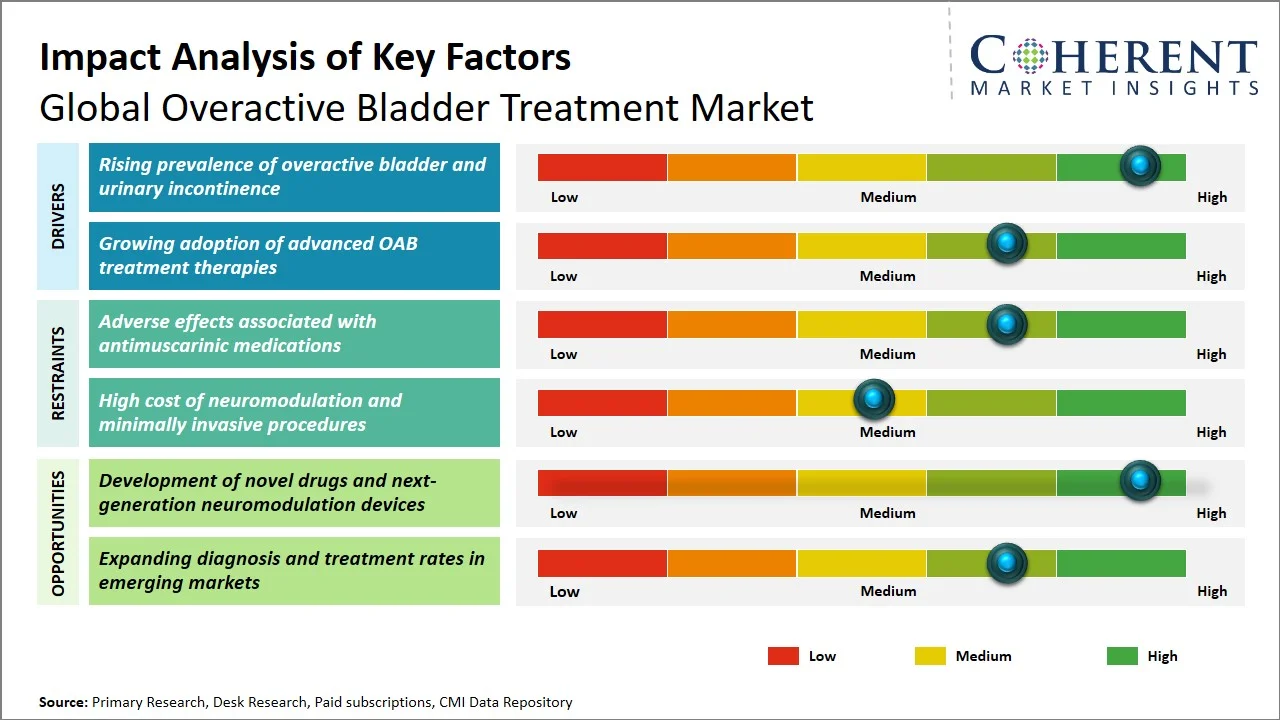
- Rising prevalence of overactive bladder and urinary incontinence: An increasing number of aging populations, increasing obesity rates and increasing prevalence of chronic disease are prospectively leading to a greater patient population of long-term bladder management. Furthermore, rising awareness and an increasing diagnosis rate are driving more patients towards medical help hence reinforcing the use of both pharmaceutical and minimally invasive overactive bladder treatments. For instance, according to Continence Health Australia, more than 7.2 million people experience incontinence, with nearly 1 in 3 people affected by the condition. The considerable disease burden highlights the rising need for effective bladder disorder management and is expected to support demand for overactive bladder treatment solutions across the healthcare system.
- Growing adoption of advanced OAB treatment therapies: Increasing acceptance and use of newer and innovative therapies for patients with overactive bladder is expected to propel market growth as patients are more inclined to visit newly emerged advanced therapies (such as sacral neuromodulation, percutaneous tibial nerve stimulation and implantable tibial neuromodulation) that provide effective long term symptom relief over traditional pharmacotherapeutics. Growing use of advanced, minimally invasive therapies will likely be seen as a key growth factor owing to recurring technological innovations and increasing use of these therapies in clinical practice. For instance, in May 2026, BlueWind Medical, Ltd. secured financing of USD 47.8 million for the commercialization of its Revi System, an implantable tibial neuromodulation therapy indicated to treat urgency urinary incontinence. The investment represents faith in more sophisticated neuromodulation methods and underscores the rise of various device-based treatments for bladder disease.
Emerging Trends
- Increasing Adoption of Implantable and Minimally Invasive Neuromodulation Therapies: The treatment environment for overactive bladder is moving toward less invasive neuromodulation approaches, such as the use of implantable tibial nerve stimulation and new, modern sacral neuromodulation systems. New neuromodulation therapies provide a long-lasting solution for patients that fail to respond to drugs, thus making their use a staple in a number of specialty urology clinics.
- Rising Use of Combination Therapy for Refractory OAB Management: Health care providers are rapidly implementing combination treatment strategies utilizing behavioral, medical and newer technical procedures such as botulinum toxin and neuromodulation to optimize symptom management and treatment persistence for patients with refractory or severe overactive bladder symptoms.
Regional Insights
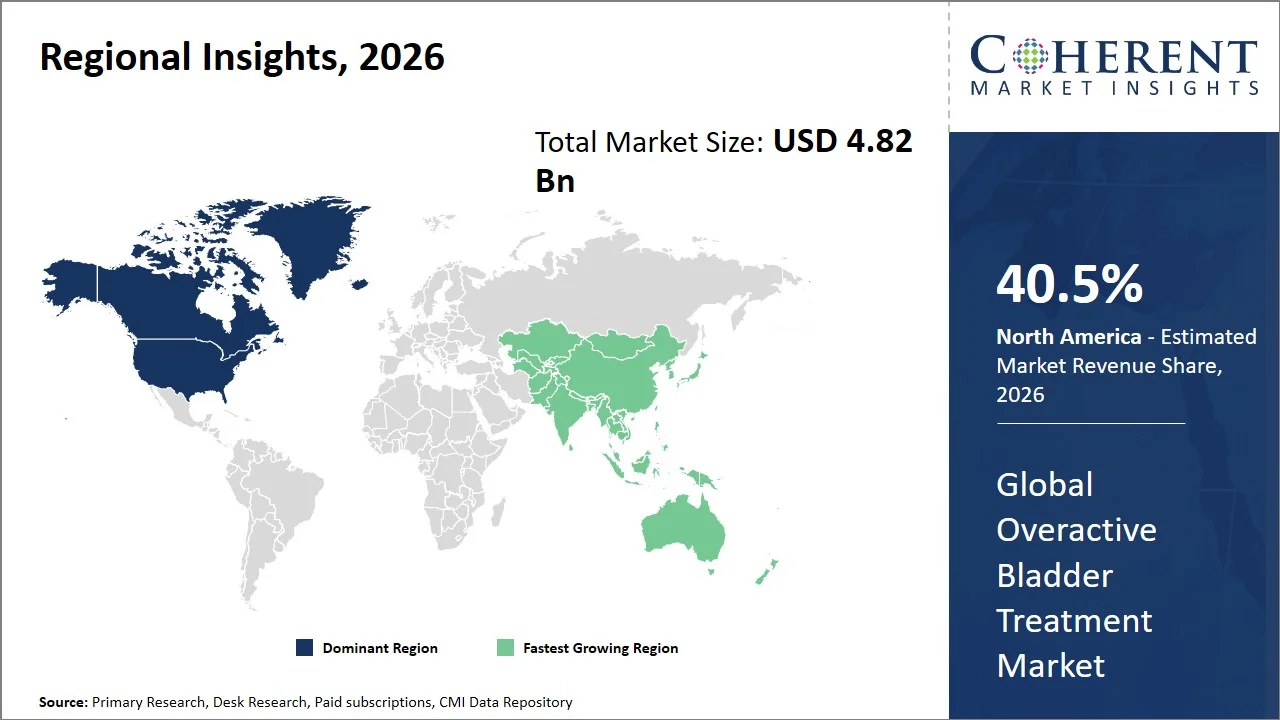
Why is North America a Strong Market for Overactive Bladder Treatment?
North America leads the global overactive bladder treatment market, accounting for an estimated 40.5% share in 2026, led by a robust healthcare infrastructure coupled with a strong influx of investment into R&D initiatives, leading to a higher incidence rate and patient awareness across region. The favorable reimbursement and healthcare policies led by the government aid towards the efficient penetration of innovative therapies. For instance, the U.S. Centers for Medicare & Medicaid Services (CMS) reimburses Posterior Tibial Nerve Stimulation (PTNS) for the treatment of patients with voiding dysfunction such as overactive bladder with incomplete response to standard therapy under LCD L33396. In addition, there is a greater emphasis and need for the development of advanced solutions along with early diagnosis which positively influences the overall market.
Why Does the Asia Pacific Overactive Bladder Treatment Market Exhibit High Growth?
The Asia Pacific overactive bladder treatment market is expected to exhibit the fastest growth with an estimated contribution of 21.5% share to the global market in 2026, driven by rapid urbanization and growing geriatric population along with investment across the region. Governments in countries like China, India, South Korea, and Japan have significantly increased health care expenditure. Further, initiatives toward easier approval for overactive bladder drugs, treatment devices, and trade liberalization coupled with efficient supply chain network also facilitates penetration across tier 2 and 3 cities. For instance, China’s National Medical Products Administration continues to leverage the priority review pathways to expedite approval for innovative treatments and devices, particularly those to meet areas of great unmet medical needs. These pathways offer advantages that accelerate access for new urology treatment options and have enhanced the commercial landscape for breakthrough OAB treatment options country-wide.
Global Overactive Bladder Treatment Market Outlook for Key Countries
Why is the U.S. Leading Innovation and Adoption in the Overactive Bladder Treatment Market?
The U.S. dominates the overactive bladder treatment market driven by the presence of robust manufacturer portfolios which offers latest-generation pharmacological and neuromodulation therapies. The early launch of novel therapy options, high usage of minimally invasive bladder management procedures, and mature specialty urology provider network support the country's market growth. Training, technological advancements, and the ever-expanding selection of treatment options for refractory overactive bladder, and the rising demand for device-based therapies are projected to further support the country's leadership position.
Is Japan a Favorable Market for Overactive Bladder Treatment Market?
Japan is one of the most promising markets for the overactive bladder treatment market owing to its significant aging population, which is associated with high proportion of age-related urinary disorders. The country has a comprehensive urology care ecosystem in place, where specialized treatment is easily available, and both drug and device-based treatments are widely accepted. Further increase in market demand is supported by progressive uptake of innovative solutions for bladder management and increasing consumer requirements for symptom management over a long period of time.
Is China Emerging as a Key Growth Hub for the Overactive Bladder Treatment Market?
China is positioned as a key growth hub in the global overactive bladder treatment market driven by rising awareness regarding urinary disorders, improving access to specialty urology care and increasing adoption for novel therapy options. The rising need for pharmacological treatment and minimally invasive bladder management options in emerging healthcare infrastructure coupled with increasing patient willingness to utilize such therapies and availability of newer treatment therapies are expected to propel the market growth in China.
Why Does Germany Top the European Overactive Bladder Treatment Market?
Germany is the leader in the European market for overactive bladder treatment owing to its robust urology care network, high uptake of novel bladder management techniques and wide availability of required treatment services. The country has a well-developed pathway for diagnosis and management of urinary pathologies including utilization of pharmaceuticals and neuromodulation techniques. The high uptake of minimally invasive procedures and continued access to frontier treatment options makes it one of the dominant markets for overactive bladder treatment.
Is Overactive Bladder Treatment Market Developing in India?
India is a high-potential market for overactive bladder treatment due to increasing awareness about urinary conditions, improving distribution of urology services and improving overall healthcare infrastructure. Increasing availability of innovative pharmacological agents and minimally invasive treatment options along with technological advancement of the Indian treatment centers is broadening the patient pool for overactive bladder management. Increasing healthcare expenditure, focus on improving quality of life conditions and higher diagnosis prevalence are also leading to market growth, making India an attractive growth opportunity for overactive bladder treatment providers in the Asia Pacific region.
Evolution of Treatment Pathways in Overactive Bladder Management
First-Line Therapy | Second-Line Therapy | Third-Line Therapy | Emerging Approaches |
Behavioral Therapy | Pharmacological Therapy | Botulinum Toxin Injections | Implantable Tibial Neuromodulation |
Bladder Training | Beta-3 Agonists | Sacral Neuromodulation | Personalized Combination Therapy |
Lifestyle Modifications | Antimuscarinics | Percutaneous Tibial Nerve Stimulation | AI-Enabled Patient Monitoring |
How is the development of novel drugs and next-generation neuromodulation devices creating new growth opportunities in the overactive bladder treatment market?
The rising demands for more efficacious and patient-centric treatment options for OAB will create opportunities for new pharmacological treatments and next-generation neuromodulation modalities. Advancements in minimally invasive neuromodulation devices, rechargeable implantable systems, as well as targeted drug therapies will all serve to broaden the number of options available to manage refractory overactive bladder. For instance, in February 2022, Medtronic launched the innovative U.S. FDA approved next-generation sacral neuromodulation therapy – InterStim X for bladder/bowel control conditions. It is a rechargeable device which delivers customized therapy programming and has a battery longevity of up to 15 years. (Source: Medtronic)
Market Players, Key Development, and Competitive Intelligence
Key Developments
- In September 2025, Medtronic received U.S. FDA approval for the Altaviva device, a neuromodulation therapy designed to treat urge urinary incontinence. The approval strengthens Medtronic’s portfolio in bladder dysfunction management and expands access to minimally invasive treatment options for patients with overactive bladder symptoms. The development is expected to support the adoption of advanced neuromodulation therapies and drive innovation within the overactive bladder treatment market.
- In July 2025, Eisai Thailand launched Beova (vibegron) tablets for the treatment of overactive bladder (OAB) following regulatory approval in the country. The launch expands access to β3-adrenergic receptor agonist therapies in Southeast Asia and marks the first commercialization of Beova within Eisai’s licensed ASEAN markets. The development is expected to support treatment adoption and strengthen the availability of advanced overactive bladder management options across the region.
Competitive Landscape
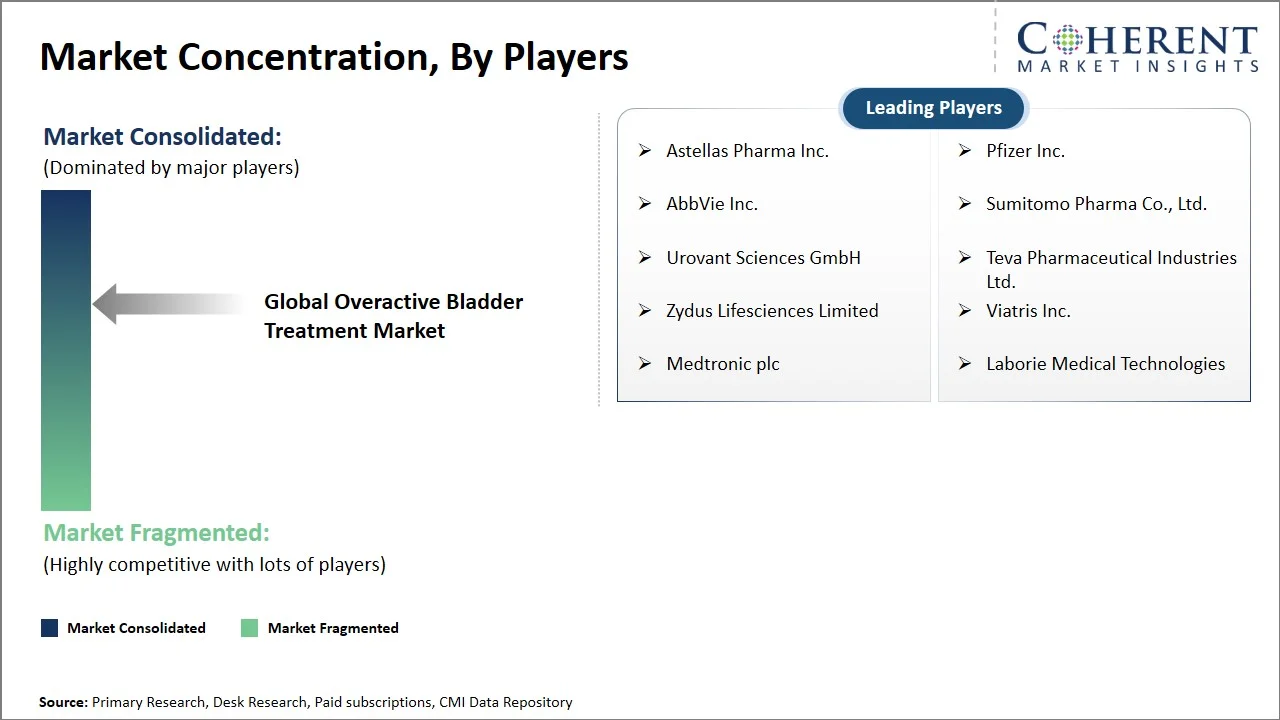
The global overactive bladder treatment market is moderately consolidated, in which players compete to diversify their portfolio of indications, increase their clinical validation, and develop minimally invasive treatment options. The industry players are likely to target on the enhancement of next-generation pharmacological and neuromodulation therapies due to their proven effectiveness, safety profile, and high levels of patient compliance. Partnership, approval from regulatory agencies, geographical expansion, and R&D innovation are the major strategic methods devised for strengthening market position. Key focus areas include:
- Development of novel pharmacological therapies with improved tolerability and reduced adverse effects
- Expansion of neuromodulation platforms, including sacral and tibial nerve stimulation technologies
- Generation of clinical evidence to support treatment effectiveness and long-term patient outcomes
- Regulatory approvals and geographic expansion to increase market penetration across high-growth regions
- Strategic partnerships, commercialization initiatives, and pipeline advancements to enhance competitive positioning
Market Report Scope
Overactive Bladder Treatment Market Report Coverage
| Report Coverage | Details | ||
|---|---|---|---|
| Base Year: | 2025 | Market Size in 2026: | USD 4.82 Bn |
| Historical Data for: | 2020 To 2024 | Forecast Period: | 2026 To 2033 |
| Forecast Period 2026 to 2033 CAGR: | 7.3% | 2033 Value Projection: | USD 7.91 Bn |
| Geographies covered: |
| ||
| Segments covered: |
| ||
| Companies covered: | Astellas Pharma Inc., Pfizer Inc., AbbVie Inc., Sumitomo Pharma Co., Ltd., Urovant Sciences GmbH, Teva Pharmaceutical Industries Ltd., Zydus Lifesciences Limited, Viatris Inc., Medtronic plc, and Laborie Medical Technologies | ||
| Growth Drivers: |
| ||
| Restraints & Challenges: |
| ||
Analyst Opinion (Expert Opinion)
- The future outlook for the overactive bladder treatment market seems promising, with developments in more sophisticated neuromodulation options as well as the expectations that new drugs will be developed as well as treatment tailored on an individual basis. With increased detection, awareness and access, the market progression is expected to shift away from traditional drug therapies towards more effective non-drug, minimally invasive options for managing symptoms on a long-term basis.
- The maximum opportunities will probably exist within neuromodulation treatments targeted at refractory OAB patients, especially among the Asia Pacific markets, including China, India and Japan, which are experiencing a growing number of eligible patients due to aging population, a rapidly developing healthcare infrastructure and growing awareness of the condition. The Market in this region will experience the greatest demand for drugs and more advanced implantable neuromodulation devices, including the beta-3 adrenergic receptor agonist.
- In order to obtain a competitive advantage, market participants should concentrate on broadening advanced treatment portfolios, establishing effective real world clinical evidence generation, and exclusive focus on physician education programs for enhanced treatment uptake. Meanwhile, companies should focus on forging strategic alliances and partnerships, extend regulation into promising emerging markets and on developing patient-friendly products to boost convenience, adherence and ultimately, long-term outcomes.
Speak to the analyst
Want personalized insights?
Take the findings above to one of our principal consultants, or have the report rebuilt around the segments, geographies and competitors you actually track.
Market Segmentation
- Treatment Type Insights (Revenue, USD Bn, 2021 - 2033)
- Pharmacological Treatment
- Neuromodulation Therapy
- Botulinum Toxin Injections
- Behavioral Therapy
- Disease Type Insights (Revenue, USD Bn, 2021 - 2033)
- Overactive Bladder Wet
- Overactive Bladder Dry
- End User Insights (Revenue, USD Bn, 2021 - 2033)
- Hospitals
- Specialty Clinics
- Ambulatory Surgical Centers
- Others
- Regional Insights (Revenue, USD Bn, 2021 - 2033)
- North America
- U.S.
- Canada
- Latin America
- Brazil
- Argentina
- Mexico
- Rest of Latin America
- Europe
- Germany
- U.K.
- Spain
- France
- Italy
- Russia
- Rest of Europe
- Asia Pacific
- China
- India
- Japan
- Australia
- South Korea
- ASEAN
- Rest of Asia Pacific
- Middle East
- GCC Countries
- Israel
- Rest of Middle East
- Africa
- South Africa
- North Africa
- Central Africa
- North America
- Key Players Insights
- Astellas Pharma Inc.
- Pfizer Inc.
- AbbVie Inc.
- Sumitomo Pharma Co., Ltd.
- Urovant Sciences GmbH
- Teva Pharmaceutical Industries Ltd.
- Zydus Lifesciences Limited
- Viatris Inc.
- Medtronic plc
- Laborie Medical Technologies
Sources
Primary Research Interviews
- Urologists and urogynecologists specializing in overactive bladder (OAB) management
- Continence care nurses and pelvic floor rehabilitation specialists
- Hospital pharmacists involved in OAB pharmacotherapy and patient adherence programs
- Neuromodulation specialists performing sacral nerve stimulation (SNM) and percutaneous tibial nerve stimulation (PTNS) procedures
- Clinical researchers and investigators involved in OAB drug and device trials
- Executives and product managers from OAB pharmaceutical and medical device companies
Stakeholders
- Overactive bladder treatment manufacturers and neuromodulation device companies
- Pharmaceutical companies developing antimuscarinics and beta-3 adrenergic agonists
- Contract research organizations (CROs) and clinical trial service providers
- Healthcare distributors and specialty pharmacy providers
- End-use Sectors
- Hospitals and multispecialty healthcare facilities
- Urology clinics and continence care centers
- Ambulatory surgery centers (ASCs)
- Rehabilitation and pelvic health centers
- Home healthcare providers
- Regulatory & Health Bodies
- U.S. Food and Drug Administration (FDA)
- European Medicines Agency (EMA)
- Pharmaceuticals and Medical Devices Agency (PMDA), Japan
- National Medical Products Administration (NMPA), China
- Medicines and Healthcare products Regulatory Agency (MHRA), U.K.
Databases
- FDA Drug Approval Database
- ClinicalTrials.gov
- WHO Global Health Observatory (GHO)
- OECD Health Statistics Database
- World Bank Health Indicators Database
- European Commission Health Statistics Database
Magazines
- Urology Times
- European Urology Today
- MedTech Dive
- Pharmaceutical Executive
- Healthcare Purchasing News
- Medical Device Network
Journals
- European Urology
- Journal of Urology
- Neurourology and Urodynamics
- International Urogynecology Journal
- BJU International
- Urology Journal
Newspapers
- The Wall Street Journal
- Financial Times
- USA Today
- The New York Times
- The Guardian
Associations
- American Urological Association (AUA)
- European Association of Urology (EAU)
- International Continence Society (ICS)
- Society of Urodynamics, Female Pelvic Medicine & Urogenital Reconstruction (SUFU)
- Urological Association of Asia (UAA)
Public Domain Sources
- World Health Organization (WHO) – Urological Health and Healthy Aging Resources
- Centers for Disease Control and Prevention (CDC) – Urinary Incontinence and Women's Health Data
- National Institutes of Health (NIH) – Bladder Disorders and Urology Research
- Centers for Medicare & Medicaid Services (CMS) – Coverage and Reimbursement Resources
- European Commission – Public Health and Aging Population Statistics
- World Bank – Healthcare Infrastructure and Health Expenditure Statistics
Proprietary Elements
- CMI Data Analytics Tool, Proprietary CMI Existing Repository of information for last 10 years.
Get access to 250+ pages report
Every segment, forecast, competitor profile and data table behind the analysis above — available for instant download.
- ESOMAR Member
- ISO 9001:2015 Certified
- D-U-N-S Registered
- GDPR & CCPA Compliant
Missing comfort of reading report in your local language? Find your preferred language:
Transform your Strategy with Exclusive Trending Reports
Frequently Asked Questions
The global overactive bladder treatment market is estimated to be valued at USD 4.82 Bn in 2026 and is expected to reach USD 7.91 Bn by 2033.
Pharmacological treatment dominates due to its widespread availability, ease of administration, established clinical efficacy, and its role as the preferred first-line treatment for managing OAB symptoms.
Overactive bladder treatment refers to medical, behavioral, and device-based interventions used to manage urinary urgency, frequency, nocturia, and urge urinary incontinence associated with OAB.
The CAGR of global overactive bladder treatment market is projected to be 7.3% from 2026 to 2033.
Rising prevalence of overactive bladder and urinary incontinence, and growing adoption of advanced OAB treatment therapies are the major factors driving the growth of the global overactive bladder treatment market.
Beta-3 adrenergic agonists are medications that relax the bladder's detrusor muscle during the storage phase, helping reduce urinary urgency and frequency.
Neuromodulation therapy uses electrical stimulation of specific nerves, such as the sacral or tibial nerves, to regulate bladder function and alleviate OAB symptoms.