
Overactive Bladder Therapeutics Market Size and Forecast – 2026 to 2033
The Overactive Bladder Therapeutics Market is anticipated to grow at a CAGR of 5.1% with USD 4.3 Bn in 2026 and is expected to reach USD 6.2 Bn in 2033. The Overactive Bladder Therapeutics Market is driven by the rising prevalence of urinary disorders, an aging population, greater disease awareness, and improved diagnostic practices. According to the Centers for Disease Control and Prevention (CDC), complicated UTIs affect an estimated 1.01% of the population, translating to approximately 2.88 million cases annually.
Key Takeaways
- Anticholinergics hold the largest market share of 48.6% in 2026 owing to its growing prevalence of overactive bladder (OAB). According to the Urology Foundation, approximately 5 million people in England currently have overactive bladder (OAB), with this figure projected to exceed 7 million by 2035. Source: Urology Foundation
- Idiopathic Bladder Overactivity expected to hold largest market share of 53.3% in 2026 owing to its growing awareness of urinary disorders.
- Hospital pharmacies acquired the prominent market share of 41.8% in 2026 owing to the growth in urology and specialty care. Over a 10-year period, hospital data showed a 154% rise in urological emergency department (ED) visits, compared with a 58% increase in overall ED visits.
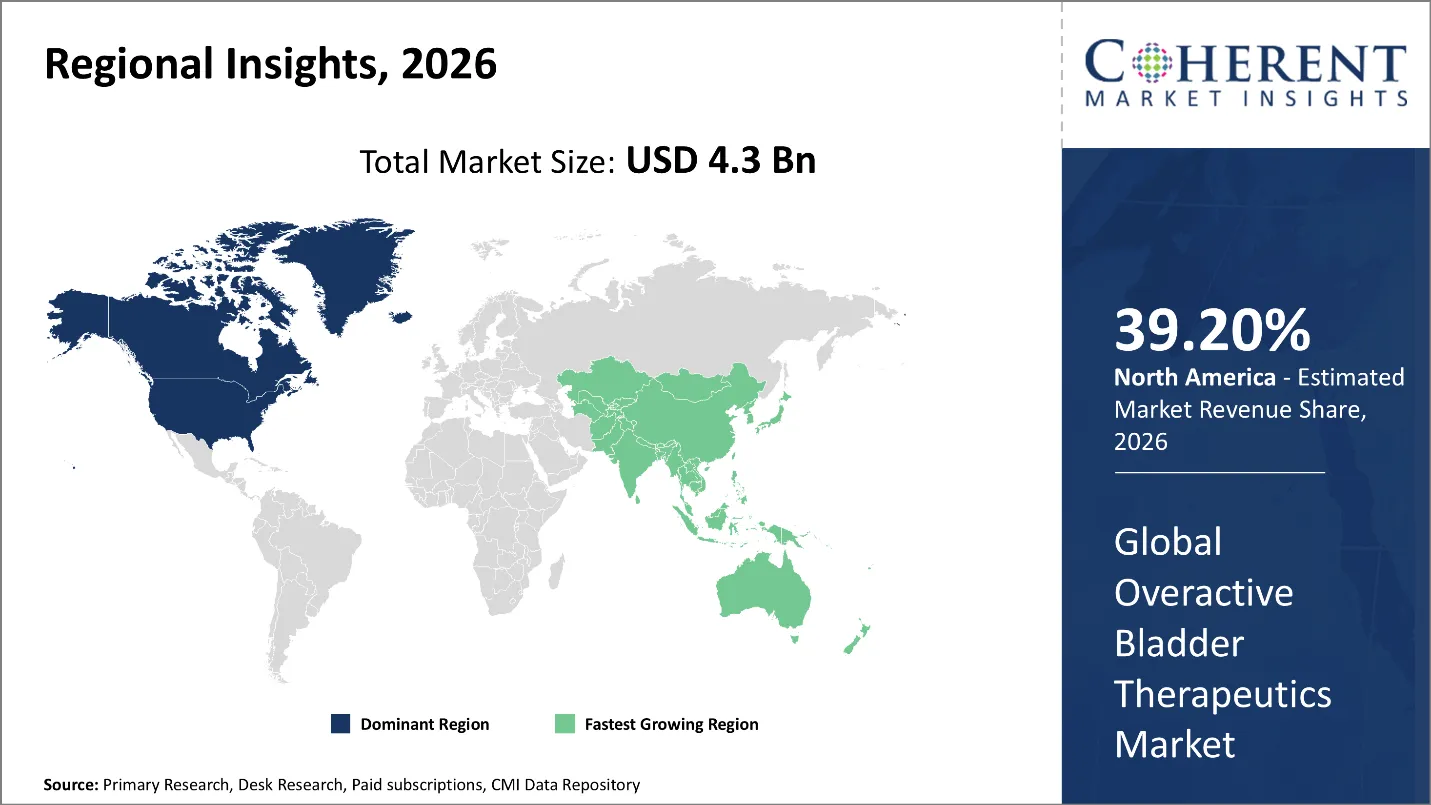
- North America is expected to acquire the dominant share of 39.2% in 2026 owing to the well-developed healthcare infrastructure.
Current Events and Their Impact on the Overactive Bladder Therapeutics Market
Current Event | Description and its Impact |
FDA Approval of Generic Mirabegron in the U.S. |
|
EU Authorization of Vibegron (Obgemsa) |
|
Segmental Insights
- Current Industry Events of 2026
- Market Size Estimation
- Regional Breakdown
- Competitive Landscape
- Customer Intelligence
- Segmental Analysis
- Pricing Analysis
- Key Market Drivers, Challenges & Future Trends
- Customized Insights Section
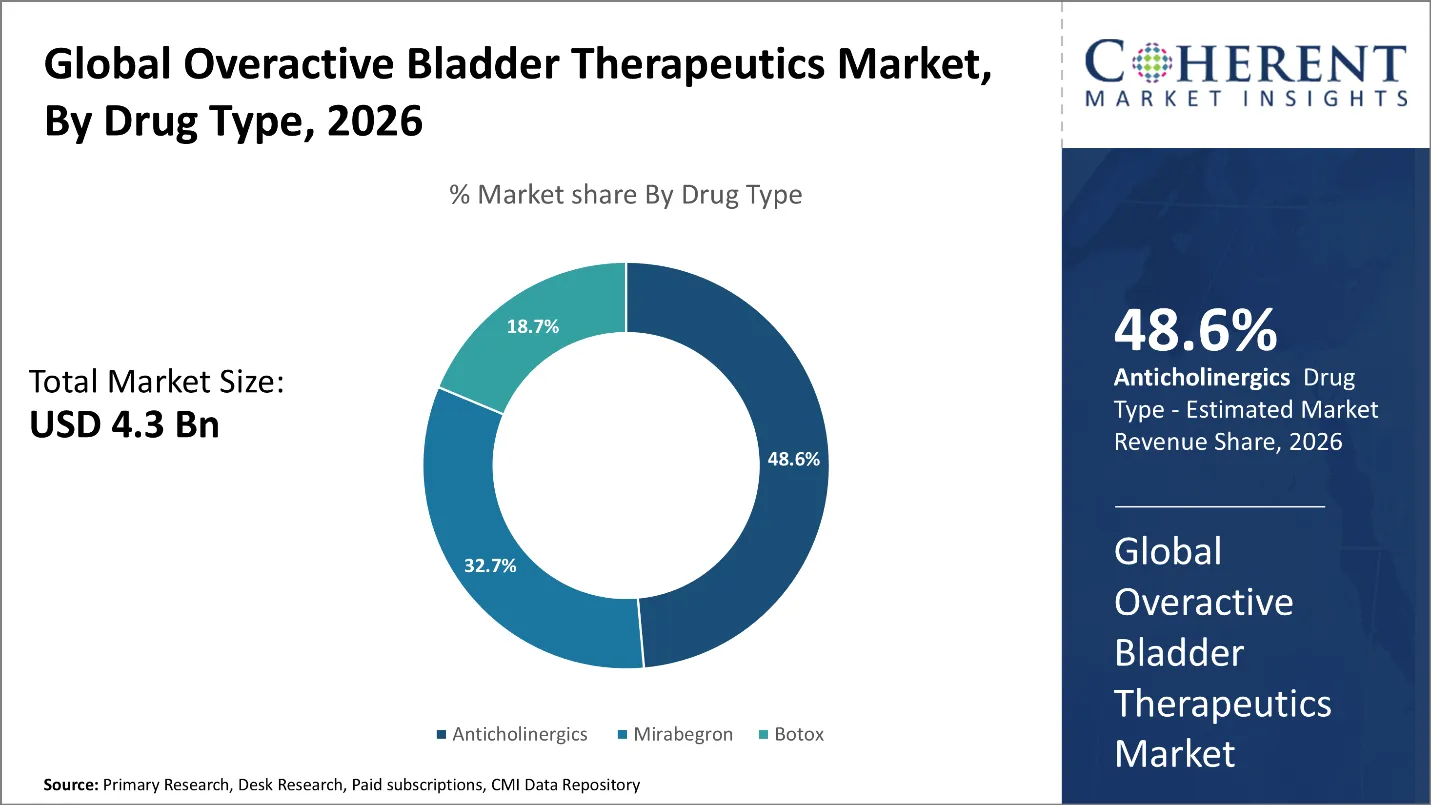
Why is Anticholinergics Acquiring the Largest Market Share?
Anticholinergics hold the largest market share of 48.6% in 2026. Healthcare professionals widely use anticholinergics to manage overactive bladder symptoms such as urinary urgency, frequency, and urge incontinence. Their long-established clinical use, widespread availability of generic formulations, and physician familiarity continue to support their adoption. As healthcare providers diagnose more cases of overactive bladder, particularly among aging populations, the demand for pharmacological treatment continues to expand. Furthermore, physicians can select from various formulations and treatment options to address individual patient needs, while greater awareness of OAB and its impact on quality of life further increases demand. Camber Pharmaceuticals has expanded its product portfolio with the addition of Dicyclomine Hydrochloride Capsules, USP. The company markets the capsules as an antispasmodic and anticholinergic (antimuscarinic) therapy for treating functional bowel disorders and irritable bowel syndrome.
Idiopathic Bladder Overactivity expected to hold largest market share
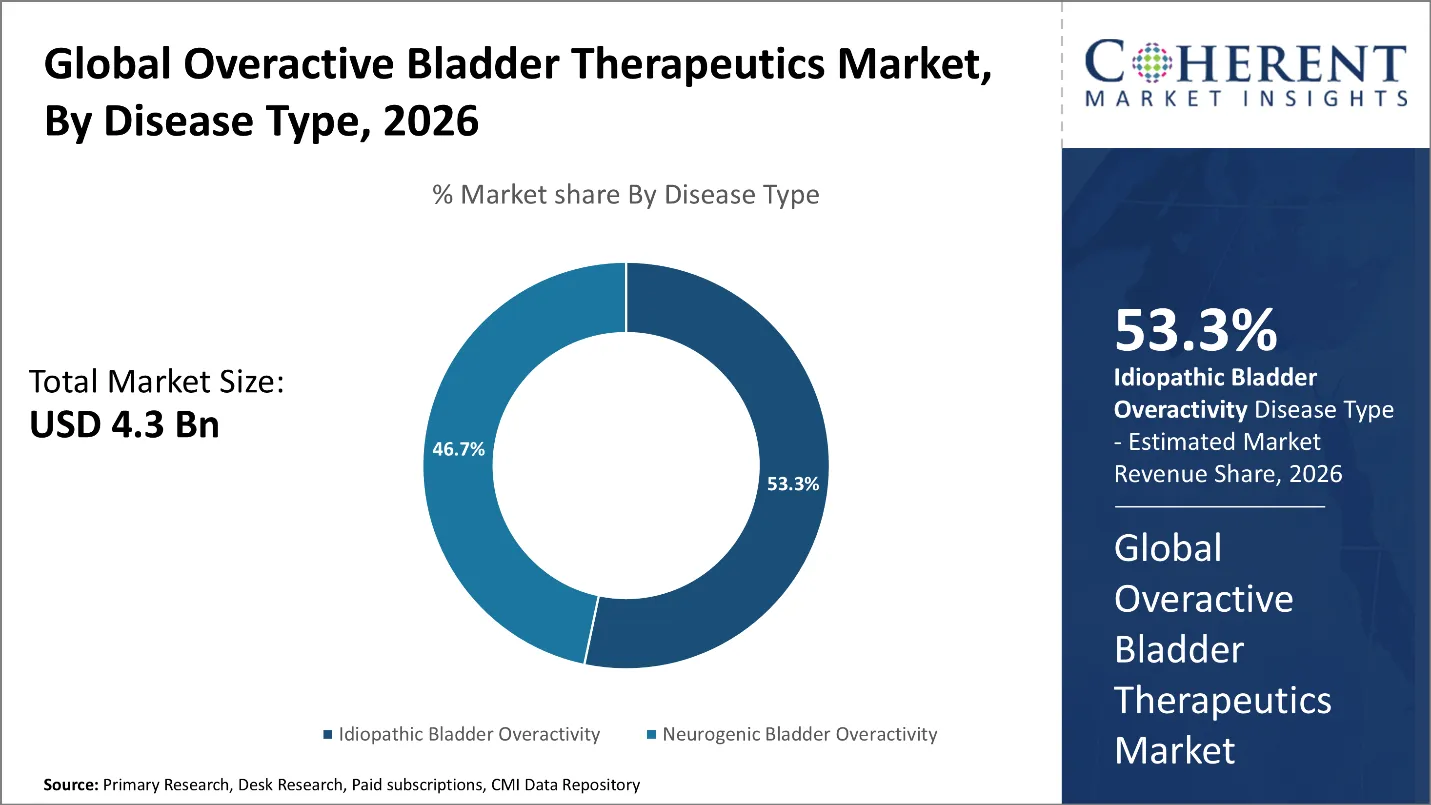
Idiopathic Bladder Overactivity expected to hold largest market share of 53.3% in 2026 owing to its expansion of treatment options. Idiopathic bladder overactivity expands the overactive bladder therapeutics market as more patients experience urinary urgency, frequency, and urge incontinence without an identifiable cause. By 2030, one in six people globally is projected to be aged 60 years or older, highlighting the accelerating global shift toward an ageing population. Healthcare providers diagnose these symptoms more frequently, prompting patients to seek appropriate treatment. An aging population increases the number of patients who require long-term symptom management. Greater awareness of bladder disorders and their effects on daily activities and quality of life also encourage treatment. Furthermore, pharmaceutical advances give physicians more options to manage persistent symptoms effectively. Urovant Sciences, a wholly owned subsidiary of Sumitovant Biopharma, Ltd., announced a partnership with actress and OAB patient Holly Robinson Peete. Through this collaboration, the company launched its Time To Go campaign, an educational initiative designed to raise awareness of overactive bladder and encourage greater understanding of the condition.
Which Distribution Channel segment dominates the market?
Hospital pharmacies acquired the prominent market share of 41.8% in 2026. Hospital pharmacies drive the Overactive Bladder Therapeutics Market by giving patients convenient access to prescription medicines and specialized treatment options. More hospital visits for urinary disorders and increased demand for urological care are boosting medication sales through these channels. Hospitals are expanding urology departments and outpatient services, which further increases pharmacy utilization. Moreover, pharmacists provide medication counseling and treatment monitoring, while improved healthcare infrastructure encourages patients to obtain OAB therapies from hospital pharmacies.
Overactive Bladder Therapeutics Market Trends
- Rising adoption of β3-adrenergic agonists: β3-adrenergic agonists such as mirabegron and vibegron are expanding pharmacological options for patients who cannot tolerate or do not respond adequately to antimuscarinic therapy. In June 2024, the European Commission authorized vibegron (Obgemsa) for symptomatic treatment of OAB in adults, adding another β3-agonist option to the European market.
- Aging population strengthening long-term treatment demand: OAB becomes increasingly prevalent with advancing age, creating a growing population requiring long-term symptom management. The World Health Organization projects that by 2030, 1 in 6 people globally will be aged 60 years or older, supporting the long-term relevance of therapies targeting age-associated urinary disorders.
- Increasing availability of generic therapies: In January 2026, the U.S. FDA approved its first generic mirabegron extended-release oral suspension, indicated for adult OAB with urgency, urinary frequency, and urge urinary incontinence, either alone or with solifenacin. Generic entry can increase treatment availability and introduce additional price competition into the U.S. market.
Regional Insights
North America dominates owing to growing focus on quality of life
North America is expected to acquire the dominant share of 39.2% in 2026. North America supports the Overactive Bladder Therapeutics Market through its large OAB patient population, aging demographics, and advanced healthcare infrastructure. By 2040, nearly 20% of the U.S. population is projected to be aged 65 years or older, compared with approximately 12.4% in 2000. Healthcare providers increasingly diagnose and treat urinary disorders, while widespread access to urologists and specialized services encourages therapy adoption. Pharmaceutical companies offer diverse prescription medicines and advanced treatment options across the region. Established reimbursement systems also improve patient access to therapies. Furthermore, rising healthcare expenditure, pharmaceutical research, and growing awareness of OAB and its effects on quality of life continue to strengthen market demand. Zydus Lifesciences launched 25 mg Mirabegron Extended-Release Tablets in the U.S. market to treat overactive bladder symptoms, including urge urinary incontinence, urgency, and increased urinary frequency.
Asia Pacific Overactive Bladder Therapeutics Market Trends
The Asia Pacific overactive bladder therapeutics market grows as the region’s aging population increases the demand for urinary disorder treatments and raises awareness of bladder health. Healthcare providers continue to improve infrastructure, expand access to urology specialists, and increase healthcare spending, encouraging more patients to seek diagnosis and treatment. Pharmaceutical companies are introducing advanced therapies, including beta-3 adrenergic agonists, while healthcare providers adopt minimally invasive options such as neuromodulation and botulinum toxin. Better reimbursement, patient education, and acceptance of long-term bladder management further drive market growth. NinaMED Pty Ltd launched in Australia with USD 13.75 million in financing led by SPRIM Global Investments. The company secured an exclusive license from EBT Medical to develop and commercialize the NiNA System, a non-invasive, drug-free, at-home therapy for overactive bladder.
United States Overactive Bladder Therapeutics Market Trends
The United States overactive bladder therapeutics market grows as the disease burden rises, awareness of urinary health expands, and patients seek effective pharmacological treatments. Healthcare providers widely use antimuscarinic medicines and beta-3 adrenergic agonists to manage symptoms, while treatment guidelines support their clinical use. Ongoing research advances therapeutic options, and improved diagnosis enables earlier treatment. Greater patient preference for noninvasive therapies and broader access to healthcare services also encourages the adoption of overactive bladder treatments across the United States Sumitomo Pharma America announced that the U.S. FDA approved GEMTESA (vibegron) 75 mg once daily for men with OAB symptoms who receive drug therapy for benign prostatic hyperplasia (BPH).
Japan Overactive Bladder Therapeutics Market Trends
Japan’s Overactive Bladder (OAB) therapeutics market is expanding as the country’s aging population increases demand for OAB diagnosis and treatment. Greater awareness of urinary health and improved diagnostic practices are encouraging more patients to seek care. Healthcare providers are also increasingly prescribing β3-adrenoceptor agonists, including mirabegron and vibegron, as concerns about anticholinergic side effects shape treatment decisions. Japanese prescribing trends indicate growing use of β3-agonists, while clinical guidelines encourage physicians to tailor treatment approaches to older patients.
Who are the Major Companies in Overactive Bladder Therapeutics Industry
Some of the major key players in Overactive Bladder Therapeutics are Pfizer Inc., Johnson & Johnson, Aurobindo Pharma Ltd., Astellas Pharma Inc., Merck & Co. Inc., Mylan NV, Teva Pharmaceutical Industries Ltd., Ono Pharmaceutical Co. Ltd., Allergan, AbbVie Inc., Sanofi, Cogentix Medical and Endo International Plc.
Key News
- In November 2025, Amara Therapeutics launched Dry Days Health, a virtual clinic focused on women with urinary incontinence. The women’s health company develops digital therapeutics and virtual care solutions for pelvic and bladder conditions, including overactive bladder.
Market Report Scope
Overactive Bladder Therapeutics Market Report Coverage
Report Coverage | Details | ||
Base Year: | 2025 | Market Size in 2026: | USD 4.3 Bn |
Historical Data for: | 2020 to 2024 | Forecast Period: | 2026 to 2033 |
Forecast Period 2026 to 2033 CAGR: | 5.1% | 2033 Value Projection: | USD 6.2 Bn |
Geographies covered: |
| ||
Segments covered: |
| ||
Companies covered: | Pfizer Inc., Johnson & Johnson, Aurobindo Pharma Ltd., Astellas Pharma Inc., Merck & Co. Inc., Mylan NV, Teva Pharmaceutical Industries Ltd., Ono Pharmaceutical Co. Ltd., Allergan, AbbVie Inc., Sanofi, Cogentix Medical and Endo International Plc. | ||
Analyst Opinion
- Overactive bladder therapeutics are increasingly being shaped by treatment efficacy and tolerability rather than simple disease prevalence. In Japan, a Phase III trial involving 1,232 patients demonstrated that vibegron 50 mg and 100 mg significantly improved micturition and other OAB symptoms versus placebo, while drug-related adverse events occurred in only 7.6% and 5.4% of patients, respectively, compared with 10.3% for imidafenacin. In our view, these outcomes strengthen the competitive position of β3-adrenoceptor agonists and are accelerating the shift away from traditional antimuscarinic therapy.
- Real-world evidence is now giving β3-agonists an important commercial advantage. A Japanese postmarketing survey covering 1,848 patients reported an effectiveness rate of 88.8%, while 7.63% experienced adverse drug reactions. Importantly, 75.35% achieved the minimal clinically important improvement in OAB symptom scores. We believe this real-world evidence is particularly significant because it demonstrates that clinical benefits can translate beyond controlled trials, supporting continued physician confidence in vibegron as a practical long-term treatment option.
- The strongest growth opportunity lies in therapies that can address difficult-to-treat patients without compromising tolerability. In a Japanese Phase III analysis, vibegron reduced urgency urinary incontinence episodes by 2.95 episodes per day with 50 mg and 3.28 episodes with 100 mg among patients with severe UUI, compared with a 2.10-episode reduction with placebo. The response rate exceeded 50%. This evidence, in our assessment, makes severe UUI an especially important therapeutic segment for β3-agonists, where measurable symptom reduction can directly influence treatment selection.
- Treatment persistence will remain a decisive competitive factor, and β3-agonists have demonstrated an advantage over antimuscarinics. Analysis of prescriptions for nearly 22,000 OAB patients found median discontinuation at 169 days for mirabegron, versus 30–78 days across evaluated antimuscarinic therapies; 12-month persistence reached 38% for mirabegron compared with 8–25% for antimuscarinics. In our opinion, this persistence differential is strategically important because OAB requires sustained symptom management, making tolerability and continued use as important as initial efficacy.
Speak to the analyst
Want personalized insights?
Take the findings above to one of our principal consultants, or have the report rebuilt around the segments, geographies and competitors you actually track.
Market Segmentation
- By Drug Type (Revenue, USD Bn, 2021-2033)
- Anticholinergics
- Oxybutynin
- Darifenacin
- Fesoterodine
- Solifenacin
- Tolterodine
- Trospium
- Mirabegron
- Botox
- Anticholinergics
- By Disease Type (Revenue, USD Bn, 2021-2033)
- Idiopathic Bladder Overactivity
- Neurogenic Bladder Overactivity
- By Distribution channel (Revenue, USD Bn, 2021-2033)
- Hospital pharmacies
- Retail pharmacies
- Online pharmacies
- By Region (Revenue, USD Bn, 2021-2033)
- North America
- U.S.
- Canada
- Latin America
- Brazil
- Mexico
- Argentina
- Rest of Latin America
- Europe
- Germany
- U.K.
- France
- Italy
- Spain
- Russia
- Rest of Europe
- Asia Pacific
- China
- India
- Japan
- Australia
- South Korea
- ASEAN
- Rest of Asia Pacific
- Middle East
- GCC
- Israel
- Rest of Middle East
- Africa
- South Africa
- Central Africa
- North Africa
- North America
Sources
Primary Research interviews
- Urologists and urogynecologists
- Hospital-based urology specialists
- Primary care physicians managing OAB patients
- Clinical pharmacists and hospital pharmacists
- Healthcare professionals specializing in urinary incontinence
- Pharmaceutical industry experts involved in OAB therapeutics
- Key opinion leaders in urology and lower urinary tract disorders
- Healthcare providers involved in minimally invasive OAB procedures
Databases
- PubMed / MEDLINE
- ClinicalTrials.gov
- Cochrane Library
- Embase
- FDA Drugs@FDA
- European Medicines Agency (EMA) databases
- World Health Organization (WHO) Global Health Observatory
- U.S. National Library of Medicine databases
- Japan Pharmaceuticals and Medical Devices Agency (PMDA) database
- Japan Medical Abstracts Society (Ichushi-Web)
Magazines
- Urology Times
- European Urology Today
- Urology News
- AUA News
- Medical News Today
- Pharmaceutical Executive
Journals
- The Journal of Urology
- European Urology
- Neurourology and Urodynamics
- International Urogynecology Journal
- Urology
- Journal of Clinical Medicine
- BJU International
- Nature Reviews Urology
- Therapeutic Advances in Urology
- International Journal of Urology
Newspapers
- The New York Times
- The Wall Street Journal
- The Guardian
- The Japan Times
- Nikkei Asia
- The Washington Post
- Reuters
Associations
- American Urological Association (AUA)
- Society of Urodynamics, Female Pelvic Medicine & Urogenital Reconstruction (SUFU)
- European Association of Urology (EAU)
- International Continence Society (ICS)
- International Urogynecological Association (IUGA)
- American Urogynecologic Society (AUGS)
- Urological Association of Asia (UAA)
- Japanese Urological Association (JUA)
Public Domain sources
- U.S. Food and Drug Administration (FDA)
- European Medicines Agency (EMA)
- National Institutes of Health (NIH)
- Centers for Disease Control and Prevention (CDC)
- Agency for Healthcare Research and Quality (AHRQ)
- National Institute for Health and Care Excellence (NICE)
- World Health Organization (WHO)
- National Center for Biotechnology Information (NCBI)
- U.S. National Library of Medicine
- Japan Ministry of Health, Labour and Welfare (MHLW)
- Pharmaceuticals and Medical Devices Agency (PMDA), Japan
- National Institute of Population and Social Security Research (IPSS), Japan
- Government statistical databases and national health surveys
- Clinical trial registries and regulatory approval records
Proprietary Elements
- CMI Data Analytics Tool
- Proprietary CMI Existing Repository of information for last 10 years
Get access to 250+ pages report
Every segment, forecast, competitor profile and data table behind the analysis above — available for instant download.
- ESOMAR Member
- ISO 9001:2015 Certified
- D-U-N-S Registered
- GDPR & CCPA Compliant
Missing comfort of reading report in your local language? Find your preferred language:
Transform your Strategy with Exclusive Trending Reports
Frequently Asked Questions
The Overactive Bladder Therapeutics Market is anticipated to grow at a CAGR of 5.1% with USD 4.3 Bn in 2026 and is expected to reach USD 6.2 Bn in 2033.
The market is primarily driven by the aging population, increasing diagnosis of overactive bladder, and rising adoption of β3-adrenoceptor agonists and minimally invasive therapies.
Anticholinergics are identified as the leading drug type in the provided market assessment, supported by their long-established clinical use, and established role in managing urinary urgency, and urge incontinence.
β3-adrenoceptor agonists are gaining attention because they provide an alternative to anticholinergic therapy, particularly for patients and physicians concerned about anticholinergic adverse effects and long-term tolerability.
Idiopathic bladder overactivity represents the leading disease-type segment in the provided assessment.
Hospital pharmacies benefit from their integration with urology departments, outpatient services, specialist consultations, and prescription-based treatment.