

Global Pediatric Healthcare Market Size and Forecast – 2026 to 2033
According to Coherent Market Insights, the Global Pediatric Healthcare Market is estimated to be valued at USD 16.61 Bn in 2026 and is expected to reach USD 22.01 Bn by 2033, exhibiting a compound annual growth rate (CAGR) of 4.1% from 2026 to 2033. This steady growth reflects increasing investments in child-specific healthcare infrastructure, rising prevalence of pediatric diseases, and advancements in pediatric medical technologies aimed at improving diagnosis, treatment, and overall pediatric health outcomes worldwide.
Key Takeaways of the Pediatric Healthcare Market
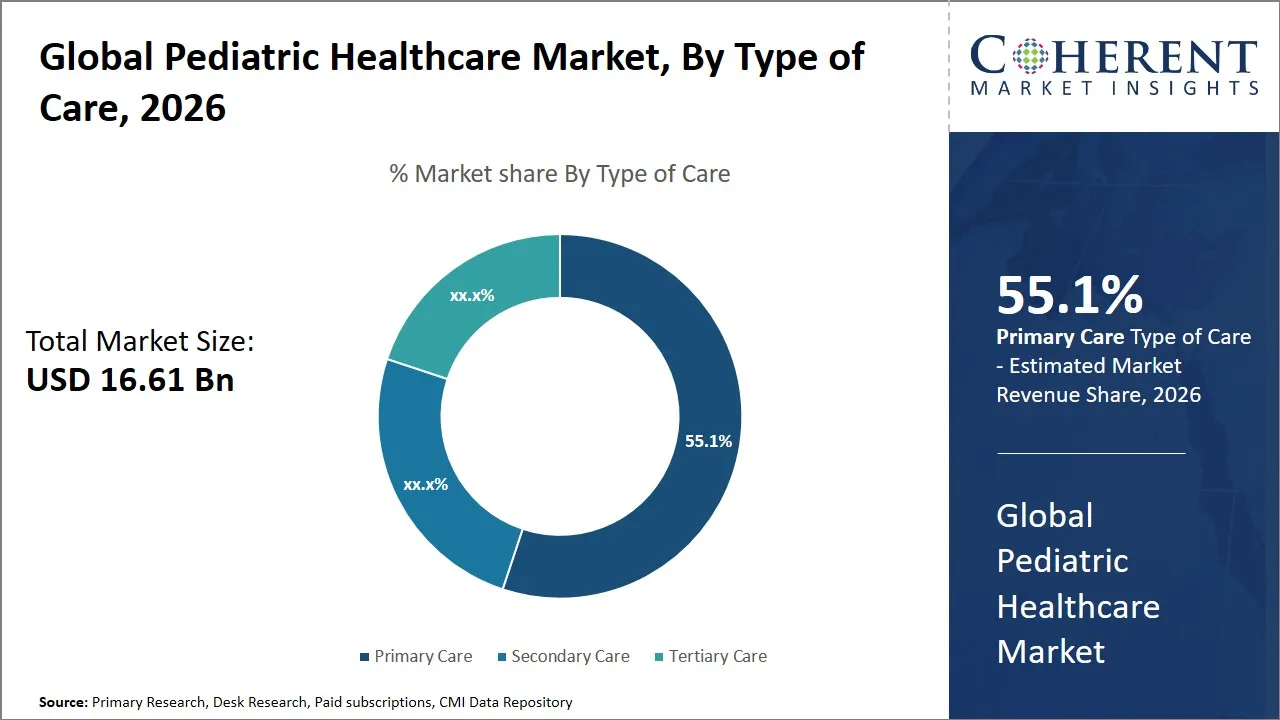
- In 2026, primary care is expected to contribute the largest share of the global pediatric healthcare market, accounting 55.1% of the market share
- Based on therapeutic area, the infectious diseases segment will hold the dominant share, representing 24.5% of the market.
- Additionally, the neonatal segment (0-28 days) segment will lead the global pediatric healthcare market, with the highest share of 35.8% in 2026.
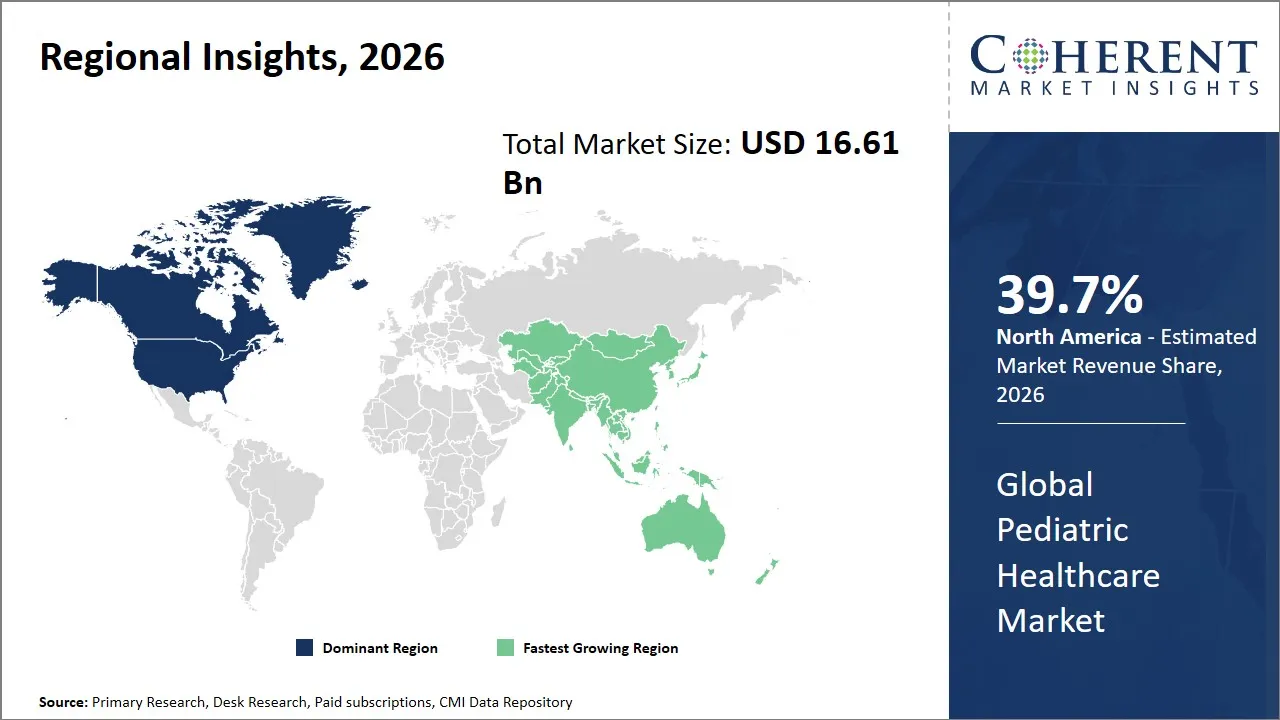
- North America is expected to lead the market, holding a share of 39.7% in 2026. Asia Pacific is anticipated to be the fastest-growing region, with 24.5% share in 2026.
Market Overview
- Key market trends indicate a growing emphasis on personalized pediatric care, driven by innovations in biotechnology and digital health solutions such as telemedicine and AI-powered diagnostics.
- Additionally, there is a strong rise in awareness among caregivers and healthcare professionals about early intervention and preventive healthcare for children, alongside expanding government initiatives promoting child health.
- These developments collectively contribute to the evolving dynamics of the pediatric healthcare market, making it more patient-centric and technologically advanced.
Currents Events and Its Impacts
Current Events | Description and its Impact |
AI Governance & Adoption Challenges in Pediatric Healthcare |
|
Expansion of Pediatric Specialty Care Networks |
|
Segmental Insights
- Current Industry Events of 2026
- Market Size Estimation
- Regional Breakdown
- Competitive Landscape
- Customer Intelligence
- Segmental Analysis
- Pricing Analysis
- Key Market Drivers, Challenges & Future Trends
- Customized Insights Section
How is increased access to primary care improving early childhood health outcomes?
By type of care, primary care will have the largest share of the global pediatric healthcare market (55.1% in 2026) because it provides a basic foundation of early diagnosis, regular maintenance of health, and preventive care of children.
Primary care represents the first point of contact with pediatric patients that is used to treat common childhood diseases, immunizations, track growth, and development indicators, as well as parental counseling. Such a wide range of services would make it viable to sustain patient interaction between the neonates and adolescents and hence continuous demand and market share in this category.
In June 2024, Pediatric Associates, the largest private pediatric primary care group in the U.S., partnered with Innovaccer, a leading AI healthcare platform. Innovaccer’s AI-powered population health management solution will help pediatric associates improve care coordination and manage health outcomes for over 1.5 million children across seven states.
Why Do Infectious Diseases Lead the Demand in the Pediatric Therapeutic Market?
By therapeutic area, the infectious diseases segment is expected to occupy the highest position in the pediatric healthcare market with a share of 24.5% in 2026, because children have a high susceptibility to a wide range of diseases.
Children especially the younger patients, such as neonates and infants, have immature immune systems that predispose them to various bacterial, viral, and parasitic infections. Continued prevalence of diseases such as pneumonia, diarrheal infections, measles, and respiratory infections drives significant demand for both preventive and therapeutic interventions.
Neonatal (0-28 days) Segment Dominates the Pediatric Healthcare Market
The neonatal (0-28 days) segment has the largest market share in the global pediatric healthcare market and is projected to account for 35.8% in 2026 because of the high-intensive care and vulnerability levels connected with the period of the critical stage of life. Infants have a distinct group of health conditions such as problems related to premature birth, congenital malformations, perinatal infections, and respiratory distress syndromes which necessitate specialized healthcare measures.
The necessity to provide neonatal intensive care units (NICUs) to the population, advanced monitoring devices, and customized medicines brings up and up this division, which ultimately leads to the development and prevalence of this area.
Telemedicine and Remote Monitoring: Revolutionizing Pediatric Healthcare
- Telemedicine and remote monitoring are revolutionizing pediatric healthcare by providing accessible care, especially in underserved areas. These technologies enable real-time consultations and continuous health monitoring, improving early detection and reducing hospital visits. Remote tools, like wearable devices, track vital signs and help in managing chronic conditions, offering a more efficient care model.
- These innovations also support personalized care, giving parents peace of mind by allowing them to monitor their child's health from home. With faster interventions and continuous management of conditions like asthma or diabetes, telemedicine and remote monitoring are enhancing clinical outcomes and shaping the future of pediatric care.
- In October 2025, Amazon One Medical, a global virtual healthcare platform, launched a telehealth service for pediatric care. The service allows parents to connect with licensed clinicians for common childhood conditions through message-based or video consultations. The platform covers conditions like pink eye, rashes, and asthma, with visits priced at USD 29 for messages and USD 49 for video calls. No membership is required, and prescriptions can be filled through Amazon Pharmacy or the patient’s pharmacy.
Regional Insights
North America Pediatric Healthcare Market Analysis and Trends
In 2026, the global pediatric healthcare market will be controlled by North America, which will hold 39.7% of its total share. This is guided by its well-developed medical facilities, high level of research and development, and the large government investment in child health. The U.S., where progressive health policies are in place, including the Children Health Insurance Program (CHIP), and the Affordable Care Act, is more accessible to the pediatric services.
The existence of large pharmaceutical and medical equipment firms such as Johnson and Johnson, Pfizer and Medtronic support innovation and holistic provision of care to the underserved pediatric population. Also, the area is advantaged by a dense knot of specialized children hospitals and research centers that spur the market development.
On January 12, 2026, Texas Children’s Hospital, a leader in pediatric healthcare, launched Austin’s first pediatric helicopter, enhancing critical care accessibility. The Kangaroo Crew helicopter, equipped with advanced medical technology, provides ICU-level care during transport. It serves Central and West Texas, reaching up to 120 nautical miles, improving response times for pediatric and neonatal care.
Asia Pacific Pediatric Healthcare Market Analysis and Trends
Asia Pacific will be the fastest growing market in the pediatric healthcare industry with a 24.5% market share in 2026. The factors that promote this increase include the development of a better healthcare system, the rise in pediatric health awareness, and increase in government child welfare and immunization programs. Other nations such as China and India are also experiencing large-scale public and private partnerships, which are increasing the scope of pediatric services.
It is also due to the burgeoning middle class and urbanization in the region that leads to the need for sophisticated technology and treatments in pediatrics. There is an active expansion of pediatric portfolios by notable multinational corporations that include Roche, GlaxoSmithKline, and local companies such as Lupin and Sun Pharmaceutical Industries into its portfolio.
Global Pediatric Healthcare Market Outlook for Key Countries
What are the Current Growth Drivers in the U.S. Pediatric Healthcare Market?
The U.S. is the pillar of the pediatric healthcare market owing to its well-developed healthcare infrastructure and enormous funding in child health research and development. Large pharmaceutical and biotech companies like Pfizer and AbbVie are very much involved in creating pediatric formulations and vaccines.
Also, major pediatric hospitals such as the Boston Children’s Hospital and St. Jude Children’s Research Hospital are also fueling clinical excellence as well as research and development. The policies of the government include immunization and care of children with cancer and rare diseases in children which guarantee thorough coverage and market base.
What Drives the Growth of the Pediatric Healthcare Market in Germany?
The pediatric healthcare market in Germany partially prospers due to the developed healthcare ecosystem and standards of medical care. The statutory health insurance system in the country guarantees extensive insurance of pediatric healthcare. Companies such as Bayer and BioNTech are playing an important role in child innovation, particularly in vaccines and new drug development.
Germany is also the leader in clinical trials and regulatory debate in the European Union through which it is a gateway to the wider regional acceptance of pediatric healthcare products. Well established public- private alliances also facilitate the production of modern pediatric medical equipment and treatments.
China Pediatric Healthcare Market Trends
The pediatric healthcare market in China can be described as one experiencing a booming growth due to massive government investments in the growth of pediatric hospitals and child health programs. Increasing interests of the country in the programs of immunization of pediatric patients and the management of chronic diseases contributes to the increasing demand for innovative medicines and diagnostics.
Firms like Hutchison China Meditech and Sino Biopharmaceutical are becoming more active, as well as the multinationals are increasing their presence. New regulatory changes that target accelerating drug approvals and streamlining market access to treatments that are specific to pediatrics are also highly promising.
India Pediatric Healthcare Market Trends
India has been in the forefront on market potential, which is pursued by an enormous and youthful populace, increased spending on healthcare, and broadened public health programs to maternal and child health. Immunization campaigns and nutrition programs have promoted an emerging pediatric healthcare ecosystem by the government.
These growths are added by major domestic players, such as Dr. Reddy Labs and Cipla, which specialize in low-cost pediatric preparations. The role of the private sector, which involves hospitals like Apollo Children Hospital is crucial in expanding access to specialized care in the field of childhood. Rural healthcare delivery and telemedicine expansion are other areas that offer avenues with regard to enhanced coverage of pediatric healthcare.
Market Players, Key Developments, and Competitive Intelligence
Key Developments
- In March 2025, Connecticut Children’s, a leading pediatric healthcare provider in Connecticut, partnered with Xerox, a technology innovator, to introduce AI-driven solutions in pediatric healthcare. The partnership aims to improve emergency department efficiency, predict cardiotoxicity risks in pediatric oncology, and enhance census forecasting. AI tools will streamline care delivery, optimize resource allocation, and improve patient outcomes. Xerox will also be the sole print technology provider for Connecticut Children’s new clinical tower set to open later in 2025.
- In February 2025, Babynama, India’s first digital pediatric care platform, secured USD 700,000 in seed funding to expand its tech infrastructure and pediatric team. The funding, led by Good Capital, includes participation from investors such as Mr. Abhishek Gupta (Founder, Fashinza), Mr. Ankit Gupta (Founder, Bicycle Health), and Mr. Dhruv Dhanraj Bahl (Ex-COO, BharatPe). Babynama, founded in 2022 by Dr. Sumitra Meena and Ashish Meena, aims to make pediatric care accessible, affordable, and convenient for parents.
- In November 2024, Zarminali Pediatrics, a new outpatient pediatric care provider, secured USD 40 Mn in seed funding led by General Catalyst. The company’s innovative model combines primary and specialty care with advanced technology to improve patient and clinician experiences. Founded Mr. Mr. Danish Qureshi, former President and COO of LifeStance Health, Miss Zarminali aims to address the fragmented pediatric care system and reduce clinician burnout.
- In July 2023, Apollo Hospitals Group launched its new brand, Apollo Children’s, to redefine pediatric healthcare in India. Building on its 40-year legacy, Apollo Children’s is India’s largest and most comprehensive pediatric care network, with over 40 hospitals, 900+ pediatric beds, and 400+ specialized pediatricians across 25+ specialties. The brand will provide advanced interventions for complex pediatric conditions, including congenital disorders, liver transplants, cardiac surgeries, and oncology.
Top Strategies Followed by Global Pediatric Healthcare Market Players
Player Type | Strategic Focus | Examples |
Established Market Leaders | Focus on large-scale production, international expansion, and acquiring patents to dominate the market. They prioritize building extensive distribution networks and investing in cutting-edge pediatric care technologies to enhance product efficacy and safety. | Companies like Johnson & Johnson and Pfizer lead the market by creating partnerships with healthcare providers and expanding their pediatric care portfolios. These companies focus on delivering high-quality products, enhancing patient outcomes, and extending their reach into emerging markets. |
Mid-Level Players | Develop cost-effective, targeted solutions for specific pediatric healthcare needs, often partnering with healthcare providers or tech innovators to improve care delivery. | Mid-level players such as Medtronic and Becton Dickinson collaborate with hospitals and specialized clinics to provide specialized pediatric care solutions, focusing on affordable and reliable products that meet specific medical requirements, including pediatric monitoring devices and surgical tools. |
Small-Scale Players | Focus on niche pediatric needs and developing innovative, often highly tailored products designed to address specific conditions in children, utilizing technologies like AI, wearables, and telemedicine. | Small players, such as Owlet and BioTherapeutics, focus on innovative pediatric health solutions, using cutting-edge technology like AI-driven monitoring devices and telemedicine platforms to provide personalized care and monitoring for infants and young children with chronic conditions. |
Market Report Scope
Pediatric Healthcare Market Report Coverage
| Report Coverage | Details | ||
|---|---|---|---|
| Base Year: | 2025 | Market Size in 2026: | USD 16.61 Bn |
| Historical Data for: | 2020 To 2024 | Forecast Period: | 2026 To 2033 |
| Forecast Period 2026 to 2033 CAGR: | 4.1% | 2033 Value Projection: | USD 22.01 Bn |
| Geographies covered: |
| ||
| Segments covered: |
| ||
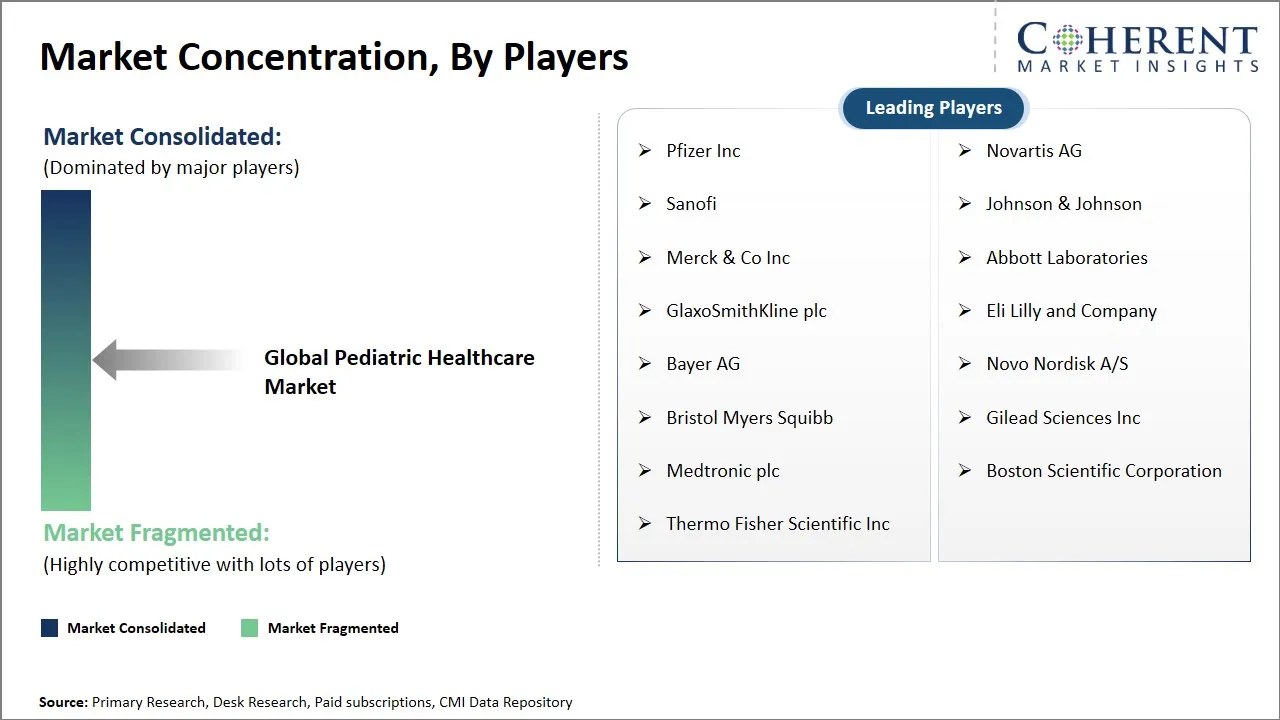
| Companies covered: | Pfizer Inc, Novartis AG, Sanofi, Johnson & Johnson, Merck & Co Inc, Abbott Laboratories, GlaxoSmithKline plc, Eli Lilly and Company, Bayer AG, Novo Nordisk A/S, Bristol Myers Squibb, Gilead Sciences Inc, Medtronic plc, Boston Scientific Corporation, and Thermo Fisher Scientific Inc | ||
| Growth Drivers: |
| ||
| Restraints & Challenges: |
| ||
Pediatric Healthcare Market Dynamics
Pediatric Healthcare Market Driver - Rising Prevalence of Pediatric Chronic Diseases
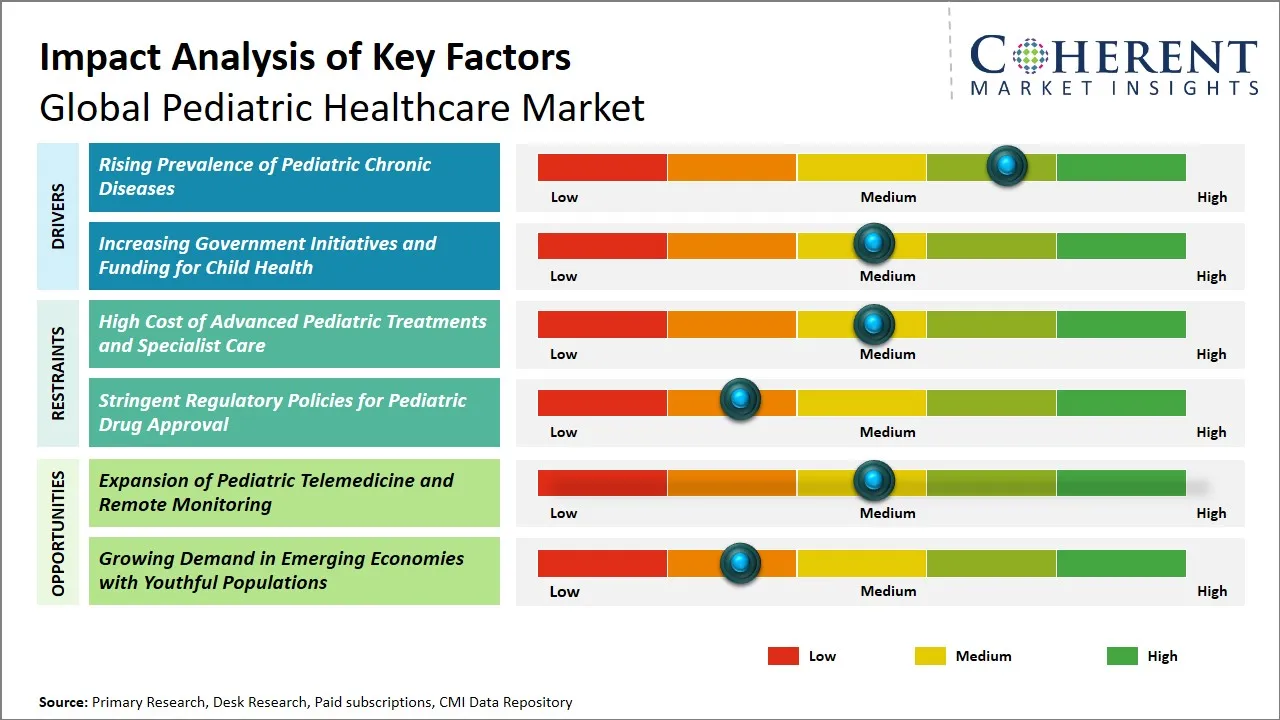
The rising prevalence of chronic diseases in children all over the world is one of the influential forces that can determine the market for pediatric healthcare. There has been an increasing incidence in conditions like asthma, diabetes, congenital heart disorders, and obesity during childhood, which has been brought about by factors such as genetic predisposition, exposure to an environment, as well as lifestyle modifications. These amplified chronic diseases will require constant healthcare services and constant care of the patient, special treatment and constant monitoring, thus creating the need to expand the services and products of pediatric healthcare.
New diagnostic equipment and higher sensitivity of the caregivers have also played a role in the earlier diagnosis and management of these long-term illnesses. The chronic conditions of children require long-term integrated care, involving specialized pediatricians, nurses, and other healthcare professionals. This need for ongoing care stimulates innovation and investment in pediatric healthcare infrastructure.
In March 2025, new research revealed that the prevalence of pediatric chronic diseases has risen to nearly 30% over the past 20 years. The study, from UCLA, estimates that 25 million young people, ages 5 to 25, now live with chronic conditions or functional limitations, with a significant rise in conditions such as ADHD/ADD, autism, asthma, prediabetes, and depression/anxiety.
Pediatric Healthcare Market Opportunity - Expansion of Pediatric Telemedicine and Remote Monitoring
The development of pediatric telemedicine and remote monitoring is one of the biggest opportunities in the international market for pediatric healthcare. The ever-growing digital health technologies, alongside the rise in the rate of internet penetration and smartphone use, has led to more convenient and efficient healthcare delivery to children.
Telemedicine helps pediatricians offer consultations, diagnostics, and follow-ups without the need to travel to different geographical locations, which is geographically challenging especially in underserved or rural regions where specialized pediatric services are scarce. Wearable health trackers and connected medical devices are examples of remote monitoring devices that enable constant monitoring of vital signs, chronic conditions, and treatment compliance among children and provide the opportunity to implement timely interventions and tailored care.
In November 2025, Owlet, a pioneer in smart infant monitoring, partnered with Locus Health, a leader in remote patient monitoring, to integrate Owlet’s U.S. FDA-cleared BabySat device into Locus Health’s platform. This collaboration enables healthcare providers to access critical infant health data remotely after hospital discharge, enhancing care continuity and supporting families.
Analyst Opinion (Expert Opinion)
- The pediatric healthcare market is growing rapidly due to technological advancements, increased regulatory support, and a rising demand for specialized care. Digital health solutions, such as telemedicine and AI-driven diagnostics, have made pediatric care more accessible and efficient, especially with the rising prevalence of chronic conditions like asthma and ADHD. Governments and healthcare organizations are increasingly focusing on improving child health outcomes, opening opportunities for innovative solutions in care delivery.
- Despite growth, challenges remain, including disparities in healthcare access and a shortage of trained professionals. Conferences like the Pediatric Health Summit and the International Pediatric Conference have been key in discussing these challenges and showcasing new advancements. Real-world collaborations, such as Owlet’s partnership with Locus Health, are demonstrating the impact of technology in improving care continuity for infants, and such initiatives are expected to shape the market's future.
Speak to the analyst
Want personalized insights?
Take the findings above to one of our principal consultants, or have the report rebuilt around the segments, geographies and competitors you actually track.
Market Segmentation
- Type of Care Insights (Revenue, USD Bn, 2021- 2033)
- Primary Care
- Secondary Care
- Tertiary Care
- Therapeutic Area Insights (Revenue, USD Bn, 2021- 2033)
- Infectious Diseases
- Respiratory Disorders (asthma allergies)
- Cardiology
- Neurology/Neurological Disorders
- Oncology
- Gastroenterology
- Allergy and Immunology
- Others (genetic metabolic mental health)
- Age Group Insights (Revenue, USD Bn, 2021- 2033)
- Neonates (0-28 days)
- Infants (1-23 months)
- Children (2-11 years)
- Adolescents (12-18 years)
- Product Type Insights (Revenue, USD Bn, 2021- 2033)
- Pharmaceuticals
- Medical Devices
- Therapeutic Services
- Nutritional Products
- Sales Channel Insights (Revenue, USD Bn, 2021- 2033)
- Online
- Offline
- End User Insights (Revenue, USD Bn, 2021- 2033)
- Hospitals
- Clinics
- Home Care
- Others (Pharmacies)
- Regional Insights (Revenue, USD Bn, 2021- 2033)
- North America
- U.S.
- Canada
- Latin America
- Brazil
- Argentina
- Mexico
- Rest of Latin America
- Europe
- Germany
- U.K.
- Spain
- France
- Italy
- Russia
- Rest of Europe
- Asia Pacific
- China
- India
- Japan
- Australia
- South Korea
- ASEAN
- Rest of Asia Pacific
- Middle East
- GCC Countries
- Israel
- Rest of Middle East
- Africa
- South Africa
- North Africa
- Central Africa
- North America
- Key Players Insights
- Pfizer Inc
- Novartis AG
- Sanofi
- Johnson & Johnson
- Merck & Co Inc
- Abbott Laboratories
- GlaxoSmithKline plc
- Eli Lilly and Company
- Bayer AG
- Novo Nordisk A/S
- Bristol Myers Squibb
- Gilead Sciences Inc
- Medtronic plc
- Boston Scientific Corporation
- Thermo Fisher Scientific Inc
Sources
Primary Research Interviews
Industry Stakeholders List
- Pediatricians
- Healthcare Providers
- End Users List
- Parents
- Caregivers
Government and International Databases
- World Health Organization (WHO)
- Centers for Disease Control and Prevention (CDC)
- National Institutes of Health (NIH)
- European Commission
- United Nations Children's Fund (UNICEF)
- National Health Service (NHS)
Trade Publications
- Pediatrics Journal
- Journal of Pediatric Healthcare
- Pediatric Infectious Disease Journal
- American Journal of Pediatric Care
- Pediatric Diabetes Journal
- Journal of Pediatric Surgery
Academic Journals
- The Lancet Child & Adolescent Health
- Pediatric Research
- Journal of Pediatric and Adolescent Gynecology
- Journal of Pediatrics
- Early Human Development
- Journal of Pediatric Nursing
Reputable Newspapers
- The New York Times - Health Section
- The Guardian - Health
- Washington post-Health
- The Wall Street Journal - Health
- BBC News - Health
- The Times of India - Health
Industry Associations
- American Academy of Pediatrics (AAP)
- Pediatric Infectious Diseases Society (PIDS)
- International Pediatric Association (IPA)
- National Association of Pediatric Nurse Practitioners (NAPNAP)
- Pediatric Nursing Certification Board (PNCB)
- Global Pediatric Education Consortium (GPEC)
Public Domain Resources
- HealthData.gov
- PubMed Central
- Open Data Network
- Data.gov
- National Health Service (NHS) Open Data
- World Bank Data
Proprietary Elements
- CMI Data Analytics Tool: Proprietary analytics tool to analyze real-time market trends, consumer behavior, and technology adoption in market
- Proprietary CMI Existing Repository of Information for Last 8 Years
Get access to 250+ pages report
Every segment, forecast, competitor profile and data table behind the analysis above — available for instant download.
- ESOMAR Member
- ISO 9001:2015 Certified
- D-U-N-S Registered
- GDPR & CCPA Compliant
Missing comfort of reading report in your local language? Find your preferred language:
Transform your Strategy with Exclusive Trending Reports
Frequently Asked Questions
The global pediatric healthcare market is estimated to be valued at USD 16.61 Bn in 2026 and is expected to reach USD 22.01 Bn by 2033.
The CAGR of global pediatric healthcare market is projected to be 4.1% from 2026 to 2033.
Rising prevalence of pediatric chronic diseases and increasing government initiatives and funding for child health are the major factors driving the growth of global pediatric healthcare market.
High cost of advanced pediatric treatments and specialist care and stringent regulatory policies for pediatric drug approval are the major factors hampering the growth of the global pediatric healthcare market.
In terms of type of care, primary care is estimated to dominate the market revenue share in 2026.
Pfizer Inc, Novartis AG, Sanofi, Johnson & Johnson, Merck & Co Inc, Abbott Laboratories, GlaxoSmithKline plc, Eli Lilly and Company, Bayer AG, Novo Nordisk A/S, Bristol Myers Squibb, Gilead Sciences Inc, Medtronic plc, Boston Scientific Corporation, and Thermo Fisher Scientific Inc are the major players.
North America is expected to lead the global pediatric healthcare market in 2026.