

Global Permaculture Farming Market Size and Forecast – 2026 To 2033
The Global Permaculture Farming Market is estimated to be valued at USD 721.4 Mn in 2026, and is projected to reach USD 1,604.8 Mn by 2033, at a CAGR of 12.1% during 2026-2033. Market growth is driven by increasing interest in regenerative agriculture, soil restoration, water-efficient cultivation and naturally grown food products. Permaculture farming combines multiple crops, agroforestry and ecological resource management to improve farm resilience and reduce reliance on external agricultural inputs.
Government-supported demonstration projects and farmer training programmers are also creating opportunities for wider commercial adoption. In August 2025, the U.S. Department of Agriculture's published grant documentation identified a USD 100,000 project budget for developing a permaculture, agroforestry, and alley-cropping farm model in Maine. The initiative aims to demonstrate diversified farm production and economically viable cultivation practices.
Key Takeaways of the Global Permaculture Farming Market
- Vegetables and Herbs are projected to grow at a CAGR of 12.4% during 2026-2033, and are projected to represent 35.3% of the global permaculture farming market revenue in 2026. Frequent harvest cycles help cash flow in the USD 721.4 million global market. In August 2025, Andando reported that its permaculture garden in Senegal, led by women, produced lettuce, peppers, tomatoes and other vegetables for household consumption and commercial sale.
- Agroforestry and Food Forests are projected to grow at a CAGR of 13.4% during 2026-2033 and will account for 37.2% of the global permaculture farming market in 2026. The mixture of fruit trees with annual crops increases the number of harvests and improves productivity of land. In March 2025, Permaculture Australia documented Mkulima Sasa’s syntropic agroforestry demonstration plot in Kenya, where a variety of different tree species were grown with vegetables and ground crops.
- Small Farms (Below 5 Hectares) are expected to grow at an estimated CAGR of 11.8% between 2026 and 2033 and will account for 40.2% of the global permaculture farming market revenue in 2026. Smaller pieces of land allow for phased investment, efficient recycling of inputs and cultivation in the local context. In August 2025, Pamoja Africa launched a permaculture training program for small-scale farmers in Kenya on soil management, seed selection, planting techniques and agroforestry practices.
- Asia Pacific is projected to witness an estimated CAGR of 12.2% over the forecast period of 2026–2033, holding its dominant position with 36.6% of the global permaculture farming market in 2026. Existing smallholder networks and locally adapted farming practices support regional participation. India’s Ministry of Agriculture in August 2026 noted the growth of natural farming clusters, and agroforestry and integrated farming programs, thereby improving the enabling environment for permaculture adoption.
- Europe is projected to record an estimated CAGR of 14.1% between 2026 and 2033 and will be the fastest growing region with 26.4% global permaculture farming market share in 2026. Commercial adoption by means of project finance, technical advisory services and differentiated food marketing support. In March 2025, the European Commission’s CINEA announced that the Farm LIFE project helped facilitate the adoption of agroforestry in six locations in the Netherlands and Belgium.
Segmental Insights
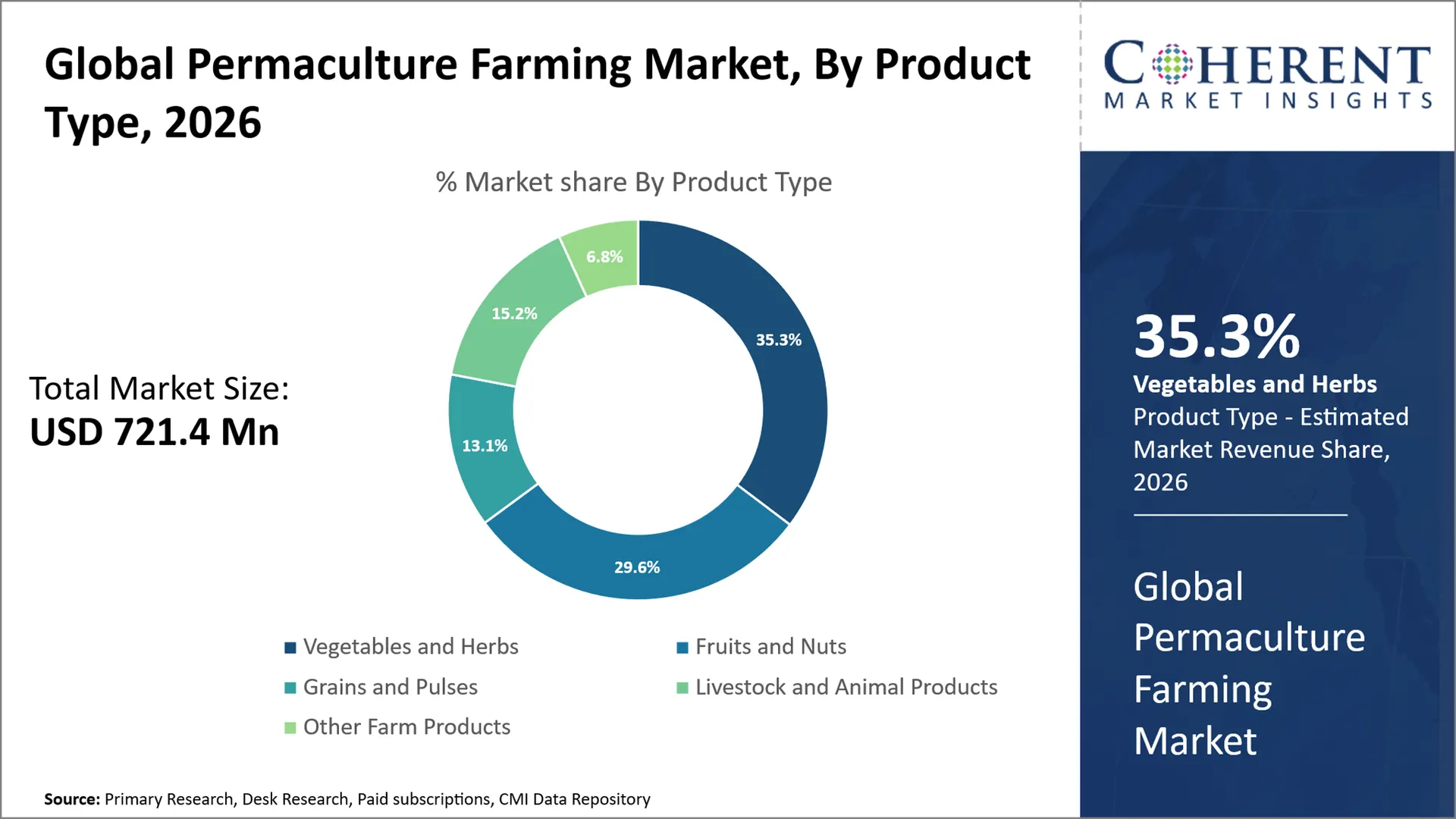
Why Do Vegetables and Herbs Dominate the Global Permaculture Farming Market?
Vegetables and Herbs are expected to account for 35.3% of the global permaculture farming market in 2026 because their planting schedules can be adjusted to local food requirements without redesigning an entire farm. Compact beds are effective for culinary herbs, leafy greens and seasonal vegetables, allowing producers to tailor crop mixes for community kitchens, hospitality businesses and home use. Available seed varieties, specific irrigation and easy propagation methods are supported by different planting programs. The commercial benefit for producers is in the alignment of varieties and quantities at harvest to known end users, but for perishable crops, timely handling is still key. In May 2025, the American India Foundation documented a permaculture farm in Punjab cultivating vegetables and herbs alongside orchard crops. The farm’s marketing of agricultural products through online sales, farm visits and restaurant buyers also showed the commercial potential of diversified cultivation.
- Current Industry Events of 2026
- Market Size Estimation
- Regional Breakdown
- Competitive Landscape
- Customer Intelligence
- Segmental Analysis
- Pricing Analysis
- Key Market Drivers, Challenges & Future Trends
- Customized Insights Section
Why Do Agroforestry and Food Forests Represent the Largest Farming System in the Global Permaculture Farming Market?
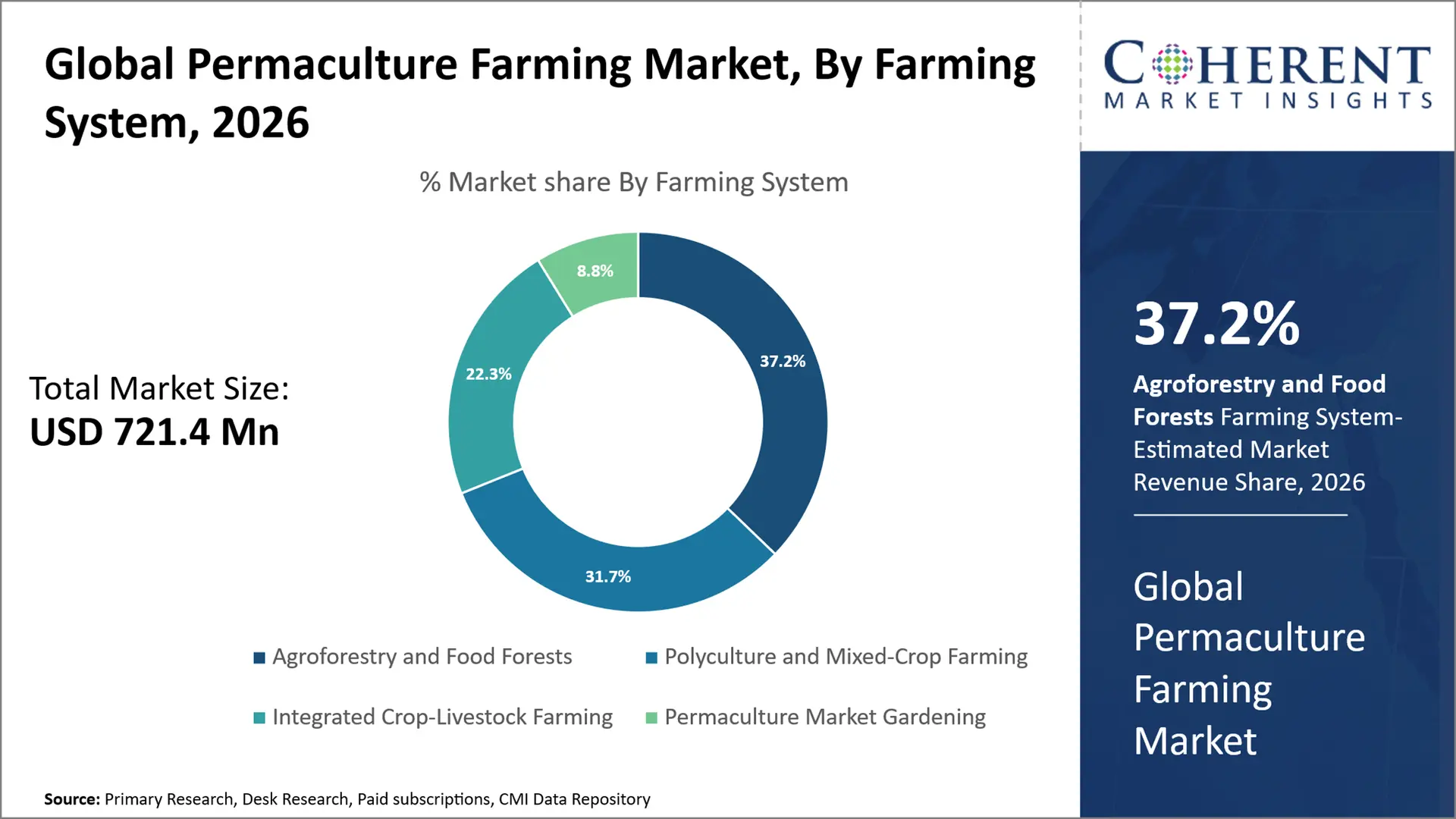
Agroforestry and Food Forests are expected to secure 37.2% of the global permaculture farming market in 2026, reflecting their ability to turn perennial planting into long-term productive farm infrastructure. Carefully planned tree canopies, understory crops, and ground cover can moderate exposed growing conditions while providing distinct ecological functions. Unlike annual cropping, establishing these systems requires advance decisions about plant spacing, root competition, access routes, and the time needed for trees to mature. That complexity creates opportunities for specialist nurseries, land designers, and earthworks contractors, while requiring patient investment from producers. In November 2025, INSPIRA implemented the first phase of its approximately two-hectare permaculture food forest in Tuscany, following a workshop focused on planting and earthworks. The project demonstrates the technical coordination and infrastructure required for a multi-layered, integrated farm system.
Why Do Small Farms (Below 5 Hectares) Dominate the Farm Size Category of the Global Permaculture Farming Market?
Small farms (Below 5 Hectares) will hold 40.2% of the global permaculture farming market in 2026. This is attributed to the fact that land parcels not suitable for conventional mechanized agriculture can be used to implement productive ecological systems. The tight layouts enable close monitoring of plant health, easy access to the beds where plants are grown, and coordinated use of the shared facilities. Opportunities also arise from demand by community institutions concerned about public food access, in addition to direct sales. However, limited land area requires careful management of labour, crop choice, and operating expenses. In November 2025, CASP documented a workshop at Earthen Routes Community Farm, a 30,000-square-foot permaculture site in Navi Mumbai that supplies seasonal produce to children receiving cancer treatment. This case shows how a small farm can integrate food production, institutional community support and experiential agricultural education on a limited area.
Current Events and their Impact
Current Event | Description and Its Impact |
England Updates Agroforestry Funding Requirements – July 2026 |
|
Philippines Issues Organic Agriculture Marketplace Guidelines – March 2026 |
|
Global Permaculture Farming Market Dynamics
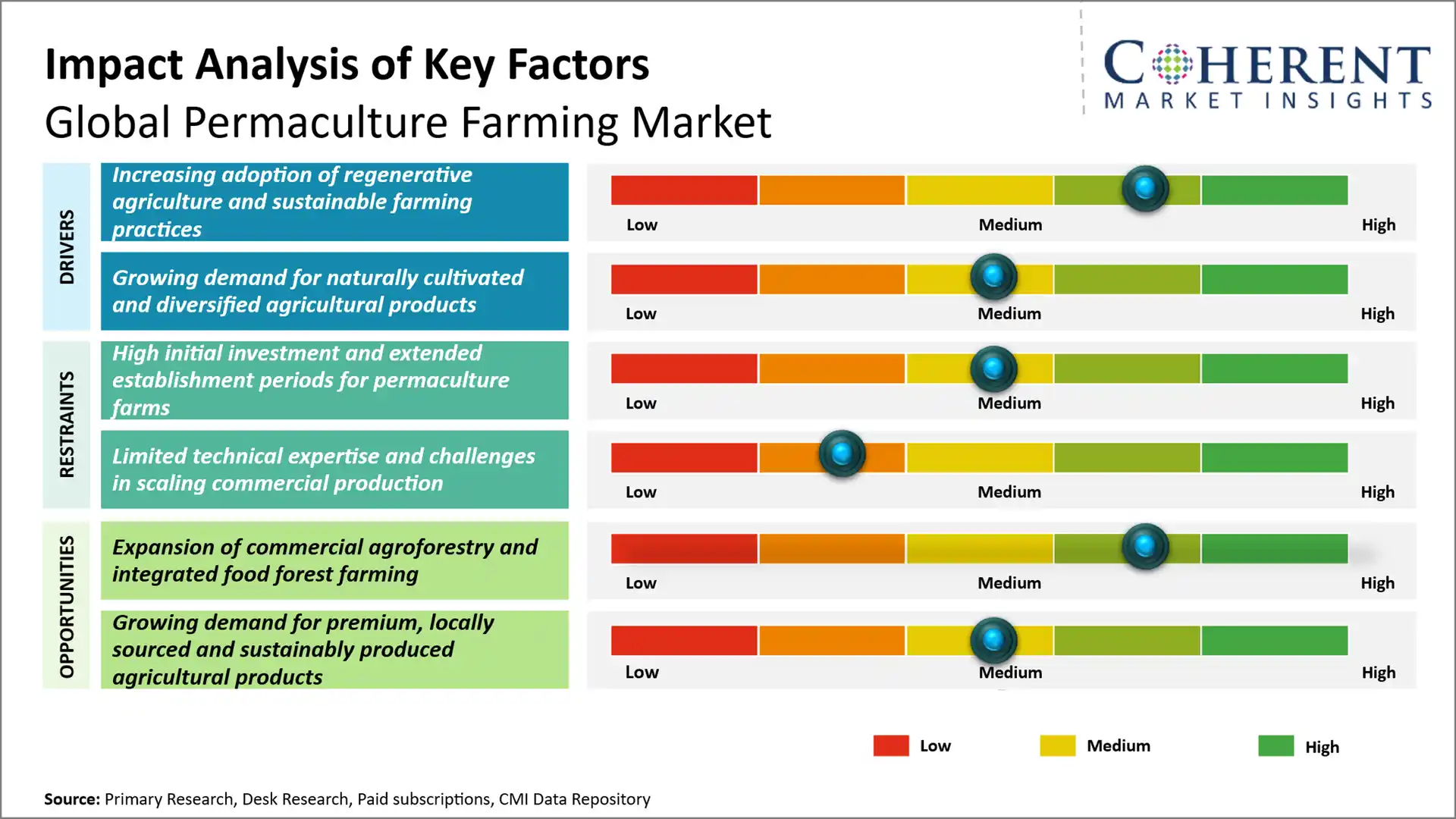
Key Market Drivers
- Increasing adoption of regenerative agriculture and sustainable farming practices: The adoption of regenerative farming practices is leading the agricultural producers to adopt permaculture systems that integrate soil conservation, biological nutrient cycling, and efficient water management. Over time, these methods can decrease dependence on purchased inputs and support diversified agricultural production. Farm operators, ecological design consultants and biological input suppliers are well placed to benefit. In May 2026, the Canadian government announced nearly USD 242802.51 in joint investment for permaculture landscaping and food-producing native plantings in Milton, Ontario, demonstrating public-sector support for practical permaculture design.
- Growing demand for naturally cultivated and diversified agricultural products: Consumers’ demand for agricultural products with a known history of cultivation is creating a commercial opportunity for permaculture producers. Diversified farms can offer seasonal fruits, vegetables, herbs and specialty crops and can differentiate on product quality and traceability. When sourcing is transparent, repeat purchases are a benefit both for the retailer and the agricultural producer. As of March 2026, the Organic Trade Association reported that U.S. organic produce sales hit USD 22.7 billion in 2025.
Emerging Market Trends
- Transition Toward Integrated Farm Management and Advisory Services: Permaculture farming is moving toward more structured farm management services that include crop planning, soil assessments, water budgets, and continuous technical support. Practical advice is needed by producers, especially those with complicated mixed-production systems, and it needs to go beyond the first design of the farm. This opens up possibilities for agricultural consultants, independent agronomists and specialist service providers to offer long term management packages. Service providers that can demonstrate measurable improvements in resource efficiency and farm profitability over the forecast period will be better positioned to develop stronger relationships with commercial growers.
- Increasing Commercialization of Seasonal and Specialty Farm Products: Permaculture producers seek new avenues to convert seasonal harvests into commercially consistent offerings. Farms can sell surplus fruits, herbs, nuts, and other agricultural products outside of their immediate harvest periods by using small-batch processing, crop-specific grading and preservation techniques. This shift creates opportunities for specialty food processors and farm-based enterprises, but puts pressure on those producers who rely solely on fresh produce sales. Businesses that match processing investment with predictable crop availability may stabilize revenue and reduce avoidable post-harvest losses over the forecast period.
Regional Insights
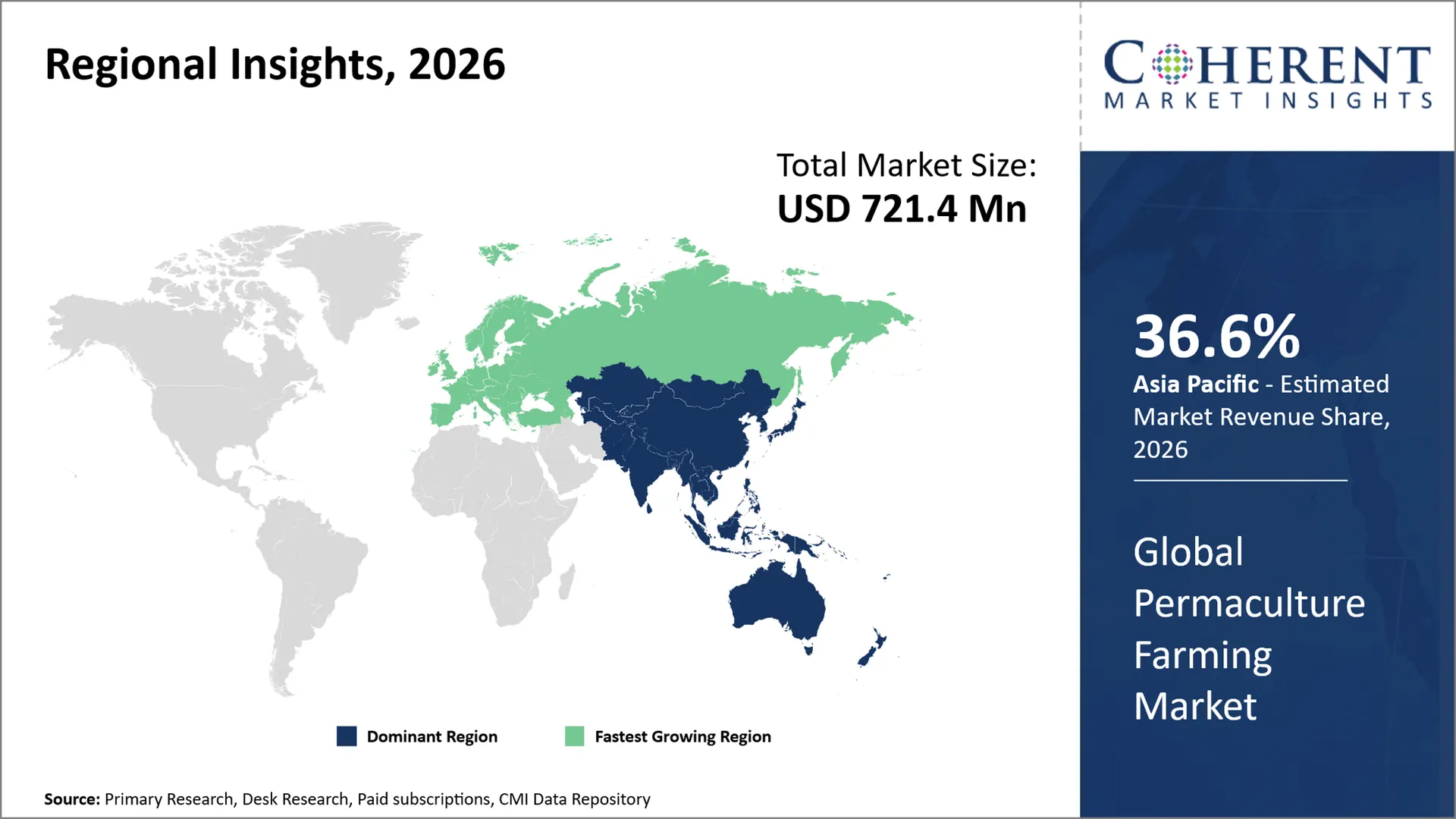
Why Does Asia Pacific Dominate the Global Permaculture Farming Market?
Asia Pacific is expected to lead the global permaculture farming market with a 36.6% share in 2026. Its competitive position reflects the relevance of integrated land management in farming communities where water security, soil erosion and diverse household crops influence the decisions on production. There are a lot of room across the region for site-specific design that includes water retention, tree cover, and food cultivation without depending solely on intensive external inputs. The commercial opportunity includes watershed planning, field training, and ecological farm-design services, in addition to crop sales. In October 2025, the University of New South Wales shared a report on its joint forum in Timor-Leste, where participants discussed the application of permaculture on the Baucau Plateau to mitigate runoff and protect groundwater. This shows how pragmatic resource management can lead to regional uptake. For commercialization we also need cheap technical advice and planting material adapted to the local environment.
Why Is Europe Emerging as the Fastest-Growing Region in the Global Permaculture Farming Market?
Europe is projected to be the fastest-growing region in the global permaculture farming market, with a 26.4% share in 2026. The potential to expand is driven by growing focus on professional management of local food systems, practical agricultural training and increased cooperation between growers and consumers. That includes farm design, education and support for community supported agriculture. Permaculture businesses may be more and more about expertise as well as produce. In October 2025, Serbia's Regional Development Agency Bačka detailed the Erasmus+-supported SMART-CSA initiative, involving partners across Europe and integrating permaculture with digital skills and community-supported farming. Such cooperation can address a persistent adoption barrier: limited access to commercially useful technical skills. However, funding programs and training activity should be read as enabling conditions and not as direct measures of farming revenue. European producers still need realistic pricing and reliable market access to turn these capabilities into growth.
Global Permaculture Farming Market Outlook for Key Countries
Why Is Australia Important in the Global Permaculture Farming Market?
Australia occupies an important position in permaculture farming through its established practitioner base and the need to manage variable rainfall, heat, and livestock within diversified properties. For growers, the central commercial question is whether ecological design can reduce operational exposure while maintaining useful production. Advisory demand therefore includes contour planning, water harvesting, integrated animal systems, and orchard management. In February 2026, New South Wales Local Land Services began a government-listed small farms workshop series delivered with Limestone Permaculture and Yeo Farm. The curriculum included composting, poultry management, orchard systems, property mapping and drought preparation. This structured field training helps landholders to convert permaculture principles into specific investment decisions, rather than general commitments to sustainability. Australian suppliers can benefit from practical installation, specialist equipment and follow-up advisory services tailored to local conditions.
Why Is Germany a Strategic Country in the Global Permaculture Farming Market?
The specialized agricultural advisory ecosystem in Germany is strategically important for the global permaculture farming market, as it can help translate ecological planting concepts into documented farm-management methods. Commercial producers should consider land-use compatibility, access to equipment, the capabilities of the work force, and the practical management of tree-crop combinations. The continuous teaching of these skills is particularly relevant for farms that are exploring diversified production, without affecting the operational planning. In April 2026, Germany’s Federal Environment Agency announced the launch of a funded project by the German Agroforestry Association to develop agroforestry management training modules, teaching materials and practitioner networks. Agroforestry is not permaculture but these skills can be useful for its tree based farming systems. Specialist consultants and agricultural educators are perhaps best placed where growers need credible implementation guidance rather than general environmental claims.
Why Is India a Key Growth Market for Global Permaculture Farming?
India matters to the global permaculture farming market because its diverse agroclimatic conditions allow ecological farming designs to be adapted to hill agriculture, vegetable cultivation, and locally available organic inputs. Small plot sizes and variable rainfall make labour-efficient bed preparation and low-cost water retention especially relevant. Unlike markets built around premium retail positioning, many Indian applications may first be judged by accessible inputs and reliable household food production. In August 2025, the Government of Sikkim reported a hands-on permaculture programme at the Tarku Agricultural and Horticultural Centre, where participants constructed layered planting beds, prepared Jeevamrut, and practised rainwater-harvesting techniques. The activity indicates a route for adoption through local extension and field demonstrations. For service providers, scalable training materials and inexpensive farm-design packages may offer stronger near-term opportunities than capital-intensive systems.
Why Is Brazil an Important Growth Market for the Global Permaculture Farming Market?
Brazil is an important for global permaculture farming market because ecological cropping methods can be tailored to peri-urban food production and community-managed agricultural spaces. Its chance is different from that of export-oriented commodity agriculture. Projects aimed at vulnerable communities could point to the availability of local food, the ability to sustain skills with minimal resources, and flexible planting patterns. “The introduction of new seed varieties alone is not enough to guaranty success; it also depends on technical follow-through and access to land and water. In September 2026, the Federal University of Mato Grosso do Sul announced the opening of student enrollment for a project developed to address peri-urban agriculture and permaculture in traditional communities facing socioeconomic vulnerability. The initiative provides an educational entry point, not evidence of commercial output on a broader scale. For Brazilian enterprises, the potential lies in low-cost implementation services and partnerships with local institutions.
Permaculture Production and Resource Management Landscape
Practice or Technology | Application in Permaculture Farming | Adoption Considerations | Commercial Implications |
GIS-Based Land and Contour Mapping | Supports farm zoning, slope assessment, planting layouts, and placement of water-retention structures. | Requires good design expertise and reliable site information. | Helps infrastructure planning and avoid costly mistakes in site layout. |
Passive irrigation systems and rain water harvesting | Mixed cropping using storage tanks, contour swales, ponds and gravity fed water distribution | It is contingent upon the initial infrastructure investment, the soil properties and rainfall patterns. | Can enhance water availability during droughts and decrease reliance on purchased irrigation water. |
Vermicomposting and On-Farm Composting Systems | Uses crop residues and other suitable organic waste to produce soil conditioners for continuous recycling of nutrients. | Requires monitoring of product quality, management of feedstock, and establishment of suitable composting conditions. | Provides opportunities for locally produced soil amendments and encourages lower external input requirements. |
Precision Drip Irrigation and Soil-Moisture Monitoring | Delivers water to selected crop zones while monitoring soil moisture across diversified planting systems. | Sensor costs, maintenance, and irrigation-system compatibility can affect adoption. | Helps allocate irrigation resources more accurately and may improve crop consistency. |
Management of beneficial insects and biological control of pests | Uses biological control, habitat management, and insect monitoring to protect a range of crops. | The effectiveness of treatment depends on identification of the pest, seasonal conditions and observation at field level. | It is a tool to ensure product quality in low-input farming systems and to reduce dependence on conventional pesticides. |
How Are Localized Planting Material and Propagation Networks Creating New Growth Opportunities in the Global Permaculture Farming Market?
Increasing demand for locally adapted planting materials is creating new opportunities in the global permaculture farming market. Farmers implementing diversified systems need fruit trees, perennial vegetables, nitrogen-fixing plants and other species compatible to local soil and climate conditions. But the diversity required for these farming systems is often not present in traditional nurseries.
The supply gap opens up opportunities for specialist nurseries, seed producers and agricultural co-operatives to develop regional propagation networks. Practical advice on planting and caring for plants, reliable planting stock, and plant mixes for the climate can be provided by businesses. Suppliers with strong regional knowledge, consistent plant quality and reliable customer support are well placed to capitalize on this growing market.
Market Players, Key Development, and Competitive Landscape
Key Developments
- In May 2026, Chempaka Kuning, a Malaysian permaculture-based organic farming enterprise, documented the addition of a chicken coop and livestock sheds. The infrastructure supports its planned integration of animal husbandry with crop cultivation and illustrates how smaller permaculture enterprises can develop additional production activities through incremental farm investment.
- In December 2025, High Valley Dawn Permaculture Farm in Australia opened applications for its 2026 internship programme, incorporating practical farm management experience and an opportunity to complete permaculture design certification. The initiative strengthens the farm's educational offering and supports the development of personnel capable of managing diversified agricultural systems.
Competitive Landscape
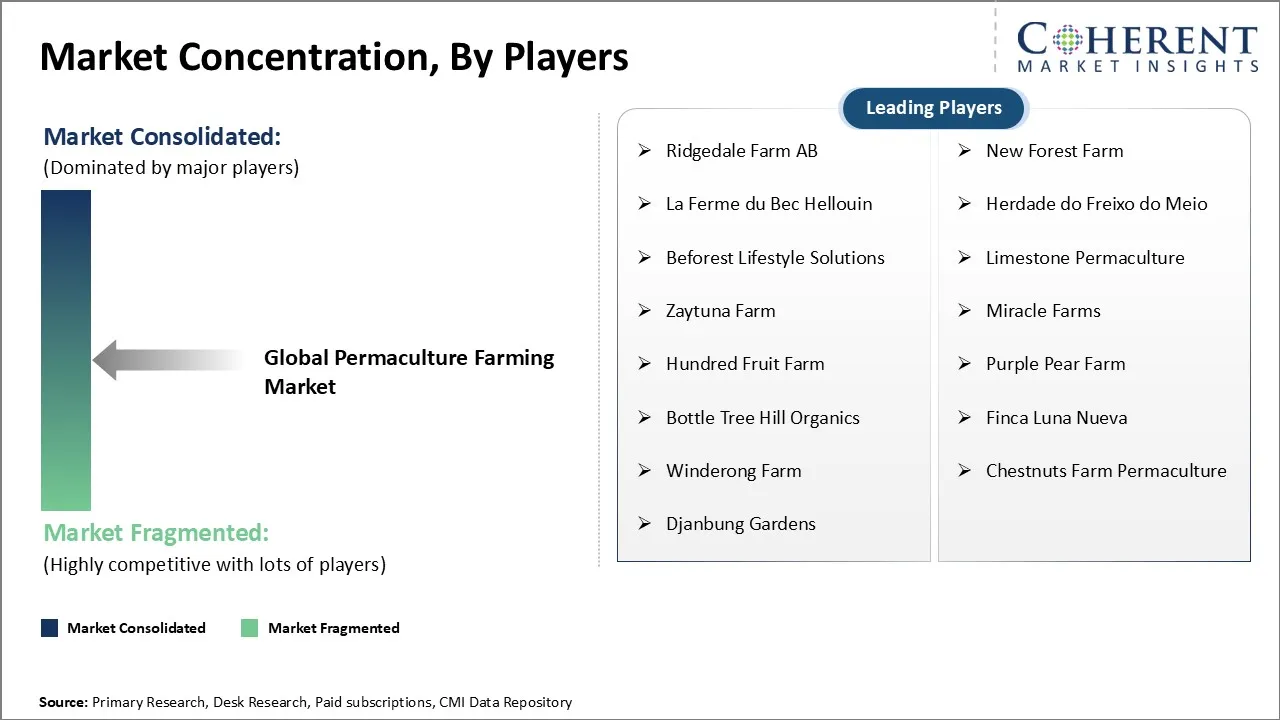
The global permaculture farming market is fragmented, comprising independent farms, agricultural cooperatives, ecological farming enterprises and specialist permaculture operators. The competition is influenced by differences in farming practices, product quality, production costs and customer relations. Specialized companies are characterized by their ecological expertise, traceability, reliable supply and their capacity to meet the requirements of commercially demanding buyers, while regional producers are still at an advantage with their local agricultural expertise.
Key competitive focus areas include
- Production Efficiency: Improving the allocation of resources and the productivity of labor in a variety of farming operations.
- Product Differentiation: Establishing uniform quality standards for specialty agricultural products and organically grown products.
- Pricing Competitiveness: The ability to balance cultivation costs, product positioning and achievable selling prices.
- Supply Reliability: Strengthening harvesting schedules, inventory planning, and fulfillment capabilities.
- Quality Assurance: Checking that farm records, product traceability and certification compliance are adequate.
- Distribution Capabilities: Extending access to institutional procurement networks, foodservice operators and specialty retailers.
- Regional Partnerships: Building operational and sourcing resilience through partnerships with agricultural organizations and local service providers.
Market Report Scope
Permaculture Farming Market Report Coverage | |||
Report Coverage | Details | ||
Base Year | 2025 | Market Size in 2026: | USD 721.4 Mn |
Historical Data For: | 2020 To 2024 | Forecast Period: | 2026 To 2033 |
Forecast Period 2026 To 2033 CAGR: | 12.1% | 2033 Value Projection: | USD 1604.8 Mn |
Geographies covered: |
| ||
Segments covered: |
| ||
Companies covered: | Ridgedale Farm AB, New Forest Farm, La Ferme du Bec Hellouin, Herdade do Freixo do Meio, Beforest Lifestyle Solutions, Limestone Permaculture, Zaytuna Farm, Miracle Farms, Hundred Fruit Farm, Purple Pear Farm, Bottle Tree Hill Organics, Finca Luna Nueva, Winderong Farm, Chestnuts Farm Permaculture, Djanbung Gardens | ||
Growth Drivers: |
| ||
Restraints & Challenges: |
| ||
Analyst Opinion (Expert Opinion)
- Global permaculture farming market is expected to be more focused on crop planning and stable agricultural output. Producers can improve the utilization of the land and create a more stable income throughout the year by combining seasonal vegetables with fruit trees, nuts and perennial crops. Matching crop choices to harvest cycles and buyer needs is going to become increasingly important to keeping profitable and competitive.
- Collective networks for the collection and distribution of produce could provide great opportunities for growth for small and medium-sized permaculture farms. Many growers are challenged to meet the volume, quality and delivery needs of restaurants, retailers and institutional buyers. Larger contracts and a stronger market position can be achieved through shared collection centers, uniform grading methods and cooperative distribution models. Quality and reliable supply will likely give producers a competitive edge going forward.
- Improve operational efficiency of permaculture farming businesses before expanding cultivation. Investment priorities include water management, quality planting materials, soil fertility and post-harvest infrastructure. Businesses must also weigh the longer payback periods for perennial crops, the costs of seasonal labor and climate-related risks. Partnerships with nurseries, agricultural cooperatives and commercial buyers can improve market access and reliability of supply. Expansion strategies should be based on clear demand visibility and realistic financial planning..
Speak to the analyst
Want personalized insights?
Take the findings above to one of our principal consultants, or have the report rebuilt around the segments, geographies and competitors you actually track.
Market Segmentation
- Product Type Insights (Revenue, USD Mn, 2021 - 2033)
- Vegetables and Herbs
- Fruits and Nuts
- Grains and Pulses
- Livestock and Animal Products
- Other Farm Products
- Farming System Insights (Revenue, USD Mn, 2021 - 2033)
- Agroforestry and Food Forests
- Polyculture and Mixed-Crop Farming
- Integrated Crop-Livestock Farming
- Permaculture Market Gardening
- Farm Size Insights (Revenue, USD Mn, 2021 - 2033)
- Small Farms (Below 5 Hectares)
- Medium Farms (5–20 Hectares)
- Large Farms (Above 20 Hectares)
- Sales Channel Insights (Revenue, USD Mn, 2021 - 2033)
- Direct-to-Consumer Sales
- Wholesale and Distributors
- Retail and Institutional Buyers
- Agricultural Cooperatives
- Regional Insights (Revenue, USD Mn, 2021 - 2033)
- North America
- U.S.
- Canada
- Latin America
- Brazil
- Argentina
- Mexico
- Rest of Latin America
- Europe
- Germany
- U.K.
- Spain
- France
- Italy
- Russia
- Rest of Europe
- Asia Pacific
- China
- India
- Japan
- Australia
- South Korea
- ASEAN
- Rest of Asia Pacific
- Middle East
- GCC Countries
- Israel
- Rest of Middle East
- Africa
- South Africa
- North Africa
- Central Africa
- North America
- Key Players Insights
- Ridgedale Farm AB
- New Forest Farm
- La Ferme du Bec Hellouin
- Herdade do Freixo do Meio
- Beforest Lifestyle Solutions
- Limestone Permaculture
- Zaytuna Farm
- Miracle Farms
- Hundred Fruit Farm
- Purple Pear Farm
- Bottle Tree Hill Organics
- Finca Luna Nueva
- Winderong Farm
- Chestnuts Farm Permaculture
- Djanbung Gardens
Sources
Primary Research Interviews
- Permaculture farm owners, regenerative agriculture practitioners, and agroforestry operators
- Organic crop producers, agricultural cooperatives, and ecological farm-design consultants
- Agricultural input suppliers, produce distributors, retailers, and industry experts
Stakeholders
- Permaculture farmers and integrated crop-livestock operators
- Seed, nursery, compost, biofertilizer, and irrigation system suppliers
- Agricultural cooperatives, food processors, organic retailers, and institutional buyers
- Farm consultants, certification agencies, and agricultural investors
End-use Sectors
- Fresh vegetables, herbs, fruits, and nuts
- Grains, pulses, and livestock products
- Organic and specialty food retail
- Foodservice, hospitality, and institutional procurement
Regulatory and Industry Bodies
- Food and Agriculture Organization (FAO)
- U.S. Department of Agriculture (USDA)
- European Commission – Directorate-General for Agriculture and Rural Development
- Ministry of Agriculture & Farmers Welfare, India
- Australian Department of Agriculture, Fisheries and Forestry
- Brazil Ministry of Agriculture and Livestock (MAPA)
Databases
- FAOSTAT agricultural production and land-use datasets
- USDA agricultural census and organic farming databases
- Eurostat agricultural production and organic farming statistics
- UN Comtrade agricultural commodity trade datasets
- National agricultural surveys, farm economics, and organic certification databases
Magazines and Journals
- Agroecology and Sustainable Food Systems
- Renewable Agriculture and Food Systems
- Agroforestry Systems
- Journal of Sustainable Agriculture and Environment
- Agricultural Systems
- Organic Agriculture
Associations
- Permaculture Association (UK)
- Permaculture Australia
- Permaculture Research Institute
- IFOAM – Organics International
- Association for Temperate Agroforestry (AFTA)
Public Domain Sources
- Permaculture cultivation, farm productivity, and crop diversification data
- Agroforestry adoption, land-use patterns, and soil restoration studies
- Organic agricultural production, consumption, and trade statistics
- Farm establishment costs, agricultural input pricing, and water management data
- Government agricultural programmes, sustainability initiatives, and farm investment developments
Key Standards and Regulations
- USDA National Organic Program – 7 CFR Part 205
- Regulation (EU) 2018/848 – Organic Production and Labelling
- India National Programme for Organic Production (NPOP)
- India Participatory Guarantee System (PGS-India)
- Food Safety and Standards (Organic Foods) Regulations, 2017 – India
- GLOBALG.A.P. Integrated Farm Assurance – Voluntary Farm Certification Standard
Proprietary Elements
- CMI Data Analytics Tool and proprietary CMI research repository, incorporating primary research, farm-level benchmarking, agricultural production economics, crop pricing, regenerative farming practices, distribution channels, and competitive intelligence for global permaculture farming market assessment.
Get access to 250+ pages report
Every segment, forecast, competitor profile and data table behind the analysis above — available for instant download.
- ESOMAR Member
- ISO 9001:2015 Certified
- D-U-N-S Registered
- GDPR & CCPA Compliant
Frequently Asked Questions
The CAGR of global permaculture farming market is projected to be 12.1% from 2026 to 2033.
The global permaculture farming market is estimated to be valued at USD 721.4 million in 2026 and is expected to reach USD 1,604.8 million by 2033.
The increasing adoption of regenerative agriculture and sustainable farming practices, along with growing demand for naturally cultivated and diversified agricultural products, are the key factors supporting the growth of the global permaculture farming market.
High initial investment and extended establishment periods for permaculture farms and Limited technical expertise and challenges in scaling commercial production are the major factors hampering the growth of global permaculture farming market.
In terms of product type, vegetables and herbs are estimated to dominate the market revenue share in 2026.
Ridgedale Farm AB, New Forest Farm, La Ferme du Bec Hellouin, Herdade do Freixo do Meio, Beforest Lifestyle Solutions, Limestone Permaculture, Zaytuna Farm, Miracle Farms, Hundred Fruit Farm, Purple Pear Farm, Bottle Tree Hill Organics, Finca Luna Nueva, Winderong Farm, Chestnuts Farm Permaculture, Djanbung Gardens are the major players.
Asia Pacific is expected to lead the global permaculture farming market in 2026.