

Global Plastic Surgery Software Market Size and Forecast – 2026-2033
The Global Plastic Surgery Software Market is estimated to be valued at USD 1.40 Bn in 2026 and is expected to reach USD 2.67 Bn by 2033, exhibiting a compound annual growth rate (CAGR) of 9.3% from 2026 to 2033.
Key Takeaways of the Global Plastic Surgery Software Market:
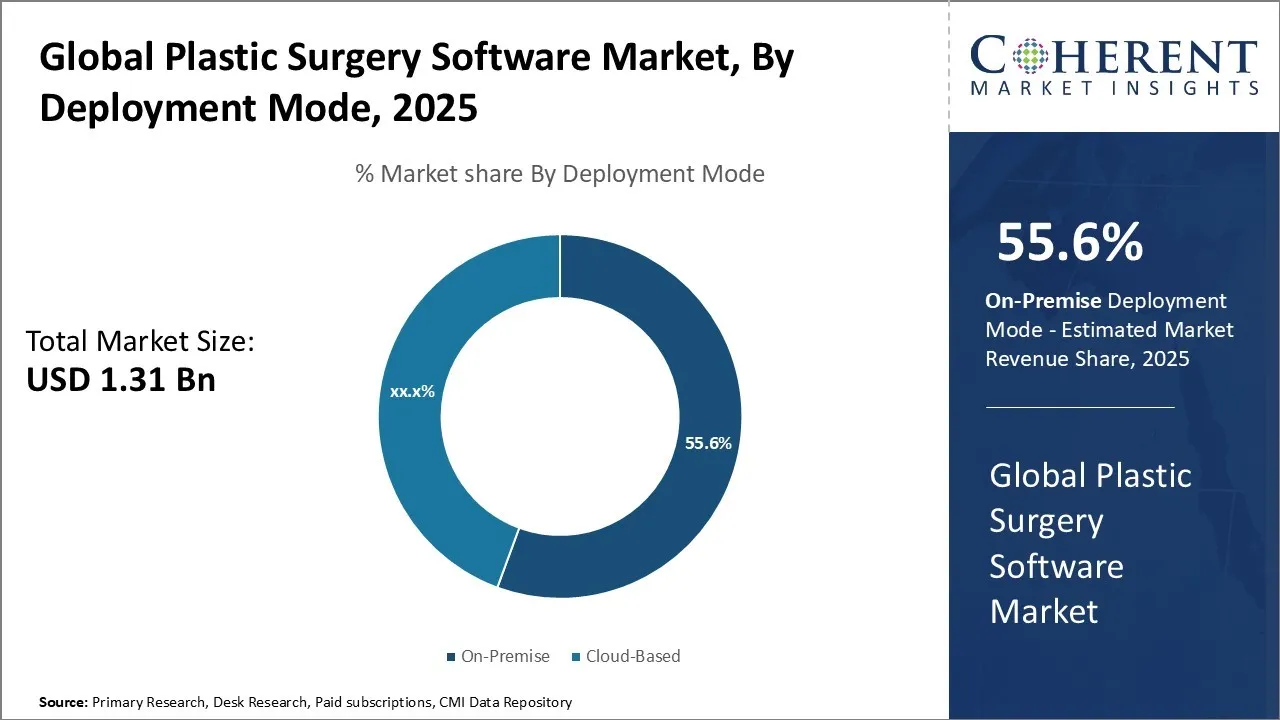
- On-premise deployment is expected to account for the largest market share at 56.6% in 2026, driven by factors such as enhanced data security, full control over software infrastructure, and compliance with internal IT policies
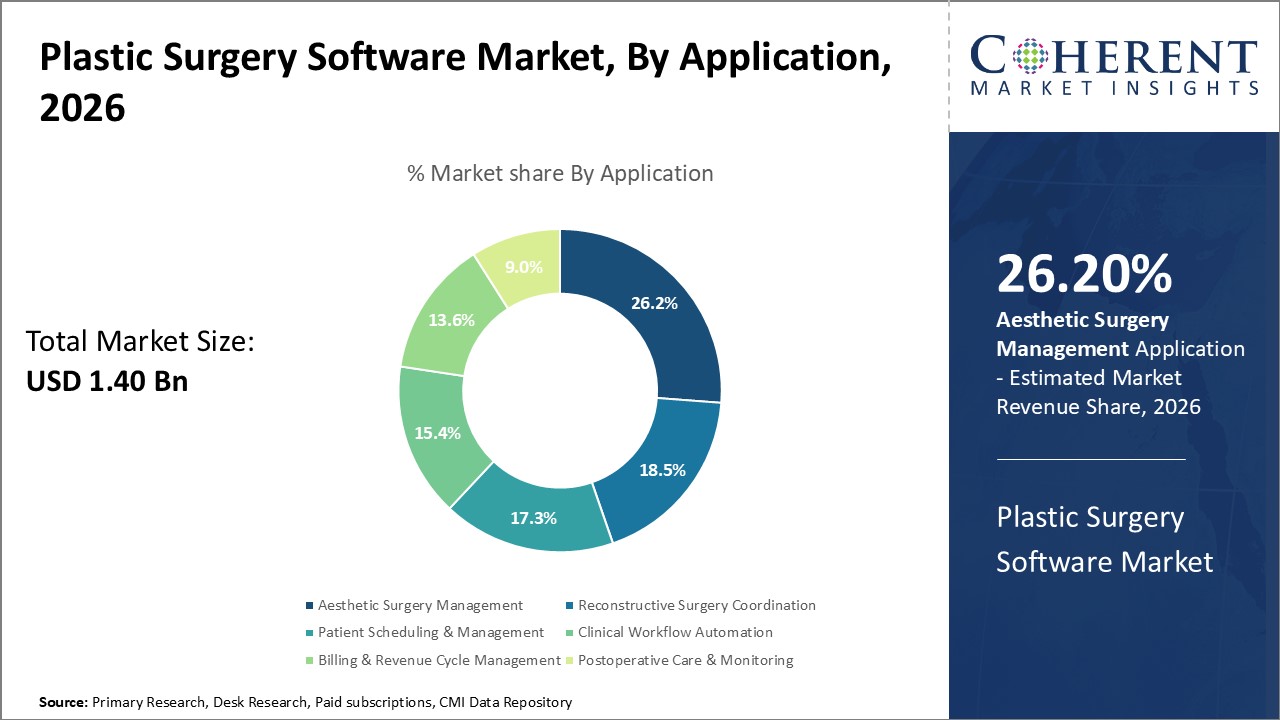
- Aesthetic surgery management is expected to lead the market by application segment, contributing 26.2% of the share in 2026, owing to the rising demand for cosmetic procedures and the need for specialized software to manage patient workflows and consultations.
- Standalone software is expected to hold the dominant position under integration capability, capturing 53.5% of the market share in 2026, supported by its ease of deployment, cost-effectiveness, and suitability for small to mid-sized clinics without complex IT ecosystems.
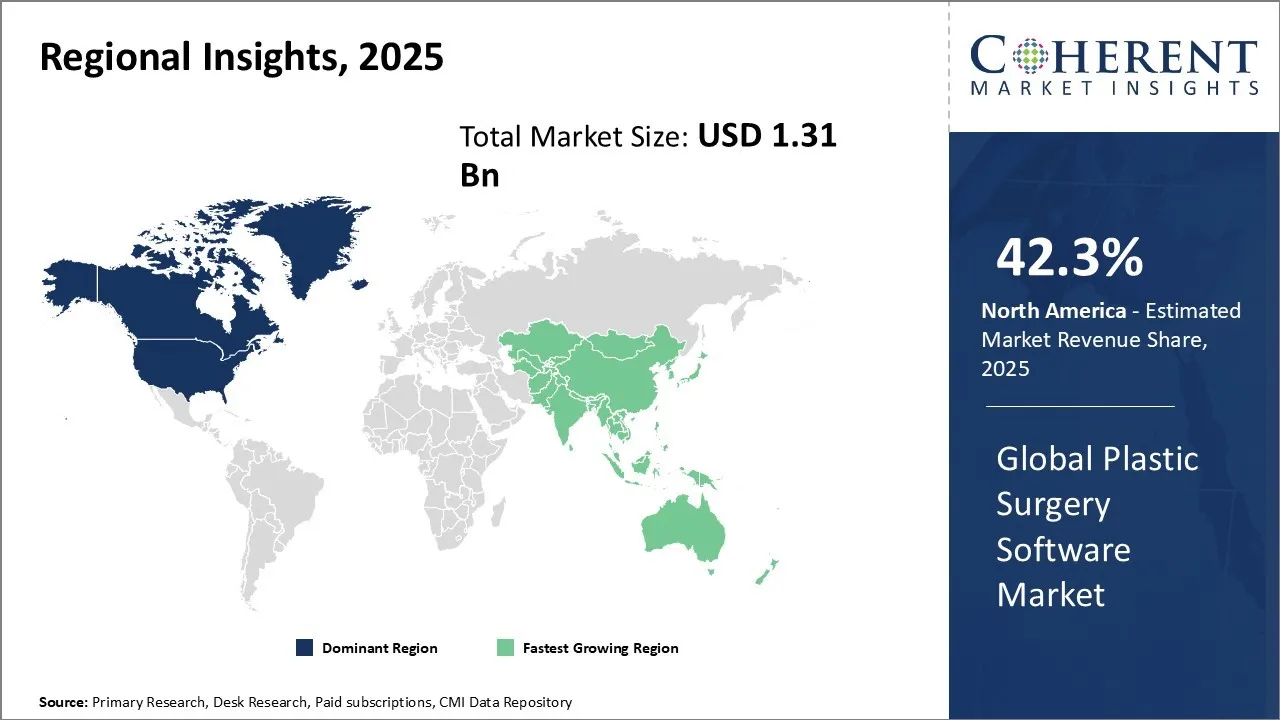
- North America is expected to lead with 42.3% share in 2026 due to advanced healthcare systems, while Asia Pacific is expected to grow the fastest at 32.5% in 2026 driven by medical tourism and rising cosmetic demand.
Market Overview:
The plastic surgery software market is experiencing significant growth due to the increasing demand for cosmetic procedures and the adoption of advanced technologies in the healthcare industry. The market trend is driven by factors such as the rising awareness about aesthetic treatments, the growing elderly population, and the desire for minimally invasive procedures. Additionally, the integration of artificial intelligence and 3D imaging technologies in plastic surgery software is expected to enhance patient outcomes and streamline surgical planning processes, further fueling market growth during the forecast period.
Currents Events and their Impact
Current Events | Description and its impact |
Technological Advancements in Surgical Planning |
|
Surge in Medical Tourism for Aesthetic Procedures |
|
Segmental Analysis
- Current Industry Events of 2026
- Market Size Estimation
- Regional Breakdown
- Competitive Landscape
- Customer Intelligence
- Segmental Analysis
- Pricing Analysis
- Key Market Drivers, Challenges & Future Trends
- Customized Insights Section
Plastic Surgery Software Market Insights by Deployment Mode - On-Premise Deployment: The Preferred Choice owing to Enhanced Control and Customization
In terms of deployment mode, the on-premise segment is expected to contribute the highest share of the market with 56.6% share in 2026 owing to several key factors that drive its adoption. On-premise deployment allows plastic surgery practices to have complete control over their software and data, ensuring enhanced security and privacy. With sensitive patient information at stake, many practices prefer to keep their data within their own premises, reducing the risk of potential breaches or unauthorized access.
Moreover, on-premise deployment enables practices to customize the software according to their specific needs and workflows. Plastic surgery practices often have unique requirements, and the ability to tailor the software to their exact specifications is a significant advantage. This customization potential allows for seamless integration with existing systems and processes, improving overall efficiency and productivity.
Plastic Surgery Software Market Insights, By Application - Aesthetic Surgery Management: Dominating Due to Rising Demand and Workflow Automation
In terms of application, the aesthetic surgery management segment is expected to hold the largest market share of 26.2% in 2026. Aesthetic surgery—commonly referred to as cosmetic surgery—has seen a substantial increase in demand as individuals increasingly pursue procedures to enhance their appearance and boost self-confidence. This trend has prompted plastic surgery practices to adopt specialized software that can effectively manage growing patient volumes and complex surgical workflows.
A key factor driving the dominance of this segment is the software’s capability to streamline and automate core functions involved in cosmetic procedures. These include patient scheduling, digital consultations, treatment planning, documentation, and post-operative follow-ups. Aesthetic surgery management software centralizes and simplifies administrative and clinical tasks, improving both practice efficiency and patient satisfaction. By offering seamless coordination across departments, it enables practitioners to deliver personalized, timely, and safe aesthetic care, thus reinforcing its strong market adoption.
Plastic Surgery Software Market Insights, by Integration Capability - Standalone Software: Flexibility and Focused Functionality Drive Market Dominance
In terms of integration capability, the standalone software segment is expected to contribute the highest share of the market with 53.5% in 2026. Standalone plastic surgery software solutions offer focused functionality and flexibility, making them an attractive choice for many practices. These software applications are designed to address specific aspects of plastic surgery practice management, such as patient scheduling, billing, or clinical documentation, without the need for extensive integration with other systems.
One of the key factors driving the dominance of standalone software is its ease of implementation. Unlike integrated software solutions that require complex setup and compatibility considerations, standalone software can be quickly deployed and put into use. This plug-and-play nature allows plastic surgery practices to adopt the software without significant disruption to their existing workflows or the need for extensive IT support.
Role of Artificial Intelligence (AI) in the Plastic Surgery Software Market
Artificial Intelligence (AI) is reshaping the global plastic surgery software market, driving major advancements in efficiency, personalization, and clinical accuracy. By integrating AI into surgical planning and patient management tools, plastic surgeons can now leverage predictive analytics to forecast surgical outcomes, minimize complications, and optimize treatment plans. AI also automates routine administrative tasks like scheduling, image processing, and documentation, significantly reducing operating costs and human error. Enhanced 3D visualization and facial recognition technologies allow for highly personalized simulations, boosting patient engagement and satisfaction. Furthermore, AI supports data-driven decision-making by analyzing patient histories and procedural data to uncover patterns that guide both clinical and business strategies.
A strong example is Canfield Scientific, a U.S.-based company specializing in imaging systems for aesthetics and plastic surgery. Its Vectra 3D system uses AI to create accurate 3D surgical simulations, enabling personalized treatment planning and outcome visualization. The AI also tracks patient progress and assists in clinical decision-making. By integrating AI into imaging and analytics, Canfield enhances efficiency, patient satisfaction, and surgical precision. This showcases how plastic surgery software companies can innovate through AI. However, challenges like data privacy, cost, and the need for clinician training must be addressed for successful adoption.
Regional Insights
North America Plastic Surgery Software Market Analysis and Trends
In North America, the dominance in the global plastic surgery software market with an estimated share of 42.3% in 2026 can be attributed to several factors. The region boasts a well-established healthcare infrastructure, with advanced medical facilities and a high adoption rate of digital solutions in the healthcare sector. These companies have been instrumental in developing innovative software solutions that streamline surgical workflows, enhance patient management, and improve overall efficiency in plastic surgery practices. Moreover, the region's favorable reimbursement policies and increasing demand for aesthetic procedures have created a conducive environment for the growth of the plastic surgery software market.
Asia Pacific Plastic Surgery Software Market Analysis and Trends
Meanwhile, the Asia Pacific region is expected to exhibit the fastest growth in the global plastic surgery software market with a share of 32.5% in 2026. The region's rapid economic development, coupled with rising disposable incomes and growing awareness about aesthetic procedures, has fueled the demand for plastic surgery software solutions. Countries like China, Japan, and South Korea have witnessed a significant increase in the number of plastic surgery clinics and hospitals, driving the adoption of specialized software to manage patient data, streamline operations, and enhance treatment outcomes. Furthermore, government initiatives to promote medical tourism and the increasing influx of international patients seeking cosmetic treatments have further propelled the market's growth in the Asia Pacific region.
Global Plastic Surgery Software Market Outlook for Key Countries
U.S. Plastic Surgery Software Market Trends
The U.S. market for plastic surgery software is distinguished by its mature, innovation-driven healthcare ecosystem, which supports widespread adoption of advanced digital tools across surgical practices. For instance, Dr. Kirk Lozada, a board-certified facial plastic surgeon in Philadelphia, U.S., emphasized the benefits of tip-plasty, a focused nose surgery that reshapes only the nasal tip. Ideal for patients with concerns like a drooping or bulbous tip, tip-plasty offers subtle changes and quicker recovery compared to full rhinoplasty.
China Plastic Surgery Software Market Trends
China plastic surgery software market has experienced significant growth in recent years, driven by the country's expanding middle class and increasing disposable incomes. The rise in popularity of cosmetic procedures, coupled with the government's efforts to regulate and standardize the aesthetic medicine industry, has created a favorable environment for the adoption of specialized software solutions. In January 2024, Establishment Labs, a global medical tech company focused on women’s health, officially launched its Motiva Implants in China following National Medical Products Administration, (NMPA) approval.
India Plastic Surgery Software Market Trends
India plastic surgery software market is rapidly growing, driven by rising demand for aesthetic procedures, increased medical tourism, and adoption of technologies like 3D imaging, AI, and virtual consultations. As the aesthetic and reconstructive surgery sectors continue to expand, the plastic surgery software market in India is poised for robust growth, offering opportunities for innovation and improved patient care. For instance, on May 03, 2026, Rajendra Institute of Medical Sciences (RIMS), a leading government medical college and hospital in Jharkhand, India, launched e-prescription trials in its psychiatry department as part of a broader digital transformation initiative. The system will soon expand to four more departments—ENT, ophthalmology, nephrology, and plastic surgery—aiming to improve accuracy, efficiency, and patient convenience across OPD services.
Canada Plastic Surgery Software Market Trends
Canada plastic surgery software market is expanding, fueled by increasing demand for cosmetic procedures, growing adoption of technologies like 3D imaging and AI, and a rise in medical tourism. Clinics are embracing cloud-based and integrated platforms to improve patient experience, streamline workflows, and support digital health initiatives, with strong backing from government-led telehealth and data privacy efforts. On January 2026, MolecuLight Corp. announced that Dr. Michael N. Desvigne will present the clinical benefits of its fluorescence imaging technology in reconstructive plastic surgery at the 47th Annual JAB Maui Burn & Wound Symposium. The event highlights advancements in wound care, burn treatment, and infection control.
Germany Plastic Surgery Software Market Trends
Germany plastic surgery software market is characterized by its focus on precision, efficiency, and patient safety. The country's stringent regulations and high standards for medical devices and software have driven the development of robust and reliable solutions. German companies, such as Brainlab AG and MeVis Medical Solutions AG have been at the forefront of developing software platforms that integrate with state-of-the-art imaging systems and surgical equipment, enabling surgeons to plan and execute procedures with greater accuracy and predictability. The increasing demand for minimally invasive procedures and the growing emphasis on evidence-based medicine have further fueled the adoption of advanced plastic surgery software solutions in Germany.
Switzerland Plastic Surgery Software Market
The Switzerland plastic surgery software market is growing rapidly, driven by high demand for aesthetic procedures, advanced healthcare infrastructure, and the adoption of technologies like 3D imaging, Virtual Reality (VR) and Artificial Intelligence (AI). The market is supported by leading players such as Crisalix S.A., Canfield Scientific, and TouchMD, who offer innovative solutions for surgical planning, simulation, and patient engagement. Crisalix S.A. is a Swiss company specializing in advanced 3D and VR simulation software for plastic and aesthetic surgery. Its platform allows patients to visualize potential outcomes of procedures like breast augmentation and rhinoplasty using photos or 3D scans.
Market Players, Key Developments, and Competitive Intelligence
Key Developments:
- In April 2025, Chesapeake Plastic Surgery, a premier cosmetic and aesthetic surgery practice in Maryland, U.S. led by board-certified plastic surgeon, Dr. Haven J. Barlow, launched a newly redesigned website to enhance patient engagement and highlight its cosmetic and reconstructive services. The modern, user-friendly platform offers detailed insights into procedures like facial rejuvenation, body contouring, and non-surgical treatments, reflecting the clinic’s commitment to personalized, natural-looking results.
- In February 2025, Pristyn Care, a leading healthcare provider known for advanced plastic surgical solutions, launched its first super-specialty hospital in Delhi, India, marking a major step toward delivering more patient-centric and comprehensive care.
- In June 2024, Johnson & Johnson MedTech, a global leader in surgical innovation and medical technologies, introduced Polyphonic, a secure and open digital ecosystem designed to enhance surgical connectivity. The platform supports software applications that are data-source agnostic and deliver real-time surgical insights. The initial release—now available to select hospitals—includes tools for surgical video, telepresence, and planning, aiming to improve team collaboration and decision-making.
Top Strategies Followed by Global Plastic Surgery Software Market Players
- Established players in the global plastic surgery software market are focusing on extensive research and development to innovate high-performance products. These companies are investing heavily in R&D to develop cutting-edge solutions that cater to the evolving needs of plastic surgeons and enhance patient outcomes.
- For instance, in April 2023, Morris Hospital, Coryell Health, and Palm Plastic Surgery & Medspa have rolled out new electronic health record (EHR) systems from MEDITECH, Oracle Cerner, and eClinicalWorks, respectively. These organizations, known for delivering quality regional healthcare, aim to enhance patient engagement and streamline clinical operations through tailored, scalable digital solutions.
- Mid-level players in the market are adopting strategies focused on delivering quality, budget-friendly products targeting price-sensitive consumers. These companies recognize the importance of offering cost-effective solutions that provide value without compromising on essential features. Furthermore, collaborations with technology providers and production partners are being explored to boost capabilities and market presence. By leveraging the expertise and resources of these partnerships, mid-level players aim to enhance their competitiveness and capture a larger share of the market.
- For instance, in April 2025, Nextech, a leading provider of healthcare technology for specialty practices, is set to launch its new MedSpa platform and preview an advanced CRM solution at The Medical Spa Show in Nevada, U.S. Designed to enhance medical compliance and client engagement, the platform offers integrated tools for clinical, regulatory, and business management tailored to med spa providers.
- Small-scale players in the global plastic surgery software market are targeting niche markets with unique features and innovative products. By leveraging advanced technologies, they can offer innovative solutions that set them apart from larger competitors. Local alliances with startups and local manufacturers are also being pursued to gain market entry and visibility.
- For example, in September 2024, a recent event held in Srinagar, Jammu & Kashmir, Indraprastha Apollo Hospitals (New Delhi, India) highlighted major advancements in plastic surgery and cancer care. In December 2024, Aesthetic Partners introduced AP Academy, a comprehensive training program offering over 300 courses across eight career tracks. Designed to support the growth of its 400 employees, the program combines clinical, business, and leadership training to enhance skills, foster career advancement, and ensure exceptional patient care in medical aesthetics.
Market Report Scope
Plastic Surgery Software Market Report Coverage
| Report Coverage | Details | ||
|---|---|---|---|
| Base Year: | 2025 | Market Size in 2026: | USD 1.40 Bn |
| Historical Data for: | 2020 To 2024 | Forecast Period: | 2026 To 2033 |
| Forecast Period 2026 to 2033 CAGR: | 9.3% | 2033 Value Projection: | USD 2.67 Bn |
| Geographies covered: |
| ||
| Segments covered: |
| ||
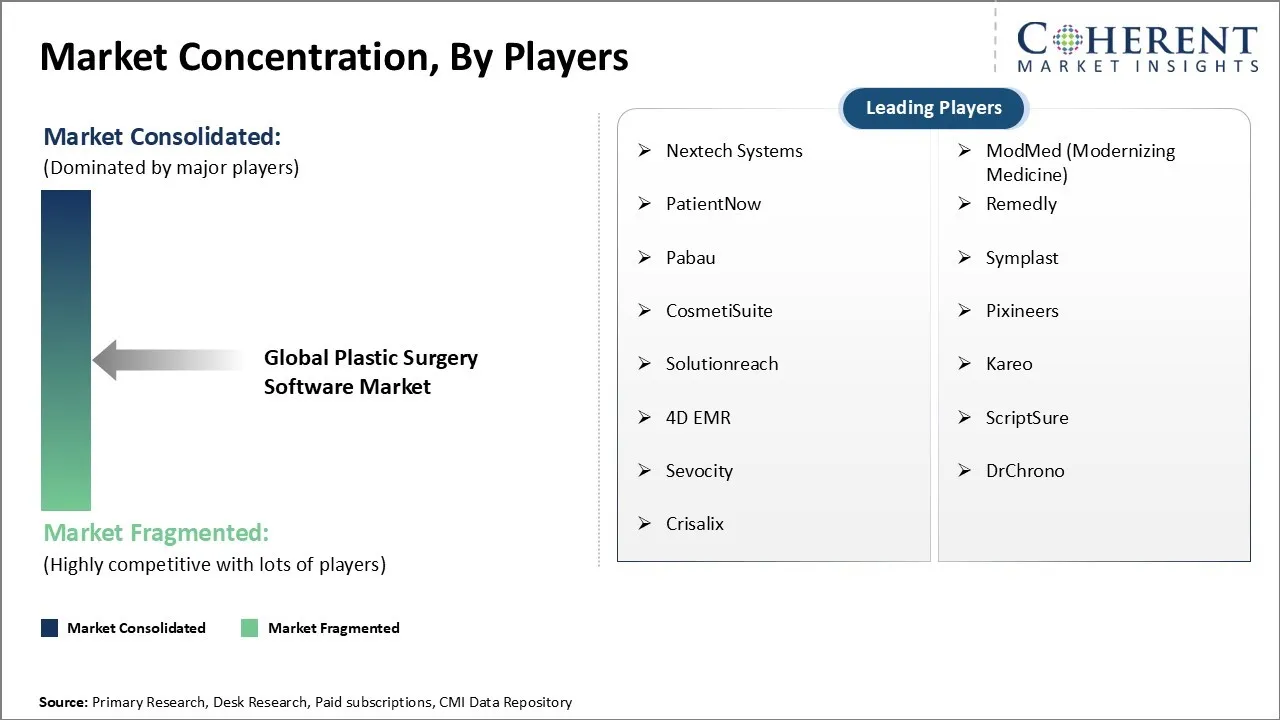
| Companies covered: | Nextech Systems, ModMed (Modernizing Medicine), PatientNow, Remedly, Pabau, Symplast, CosmetiSuite, Pixineers, Solutionreach, Kareo, 4D EMR, ScriptSure, Sevocity, DrChrono, and Crisalix | ||
| Growth Drivers: |
| ||
| Restraints & Challenges: |
| ||
Market Dynamics
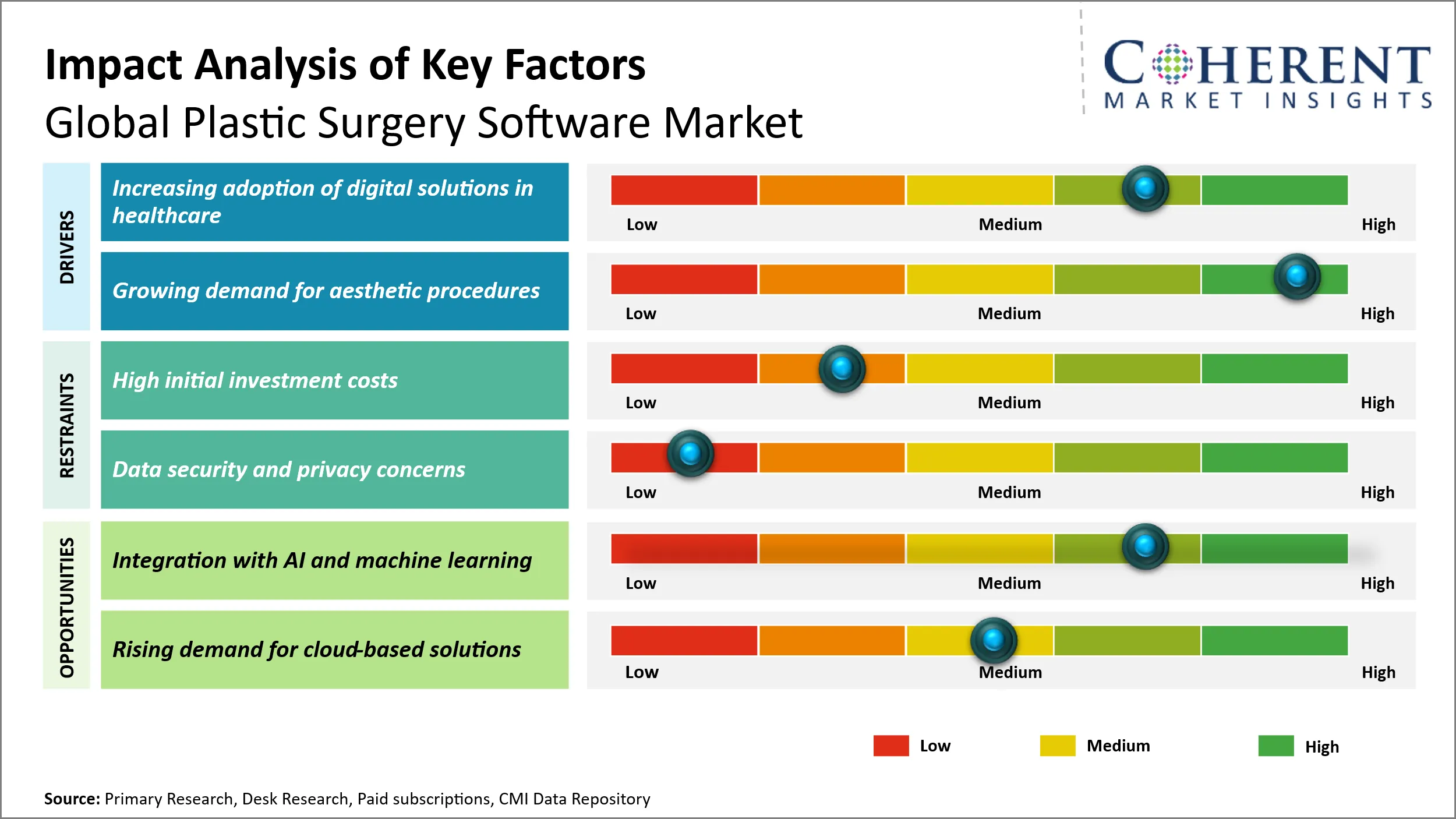
Plastic Surgery Software Market Driver - Increasing adoption of digital solutions in healthcare
The global plastic surgery software market is experiencing a significant boost due to the increasing adoption of digital solutions in the healthcare sector. As technology continues to advance, more and more plastic surgery practices are embracing software solutions to streamline their operations, enhance patient care, and improve overall efficiency. These software platforms offer a wide range of features, including electronic medical records (EMR), patient management, appointment scheduling, billing, and reporting. By leveraging these digital tools, plastic surgeons can effectively manage their practices, reduce administrative burdens, and allocate more time to delivering high-quality patient care.
Moreover, the integration of plastic surgery software with other healthcare systems, such as hospital information systems and imaging software, enables seamless data exchange and collaboration among healthcare providers. For instance, in March 2025, GE HealthCare launched the Genesis portfolio, a cloud-based imaging SaaS suite, to improve patient care coordination, reduce costs, and support secure, scalable access to medical images. Aimed at accelerating digital transformation, the platform addresses growing imaging data demands and IT challenges in healthcare by offering flexible, cloud-enabled solutions over traditional on-premise systems. This trend towards digitalization in healthcare is expected to continue driving the growth of the plastic surgery software market in the coming years, as more practices recognize the benefits of adopting these innovative solutions.
Plastic Surgery Software Market Opportunity - Integration with AI and Machine Learning
The integration of artificial intelligence (AI) and machine learning technologies presents a compelling opportunity for the Global Plastic Surgery Software Market. By leveraging these advanced technologies, plastic surgery software can offer enhanced capabilities and insights to surgeons and healthcare professionals. AI and machine learning algorithms can analyze vast amounts of patient data, including medical histories, images, and treatment outcomes, to provide personalized treatment recommendations and predict potential complications. This can assist surgeons in making more informed decisions, improving patient outcomes, and reducing the risk of adverse events.
Furthermore, AI-powered analytics can help identify patterns and trends in patient data, enabling practices to optimize their operations, streamline workflows, and enhance overall efficiency. In April 2024, a recent review by Elsevier B.V. with title Artificial Intelligence in Surgical Research highlights how AI is transforming plastic and reconstructive surgery by enhancing surgical planning, outcome prediction, and patient consultation. While showcasing real-world applications, the study also addresses ethical risks and emphasizes the importance of a balanced, well-regulated approach to AI adoption in clinical practice.
Analyst Opinion (Expert Opinion)
- The global plastic surgery software market is experiencing steady growth, driven by rising demand for aesthetic and reconstructive procedures, technological advancements such as 3D imaging and AI-powered surgical planning, and increasing acceptance of digital solutions among clinics and hospitals. Regulatory support for digital health integration, especially in markets like the U.S., EU, and Asia Pacific, is further accelerating adoption. Emerging opportunities include mobile-compatible platforms, teleconsultation features, and integrated electronic health records (EHR)-billing-imaging ecosystems. However, challenges such as data privacy, high implementation costs, and the need for interoperability with legacy systems persist.
- Recent industry momentum has been reinforced by events like the International Society of Aesthetic Plastic Surgery (ISAPS) Congress, Arab Health, and the American Society of Plastic Surgeons (ASPS) Annual Meeting, which have served as key platforms for showcasing digital tools in surgical practices. Notably, companies like Crisalix, Nextech, and Establishment Labs have launched innovative simulation, CRM, and surgical workflow tools, while national-level initiatives in countries like Germany, the U.S., and Japan are promoting digital transformation in elective surgeries through telemedicine integration and AI-driven diagnostics. These developments are expected to shape the next phase of global market expansion.
Speak to the analyst
Want personalized insights?
Take the findings above to one of our principal consultants, or have the report rebuilt around the segments, geographies and competitors you actually track.
Market Segmentation
- Deployment Mode Insights (Revenue, USD Bn, 2021 - 2033)
- On-Premise
- Cloud-Based
- Application Insights (Revenue, USD Bn, 2021 - 2033)
- Aesthetic Surgery Management
- Reconstructive Surgery Coordination
- Patient Scheduling & Management
- Clinical Workflow Automation
- Billing & Revenue Cycle Management
- Postoperative Care & Monitoring
- Integration Capability Insights (Revenue, USD Bn, 2021 - 2033)
- Standalone Software
- Integrated Software
- Software Type Insights (Revenue, USD Bn, 2021 - 2033)
- Practice Management Software
- Electronic Health Records (EHR)
- Medical Billing Software
- Imaging & Simulation Software
- Inventory & Supply Chain Management
- Pricing Model Insights (Revenue, USD Bn, 2021 - 2033)
- Subscription-Based (SaaS)
- Monthly Subscription
- Annual Subscription
- One-Time License Purchase
- Pay-per-Use
- Freemium Model
- Others
- End User Insights (Revenue, USD Bn, 2021 - 2033)
- Specialized Plastic Surgery Clinics
- Hospitals
- Medical Spas
- Ambulatory Surgical Centers
- Others
- Regional Insights (Revenue, USD Bn, 2021 - 2033)
- North America
- U.S.
- Canada
- Latin America
- Brazil
- Argentina
- Mexico
- Rest of Latin America
- Europe
- Germany
- U.K.
- Spain
- France
- Italy
- Russia
- Rest of Europe
- Asia Pacific
- China
- India
- Japan
- Australia
- South Korea
- ASEAN
- Rest of Asia Pacific
- Middle East
- GCC Countries
- Israel
- Rest of Middle East
- Africa
- South Africa
- North Africa
- Central Africa
- North America
- Key Players Insights
- Nextech Systems
- ModMed (Modernizing Medicine)
- PatientNow
- Remedly
- Pabau
- Symplast
- CosmetiSuite
- Pixineers
- Solutionreach
- Kareo
- 4D EMR
- ScriptSure
- Sevocity
- DrChrono
- Crisalix
Sources
Primary Research Interviews:
- Clinical IT Administrators – Insights on EMR integration and workflow optimization
- Plastic Surgeons and Aesthetic Clinicians – Feedback on software usability, diagnostic accuracy, and image rendering tools
- Hospital Procurement Officers – Perspectives on budgeting, feature requirements, and compliance
- Medical Software Engineers – Technical insights into software development challenges and interoperability
- Clinic Managers and Coordinators – User feedback on appointment scheduling, CRM modules, and reporting dashboards
Databases:
- U.S. Food and Drug Administration (FDA)
- European Medicines Agency (EMA)
- World Health Organization (WHO)
- Centers for Medicare & Medicaid Services (CMS)
- U.S. Department of Health and Human Services (HHS) initiatives
- National Health Service (NHS)
- Organisation for Economic Co-operation and Development (OECD)
- Health Level Seven International (HL7)
Magazines:
- Plastic Surgery Practice Magazine
- Medical Design & Outsourcing
- HealthTech Magazine
- Becker’s Health IT & CIO Report
- Aesthetic Medicine Magazine
- Medical Device and Diagnostic Industry (MD+DI)
Journals:
- Aesthetic Surgery Journal (ASJ)
- Journal of Plastic, Reconstructive & Aesthetic Surgery (JPRAS)
- International Journal of Medical Informatics
- Journal of Digital Imaging
Newspapers:
- The New York Times – Technology and Health Sections
- The Guardian – Health Tech Features
- Financial Times – Digital Health Coverage
Associations:
- American Society of Plastic Surgeons (ASPS)
- International Society of Aesthetic Plastic Surgery (ISAPS)
- Healthcare Information and Management Systems Society (HIMSS)
- Medical Group Management Association (MGMA)
- American Medical Informatics Association (AMIA)
Public Domain Sources:
- World Economic Forum (WEF) – Reports on digital transformation in healthcare
- U.S. Department of Commerce – Health Technology Export Reports
- Conference Proceedings – HIMSS Global Conference & Exhibition, IMCAS World Congress, Aesthetic Innovation Summit
Proprietary Elements:
- CMI Data Analytics Tool: Proprietary analytics tool to analyze real-time market trends, consumer behavior, and technology adoption in market.
- Proprietary CMI Existing Repository of Information for Last 8 Years
Get access to 250+ pages report
Every segment, forecast, competitor profile and data table behind the analysis above — available for instant download.
- ESOMAR Member
- ISO 9001:2015 Certified
- D-U-N-S Registered
- GDPR & CCPA Compliant
Missing comfort of reading report in your local language? Find your preferred language:
Transform your Strategy with Exclusive Trending Reports
Frequently Asked Questions
The global plastic surgery software market is estimated to be valued at USD 1.31 Bn in 2025 and is expected to reach USD 2.41 Bn by 2032.
The CAGR of the global plastic surgery software market is projected to be 9.1% from 2025 to 2032.
Increasing adoption of digital solutions in healthcare and growing demand for aesthetic procedures are the major factors driving the growth of the global plastic surgery software market.
High initial investment costs and data security and privacy concerns are the major factors hampering the growth of the global plastic surgery software market.
In terms of deployment mode, the on-premise segment is estimated to dominate the market revenue share in 2025.
Nextech Systems, ModMed (Modernizing Medicine), PatientNow, Remedly, Pabau, Symplast, CosmetiSuite, Pixineers, Solutionreach, Kareo, 4D EMR, ScriptSure, Sevocity, DrChrono, and Crisalix are the major players.
North America is expected to lead the global plastic surgery software market in 2025.