

Global Platelet Function and Viscoelastic Coagulation Monitor Market Size and Forecast – 2026 To 2033
The global platelet function and viscoelastic coagulation monitor market is expected to grow from USD 290.9 Mn in 2026 to USD 524.5 Mn by 2033, registering a compound annual growth rate (CAGR) of 8.8% from 2026 to 2033. The market for global platelet function and viscoelastic coagulation monitor is poised for significant expansion, fueled by the growing volume of surgical procedures worldwide and the resulting need for rapid perioperative assessment of hemostasis.
According to the World Health Organization (WHO), approximately 313 million surgical procedures are performed globally each year, while an additional 143 million procedures are needed annually in low- and middle-income countries to save lives and prevent disability, highlighting the substantial global demand for surgical care and rapid perioperative coagulation assessment.
Key Takeaways of the Global Platelet Function and Viscoelastic Coagulation Monitor Market
- Thromboelastography (TEG) is projected to hold 48.6 % of the global platelet function and viscoelastic coagulation monitor market share in 2026, making it dominant product type segment, across North America benefiting from established clinical use of viscoelastic testing in trauma and acute bleeding management. For instance, the Eastern Association for the Surgery of Trauma (EAST) recommends TEG/ROTEM-guided transfusion strategies for adult trauma, surgical, and critically ill patients with ongoing hemorrhage and suspected coagulopathy, supporting integration of these technologies into North American acute-care protocols.
- Cardiac surgery is projected to hold 32.6 % of the global platelet function and viscoelastic coagulation monitor market share in 2026, making it dominant application segment, across Europe supported by formal patient blood-management guidance for cardiac procedures. For instance, the EACTS/EACTAIC/EBCP guidelines, published in 2025 in the European Journal of Cardio-Thoracic Surgery, specifically assess TEG/ROTEM-guided bleeding management and report reduced mortality in randomized trials, reinforcing the role of viscoelastic testing in European cardiac-surgery practice.
- Hospitals are projected to hold 42.1 % of the global platelet function and viscoelastic coagulation monitor market share in 2026, making it dominant end user segment, across Asia Pacific benefiting from the increasing integration of viscoelastic testing into hospital-based blood-management protocols. For instance, China's 2024 national patient blood-management guideline for adult cardiac surgery specifically recommends TEG/ROTEM to guide hemostasis and blood-product transfusion following cardiopulmonary bypass, demonstrating institutional adoption within hospital cardiac-surgery settings.
- North America market maintains dominance with an expected share of 38.7 % in 2026, bolstered by the region’s established patient blood-management infrastructure and growing integration of viscoelastic testing into specialized transfusion practices. For instance, Canadian Blood Services conducted a dedicated 2026 ROTEM-focused transfusion medicine seminar, highlighting the use of ROTEM in coagulopathy and bleeding management and reviewing its implementation in trauma-related massive hemorrhage protocols.
- Asia Pacific is expected to exhibit the fastest growth in the global platelet function and viscoelastic coagulation monitor market, registering an estimated CAGR of 11.4 % during 2026–2033, driven by expanding clinical use of rapid whole-blood coagulation assessment and improving diagnostic capabilities. For instance, in April 2025, the Japanese Society on Thrombosis and Hemostasis updated its thromboelastography (TEG) reference recognizing TEG as a point-of-care test used in operating rooms and emergency settings and noting its ability to assess coagulation and platelet function.
Segmental Insights
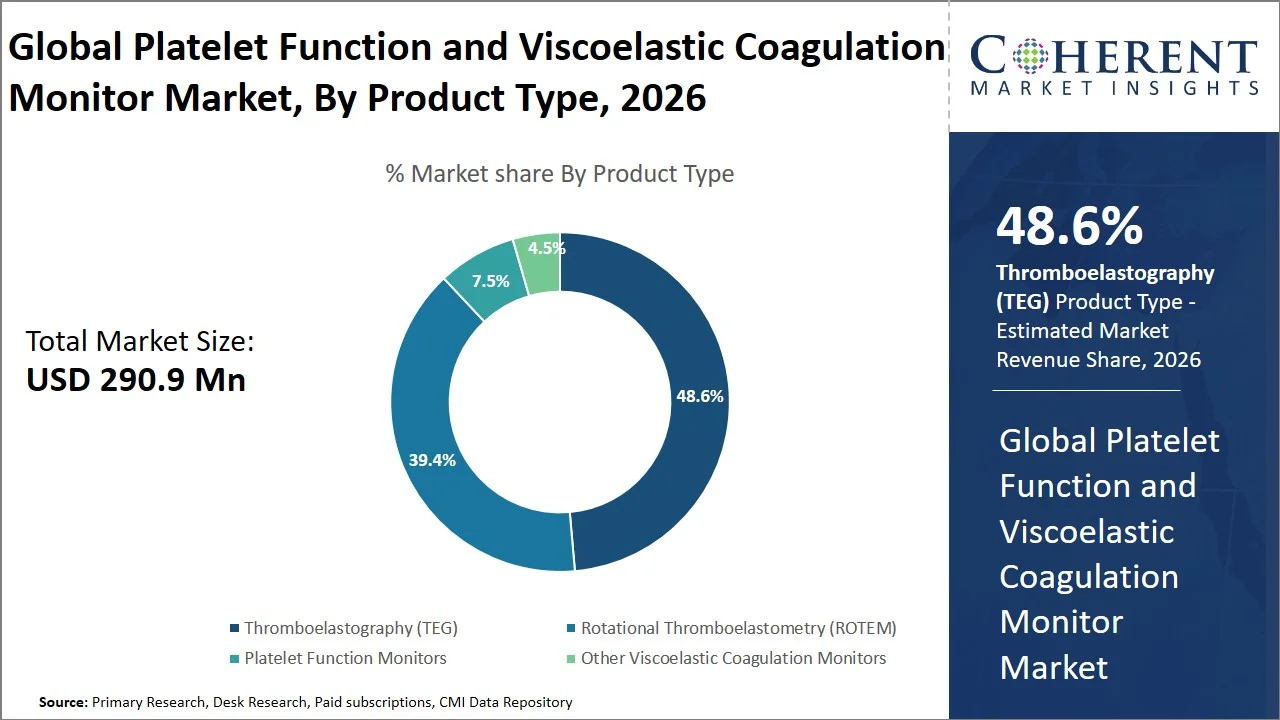
Why Do Thromboelastography (TEG) Dominate the Global Platelet Function and Viscoelastic Coagulation Monitor Market?
Thromboelastography (TEG) is projected to hold the market share of 48.6% in 2026, owing to its benefit to quickly analyze clot formation, clot strength and fibrinolysis. Its point-of-care technology leads to more rapid clinical decisions and focused blood management. For instance, TEG 6s, Haemonetics' next-generation system, utilizes automatically controlled microfluidic cartridges in parallel testing for up to four tests without need for individual reagent addition by the operator. The PlateletMapping cartridges, on the other hand, allow evaluation of global hemostasis and platelet function on the same platform.
- Current Industry Events of 2026
- Market Size Estimation
- Regional Breakdown
- Competitive Landscape
- Customer Intelligence
- Segmental Analysis
- Pricing Analysis
- Key Market Drivers, Challenges & Future Trends
- Customized Insights Section
Why Does Cardiac Surgery Represent the Largest Application Segment in the Platelet Function and Viscoelastic Coagulation Monitor Market?
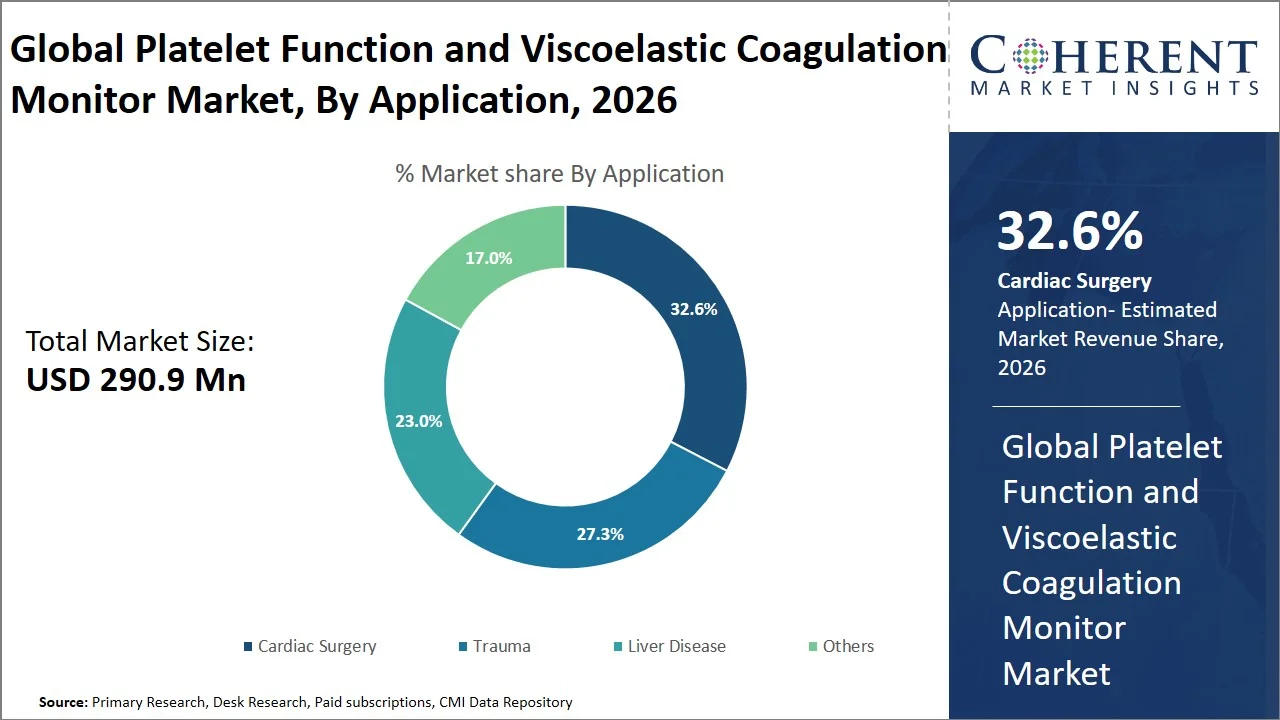
Cardiac surgery is projected to hold a market share of 32.6% in 2026, due to the risk of platelet and hemostatic abnormalities associated with cardiopulmonary bypass surgery. Real-time monitoring of platelets and coagulation can determine the nature of the hemostatic defect, thus facilitate intraoperative and postoperative fluid administration. For instance, in May 2025, a systematic review published by the National Library of Medicine developed specific TEG 6s protocol algorithm for cardiac surgery patients and bleeding issues, creating guidance for intraoperative and early postoperative management of blood transfusion strategies. This encourages more widely established integration of viscoelastic monitoring in cardiac-surgery operating suites.
Hospitals Segment Dominates the Global Platelet Function and Viscoelastic Coagulation Monitor Market
The hospitals segment is projected to hold a market share of 42.1% in 2026, driven by the vast number of bleeding injuries and availability of dedicated transfusion and critical care infrastructure. Hospitals may include viscoelastic monitoring into existing trauma, surgical or blood-management practices to better inform targeted transfusion practices. For instance, in July 2025, a retrospective cohort study conducted by St. Michael’s Hospital (SMH) published in John Wiley & Sons, Inc reported that ROTEM had been integrated in its major hemorrhage protocol for over 10 years. ROTEM was ordered in patients who had suffered trauma, the results were available to view in real time in the trauma bay and were usually available within 10 minutes of being received. This reflects established hospital-level access to viscoelastic monitoring in an emergency setting.
Currents Events and their Impact
Current Events | Description and its Impact |
Joint Commission Strengthened Patient Blood Management Requirements for Viscoelastic Testing (January 2026) |
|
American Burn Association Issued Blood Product Transfusion Guideline (July 2025) |
|
TEG 6s-Guided Transfusion Algorithm Developed for Severe Trauma (June 2025) |
|
Platelet Function and Viscoelastic Coagulation Monitor Market Dynamics
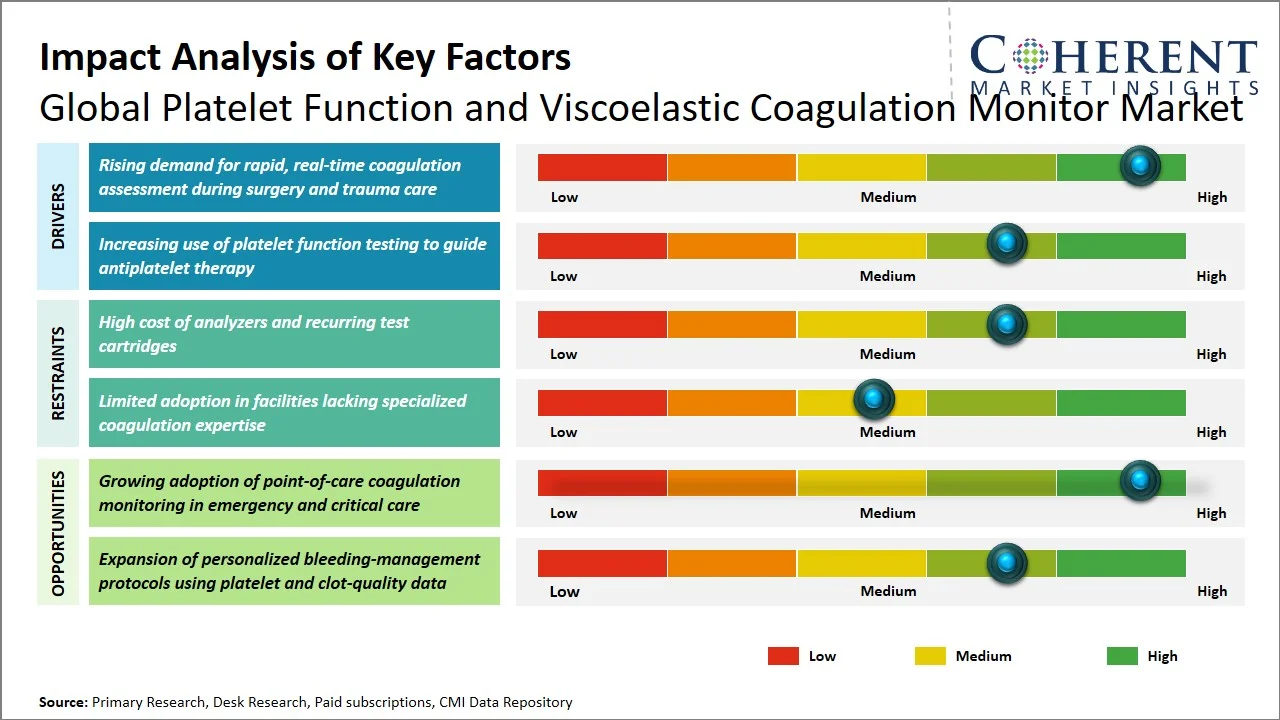
Market Drivers
- Rising demand for rapid, real-time coagulation assessment during surgery and trauma care: The rising need to identify coagulopathy quickly during major bleeding is encouraging the use of viscoelastic monitors, which provide dynamic assessment of clot formation, strength, and fibrinolysis at the point of care. For instance, a 2025 European clinical practice guideline update strongly recommends performing viscoelastic assays to aid diagnosis and treatment of trauma-induced coagulopathy in severely bleeding trauma patients. This reinforces the clinical role of rapid coagulation monitoring in emergency and surgical settings
- Increasing use of platelet function testing to guide antiplatelet therapy: Growing recognition of differences in patient response to P2Y12 inhibitors is supporting more individualized antiplatelet treatment, particularly in patients undergoing percutaneous coronary intervention. Platelet function testing can help identify patients at higher thrombotic or bleeding risk and guide escalation or de-escalation of therapy. For instance, the 2024 International Consensus Statement on Platelet Function and Genetic Testing in PCI recommends considering platelet function testing to guide P2Y12 inhibitor escalation in high-thrombotic-risk patients and de-escalation in selected patients with acute coronary syndrome.
- Growing adoption of patient blood management programs: The expansion of structured patient blood management programs is increasing the use of real-time coagulation assessment to support targeted bleeding management and minimize unnecessary transfusions. Such programs encourage healthcare providers to optimize blood use, reduce avoidable blood loss, and implement evidence-based hemostatic interventions. For instance, Australia’s National Blood Authority operates a national Patient Blood Management program and develops clinical guidelines and implementation resources for healthcare providers, supporting the integration of evidence-based blood-conservation and bleeding-management practices.
Emerging Trends
- Automation and miniaturization of platelet-function testing: Automated aggregometers, cartridge-based systems, and microfluidic platforms are improving testing consistency, throughput, and ease of use. These technologies are also enabling more compact and accessible platelet-function testing at the point of care.
- Expansion of personalized, goal-directed transfusion: TEG/ROTEM results are increasingly being incorporated into algorithms that match specific coagulation abnormalities with targeted blood products and hemostatic therapies. Recent consensus work has further standardized TEG 6s-guided transfusion decisions in severe trauma.
- Integration of advanced data interpretation and AI: Emerging platelet-function platforms are moving toward automated data analysis and AI-assisted interpretation to improve diagnostic consistency and support individualized treatment decisions. This trend could enhance the clinical utility of complex platelet and coagulation datasets.
Regional Insights
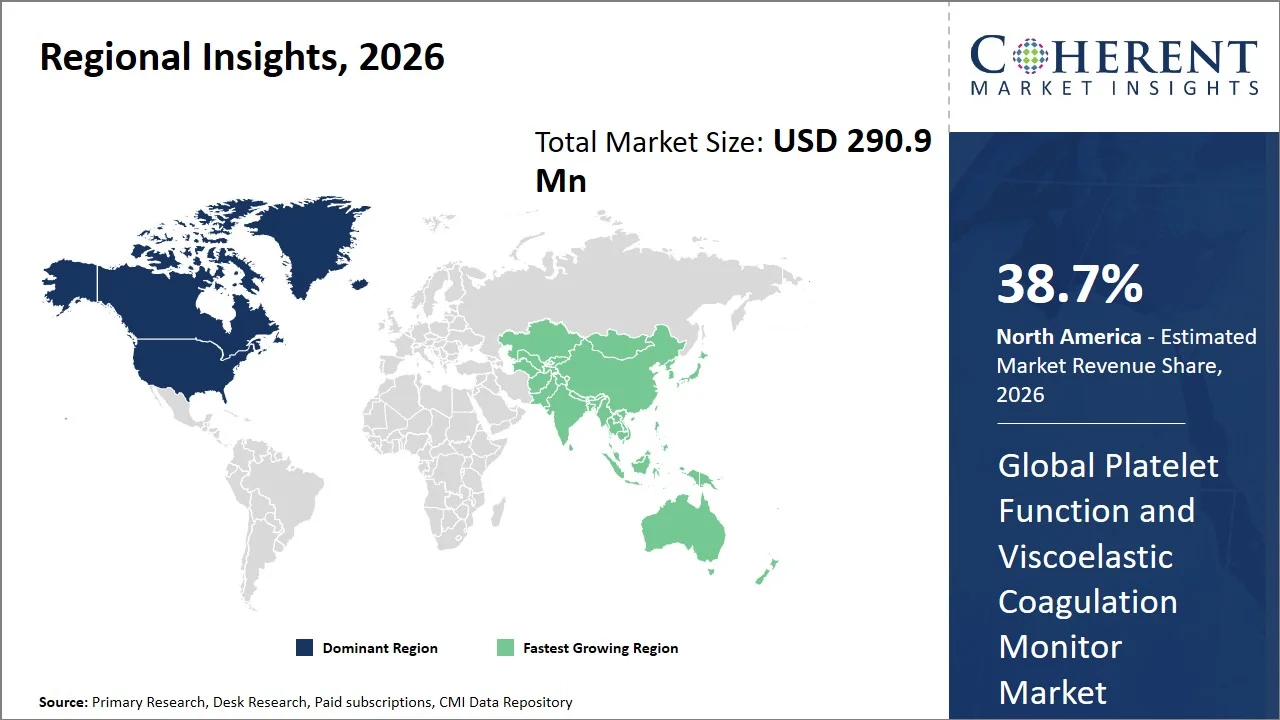
Why is North America a Strong Market for Platelet Function and Viscoelastic Coagulation Monitor?
North America leads the global platelet function and viscoelastic coagulation monitor market, accounting for an estimated 38.7% share in 2026, owing to well-established healthcare infrastructure, effective research and development (R&D), and beneficial government policies promoting innovative advancements in the medical diagnostic solutions market. For instance, through program called Small Business Innovation Research (SBIR) and Small Business Technology Transfer (STTR), the U.S. National Institutes of Health(NIH) grants more than USD 1.4 billion per year to R&D in small business for novel technologies, including medical devices and diagnostics. A huge network of hospital’s, trauma center, and specialized cardiac care center promotes a larger spread of real-time coagulation monitoring across the region. Moreover, advanced regulatory environment and experienced clinical research set-up across the geography enable advancements in point-of-care hemostasis solutions market.
Why Does Asia Pacific Platelet Function and Viscoelastic Coagulation Monitor Market Exhibit High Growth?
Asia Pacific is expected to exhibit the fastest growth in the global platelet function and viscoelastic coagulation monitor market, registering an estimated CAGR of 11.4% during 2026–2033. The region is projected to account for approximately 23.2% of the global market in 2026, owing to steady development of healthcare infrastructure, growing surgical procedure counts and escalating adoption of point-of-care medical diagnostic technologies. Increased government initiatives to uplift and broaden medical facilities along with higher spending on healthcare infrastructure within the nascent regions such as South Korea, China, and India is another contributing factor for regional market expansion.
For instance, with an outlay of USD 6.74 billion (INR 64,180 crore) through FY25-26, India’s PM-Ayushman Bharat Health Infrastructure Mission (PM-ABHIM) boosts the critical-care capacity, diagnostic infrastructure across India including 730 integrated public health laboratories. This increasing availability of healthcare and diagnostics makes an environment more conducive to advanced coagulation monitoring implementation. (Source: Press Information Bureau) Furthermore, the rise in awareness pertaining to coagulation management, and the necessity of quick analysis in cardiovascular surgeries, in-trauma settings, and intensive care, has encouraged the utilization of sophisticated diagnostics.
Global Platelet Function and Viscoelastic Coagulation Monitor Market Outlook for Key Countries
Why is the U.S. Leading Innovation and Adoption in the Platelet Function and Viscoelastic Coagulation Monitor Market?
The U.S. is at the forefront of innovation and penetration with pre-established TEG, ROTEM, and platelet-function testing used in trauma, cardiac surgery, and critical care workstreams. The country's market leading position in hospital applications is enhanced by TEG 6s-based clinical algorithms targeting cardiac surgery and major bleeds. The use of these applications is bolstering the incorporation of real-time coagulation monitoring into U.S. hospital practice.
Is Japan a Favorable Market for Platelet Function and Viscoelastic Coagulation Monitor Market?
Japan is one of the most promising markets for the platelet function and viscoelastic coagulation monitor market, because TEG and ROTEM are used routinely in operating rooms, emergency care, trauma, and cardiovascular surgery. TEG is considered as the only point-of-care whole-blood coagulation test defined as by the Japan Society on Thrombosis and Hemostasis and has been applied in OR/ER setting in the country. Furthermore, Japan population’s aging, cardiovascular and surgical procedure volume leads to the increased needs in fast, on-bedside hemostasis management.
Is China Emerging as a Key Growth Hub for the Platelet Function and Viscoelastic Coagulation Monitor Market?
China is the prime focus area of growth for the platelet function and viscoelastic coagulation monitor market due to significant spread of TEG usage in the hospital coagulation management. According to China Insights Consultancy (CIC), market size for China’s TEG device revenue increased from RMB 297.6 million in 2018 to RMB 965.4 million in 2024 growing at a CAGR of 21.7%. Also, applications of TEG tests used in cardiac surgeries, trauma, emergency situations, and intensive-care settings contribute to the growth in this market.
Why Does Germany Top the European Platelet Function and Viscoelastic Coagulation Monitor Market?
Germany leads the European platelet function and viscoelastic coagulation monitor market based on extensive cardiac surgery infrastructure with established integration of viscoelastic testing into the peri-operative blood management workflow. Germany's importance in ROTEM blood-analyzing technology, with this technique originating and continuing to develop within Germany, places it firmly in its leadership role within cardiac surgery settings. Furthermore, support from the European cardiac surgery guidelines by including TEG/ROTEM based blood management as an integrated part of the patient blood management further cement Germany's leadership role.
Is Platelet Function and Viscoelastic Coagulation Monitor Market Developing in India?
India has emerged as a promising and lucrative market place for platelet function and viscoelastic coagulation monitoring especially as state-of-the-art cardiac centers, liver-transplant centers and trauma-care centers increase their utilization of point-of care testing of hemostasis. Specifically Indian patient blood-management specialists identified TEG and ROTEM as appropriate tests for monitoring coagulation in real-time while patients are undergoing cardiac surgery, and indicated that availability of these devices in OR and ICUs should be focused for high-risk patients.
Impact of Viscoelastic Testing on Blood Product Transfusion in Surgical Patients
Outcome | VHA-guided management | Clinical significance |
Red blood cell transfusion | Lower use | Supports targeted transfusion decisions |
Platelet transfusion | Lower use | Enables platelet-specific hemostatic management |
Fresh frozen plasma transfusion | Lower use | Helps reduce empiric plasma administration |
Blood loss | Lower | Supports faster identification of coagulation abnormalities |
ICU stay | Shorter | Indicates potential improvement in perioperative management |
How is the growing adoption of point-of-care coagulation monitoring in emergency and critical care creating new growth opportunities in the platelet function and viscoelastic coagulation monitor market?
Increased use of point-of-care coagulation monitoring has expanded availability of timely assessment of hemostasis at the emergency department or in intensive Care, where standard Laboratory testing often results in delay of hemostatic intervention. Portable TEG and ROTEM units facilitate dynamic characterization of the coagulation process at the bedside. For instance, in September 2025, Queensland Health study published by National Library of Medicine reported 43,220 viscoelastic hemostatic assay (VHA) tests across 21,178 patients, including 7,693 tests performed in emergency departments, reinforcing the significant integration of systems into acute-care workflows.
Market Players, Key Development, and Competitive Landscape
Key Developments
- In July 2026, Retham Technologies launched its functional Retham Cryoplatelets for research and named Prolytix as the distributor. The cryopreserved platelets provide a consistent, stable, readily available source of functional human platelets for laboratory use. The launch can support platelet-function and coagulation research by reducing reliance on fresh donor platelets.
- In April 2026, PlateletDiagnostics announced a novel immune-based platelet function assay designed to monitor antiplatelet therapy. The assay measures phosphorylation of the platelet protein Drp1 using an ELISA-based approach, offering a potential new method for assessing platelet function and treatment response. This development could support the expansion of personalized antiplatelet therapy monitoring.
- In May 2025, Entegrion’s Viscoelastic Coagulation Monitor (VCM) received FDA Breakthrough Device Designation for its potential use in assessing hemostasis in preterm neonates. The designation supports development of a rapid, point-of-care coagulation monitoring solution for neonatal care. This milestone could broaden the application of viscoelastic coagulation monitoring in specialized clinical settings.
Competitive Landscape
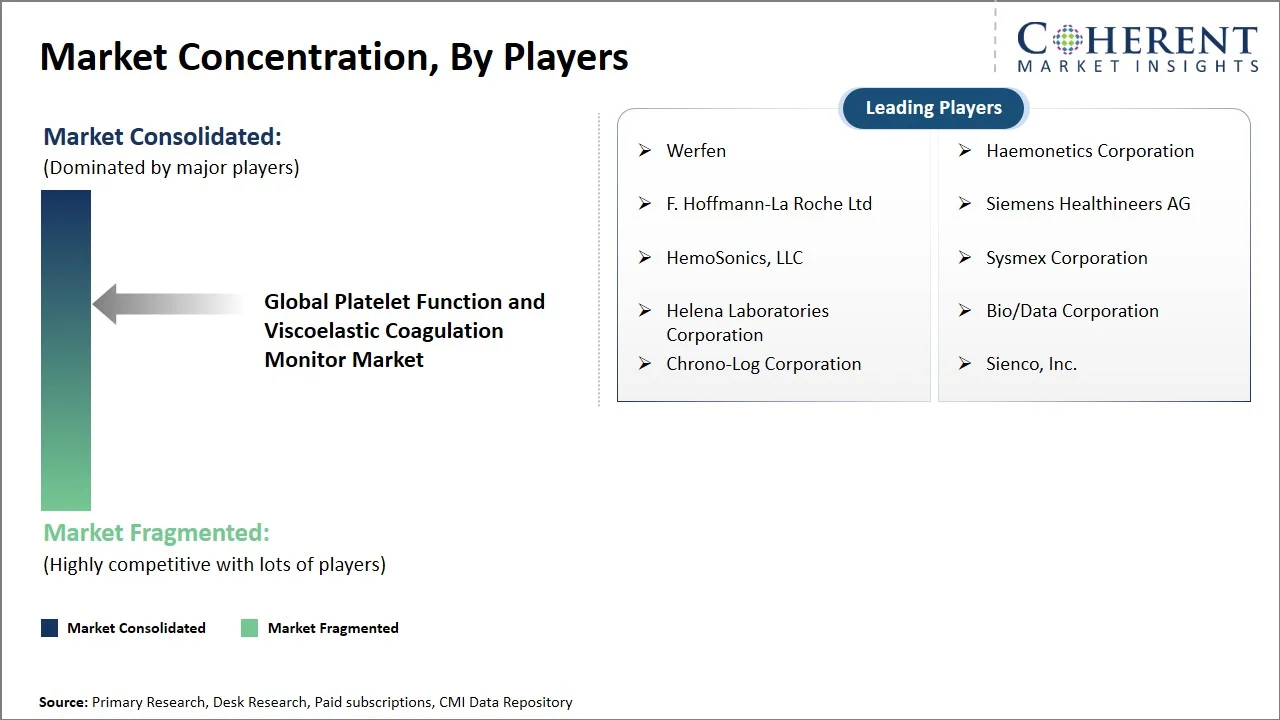
The global platelet function and viscoelastic coagulation monitor market is moderately consolidated, with competition centered on technological performance, testing speed, ease of use, clinical utility, and integration into patient blood-management workflows. Leading players are expanding cartridge-based and portable platforms that enable rapid assessment of coagulation and platelet contribution to clot strength, while broadening applications across cardiac surgery, trauma, liver transplantation, and critical care. Companies are also strengthening hospital networks, clinical evidence, and software capabilities to improve adoption and differentiate their platforms. Key focus areas include:
- Development of cartridge-based and automated monitoring systems
- Expansion of platelet-function assessment capabilities
- Expansion of clinical applications across surgery, trauma, transplantation, and critical care
- Strengthening clinical evidence and patient blood-management integration
Market Report Scope
Platelet Function and Viscoelastic Coagulation Monitor Market Report Coverage
| Report Coverage | Details | ||
|---|---|---|---|
| Base Year: | 2025 | Market Size in 2026: | USD 290.9 Mn |
| Historical Data for: | 2020 To 2024 | Forecast Period: | 2026 To 2033 |
| Forecast Period 2026 to 2033 CAGR: | 8.8% | 2033 Value Projection: | USD 524.5 Mn |
| Geographies covered: |
| ||
| Segments covered: |
| ||
| Companies covered: | Werfen, Haemonetics Corporation, F. Hoffmann-La Roche Ltd, Siemens Healthineers AG, HemoSonics, LLC, Sysmex Corporation, Helena Laboratories Corporation, Bio/Data Corporation, Chrono-Log Corporation, Sienco, Inc. | ||
| Growth Drivers: |
| ||
| Restraints & Challenges: |
| ||
Analyst Opinion (Expert Opinion)
- In the coming years, the global platelet function and viscoelastic coagulation monitor market will move toward automated, portable, and increasingly integrated point-of-care platforms that deliver rapid coagulation and platelet-function results with minimal operator intervention. Manufacturers are expected to combine TEG/ROTEM capabilities with automated interpretation, connectivity with hospital information systems, and decision-support tools, while expanding applications beyond cardiac surgery and trauma into transplantation, critical care, and other high-bleeding-risk procedures.
- The maximum opportunities will probably exist within thromboelastography (TEG) for trauma in India, where an established monitoring technology, rising emergency and trauma-care requirements, and expanding hospital infrastructure create attractive growth potential. Portable, cartridge-based TEG systems offering rapid turnaround and low operational complexity are likely to gain traction across tertiary hospitals and emerging trauma-care networks.
- In order to obtain a competitive advantage, market participants should focus on reducing operational complexity and total cost of ownership while improving portability, test speed, and interoperability with hospital information systems. Competitive advantage can be strengthened through reliable consumable availability, automated result interpretation, application-specific clinical algorithms, and solutions tailored to trauma, cardiac surgery, and critical-care workflows.
Speak to the analyst
Want personalized insights?
Take the findings above to one of our principal consultants, or have the report rebuilt around the segments, geographies and competitors you actually track.
Market Segmentation
- Product Type Insights (Revenue, USD Mn, 2021 - 2033)
- Thromboelastography (TEG)
- Rotational Thromboelastometry (ROTEM)
- Platelet Function Monitors
- Other Viscoelastic Coagulation Monitors
- Application Insights (Revenue, USD Mn, 2021 - 2033)
- Cardiac Surgery
- Trauma
- Liver Disease
- Others
- End User Insights (Revenue, USD Mn, 2021 - 2033)
- Hospitals
- Ambulatory Surgical Centers
- Clinics
- Others
- Regional Insights (Revenue, USD Mn, 2021 - 2033)
- North America
- U.S.
- Canada
- Latin America
- Brazil
- Argentina
- Mexico
- Rest of Latin America
- Europe
- Germany
- U.K.
- Spain
- France
- Italy
- Russia
- Rest of Europe
- Asia Pacific
- China
- India
- Japan
- Australia
- South Korea
- ASEAN
- Rest of Asia Pacific
- Middle East
- GCC Countries
- Israel
- Rest of Middle East
- Africa
- South Africa
- North Africa
- Central Africa
- North America
- Key Players Insights
- Werfen
- Haemonetics Corporation
- Hoffmann-La Roche Ltd
- Siemens Healthineers AG
- HemoSonics, LLC
- Sysmex Corporation
- Helena Laboratories Corporation
- Bio/Data Corporation
- Chrono-Log Corporation
- Sienco, Inc.
Sources
Primary Research Interviews
- Cardiac anesthesiologists and perfusionists using TEG/ROTEM for perioperative coagulation management
- Trauma surgeons and emergency physicians involved in viscoelastic-guided bleeding management
- Hematologists and transfusion-medicine specialists involved in platelet-function and coagulation testing
- Laboratory directors and point-of-care testing managers overseeing coagulation-monitoring programs
- Medical-device quality assurance and regulatory professionals from platelet-function and viscoelastic coagulation monitor manufacturers
- Executives and product managers from coagulation diagnostics and point-of-care testing companies
Stakeholders
- Platelet function and viscoelastic coagulation monitor manufacturers
- Platelet-function assay, coagulation analyzer, and diagnostic reagent suppliers
- Healthcare distributors and laboratory diagnostic suppliers
- Blood banks, transfusion services, and patient blood-management program providers
- End-use Sectors
- Hospitals and multispecialty healthcare facilities
- Ambulatory surgery centers (ASCs)
- Trauma centers
- Cardiac surgery centers
- Liver transplantation centers
- Critical care and emergency departments
- Regulatory & Health Bodies
- U.S. Food and Drug Administration (FDA)
- Centers for Medicare & Medicaid Services (CMS)
- European Medicines Agency (EMA)
- Medicines and Healthcare products Regulatory Agency (MHRA), U.K.
- Pharmaceuticals and Medical Devices Agency (PMDA), Japan
- National Medical Products Administration (NMPA), China
- Therapeutic Goods Administration (TGA), Australia
Databases
- FDA 510(k) Premarket Notification Database
- FDA Medical Device Registration and Listing Database
- CMS Healthcare Cost Report Information System (HCRIS)
- ClinicalTrials.gov
- WHO Global Health Observatory
- World Bank Health Indicators Database
- OECD Health Statistics
Journals
- Journal of Thrombosis and Haemostasis
- Blood Advances
- British Journal of Anaesthesia
- Journal of Clinical Monitoring and Computing
- American Journal of Hematology
Associations
- American Society of Anesthesiologists (ASA)
- Society of Thoracic Surgeons (STS)
- Eastern Association for the Surgery of Trauma (EAST)
- International Society on Thrombosis and Haemostasis (ISTH)
- European Society of Anaesthesiology and Intensive Care (ESAIC)
- European Association for Cardio-Thoracic Surgery (EACTS)
Public Domain Sources
- World Health Organization (WHO) – Patient Blood Management and blood-safety resources
- U.S. Food and Drug Administration (FDA) – Medical device and coagulation-testing databases
- National Institutes of Health (NIH) – Hemostasis, platelet-function, and coagulation research
- Centers for Disease Control and Prevention (CDC) – Trauma, cardiovascular disease, and healthcare data
- Centers for Medicare & Medicaid Services (CMS) – Hospital and healthcare utilization data
- European Centre for Disease Prevention and Control (ECDC) – Healthcare and surgical safety resources
- World Bank – Healthcare infrastructure and health expenditure statistics
Proprietary Elements
- CMI Data Analytics Tool, Proprietary CMI Existing Repository of information for last 10 years.
Get access to 250+ pages report
Every segment, forecast, competitor profile and data table behind the analysis above — available for instant download.
- ESOMAR Member
- ISO 9001:2015 Certified
- D-U-N-S Registered
- GDPR & CCPA Compliant
Missing comfort of reading report in your local language? Find your preferred language:
Transform your Strategy with Exclusive Trending Reports
Frequently Asked Questions
The global platelet function and viscoelastic coagulation Monitor market is estimated to be valued at USD 290.9 Mn in 2026 and is expected to reach USD 524.5 Mn by 2033.
Thromboelastography (TEG) dominates due to its rapid, real-time assessment of clot formation, clot strength, and fibrinolysis, supporting timely transfusion and hemostatic decisions.
Platelet function and viscoelastic coagulation monitors are diagnostic systems that assess platelet activity and whole-blood coagulation dynamics to guide bleeding and transfusion management.
They are used to assess platelet activity and coagulation dynamics to guide bleeding management, transfusion, and hemostatic therapy.
They analyze whole-blood clot formation, strength, breakdown, and platelet activity to provide real-time hemostatic information.
TEG and ROTEM are viscoelastic testing technologies that assess clot dynamics using different analytical systems and measurement parameters.
They identify specific coagulation abnormalities in real time, enabling targeted selection of blood products and hemostatic therapies.