

Global Pleurotus Ostreatus Market Size and Forecast – 2026 To 2033
The global pleurotus ostreatus market is estimated to be valued at USD 6.28 Bn in 2026 and is expected to reach USD 8.04 Bn by 2033, growing at a compound annual growth rate (CAGR) of 3.6% from 2026 to 2033. The market growth is supported by the transition of oyster mushrooms from a conventional fresh food ingredient into a diversified functional ingredient used across culinary, wellness, and specialty nutrition applications.
Producers are increasingly exploring value creation through dried mushrooms, mushroom powders, extracts, and processed food formulations to overcome fresh-product shelf-life limitations and improve margins. In addition, commercial growers are adopting controlled cultivation systems and alternative substrate solutions to improve production consistency and resource efficiency. In April 2025, Smallhold expanded its mushroom cultivation operations through partnerships with retail and foodservice customers, strengthening access to locally grown specialty mushrooms and demonstrating the increasing commercialization of cultivated mushroom products in North America.
Key Takeaways of the Global Pleurotus Ostreatus Market
- Fresh Pleurotus Ostreatus is projected to register an estimated CAGR of 3.8% and account for 58.6 % of the global pleurotus ostreatus market in 2026, supported by consumer preference for minimally processed foods, superior texture, and wider retail availability. In April 2025, South Mill Champs partnered with Sprouts Farmers Market to introduce sustainable mushroom packaging solutions for fresh mushroom products.
- Grey Oyster Mushroom is expected to achieve an estimated CAGR of 3.9% and hold 64.8 % of the global pleurotus ostreatus market in 2026, reflecting its established cultivation practices, consumer familiarity, and suitability across culinary applications. In February 2024, South Mill Champs announced a strategic joint venture with Grupo APAL to expand mushroom production capabilities in Mexico, strengthening specialty mushroom supply networks.
- Food Consumption is anticipated to record an estimated CAGR of 3.7% and represent 62.8 % of the global pleurotus ostreatus market in 2026, driven by mushroom adoption in plant based diets, restaurant menus, and household cooking. In August 2024, South Mill Champs expanded its distribution network through the acquisition of Baird Produce to improve fresh produce availability across Florida markets.
- Asia Pacific is estimated to grow at a CAGR of 4.1% and account for 44.6 % of the global pleurotus ostreatus market in 2026, supported by strong mushroom consumption traditions, expanding controlled cultivation, and growing functional food interest. In 2025, Nutricrafts expanded its functional mushroom portfolio in India with products including fresh organic oyster mushrooms and mushroom powder for wellness-focused consumers.
- Europe is projected to witness an estimated CAGR of 4.3% and contribute 26.7 % of the global pleurotus ostreatus market in 2026, supported by specialty mushroom innovation, sustainable cultivation initiatives, and organized industry collaboration. In 2026, the European Society of Specialty Mushroom Industry continued strengthening its network of growers, researchers, processors, and technology providers across European specialty mushroom markets.
Segmental Insights
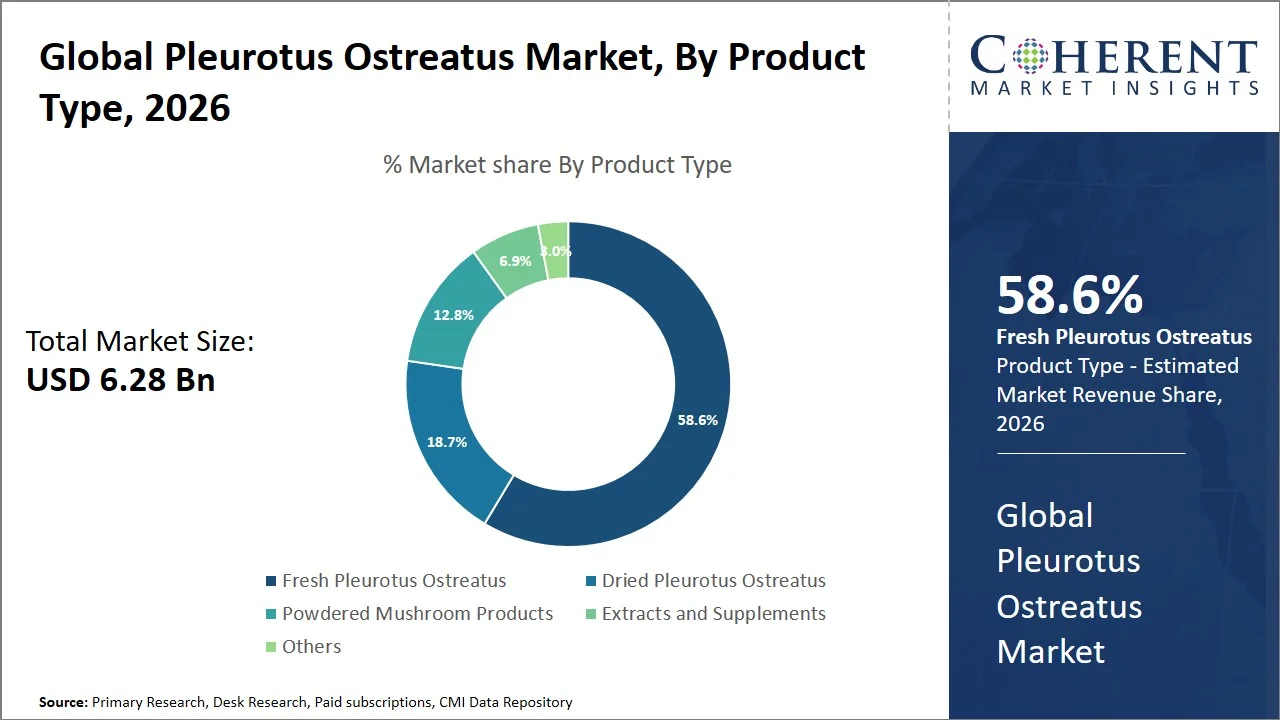
Why Does Fresh Pleurotus Ostreatus Dominate the Global Pleurotus Ostreatus Market?
Fresh Pleurotus Ostreatus is expected to account for 58.6% of the global pleurotus ostreatus market in 2026, supported by its direct alignment with consumer preferences for fresh, minimally processed, nutrient-rich food products. The segment leads due to strong household consumption, restaurant usage, and supermarket penetration where fresh oyster mushrooms are positioned as premium yet accessible ingredients. Producers benefit from relatively short cultivation cycles, efficient substrate utilization, and expanding controlled-environment farming systems that improve supply consistency and quality. Fresh formats remain commercially attractive because they preserve texture, flavor, and nutritional characteristics preferred by culinary users. Manufacturers and growers are increasingly investing in cold-chain infrastructure and localized production models to reduce spoilage and improve market reach. In April 2025, Caputo & Guest expanded domestic fresh mushroom production in the U.S. to strengthen locally grown mushroom availability for retailers and consumers.
- Current Industry Events of 2026
- Market Size Estimation
- Regional Breakdown
- Competitive Landscape
- Customer Intelligence
- Segmental Analysis
- Pricing Analysis
- Key Market Drivers, Challenges & Future Trends
- Customized Insights Section
Why Does Grey Oyster Mushroom Represent the Largest Variety Segment in the Global Pleurotus Ostreatus Market?
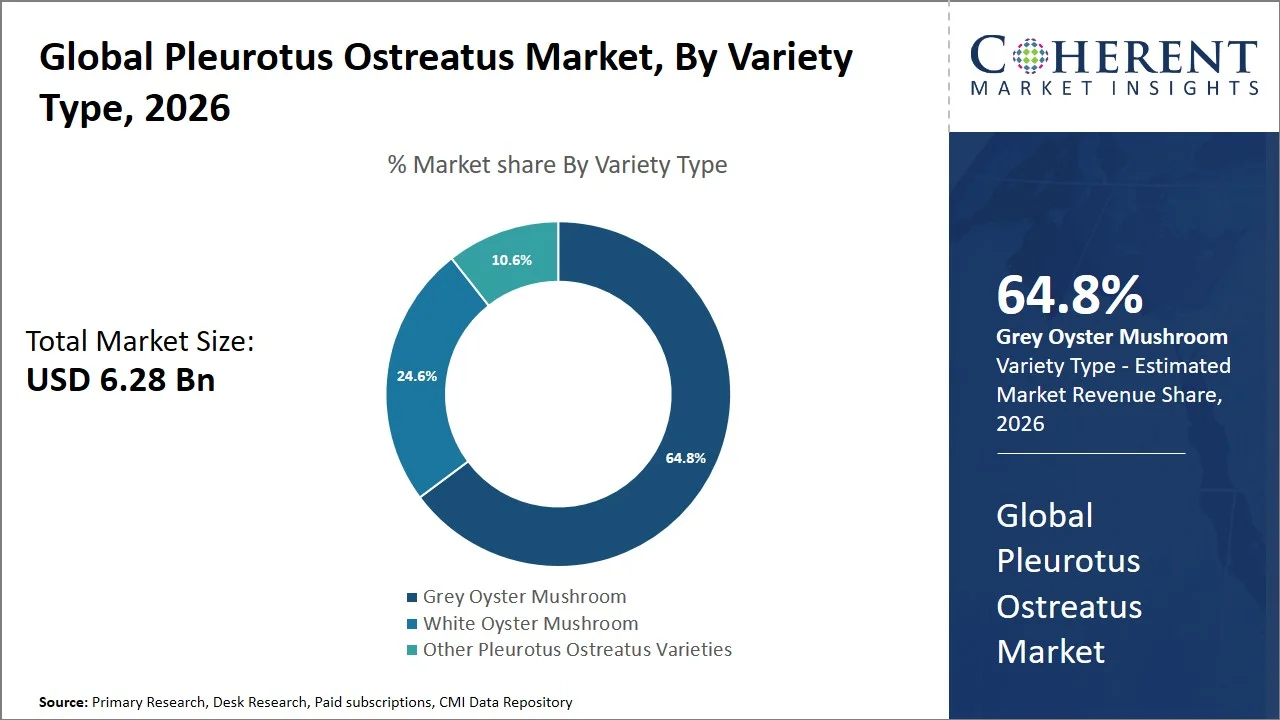
Grey Oyster Mushroom is projected to hold 64.8% of the global pleurotus ostreatus market in 2026, driven by its established cultivation ecosystem, adaptability across climatic conditions, and broad acceptance among commercial growers. The variety remains dominant because it performs well on commonly available agricultural substrates such as straw, sawdust, and other lignocellulosic materials, enabling cost-effective production across both small-scale farms and commercial facilities. Its firm texture, mild flavor profile, and versatility across fresh cooking, processed foods, and dried mushroom applications support consistent end-user demand. From a supplier perspective, Grey Oyster Mushroom offers operational advantages through simpler cultivation requirements compared with some specialty varieties, allowing wider farmer participation and production scalability. In January 2026, ICAR successfully demonstrated specialty oyster mushroom cultivation under controlled environmental conditions in Arunachal Pradesh, highlighting continued research efforts to diversify Pleurotus cultivation practices in India.
Why Does Food Consumption Dominate the Application Category of the Global Pleurotus Ostreatus Market?
Food Consumption is expected to represent 62.8% of the global pleurotus ostreatus market in 2026, supported by the widespread use of oyster mushrooms as a culinary ingredient across households, restaurants, and foodservice channels. The segment leads because Pleurotus Ostreatus offers desirable texture, nutritional value, and versatility across vegetarian dishes, ready-to-cook meals, soups, and premium food preparations. Retailers, growers, and food processors benefit from expanding consumer interest in fresh mushrooms and locally sourced food products. Increasing investments in consumer education, recipe promotion, and retail engagement are strengthening mushroom purchasing behavior. In March 2026, Agriculture and Agri-Food Canada approved funding for Mushrooms Canada’s “Restoring and Revitalizing Mushroom Consumption in North America” initiative, aimed at expanding fresh mushroom consumption through retail sampling, consumer education, and digital marketing activities.
Current Events and their Impact
Current Event | Description and Its Impact |
January 2025 – ICAR Mushroom Cultivation Entrepreneurship Programme, India |
|
October 2024 – ICAR-IIHR Standardized Oyster Mushroom Cultivation Technology, India |
|
2025 – India Agricultural Research Focus on Mushroom Sector Development |
|
Global Pleurotus Ostreatus Market Dynamics
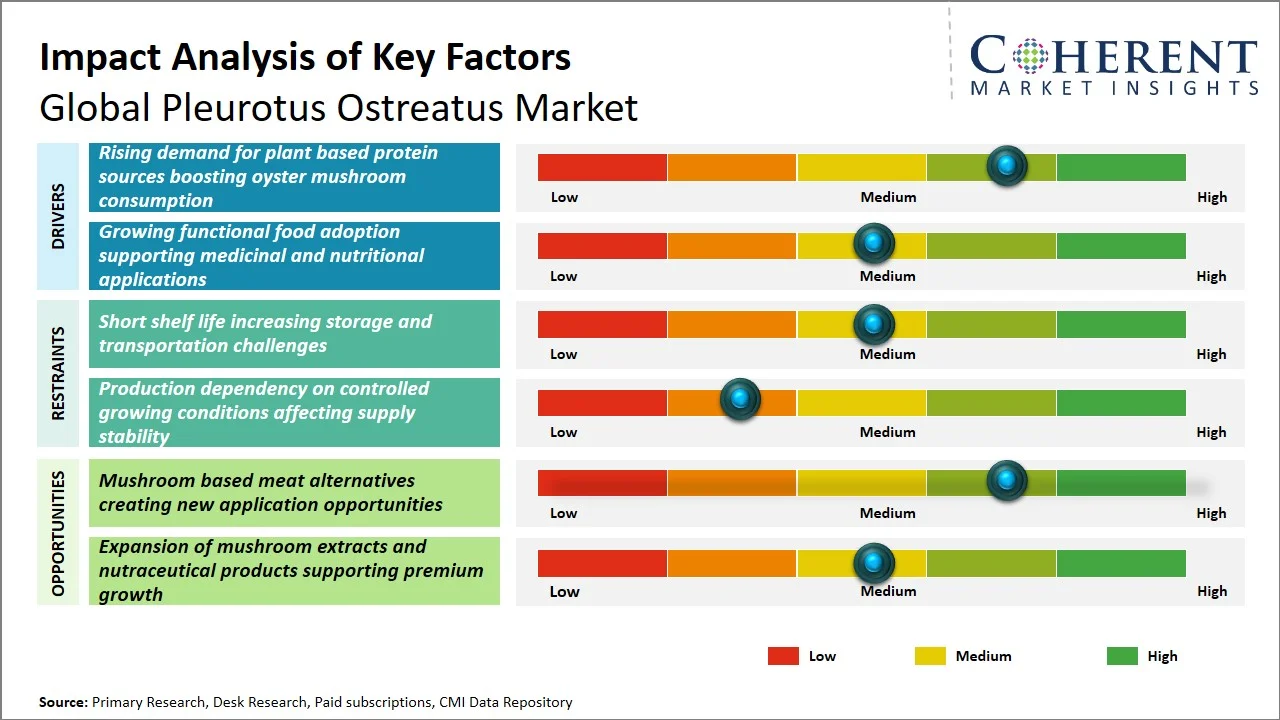
Key Market Drivers
- Rising demand for plant based protein sources boosting oyster mushroom consumption: The growing shift toward plant based diets is strengthening demand for Pleurotus Ostreatus as consumers seek natural, protein-rich ingredients with meat-like texture and culinary flexibility. Oyster mushrooms are increasingly incorporated into vegetarian meals, foodservice menus, blended protein products, and convenient meal solutions due to their savory flavor profile and ability to replicate meat textures. This trend benefits mushroom growers, food processors, and retailers by expanding applications beyond traditional fresh consumption toward premium and alternative protein categories. Producers investing in scalable cultivation and distribution networks are positioned to capture demand from health-conscious consumers and sustainable food brands. In March 2025, MyForest Foods expanded its MyBacon production capabilities following additional investment to support retail growth of its mycelium-based food products across North America, highlighting increasing commercial interest in fungi-based protein alternatives.
- Growing functional food adoption supporting medicinal and nutritional applications: Functional food adoption is creating additional commercialization opportunities for Pleurotus Ostreatus beyond conventional culinary usage. Oyster mushrooms are increasingly explored for their nutritional profile, bioactive compounds, and potential role in wellness-oriented food formulations, encouraging manufacturers to develop powders, extracts, and specialty mushroom ingredients. This shift benefits cultivators, ingredient processors, and nutraceutical companies by enabling higher-value applications and premium product positioning. Companies with capabilities in mushroom processing, quality standardization, and ingredient formulation can access expanding wellness-focused consumer segments. In May 2025, Laird Superfood expanded its organic mushroom powder portfolio by introducing Organic Oyster Mushroom Powder as part of its functional mushroom product range, supporting wider consumer access to mushroom-based wellness ingredients.
Emerging Market Trends
- Expansion of Controlled Environment and Precision Mushroom Cultivation: Commercial oyster mushroom production is gradually shifting toward controlled cultivation models that enable producers to manage temperature, humidity, substrate conditions, and crop cycles more effectively. These systems are helping growers achieve consistent quality, reduce seasonal production limitations, and improve supply reliability for organized retail and foodservice buyers. The trend is particularly relevant for commercial farms seeking scalability, while smaller growers are adopting simplified cultivation structures and ready-to-use production systems. Over the forecast period, precision cultivation practices are expected to influence investment decisions by improving operational efficiency and reducing production risks.
- Increasing Integration of Circular Economy Practices in Mushroom Production: The oyster mushroom industry is increasingly adopting circular production approaches by converting agricultural residues into valuable food products while generating reusable spent mushroom substrate. This trend is transforming cultivation economics by improving resource efficiency and creating additional revenue opportunities through composting, animal feed applications, and soil enrichment solutions. Producers are focusing on locally available biomass resources to reduce input costs and strengthen sustainability positioning. Over time, circular cultivation models are expected to become an important differentiator for suppliers targeting environmentally conscious consumers, institutional buyers, and sustainability-focused food companies.
Regional Insights

Why Does Asia Pacific Dominate the Global Pleurotus Ostreatus Market?
Asia Pacific is expected to account for 44.6% of the global pleurotus ostreatus market in 2026, supported by its established mushroom cultivation ecosystem, strong consumer acceptance, abundant agricultural residues for substrate utilization, and large-scale production capabilities. Countries such as China and India have developed extensive oyster mushroom farming networks ranging from smallholder operations to commercial controlled-environment facilities. The region benefits from favorable climatic conditions, traditional dietary integration of mushrooms, expanding plant based food consumption, and increasing interest in functional ingredients derived from edible fungi. Growing adoption of indoor cultivation technologies is further improving productivity consistency and enabling year-round supply. China’s leadership in global mushroom production and the expansion of oyster mushroom cultivation practices across Asia continue to strengthen regional dominance. In August 2025, research published through CABI highlighted India’s expanding mushroom cultivation landscape, including increasing adoption of oyster mushroom farming supported by training programs and sustainable agricultural practices.
Why Is Europe Emerging as the Fastest-Growing Region in the Global Pleurotus Ostreatus Market?
Europe is emerging as the fastest-growing region in the global pleurotus ostreatus market with a 26.7% share in 2026, driven by rising consumer preference for sustainable protein alternatives, increasing demand for locally produced food ingredients, and stronger adoption of circular bioeconomy practices. European growers are increasingly utilizing controlled cultivation systems that improve production efficiency while reducing dependence on seasonal supply conditions. The region’s focus on waste valorization also supports oyster mushroom cultivation, as Pleurotus species can efficiently utilize agricultural by-products such as straw and other lignocellulosic materials. Growing demand from retail, foodservice, and functional food manufacturers is encouraging commercialization beyond traditional fresh mushroom consumption. Research collaborations and innovation in mushroom-based applications are further strengthening Europe’s market position. In November 2025, According to Springer Nature Limited a study published in Scientific Reports demonstrated increasing European research interest in utilizing agricultural waste streams as sustainable substrates for Pleurotus ostreatus cultivation.
Global Pleurotus Ostreatus Market Outlook for Key Countries
Why Is the U.S. a Key Market for the Global Pleurotus Ostreatus Market?
The U.S. is a key market for the global pleurotus ostreatus market due to increasing consumer interest in functional foods, plant based nutrition, specialty mushrooms, and premium fresh produce categories. The country has a developed retail ecosystem, including supermarkets, specialty food stores, restaurants, and online grocery platforms that support wider mushroom availability. Commercial mushroom producers are increasingly investing in advanced cultivation facilities, automation, and value-added products such as mushroom powders and extracts. Growing awareness regarding immune-supporting foods and sustainable food choices is also expanding consumer adoption beyond traditional culinary usage. The U.S. market benefits from strong food innovation capabilities and increasing integration of mushrooms into alternative protein and wellness product categories. Research activities also indicate the country remains among the important contributors to Pleurotus ostreatus-related production and innovation globally.
Why Is India Important in the Global Pleurotus Ostreatus Market?
India plays an important role in the global pleurotus ostreatus market due to its expanding cultivation base, availability of agricultural residues, rising nutritional awareness, and increasing participation of small and medium-scale growers. Oyster mushrooms are gaining popularity because they require comparatively lower investment, shorter cultivation cycles, and can utilize locally available substrates such as wheat straw, paddy straw, and other agro-waste materials. Government-supported agricultural training programs, research institutions, and farmer development initiatives are improving cultivation knowledge and commercialization opportunities. Demand is also increasing in urban markets through fresh consumption, dried mushroom products, and online retail channels. India’s growing focus on sustainable agriculture and income diversification for farmers is supporting wider adoption of oyster mushroom farming.
In August 2025, CABI research highlighted India’s expanding oyster mushroom cultivation activities, including adoption among farmers and promotion through agricultural extension networks.
Why Does China Support Growth in the Global Pleurotus Ostreatus Market?
China supports growth in the global pleurotus ostreatus market through its extensive mushroom production infrastructure, established cultivation expertise, strong domestic consumption base, and export-oriented supply capabilities. The country has developed highly integrated mushroom value chains covering spawn production, substrate preparation, cultivation, processing, and distribution. Large-scale availability of agricultural residues, advanced farming techniques, and long-standing consumer familiarity with edible fungi provide China with a significant competitive advantage. The country’s commercial ecosystem also supports development of dried mushrooms, processed products, and functional mushroom ingredients for domestic and international markets. Research indicates that China remains one of the largest contributors to global mushroom production and plays a central role in Pleurotus cultivation expansion.
In recent years, Chinese producers have increasingly adopted technology-enabled cultivation methods to improve production efficiency and quality consistency across commercial mushroom operations.
Why Is Germany a Strategic Country in the Global Pleurotus Ostreatus Market?
Germany represents a strategic country in the global pleurotus ostreatus market due to its advanced food processing industry, strong sustainability focus, organized retail infrastructure, and growing consumer interest in alternative protein sources. The country’s emphasis on resource-efficient food production aligns well with oyster mushroom cultivation, which supports circular agricultural practices through utilization of organic residues. German consumers increasingly demand fresh, locally sourced, and environmentally responsible food products, creating opportunities for premium mushroom suppliers and innovative food manufacturers. The country also serves as an important European distribution hub, connecting mushroom producers with broader regional markets. Growing adoption of controlled-environment agriculture and biotechnology-based food innovation further supports market development. Germany’s strong research ecosystem and sustainability-driven agricultural policies create favorable conditions for commercial mushroom cultivation expansion.
Why Is Canada an Important Growth Market for the Global Pleurotus Ostreatus Market?
Canada represents an important growth market for the global pleurotus ostreatus market due to its expanding specialty mushroom industry, strong consumer preference for sustainable food products, and growing demand for locally produced fresh foods. The country’s advanced agricultural infrastructure, availability of controlled-environment farming technologies, and established greenhouse production expertise support year-round oyster mushroom cultivation despite climatic limitations. Canadian growers are increasingly adopting indoor farming models that enable consistent production quality, reduce dependence on imports, and improve supply reliability for supermarkets, restaurants, and foodservice operators. The country’s focus on circular agriculture also creates opportunities for utilizing agricultural residues as mushroom cultivation substrates. In addition, rising interest in plant based diets and functional ingredients is encouraging broader adoption of oyster mushrooms across retail and processed food applications. In September 2025, Mushrooms Canada continued promoting domestic mushroom consumption and industry development through initiatives supporting Canadian mushroom growers and sustainable production practices.
Product Innovation and Consumption Evolution Landscape
Technology / Innovation Area | Current Adoption Level | Market Application | Strategic Impact |
Controlled Environment Cultivation Systems | Medium | Commercial oyster mushroom farms | Enables year-round production and quality consistency |
Automated Climate Monitoring Systems | Emerging | Large-scale cultivation facilities | Improves yield management and reduces production variability |
Advanced Spawn Production Technologies | Medium | Mushroom growers and laboratories | Enhances crop reliability and productivity |
Agricultural Residue-Based Substrate Processing | High | Sustainable mushroom cultivation | Reduces raw material costs and supports circular production |
Ready-to-Grow Mushroom Cultivation Kits | Emerging | Household and small-scale growers | Expands consumer participation and decentralized production |
Mushroom Processing and Preservation Technologies | Medium | Dried mushrooms, powders, extracts | Extends shelf life and enables value-added commercialization |
How Are Value-Added Mushroom Ingredients Creating New Growth Opportunities in the Global Pleurotus Ostreatus Market?
Value-added mushroom ingredients represent an attractive opportunity for companies seeking growth beyond fresh mushroom sales. While fresh Pleurotus Ostreatus remains central to consumption, processed formats such as powders, extracts, and functional ingredients allow manufacturers to access higher-margin applications across wellness foods, supplements, and specialty nutrition products. Ingredient suppliers can differentiate through standardized processing, quality certification, and customized formulations for food manufacturers. This opportunity is particularly relevant for companies that can integrate cultivation, processing, and distribution capabilities to control product quality and supply reliability. Investment in extraction technologies, branding, and partnerships with food innovators will be important for capturing emerging demand. New entrants with specialized processing capabilities may compete effectively, while established growers can create additional value by moving downstream into ingredient development and branded products.
Market Players, Key Development, and Competitive Landscape
Key Developments
- In February 2026, Caputo & Guest launched its direct-to-consumer e-commerce platform to expand access to fresh specialty mushrooms across the U.S. The initiative includes fresh oyster mushroom offerings and strengthens the company’s vertically integrated cultivation-to-consumer model. This development is relevant to the global pleurotus ostreatus market as direct retail channels can improve consumer accessibility, brand visibility, and premium mushroom adoption.
- In September 2025, Red Light Holland’s subsidiary Happy Caps Mushroom Farm expanded its partnership with Albertsons Companies’ Safeway banner to increase distribution of oyster mushroom home grow kits across 123 stores in Oregon and Washington. This development supports the global pleurotus ostreatus market by improving retail accessibility, strengthening consumer participation in mushroom cultivation, and creating new distribution pathways for oyster mushroom products.
Competitive Landscape
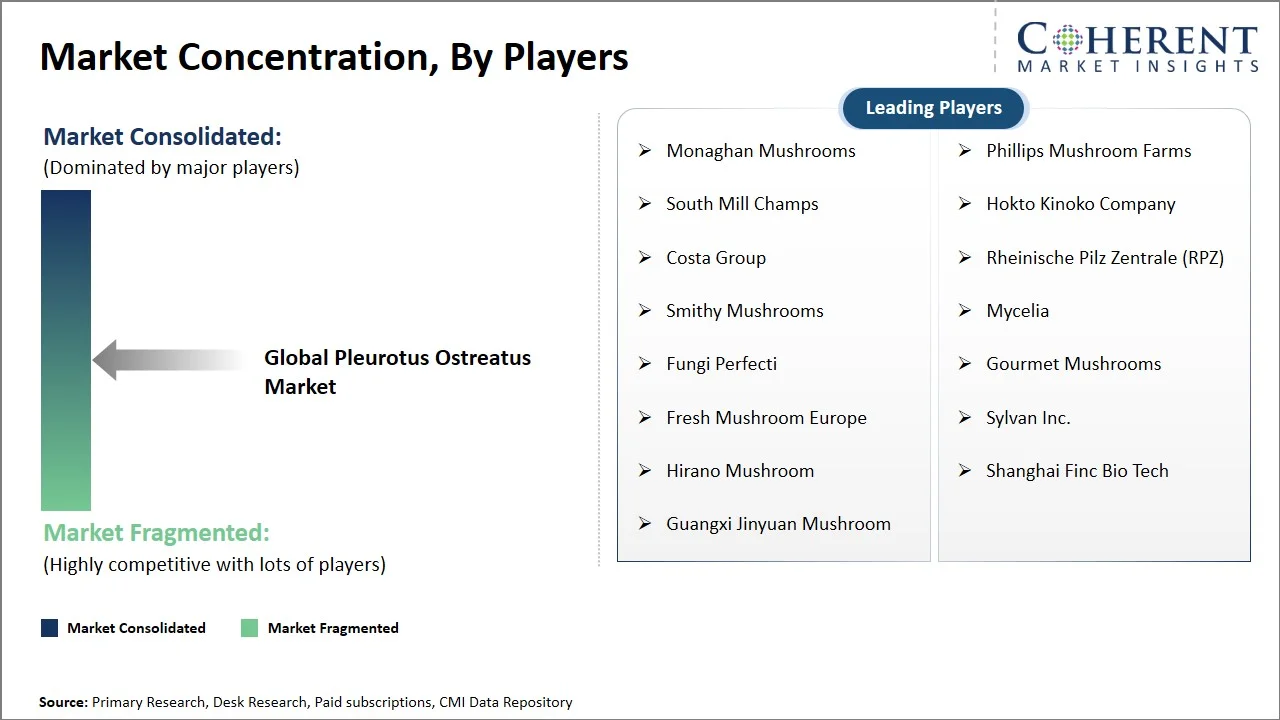
The global pleurotus ostreatus market is moderately fragmented, with competition ranging from specialized mushroom growers and agricultural enterprises to processed mushroom ingredient suppliers. Competitive positioning depends on cultivation efficiency, product quality, supply reliability, distribution access, sustainability practices, and ability to provide fresh as well as value-added mushroom formats.
Key focus areas include
- Cultivation efficiency and production consistency
- Controlled environment farming capabilities
- Quality assurance and food safety certifications
- Fresh mushroom supply chain and cold-chain infrastructure
- Processing capabilities for dried mushrooms, powders, and extracts
- Sustainable substrate utilization and circular production models
- Retail, foodservice, and institutional distribution networks
- Product differentiation through organic, specialty, and premium positioning
Market Report Scope
Pleurotus Ostreatus Market Report Coverage
| Report Coverage | Details | ||
|---|---|---|---|
| Base Year: | 2025 | Market Size in 2026: | USD 6.28 Bn |
| Historical Data for: | 2020 To 2024 | Forecast Period: | 2026 To 2033 |
| Forecast Period 2026 to 2033 CAGR: | 3.6% | 2033 Value Projection: | USD 8.04 Bn |
| Geographies covered: |
| ||
| Segments covered: |
| ||
| Companies covered: | Monaghan Mushrooms, Phillips Mushroom Farms, South Mill Champs, Hokto Kinoko Company, Costa Group, Rheinische Pilz Zentrale (RPZ), Smithy Mushrooms, Mycelia, Fungi Perfecti, Gourmet Mushrooms, Fresh Mushroom Europe, Sylvan Inc., Hirano Mushroom, Shanghai Finc Bio Tech, Guangxi Jinyuan Mushroom | ||
| Growth Drivers: |
| ||
| Restraints & Challenges: |
| ||
Analyst Opinion (Expert Opinion)
- The global pleurotus ostreatus market is likely to transition from a cultivation-driven industry toward a more integrated food ecosystem where producers compete through processing capabilities, branded products, supply-chain reliability, and specialized applications rather than only production volume.
- The most important market transformation will come from the combination of controlled cultivation, circular production models, and ingredient innovation. Companies capable of converting cultivation expertise into scalable food and wellness solutions will likely gain stronger competitive positioning.
- Market participants should prioritize reliable spawn supply, production automation, post-harvest infrastructure, and value-added processing capabilities. Companies should avoid competing only on fresh mushroom pricing and instead focus on differentiated products, customer partnerships, and sustainable production models to protect margins.
Speak to the analyst
Want personalized insights?
Take the findings above to one of our principal consultants, or have the report rebuilt around the segments, geographies and competitors you actually track.
Market Segmentation
- Product Type Insights (Revenue, USD Bn, 2021 - 2033)
- Fresh Pleurotus Ostreatus
- Dried Pleurotus Ostreatus
- Powdered Mushroom Products
- Extracts and Supplements
- Others
- Variety Type Insights (Revenue, USD Bn, 2021 - 2033)
- Grey Oyster Mushroom
- White Oyster Mushroom
- Other Pleurotus Ostreatus Varieties
- Application Insights (Revenue, USD Bn, 2021 - 2033)
- Food Consumption
- Nutraceuticals and Functional Foods
- Pharmaceutical Applications
- Animal Feed and Other Applications
- Research and Others
- Distribution Channel Insights (Revenue, USD Bn, 2021 - 2033)
- Supermarkets and Hypermarkets
- Specialty Food Stores
- Online Retail
- Foodservice Channels
- Direct Sales
- Cultivation Method Insights (Revenue, USD Bn, 2021 - 2033)
- Indoor Controlled Cultivation
- Outdoor and Traditional Cultivation
- Regional Insights (Revenue, USD Bn, 2021 - 2033)
- North America
- U.S.
- Canada
- Latin America
- Brazil
- Argentina
- Mexico
- Rest of Latin America
- Europe
- Germany
- U.K.
- Spain
- France
- Italy
- Russia
- Rest of Europe
- Asia Pacific
- China
- India
- Japan
- Australia
- South Korea
- ASEAN
- Rest of Asia Pacific
- Middle East
- GCC Countries
- Israel
- Rest of Middle East
- Africa
- South Africa
- North Africa
- Central Africa
- North America
- Key Players Insights
- Monaghan Mushrooms
- Phillips Mushroom Farms
- South Mill Champs
- Hokto Kinoko Company
- Costa Group
- Rheinische Pilz Zentrale (RPZ)
- Smithy Mushrooms
- Mycelia
- Fungi Perfecti
- Gourmet Mushrooms
- Fresh Mushroom Europe
- Sylvan Inc.
- Hirano Mushroom
- Shanghai Finc Bio Tech
- Guangxi Jinyuan Mushroom
Sources
Primary Research Interviews
- Oyster mushroom cultivators, commercial mushroom farms, spawn producers, mushroom processing companies, food manufacturers, nutraceutical companies, and specialty mushroom product developers
- Mushroom growers, agricultural entrepreneurs, foodservice operators, retail buyers, procurement managers, R&D professionals, cultivation technology providers, and functional ingredient specialists
Stakeholders
- Commercial mushroom producers, oyster mushroom cultivation companies, spawn suppliers, substrate suppliers, mushroom processing companies, and fresh produce distributors
- Agricultural input providers, cultivation equipment manufacturers, controlled-environment farming technology providers, packaging suppliers, logistics providers, and cold-chain service companies
- Food manufacturers, plant based food companies, nutraceutical brands, dietary supplement manufacturers, restaurants, supermarkets, specialty food retailers, and online grocery platforms
End-use Industries
- Fresh food and foodservice industry
- Plant based food and alternative protein sector
- Functional foods and nutraceutical products
- Dietary supplements and wellness products
- Food processing and ready-to-eat meal manufacturing
- Specialty food retail and online grocery channels
Regulatory and Industry Bodies
- Food and Agriculture Organization of the United Nations (FAO)
- United States Department of Agriculture (USDA)
- European Food Safety Authority (EFSA)
- Food Standards Agency (FSA)
- National food safety and agricultural authorities
- Organic certification bodies and sustainable agriculture organizations
Databases
- Company annual reports, investor presentations, sustainability reports, and corporate publications
- Agricultural production databases and mushroom cultivation statistics
- Food and beverage industry databases and specialty food market datasets
- Trade statistics for mushroom products and processed mushroom ingredients
- Import-export databases for fresh, dried, and processed mushroom products
- Company product portfolios, cultivation facility information, and competitive intelligence databases
Magazines and Journals
- Mushroom cultivation and horticulture publications
- Food science and nutrition journals
- Agricultural biotechnology and controlled-environment farming journals
- Functional food and nutraceutical research publications
- Food processing and sustainable agriculture journals
Associations
- International Society for Mushroom Science (ISMS)
- American Mushroom Institute (AMI)
- Mushroom Council
- European mushroom industry associations
- Specialty food and organic agriculture associations
- Food technology and sustainable agriculture organizations
Public Domain Sources
- Mushroom cultivation technology developments
- Controlled-environment agriculture advancements
- Sustainable substrate utilization and circular bioeconomy initiatives
- Plant based food and alternative protein developments
- Functional mushroom ingredient innovation
- Food safety, quality standards, and agricultural sustainability updates
Key Standards and Regulations
- Food safety and quality management standards
- Fresh produce handling and storage regulations
- Organic farming and certification requirements
- Mushroom cultivation and agricultural production guidelines
- Food labeling and nutritional claim regulations
- Sustainable agriculture and circular economy frameworks
Proprietary Elements
- CMI Data Analytics Tool, Proprietary CMI repository containing 10+ years of food, agriculture, biotechnology, sustainability, functional ingredients, consumer products, and specialty food market intelligence.
Get access to 250+ pages report
Every segment, forecast, competitor profile and data table behind the analysis above — available for instant download.
- ESOMAR Member
- ISO 9001:2015 Certified
- D-U-N-S Registered
- GDPR & CCPA Compliant
Missing comfort of reading report in your local language? Find your preferred language:
Frequently Asked Questions
The global pleurotus ostreatus market is estimated to be valued at USD 6.28 billion in 2026 and is expected to reach USD 8.04 billion by 2033.
The CAGR of global pleurotus ostreatus market is projected to be 3.6% from 2026 to 2033.
Pleurotus Ostreatus is widely used across food consumption, functional food products, nutraceutical formulations, and specialty mushroom-based ingredients due to its nutritional profile and versatility.
Pleurotus Ostreatus products are distributed through supermarkets, specialty food stores, online retail platforms, foodservice channels, and direct sales networks.
Key trends shaping the market include increasing adoption of controlled cultivation systems, expansion of value-added mushroom products, and integration of sustainable production practices.
Major end users include households, restaurants, foodservice operators, food manufacturers, nutraceutical companies, and wellness-focused product developers.
Short shelf life increasing storage and transportation challenges and production dependency on controlled growing conditions affecting supply stability are the major factors hampering the growth of global pleurotus ostreatus market.