

Global Precision Medical Manufacturing Market Size and Forecast – 2026 To 2033
The global precision medical manufacturing market is expected to grow from USD 68.42 Bn in 2026 to USD 154.76 Bn by 2033, registering a compound annual growth rate (CAGR) of 12.4% from 2026 to 2033. The market for global precision medical manufacturing is poised for significant expansion, fueled by the increasing demand for patient-specific medical devices and complex anatomical components that require highly precise manufacturing.
According to the U.S. Food and Drug Administration (FDA), more than 100 medical devices manufactured using additive manufacturing technologies have been cleared, including orthopedic, dental, and diagnostic applications, demonstrating the increasing integration of advanced manufacturing into regulated medical-device production.
Key Takeaways of the Global Precision Medical Manufacturing Market
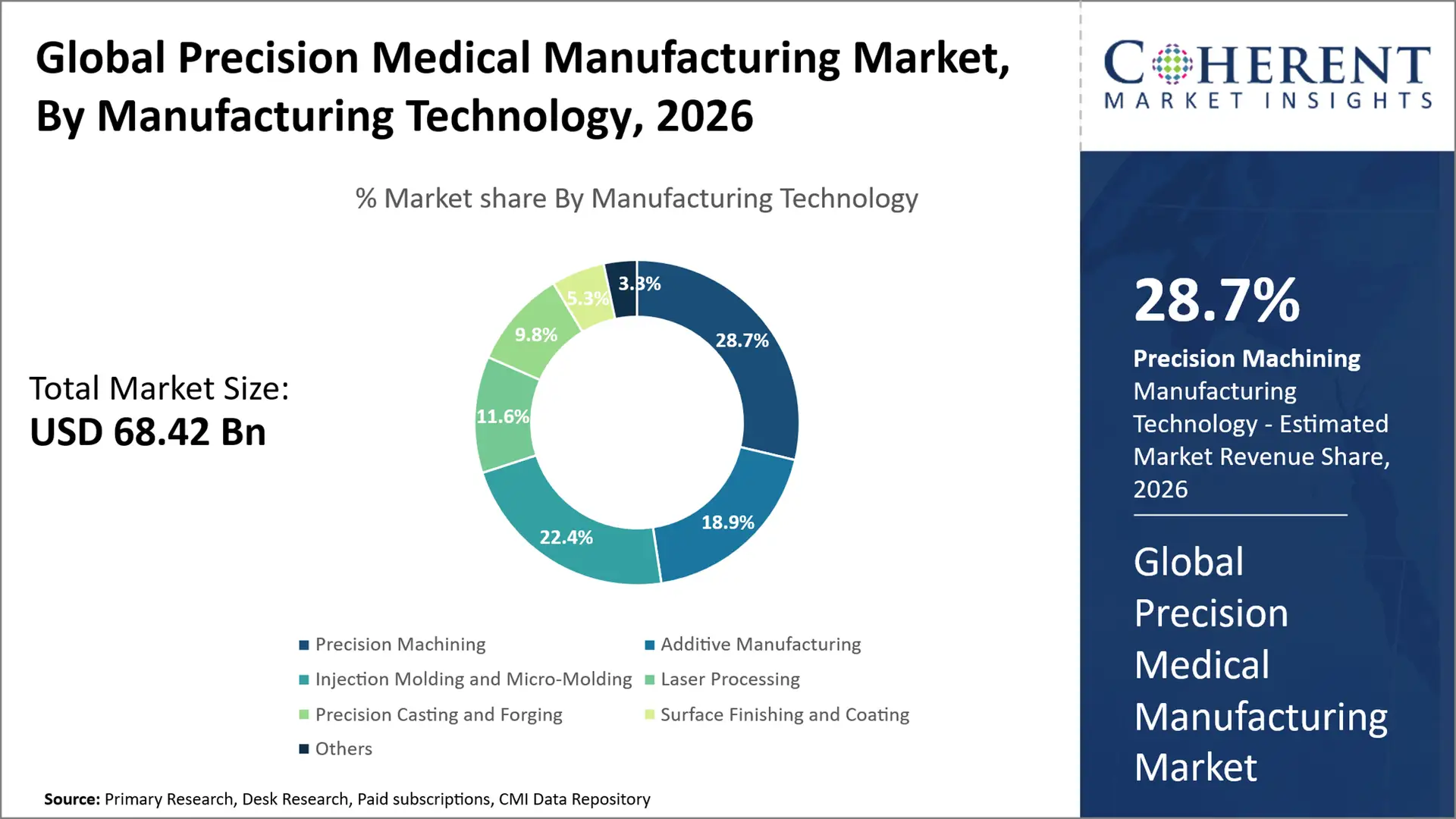
- Precision machining is projected to hold 28.7% of the global precision medical manufacturing market share in 2026, making it dominant manufacturing technology segment across North America due to the region’s established medical-device manufacturing and quality-control infrastructure. For instance, the U.S. FDA’s Quality Management System Regulation (QMSR) became effective in February 2026, incorporating ISO 13485:2016 and strengthening requirements for consistent production, risk management, and lifecycle controls.
- Orthopedic and implantable devices are projected to hold 27.9% of the global precision medical manufacturing market share in 2026, making it dominant product segment across Asia Pacific where adoption of advanced implant manufacturing is expanding. For instance, in February 2025, China’s National Medical Products Administration (NMPA) approved a knee prosthesis system incorporating additively manufactured trabecular porous structures at the bone-integration interface, specifically designed to improve bone integration in primary knee replacement. This regulatory approval demonstrates the increasing application of advanced precision manufacturing technologies in orthopedic implants in the region.
- Metals and alloys are projected to hold 43.6% of the global precision medical manufacturing market share in 2026, making it dominant material segment, across Asia Pacific supported by their extensive use in precision-manufactured implants and other load-bearing medical components. For instance, in June 2025, China’s NMPA introduced measures specifically covering regulatory requirements for metal additive-manufactured bone implants, including quality-management inspection points, highlighting the growing regulatory focus on advanced metal manufacturing for medical applications.
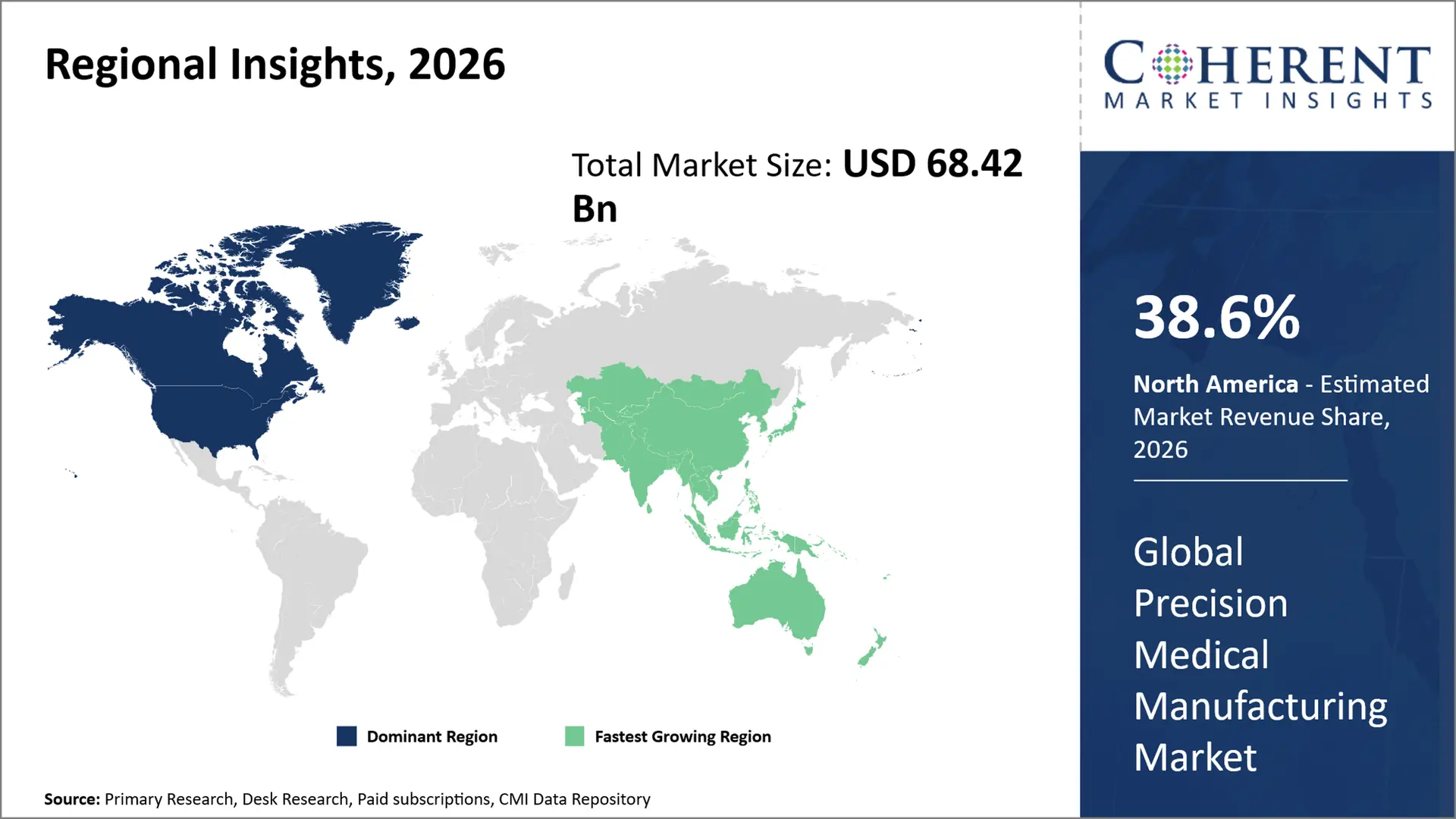
- North America market maintains dominance with an expected share of 38.6% in 2026, bolstered by its mature medical-device manufacturing base and established regulatory infrastructure. For instance, in August 2026, the U.S. FDA updated its medical-device classification framework and opened public comment on the classification of certain device accessories, reflecting continued regulatory development across the U.S. medical-device ecosystem.
- Asia Pacific is expected to exhibit the fastest growth in the global precision medical manufacturing market, registering an estimated CAGR of 12.4% during 2026–2033, driven by increasing adoption of personalized medical devices and advanced manufacturing capabilities. For instance, in May 2026, Singapore’s Health Sciences Authority (HSA) updated its regulatory guidance for personalized medical devices, specifically defining patient-matched devices as products manufactured within a validated design envelope and matched to an individual patient’s anatomy. The framework also establishes specific manufacturing, licensing, and evidence requirements, supporting the development of precision-manufactured, patient-specific devices in the region.
Segmental Insights
Why Do Precision Machining Dominate the Global Precision Medical Manufacturing Market?
Precision machining is projected to hold the market share of 28.7% in 2026, due to its ability to make complex medical parts within tight tolerances, ultra-reproducibility, and surface-finish quality. CNC milling, turning, grinding, and micro-machining are also suitable for the production of implants, surgical instruments and other precise control machining applications. For instance, in May 2026, the U.S Food and Drug Administration (FDA) officially recognized ISO 23298 as a consensus standard for measurement of the machining accuracy of computer-aided milling machines for dental CAD/CAM systems. This demonstrates the importance of machining accuracy standards for regulated manufacturing of medical devices.
- Current Industry Events of 2026
- Market Size Estimation
- Regional Breakdown
- Competitive Landscape
- Customer Intelligence
- Segmental Analysis
- Pricing Analysis
- Key Market Drivers, Challenges & Future Trends
- Customized Insights Section
Why Does Orthopedic and Implantable Devices Represent the Largest Product Segment in the Precision Medical Manufacturing Market?
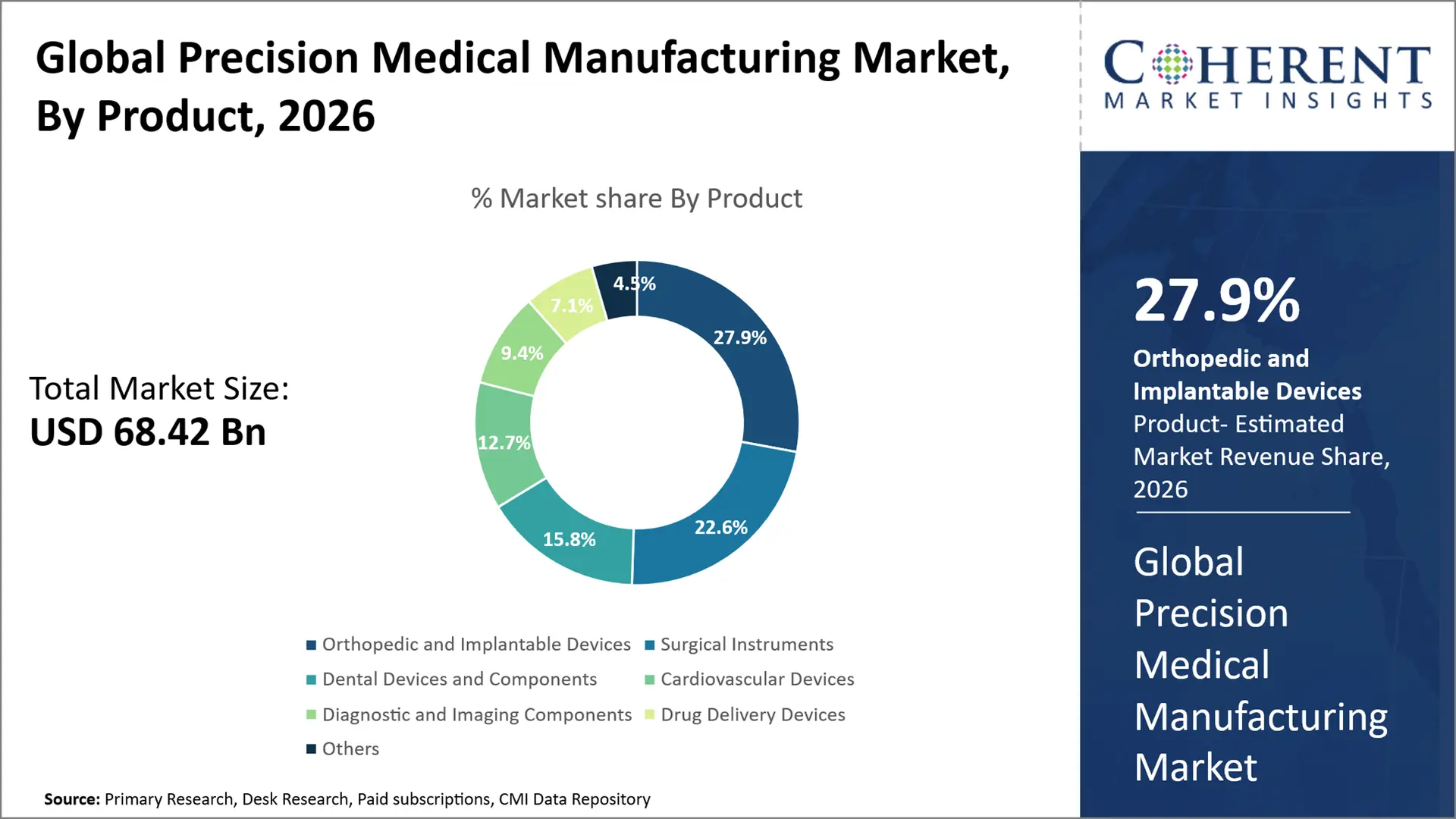
Orthopedic and implantable devices are projected to hold a market share of 27.9% in 2026, driven by high demand for joint replacements, spinal implants, fixation devices and patient-specific orthopedic devices. Innovations in precision machining, additive manufacturing and porous structures may allow for implants with complex geometries and improved anatomical fit. For instance, in May 2026, U.S. Food and Drug Administration (FDA) approved the Zimmer, Inc.’s Persona Personalized Knee System (porous-coated knee prosthesis) that offer personalized orthopedic applications, illustrating persistent regulatory adoption of advanced, precision-manufactured implants.
Metals and Alloys Segment Dominates the Global Precision Medical Manufacturing Market
The metals and alloys segment is projected to hold a market share of 43.6% in 2026, reinforced by proven strength, durability, biocompatibility, and precision-machined and implantable capabilities for metals or alloys. In addition, Titanium, cobalt-chrome, stainless steel, nickel-titanium alloys are widely used to manufacture orthopedic implants and surgical instruments. For instance, in December 2025, the U.S. Food and Drug Administration (FDA) recognized ASTM F67-24, a designation for unalloyed titanium used for surgical implants, and ASTM F2066-23 for titanium-15 molybdenum alloy used for surgical implants to support the regulatory importance of metallic materials in the production of medical devices.
Current Events and their Impact
Current Events | Description and its Impact |
India Government Strengthened Support for High-Precision Medical Instrument Manufacturing (July 2026) |
|
European Commission Updated Harmonized Standards for Medical Devices (June 2026) |
|
U.S. FDA Implemented Quality Management System Regulation (QMSR) for Medical Device Manufacturing (February 2026) |
|
Precision Medical Manufacturing Market Dynamics
Market Drivers
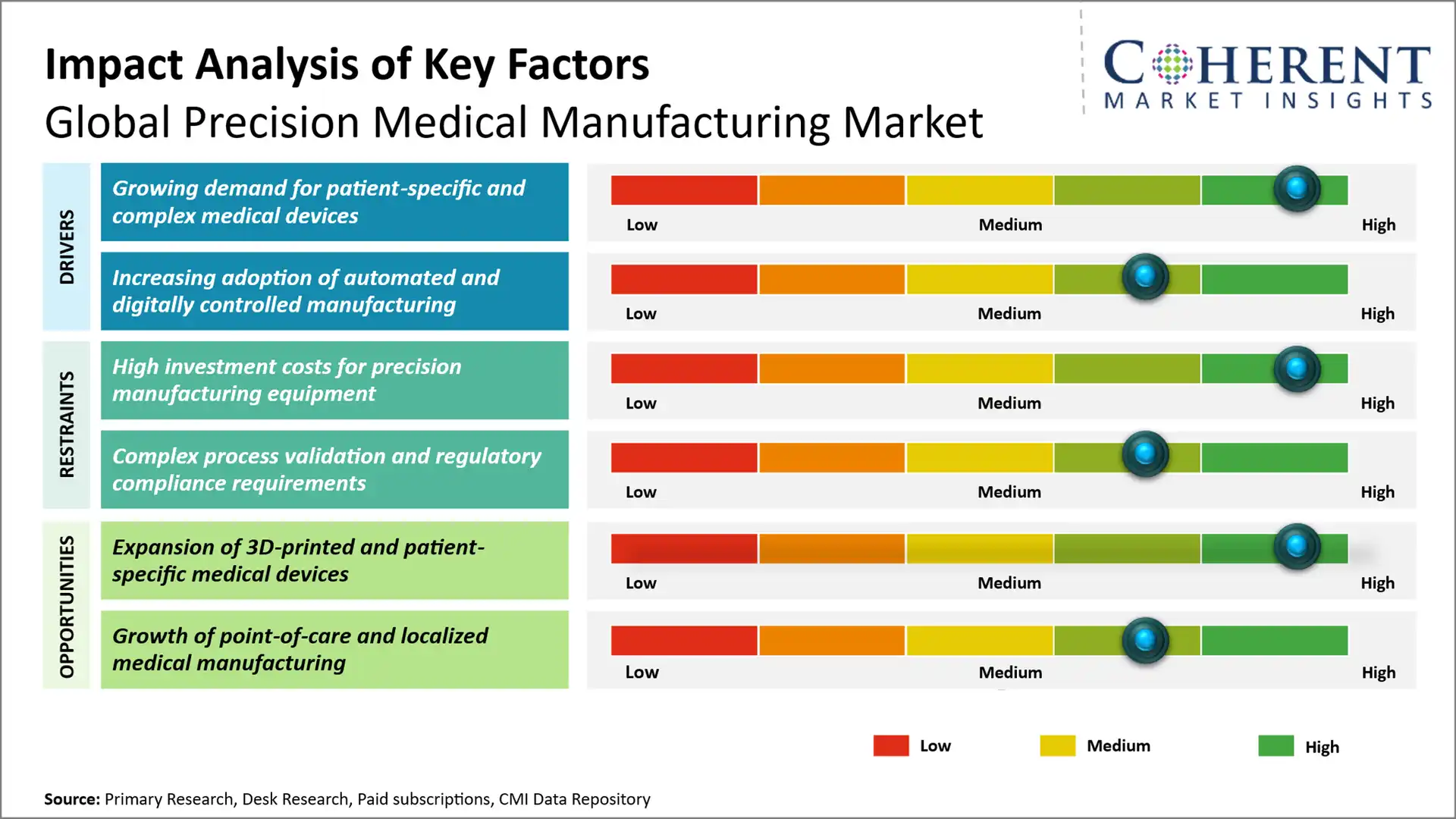
- Growing demand for patient-specific and complex medical devices: The increasing demand for patient-specific and anatomically complex medical devices is driving precision medical manufacturing, as manufacturers require advanced processes capable of producing highly accurate, customized geometries. Patient-matched implants, surgical guides, and complex components can be developed from individual patient imaging data, supporting more personalized treatment and expanding the need for precision manufacturing capabilities. For instance, in May 2026, the U.S. FDA issued final guidance for patient-matched guides for orthopedic implants, providing recommendations for their design and premarket submissions and supporting more consistent regulatory review of these customized devices.
- Increasing adoption of automated and digitally controlled manufacturing: The increasing adoption of automation, robotics, digital process control, and connected manufacturing systems is improving precision, repeatability, production efficiency, and quality control in medical-device manufacturing. Digital technologies also enable real-time monitoring, automated inspection, and greater process traceability, supporting the production of increasingly complex medical components. For instance, in February 2026, the U.S. FDA issued final guidance on computer software assurance for automated systems used in medical-device production and quality management, reflecting the growing role of validated digital and automated manufacturing technologies.
- Rising demand for minimally invasive medical devices: The growing adoption of minimally invasive procedures is increasing demand for smaller, more complex, and highly precise medical components. Devices such as endoscopic instruments, catheters, surgical tools, and implantable components require tight tolerances and advanced manufacturing capabilities, supporting the expansion of precision medical manufacturing. For instance, in July 2026, the U.S. FDA authorized the Claria System, an integrated device designed for laparoscopic gynecologic procedures, highlighting continued development of specialized devices for minimally invasive surgery.
Emerging Trends
- AI-enabled smart manufacturing: AI, machine learning, connected sensors, and automated process controls are increasingly being integrated into medical manufacturing to improve precision, detect defects, and optimize production parameters. Digital manufacturing systems are also enabling greater process traceability and adaptive quality control.
- Patient-specific additive manufacturing: 3D printing is expanding beyond prototyping toward patient-specific implants, surgical guides, dental devices, and complex components. Its ability to produce customized geometries directly from digital designs is supporting greater personalization and manufacturing flexibility.
- In-process monitoring and precision metrology: Manufacturers are increasingly adopting real-time sensing, in-situ monitoring, and advanced metrology to maintain dimensional accuracy and identify process deviations during production. These technologies are particularly important for qualifying advanced processes such as metal additive manufacturing.
Regional Insights
Why is North America a Strong Market for Precision Medical Manufacturing?
North America leads the global precision medical manufacturing market, accounting for an estimated 38.6% share in 2026, driven by well-established medical device manufacturing ecosystem, growing technological infrastructure, unique suppliers and research and development infrastructure. The region is expected to have a competitive edge owing to the integrated supply chain, growing adoption of precision engineering, advanced manufacturing technologies and automation and advanced manufacturing technologies for the manufacturing of highly complex medical devices in the region.
Additionally, supportive U.S. FDA regulatory policies enhance high manufacturing and quality norms, while facilitating the pathways for review and market penetration of sophisticated precision medical devices and systems that could increase the competitiveness of the market. For instance, in April 2026, U.S. Food and Drug Administration (FDA) and the U.S. Centers for Medicare & Medicaid Services (CMS) launched the Regulatory Alignment for Predictable and Immediate Device (RAPID) Coverage Pathway. This pathway seeks to accelerate coverage for available Medicare-covered Breakthrough Devices, accelerating the transition from regulatory approval to coverage for innovative devices.
Why Does Asia Pacific Precision Medical Manufacturing Market Exhibit High Growth?
Asia Pacific is expected to exhibit the fastest growth in the global precision medical manufacturing market, registering an estimated CAGR of 12.4% during 2026–2033. The region is projected to account for 25.8% of the global market in 2026, owing to high capital spending, improved medical-device manufacturing, and rising use of advanced and minimally invasive technologies. Robust manufacturing capabilities, relatively low cost of production, and strengthening regional supply chains are expected to facilitate investments in precision medical manufacturing.
Furthermore, government initiatives on supporting domestic manufacturing, developing technologies, encouraging local production & innovation are predicted to further strengthen regional manufacturing ecosystem. For instance, in July 2026, India’s Department of Pharmaceuticals reported that government measures supporting indigenous medical-device manufacturing had resulted in domestic production of high-precision products, including MRI and CT equipment, LINACs, mammography systems, C-arms, ultrasound equipment, heart valves, and stents, with 27 approved projects reporting USD 120.3 million (INR 1,153.07 crore) in actual investment. (Source: Press Information Bureau)
Global Precision Medical Manufacturing Market Outlook for Key Countries
Why is the U.S. Leading Innovation and Adoption in the Precision Medical Manufacturing Market?
The US will probably be at the forefront of commercial adoption of additive manufacturing, automation, and digital process controls for controlled medical device manufacture. The U.S regulatory environment seems conducive to sophisticated, patient-specific device design and brings process validation and manufacturing quality into focus. Additionally, the Center for Devices and Radiological Health's focus on advanced manufacturing initiatives may help translate these manufacturing developments to medical devices.
Is Japan a Favorable Market for Precision Medical Manufacturing Market?
Japan is a favorable market for precision medical manufacturing with the focus on high quality, technologically advanced products and regulatory processes. PMDA provide a rational system for consultation, review, and regulatory-science assistance for innovative devices. While, PMDA's SAKIGAKE program is expected to enable prioritization for consultation and review for highly innovative devices, helping manufacturers to set up manufacturing systems ahead of commercialization.
Is China Emerging as a Key Growth Hub for the Precision Medical Manufacturing Market?
China continues to emerge as a key innovation hub, with local 3D-manufacturing of medical-devices, there is good progress with regulatory recognition of a higher level of manufacturing readiness. The National Medical Products Administration (NMPA) has established regulatory guidance for 3D-printed medical-devices that could provide more clarity for manufacturers looking to develop complex and customized products. Along with increased regulatory recognition, the rise of precision-engineering capabilities in China appears to further fuel the localization of high-tech medical-device manufacturing.
Why Does Germany Top the European Precision Medical Manufacturing Market?
Germany leads the European precision medical manufacturing market due to its expertise and a well-established and sophisticated regulation for the manufacturing of complex and high-precision devices. The Federal Institute for Drugs and Medical Devices (BfArM) offers a classification and regulatory-status determination of class I-IV medical devices, while Germany phased in EUDAMED registration as mandatory for new marketed devices as of 28 May 2026, improving regulatory traceability and market supervision.
Is Precision Medical Manufacturing Market Developing in UK?
The UK is evolving as a precision medical manufacturing market through new regulations designed to open access to new medical devices and strengthen the UK's Med Tech industry. As of May 2026, the MHRA suggested new pre-market approvals that could speed up entry to safe and innovative devices, including a system that works with devices which might be already permitted in Australia, Canada and the U.S.
Precision Manufacturing Technology Adoption by Medical Device Application
Manufacturing Technology | Key Medical Applications | Typical Production Advantage |
Precision Machining | Orthopedic implants, surgical instruments, cardiovascular components | Tight tolerances and repeatable production |
Additive Manufacturing | Patient-specific implants, surgical guides, complex orthopedic components | Complex geometries and customization |
Injection & Micro-Molding | Drug delivery devices, diagnostic components, minimally invasive devices | High-volume, consistent production |
Laser Processing | Surgical instruments, implants, micro-components | High-precision cutting, welding, and marking |
Precision Casting & Forging | Orthopedic and cardiovascular components | Complex metal shapes and material strength |
Surface Finishing & Coating | Implants, surgical instruments, device components | Surface quality, durability, and functional performance |
How is the expansion of 3D-printed and patient-specific medical devices creating new growth opportunities in the precision medical manufacturing market?
The growing adoption of 3D printing technology in precision medical manufacturing market is likely to expand significantly owing to the rapid adoption of three-dimensional (3D) printing technology. This technology is increasingly being used to manufacture components like complex medical parts, prosthetics, surgical guides, as well as patient specific implants. 3D printing allows for support for complex geometries, design speed, customization, and personalization of designs. For instance, On September 9, 2026, the Technology Development Board of India granted assistance to Ceramat Pvt. Ltd. For 3D-printed standard and customized patient-specific calcium phosphate bone grafts. The study showcases a new approach of commercialization of personalized additive-manufactured medical products. (Source: Press Information Bureau)
Market Players, Key Development, and Competitive Landscape
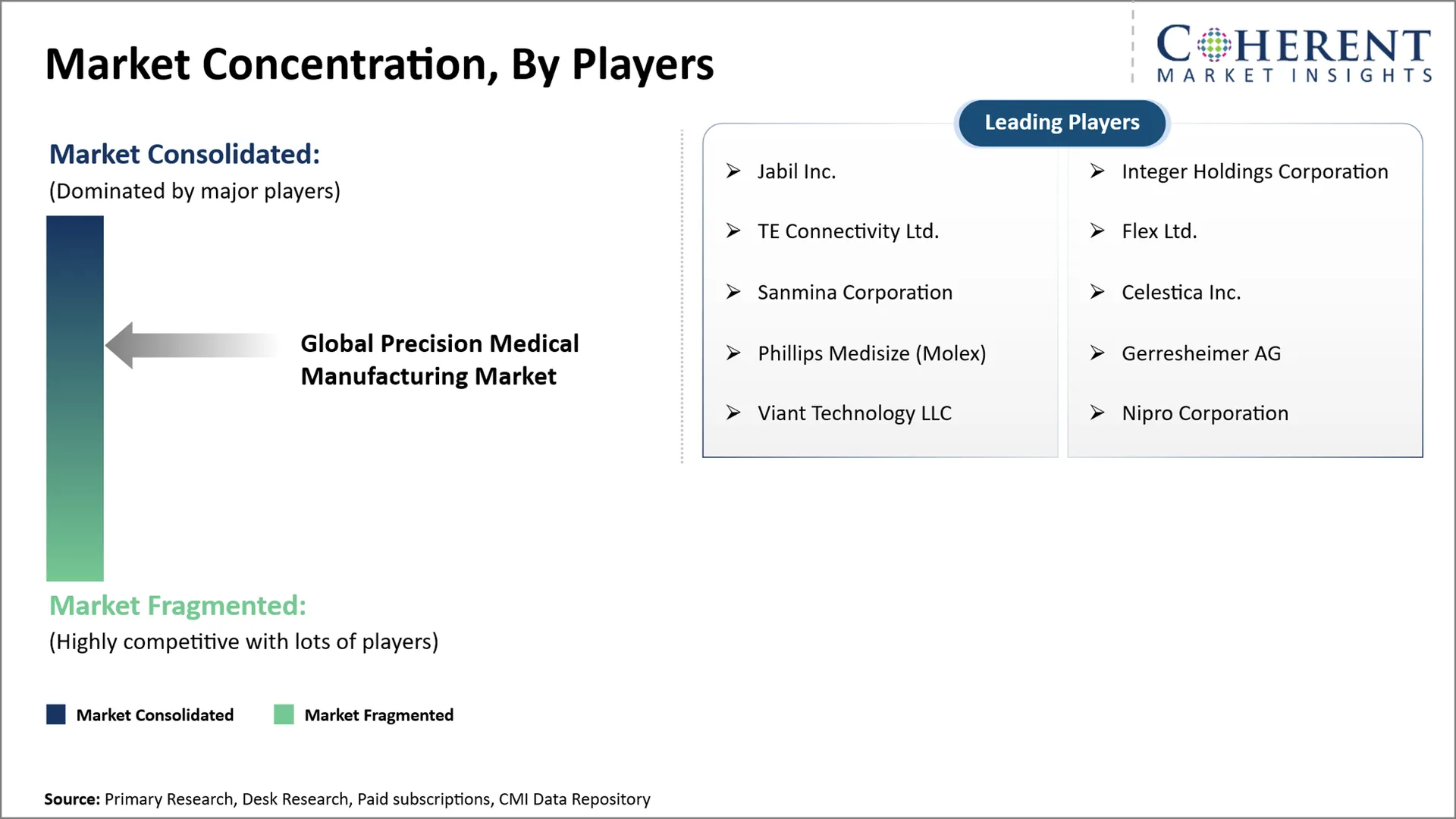
Key Developments
- On September 15, 2026, Velosity acquired Lucid Labs, an advanced engineering and precision-machining company, to expand its medical-device manufacturing capabilities. The acquisition combines product development, rapid prototyping, precision machining, injection molding, and assembly capabilities. The integration strengthens end-to-end precision manufacturing for medical devices, from concept development and prototyping through commercial production.
- On September 10, 2026, KYOCERA Fineceramics Medical GmbH began series production of BIOCERAM AZUL ceramic ball heads at its highly automated Industry 4.0 facility in Waiblingen, Germany. The facility was designed for industrial-scale manufacturing of ceramic components for orthopedic implants. The launch expands precision manufacturing capacity for high-performance medical ceramics and supports scalable production of orthopedic implant components.
- On September 10, 2026, Precera Medical acquired Additive Metal Services (AMS), adding metal injection molding and sinter-based additive manufacturing to its precision machining, automation, and device-assembly capabilities. The combined platform supports manufacturing of complex medical components, including robotic-surgery and interventional-device components. The acquisition strengthens integrated precision-manufacturing capabilities from prototyping through scaled commercial production.
- In July 2026, KKR launched Allyntra, an engineered-solutions platform focused on medical technology and precision industries. The platform specializes in the design, development, and manufacturing of highly engineered components and assemblies for advanced surgical applications. The launch strengthens precision-manufacturing capabilities for next-generation medical technologies, including robotic-assisted and minimally invasive surgical systems.
Competitive Landscape
The global precision medical manufacturing market is competitive, with competition centered on precision engineering capabilities, manufacturing accuracy, automation, process scalability, quality control, and integrated production services. Market participants are increasingly expanding capabilities across CNC machining, additive manufacturing, injection molding, micro-machining, and automated assembly to support complex medical-device components and accelerate the transition from prototyping to commercial production. Key focus areas include:
- Expansion of precision machining and micro-machining capabilities
- Integration of additive manufacturing and metal injection molding
- Adoption of automation, digital manufacturing, and advanced inspection systems
- Development of integrated manufacturing platforms
- Strategic acquisitions and partnerships
Market Report Scope
Precision Medical Manufacturing Market Report Coverage | |||
Report Coverage | Details | ||
Base Year | 2025 | Market Size in 2026: | USD 68.42 Bn |
Historical Data For: | 2020 To 2024 | Forecast Period: | 2026 To 2033 |
Forecast Period 2026 To 2033 CAGR: | 12.4% | 2033 Value Projection: | USD 154.76 Bn |
Geographies covered: |
| ||
Segments covered: |
| ||
Companies covered: | Jabil Inc., Integer Holdings Corporation, TE Connectivity Ltd., Flex Ltd., Sanmina Corporation, Celestica Inc., Phillips Medisize (Molex), Gerresheimer AG, Viant Technology LLC, Nipro Corporation | ||
Growth Drivers: |
| ||
Restraints & Challenges: |
| ||
Analyst Opinion (Expert Opinion)
- In the coming years, global precision medical manufacturing market will shift toward highly automated, digitally connected, and increasingly customized production. Manufacturing will move beyond standalone machining or molding toward integrated platforms combining design, rapid prototyping, additive manufacturing, precision machining, automated inspection, and scalable production. We also expect micro-manufacturing and patient-specific production to become increasingly important as medical devices become smaller, more complex, and more personalized.
- The maximum opportunities are foreseen within additive manufacturing for orthopedic and implantable devices in China. This combination can benefit from the growing need for complex geometries, customized implants, shorter development cycles, and localized production. Manufacturers that establish scalable additive capabilities while maintaining high precision and repeatability can address both customized and increasingly sophisticated orthopedic applications.
- In order to gain a competitive advantage market players should focus on building integrated manufacturing capabilities rather than competing on individual processes alone. Combining precision machining, additive manufacturing, micro-fabrication, automated inspection, and digital quality control can improve flexibility while reducing development-to-production timelines.
Speak to the analyst
Want personalized insights?
Take the findings above to one of our principal consultants, or have the report rebuilt around the segments, geographies and competitors you actually track.
Market Segmentation
- Manufacturing Technology Insights (Revenue, USD Bn, 2021 - 2033)
- Precision Machining
- Additive Manufacturing
- Injection Molding and Micro-Molding
- Laser Processing
- Precision Casting and Forging
- Surface Finishing and Coating
- Others
- Product Insights (Revenue, USD Bn, 2021 - 2033)
- Orthopedic and Implantable Devices
- Surgical Instruments
- Dental Devices and Components
- Cardiovascular Devices
- Diagnostic and Imaging Components
- Drug Delivery Devices
- Others
- Material Insights (Revenue, USD Bn, 2021 - 2033)
- Metals and Alloys
- Polymers and Plastics
- Ceramics
- Composites
- Others
- Manufacturing Scale Insights (Revenue, USD Bn, 2021 - 2033)
- Prototype and Low-Volume Manufacturing
- Medium-Volume Manufacturing
- High-Volume Manufacturing
- Application Insights (Revenue, USD Bn, 2021 - 2033)
- Surgical and Interventional
- Orthopedic and Rehabilitation
- Dental
- Cardiovascular
- Diagnostic and Imaging
- Drug Delivery
- Others
- End User Insights (Revenue, USD Bn, 2021 - 2033)
- Medical Device OEMs
- Hospitals and Healthcare Institutions
- Contract Manufacturing Organizations
- Research and Academic Institutions
- Others
- Regional Insights (Revenue, USD Bn, 2021 - 2033)
- North America
- U.S.
- Canada
- Latin America
- Brazil
- Argentina
- Mexico
- Rest of Latin America
- Europe
- Germany
- U.K.
- Spain
- France
- Italy
- Russia
- Rest of Europe
- Asia Pacific
- China
- India
- Japan
- Australia
- South Korea
- ASEAN
- Rest of Asia Pacific
- Middle East
- GCC Countries
- Israel
- Rest of Middle East
- Africa
- South Africa
- North Africa
- Central Africa
- North America
- Key Players Insights
- Jabil Inc.
- Integer Holdings Corporation
- TE Connectivity Ltd.
- Flex Ltd.
- Sanmina Corporation
- Celestica Inc.
- Phillips Medisize (Molex)
- Gerresheimer AG
- Viant Technology LLC
- Nipro Corporation
Primary Research Interviews
- Precision medical-device manufacturers specializing in CNC machining, micro-machining, additive manufacturing, and molding
- Medical-device OEM executives responsible for manufacturing, sourcing, and supplier development
- Manufacturing engineers and precision-engineering specialists involved in medical-device production
- Quality assurance and regulatory professionals responsible for ISO 13485, process validation, and device compliance
- Product-development and R&D specialists involved in customized implants, surgical instruments, and complex medical components
- Contract manufacturing executives involved in prototyping, tooling, assembly, and commercial-scale production
Stakeholders
- Precision medical manufacturing companies
- Medical-device OEMs and component manufacturers
- Contract medical-device manufacturers and engineering service providers
- Hospitals and healthcare institutions using customized or patient-specific devices
- Orthopedic, cardiovascular, dental, and surgical-device manufacturers
- Medical-device material and specialty-alloy suppliers
- Manufacturing equipment, CNC, additive manufacturing, and automation technology providers
- Quality testing, inspection, and certification service providers
- End-use Sectors
- Orthopedics & Implants
- Surgical & Minimally Invasive Devices
- Cardiovascular Devices
- Dental Devices
- Diagnostic & Imaging Equipment
- Drug Delivery Devices
- Robotic Surgery
- Ophthalmic Devices
- Other Medical Devices
- Regulatory & Health Bodies
- U.S. Food and Drug Administration (FDA) – medical-device manufacturing, QMSR, additive manufacturing, and device quality requirements
- International Organization for Standardization (ISO) – ISO 13485 quality management requirements for medical-device manufacturing
- European Commission – European medical-device regulatory framework and conformity requirements
- European Medicines Agency (EMA) – medical-device and combination-product regulatory information
- Medical Device Coordination Group (MDCG), European Union – medical-device regulatory guidance and implementation
- International Electrotechnical Commission (IEC) – standards relevant to medical electrical equipment and manufacturing quality
- International Council on Harmonisation (ICH) – quality and regulatory standards relevant to medical products
Databases
- FDA 510(k), PMA, De Novo, and Device Classification databases – medical-device approvals, classifications, and regulatory information
- FDA TPLC – medical-device product lifecycle and regulatory information
- ClinicalTrials.gov – clinical studies involving medical devices, implants, and advanced technologies
- NIH RePORTER – publicly funded research in medical-device engineering, manufacturing, and advanced technologies
- U.S. Census Bureau – manufacturing and industry statistics
- Eurostat – European manufacturing, industrial production, and healthcare industry statistics
Associations
- Advanced Medical Technology Association (AdvaMed) – medical-device industry and technology resources
- Medical Device Manufacturers Association (MDMA) – medical-device manufacturing and regulatory resources
- Association for Manufacturing Technology (AMT) – advanced manufacturing, CNC, automation, and digital manufacturing resources
- Additive Manufacturing Users Group (AMUG) – additive manufacturing technology and applications
- SME – advanced manufacturing, precision engineering, and additive manufacturing resources
- American Society for Quality (ASQ) – quality management, process control, and manufacturing quality resources
- ASTM International – standards for additive manufacturing, materials, testing, and medical-device applications
Public Domain Sources
- U.S. Food and Drug Administration (FDA) – medical-device manufacturing, QMSR, quality compliance, and additive manufacturing
- International Organization for Standardization (ISO) – ISO 13485 and medical-device quality management standards
- National Institutes of Health (NIH) – medical-device research, biomedical engineering, and advanced manufacturing research
- U.S. Census Bureau – manufacturing and industry data
- Eurostat – European manufacturing and industrial statistics
- World Health Organization (WHO) – medical devices, healthcare technology, and health-system information
- European Commission – medical-device regulations and healthcare technology policies
Proprietary Elements
- CMI Data Analytics Tool, Proprietary CMI Existing Repository of information for last 10 years.
Get access to 250+ pages report
Every segment, forecast, competitor profile and data table behind the analysis above — available for instant download.
- ESOMAR Member
- ISO 9001:2015 Certified
- D-U-N-S Registered
- GDPR & CCPA Compliant
Missing comfort of reading report in your local language? Find your preferred language:
Frequently Asked Questions
The global precision medical manufacturing market is estimated to be valued at USD 68.42 Bn in 2026 and is expected to reach USD 154.76 Bn by 2033.
Precision machining dominates due to its ability to produce complex medical components with tight dimensional tolerances, high repeatability, and consistent quality.
Precision medical manufacturing is the production of medical devices and components using advanced technologies to achieve high accuracy, consistency, and stringent quality requirements.
The CAGR of global precision medical manufacturing market is projected to be 12.4% from 2026 to 2033.
Growing demand for patient-specific and complex medical devices, and increasing adoption of automated and digitally controlled manufacturing are the major factors driving the growth of the global precision medical manufacturing market.
High investment costs for precision manufacturing equipment, and complex process validation and regulatory compliance requirements are the major factors hampering the growth of the global precision medical manufacturing market.
In terms of product, orthopedic and implantable devices are estimated to dominate the market revenue share in 2026.