

Global Printed Sensor Market Size and Forecast – 2026 To 2033
The global printed sensor market is expected to grow from USD 13.00 Bn in 2026 to USD 19.00 Bn by 2033, registering a compound annual growth rate (CAGR) of 6.6% from 2026 to 2033. The global printed sensor market is driven by increasing IoT deployments. On February 19, 2025, Renesas Electronics Corporation introduced the RA4L1 microcontroller (MCU) group, including 14 new devices with ultra-low power consumption, advanced security features and segment LCD support. The new MCUs deliver an unmatched combination of performance, features and power savings that enable designers to address a myriad of applications, including water meter, smart locks, IoT sensors and more.
Key Takeaways of the Global Printed Sensor Market
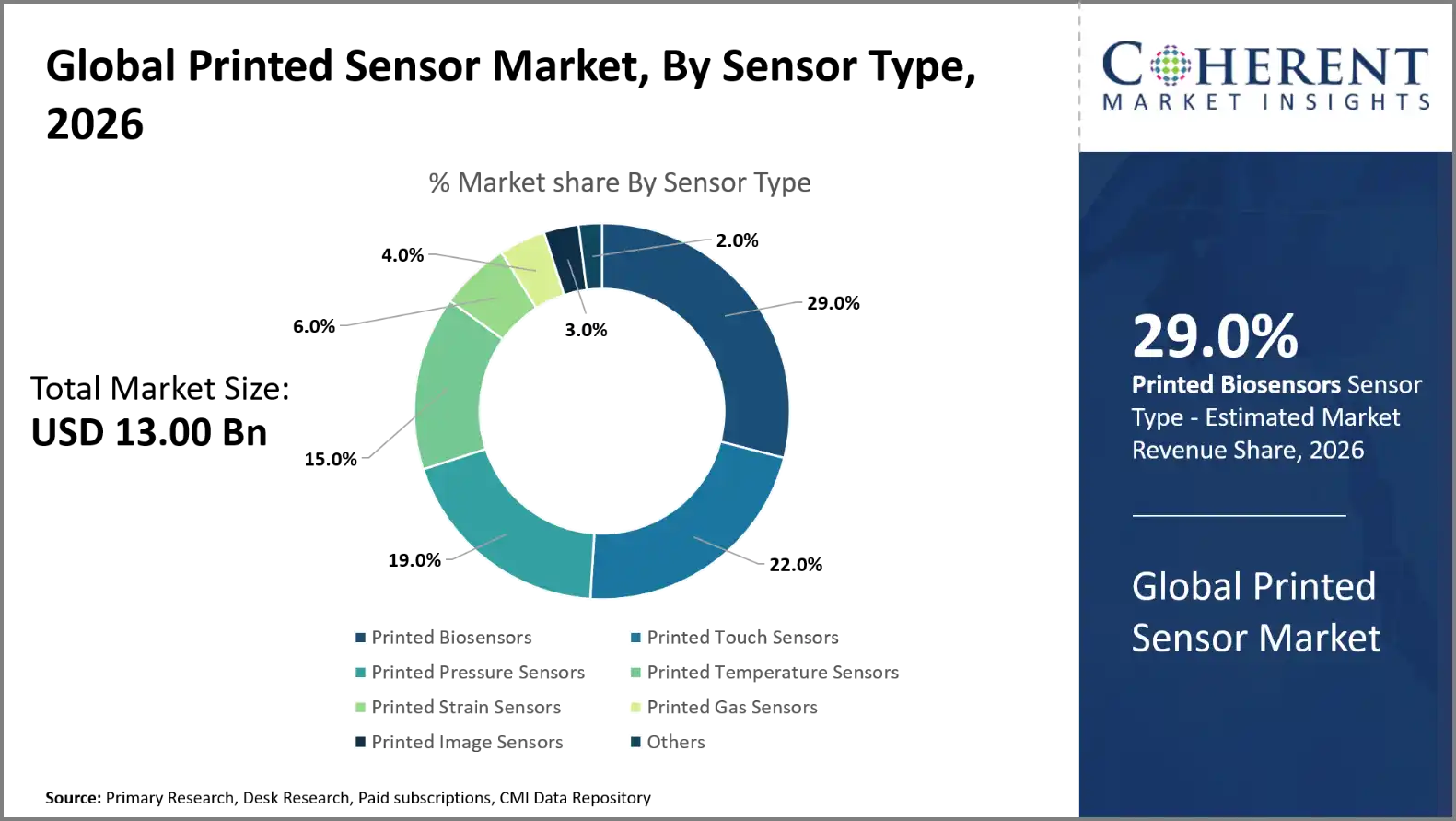
- The Printed Biosensors segment is expected to account for 29.0% of the global printed sensor market share in 2026. Expansion of smart packaging applications is driving the growth of the segment. On January 8, 2025, Giesecke+Devrient launched the G+D Smart Label, its innovative tracking solution that transforms any package into an IoT device.
- The Screen Printing segment is estimated to capture 35.0% of the market share in 2026. Growing consumer electronics production is majorly driving the growth of the segment. In October 2024, Samsung Electronics expanded its Galaxy wearable portfolio with Galaxy Ring in India.
- The Polyethylene Terephthalate segment is estimated to capture 47.0% of the market share in 2026. Rising demand for lightweight sensors is majorly driving the growth of the segment. On March 24, 2025, NOK Corporation and Salmontech began developing ultra-thin wearable ultrasonic sensors.
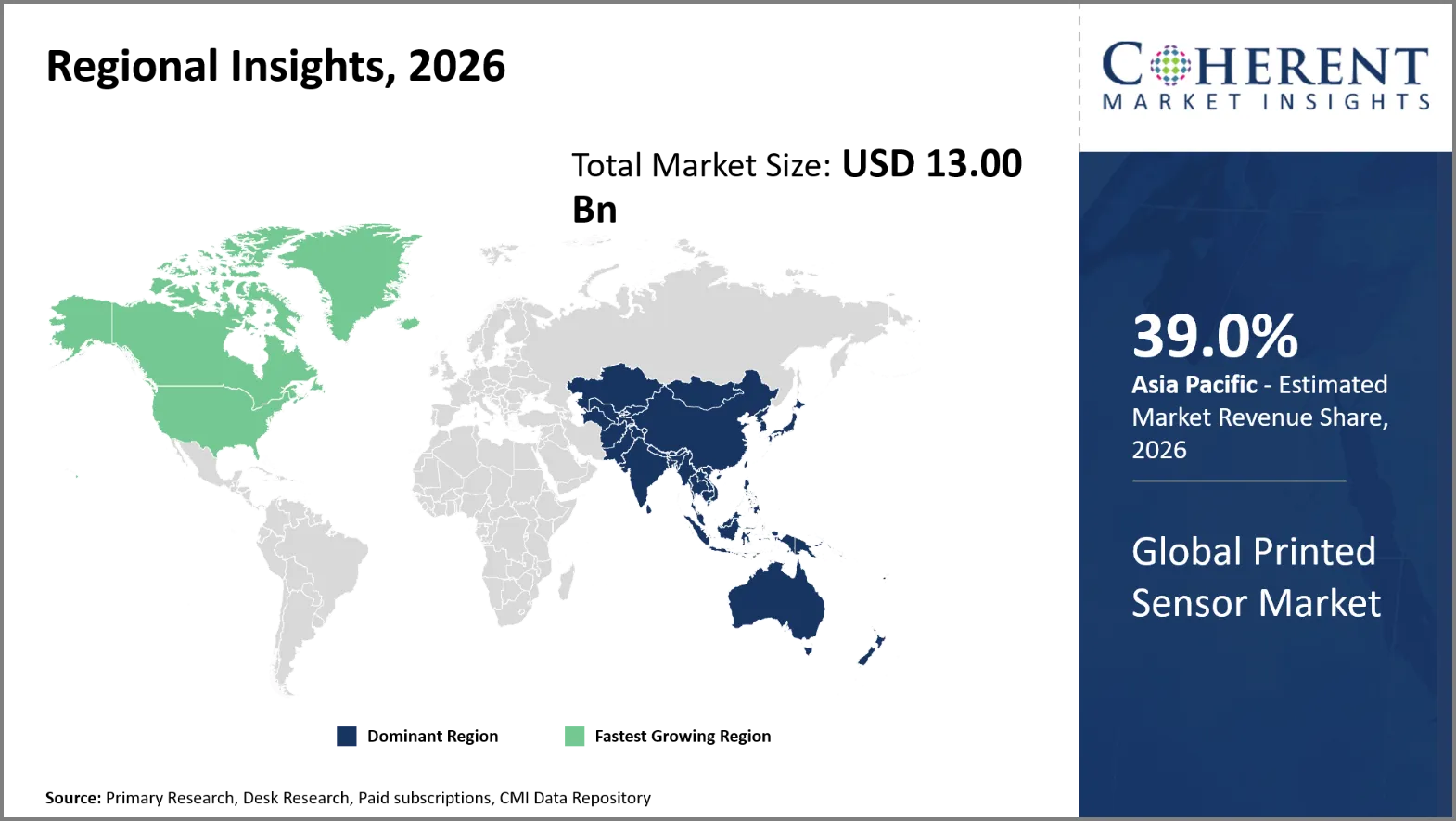
- Asia Pacific is expected to dominate the printed sensor market in 2026 with a market share of 39.0%. Increasing use of flexible automotive interfaces in Asia Pacific is driving the growth of the regional market. On January 9, 2025, Tianma introduced multiple flexible automotive displays at CES 2025. Its demonstrations included dynamic cold-bending flexible OLED technology and sliding OLED displays.
- North America is expected to account for 31.0% share in 2026 and is projected to record the fastest growth over the forecast period. Advancements in conductive inks in North America is driving the growth of the regional market. In June 2026, Electroninks launched its EI-1169 ultraviolet-curable silver conductive ink. The Austin, Texas-based company developed the ink for inkjet deposition on epoxy, polyimide, and copper substrates.
Segmental Insights
Why Does Printed Biosensors Dominate the Global Printed Sensor Market?
The printed biosensors segment is expected to account for 29.0% of the global printed sensor market share in 2026. Printed biosensors are benefiting from the increased demand for quick, low-cost and disposable healthcare testing solutions. Their versatile design allows for integration into wearable devices, diagnostic patches and point-of-care testing systems. Screen printing enables the scalable manufacturing of conductive electrodes and biological sensing layers on flexible substrates. Healthcare professionals are increasingly asking for small sensors for continuous tracking of glucose, biomarkers and physiological parameters. These advantages encourage expanded use in customized healthcare, wearable monitoring, and decentralized diagnostics.
On May 11, 2026, Interlink Electronics, Inc. announced that it had entered into a non-binding letter of intent relating to a potential strategic purchase. The proposed acquisition target is a well-established provider of high-performance manufacturing solutions to customers in mission critical industries including semiconductor, defense, laser and photonics, commercial high-tech and aerospace.
- Current Industry Events of 2026
- Market Size Estimation
- Regional Breakdown
- Competitive Landscape
- Customer Intelligence
- Segmental Analysis
- Pricing Analysis
- Key Market Drivers, Challenges & Future Trends
- Customized Insights Section
Why is Screen Printing the Most Preferred Printing Technology?
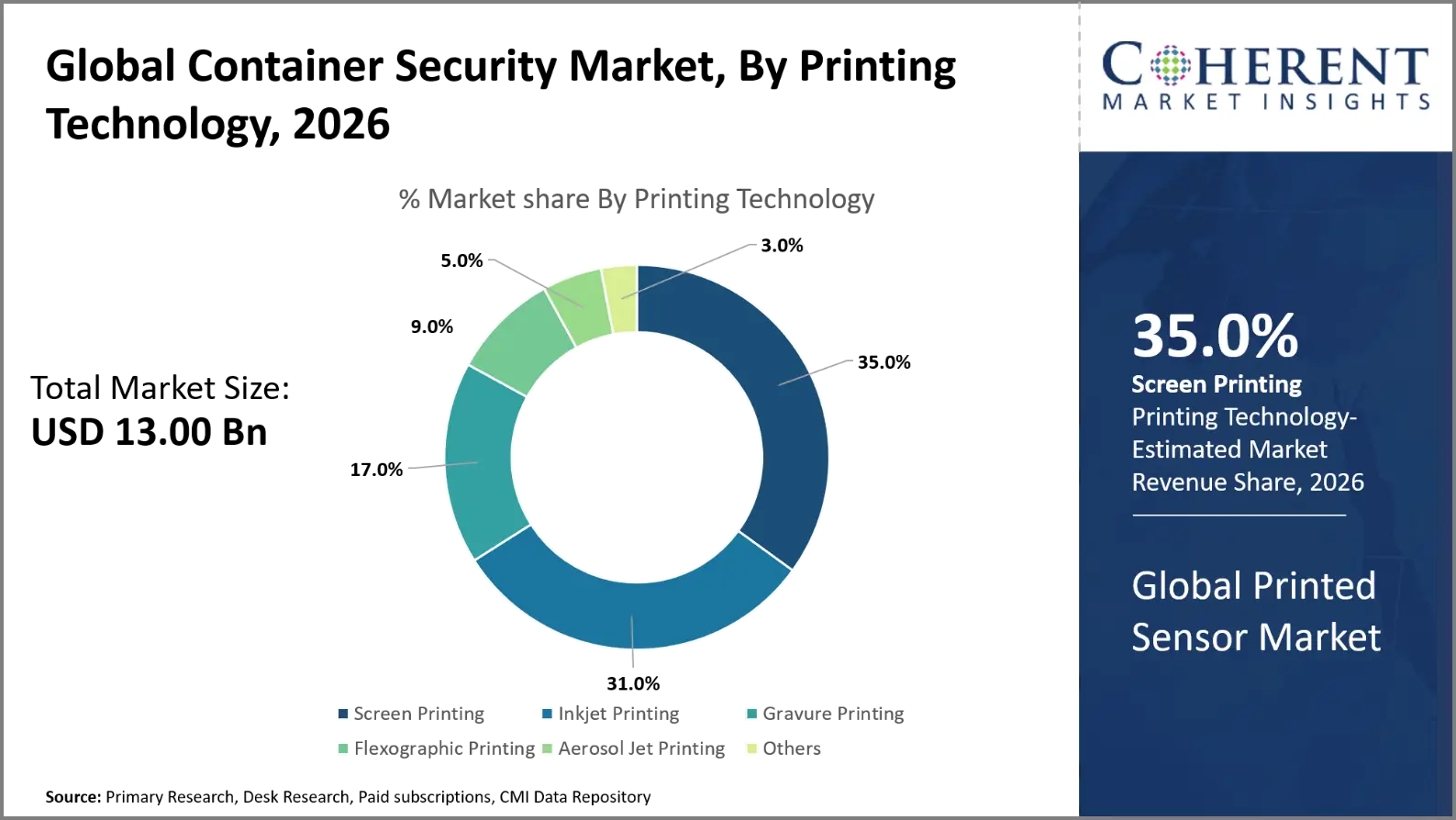
The screen printing segment is expected to account for 35.0% of the global printed sensor market share in 2026. Screen printing provides low-cost fabrication of sensor electrodes on both flexible and rigid substrates. This technique allows the continuous deposition of conductive inks with regulated thickness and pattern definition. Manufacturers are able to adjust screen designs to fit multiple sensor geometries with only minor equipment modifications. It is compatible with silver, carbon and graphene and other functional inks, broadening application possibilities. These features enable scalable manufacturing for healthcare, automotive, consumer electronics and industrial sensor applications.
On January 13, 2026, NovaCentrix reported its fifth consecutive year of revenue growth. This milestone underlines the company’s continued momentum and long-term commitment to enabling next generation printed and flexible electronics. NovaCentrix has experienced consistent revenue growth across its portfolio for the past five years. This growth has been driven by increasing market adoption of its Metalon conductive inks and nanoparticle-based materials.
Polyethylene Terephthalate Dominates the Global Printed Sensor Market
The polyethylene terephthalate segment is expected to account for 47.0% of the global printed sensor market share in 2026. Polyethylene terephthalate provides a lightweight and flexible substrate for printed sensor manufacturing. Its dimensional stability allows for accurate deposition of conductive inks in high volume production. The material also has strong electrical insulation and appropriate surface characteristics for printed electronic layers. Its comparatively low cost also allows for wider usage in consumer electronics, healthcare, automotive, and packaging applications. These properties allow the use of polyethylene terephthalate for flexible and low-cost sensor systems that can be manufactured at scale. In January 2025, Toray Films Europe launched Lumirror 41.31 STB polyester film in January 2025. The new PET film has ultra-low shrinkage and enhanced mechanical, optical and thermal qualities. Toray developed the material specifically for flexible electronics applications. Owing to its dimensional stability, it allows for accurate processing of printed electronic structures.
Current Events and their Impact
Current Events | Description and its Impact |
European Union - Ecodesign for Sustainable Products Regulation (EU) 2024/1781 |
|
European Union - Restriction of Hazardous Substances Directive |
|
Printed Sensor Market Dynamics
Market Drivers
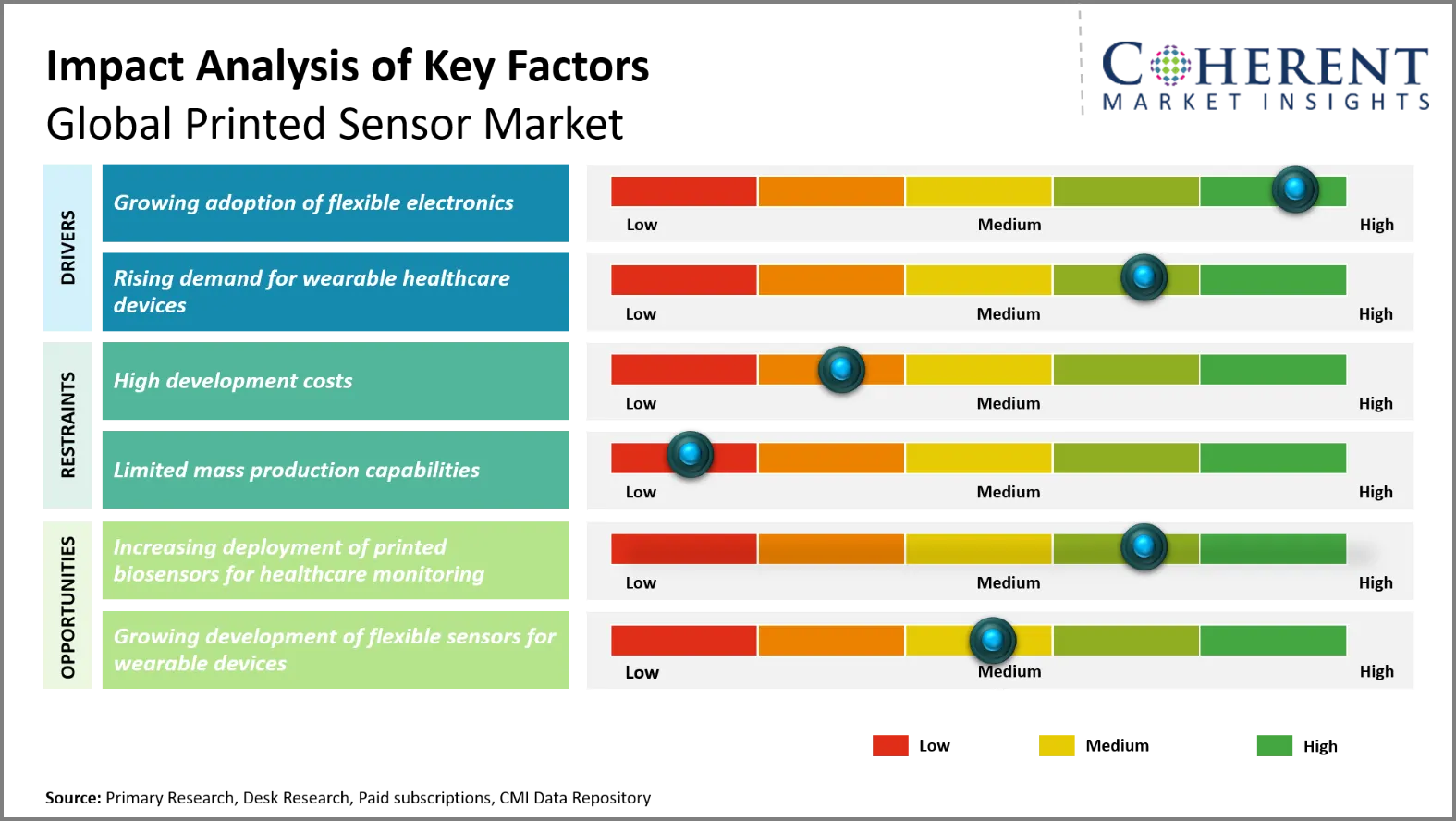
Growing adoption of flexible electronics
The rising use of flexible electronics is driving the demand for sensors that can be integrated on curved and uneven surfaces. Printed sensors open the door to lightweight solutions for flexible displays, smart labeling, car interiors and wearable devices. Its interoperability with flexible substrates allows manufacturers to embed sensor functionalities within tiny electrical devices. Improvements in conductive inks and printing methods are enhancing sensor performance and manufacturability. These innovations are pushing the use of printed sensors in consumer electronics, healthcare, automotive and industrial systems.
On July 15, 2026, Samsung Electronics unveiled new Flex Titanium technology for the next generation of Galaxy foldable handsets. The new display structure, built on seven generations of foldable innovation and technical expertise, leverages structural and material breakthroughs to give a more refined viewing experience with better durability and reduced crease visibility.
Rising demand for wearable healthcare devices
Increasing demand for wearable healthcare devices is creating opportunities for compact and flexible printed sensing technologies. Printed sensors can detect pressure, temperature, motion, hydration and some biological factors. Owing to their tiny design, the sensors can be integrated into patches, smart textiles, fitness monitors and platforms for real-time monitoring. The healthcare industry increasingly demands more convenient monitoring systems to enable remote and tailored healthcare. This tendency encourages the sensor producers to develop sensing components that are flexible, light weight and low power.
On April 22, 2025, LifeSignals, Inc. introduced the UbiqVue 2AYe Holter System at Heart Rhythm 2025. Distributed in conjunction with UltraLinQ Healthcare Solutions, the new Holter solution improves cardiac monitoring workflows by providing diagnostic reports in a fraction of the usual turnaround time and removes the need to post or recover the Biosensor device.
Emerging Trends
- Flexible and stretchable sensor integration: Printed sensors are being incorporated into flexible substrates more and more often, allowing them to conform to curved surfaces. This trend supports wearable electronics, smart fabrics, electronic skin, and flexible automobile interfaces. Advances in conductive inks are leading to enhanced mechanical durability and sensing uniformity.
- Printed biosensor development: Manufacturers are creating printed biosensors for wearable monitoring and decentralized healthcare applications. These gadgets are composed of flexible electrodes together with biological recognition materials. Advances in printed biomaterials are providing miniaturized sensing devices for physiological indicators and chosen disease biomarkers.
- Integration with Internet of Things devices: Printed sensors are rapidly being integrated into connected devices requiring dispersed and low-profile sensing. The lightweight design facilitates smart packaging, industrial monitoring, and building automation. The wireless connection provides continuous data collecting and remote monitoring of devices.
- Advanced functional ink development: There is a growing interest in the creation of conductive, semiconducting and nanomaterial-based inks for printed sensing applications. Silver, carbon, graphene and other functional elements make these unusual electrical properties possible. These advancements offer increased sensitivity, better adaptability and more diversified sensor architectures.
Regional Insights
Why is Asia Pacific a Strong Market for Printed Sensor?
Asia Pacific is expected to account for a market share of 39.0% in 2026. Asia Pacific growth is supported by dense electronics manufacturing clusters across China, Japan, South Korea, and Taiwan. Japan’s New Energy and Industrial Technology Development Organization has funded large-area printed electronics development. The program targets low-temperature processing, uniform thin-film transistor arrays, and continuous high-speed printing. South Korea has developed display and flexible electronics skills to enable integration of printed sensors. China adds large scale consumer electronics manufacturing and flexible device production capabilities. Regional adoption also extends into smart packaging, automotive interfaces, and wearable electronics. These manufacturing ecosystems create strong demand for printable sensing layers and flexible substrates.
Why Does North America Printed Sensor Market Exhibit High Growth?
North America is expected to register the fastest growth with a CAGR of 7.5% over the forecast period and projected to account for 31.0% of the global printed sensor market in 2026. North American growth is strongly connected with advanced healthcare, aerospace, defense, and industrial sensing applications. The National Institute of Standards and Technology developed a flexible printable magnetic-field sensor using organic light-emitting and detecting layers. The patented design targets wearables, smart textiles, automotive systems, industrial equipment, and biomedical patches. The National Institute of Standards and Technology also conducts measurement research for flexible organic electronics. Its work targets Internet of Things, Industry 4.0, and healthcare applications. These activities strengthen commercialization pathways for printable sensing technologies.
Global Printed Sensor Market Outlook for Key Countries
Why is China Emerging as a Major Hub in the Printed Sensor Market?
China benefits from its large consumer electronics manufacturing base and extensive flexible electronics supply chains. The country has major capabilities in smartphones, displays, wearable devices, and electronic components. Flexible sensor integration can therefore leverage existing component manufacturing infrastructure. Shenzhen and other electronics clusters provide concentrated production capabilities for touch, biometric, and flexible sensing components. Companies developing flexible displays and sensor technologies are also expanding application possibilities. China’s industrial ecosystem drives printed sensor use across consumer electronics, automotive systems, smart packaging and connected devices. This manufacturing concentration remains a distinct growth factor for printable sensor adoption.
Is U.S. the Next Growth Engine for the Printed Sensor Market?
The U.S. printed sensor market benefits from government-supported research in printable materials, measurement science and advanced electronics manufacturing. The National Institute of Standards and Technology has developed a printed magnetic sensor, patent number 12,339,330. The device is aimed at flexible wearables, smart fabrics, biomedical patches, automotive systems and Internet of Things equipment. The National Institute of Standards and Technology develops measurement methods for organic semiconductor materials as well. These methods address reproducibility challenges affecting solution-processed flexible electronics. This research infrastructure supports commercialization of specialized printed sensors.
Germany Printed Sensor Market Analysis and Trends
Germany is expanding printed sensor development through industrial research institutes and automotive technology programs. Fraunhofer Institute for Ceramic Technologies and Systems demonstrated printed anisotropic magneto resistive sensors on polymer tapes. These sensors survived more than 30,000 bending cycles during testing. Polyimide versions demonstrated temperature stability reaching 300°C. Fraunhofer Institute for Manufacturing Engineering and Automation also develops transparent pressure and touch sensors on flexible substrates. Its work covers humidity, temperature, and ultraviolet sensing. Automotive, industrial machinery, and medical applications provide distinct commercialization pathways.
Japan Printed Sensor Market Analysis and Trends
Japan’s growth is supported by long-standing expertise in precision materials, printing processes, and functional electronics. The New Energy and Industrial Technology Development Organization has supported next-generation printed electronics materials and process development. Its program targets large-area, low-defect, uniform transistor arrays on plastic film substrates. Japanese manufacturers also possess strong capabilities in automotive electronics, industrial equipment, healthcare devices, and electronic materials. These industries create applications for flexible pressure, temperature, and human-interface sensors. The country’s precision manufacturing culture particularly supports high-reliability printed sensor development.
South Korea Printed Sensor Market Analysis and Trends
South Korea benefits from its concentration of display, semiconductor, and advanced electronic component manufacturing. Flexible display production provides established expertise in thin substrates, conductive layers, and high-precision pattern formation. This infrastructure enables integration of printed sensor functionalities into displays and wearables. South Korea’s electronics makers also have wide-ranging skills in cellphones, smartwatches and automotive electronics. These products increasingly require thin touch, pressure, temperature, and biometric sensing components. The country’s display-centered manufacturing ecosystem therefore provides a distinct pathway for printed sensor integration. Local materials expertise further supports development of flexible electronic components.
Global Printed Sensor Market - Printed Sensor Production Capacity by Country (2025)
Country | Estimated Printed Sensor Production Capacity | Estimated Global Capacity Share |
China | 1,250 million units | 38.5% |
Japan | 520 million units | 16.0% |
South Korea | 430 million units | 13.2% |
Taiwan | 300 million units | 9.2% |
U.S. | 245 million units | 7.6% |
Germany | 170 million units | 5.2% |
India | 115 million units | 3.5% |
France | 75 million units | 2.3% |
United Kingdom | 65 million units | 2.0% |
Singapore | 45 million units | 1.5% |
How is Increasing Deployment of Printed Biosensors for Healthcare Monitoring Creating New Growth Opportunities in the Printed Sensor Market?
Increasing deployment of printed biosensors is creating opportunities through low-cost, flexible platforms for continuous physiological monitoring. Printed electrodes can be included in wearable patches for electrochemical sensing allowing the detection of glucose, lactate and electrolytes. Flexible substrates enable sensors to closely match the contours of skin surfaces, hence boosting their appropriateness for long-term monitoring. Research institutes are also creating printed biosensors with the ability of multiplexed detection, which enables to detect numerous biomarkers in one small platform. These innovations are propelling new potential for disposable diagnostic patches, remote patient monitoring, sports medicine and decentralized testing. Healthcare equipment is also getting compact and more comfortable with the use of sensing electrodes and flexible electronics.
On August 21, 2025, Abbott announced the debut of the FreeStyle Libre 2 Plus sensor, the latest sensor to join the FreeStyle Libre sensor range. This pioneering technology sends automatic glucose readings every minute directly to user’s phone, giving people with diabetes the power to control their disease with confidence, accuracy and simplicity.
Market Players, Key Development, and Competitive Landscape
Key Developments
- On February 25, 2026, FLEXOO successfully closed its Series A funding round, raising a total investment of USD 12.5 million. The funds will drive FLEXOO’s global business with customers that are internationally leading in the battery storage and automotive industries. Additionally, it will enable FLEXOO to continuously build its Physical AI sensor platform, which combines ultra-thin, free-form sensors with edge AI computing, and tackle new markets.
- On September 5, 2025, TracXon, a deep-tech spin-off from TNO, secured USD 5.5 million in seed funding to accelerate the industrialization of hybrid printed electronics (HPE). This breakthrough technology offers a sustainable, resource-efficient alternative to traditional printed circuit boards (PCBs), one of the most polluting components in electronics.
Competitive Landscape
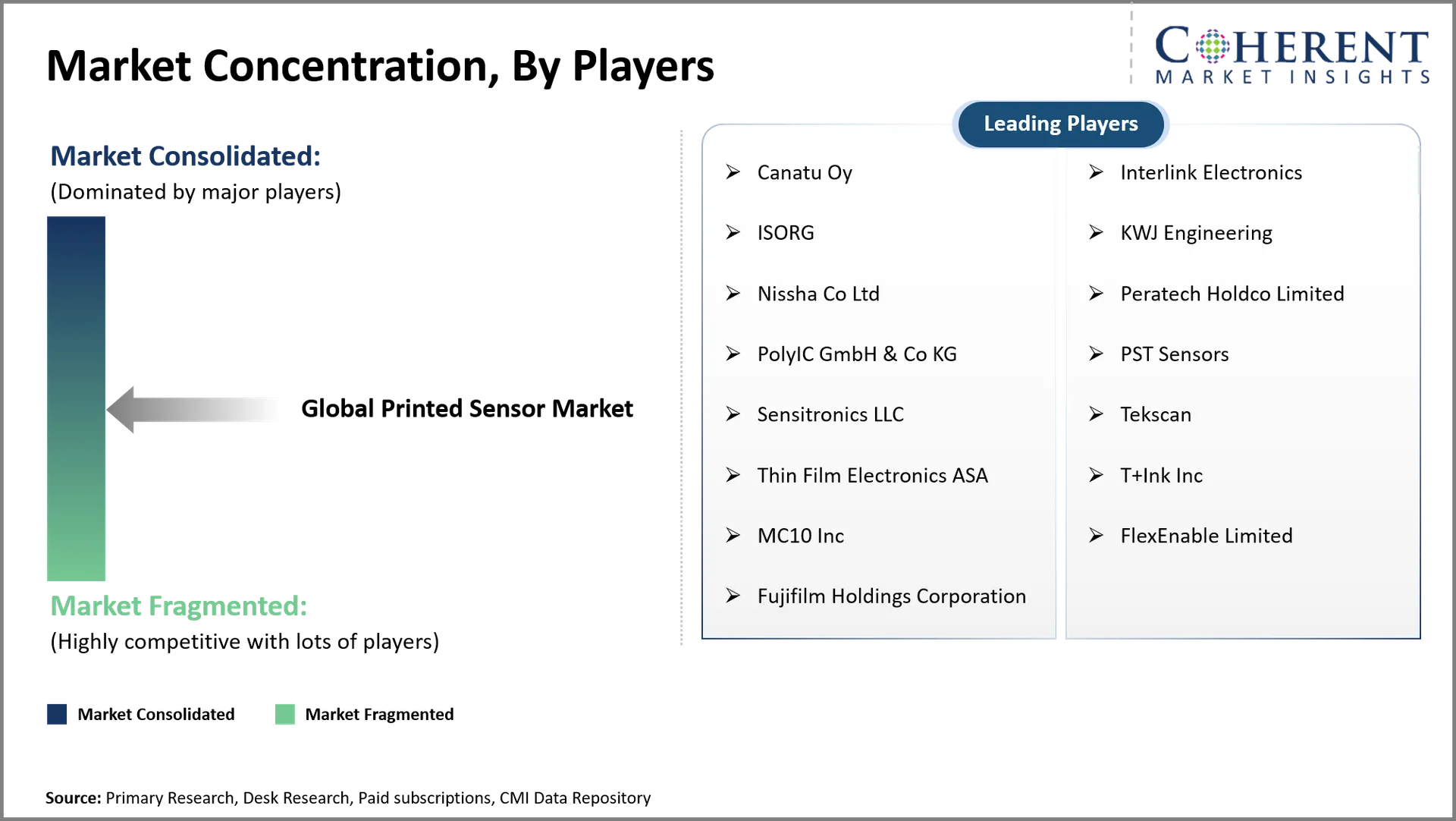
Key players are distinguishing themselves through proprietary sensor architectures, application engineering and manufacturing integration. Interlink Electronics integrates printed electronics, force sensing, wearables and gas sensing into a single platform. Its 2024 purchase of Conductive Transfers built stretchy printed electronics for smart fabrics and medical devices. Tekscan is the embedded flexible force sensor, pressure mapping and tactile sensing company. In February 2025, Tekscan teamed with FLEXOO to extend printable sensor capabilities for automotive, energy and electronics applications. These strategies show increasing emphasis on application-specific integration, stretchable architectures, and production-ready sensor solutions.
Market Report Scope
Report Coverage | Details | ||
Base Year | 2025 | Market Size in 2026: | USD 13.00 Bn |
Historical Data For: | 2020 To 2024 | Forecast Period: | 2026 To 2033 |
Forecast Period 2026 To 2033 CAGR: | 6.6% | 2033 Value Projection: | USD 19.00 Bn |
Geographies covered: |
| ||
Segments covered: |
| ||
Companies covered: | Canatu Oy, Interlink Electronics, ISORG, KWJ Engineering, Nissha Co Ltd, Peratech Holdco Limited, PolyIC GmbH & Co KG, PST Sensors, Sensitronics LLC, Tekscan, Thin Film Electronics ASA, T+Ink Inc, MC10 Inc, FlexEnable Limited, Fujifilm Holdings Corporation | ||
Growth Drivers: |
| ||
Restraints & Challenges: |
| ||
Analyst Opinion (Expert Opinion)
- The industry is likely to move toward thinner, stretchable, and application-specific sensor architectures. Printed biosensors, textile sensors, and flexible force sensors offer strong development potential. Interlink already combines printed electrodes, textile sensing, and wearable technologies within integrated product programs. This direction should favor suppliers capable of combining materials, sensing, electronics, and manufacturing engineering.
- The biggest prospects are likely to be in wearable healthcare, automotive interfaces, industrial robots and smart textiles. Printed biosensors for body-contact use can be built as monitoring and diagnostic electrodes. Thin force and touch sensors may be used in automotive applications where conventional components generate packaging limits. Germany, Japan, South Korea, China, and the U.S. should remain important development centers because of their specialized electronics capabilities.
- Market participants should prioritize proprietary conductive materials, reliable printing processes, and application-specific sensor designs. Interlink maintains in-house screen-printing capabilities across U.S., Chinese, and United Kingdom facilities. Tekscan demonstrates another route through partnerships that combine sensing expertise with printed electronics manufacturing. Companies can strengthen differentiation by securing application partnerships before scaling production.
Speak to the analyst
Want personalized insights?
Take the findings above to one of our principal consultants, or have the report rebuilt around the segments, geographies and competitors you actually track.
Market Segmentation
- Sensor Type Insights (Revenue, USD Billion, 2021 - 2033)
- Printed Biosensors
- Printed Touch Sensors
- Printed Pressure Sensors
- Printed Temperature Sensors
- Printed Strain Sensors
- Printed Gas Sensors
- Printed Image Sensors
- Others
- Printing Technology Insights (Revenue, USD Billion, 2021 - 2033)
- Screen Printing
- Inkjet Printing
- Gravure Printing
- Flexographic Printing
- Aerosol Jet Printing
- Others
- Substrate Insights (Revenue, USD Billion, 2021 - 2033)
- Polyethylene Terephthalate
- Polyimide
- Polyethylene Naphthalate
- Paper
- Glass
- Metal Foils
- Others
- Application Insights (Revenue, USD Billion, 2021 - 2033)
- Consumer Electronics
- Healthcare
- Automotive
- Industrial
- Aerospace and Defense
- Smart Packaging
- Others
- Regional Insights (Revenue, USD Billion, 2021 - 2033)
- North America
- U.S.
- Canada
- Latin America
- Brazil
- Argentina
- Mexico
- Rest of Latin America
- Europe
- Germany
- U.K.
- Spain
- France
- Italy
- Russia
- Rest of Europe
- Asia Pacific
- China
- India
- Japan
- Australia
- South Korea
- ASEAN
- Rest of Asia Pacific
- Middle East
- GCC Countries
- Israel
- Rest of Middle East
- Africa
- South Africa
- North Africa
- Central Africa
- North America
- Key Players Insights
- Canatu Oy
- Interlink Electronics
- ISORG
- KWJ Engineering
- Nissha Co Ltd
- Peratech Holdco Limited
- PolyIC GmbH & Co KG
- PST Sensors
- Sensitronics LLC
- Tekscan
- Thin Film Electronics ASA
- T+Ink Inc
- MC10 Inc
- FlexEnable Limited
- Fujifilm Holdings Corporation
Sources
Primary Research Interviews
- Printed Sensor Manufacturers & Technology Developers
- Raw Material Suppliers (Conductive Inks, Substrates)
- End-Use Industry Representatives (Healthcare, Automotive, Consumer Electronics)
- Packaging & Retail Solution Providers
Magazines
- Printed Electronics World Magazine
- Sensors Magazine
- Advanced Materials & Processes
- IEEE Spectrum
Journals
- Journal of Printed Electronics & Materials Science
- Sensors and Actuators (Elsevier)
Associations
- Organic and Printed Electronics Association (OE-A)
- SEMI (Semiconductor Equipment and Materials International)
- International Sensor Association (ISENSA)
- IDTechEx Research Association
Public Domain Sources
- U.S. Patent and Trademark Office (USPTO) – Patent Filings on Printed Sensors
- European Commission – Innovation & Technology Reports
- National Renewable Energy Laboratory (NREL) Reports
- World Intellectual Property Organization (WIPO)
Proprietary Elements
- CMI Data Analytics Tool
- Proprietary CMI Existing Repository of Information for the Last 10 Years
Get access to 250+ pages report
Every segment, forecast, competitor profile and data table behind the analysis above — available for instant download.
- ESOMAR Member
- ISO 9001:2015 Certified
- D-U-N-S Registered
- GDPR & CCPA Compliant
Missing comfort of reading report in your local language? Find your preferred language:
Frequently Asked Questions
The global printed sensor market is expected to stand at USD 13.00 Bn in 2026 and is expected to reach USD 19.00 Bn by 2033.
The CAGR of the global printed sensor market is projected to be 6.6% from 2026 to 2033.
Growing adoption of flexible electronics and Rising demand for wearable healthcare devices are the major factors driving the growth of the global printed sensor market.
High development costs and limited mass production capabilities are the major factors hampering the growth of the global printed sensor market.
In terms of sensor type, printed biosensors segment is estimated to dominate the market revenue share in 2026.
Printed sensors are sensing devices manufactured by depositing functional materials onto substrates using printing technologies.
Healthcare devices use printed sensors for physiological monitoring, diagnostic testing, and wearable health applications.