

Global Programmable Cell Therapy Market Size and Forecast – 2026-2033
The global programmable cell therapy market is expected to grow from USD 3,470.0 Mn in 2026 to USD 10,988.2 Mn by 2033, registering a compound annual growth rate (CAGR) of 17.9% from 2026 to 2033. The market for global programmable cell therapy is poised for significant expansion, fueled by the growing investment in targeted delivery technologies for in-vivo genome editing.
In May 2023, the U.S. National Institutes of Health (NIH) introduced the Targeted Genome Editor Delivery (TARGETED) Challenge, a USD 6 million initiative focused on developing programmable delivery systems capable of directing genome-editing tools to specific cell types, tissues, and organs. The initiative directly addresses delivery and targeting limitations that constrain the clinical translation of CRISPR, base-editing, and prime-editing technologies.
Key Takeaways of the Global Programmable Cell Therapy Market
- T Cells are projected to hold 67.4% of the global programmable cell therapy market share in 2026, making it dominant cell type segment across North America due to the region’s established regulatory framework for engineered cellular therapies and extensive clinical-development infrastructure. For instance, the U.S. FDA’s Center for Biologics Evaluation and Research (CBER) provides specific regulatory guidance and scientific advice for cellular and gene therapy products, including cellular immunotherapies and genetically modified cells, supporting the development of increasingly programmable T-cell platforms.
- CAR-T cell therapy is projected to hold 61.8% of the global programmable cell therapy market share in 2026, making it dominant therapy type segment across Europe due to the region’s established advanced-therapy regulatory framework and growing focus on genetically modified cell products. For instance, the European Medicines Agency’s Committee for Advanced Therapies (CAT) is actively working with international regulators on cell and gene therapy regulation and included advanced-therapy development and regulatory coordination in its 2026 work plan.
- CRISPR-based programming is projected to hold 38.7% of the global programmable cell therapy market share in 2026, making it dominant programming technology segment across the Asia Pacific region as regulatory authorities strengthen frameworks for advanced cell and gene therapies. For instance, Japan’s PMDA participates in international regulatory cooperation on cell and gene therapies, while its regulatory framework incorporates specific considerations for advanced therapies and genetically modified cells, supporting the structured development of genome-editing-based platforms.
- North America market maintains dominance with an expected share of 45.6% in 2026, bolstered by its mature cell and gene therapy development infrastructure and established regulatory framework for advanced cellular therapies. For instance, Health Canada’s advanced therapeutic products framework provides a flexible, risk-based regulatory approach for complex therapies where conventional regulations may not adequately address their characteristics, supporting the development of emerging cell-based technologies in the region.
- Asia Pacific is expected to exhibit the fastest growth in the global programmable cell therapy market, registering an estimated CAGR of 18.9% during 2026–2033, driven by strengthening regulatory frameworks and expanding clinical translation of advanced cellular technologies, particularly in China. For instance, in April 2026, China’s National Health Commission issued procedures for the approval and supervision of clinical translation of biomedical new technologies, covering technologies that act at the cellular and molecular levels and establishing requirements for their clinical research and compliant translation.
Segmental Insights
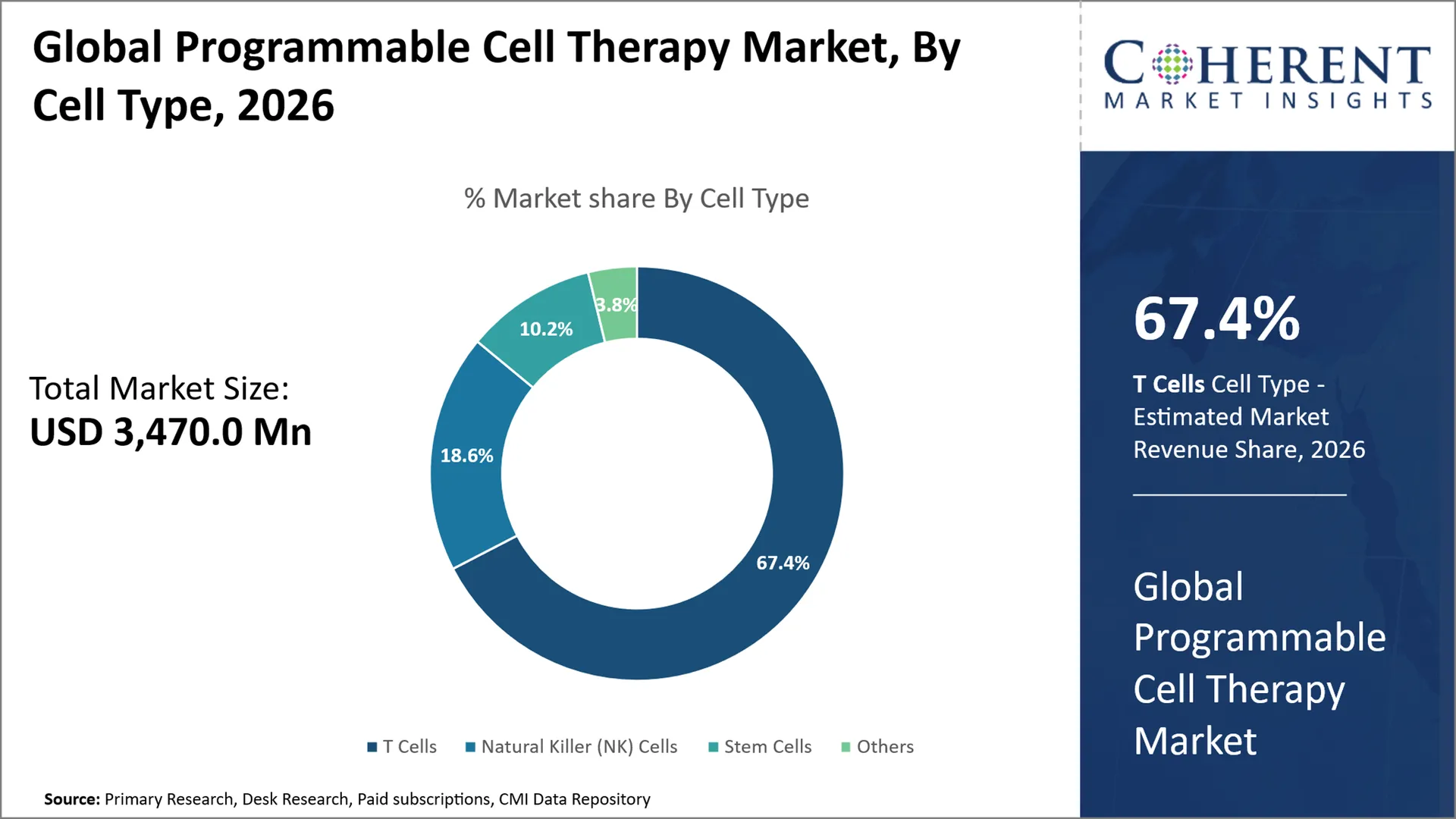
Why Do T Cells Dominate the Global Programmable Cell Therapy Market?
T Cells are projected to hold the market share of 67.4% in 2026, because of availability of mature platforms for Car-T and TCR engineering and their ability to recognize tumors more specifically. In addition, T cells have the ability to expand ex vivo that supports a scalable manufacturing process. Their position in the market will be further supported by continued regulatory progress for genetically-engineered T-cell products. For instance, in March 2026, the Pharmaceuticals and Medical Devices Agency (PMDA) in Japan updated their regulatory requirements for the application of regenerative medical products to include revised considerations for cell-processed products, supporting the persistent growth of engineered cellular therapies including CAR-T and TCR-based products in Japan.
- Current Industry Events of 2026
- Market Size Estimation
- Regional Breakdown
- Competitive Landscape
- Customer Intelligence
- Segmental Analysis
- Pricing Analysis
- Key Market Drivers, Challenges & Future Trends
- Customized Insights Section
Why Does CAR-T Cell Therapy Represent the Largest Therapy Type Segment in the Programmable Cell Therapy Market?
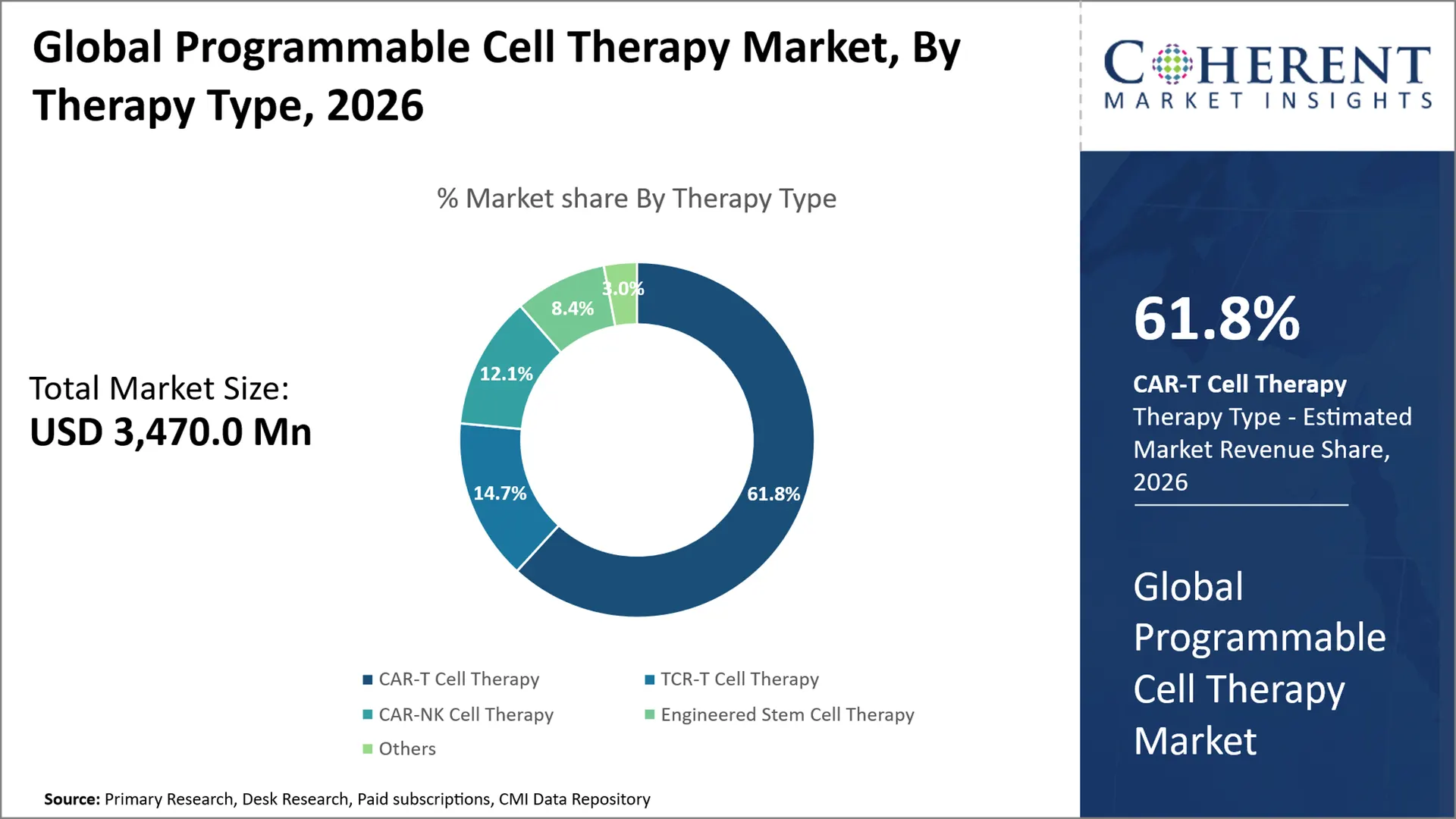
CAR-T cell therapy is projected to hold a market share of 61.8% in 2026, as it can be readily engineered to detect desired tumor antigens and execute precision-targeted cytotoxicity, and modular CARs lend themselves well to optimization for persistence, safety and tumor targeting. In addition, the maturity of the clinical infrastructure and pipeline should enable a broader adoption across hematologic indications and into new solid tumor indications. For instance, in March 2026, the Committee for Advanced Therapies (CAT) of European Medicines Agency (EMA) added a scientific opinion for allogeneic CAR-T lymphocyte therapy against CEACAM6 to its agenda, providing evidence of the regulatory authorities' ongoing consider approval of the CAR-T paradigm in Europe.
CRISPR-Based Programming Segment Dominates the Global Programmable Cell Therapy Market
The CRISPR-based programming segment is projected to hold a market share of 38.7% in 2026, because of its specificity and multiplex editing that allows for targeted programming of therapeutic cells by adding or disrupting genes that govern cellular function, safety, and persistence. In addition, its ability to work in T cells, NK cells and stem cells is also expected to provide a boost across numerous programmable-cell platforms. For instance, in January 2026, the Committee for Advanced Therapies (CAT) of the European Medicines Agency (EMA) confirmed gene editing as a known technology in the development of ATMPs and began working on guidance on in-vivo and in-vitro gene-editing products including genetically modified cells.
Current Events and their Impact
Current Events | Description and its Impact |
U.S. FDA Issues Final Guidance on Cellular and Gene Therapy Product Development (August 2026) |
|
U.S. FDA Issues Draft Guidance on Potency Assessment for Active Immunotherapy Products (August 2026) |
|
China Implements New Regulation for Biomedical New-Technology Clinical Research (May 2026) |
|
Programmable Cell Therapy Market Dynamics
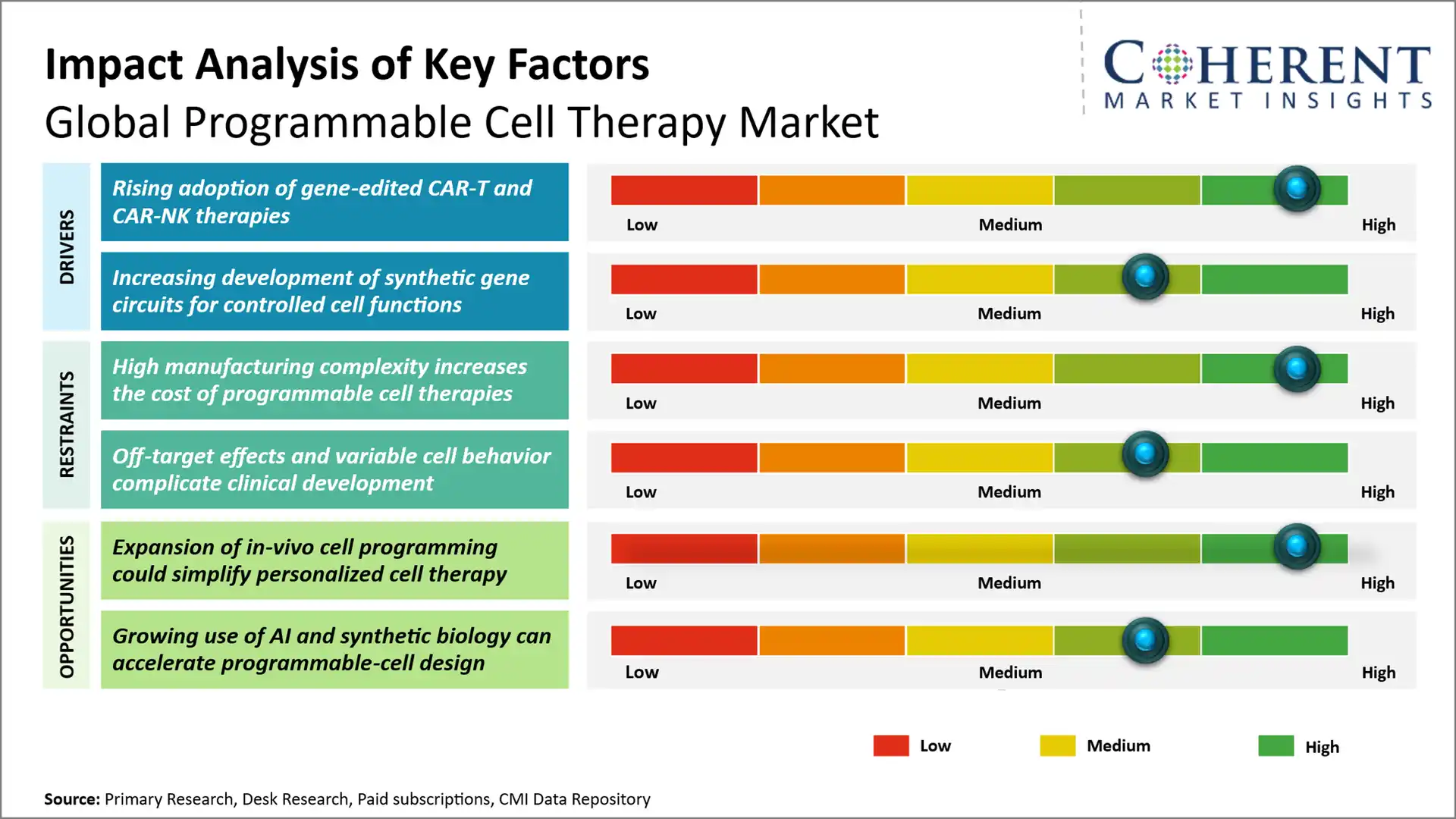
Market Drivers
- Rising adoption of gene-edited CAR-T and CAR-NK therapies: Gene-edited CAR-T and CAR-NK therapies are gaining momentum as programmable cells can be engineered to improve target specificity, persistence, immune evasion, and antitumor activity. The expansion of these platforms is also supporting the development of allogeneic, off-the-shelf therapies with greater manufacturing flexibility. For instance, in February 2026, India’s Technology Development Board provided USD 4.8 million (INR 40 crore) in financial assistance toward East Ocyon Bio’s CAR-NK cell therapy project, with a total project cost of USD 20.4 million (INR 170.37 crore), supporting development of an indigenous CAR-NK platform for oncology and leishmaniasis.
- Increasing development of synthetic gene circuits for controlled cell functions: Synthetic gene circuits are advancing programmable cell therapies by enabling engineered cells to sense disease-specific signals, process multiple biological inputs, and activate controlled therapeutic responses. This approach is improving the precision and safety of engineered T-cell and NK-cell therapies, particularly for complex solid tumors. For instance, in April 2026, Senti Biosciences reported peer-reviewed results demonstrating NOT-gated CAR circuits in T cells and NK cells, evaluating more than 60 circuit designs to optimize activation, inhibition, antigen response, and functional durability, highlights the increasing use of synthetic biology to build decision-making capabilities into living therapeutic cells.
- Rising development of allogeneic and off-the-shelf programmable cell therapies: Allogeneic programmable cell therapies are gaining attention as they can reduce the individualized manufacturing requirements of autologous approaches and enable standardized, readily available treatments. Advances in gene editing are enabling developers to modify donor-derived cells for improved immune compatibility, scalability, and therapeutic control. For instance, on September 2, 2026, the U.S. National Institutes of Health highlighted research focused on advancing allogeneic and in-vivo cellular immunotherapies to address the manufacturing complexity of conventional autologous approaches. The initiative emphasizes reducing patient-specific processing requirements while improving the scalability, accessibility, and cost efficiency of next-generation cell therapies
Emerging Trends
- Shift toward in-vivo cell programming: The market is moving toward programming therapeutic cells directly inside the patient, potentially reducing the time, cost, and manufacturing complexity associated with ex-vivo cell therapies. This approach is creating new possibilities for scalable and more accessible personalized treatments.
- Rise of synthetic gene circuits: Synthetic gene circuits are enabling cells to sense specific biological signals and activate predefined therapeutic functions, improving control over cellular behavior. Their integration with immune-cell and stem-cell platforms is supporting the development of more precise and responsive therapies.
- Expansion of allogeneic programmable cell therapies: Developers are increasingly pursuing allogeneic, off-the-shelf programmable cells to overcome the individualized manufacturing requirements of autologous therapies. Advances in gene editing and immune-evasion strategies are supporting more scalable cell-therapy platforms.
Regional Insights
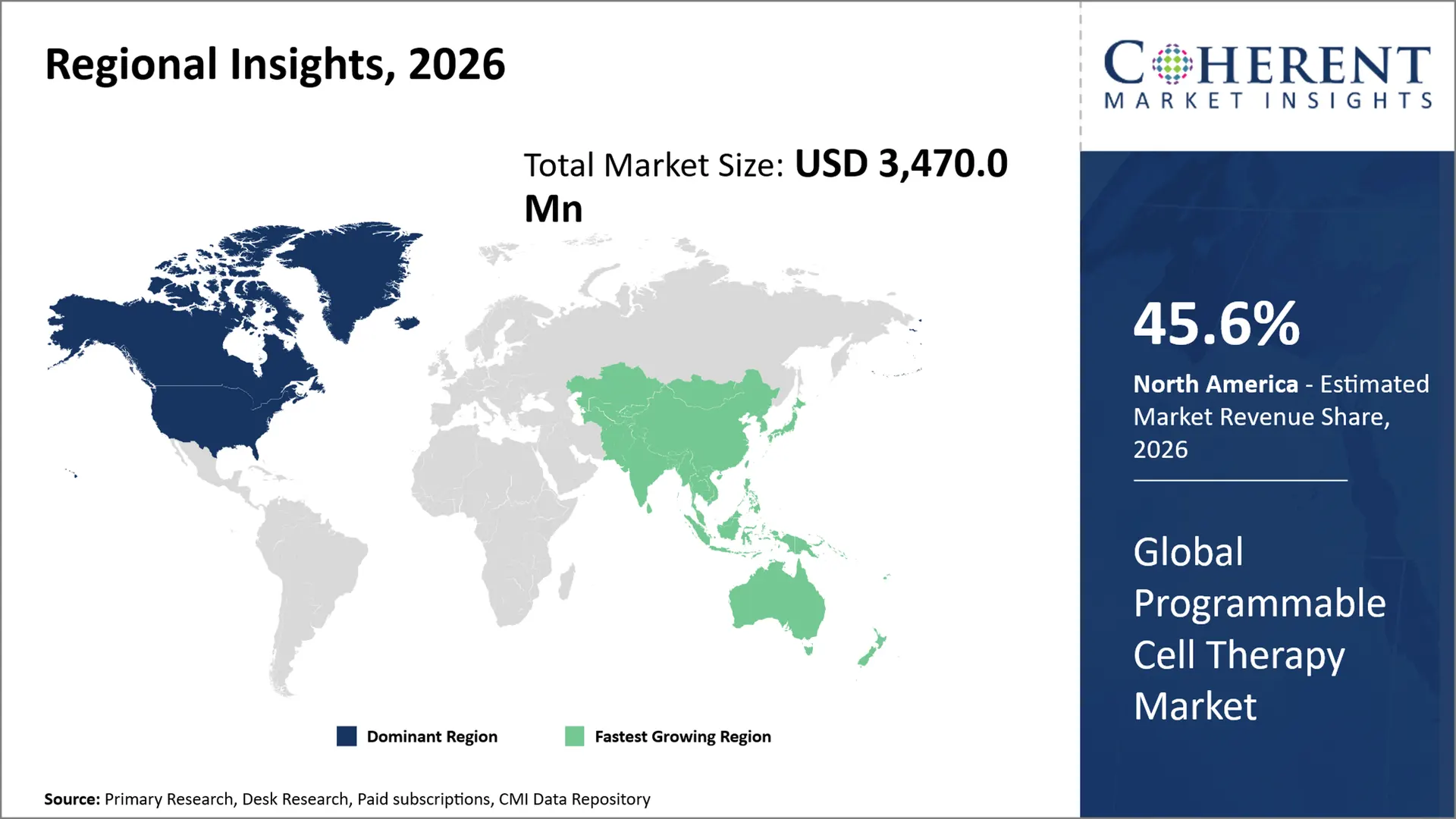
Why is North America a Strong Market for Programmable Cell Therapy?
North America leads the global programmable cell therapy market, accounting for an estimated 45.6% share in 2026, owing to region's emerging healthcare ecosystem, promising R&D environment, increased healthcare and biotechnology investments, and advanced clinical development activities. Regulatory approvals of cell therapies by bodies like the U.S. Food and Drug Administration (FDA) are expected to push innovative cell therapies forward by defining the indication specific pathways and guidance for cellular and gene therapy products and allowing the innovation to flourish.
For instance, in August 2026, the U.S. Food and Drug Administration (FDA) provided comprehensive guidance on common regulatory, Chemistry, Manufacturing, and Controls, pharmacology/toxicology, clinical, and clinical-pharmacology concerns for cellular and gene therapy products to aid developers to get a better knowledge of the full product development process. Additionally, academia, research institutions, and biopharmaceuticals collaborations along with well-established reimbursement and healthcare infrastructure in the region are expected to drive the market in the future.
Why Does Asia Pacific Programmable Cell Therapy Market Exhibit High Growth?
Asia Pacific is expected to exhibit the fastest growth in the global programmable cell therapy market, registering an estimated CAGR of 18.9% during 2026–2033. The region is projected to account for 23.1% of the global market in 2026, attributed to the growing healthcare infrastructure, increased investments in regenerative medicine and the adoption of innovative cellular technologies. Additionally, the region has a rapidly growing biotech industry ecosystem which can be attributed to government funding, attracting regulatory policies and a growing number of collaborations between national and international firms in China, South Korea, Japan.
For instance, in July 2026, Xiamen Free Trade Zone, and Xiamen University First Affiliated Hospital jointly established a cell therapy research and development base. Six cooperation agreements were signed including iPSC technology, cell-therapy quality control, cross-border technology integration and clinical research. Furthermore, enhancement in clinical research activities, advancements in manufacturing processes and growing demand for personalized medicines are expected to further drive the growth of programmable cell therapy market in the region.
Global Programmable Cell Therapy Market Outlook for Key Countries
Why is the U.S. Leading Innovation and Adoption in the Programmable Cell Therapy Market?
The U.S. is expected to excel at innovating and adopting CAR therapies because of its advanced policies regarding genetically engineered and programmable cell therapies, supported by a developed ecosystem for clinical development. In addition, the U.S Food and Drug Administration (FDA) has published specific guidance for CAR-T products and therapies involving human genome editing, giving innovators clarity on the expectations for safety, quality, manufacturing and clinical development.
Is Japan a Favorable Market for Programmable Cell Therapy Market?
Japan offers a promising environment for programmable cell therapy, with a distinct regulatory classification for regenerative medicine products and capability in more advanced cell therapies. In addition, the country's Pharmaceuticals and Medical Devices Agency (PMDA) has regulatory pathways addressing cell-processed products and gene-modified cellular therapies that probably favor the translation of programmable cell platforms to the clinic.
Is China Emerging as a Key Growth Hub for the Programmable Cell Therapy Market?
China is emerging as the major growth center for the programmable cell therapy market supported by expanding cell-therapy research and a more advanced regulatory environment for advanced biomedical solutions. The NMPA has released the 2026 Technical Guidelines for the Scope and Classification of Cell Therapy Products in July 2026, which seem to define the regulatory classification for Cell-based treatments more clearly.
Why Does Germany Top the European Programmable Cell Therapy Market?
Germany leads the European programmable cell therapy market owing to its professionalized regulatory expertise for advanced therapy medicinal products (ATMPs) conducted at the Paul-Ehrlich-Institut (PEI) for gene and somatic cell therapy. Additionally, the national specific quality-assurance protocols associated with CAR-T therapy will drive the uniformed clinical utilization along with patient safety.
Is Programmable Cell Therapy Market Developing in South Korea?
South Korea is a rising market for programmable cell therapy driven by its growing incentives for more compatible advanced regenerative medicine and cell and gene therapy regulations. The country is expected to go through a regulatory reform on in-vivo gene therapy within the category of advanced regenerative medicine in 2026. Also, the Ministry of Food and Drug Safety has revised guidelines for comparability assessment in cell and gene therapy.
Key Programmable Cell Therapy Platforms by Cell Type, Programming Technology, and Therapeutic Function
Cell Type | Programming Technology | Key Therapeutic Function | Major Therapeutic Focus |
T Cells | CRISPR/Cas9, synthetic gene circuits, CAR engineering | Target recognition and controlled cytotoxicity | Oncology |
NK Cells | CRISPR-based editing, CAR engineering, gene circuits | Tumor recognition and immune activation | Oncology |
Stem Cells | CRISPR editing, synthetic gene circuits, RNA programming | Differentiation and controlled therapeutic-factor secretion | Regenerative medicine, genetic disorders |
Macrophages | Gene editing, synthetic circuits, CAR programming | Tumor targeting and immune modulation | Solid tumors, inflammatory diseases |
Other Immune Cells | Gene editing and programmable molecular switches | Disease-specific immune modulation | Autoimmune and infectious diseases |
How is the expansion of in-vivo cell programming for simplified personalized cell therapy creating new growth opportunities in the programmable cell therapy market?
The expansion of in-vivo cell programming offers the possibility of reduced manufacturing complexity, duration, and capital requirement of ex-vivo cell therapies by programming therapeutic cells in the patient. Additionally, it could also improve scalability and accessibility of programmable therapies across oncology and other disease areas. For instance, in March 2026, a study published by Springer Nature Limited, demonstrated the site-specific in vivo programming of T cells by CRISPR-Cas9 and precision delivery in humanized models of hematological and solid cancers that leads to generation of CAR-T cells. The results pave the way for more scalable and accessible cell therapies.
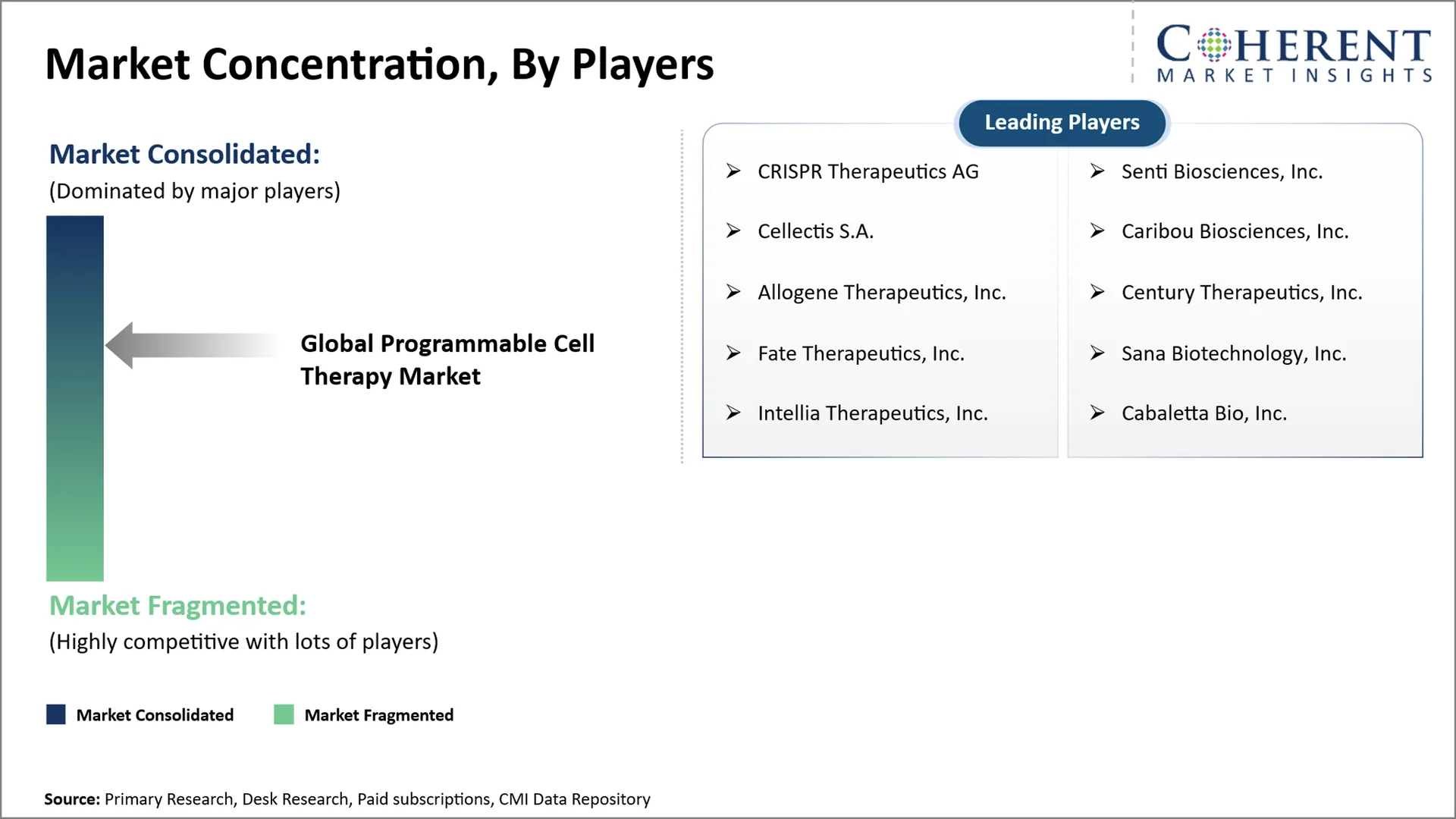
Market Players, Key Development, and Competitive Landscape
Key Developments
- On September 17,2026, Kincell Bio and Cellipont Bioservices merged to form Kincellis Advanced Therapies, combining immune-cell, stem-cell, iPSC, and emerging mRNA-enabled capabilities. The new CDMO operates approximately 140,000 sq. ft. across three U.S. sites with 16 qualified GMP manufacturing suites, supporting autologous and allogeneic therapies from development through commercial supply.
- On September 15, 2026, Insilico Medicine launched its Longevity Vaccines research initiative, applying generative AI and programmable RNA to develop single-administration, self-limiting in-vivo cell therapies. The approach uses circular mRNA delivered through targeted lipid nanoparticles to program patients’ T cells to eliminate disease-associated cell populations, beginning with senescent immune cells.
- In June 2026, Syntax Bio and Applied StemCell announced a strategic collaboration to advance programmable stem-cell therapies by evaluating engineered iPSC and hypoimmune cell lines using the Cellgorithm platform. The collaboration aims to improve the efficiency, reproducibility, and scalability of stem-cell development for next-generation regenerative and cell-based therapies.
- In April 2025, Charles River Laboratories announced the inaugural cohort of its Advanced Therapy Incubator Program, which included Adjuva Bio, developer of the LogiCAR programmable cell-therapy platform. The program provides scientific, regulatory, quality, and manufacturing support to early-stage advanced-therapy developers.
Competitive Landscape
The global programmable cell therapy market is competitive, with participants focusing on cell programming precision, gene-editing efficiency, therapeutic control, manufacturing scalability, and platform versatility. Market participants are advancing capabilities across CRISPR-based engineering, synthetic gene circuits, RNA programming, engineered immune cells, and stem-cell platforms to improve therapeutic performance and accelerate development toward clinical applications. Key focus areas include:
- Expansion of CRISPR-based gene editing and programmable cell-engineering platforms
- Integration of synthetic biology, gene circuits, and RNA-based programming
- Development of allogeneic and off-the-shelf programmable cell therapies
- Advancement of in-vivo cell programming
- Strategic collaborations, platform licensing, clinical pipeline expansion, and next-generation cell-therapy manufacturing capabilities
Market Report Scope
Programmable Cell Therapy Market Report Coverage | |||
Report Coverage | Details | ||
Base Year | 2025 | Market Size in 2026: | USD 3,470.0 Mn |
Historical Data For: | 2020 To 2024 | Forecast Period: | 2026 To 2033 |
Forecast Period 2026 To 2033 CAGR: | 17.9% | 2033 Value Projection: | USD 10,988.2 Mn |
Geographies covered: |
| ||
Segments covered: |
| ||
Companies covered: | CRISPR Therapeutics AG, Senti Biosciences, Inc., Cellectis S.A., Caribou Biosciences, Inc., Allogene Therapeutics, Inc., Century Therapeutics, Inc., Fate Therapeutics, Inc., Sana Biotechnology, Inc., Intellia Therapeutics, Inc., Cabaletta Bio, Inc. | ||
Growth Drivers: |
| ||
Restraints & Challenges: |
| ||
Analyst Opinion (Expert Opinion)
- In the coming years, global programmable cell therapy market will move toward highly controlled, multi-functional cells capable of responding dynamically to disease-specific signals. The market is expected to progress beyond conventional engineered T-cell therapies toward allogeneic platforms, synthetic gene circuits, RNA-programmed cells, and in-vivo cell programming, with manufacturing scalability and controllable cellular behavior becoming central to commercialization.
- The maximum opportunities are foreseen within T-cell for Oncology in China. T-cell platforms, particularly programmable CAR-T and next-generation engineered T-cell therapies, offer the broadest near-term development base, while oncology provides the largest addressable therapeutic application. China presents a substantial opportunity because of its expanding cell-therapy development ecosystem, growing clinical activity, and increasing capacity for advanced cell-therapy manufacturing.
- In order to gain a competitive advantage market players should prioritize programmability, scalability, and therapeutic control simultaneously, rather than competing solely on individual cell-therapy candidates. Building modular platforms that can rapidly incorporate new targets or genetic circuits, while developing cost-efficient allogeneic manufacturing and robust safety-control mechanisms, can improve pipeline flexibility and commercialization potential.
Speak to the analyst
Want personalized insights?
Take the findings above to one of our principal consultants, or have the report rebuilt around the segments, geographies and competitors you actually track.
Market Segmentation
- Cell Type Insights (Revenue, USD Mn, 2021 - 2033)
- T Cells
- Natural Killer (NK) Cells
- Stem Cells
- Others
- Therapy Type Insights (Revenue, USD Mn, 2021 - 2033)
- CAR-T Cell Therapy
- TCR-T Cell Therapy
- CAR-NK Cell Therapy
- Engineered Stem Cell Therapy
- Others
- Programming Technology Insights (Revenue, USD Mn, 2021 - 2033)
- CRISPR-Based Programming
- Synthetic Gene Circuits
- RNA-Based Programming
- Transcriptional/Protein-Level Programming
- Others
- Therapeutic Approach Insights (Revenue, USD Mn, 2021 - 2033)
- Autologous
- Allogeneic
- In Vivo Cell Programming
- Application Insights (Revenue, USD Mn, 2021 - 2033)
- Oncology
- Autoimmune Diseases
- Genetic Disorders
- Infectious Diseases
- Neurological Disorders
- Regenerative Medicine
- Others
- End User Insights (Revenue, USD Mn, 2021 - 2033)
- Hospitals and Specialty Clinics
- Pharmaceutical and Biotechnology Companies
- Academic and Research Institutes
- Contract Research Organizations (CROs)
- Others
- Regional Insights (Revenue, USD Mn, 2021 - 2033)
- North America
- U.S.
- Canada
- Latin America
- Brazil
- Argentina
- Mexico
- Rest of Latin America
- Europe
- Germany
- U.K.
- Spain
- France
- Italy
- Russia
- Rest of Europe
- Asia Pacific
- China
- India
- Japan
- Australia
- South Korea
- ASEAN
- Rest of Asia Pacific
- Middle East
- GCC Countries
- Israel
- Rest of Middle East
- Africa
- South Africa
- North Africa
- Central Africa
- North America
- Key Players Insights
- CRISPR Therapeutics AG
- Senti Biosciences, Inc.
- Cellectis S.A.
- Caribou Biosciences, Inc.
- Allogene Therapeutics, Inc.
- Century Therapeutics, Inc.
- Fate Therapeutics, Inc.
- Sana Biotechnology, Inc.
- Intellia Therapeutics, Inc.
- Cabaletta Bio, Inc.
Sources
Primary Research Interviews
- Programmable Cell Therapy companies – cell engineering, gene editing, synthetic biology, and programmable-cell platform development
- Pharmaceutical and biotechnology companies – clinical development, therapeutic pipelines, and commercialization
- Cell and gene therapy CDMOs – cell processing, manufacturing scale-up, and technology adoption
- Cell therapy manufacturing and process-development specialists – GMP production, automation, and process optimization
- Regulatory and quality professionals – CMC, clinical development, safety, and regulatory requirements
- Academic and research institutions – CRISPR, synthetic biology, cell engineering, and next-generation cell therapy research
Stakeholders
- Programmable Cell Therapy companies
- Pharmaceutical and biotechnology companies
- Cell and gene therapy CDMOs
- Contract Research Organizations (CROs)
- Hospitals and specialty clinics
- Academic and research institutions
- Cell therapy manufacturing and technology providers
- Synthetic biology and gene-editing technology providers
- Regulatory and health authorities
- Investors and venture capital firms
- End-use Sectors
- Pharmaceuticals & Biotechnology
- Hospitals & Specialty Clinics
- Academic & Research Institutes
- Contract Development & Manufacturing Organizations (CDMOs)
- Cell Therapy Manufacturing & Processing
- Clinical Research Organizations (CROs)
- Other End-use Sectors
- Regulatory & Health Bodies
- U.S. Food and Drug Administration (FDA) – cellular and gene therapy regulation, CMC, clinical development, and manufacturing requirements
- European Medicines Agency (EMA) – advanced therapy medicinal products, including gene and somatic-cell therapies
- Medicines and Healthcare products Regulatory Agency (MHRA) – advanced therapy regulation, quality, and manufacturing requirements
- World Health Organization (WHO) – cell, tissue, and gene therapy standards and regulatory frameworks
- International Council for Harmonisation of Technical Requirements for Pharmaceuticals for Human Use (ICH) – pharmaceutical quality, safety, efficacy, and regulatory guidelines
Databases
- FDA Drugs@FDA & Biologics License Applications – regulatory and approved-product information
- ClinicalTrials.gov – clinical trials involving cell and gene therapies and engineered-cell platforms
- NIH RePORTER – publicly funded research in cell therapy, gene editing, synthetic biology, and related biomedical fields
- WIPO PATENTSCOPE – international patent information covering cell engineering, gene editing, and biotechnology
- USPTO Patent Center – U.S. patent information related to cell and gene engineering technologies
Associations
- Biotechnology Innovation Organization (BIO) – biotechnology, biopharmaceutical development, and cell and gene therapy resources
- International Society for Cell & Gene Therapy (ISCT) – cell and gene therapy research, clinical translation, and manufacturing
- Alliance for Regenerative Medicine (ARM) – cell and gene therapy industry, regulatory, and commercialization resources
- International Society for Pharmaceutical Engineering (ISPE) – pharmaceutical manufacturing, process engineering, and quality resources
- American Society of Gene & Cell Therapy (ASGCT) – gene and cell therapy research, clinical development, and scientific resources
Public Domain Sources
- National Institutes of Health (NIH) – biomedical research and publicly funded cell and gene therapy research
- National Cancer Institute (NCI) – cancer-focused cell therapy, CAR-T, and gene-engineering research
- National Center for Biotechnology Information (NCBI) – genomic, molecular biology, and biomedical research databases
- U.S. Census Bureau – biotechnology-related industry and economic statistics
- Eurostat – European biotechnology, R&D, innovation, and healthcare statistics
- OECD Data Explorer – biotechnology, R&D, innovation, and science and technology statistics
Proprietary Elements
- CMI Data Analytics Tool, Proprietary CMI Existing Repository of information for last 10 years.
Get access to 250+ pages report
Every segment, forecast, competitor profile and data table behind the analysis above — available for instant download.
- ESOMAR Member
- ISO 9001:2015 Certified
- D-U-N-S Registered
- GDPR & CCPA Compliant
Missing comfort of reading report in your local language? Find your preferred language:
Frequently Asked Questions
The global programmable cell therapy market is estimated to be valued at USD 3,470.0 Mn in 2026 and is expected to reach USD 10,988.2 Mn by 2033.
T Cells dominates due to their established use in CAR-T and TCR-T therapies, extensive clinical development, and strong programmability for targeted immune responses.
Programmable cell therapy involves genetically or molecularly engineering living cells to perform specific therapeutic functions in response to defined biological signals.
The CAGR of global programmable cell therapy market is projected to be 17.9% from 2026 to 2033.
Rising adoption of gene-edited CAR-T and CAR-NK therapies, and increasing development of synthetic gene circuits for controlled cell functions are the major factors driving the growth of the global programmable cell therapy market.
High manufacturing complexity increases the cost of programmable cell therapies, and off-target effects and variable cell behavior complicate clinical development are the major factors hampering the growth of the global programmable cell therapy market.
In terms of therapy type, CAR-T cell therapy is estimated to dominate the market revenue share in 2026.