
Global Quantum-Enabled Biomedical Measurement Market Size and Forecast – 2026 To 2033
The global quantum-enabled biomedical measurement market is expected to grow from USD 428.6 Mn in 2026 to USD 1,087.4 Mn by 2033, registering a compound annual growth rate (CAGR) of 14.2% from 2026 to 2033. The global quantum-enabled biomedical measurement market is projected to witness significant growth owing to increasing government expenditure towards quantum sensing and quantum metrology research.z
India’s National Quantum Mission has an outlay of USD 720 million (INR 6,003.65 crore) sanctioned for the period 2023-2031 with dedicated research hubs for quantum sensing and metrology, boosting the technology ecosystem for future biomedical applications. (Source: Office of the Principal Scientific Adviser (PSA))
Key Takeaways of the Global Quantum-Enabled Biomedical Measurement Market
- Quantum sensors are projected to hold 39.6% of the global quantum-enabled biomedical measurement market share in 2026, making it dominant technology segment, across North America due to high quantum research infrastructure and increasing biomedical applications that leads to strong growth of quantum sensor technologies in the region. For instance, U.S. National Institutes of Health (NIH) emphasized quantum information science and technologies for biomedical applications in April 2026 focusing on its power to lead to next-generation imaging and diagnostic tools.
- Magnetic field and bio magnetic measurement is projected to hold 31.4% of the global quantum-enabled biomedical measurement market share in 2026, making it dominant application segment, across Europe due to the increased research activity in the region related to quantum enabled brain imaging and neurological measurements. For instance, in May 2026, the European Union dedicated a budget of USD 2.97 million (EUR 2.57 million) to the RESQ project with the aim of enabling the development of quantum sensing for improved metabolic brain imaging.
- Academic and research institutes are projected to hold 35.7% of the global quantum-enabled biomedical measurement market share in 2026, making it dominant end user segment, across Asia Pacific due to government-funded quantum research and university-based biomedical innovations. For instance, the National Institutes for Quantum Science and Technology in Japan is developing a quantum sensing-based diagnostic platform for ultra-early in-vitro disease detection, including quantum liquid biopsy research.
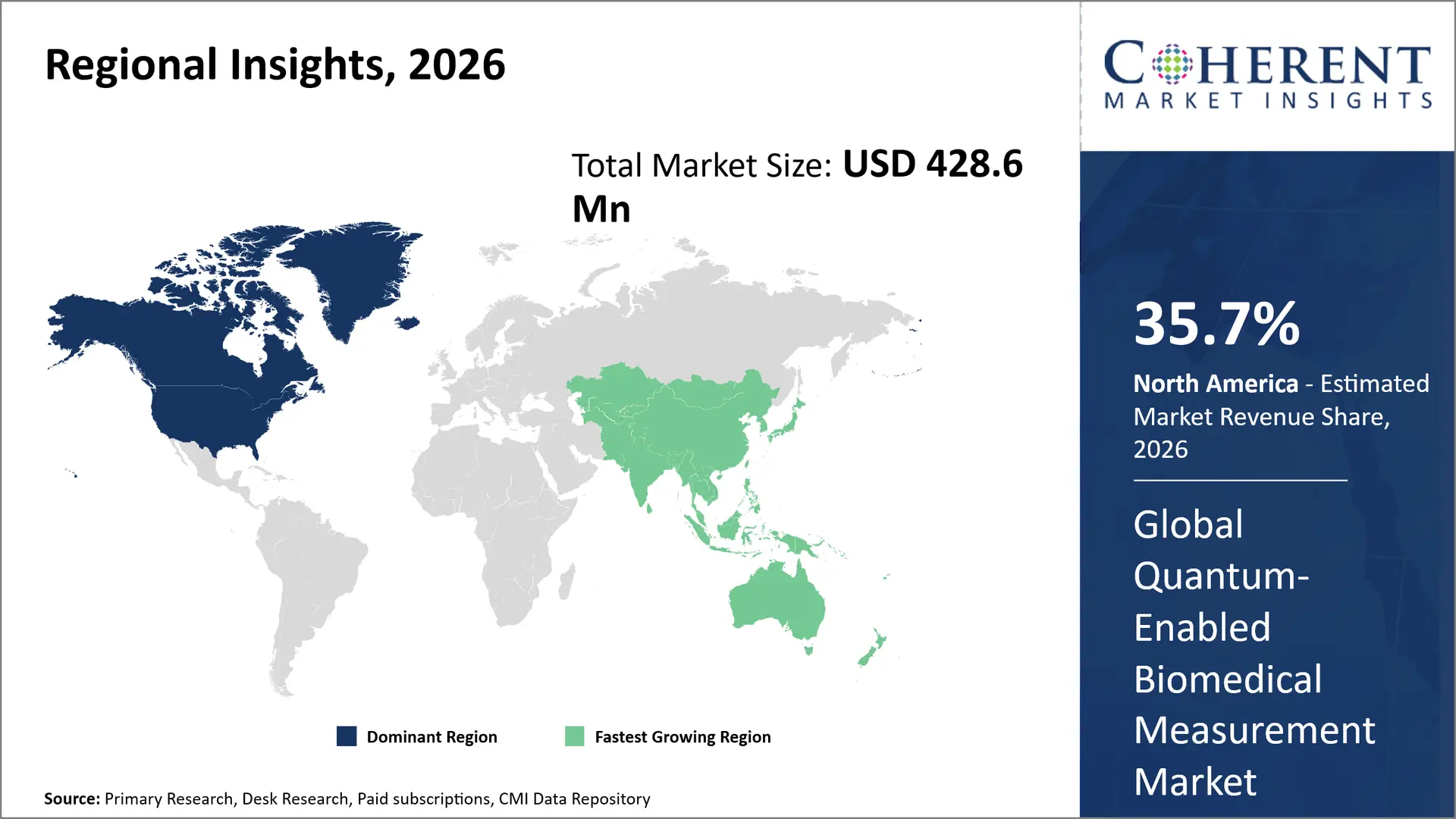
- North America market maintains dominance with an expected share of 35.7% in 2026, due to the high biomedical research infrastructure, a significant amount of funding in the field of quantum technology, and transdisciplinary research and development. For instance, the U.S. Advanced Research Projects Agency for Health (ARPA-H), has launched the UNIQUE program to explore quantum-entanglement-based biomedical imaging. UNIQUE combines quantum science, clinical imaging, and AI to detect biological signals that may be missed by traditional imaging.
- Asia Pacific is expected to exhibit the fastest growth in the global quantum-enabled biomedical measurement market, registering an estimated CAGR of 17.8% during 2026–2033, attributed to the increasing government funding for quantum sensing, growing biomedical research infrastructure, and increasing commercialization activities. For instance, in January 2026, the Ministry of Science and ICT of South Korea announced the first integrated master plan for quantum technology, with medicine as a priority application for commercialisation of quantum sensors, with funding across the board from prototype to commercialisation.
Segmental Insights
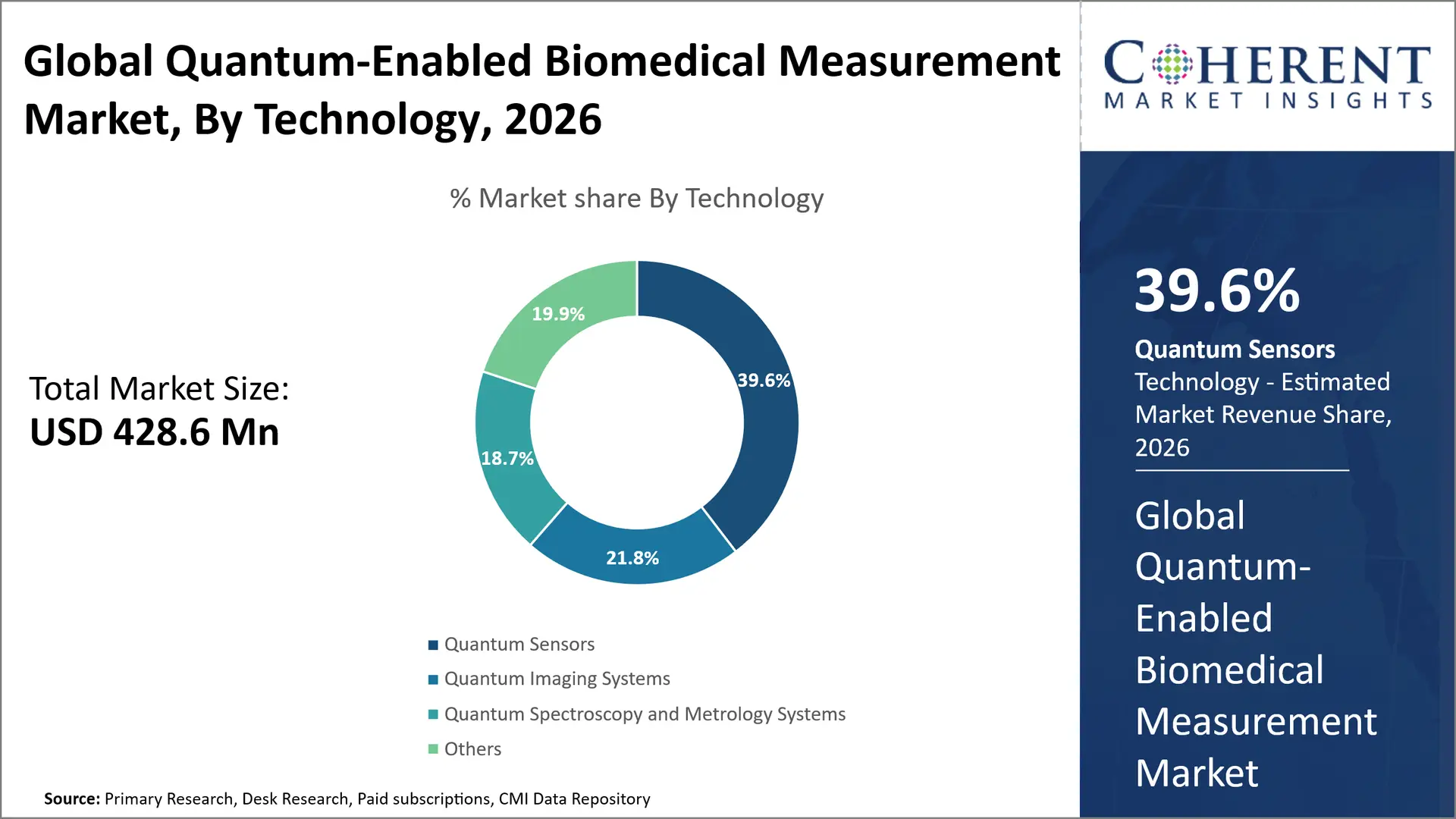
Why Do Quantum Sensors Dominate the Global Quantum-Enabled Biomedical Measurement Market?
Quantum sensors are projected to hold the market share of 39.6% in 2026, due to their highest sensitivity for sensing weak magnetic signals as well as physiological signals. Their ability to provide non-invasive, high-resolution signals are expected to be a driving factor for their importance in biomedical applications. For instance, Sandia National Laboratories is developing a wearable optically pumped magnetometers (OPM)-based brain imaging system that will record the activity of the brain without the need for a cool to cryogenic temperature, highlighting the potential of quantum sensors in clinical neuroimaging.
- Current Industry Events of 2026
- Market Size Estimation
- Regional Breakdown
- Competitive Landscape
- Customer Intelligence
- Segmental Analysis
- Pricing Analysis
- Key Market Drivers, Challenges & Future Trends
- Customized Insights Section
Why Do Magnetic Field and Bio magnetic Measurement Represent the Largest Application Segment in the Quantum-Enabled Biomedical Measurement Market?
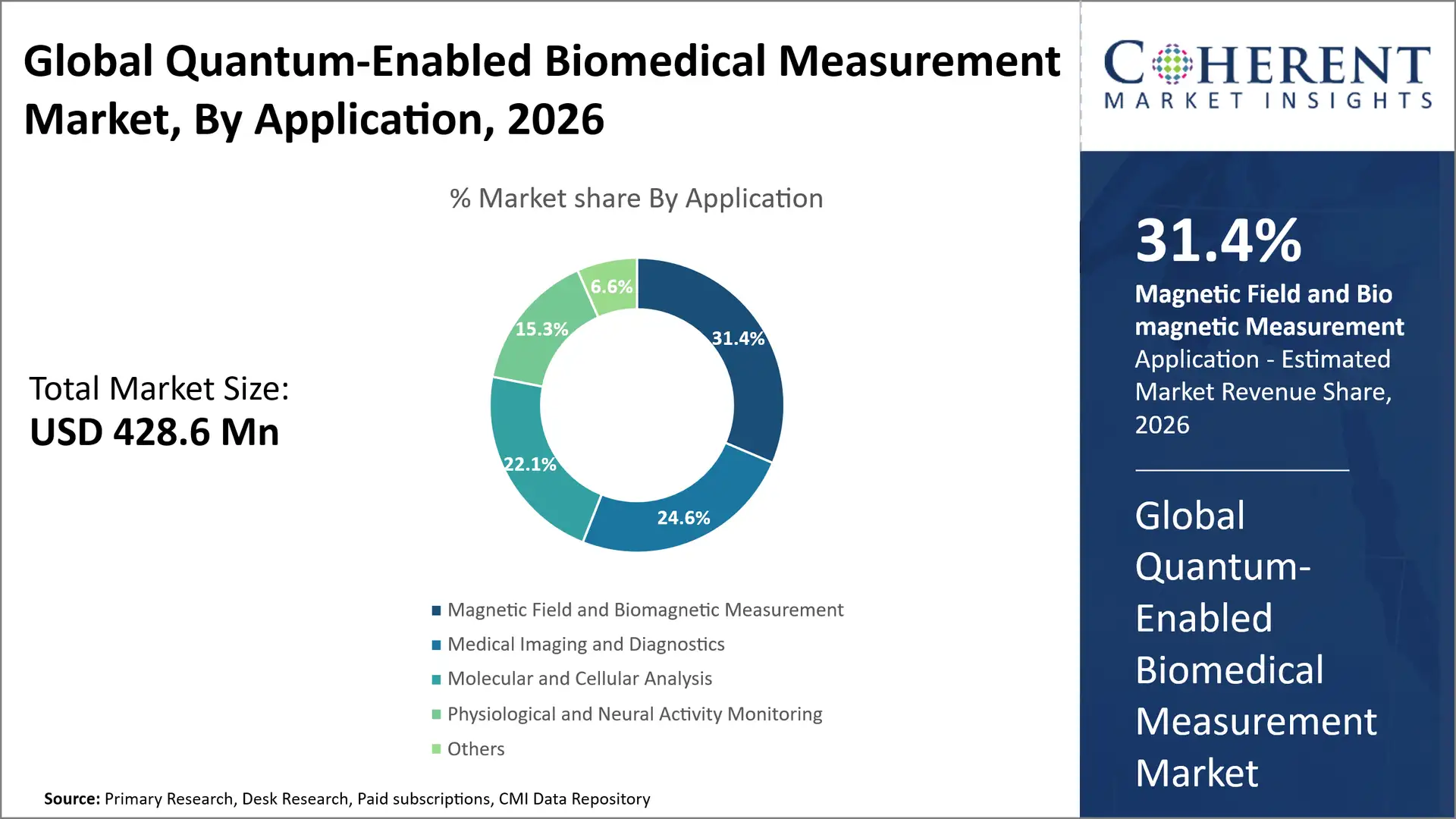
Magnetic field and bio magnetic measurement is projected to hold a market share of 31.4% in 2026, because the quantum magnetometers are potentially more sensitive to extremely weak magnetic fields generated by the brain, heart and other biological systems. This capability opens up the possibility for non-invasive brain mapping and heart rate monitoring. For instance, the U.S. National Institutes of Health is funding research on quantum magnetic tunnel junction sensor arrays that will be used in magnetoencephalography (MEG). The research aims to develop a method to measure brain activity in the environment, without magnetic shielding.
Academic and Research Institutes Segment Dominates the Global Quantum-Enabled Biomedical Measurement Market
The academic and research institutes segment is projected to hold a market share of 35.7% in 2026, since they are at the forefront of quantum technology development, multi-disciplinary biomedical applications and pre-commercial validation of measurement systems. The availability of labs and research funds provide an ideal environment to research more applications in cell analysis and advanced neurodiagnostics. For instance, in August 2026, the U.S. National Science Foundation extended its Quantum Sensing for Biophysics and Bioengineering Institute with USD 37.5 million for five years, potentially enabling new quantum sensors for probing intricate biological functions. (Source: University of Chicago)
Current Events and their Impact
Current Events | Description and its Impact |
NIH Initiates Qu-SAFE Challenge for Quantum-Enabled Biomedical Detection (October 2026) |
|
NIH Funds Quantum Diamond Magnetometry for Minimally Invasive Endometriosis Diagnosis (August 2026) |
|
Quantum-Enabled Biomedical Measurement Market Dynamics
Market Drivers
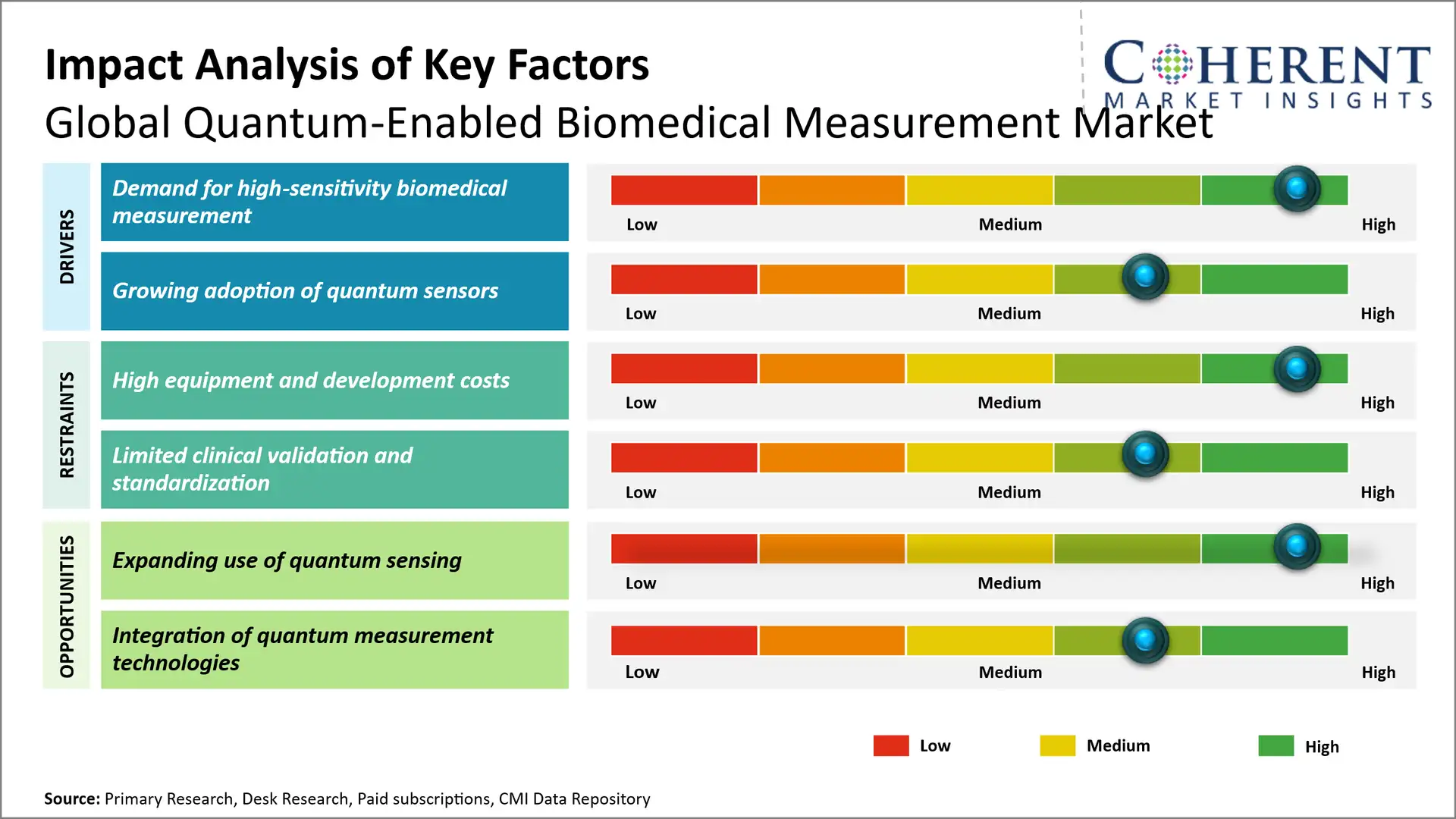
- Demand for high-sensitivity biomedical measurement: The huge requirement for ultra-sensitive diagnostics detectors points towards an increasing requirement for quantum sensors that can be "minimally coupled" with biological signals. Quantum sensors could be used to improve measurement of brain and heart activity to support accurate, non-invasive diagnostics. For instance, in September 2026, a study published in the National Library of Medicine, demonstrated that the magnetic signals in a human heart could be measured non-invasively by small (pocket sized) room temperature diamond quantum sensors.
- Growing adoption of quantum sensors: The growing use of quantum sensors is paving the way for new biomedical measurement tools which could measure small magnetic and physiological signals with greater accuracy. For instance, the European Union-funded MetaboliQs project is using quantum sensing for metabolic brain imaging, one of several new uses for quantum sensors in non-invasive brain research.
- Increasing government investments in quantum research: Government investments in quantum research is rising, and is expected to have a major role in the development of sensors for biomedical applications. For instance, Japan's MEXT (Ministry of Education, Culture, Sports, Science and Technology) is funding quantum sensing and precision measurement studies by its Q-LEAP research programme. This is helping to increase the development of quantum-enabled diagnostic and medical imaging tools.
Emerging Trends
- Artificial Intelligence within Quantum Sensing Systems: Artificial intelligence coupled with quantum sensors is emerging as a potential technique to optimize the interpretation of complex biomedical signals, as well as measurement precision.
- Impact: Algorithms driven by artificial intelligence can analyze low bio magnetic signals, reduce measurement noise, and detect finer physiologic signals. They can improve the accuracy and performance of advanced diagnostic measures.
- Market Relevance: This trend will drive the use of quantum sensors for neurological and cardiovascular diagnostics. The development will also create opportunities for integrated quantum sensing & data-analysis platform.
- Miniaturization of Quantum Sensors for Portable Diagnostics: Miniaturization of quantum sensors is ongoing and enabling movement of quantum measurement devices from large laboratory setups to smaller form factors.
- Impact: Miniature sensors can reduce the size of equipment, infrastructure requirements and enable flexible and non-invasive measurements. Such advances can translate into improved accessibility for research, clinical and point-of-care applications.
- Market Relevance: Portable quantum measurement systems could affect the wider use bedside neurological monitoring and cardiac diagnostics. The trend is anticipated to open up opportunities for developers of miniaturized application-specific biomedical devices.
Regional Insights
Why is North America a Strong Market for Quantum-Enabled Biomedical Measurement?
North America leads the global quantum-enabled biomedical measurement market, accounting for an estimated 35.7% share in 2026, attributed to the presence of a burgeoning quantum research ecosystem, a well-developed biomedical ecosystem, and pioneering collaboration avenues between academia and healthcare bodies. In the US, the National Quantum Initiative Act provides a framework for the federal government to coordinate and invest in quantum research, enabling them to fast track the development of quantum sensing and measurement technologies. Additionally, access to sophisticated clinical research facilities can support evidence for quantum-enabled biomedical applications.
Why Does Asia Pacific Quantum-Enabled Biomedical Measurement Market Exhibit High Growth?
Asia Pacific is expected to exhibit the fastest growth in the global quantum-enabled biomedical measurement market, registering an estimated CAGR of 17.8% during 2026–2033. The region is projected to account for 25.6% of the global market in 2026, rising demand for accurate diagnostics, increase in fundings for new technology, and the rise of quantum initiatives by the government. For instance, National Natural Science Foundation of China has unveiled its 2026 High-precision quantum manipulation and detection research program. The program explicitly mentions quantum precision measurement for medical applications and brain-computer interface, which include high-sensitivity brain imaging and the early detection of neurological diseases.
Furthermore, countries like China, Japan, and South Korea are expected to provide significant opportunities due to the targeted research of quantum sensors, quantum technology funds, and quantum factors which would improve the overall innovation in the region and as a result, boosts the growth of quantum-enabled biomedical measurement.
Global Quantum-Enabled Biomedical Measurement Market Outlook for Key Countries
Why is the U.S. Leading Innovation and Adoption in the Quantum-Enabled Biomedical Measurement Market?
The US remains a world leader in the market, based on a strong ability to develop quantum technologies and conduct biomedical research, supported by a mature community of universities, national labs, and medical technology developers. Prioritizing the transition of new quantum magnetometers, imaging techniques, and precision sensors into effective diagnostics drives the technology pipeline. Moreover, the synergy between quantum physicists, biomedical researchers, and end users of measurement devices promotes the development of solutions that can be used in clinics.
Is Japan a Favorable Market for Quantum-Enabled Biomedical Measurement Market?
Japan offers a favorable market based on an established quantum research community, applying quantum sensing in particular to biomedical applications. Research supported by the Ministry of Education, Culture, Sports, Science and Technology's Quantum Leap Flagship Program (Q-LEAP) puts a focus on quantum magnetometry for magnetoencephalography (MEG), magnetocardiography and magnetic imaging of cells and nerves. The partnership between the National Institutes for Quantum Science and Technology (QST) and the National Institute of Advanced Industrial Science and Technology (AIST) is opening up opportunities in the field of high-sensitivity biological measurements and in diagnostics at a molecular level.
Is China Emerging as a Key Growth Hub for the Quantum-Enabled Biomedical Measurement Market?
China is developing as a major hub for growth driven by strong government-supported quantum research, and growing infrastructure for precision measurement and quantum sensor development. China's advanced capabilities in atomic magnetometry, NV-diamond sensing, and quantum-enhanced imaging could be translated to biomedical applications such as neurological measurement and molecular diagnostics. However, scaling up laboratory work into clinically validated and commercially deployable systems remains a key challenge.
Why Does Germany Top the European Quantum-Enabled Biomedical Measurement Market?
With a strong research base in quantum magnetometry, biomedical imaging, and high-precision measurement, Germany leads the European market. Several institutions including Fraunhofer, Leibniz IPHT and Charité have made developments in the integration of optically pumped magnetometers and diamond quantum sensors for measuring at the brain, tissue and heart level. Its focus on linking research in quantum physics and medical engineering and clinical application has added to its leading position.
Is Quantum-Enabled Biomedical Measurement Market Developing in UK?
UK is emerging as the next potential market due to the mature quantum research community and growing focus in biomedical applications. With mature quantum sensing, magnetometry, and imaging capabilities, opportunities exist for projects relating to neurological diagnostics, cardiac and other physiological monitoring and in molecular diagnostics. Research communities and quantum measurement start-ups are also working together to enable the transition of quantum measurement from academia into the clinic.
Biomedical Applications and Measurement Capabilities of Quantum Technologies
Biomedical application | Quantum technology | Measurement capability |
Neurological diagnostics | Optically Pumped Magnetometers (OPMs) | Detects weak magnetic fields generated by brain activity |
Molecular and cellular analysis | Nitrogen-Vacancy (NV) diamond sensors | Detects nanoscale magnetic and biochemical signals |
Cardiac monitoring | Quantum magnetometers | Measures magnetic signals associated with cardiac activity |
Advanced medical imaging | Quantum-enhanced MRI and imaging | Improves sensitivity for tissue and biological measurements |
Point-of-care diagnostics | Quantum biosensors and spectroscopy | Enables sensitive detection of biomarkers in biological samples |
How is the expanding use of quantum sensing creating new growth opportunities in the quantum-enabled biomedical measurement market?
As adoption of quantum sensing increases, there are opportunities to achieve higher precision in biomedical measurements, particularly in neurological and heart conditions where current technologies might struggle to pick up on the very low levels of biological signals. Quantum magnetometers and diamond sensors could improve the sensitivity of bio magnetic measurements and help to enable the advances in cell-level and non-invasive brain imaging. For instance, the U.S. Advanced Research Projects Agency for Health (ARPA-H) awarded up to USD 3.2 million to the City College of New York in September 2026 to develop a quantum magnetic induction tomography system using nitrogen-vacancy-centre sensors for non-contact tissue imaging, highlighting the applications of quantum sensing for portable non-invasive biomedical diagnostics.
Market Players, Key Development, and Competitive Intelligence
Key Developments
- On October 8, 2026, the UK Quantum Biomedical Sensing (Q-BIOMED) Research Hub released the summaries of its annual Q-BIOMED Connect 2026 conference, which took place at the University of Cambridge. The conference brought together researchers, clinicians, funders and policy makers to discuss developments in quantum-enabled medical imaging, diagnostics and biomedical sensing.
- In March 2026, Psi Quantum and Japan's National Cancer Center signed a new strategic research agreement for the development of quantum computing applications in oncology and drug discovery. The partners focus on the creation of fault-tolerant quantum algorithms and applications relevant for the clinic, emphasizing the growing importance of quantum technology in biomedicine.
Competitive Landscape
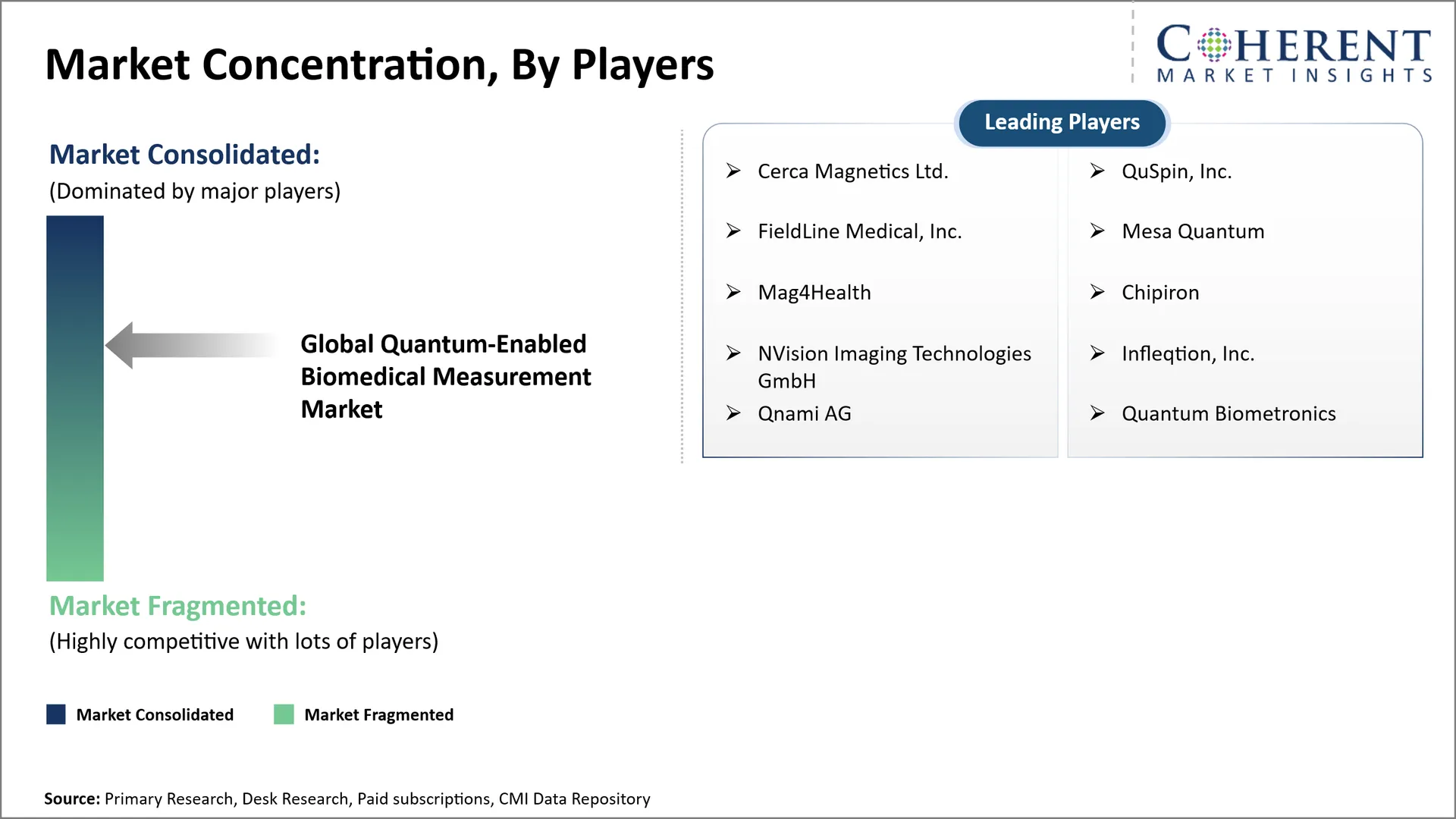
The market for global quantum-enabled biomedical measurement market is highly fragmented with competition among a number of players from specialized quantum sensing companies, medical tech developers, research spin-offs, and traditional instrumentation vendors. Currently no player has dominance in the entire industry with competition across quantum magnetometry, imaging, and spectroscopy. The immaturity of commercialization in this space combined with the broad market requirements increases fragmentation.
Key focus areas include
- Design of quantum sensors for monitoring brain and heart signals.
- Development of quantum imaging modalities to be used as a non-invasive diagnostic technique.
- Incorporation of NV-diamond sensors for molecular analysis.
- The miniaturization of quantum devices for point of care applications
- Improvement of the accuracy of measurement and clinical validation
Market Report Scope
Global Quantum-Enabled Biomedical Measurement Market Report Coverage | |||
Report Coverage | Details | ||
Base Year | 2025 | Market Size in 2026: | USD 428.6 Mn |
Historical Data For: | 2020 To 2024 | Forecast Period: | 2026 To 2033 |
Forecast Period 2026 To 2033 CAGR: | 14.2% | 2033 Value Projection: | USD 1,087.4 Mn |
Geographies covered: |
| ||
Segments covered: |
| ||
Companies covered: | Cerca Magnetics Ltd., QuSpin, Inc., FieldLine Medical, Inc., Mesa Quantum, Mag4Health, Chipiron, NVision Imaging Technologies GmbH, Infleqtion, Inc., Qnami AG, Quantum Biometronics | ||
Growth Drivers: |
| ||
Restraints & Challenges: |
| ||
Analyst Opinion (Expert Opinion)
- In the coming years, the global quantum-enabled biomedical measurement market is expected to shift from research driven development to broader clinical and commercial expansion. Advances in quantum sensing, imaging and spectroscopy will allow for detection of microscopic biological signals leading to more accurate, non-invasive diagnosis. Quantum-enabled biomedical measurement will be expanded further with the convergence with artificial intelligence and advanced data analytics.
- The biggest potential applications are expected to be in quantum sensing for neurological and cardiovascular diagnostics, specifically through optically pumped magnetometers and quantum-enhanced brain imaging. The U.S. and China are well placed to benefit the most, with significant quantum research efforts, a complex healthcare infrastructure, and continuous growth in the use of biomedical technology.
- In order to gain a competitive advantage market players should focus on developing affordable miniature quantum measurement solutions that are clinically accurate rather than measuring laboratory performance alone. Industry partnerships with hospitals, university research centers and startups in the medical device space can help to accelerate clinical validation and commercialization further. Meanwhile, companies should explore avenues to embed artificial intelligence, specialized use-cases and scalable manufacturing into their offering to strengthen market competitiveness.
Speak to the analyst
Want personalized insights?
Take the findings above to one of our principal consultants, or have the report rebuilt around the segments, geographies and competitors you actually track.
Market Segmentation
- Technology Insights (Revenue, USD Mn, 2021 - 2033)
- Quantum Sensors
- Quantum Imaging Systems
- Quantum Spectroscopy and Metrology Systems
- Others
- Application Insights (Revenue, USD Mn, 2021 - 2033)
- Magnetic Field and Bio magnetic Measurement
- Medical Imaging and Diagnostics
- Molecular and Cellular Analysis
- Physiological and Neural Activity Monitoring
- Others
- End User Insights (Revenue, USD Mn, 2021 - 2033)
- Hospitals and Diagnostic Centers
- Pharmaceutical and Biotechnology Companies
- Academic and Research Institutes
- Medical Device and Biomedical Technology Companies
- Others
- Regional Insights (Revenue, USD Mn, 2021 - 2033)
- North America
- U.S.
- Canada
- Latin America
- Brazil
- Argentina
- Mexico
- Rest of Latin America
- Europe
- Germany
- U.K.
- Spain
- France
- Italy
- Russia
- Rest of Europe
- Asia Pacific
- China
- India
- Japan
- Australia
- South Korea
- ASEAN
- Rest of Asia Pacific
- Middle East
- GCC Countries
- Israel
- Rest of Middle East
- Africa
- South Africa
- North Africa
- Central Africa
- North America
Sources
Primary Research Interviews
- Quantum sensing and magnetometry researchers.
- Biomedical imaging and spectroscopy specialists.
- Quantum technology product development heads.
- Clinical researchers specializing in neurological and cardiovascular diagnostics.
Stakeholders
- Developers of quantum sensors, magnetometers, and biomedical measurement systems.
- Manufacturers of quantum-enabled imaging and spectroscopy equipment.
- Quantum technology companies specializing in biomedical sensing and diagnostics.
- Hospitals, diagnostic centers, and research institutions adopting quantum-based measurement technologies.
- Healthcare technology providers integrating quantum measurement systems with clinical data and diagnostic platforms.
- End-use Sectors
- Hospitals and diagnostic centers.
- Neurology and cardiology research centers.
- Academic and biomedical research institutions.
- Pharmaceutical and biotechnology companies.
- Regulatory & Health Bodies
- U.S. Food and Drug Administration (FDA), U.S.
- Medicines and Healthcare products Regulatory Agency (MHRA), UK.
- European Medicines Agency (EMA), European Union.
- Central Drugs Standard Control Organisation (CDSCO), India.
Databases
- ClinicalTrials.gov
- NIH RePORTER – publicly funded biomedical research projects.
- CORDIS – European research and innovation projects.
Associations
- IEEE Quantum Initiative
- Quantum Economic Development Consortium (QED-C)
- European Quantum Industry Consortium (QuIC)
- International Society for Magnetic Resonance in Medicine (ISMRM)
Public Domain Sources
- National Institutes of Health (NIH), U.S.
- National Institute of Standards and Technology (NIST), U.S.
- UK Research and Innovation (UKRI), UK.
- National Institutes for Quantum Science and Technology (QST), Japan.
Proprietary Elements
- CMI Data Analytics Tool
- Proprietary CMI Existing Repository of information for last 10 years.
Get access to 250+ pages report
Every segment, forecast, competitor profile and data table behind the analysis above — available for instant download.
- ESOMAR Member
- ISO 9001:2015 Certified
- D-U-N-S Registered
- GDPR & CCPA Compliant
Frequently Asked Questions
The global quantum-enabled biomedical measurement market is estimated to be valued at USD 428.6 Mn in 2026 and is expected to reach USD 1,087.4 Mn by 2033.
Quantum sensors dominate due to their ability to sense the weak biological signals very accurately and sensitively.
The system uses quantum technologies (quantum sensors, quantum imaging systems, etc.) to detect biological signals and processes with greater sensitivity and accuracy.
The CAGR of global quantum-enabled biomedical measurement market is projected to be 14.2% from 2026 to 2033.
Demand for high-sensitivity biomedical measurement, and growing adoption of quantum sensors are the major factors driving the growth of the global quantum-enabled biomedical measurement market.
High equipment and development costs, and limited clinical validation and standardization are the major factors hampering the growth of the global quantum-enabled biomedical measurement market.
In terms of application, magnetic field and bio magnetic measurement is estimated to dominate the market revenue share in 2026.