

Global Radiotheranostics Market Size and Forecast – 2026 To 2033
The global radiotheranostics market is expected to grow from USD 9.42 Bn in 2026 to USD 18.16 Bn by 2033, registering a compound annual growth rate (CAGR) of 9.8% from 2026 to 2033. The global radiotheranostics market is projected to grow significantly owing to the expansion of medical radioisotope production and radiopharmaceuticals supplies by the governments, which ensure the availability of diagnostic and therapeutic isotopes.
In August 2026, India's Department of Atomic Energy announced that its domestic Lutetium-177 production grew from 473 Ci in FY2021-22 to 976 Ci in FY2025-26 - more than doubling production capacity to meet targeted radionuclide therapies. (Source: Press Information Bureau)
Key Takeaways of the Global Radiotheranostics Market
- Therapeutic radiopharmaceuticals are projected to hold 58.4% of the global radiotheranostics market share in 2026, making it dominant product type segment. North America will continue to maintain a dominating share in the global market owing to well-established nuclear medicine infrastructure and government efforts to enhance medical isotopes availability. The U.S. Government Accountability Office (GAO) reported that the Department of Energy (DOE) achieved more than 7,700 shipments of the isotope during FY2020-FY2025, 95% of which supported medical applications.
- Lutetium-177 (Lu-177) is projected to hold 36.8% of the global radiotheranostics market share in 2026, making it dominant radioisotope segment. The market in Europe is gaining a strong foothold in the global medical radioisotopes supply chain due to an increasing investment to develop domestic production infrastructure and ensure supply security of the medical radioisotopes. In September 2026, the European Commission announced a new plan – The European Radioisotope Valley Initiative (ERVI) to promote the production of medical radioisotopes, drive investments in infrastructure, and reduce dependence on foreign suppliers.
- Oncology is projected to hold 78.4% of the global radiotheranostics market share in 2026, making it dominant application segment. Asia Pacific will witness growing adoption of radioisotopes, with presence of several national efforts aimed at increasing production of radioisotopes, studies in nuclear medicine, and availability of therapies for targeted cancer treatments. Japan's Ministry of Health, Labour and Welfare has outlined efforts to bolster domestic research and stable supply of medical radioisotopes, and to conduct joint research of next-generation radiopharmaceuticals and theranostics.
- North America market maintains dominance with an expected share of 48.6% in 2026, owing to the presence of infrastructure for nuclear medicines, concentration of radiopharmaceutical manufacturing facilities and an increasing focus on medical isotope production. In July 2026, the Government of Ontario allocated additional funding of USD 4.6 million to enhance the production and research capacity for medical isotopes at McMaster Nuclear Reactor.
- Asia Pacific is expected to exhibit the fastest growth in the global radiotheranostics market, registering an estimated CAGR of 12.8% during 2026–2033, owing to the increasing nuclear medicine infrastructure, surging demand for radionuclide targeted therapies, and increasing regional synthesis capacity and supply chains of radioisotopes. In July 2026, the OECD Nuclear Energy Agency, in co-operation with Australia’s AINSTO, hosted the First Asia-Pacific Workshop on Medical Radioisotopes, which discussed questions related to isotope supply security, infrastructure and the uptake of radioligand therapy and theranostics in the region.
Segmental Insights
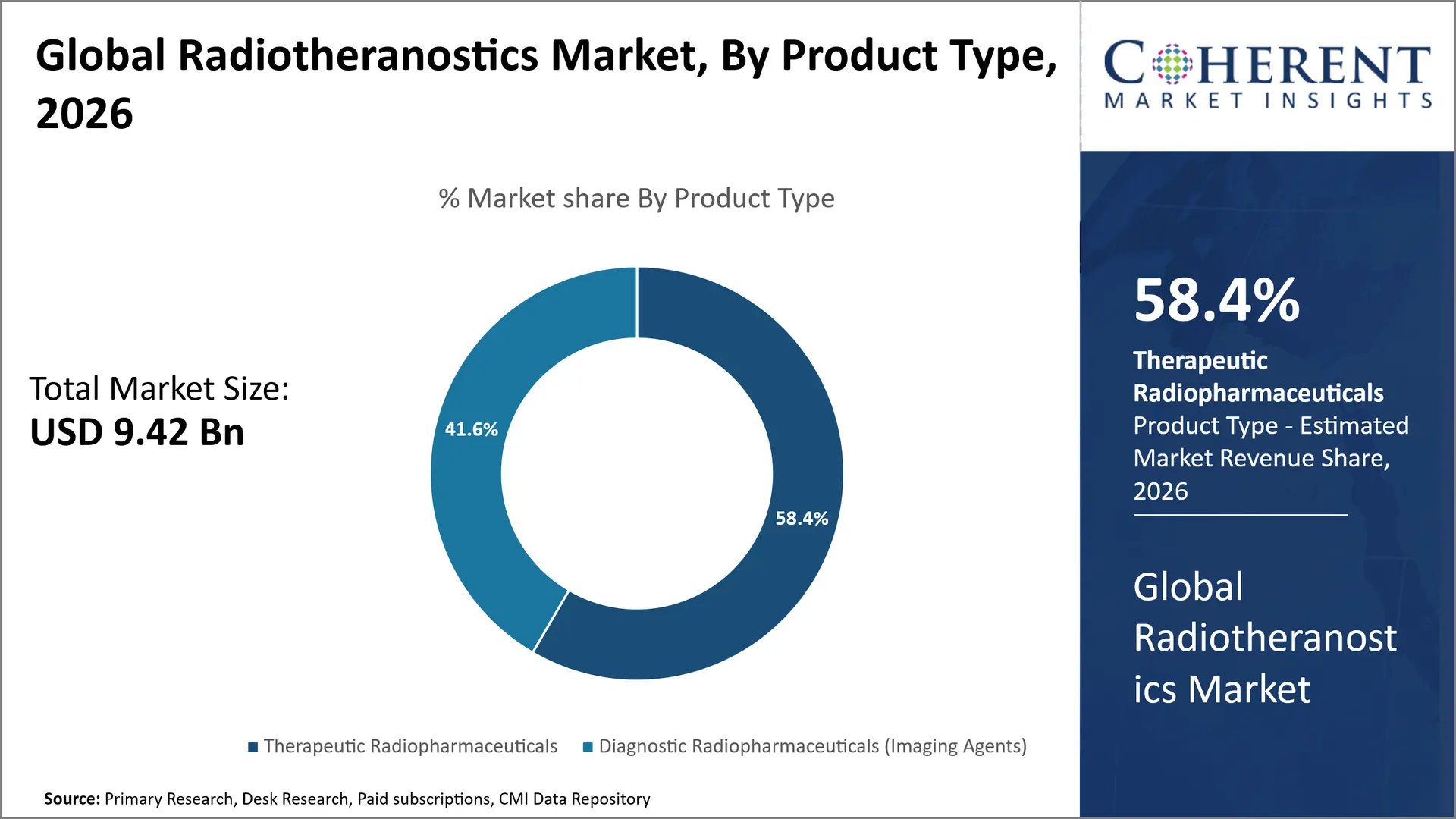
Why Do Therapeutic Radiopharmaceuticals Dominate the Global Radiotheranostics Market?
Therapeutic radiopharmaceuticals are projected to hold the market share of 58.4% in 2026, owing to their ability to facilitate targeted treatment for cancer using Lutetium-177-based treatments for prostate cancer and neuroendocrine tumours. Their potential to allow radiation of target molecules, while constraining radiation to the healthy tissues around them, is driving their acceptance in clinical practice. For instance, in September 2026, the U.S. Food and Drug Administration (FDA) approved BEXLUTRY (lutetium Lu 177 dotatate) for the treatment of adult patients with somatostatin receptor-positive gastroenteropancreatic neuroendocrine tumors (GEP-NETs) further expanding the therapeutic landscape of targeted radionuclide therapy.
- Current Industry Events of 2026
- Market Size Estimation
- Regional Breakdown
- Competitive Landscape
- Customer Intelligence
- Segmental Analysis
- Pricing Analysis
- Key Market Drivers, Challenges & Future Trends
- Customized Insights Section
Why Does Lutetium-177 (Lu-177) Represent the Largest Radioisotope Segment in the Radiotheranostics Market?
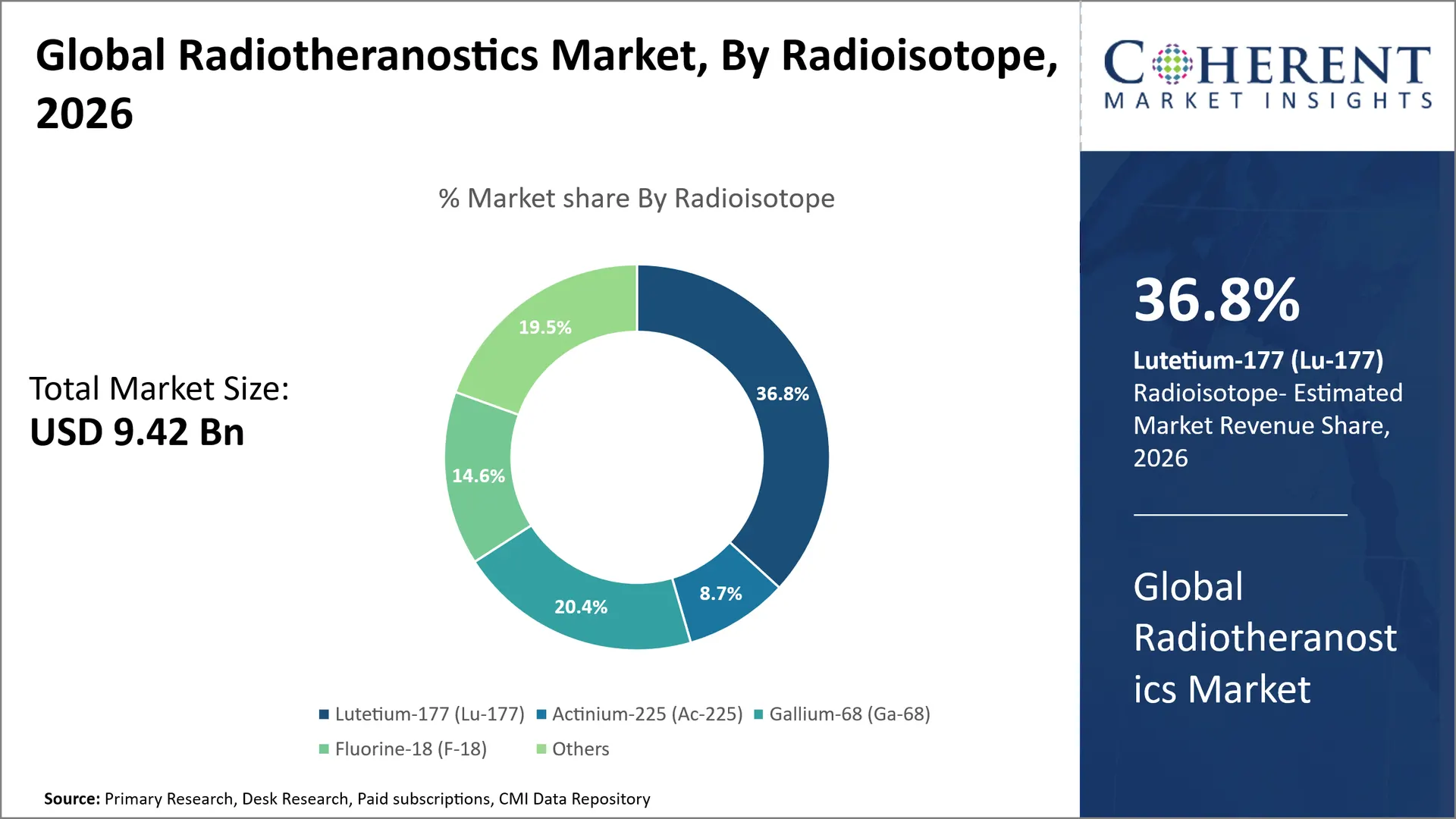
Lutetium-177 (Lu-177) is projected to hold a market share of 36.8% in 2026, as it is most widely adopted diagnostic and therapeutic isotope in targeting therapies for prostate cancer, neuroendocrine tumours underpinned by the therapeutic and imaging versatility of the isotope. Its expanding role in other radiopharmaceuticals is further helping to drive uptake, and a demand for reliable isotope supply. For instance, in March 2026, Ilumira (Lutetium-177 chloride precursor for radiolabeling of carrier molecules) was granted marketing authorization by the European Commission for radiolabeling carrier molecules for targeted radiopharmaceutical use.
Oncology Segment Dominates the Global Radiotheranostics Market
The oncology segment is projected to hold a market share of 78.4% in 2026, owing to the high utilization of targeted radiopharmaceuticals for the detection, staging, therapy determination, and theranostics of cancer. High application of PSMA-, somatostatin receptor- and tumour specific imaging agents are driving the radiotheranostics applications in prostate, neuroendocrine and brain cancers. For instance, in September 2026, the U.S. Food and Drug Administration (FDA) approved an imaging agent, PIXCLARA (Floretyrosine F-18), as a PET imaging agent to discriminate recurrent or progressive glioma from treatment-related alterations, contributing to radiopharmaceutical therapies in brain cancer detection.
Current Events and their Impact
Current Events | Description and its Impact |
India Announces National Nuclear Medicine Expansion Programme (July 2026) |
|
U.S. Department of Energy Announces USD 263 Million Conditional Loan for Medical Isotope Production (April 2026) |
|
Radiotheranostics Market Dynamics
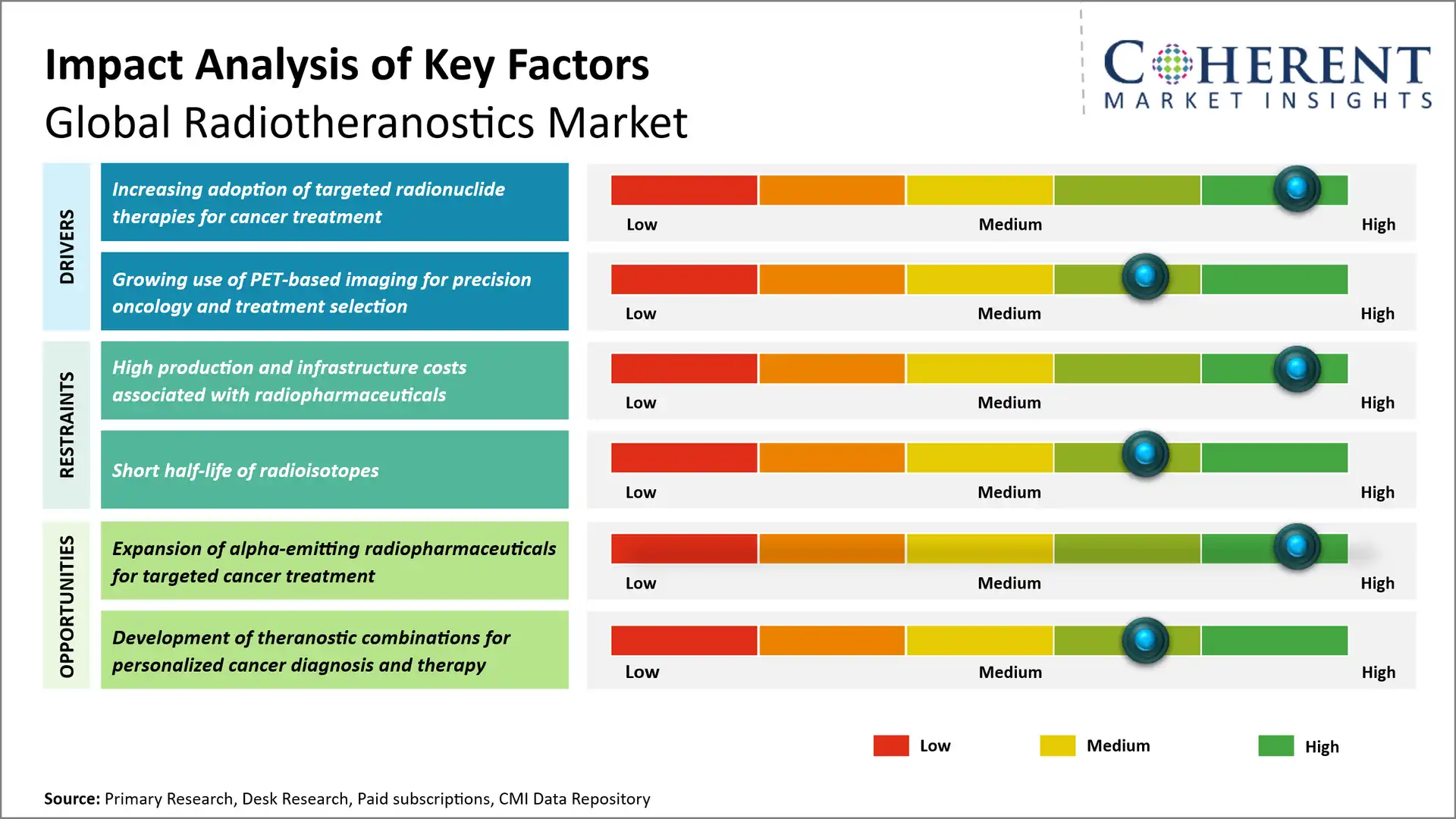
Market Drivers
- Increasing adoption of targeted radionuclide therapies for cancer treatment: Growing uptake of targeted therapies, especially using Lutetium-177, including PSMA-617 and DOTA-TATE, is expanding options for prostate and neuroendocrine tumours. Increasing clinical adoption of targeted therapies is driving the potential of these therapies, owing to their ability to selectively deliver the radiation to the diseased tumour cells and thus, reducing the side effects, over the normal organs. In February 2026, India Department of Atomic Energy announced use of Lu-177-PSMA-617 and Lu-177-DOTA-TATE radiopharmaceuticals for cancer treatment.
- Growing use of PET-based imaging for precision oncology and treatment selection: Growing adoption of PET/CT, especially PSMA-PET and somatostatin receptor PET imaging allow doctors to determine target expression and disease spread of the disease prior to selecting radiopharmaceutical therapy for the treatment. This facilitates targeted treatment in more patients and help in planning treatments. In July 2026, the National Cancer Center of Japan had started first-in-human imaging research to study expression of Claudi 18.2 in gastric cancer patients using PET/CT with ^64Cu- PD-29875.
- Expansion of radiopharmaceutical manufacturing and supply capacity: Investments to build new dedicated radiopharmaceutical manufacturing plants are enhancing global supply and access to diagnostic and therapeutic radioisotopes. Advanced manufacturing infrastructure facilitates assured product supply and allows broader clinical application of radiotheranostics. The Government of Canada in October 2026 announced an investment of USD 16.58 million (CAD 23.8 million) to develop and modernize radiopharmaceutical manufacturing facilities in Quebec, Canada.
Emerging Trends
- Expansion of alpha-emitting radiopharmaceuticals: Actinium-225- and Lead-212- based treatments are being developed at an increasing rate because they are highly effective at targeting very localized radiation to the cancer cells.
- Impact: These therapies are extending treatment options to resistant and metastatic cancers and stimulating investment in the pipeline of next-generation radiopharmaceuticals.
- Market Relevance: An increase in clinical development and manufacturing activities of alpha-emitting isotopes will provide new revenue streams to the radiotheranostics value chain.
- Advancements in personalized theranostic pairing: The creation of matched diagnostic and therapeutic radiopharmaceuticals, including PSMA- and somatostatin receptor-targeted agents.
- Impact: Better patient selection, increased tumour-specificity and better assessment of treatment response are driving more widespread adoption of precision radionuclide therapies
- Market Relevance: Growing adoption of diagnostic-therapeutic combinations is likely to create greater need for imaging agents, therapeutic radioisotopes, and combined radiotheranostics.
Regional Insights
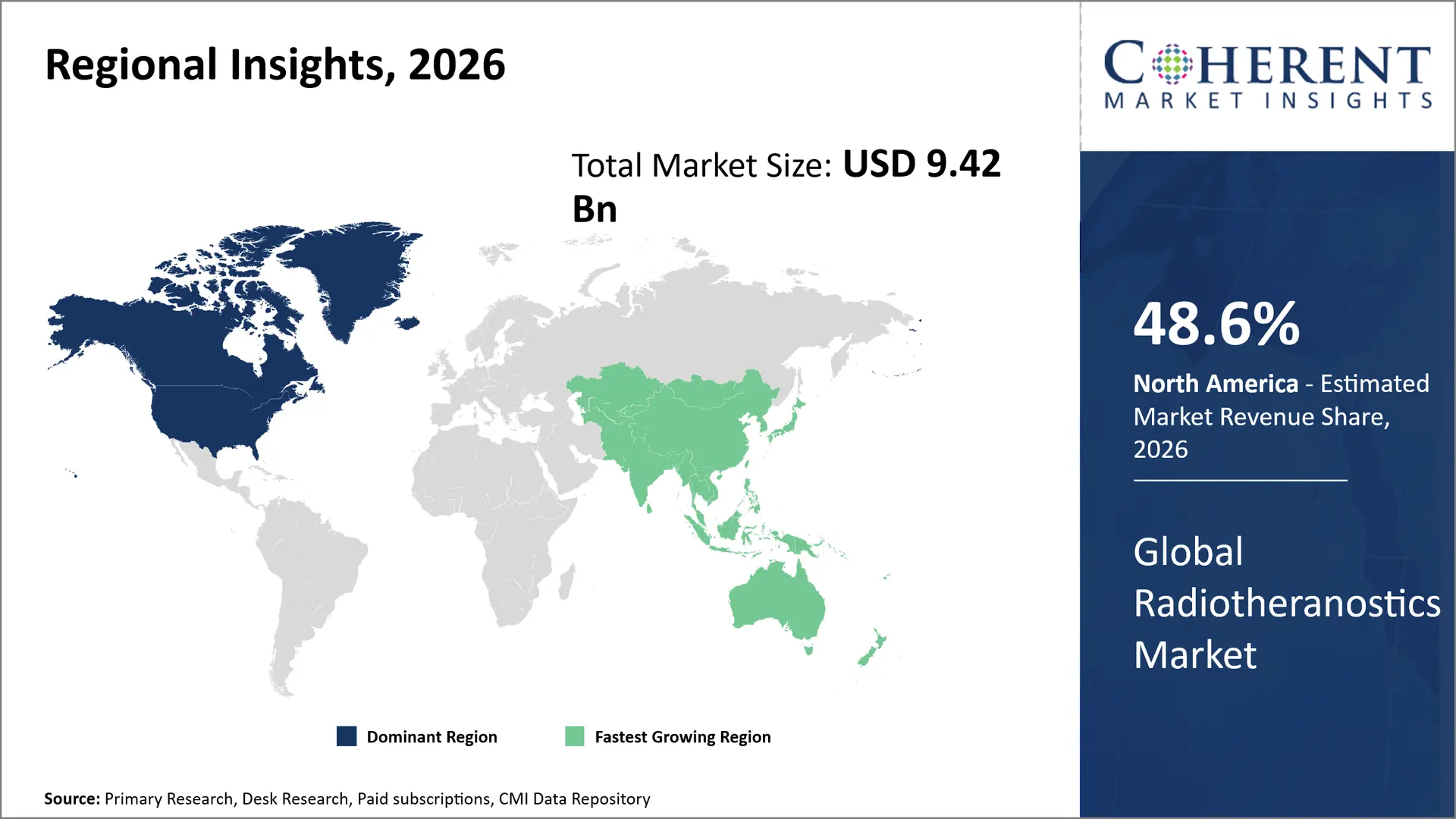
Why is North America a Strong Market for Radiotheranostics?
North America leads the global radiotheranostics market, accounting for an estimated 48.6% share in 2026, due to the presence of sophisticated healthcare facilities, large scale R&D infrastructure and high volume of clinical trials in targeted radiopharmaceuticals. Streamlined regulatory pathways through the U.S. FDA for acceptance and commercialization of new radiotherapeutic drugs, well developed reimbursement channels for clinical implementation, and collaborative research activities between market players and other research organizations further accelerate innovation and market expansion. For instance, on July 31, 2026, the U.S. FDA expanded the indication for Pluvicto (lutetium-177 vipivotide tetraxetan) in combination with androgen receptor pathway inhibitor therapy in patients with PSMA-positive mHSPC.
Why Does Asia Pacific Radiotheranostics Market Exhibit High Growth?
Asia Pacific is expected to exhibit the fastest growth in the global radiotheranostics market, registering an estimated CAGR of 12.8% during 2026–2033. The region is projected to account for 19.7% of the global market in 2026, owing to the high incidence of cancer and the rising healthcare spending coupled with the boom in nuclear medicine infrastructure in China, India, and other emerging countries.
Japan, South Korea, and China have adopted attractive policies and funding programs for the proliferation of nuclear medicine and personalized medicine. For instance, Japan FY2026 Basic Policy on Economic and Fiscal Management and Reform promotes development, production, and stable supply of medical radioisotopes on the domestic market. Furthermore, South Korea Radiation-Biotechnology Innovation Strategy promotes achievement of 100% self-sufficiency for medical isotopes in the core isotope by 2030 and domestic radiopharmaceutical development. (Source: Ministry of Science and ICT) These initiatives strengthen regional isotope supply capabilities and the development of next-generation radiotheranostic treatments.
Global Radiotheranostics Market Outlook for Key Countries
Why is the U.S. Leading Innovation and Adoption in the Radiotheranostics Market?
U.S. dominates radiotheranostics market with robust commercialization of targeted radiopharmaceuticals, such as prostate specific membrane antigen (PSMA) targeted therapies for prostate cancer, and somatostatin receptor targeted therapies for neuroendocrine tumours. The existence of key players (such as Novartis AG, Lantheus Holdings, Inc., Bristol Myers Squibb), radiopharmaceutical manufacturers (such as Curium Pharma, Cardinal Health, NorthStar Medical Radioisotopes), and specialized nuclear medicine centres (such as Memorial Sloan Kettering Cancer Center, MD Anderson Cancer Center, Mayo Clinic) underpins innovation in each part of the value chain. Furthermore, its robust clinical pipeline, availability of dedicated isotope manufacturing and mature treatment delivery ecosystem underpin its market leadership.
Is China a Favorable Market for Radiotheranostics Market?
China represents an attractive growth market for radiotheranostics, underpinned by an increasing ability to develop radiopharmaceuticals in the country, produce isotopes and accelerate targeted radionuclide treatments. Focus areas include Lu-177-based prostate and neuroendocrine tumour therapies and the maturation of Ac-225-based alpha therapies. The pharmaceutical companies and nuclear medicine centers are emerging as future sources of localized radiopharmaceuticals, which will also help to build local manufacturing capacity.
Is Japan Emerging as a Key Growth Hub for the Radiotheranostics Market?
Japan is becoming a major growth center for radiotheranostics owing to existing nuclear medicine network and expertise, growing development of targeted radionuclide therapies and established niche for development of diagnostic radiopharmaceuticals. Potential for adoption of radiotheranostics exists in emerging opportunities of PSMA targeted prostate cancer therapy and somatostatin receptor targeted therapies for neuroendocrine cancers. The domestic pharma players, radiopharmaceuticals vendors and clinical research infrastructure facilitate Japan's early adoption of radiotheranostics.
Why Does Germany Top the European Radiotheranostics Market?
Germany holds the largest share in the European radiotheranostics market because of its existing radiopharmaceutical manufacturing infrastructure, specialized nuclear medicine centres and its strengths in medical isotope production. The various companies operating in the region have the necessary expertise and infrastructure for the development and manufacturing of targeted radiopharmaceuticals. Furthermore, Germany has strong expertise in Lutetium-177 based therapies, radio pharmacy infrastructure, and clinical research.
Is Radiotheranostics Market Developing in France?
The currently emerging radiotheranostics market in France leverages the existing nuclear medicine infrastructure, radiopharmaceutical research and development skills, and medical isotope manufacturing know-how within the country. Increasing demand for the use of targeted radionuclide therapies within medical cancer treatment is another driver of the ongoing development of the radiotheranostics field in France, especially Lutetium-177-based therapies and new alpha-emitting therapies.
Clinical Pipeline of Key Radiotheranostic Candidates and Their Developing Companies
Candidate | Developing Company | Target | Radioisotope | Indication | Development stage |
Lu-177 PSMA-617 (Pluvicto) | Novartis AG | PSMA: Prostate-Specific Membrane Antigen | Lu-177 / Ga-68 | Prostate cancer | Approved |
Ac-225 PSMA-617 | Novartis AG | PSMA: Prostate-Specific Membrane Antigen | Ac-225 | Prostate cancer | Phase II |
Lu-177 Edotreotide | ITM Isotope Technologies Munich SE | SSTR2: Somatostatin Receptor 2 | Lu-177 / Ga-68 | Neuroendocrine tumours | Phase III |
Ac-225-DOTATATE (RYZ101) | RayzeBio, Inc. (Bristol Myers Squibb) | SSTR2: Somatostatin Receptor 2 | Ac-225 | Neuroendocrine tumours | Phase I/II and Phase III studies |
Lu-177 FAP-2286 | Novartis AG | FAP: Fibroblast Activation Protein | Lu-177 / Ga-68 | Advanced solid tumours | Phase I/II |
Pb-212 ADVC001 | AdvanCell | PSMA: Prostate-Specific Membrane Antigen | Pb-212 / Ga-68 | Prostate cancer | Phase II |
How is the expansion of alpha-emitting radiopharmaceuticals for targeted cancer treatment creating new growth opportunities in the radiotheranostics market?
The proliferation of alpha-emitting radiopharmaceuticals is an opportunity for market participants to bring more targeted treatment options to the market, with more effective options for patients with difficult- to treat and treatment-resistant cancers. Improvements in isotope production and GMP-compliant manufacturing can enhance supply security, speed up clinical development and help bring more of these treatments to market. For instance, in October 2026, Eckert & Ziegler was granted its German GMP manufacturing license to actinium-225 that can now be utilized for investigative patient treatment and expand the clinical supply infrastructure of alpha radiopharmaceuticals. This progress opens a multitude of opportunities within the fields of isotope manufacturing, radiopharmaceutical development, and contract manufacturing.
Market Players, Key Developments, and Competitive Landscape
Key Developments
- On November 19, 2026, AtomVie Global Radiopharma and ITM Isotope Technologies Munich SE entered into a supply agreement for non-carrier-added Lutetium-177 (n.c.a. Lu-177) for radiopharmaceutical production and for the development of precision oncology. The agreement is designed to increase reliability of radioisotope supply and increase access to Lu-177 for targeted diagnostic and therapeutic radiopharmaceutical development.
- In October 2026, Nuclidium AG and NorthStar Medical Technologies, LLC announced a strategic partnership to advance Copper-67 (Cu-67) radiopharmaceutical manufacturing to address targeted radiotheranostic therapy development and commercialisation. The strategic partnership will help to enable NUCLIDIUM's own oncology pipeline of targeted radiotheranostics for metastatic breast and prostate cancers.
Competitive Landscape
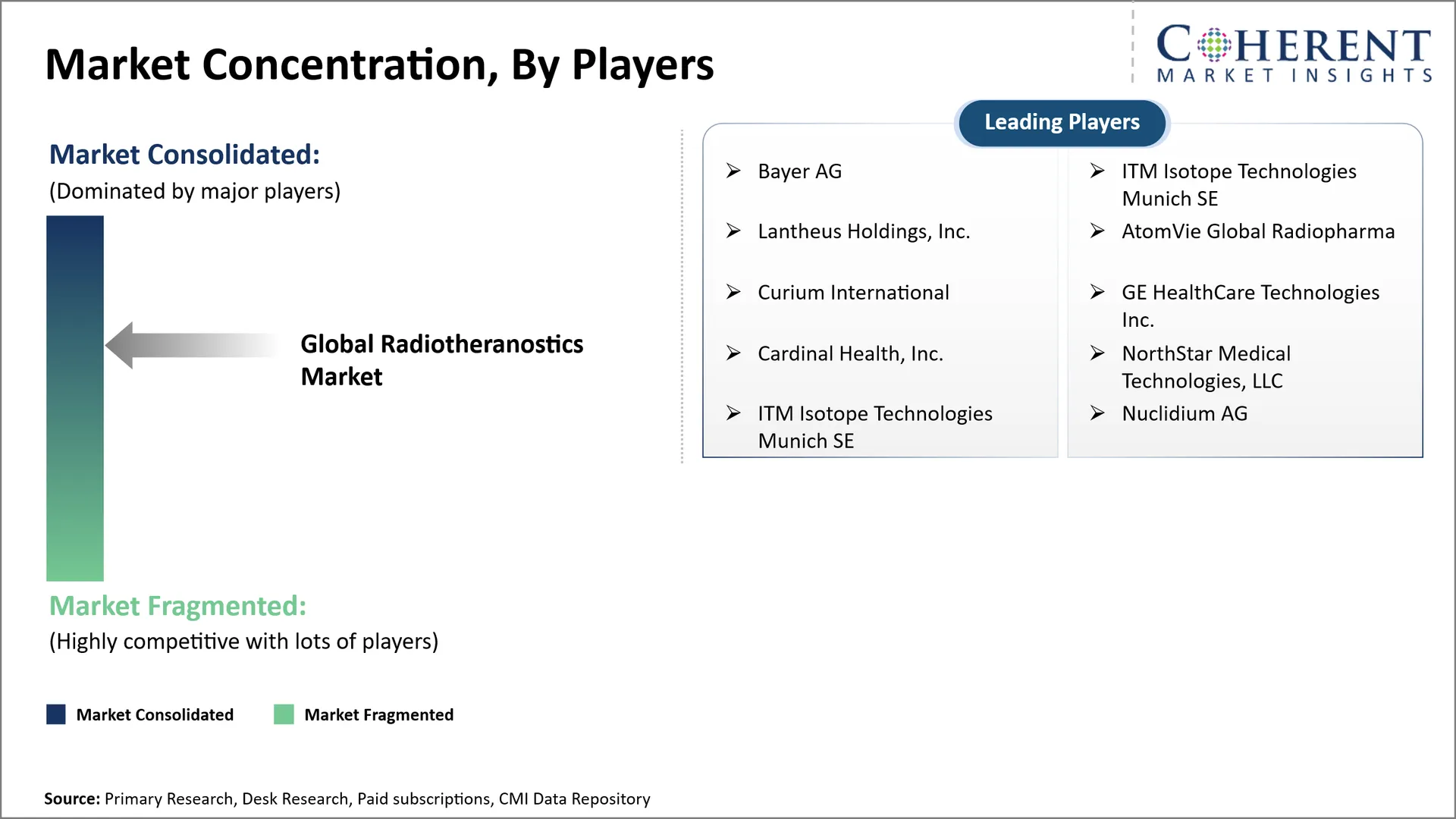
The global radiotheranostics market is highly competitive and moderately is concentrated among market players working in radiopharmaceutical design and development; production of medical isotopes; in specialized manufacturing; and radio pharmacy distribution. Competition for commercial radiotheranostics market share is based on progress in clinical pipeline development, clinical pipeline portfolios, targeted radiochemistry, availability of isotopes, radiochemical purity, cost of manufacturing at scale, and access to nuclear medicine facilities. Key focus areas include:
- Development of next-generation alpha-emitting and beta-emitting therapies, such as Actinium-225, Lutetium-177, and other novel therapeutic isotopes.
- Development of new molecular targets and ligand platforms to enhance tumour targeting and delivery.
- Enhanced production facilities for radioisotopes, radiolabeling and specialized manufacturing to maintain an assured supply of product.
- Growth of clinical development programmes in both new cancer indications and combination treatment strategies.
- Enhancement of distribution systems for radiopharmaceuticals, execution of radiation-safe transport and treatment at various centres of specialized nuclear medical science.
- Combine quantitative imaging and individualized dosimetry to improve patient selection, planning, and results.
Market Report Scope
Radiotheranostics Market | |||
Report Coverage | Details | ||
Base Year | 2025 | Market Size in 2026: | USD 9.42 Bn |
Historical Data For: | 2020 To 2024 | Forecast Period: | 2026 To 2033 |
Forecast Period 2026 To 2033 CAGR: | 9.8% | 2033 Value Projection: | USD 18.16 Bn |
Geographies covered: |
| ||
Segments covered: |
| ||
Companies covered: | Bayer AG, ITM Isotope Technologies Munich SE, Lantheus Holdings, Inc., AtomVie Global Radiopharma, Curium International, GE HealthCare Technologies Inc., Cardinal Health, Inc., NorthStar Medical Technologies, LLC, ITM Isotope Technologies Munich SE, Nuclidium AG | ||
Growth Drivers: |
| ||
Restraints & Challenges: |
| ||
Analyst Opinion (Expert Opinion)
- A more personalized treatment paradigm that employs target-specific approaches and therefore wider application of diagnostic imaging in therapeutic decisions will be pursued by the radiotheranostics industry. Advances in next-generation alpha and beta emission radiopharmaceuticals are expected to increase the number of indications beyond currently approved cancer types. During the forecast, increased isotope availability, an increased number of indications, and targeted molecular approaches will facilitate adoption.
- The greatest commercial opportunity is predicted to be Lutetium-177 based therapeutic radiopharmaceuticals for Oncology in the U.S. for prostate cancer and neuroendocrine tumour treatment. Other areas with strong commercial opportunities are predicted to be Actinium-225 based therapeutic radiopharmaceuticals for Oncology due to increasing demand for targeted alpha therapy and next generation radiopharmaceuticals.
- In order to gain a competitive advantage market players should focus on investments to support the development of new radiopharmaceuticals, in particular alpha-emitting isotopes and ligands with new targets for underrepresented cancer types. Augmenting isotope sourcing, radiolabeling, and geographically spread-out manufacturing sites will be crucial for access and supply to emerge reliably. Firms should increase their number of clinical partners, indication-specific programmes and dedicated distribution channels.
Speak to the analyst
Want personalized insights?
Take the findings above to one of our principal consultants, or have the report rebuilt around the segments, geographies and competitors you actually track.
Market Segmentation
- Product Type Insights (Revenue, USD Bn, 2021 - 2033)
- Therapeutic Radiopharmaceuticals
- Diagnostic Radiopharmaceuticals (Imaging Agents)
- Radioisotope Insights (Revenue, USD Bn, 2021 - 2033)
- Lutetium-177 (Lu-177)
- Actinium-225 (Ac-225)
- Gallium-68 (Ga-68)
- Fluorine-18 (F-18)
- Others
- Application Insights (Revenue, USD Bn, 2021 - 2033)
- Oncology
- Neurology
- Cardiology
- Others
- End User Insights (Revenue, USD Bn, 2021 - 2033)
- Hospitals and Cancer Centers
- Diagnostic Imaging Centers
- Academic and Research Institutes
- Pharmaceutical and Biotechnology Companies
- Others
- Distribution Channel Insights (Revenue, USD Bn, 2021 - 2033)
- Hospital Pharmacies
- Specialty Pharmacies
- Radiopharmaceutical Distribution Networks
- Others
- Regional Insights (Revenue, USD Bn, 2021 - 2033)
- North America
- U.S.
- Canada
- Latin America
- Brazil
- Argentina
- Mexico
- Rest of Latin America
- Europe
- Germany
- U.K.
- Spain
- France
- Italy
- Russia
- Rest of Europe
- Asia Pacific
- China
- India
- Japan
- Australia
- South Korea
- ASEAN
- Rest of Asia Pacific
- Middle East
- GCC Countries
- Israel
- Rest of Middle East
- Africa
- South Africa
- North Africa
- Central Africa
- North America
- Key Players Insights
- Bayer AG
- ITM Isotope Technologies Munich SE
- Lantheus Holdings, Inc.
- AtomVie Global Radiopharma
- Curium International
- GE HealthCare Technologies Inc.
- Cardinal Health, Inc.
- NorthStar Medical Technologies, LLC
- ITM Isotope Technologies Munich SE
- Nuclidium AG
Sources
Primary Research Interviews
- Nuclear Medicine Physicians and Radiologists
- Radiopharmaceutical Research Scientists
- Medical Radioisotope Production Specialists
- Clinical Research and Drug Development Experts
- Radiopharmaceutical Manufacturing and Process Development Experts
Stakeholders
- Radiopharmaceutical Developers
- Medical Radioisotope Producers
- Nuclear Medicine Specialists
- Radiopharmaceutical Manufacturing and Distribution Organizations
- End-use Sectors
- Hospitals and Multispecialty Healthcare Systems
- Specialty Oncology and Cancer Treatment Centers
- Diagnostic Imaging and Nuclear Medicine Centers
- Academic and Research Institutions
- Regulatory & Health Bodies
- U.S. Food and Drug Administration (FDA)
- European Medicines Agency (EMA)
- Pharmaceuticals and Medical Devices Agency (PMDA), Japan
Databases
- ClinicalTrials.gov
- AuntMinnie Radiopharmaceutical Therapy Tracker
Associations
- Society of Nuclear Medicine and Molecular Imaging (SNMMI)
- European Association of Nuclear Medicine (EANM)
- World Association of Radiopharmaceutical and Molecular Therapy (WARMTH)
- Asia Oceania Federation of Nuclear Medicine and Biology (AOFNMB)
- Canadian Association of Nuclear Medicine (CANM)
Public Domain Sources
- Department of Energy (DOE), U.S.
- Department of Atomic Energy (DAE), India
- Press Information Bureau (PIB), India
- European Commission (EC)
- National Cancer Center Japan (NCC Japan)
- European Medicines Agency (EMA)
Proprietary Elements
- CMI Data Analytics Tool, Proprietary CMI Existing Repository of information for last 10 years.
Get access to 250+ pages report
Every segment, forecast, competitor profile and data table behind the analysis above — available for instant download.
- ESOMAR Member
- ISO 9001:2015 Certified
- D-U-N-S Registered
- GDPR & CCPA Compliant
Frequently Asked Questions
The global radiotheranostics market is estimated to be valued at USD 9.42 Bn in 2026 and is expected to reach USD 18.16 Bn by 2033.
Therapeutic radiopharmaceuticals dominate supported by growing use of targeted therapies for cancer, approved clinical use for prostate and neuroendocrine tumours and rising demand for precision medicine.
Radiotheranostics is a form of personalized nuclear medicine that utilizes diagnostic imaging and targeted radionuclide therapy to diagnose and treat disease with a specific targeting molecule labeled with a radioactive atom.
The CAGR of global radiotheranostics market is projected to be 9.8% from 2026 to 2033.
Increasing adoption of targeted radionuclide therapies for cancer treatment, and growing use of PET-based imaging for precision oncology and treatment selection are the major factors driving the growth of the global radiotheranostics market.
High production and infrastructure costs associated with radiopharmaceuticals, and short half-life of radioisotopes are the major factors hampering the growth of the global radiotheranostics market.
In terms of radioisotope, Lutetium-177 (Lu-177) is estimated to dominate the market revenue share in 2026.