

Global Respiratory Vaccines Market Size and Forecast – 2026 To 2033
The global respiratory vaccines market is expected to grow from USD 63,750.0 Mn in 2026 to USD 84,456.9 Mn by 2033, registering a compound annual growth rate (CAGR) of 4.1% from 2026 to 2033. The market for global respiratory vaccines is poised for significant expansion, fueled by the high global burden of respiratory infections and continued demand for preventive vaccination.
According to the World Health Organization (WHO), seasonal influenza causes around 1 billion cases annually, including 3–5 million severe cases and 290,000–650,000 respiratory deaths, reinforcing the need for widespread influenza vaccination.
Key Takeaways of the Global Respiratory Vaccines Market
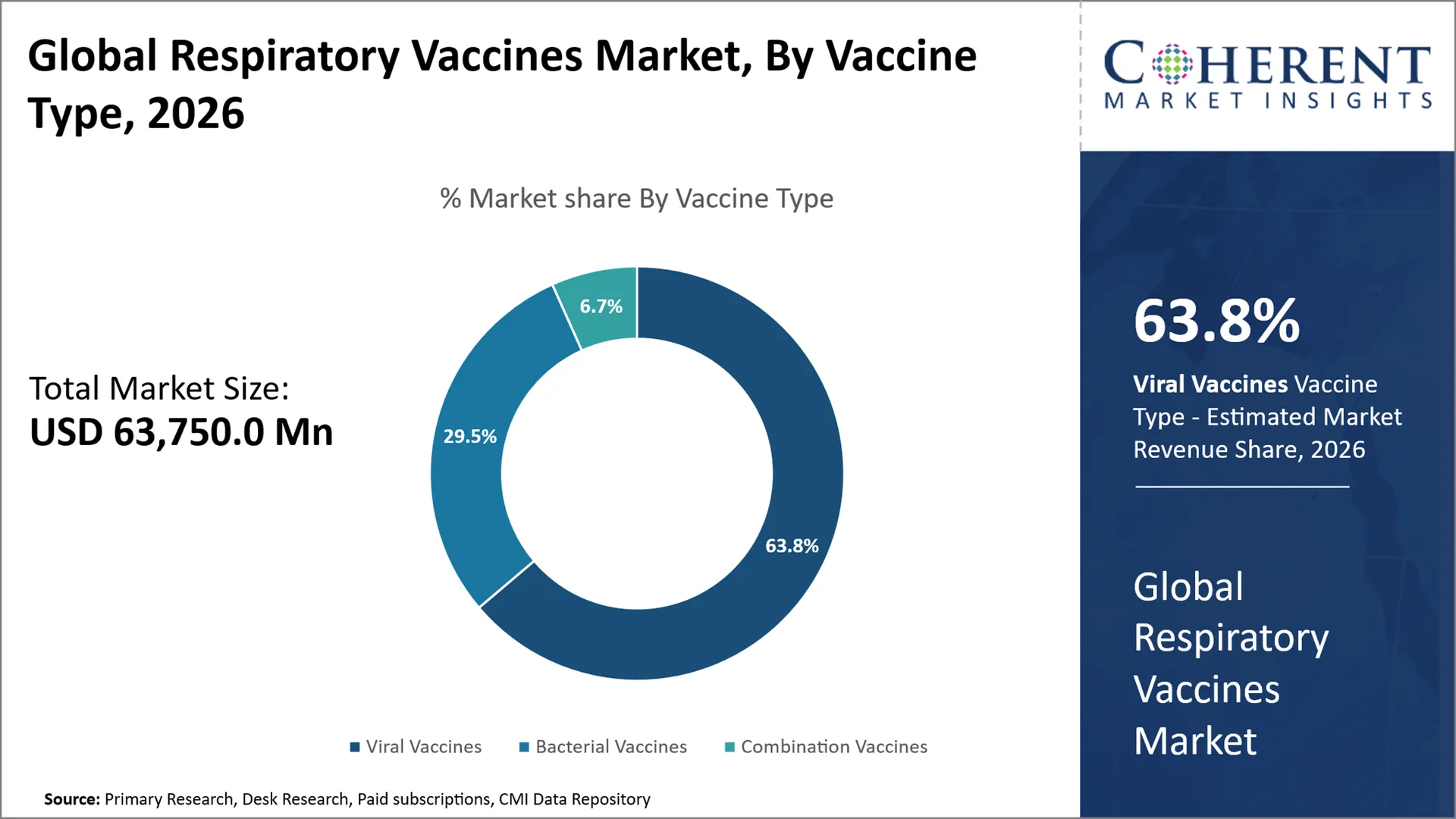
- Viral vaccines are projected to hold 63.8% of the global respiratory vaccines market share in 2026, making it dominant vaccine type segment across North America due to established influenza, COVID-19, and RSV immunization programs and broad coverage across pediatric and adult populations. For instance, the U.S. CDC recommends seasonal influenza vaccination for everyone aged 6 months and older and RSV vaccination for adults aged 75 years and older and selected adults aged 50–74 years, supporting sustained demand for viral respiratory vaccines.
- Influenza is projected to hold 27.6% of the global respiratory vaccines market share in 2026, making it dominant infection segment across North America due to established annual influenza immunization programs and continuous seasonal surveillance. The U.S. CDC reported that 46.5% of U.S. adults had received a flu vaccine by February 22, 2026, demonstrating the scale of seasonal influenza vaccination activity in the region.
- Pediatric is projected to hold 61.2% of the global respiratory vaccines market share in 2026, making it dominant age group segment across Asia Pacific due to extensive childhood immunization programs and increasing government focus on protecting infants against severe respiratory infections. Japan’s Ministry of Health, Labour and Welfare (MHLW) introduced maternal RSV vaccination as a routine immunization under Japan’s Immunization Act from April 2026, covering pregnant women at 28–36 weeks of gestation to provide protection against RSV-related lower respiratory tract disease in newborns.
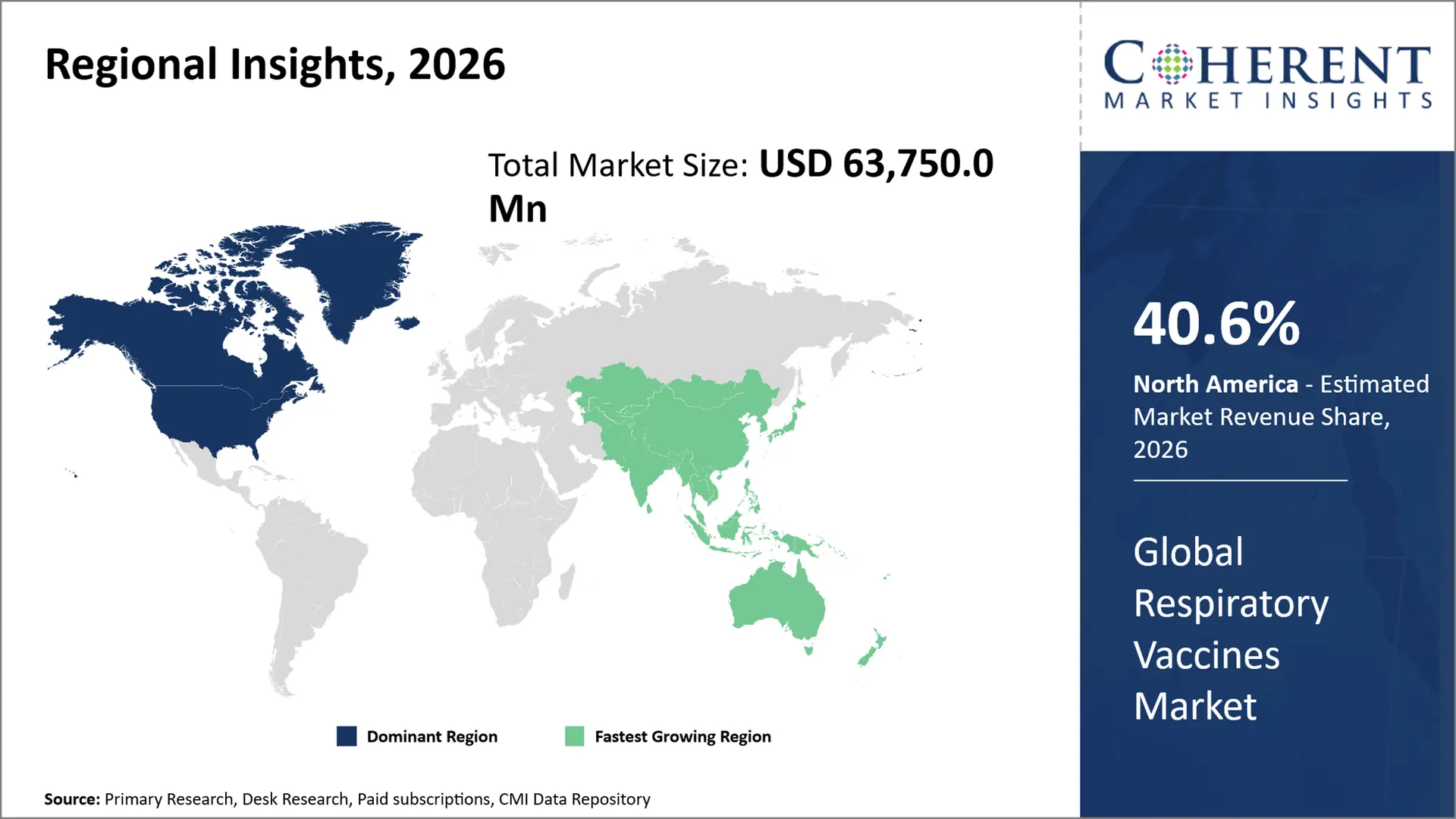
- North America market maintains dominance with an expected share of 40.6% in 2026, bolstered by its well-established respiratory vaccination programs, broad healthcare access, and sustained uptake of influenza, RSV, and other respiratory vaccines. The U.S. CDC distributed 135.6 million influenza vaccine doses for the 2025–26 season by March 7, 2026, demonstrating the scale of seasonal respiratory immunization activity in the region.
- Asia Pacific is expected to exhibit the fastest growth in the global respiratory vaccines market, registering an estimated CAGR of 7.9% during 2026–2033, driven by expanding immunization coverage, introduction of additional vaccines, and efforts to close vaccination gaps across large populations. On September 24, 2026, WHO reported that the South-East Asia Region sustained 94% DTP3 coverage in 2025, while countries continued efforts to reach zero-dose and partially vaccinated children, supporting continued expansion of vaccination programs across the region.
Segmental Insights
Why Do Viral Vaccines Dominate the Global Respiratory Vaccines Market?
Viral vaccines are projected to hold the market share of 63.8% in 2026, due to the increasing prevalence of viral respiratory infections such as flu, COVID-19 and RSV. Moreover, the ever-changing genetics of viruses demand vaccine modifications regularly, and with advancements in recombinant, mRNA and other nucleic-acid platforms increases the scope of development. For instance, in June 2026, the U.K. Medicines and Healthcare Products Regulatory Agency (MHRA) approved Aujemflu, an adjuvanted trivalent influenza vaccine for adults ≥ 50 years of age. The cell-culture, egg-free vaccine is directed against three influenza strains, representing ongoing product innovation within viral respiratory vaccines.
- Current Industry Events of 2026
- Market Size Estimation
- Regional Breakdown
- Competitive Landscape
- Customer Intelligence
- Segmental Analysis
- Pricing Analysis
- Key Market Drivers, Challenges & Future Trends
- Customized Insights Section
Why Does Influenza Represent the Largest Infection Segment in the Respiratory Vaccines Market?
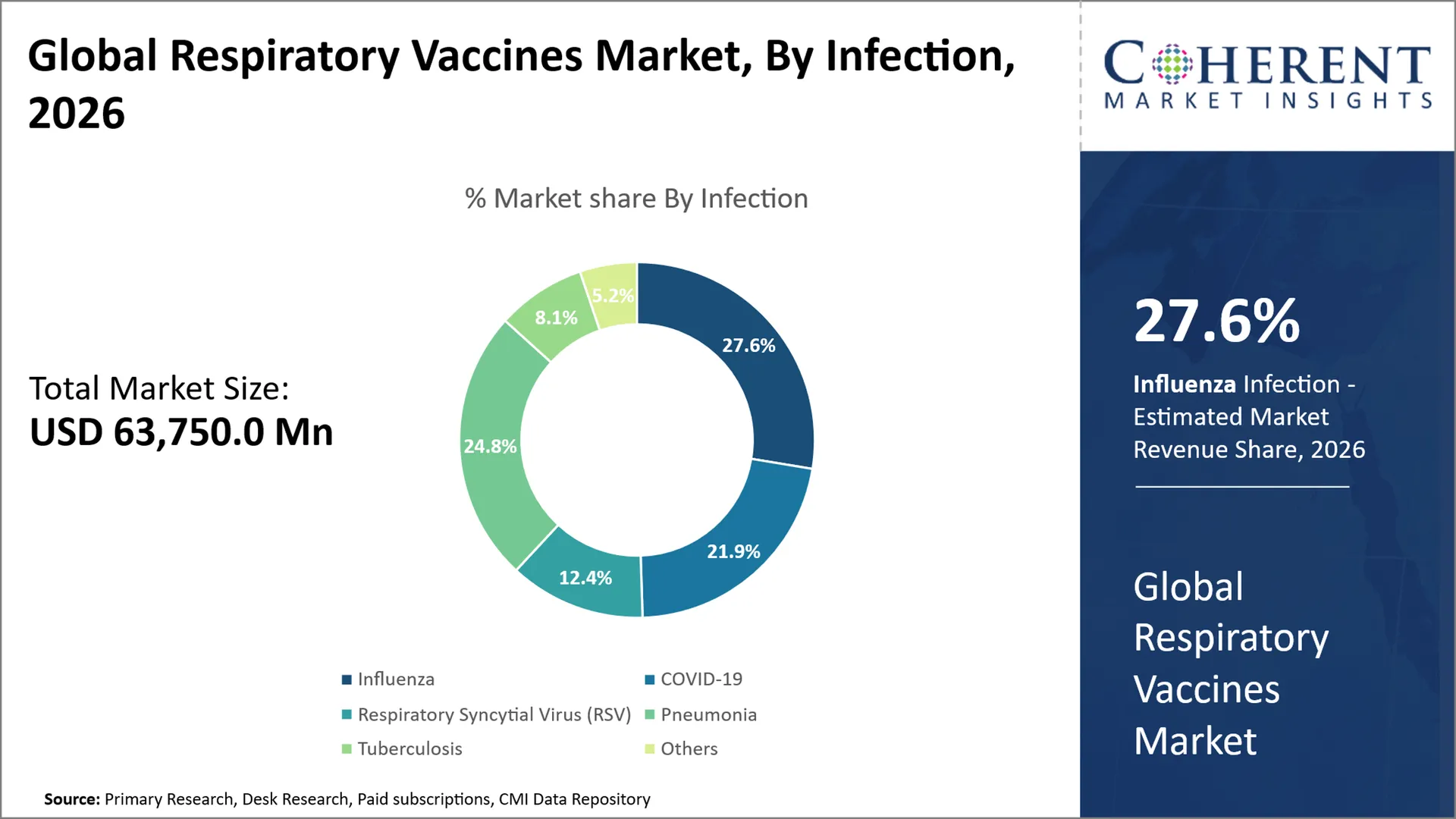
Influenza is projected to hold a market share of 27.6% in 2026, due to the recurring seasonal burden, common population of disease and regular annual vaccination programs. In addition, ongoing strain monitoring and annual vaccine updates will probably maintain demand, particularly for children, elderly, pregnant women and high-risk patients. For instance, in February 2026, the Department of Health and Social Care, UK Health Security Agency and NHS England published national guidance for the influenza immunization programme for 2026- 2027 to include children, pregnant women, people aged 65 years and over and people in a clinical-risk group, reinforcing significant and ongoing population need for seasonal influenza immunization. (Source: Government of UK)
Pediatric Segment Dominates the Global Respiratory Vaccines Market
The pediatric segment is projected to hold a market share of 61.2% in 2026, owing to greater prevalence of pneumococcal disease, influenza and RSV disease among infants and children. The well-established pediatric vaccination programs and vaccine schedules established in infants and children provide a predictable demand. Furthermore, high pediatric vaccination coverage could lead to minimum spread of diseases in the community. For instance, India’s Universal Immunization Programme (UIP) provides routine childhood vaccination through the national immunization schedule, including pneumococcal conjugate vaccine (PCV) to protect children against pneumococcal disease. (Source: Ministry of Health and Family Welfare)
Current Events and their Impact
Current Events | Description and its Impact |
WHO Updates Influenza Vaccine Composition for 2027 Southern Hemisphere Season (September 2026) |
|
U.K. Transitions Adult Pneumococcal Program to PCV20 (September 2026) |
|
U.S. CDC Expands Risk-Based Adult RSV Vaccination Recommendations (February 2026) |
|
Respiratory Vaccines Market Dynamics
Market Drivers
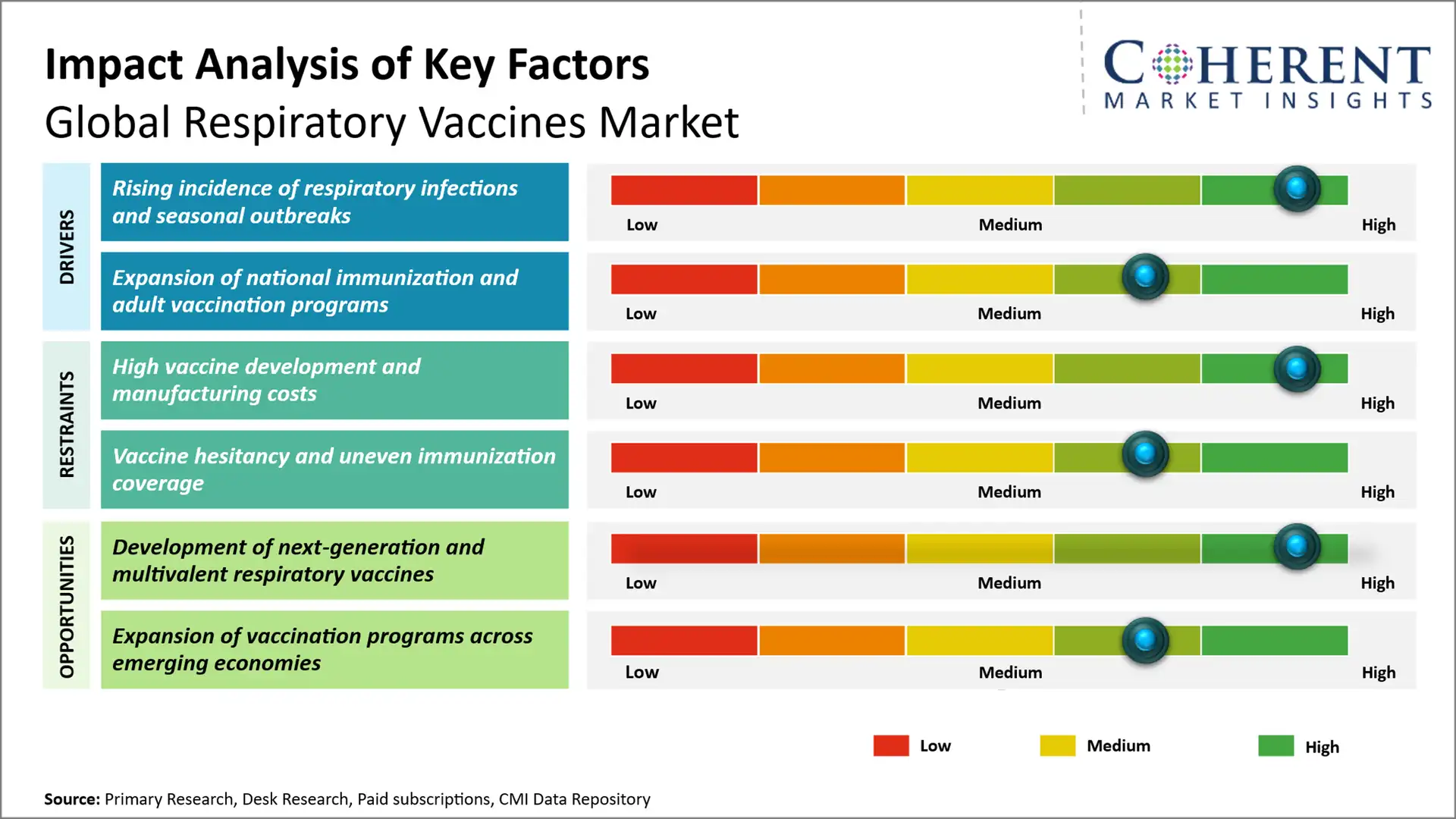
- Rising incidence of respiratory infections and seasonal outbreaks: The persistent circulation of influenza, RSV, and other respiratory viruses continues to drive demand for preventive vaccination and seasonal immunization programs. Regional fluctuations in respiratory virus activity also require sustained vaccine availability and periodic immunization campaigns. For instance, on September 24, 2026, WHO reported that regional influenza positivity in the Western Pacific increased from 14% in week 35 to 16% in week 37, with influenza activity increasing across most transmission zones. This recurring seasonal activity supports continued demand for respiratory vaccines.
- Expansion of national immunization and adult vaccination programs: The expansion of national immunization schedules and adult vaccination programs is increasing access to respiratory vaccines beyond traditional pediatric programs. Greater inclusion of older adults and high-risk populations is creating additional demand for RSV, influenza, and pneumococcal vaccines. For instance, from September 1, 2026, England expanded its national RSV vaccination program to include adults aged 65–74 years with certain clinical risk conditions, including chronic respiratory disease and immunosuppression. The expansion increases the eligible population for routine RSV vaccination and supports broader adult respiratory immunization.
- Rising government focus on respiratory pandemic preparedness: Governments are strengthening preparedness for pandemic-prone respiratory viruses by improving vaccine deployment plans, regulatory readiness, logistics, and vaccination infrastructure. These initiatives are expected to support sustained investment in respiratory vaccine development, manufacturing, and distribution. For instance, from 15-17 September 2026, WHO supported Kyrgyzstan and Tajikistan in updating national deployment and vaccination plans for pandemic influenza and other respiratory viruses with pandemic potential, including measures covering vaccine allocation, regulation, logistics, and workforce readiness.
Emerging Trends
- Expansion of next-generation RSV vaccines: The respiratory vaccines market is witnessing increasing development and adoption of RSV vaccines targeting older adults, pregnant women, and infants. Broader age-group protection is expanding the addressable vaccination population.
- Shift towards multivalent and combination vaccines: Vaccine developers are increasingly pursuing multivalent formulations capable of providing protection against multiple strains or respiratory pathogens in a single product. This approach can simplify vaccination schedules and broaden immunization coverage.
- Advancement of mRNA and rapid-response vaccine platforms: mRNA and other flexible vaccine platforms are gaining importance for developing rapidly adaptable vaccines against evolving respiratory pathogens. These technologies support faster antigen redesign and the development of broader, next-generation respiratory vaccines.
Regional Insights
Why is North America a Strong Market for Respiratory Vaccines?
North America leads the global respiratory vaccines market, accounting for an estimated 40.6% share in 2026, owing to increasing development of healthcare infrastructure, awareness to vaccination and government initiatives related to respiratory diseases. For instance, in FY 2026, the U.S. Centers for Disease Control and Prevention (CDC) is offering assistance to 66 state and local immunization programs under its Immunization and Respiratory Disease (IRD) initiative, including the response to respiratory disease outbreaks, vaccinations, and respiratory virus surveillance.
North America is one of the leading regions in terms of vaccination programmes which include influenza, RSV, COVID-19, and pneumococcal disease for children and adults, disease monitoring and intensive public-health vaccination surveillance practices, which is anticipated to increase the adoption of vaccines by both healthcare providers and patients.
Why Does Asia Pacific Respiratory Vaccines Market Exhibit High Growth?
Asia Pacific is expected to exhibit the fastest growth in the global respiratory vaccines market, registering an estimated CAGR of 7.9% during 2026–2033. The region is projected to account for 21.8% of the global market in 2026, due to increase in healthcare expenditure, large population base, and increasing prevalence of respiratory diseases. The government across the region are making more concerted efforts to raise immunization levels by implementing programs to support immune integrity of routine vaccination and ensuring access to preventive health coverage.
For instance, the Ministry of Health and Family Welfare, Government of India, launched Mission Indradhanush to improve routine immunization and achieve full immunization coverage of children and pregnant women. The Targeted Mission Indradhanush focuses on those children and pregnant women who are missed or left out of routine immunization. It includes vaccines against respiratory diseases including PCV, which has a direct impact on reducing vaccine preventable respiratory diseases. Moreover, upgradation of healthcare infrastructure, growing vaccine awareness, and developing domestic vaccine manufacturing capacities further support Asia-Pacific market growth.
Global Respiratory Vaccines Market Outlook for Key Countries
Why is the U.S. Leading Innovation and Adoption in the Respiratory Vaccines Market?
The U.S. is considered as the leader in innovation and adoption in the respiratory vaccines market due to country’s significant capacity in vaccine development, quickly adapts to new vaccine platforms, and high use of influenza, RSV, pneumococcal and COVID-19 vaccines among recommended populations. Additionally, strong regulatory and public health infrastructure in the country is expected to drive the updates in respiratory vaccines and expansion of recommendations for vaccination among different age and risk groups.
Is Japan a Favorable Market for Respiratory Vaccines Market?
Japan is a good market for respiratory vaccines, mainly because of a high demand among the elderly population and an increasing coverage of pneumococcal and respiratory syncytial virus (RSV) vaccination. In addition, the focus on seasonal vaccine supply planning in the country and support for vaccine R&D will probably offer new opportunities for the manufacturers of respiratory vaccines.
Is China Emerging as a Key Growth Hub for the Respiratory Vaccines Market?
China is increasingly being identified as a key hub for growth in the respiratory vaccines market driven by large population size, a high demand for adult and pediatric vaccinations and advances in respiratory disease surveillance and immunization services. Furthermore, the guidance for seasonal influenza vaccination is growing, as shown by the China CDC's release of the 2026-2027 influenza vaccination technical guidelines covering children, adult, older adults and other risk groups.
Why Does Germany Top the European Respiratory Vaccines Market?
Germany leads the European respiratory vaccines market owing to the existence of German vaccination recommendations which include influenza, pneumococcal disease, COVID-19 and RSV in elderly population and high-risk groups. In addition, the systematic and evidence-based vaccination strategy led by STIKO enables periodic revisions of recommendations according to relevant developments.
Is Respiratory Vaccines Market Developing in India?
India is becoming an increasingly important market for respiratory vaccines driven by its large public immunization infrastructure and growing penetration of pneumococcal immunization. The availability of PCV within the government-funded Universal Immunization Programme in India is evidence of the presence of a defined demand for the prevention of respiratory disease.
Key Vaccine Characteristics by Type and Target Population
Vaccine Type | Major Respiratory Diseases Targeted | Primary Target Population | Key Vaccine Platforms | Typical Route of Administration |
Viral Vaccines | Influenza, COVID-19, RSV | Pediatric, Adult, Geriatric | mRNA, Recombinant, Viral Vector, Live Attenuated | Intramuscular, Intranasal |
Bacterial Vaccines | Pneumococcal disease, Tuberculosis | Pediatric, Adult, Geriatric | Conjugate, Polysaccharide, Live Attenuated | Intramuscular, Other |
Combination Vaccines | Multiple respiratory infections | Primarily Pediatric and Adult | Recombinant, Conjugate, Multivalent | Intramuscular |
How are the development of next-generation and multivalent respiratory vaccines creating new growth opportunities in the respiratory vaccines market?
The development of next-generation and multivalent respiratory vaccines offer huge opportunities, as mRNA, recombinant and other advanced platforms are expected to offer greater breadth and flexibility to protect against multiple respiratory pathogens. Furthermore, the greater emphasis on universal and variant-adapted vaccines improve protection and reduce the need to reformulate vaccines frequently. For instance, on September 9, 2026, the Gavi-supported World Health Organization prequalified the multi-dose presentation of the maternal vaccine for RSV, RSVpreF (ABRYSVO), enabling affordable, scalable delivery of RSV vaccination in Gavi-supported countries.
Market Players, Key Development, and Competitive Landscape
Key Developments
- On September 16, 2026, Sanofi announced its new state-of-the-art influenza vaccine manufacturing facility in Toronto as part of a USD 663.2 million (CAD 925 million) investment in Canadian biomanufacturing. The facility is intended to establish end-to-end influenza vaccine manufacturing capacity and strengthen domestic vaccine supply and pandemic preparedness.
- In July 2026, the European Commission signed a joint procurement framework contract with Moderna, providing six countries access to up to 24 million doses of its mRNA-based RSV vaccine, mRESVIA, for up to four years. The agreement is intended to strengthen RSV vaccine availability and preparedness ahead of the 2026–2027 winter season.
- In March 2026, Pfizer Japan and ASKA Pharmaceutical announced co-promotion of ABRYSVO in Japan from April 1, 2026, expanding information and appropriate-use support for maternal RSV immunization. Japan’s Health Science Council had also agreed to include the vaccine in the routine vaccination program for preventing RSV infection in children from April 2026.
- In July 2025, Sanofi announced an agreement to acquire Vicebio, gaining an early-stage RSV/hMPV combination vaccine candidate and Molecular Clamp technology. The acquisition also added a preclinical trivalent candidate targeting RSV, hMPV, and parainfluenza virus type 3, supporting development of next-generation combination respiratory vaccines.
Competitive Landscape
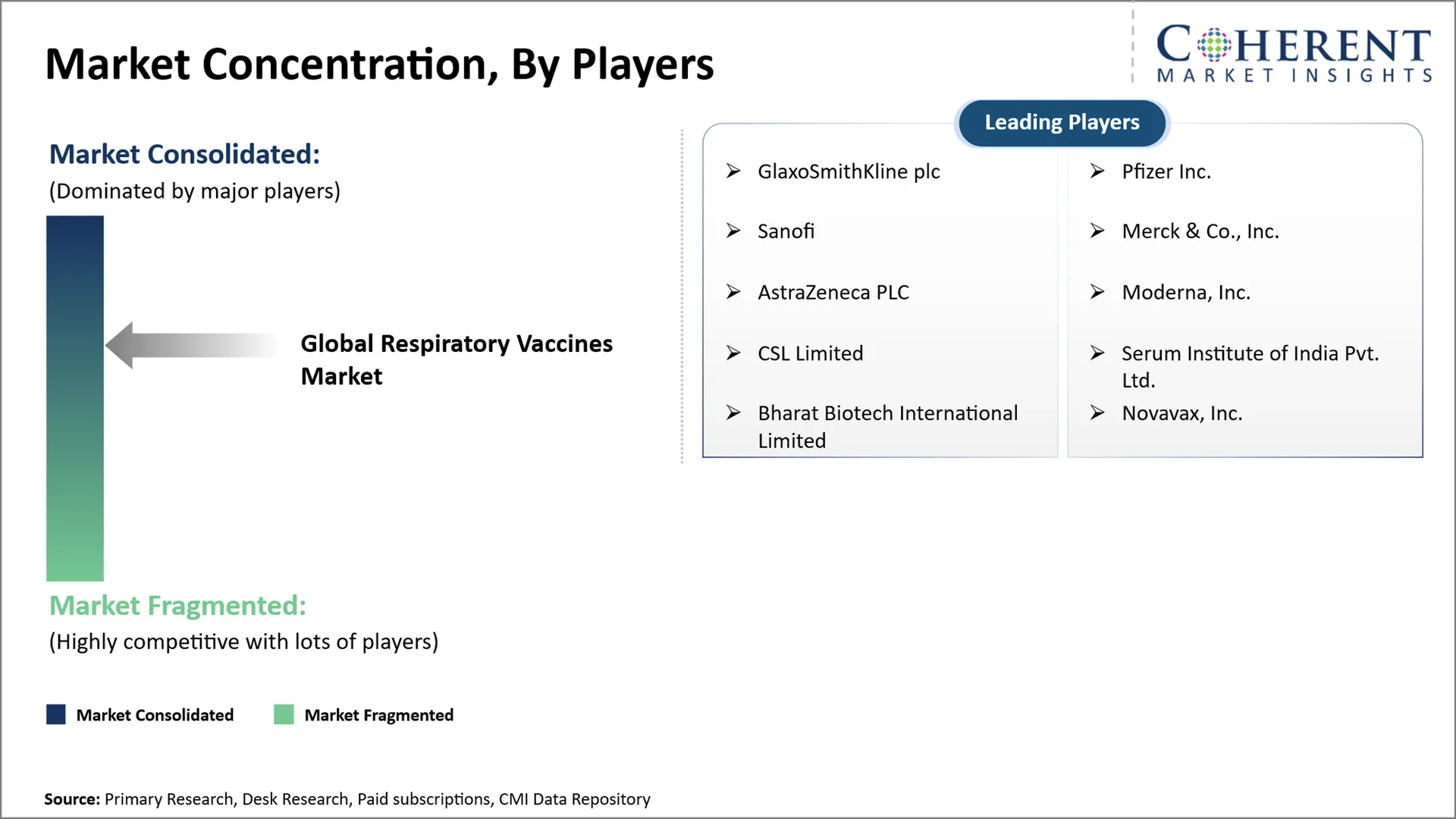
The global respiratory vaccines market is competitive, with participants focusing on vaccine efficacy, broader pathogen coverage, platform innovation, manufacturing scalability, and rapid development of next-generation vaccines. Market participants are advancing capabilities across mRNA, recombinant protein, adjuvanted, and multivalent vaccine platforms to strengthen protection against influenza, RSV, COVID-19, pneumococcal disease, and emerging respiratory pathogens. Key focus areas include:
- Expansion of mRNA, recombinant protein, and adjuvanted vaccine platforms for respiratory diseases
- Development of multivalent and combination vaccines targeting RSV, influenza, COVID-19, hMPV, and other respiratory pathogens
- Advancement of next-generation RSV, influenza, pneumococcal, and pandemic influenza vaccines across pediatric, adult, and geriatric populations
- Development of intranasal, thermostable, and other delivery approaches to improve vaccine administration and accessibility
- Strategic collaborations, government procurement agreements, manufacturing capacity expansion, and pipeline development across emerging respiratory pathogens
Market Report Scope
Respiratory Vaccines Market Report Coverage | |||
Report Coverage | Details | ||
Base Year | 2025 | Market Size in 2026: | USD 63,750.0 Mn |
Historical Data For: | 2020 To 2024 | Forecast Period: | 2026 To 2033 |
Forecast Period 2026 To 2033 CAGR: | 4.1% | 2033 Value Projection: | USD 84,456.9 Mn |
Geographies covered: |
| ||
Segments covered: |
| ||
Companies covered: | GlaxoSmithKline plc, Pfizer Inc., Sanofi, Merck & Co., Inc., AstraZeneca PLC, Moderna, Inc., CSL Limited, Serum Institute of India Pvt. Ltd., Bharat Biotech International Limited, Novavax, Inc. | ||
Growth Drivers: |
| ||
Restraints & Challenges: |
| ||
Analyst Opinion (Expert Opinion)
- In the coming years, global respiratory vaccines market is expected to evolve toward broader, more durable, and multi-pathogen protection, supported by advances in mRNA, recombinant, adjuvanted, and multivalent platforms. The market is likely to increasingly shift toward next-generation RSV and influenza vaccines, broader age-group coverage, and faster adaptation to changing respiratory pathogens.
- The maximum opportunities are foreseen within viral vaccines for respiratory syncytial virus (RSV) in geriatric/adult population in the U.S, where established vaccination infrastructure and the expanding use of RSV vaccines create a strong commercial base. In parallel, RSV vaccination in maternal and pediatric populations represents an important expansion opportunity as countries broaden infant protection strategies.
- In order to gain a competitive advantage, market players should prioritize next-generation vaccine platforms, broader pathogen coverage, differentiated delivery technologies, and scalable manufacturing while building flexible pipelines that can respond to emerging respiratory threats. Strategic emphasis on clinical differentiation, faster development cycles, supply reliability, and expansion into underpenetrated markets can help strengthen long-term market positioning.
Speak to the analyst
Want personalized insights?
Take the findings above to one of our principal consultants, or have the report rebuilt around the segments, geographies and competitors you actually track.
Market Segmentation
- Vaccine Type Insights (Revenue, USD Mn, 2021 - 2033)
- Viral Vaccines
- Bacterial Vaccines
- Combination Vaccines
- Infection Insights (Revenue, USD Mn, 2021 - 2033)
- Influenza
- COVID-19
- Respiratory Syncytial Virus (RSV)
- Pneumonia
- Tuberculosis
- Others
- Age Group Insights (Revenue, USD Mn, 2021 - 2033)
- Pediatric
- Adult
- Geriatric
- Route of Administration Insights (Revenue, USD Mn, 2021 - 2033)
- Intramuscular
- Intranasal
- Others
- End User Insights (Revenue, USD Mn, 2021 - 2033)
- Hospitals
- Clinics
- Vaccination Centers
- Government and Public Health Organizations
- Research Institutes
- Others
- Distribution Channel Insights (Revenue, USD Mn, 2021 - 2033)
- Hospital and Retail Pharmacies
- Government Suppliers
- Others
- Regional Insights (Revenue, USD Mn, 2021 - 2033)
- North America
- U.S.
- Canada
- Latin America
- Brazil
- Argentina
- Mexico
- Rest of Latin America
- Europe
- Germany
- U.K.
- Spain
- France
- Italy
- Russia
- Rest of Europe
- Asia Pacific
- China
- India
- Japan
- Australia
- South Korea
- ASEAN
- Rest of Asia Pacific
- Middle East
- GCC Countries
- Israel
- Rest of Middle East
- Africa
- South Africa
- North Africa
- Central Africa
- North America
- Key Players Insights
- GlaxoSmithKline plc
- Pfizer Inc.
- Sanofi
- Merck & Co., Inc.
- AstraZeneca PLC
- Moderna, Inc.
- CSL Limited
- Serum Institute of India Pvt. Ltd.
- Bharat Biotech International Limited
- Novavax, Inc.
Sources
Primary Research Interviews
- Respiratory vaccine companies – vaccine development pipelines, vaccine platforms, clinical development, and commercialization
- Pharmaceutical and biotechnology companies – vaccine R&D, clinical trials, manufacturing, and portfolio strategies
- Vaccine CDMOs and manufacturing specialists – vaccine production, fill-finish operations, manufacturing scale-up, and supply-chain requirements
- Contract Research Organizations (CROs) – clinical trial design, recruitment, regulatory submissions, and vaccine development
- Regulatory and public health professionals – vaccine approvals, immunization policies, safety requirements, and vaccination programs
Stakeholders
- Respiratory vaccine manufacturers
- Pharmaceutical and biotechnology companies
- Vaccine CDMOs and manufacturing technology providers
- Contract Research Organizations (CROs)
- Hospitals and clinics
- Vaccination centers and immunization providers
- Government and public health organizations
- Academic and research institutes
- Vaccine distributors, cold-chain providers, and logistics companies
- Regulatory and health authorities
- End-use Sectors
- Hospitals
- Clinics
- Vaccination Centers
- Government & Public Health Organizations
- Research Institutes
- Regulatory & Health Bodies
- U.S. Food and Drug Administration (FDA) – vaccine approvals, clinical development, safety, manufacturing, and regulatory requirements
- Centers for Disease Control and Prevention (CDC) – immunization recommendations, vaccination coverage, and respiratory disease surveillance
- European Medicines Agency (EMA) – vaccine evaluation, authorization, safety monitoring, and pharmacovigilance
- European Centre for Disease Prevention and Control (ECDC) – respiratory disease surveillance, vaccination guidance, and immunization monitoring
- Medicines and Healthcare products Regulatory Agency (MHRA) – vaccine authorization, safety monitoring, and regulatory requirements in the UK
Databases
- ClinicalTrials.gov – clinical trials involving influenza, RSV, COVID-19, pneumococcal, and other respiratory vaccines
- WHO ICTRP – global clinical trial information for vaccine development and infectious diseases
- WHO Global Health Observatory (GHO) – global immunization, mortality, disease burden, and health-system statistics
- WHO FluNet – global influenza virological surveillance and circulating strain data
- WHO Prequalified Vaccines Database – information on prequalified vaccines, manufacturers, formulations, and regulatory status
- FDA Vaccines Licensed for Use in the United States – U.S. vaccine approvals, indications, manufacturers, and product information
Associations
- International Federation of Pharmaceutical Manufacturers & Associations (IFPMA) – vaccine innovation, manufacturing, access, and pharmaceutical industry resources
- Vaccines Europe – vaccine development, immunization policy, access, and European vaccine industry resources
- International Society for Vaccines (ISV) – vaccine research, development, immunology, and global vaccination resources
- Infectious Diseases Society of America (IDSA) – infectious disease research, clinical guidance, and vaccination resources
- American Academy of Pediatrics (AAP) – pediatric immunization recommendations and vaccine-related clinical resources
Public Domain Sources
- World Health Organization (WHO) – global immunization, respiratory disease, vaccine policy, and vaccine-prequalification data
- Centers for Disease Control and Prevention (CDC) – U.S. vaccination recommendations, respiratory disease surveillance, and immunization data
- U.S. Food and Drug Administration (FDA) – vaccine approvals, regulatory guidance, safety, and product information
- National Institutes of Health (NIH) – vaccine research, clinical research, and biomedical science data
- European Centre for Disease Prevention and Control (ECDC) – European respiratory disease surveillance and vaccination data
- UNICEF – global immunization coverage, vaccine procurement, and childhood vaccination data
- Gavi, the Vaccine Alliance – vaccine financing, immunization programs, and coverage data in lower-income countries
- World Bank – healthcare expenditure, population, health-system, and socioeconomic indicators
Proprietary Elements
- CMI Data Analytics Tool, Proprietary CMI Existing Repository of information for last 10 years.
Get access to 250+ pages report
Every segment, forecast, competitor profile and data table behind the analysis above — available for instant download.
- ESOMAR Member
- ISO 9001:2015 Certified
- D-U-N-S Registered
- GDPR & CCPA Compliant
Frequently Asked Questions
The global respiratory vaccines market is estimated to be valued at USD 63,750.0 Mn in 2026 and is expected to reach USD 84,456.9 Mn by 2033.
Viral vaccines dominate due to the high prevalence of influenza, COVID-19, RSV, and other viral respiratory infections, driving substantial demand for preventive vaccination.
Respiratory vaccines are vaccines designed to prevent or reduce the severity of infections affecting the respiratory system, including influenza, COVID-19, RSV, and pneumococcal disease.
The CAGR of global respiratory vaccines market is projected to be 4.1% from 2026 to 2033.
Rising incidence of respiratory infections and seasonal outbreaks, and expansion of national immunization and adult vaccination programs are the major factors driving the growth of the global respiratory vaccines market.
High vaccine development and manufacturing costs, and vaccine hesitancy and uneven immunization coverage are the major factors hampering the growth of the global respiratory vaccines market.
In terms of age group, pediatric is estimated to dominate the market revenue share in 2026.