

Global Single Cell Genomics Market Size and Forecast – 2026 To 2033
The global single cell genomics market is expected to grow from USD 3,860.0 Mn in 2026 to USD 10,920.0 Mn by 2033, registering a compound annual growth rate (CAGR) of 16.0% from 2026 to 2033. The market for global single cell genomics is poised for significant expansion, fueled by the growing adoption of precision medicine and high-resolution cellular analysis, as researchers increasingly require genomic data at single-cell resolution to understand disease heterogeneity and treatment response.
In June 2026, the U.S. National Institutes of Health (NIH) reported that its All of Us Research Program had made genomic and health data from more than 747,000 participants available to researchers, supporting next-generation precision medicine research.
Key Takeaways of the Global Single Cell Genomics Market
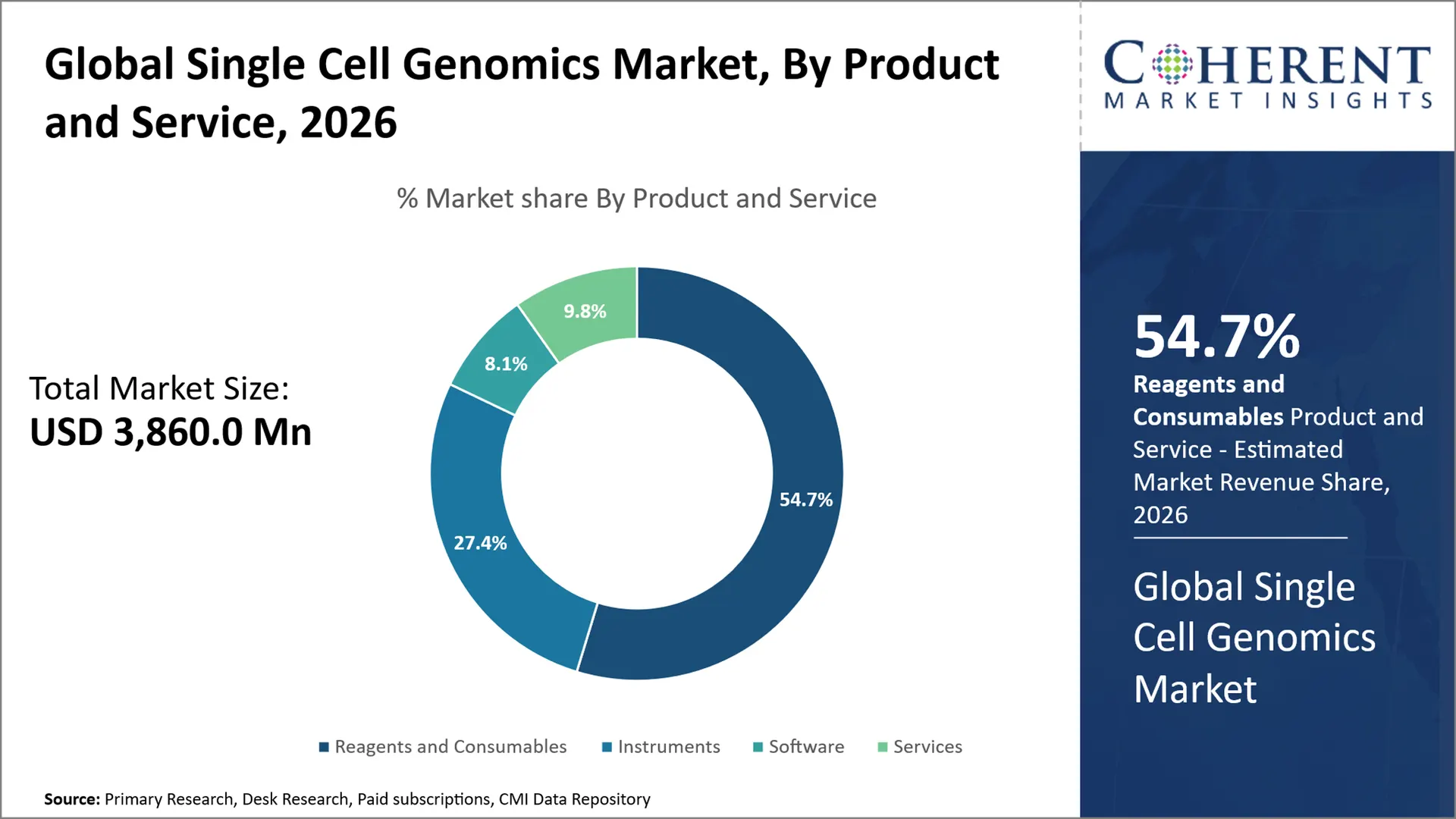
- Reagents and consumables are projected to hold 54.7% of the global single cell genomics market share in 2026, making it dominant product and service segment across North America due to the region’s extensive government-supported genomics research and technology-development programs. The U.S. National Institutes of Health (NIH) issued a 2026 genomics technology-development program supporting high-throughput sequencing, epigenomics, functional genomics, multi-omics, and spatially resolved genomic technologies, creating demand for the reagents and consumables required for these workflows.
- Single-cell sequencing is projected to hold 39.8% of the global single cell genomics market share in 2026, making it dominant technology segment across Asia Pacific due to expanding government-backed genomics and precision-medicine initiatives. For instance, India’s Department of Biotechnology (DBT) has expanded national genomics initiatives toward advanced applications including single-cell and spatial genomics, supporting wider adoption of high-resolution sequencing technologies in biomedical research.
- Cancer Research is projected to hold 29.5% of the global single cell genomics market share in 2026, making it dominant application segment across North America due to strong government-funded cancer genomics research. For instance, the U.S. National Cancer Institute (NCI) reported in April 2026 an NIH-funded AI model that analyzed single-cell tumor data from more than 150 cancer patients to identify cell populations associated with survival outcomes in melanoma and liver cancer, demonstrating the application of single-cell genomics in cancer research.
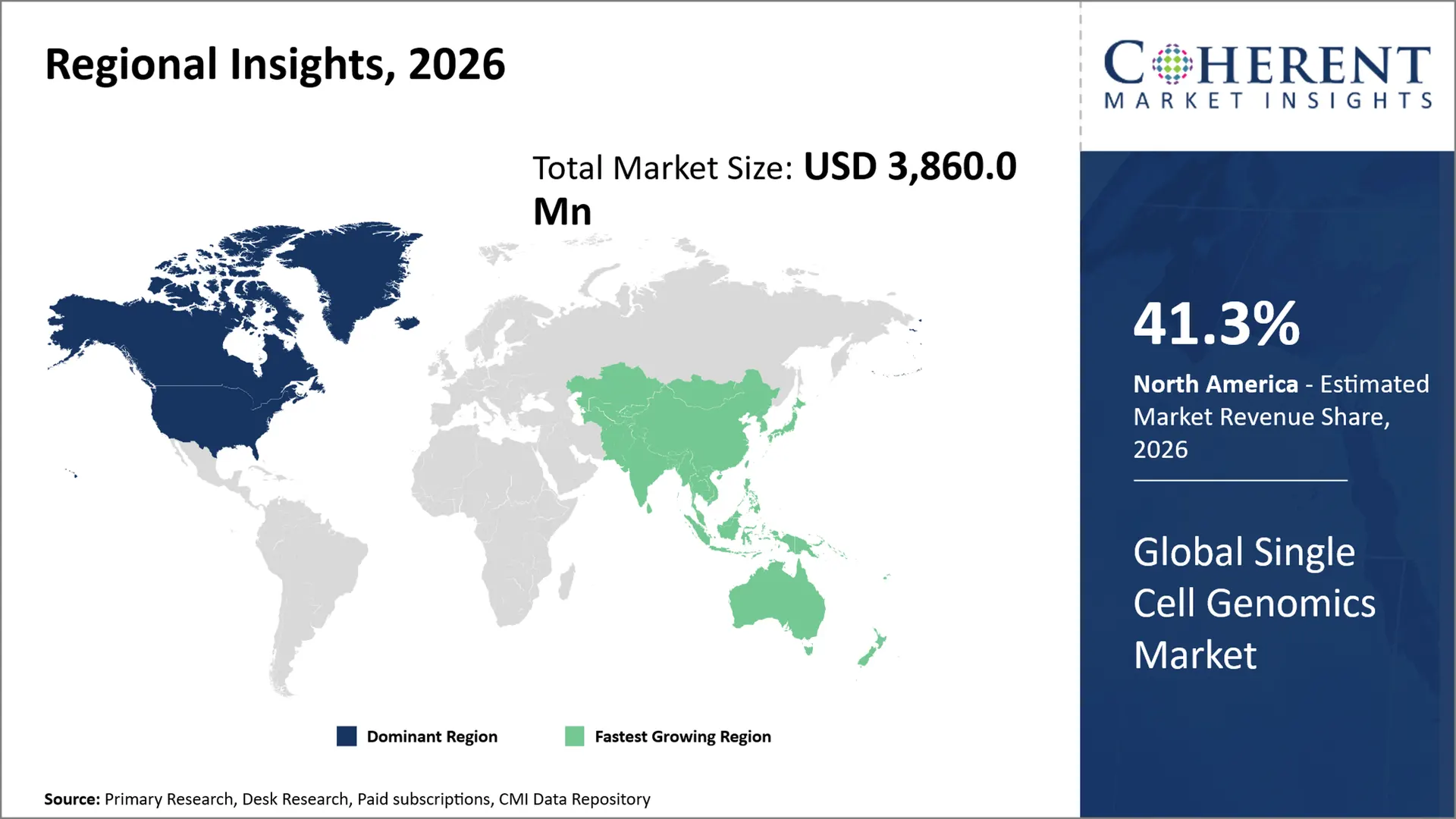
- North America market maintains dominance with an expected share of 41.3% in 2026, bolstered by advanced genomics infrastructure, strong research funding, and established data-sharing frameworks. For instance, the U.S. NIH’s Bio Genesis Mission, launched in July 2026, is developing an AI-enabled biomedical research ecosystem integrating advanced computing, scientific facilities, and large-scale biomedical data resources to accelerate discovery and clinical translation.
- Asia Pacific is expected to exhibit the fastest growth in the global single cell genomics market, registering an estimated CAGR of 18.9% during 2026–2033, driven by expanding national genomics programs and integration of genomics into healthcare research. For instance, in September 2026, Australia’s Department of Health released its National Health Genomics Policy Framework and Implementation Plan 2026–30 to further embed genomics across the national health system, strengthening the regional environment for advanced genomic technologies.
Segmental Insights
Why Do Reagents and Consumables Dominate the Global Single Cell Genomics Market?
Reagents and consumables are projected to hold the market share of 54.7% in 2026, as high-quality reagents are crucial for processing cells, barcoding, amplification, library construction, and sequencing as the workflows are complex and sensitive in single-cell analysis. This has driven a continual requirement for consistent high-quality consumables. For instance, in August 2024, the National Institute of Child Health and Human Development (NICHD) procured single cell analysis of mouse brain samples, that explicitly includes cell-isolation consumables, QC samples, and reagents for RNA single cell sequencing.
- Current Industry Events of 2026
- Market Size Estimation
- Regional Breakdown
- Competitive Landscape
- Customer Intelligence
- Segmental Analysis
- Pricing Analysis
- Key Market Drivers, Challenges & Future Trends
- Customized Insights Section
Why Does Single-Cell Sequencing Represent the Largest Technology Segment in the Single Cell Genomics Market?
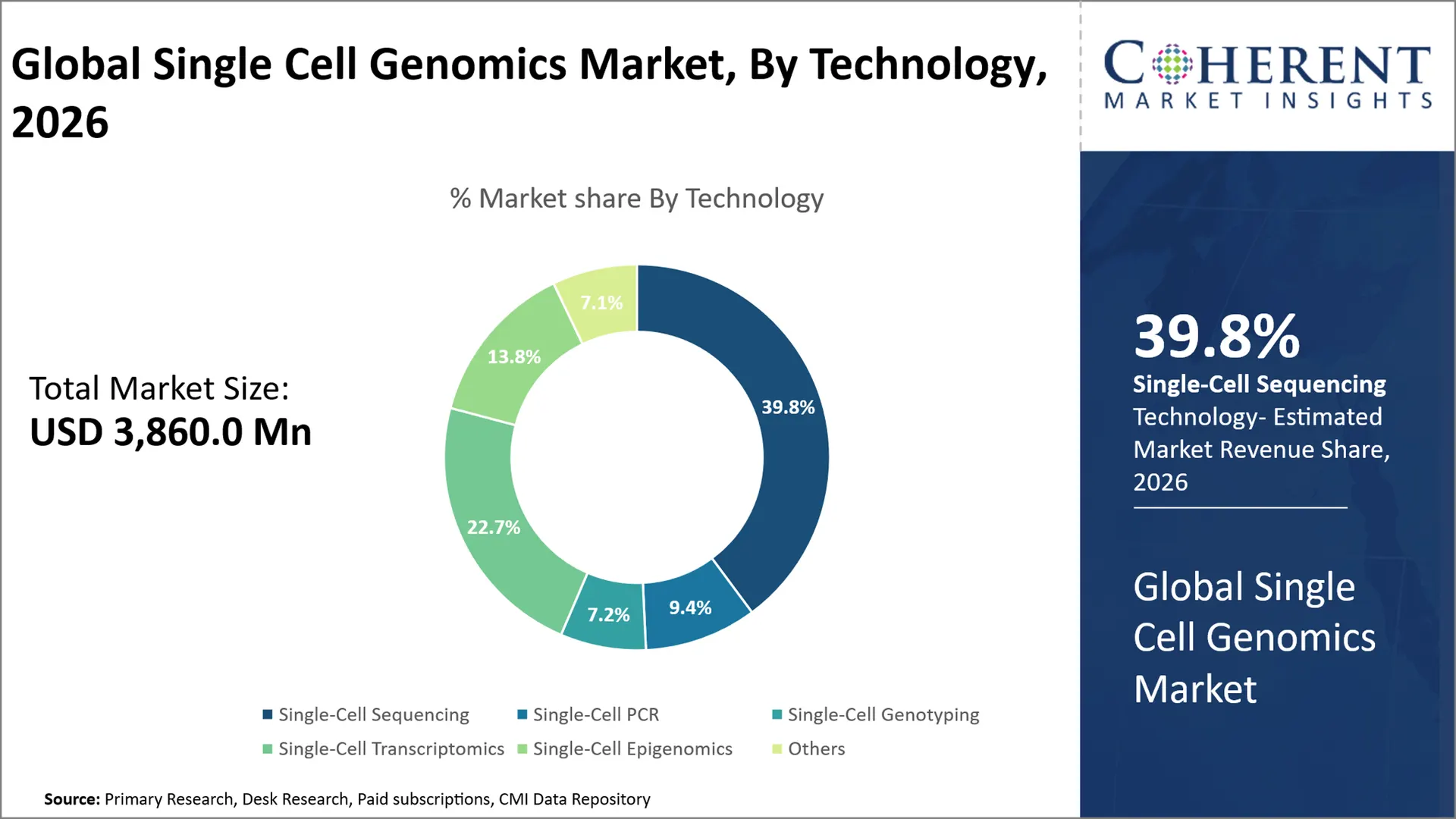
Single-cell sequencing is projected to hold a market share of 39.8% in 2026, because it allows high-resolution cell characterization including of rare cell types and cellular heterogeneity in cancer and other diseases. Sequencing workflows are becoming more sophisticated, broadening its applications for biomarker discovery, treatment-response studies and therapeutic development. For instance, the EU-funded POPYNA project uses the technique of single-cell RNA sequencing on human-derived colorectal cancer organoids to pinpoint tumor-cell sub populations and understand how they influence tumor growth and response to therapy. (Source: European Commission)
Cancer Research Segment Dominates the Global Single Cell Genomics Market
The cancer research segment is projected to hold a market share of 29.5% in 2026, as it offers the highest potential to understand tumor heterogeneity, cell states, and molecular mechanisms contributing to disease progression and response to treatment. The technology is increasingly being used in cancer biology, biomarker discovery and precision oncology. For instance, the EU-funded CINbyFUNseq project commenced in 2025, uses high resolution single cell sequencing and spatial profiling to analyze chromosomal instability and immunoediting in gastric cancer. (Source: European Commission)
Current Events and their Impact
Current Events | Description and its Impact |
U.S. National Cancer Institute (NCI) Supports AI Analysis of Single-Cell Tumor Data (April 2026) |
|
Australia Opens Genomics Health Futures Research Grant (March 2026) |
|
U.S. National Institutes of Health (NIH) Advances Brain Cell Atlas Integration Initiative (January 2026) |
|
Single Cell Genomics Market Dynamics
Market Drivers
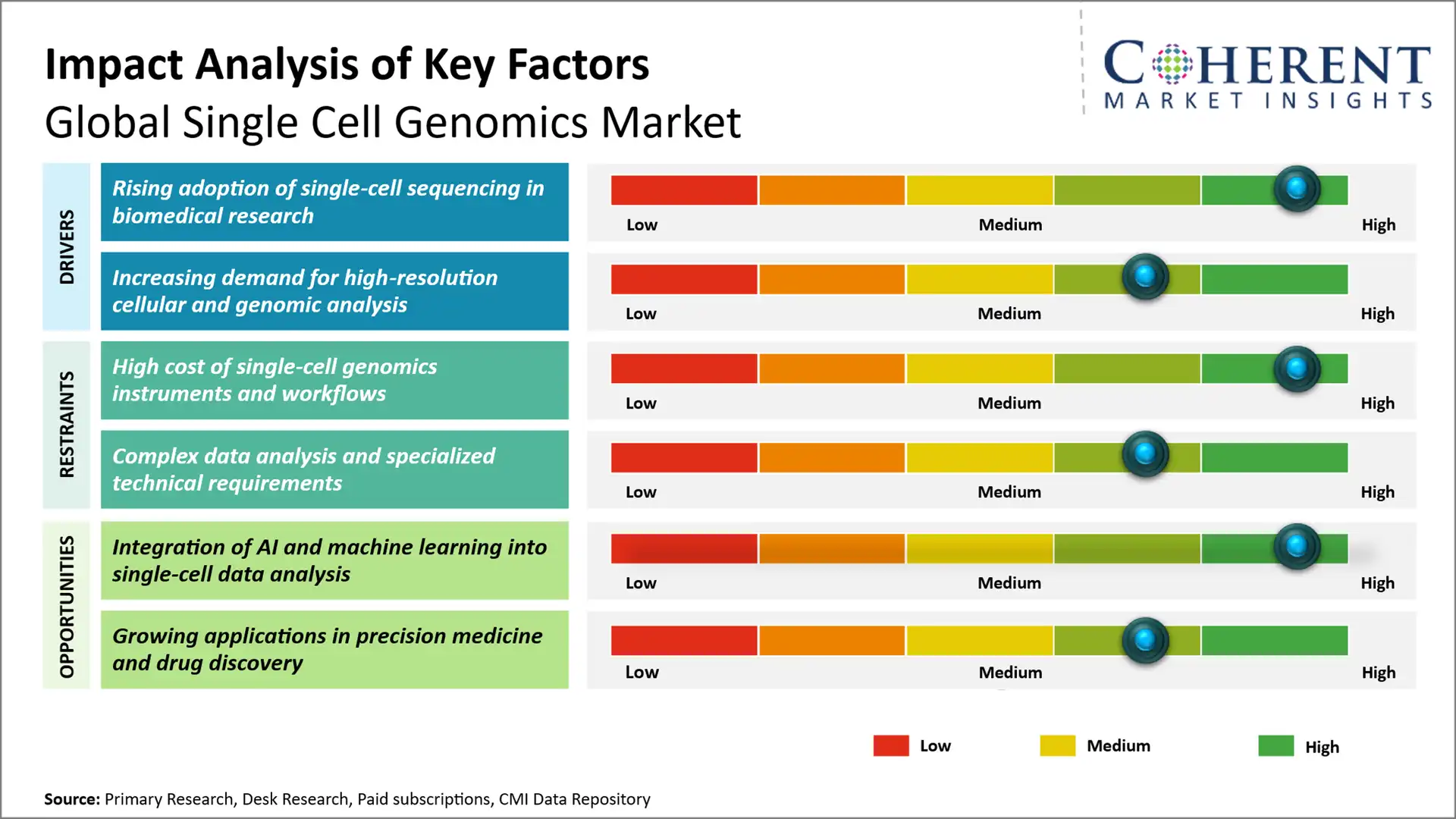
- Rising adoption of single-cell sequencing in biomedical research: Growing use of single-cell sequencing is enabling high-resolution analysis of cellular heterogeneity across disease research, cell-state characterization, and therapeutic development. Integration with multi-omics and computational approaches is further expanding its use in biomedical research. For instance, in 2026, the NIH National Institute of General Medical Sciences (NIGMS) funded a five-year project focused on developing computational systems for single-cell and spatial transcriptomics, supporting broader use of single-cell sequencing in biomedical research.
- Increasing demand for high-resolution cellular and genomic analysis: The growing need to resolve cellular heterogeneity and molecular changes at individual-cell level is increasing demand for high-resolution genomic analysis across oncology, immunology, neuroscience, and precision medicine. For instance, the NIH’s SenNet program is using single-cell and spatial omics to identify and characterize rare senescent cells within complex human tissues, supporting detailed analysis of cellular states and disease mechanisms.
- Increasing integration of single-cell genomics with multi-omics research: The integration of single-cell genomics with transcriptomics, epigenomics, proteomics, and spatial profiling is enabling researchers to characterize cellular states across multiple molecular layers. For instance, in March 2026, the U.S. NIH highlighted genomics technology development aimed at improving the resolution, throughput, and cost of genomic, epigenetic, and functional analyses, supporting broader adoption of integrated high-resolution cellular workflows.
Emerging Trends
- AI-driven single-cell data analysis: Integration of AI, machine learning, and foundation models is increasingly being used to automate clustering, dimensionality reduction, cell classification, and multi-omics data integration.
- Expansion of spatial single-cell multi-omics: Single-cell genomics is increasingly converging with spatial transcriptomics, epigenomics, proteomics, and metabolomics to characterize molecular profiles within their native tissue environment.
- Growth of high-throughput multi-omics profiling: Advances in microfluidics, barcoding, sequencing, and joint-profiling technologies are enabling simultaneous analysis of multiple molecular layers at single-cell resolution, supporting applications in oncology, immunology, biomarker discovery, and precision medicine.
Regional Insights
Why is North America a Strong Market for Single Cell Genomics?
North America leads the global single cell genomics market, accounting for an estimated 41.3% share in 2026, driven by robust research infrastructure, high R&D expenditure and a growing biotechnology and pharmaceutical activity. The U.S. has several government-sponsored programs that provide support for genomics research, development of genome-based technologies, and the generation of large-scale biological data.
For instance, U.S. National Institutes of Health (NIH) Common Fund (CF) Single Cell Analysis Program (SCAP) supports the development of new technologies for single cell analysis, such as measuring cellular heterogeneity and techniques for genomic and transcriptomic analysis at the single cell resolution. Furthermore, technological advancements in the genomics and the strong collaboration between academia and industry further propels the adoption of research and commercialization.
Why Does Asia Pacific Single Cell Genomics Market Exhibit High Growth?
Asia Pacific is expected to exhibit the fastest growth in the global single cell genomics market, registering an estimated CAGR of 18.9% during 2026–2033. The region is projected to account for approximately 24.2% of the global market in 2026, driven by the rising research capacity of genomics, increasing investment by government & hospitals and an augmenting healthcare infrastructure.
The growing geographical spread of genomics research in Asian countries including China, Japan, South Korea and India reflects the importance assigned by the governments and healthcare sector to genomics research for the development of precision medicine. For instance, India's Genome India Project has completed sequencing 10,000 Indians from 83 population groups and has assembled a national genomic resource for biomedical research and precision medicine.
Global Single Cell Genomics Market Outlook for Key Countries
Why is the U.S. Leading Innovation and Adoption in the Single Cell Genomics Market?
The US is at the forefront of the single cell genomics market with significant NIH investment in single cell transcriptomics, multi-omics and related analytics technologies, combined with a US-wide ecosystem for genomics research and data infrastructure – exemplified by the NIH All of Us Research Programs. These together will foster single-cell technology development and large-scale applications in biomedical research.
Is China a Favorable Market for Single Cell Genomics Market?
China is a leader in single cell genomics, with government-funded research programs referring to single cell multi-omics, including single cell RNA-seq and single cell ATAC-seq. The National Natural Science Foundation of China (which includes single-cell multi-omics (scRNA-seq and scATAC-seq) into the 2025 Immunity Digital Decoding research program, supporting technology applications in large-scale biological research.
Is Japan Emerging as a Key Growth Hub for the Single Cell Genomics Market?
Japan is becoming a growth area for single cell genomics market as national research efforts broaden to include single-cell analysis and the latest genomic research tools. Japan Agency for Medical Research and Development (AMED) grants are supporting two groups that are combining long-read and single-cell sequencing approaches for disease research. Additionally, RIKEN is building a Japan-wide single cell medical network to perform coordinated single-cell profiling of human samples.
Why Does Germany Top the European Single Cell Genomics Market?
Germany holds the leading position in the European single cell genomics market owing to the presence of large collaborative research infrastructure and single cell specialization platform. Single Cell Omics Germany (SCOG) network links research groups at the largest institutions with single cell users, and facilities like DKFZ and Max Delbrck Centre that are dedicated to multi-omics, single cell sequencing and spatial analysis.
Is Single Cell Genomics Market Developing in U.K.?
The U.K. is a large market with high growth potential, driven by well-developed single-cell research infrastructure and ongoing MRC funding for genomics and multimodal research. UK Research and Innovation (UKRI) funds at Oxford, Cambridge, Manchester, Newcastle and other sites offer dedicated single-cell research, and UKRI-funded LEGACYIII Network is increasing the scope of single-cell genomics research in immunology.
Single Cell Genomics Workflow and Technology Applications
Workflow Stage | Key Technologies / Methods | Primary Output | Major Applications |
Sample Preparation & Cell Isolation | Tissue dissociation, cell sorting, microfluidics, single-nucleus preparation | High-quality single-cell/single-nucleus suspension | Tissue profiling, cell atlas development |
Cell Capture & Library Preparation | Droplet-based capture, microwells, combinatorial indexing, barcoding | Cell-specific molecular libraries | High-throughput cellular profiling |
Sequencing & Molecular Profiling | Single-cell RNA sequencing, DNA sequencing, ATAC-seq, immune profiling | Genomic, transcriptomic, and epigenomic data | Cell-type identification, cellular-state analysis |
Data Processing & Quality Control | Read processing, alignment, barcode assignment, quality filtering | Cell-level count matrices and curated datasets | Data quality assessment and normalization |
Computational & AI Analysis | Clustering, dimensionality reduction, cell annotation, trajectory analysis, AI/ML | Cell populations, molecular signatures, cellular relationships | Biomarker discovery, disease characterization |
Multi-Omics & Spatial Integration | Spatial transcriptomics, single-cell multi-omics, proteomics integration | Integrated molecular and spatial profiles | Precision medicine, oncology, drug discovery |
How is the integration of AI and machine learning into single-cell data analysis creating new growth opportunities in the single cell genomics market?
The convergence of AI and ML is opening up tremendous potential for the faster interpretation of large and complex single-cell and multi-omics data sets, with capabilities including cell classification, pattern detection and the detection of cellular signatures associated with disease. These data management tools enhance the analysis process from a speed, reproducibility and interpretability perspective, and identify biomarkers. For instance, in June 2026, the U.S. National Eye Institute (NIH) developed IAN (Intelligent system for omics data Analysis and discovery), an AI program that automatically interprets huge gene-expression datasets and provides biologically meaningful information from large genomic datasets.
Market Players, Key Development, and Competitive Intelligence
Key Developments
- On September 15, 2026, Stellaromics announced the first commercial placements of its Pyxa 3D spatial multi-omics platform at leading research institutions across the U.S. and Europe. The installations support research in oncology, neuroscience, immunology, and genomics, reflecting growing adoption of advanced single-cell and spatial genomics technologies.
- On September 10, 2026, Lunit announced a collaboration with 10x Genomics to integrate AI-powered pathology analysis with spatial molecular data for oncology clinical research. The collaboration combines Lunit SCOPE IO with 10x Genomics’ Xenium and Atera platforms, supporting biomarker discovery and broader adoption of advanced single-cell and spatial genomics workflows.
- In August 2025, 10x Genomics announced an agreement to acquire Scale Biosciences to expand its single-cell analysis capabilities. The acquisition adds scalable single-cell technologies to its Chromium platform, supporting broader adoption of high-throughput single-cell genomics workflows.
Competitive Landscape
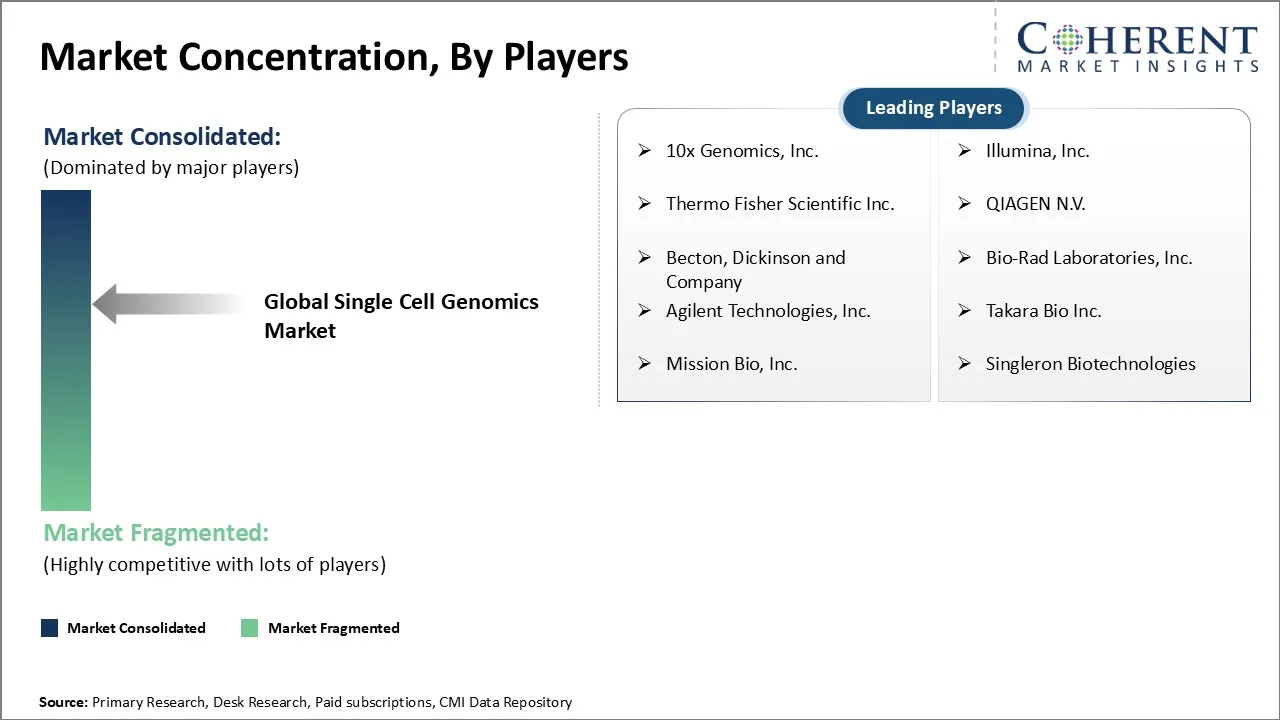
The global single cell genomics market is moderately competitive, with market dynamics shaped by advances in single-cell sequencing, spatial genomics, multi-omics integration, and computational analysis. Market participants are increasingly focusing on improving cellular resolution, sequencing throughput, workflow scalability, data-analysis capabilities, and integration of multiple molecular datasets to address expanding applications across oncology, immunology, developmental biology, and drug discovery.
Key focus areas include
- Development of high-throughput single-cell sequencing platforms
- Integration of single-cell genomics with spatial and multi-omics technologies
- Advancement of AI-enabled bioinformatics and data-analysis tools
- Improvement of microfluidics, barcoding, and library-preparation workflows
- Expansion of single-cell genomics applications
Market Report Scope
Global Single Cell Genomics Market Report Coverage | |||
Report Coverage | Details | ||
Base Year | 2025 | Market Size in 2026: | USD 3,860.0 Mn |
Historical Data For: | 2020 To 2024 | Forecast Period: | 2026 To 2033 |
Forecast Period 2026 To 2033 CAGR: | 16.0% | 2033 Value Projection: | USD 10,920.0 Mn |
Geographies covered: |
| ||
Segments covered: |
| ||
Companies covered: | 10x Genomics, Inc., Illumina, Inc., Thermo Fisher Scientific Inc., QIAGEN N.V., Becton, Dickinson and Company, Bio-Rad Laboratories, Inc., Agilent Technologies, Inc., Takara Bio Inc., Mission Bio, Inc., Singleron Biotechnologies | ||
Growth Drivers: |
| ||
Restraints & Challenges: |
| ||
Analyst Opinion (Expert Opinion)
- In the coming years, global single cell genomics market is expected to move toward integrated, high-throughput platforms that combine single-cell sequencing with spatial profiling, multi-omics, and AI-driven data analysis. The industry is likely to shift from generating individual molecular datasets toward comprehensive cellular profiles that connect genomic, transcriptomic, epigenomic, and spatial information, particularly for complex disease research and precision medicine.
- The maximum opportunities are foreseen within single-cell sequencing for cancer research in China. Increasing demand for cellular-level characterization of tumor heterogeneity, biomarker discovery, and treatment response creates scope for high-throughput sequencing platforms, advanced library-preparation workflows, and integrated data-analysis solutions. Players should focus on scalable sequencing and multi-omics capabilities that can support large oncology research programs.
- In order to gain a competitive advantage, market players should prioritize higher throughput, improving cellular resolution, integrated multi-omics capabilities, and AI-enabled analysis while reducing workflow complexity and per-sample costs. Developing interoperable platforms that connect sample preparation, sequencing, spatial analysis, and computational interpretation can create differentiation and improve adoption across academic research, pharmaceutical development, and translational applications.
Speak to the analyst
Want personalized insights?
Take the findings above to one of our principal consultants, or have the report rebuilt around the segments, geographies and competitors you actually track.
Market Segmentation
- Product and Service Insights (Revenue, USD Mn, 2021 - 2033)
- Reagents and Consumables
- Instruments
- Software
- Services
- Technology Insights (Revenue, USD Mn, 2021 - 2033)
- Single-Cell Sequencing
- Single-Cell PCR
- Single-Cell Genotyping
- Single-Cell Transcriptomics
- Single-Cell Epigenomics
- Others
- Application Insights (Revenue, USD Mn, 2021 - 2033)
- Cancer Research
- Immunology and Immuno-Oncology
- Developmental Biology
- Neurology
- Stem Cell Research
- Drug Discovery and Development
- Others
- End User Insights (Revenue, USD Mn, 2021 - 2033)
- Academic and Research Institutes
- Pharmaceutical and Biotechnology Companies
- Hospitals and Diagnostic Laboratories
- Contract Research Organizations (CROs)
- Others
- Regional Insights (Revenue, USD Mn, 2021 - 2033)
- North America
- U.S.
- Canada
- Latin America
- Brazil
- Argentina
- Mexico
- Rest of Latin America
- Europe
- Germany
- U.K.
- Spain
- France
- Italy
- Russia
- Rest of Europe
- Asia Pacific
- China
- India
- Japan
- Australia
- South Korea
- ASEAN
- Rest of Asia Pacific
- Middle East
- GCC Countries
- Israel
- Rest of Middle East
- Africa
- South Africa
- North Africa
- Central Africa
- North America
Sources
Primary Research Interviews
- Single-cell genomics researchers and principal investigators involved in sequencing and cellular analysis
- Genomics core-facility directors responsible for single-cell sequencing platforms and research workflows
- Bioinformatics and computational biology specialists involved in single-cell and multi-omics data analysis
- Pharmaceutical and biotechnology R&D professionals involved in biomarker discovery and precision medicine
- Cancer researchers and translational scientists using single-cell genomics for disease characterization and therapeutic research
- Laboratory managers and genomics technology specialists responsible for sequencing equipment, reagents, and consumables
Stakeholders
- Academic and research institutes
- Pharmaceutical and biotechnology companies
- Contract research organizations (CROs)
- Hospitals and diagnostic laboratories
- Genomics and sequencing laboratories
- Biobanks and biomedical research centers
- Government-funded genomics research programs
- Bioinformatics and computational biology centers
- End-use Sectors
- Academic & Research Institutes
- Pharmaceutical & Biotechnology Companies
- Contract Research Organizations (CROs)
- Hospitals & Diagnostic Laboratories
- Government & Public Research Institutions
- Biobanks & Biomedical Research Centers
- Regulatory & Health Bodies
- National Institutes of Health (NIH), U.S.
- National Cancer Institute (NCI), U.S.
- National Human Genome Research Institute (NHGRI), U.S.
- U.S. Food and Drug Administration (FDA)
- European Medicines Agency (EMA)
- National Health and Medical Research Council (NHMRC), Australia
- Department of Biotechnology (DBT), India
- National Natural Science Foundation of China (NSFC)
Databases
- NCBI Gene Expression Omnibus (GEO) – high-throughput functional genomics and single-cell sequencing datasets
- NCBI Sequence Read Archive (SRA) – raw high-throughput sequencing data, including single-cell datasets
- NCBI BioProject – biological research projects and associated genomic datasets
- NIH Database of Genotypes and Phenotypes (dbGaP) – controlled-access human genomic and phenotypic data
- NCI Genomic Data Commons (GDC) – cancer genomic and clinical datasets supporting cancer research and precision medicine
- European Nucleotide Archive (ENA) – nucleotide sequence and genomic data
- Human Cell Atlas Data Portal – single-cell and cellular profiling datasets
- Indian Biological Data Centre (IBDC) – genomic and life-science datasets generated through Indian research programs, including GenomeIndia
Associations
- American Society of Human Genetics (ASHG)
- American Association for Cancer Research (AACR)
- International Society for Computational Biology (ISCB)
- International Society for Stem Cell Research (ISSCR)
- Human Genome Organisation (HUGO)
- European Association for Cancer Research (EACR)
- International Society for Advancement of Cytometry (ISAC)
Public Domain Sources
- NIH – genomics research programs, funding initiatives, biomedical research infrastructure, and genomic data-sharing policies
- NCI – cancer genomics research, single-cell sequencing applications, genomic data infrastructure, and precision-medicine resources
- NHGRI – human genomics research, genome sequencing, genomic technologies, and population genomics
- NCBI – genomic databases, sequencing repositories, functional genomics datasets, and data-submission standards
- Department of Biotechnology (DBT), India – national genomics programs, GenomeIndia, sequencing infrastructure, and genomic data resources
- National Natural Science Foundation of China (NSFC) – government-funded genomics and advanced biomedical research programs
- European Commission – European genomics, health-data, and research initiatives
- Australian Government / NHMRC – genomics research funding and national genomics initiatives
Proprietary Elements
- CMI Data Analytics Tool
- Proprietary CMI Existing Repository of information for last 10 years.
Get access to 250+ pages report
Every segment, forecast, competitor profile and data table behind the analysis above — available for instant download.
- ESOMAR Member
- ISO 9001:2015 Certified
- D-U-N-S Registered
- GDPR & CCPA Compliant
Missing comfort of reading report in your local language? Find your preferred language:
Frequently Asked Questions
The global single cell genomics market is estimated to be valued at USD 3,860.0 Mn in 2026 and is expected to reach USD 10,920.0 Mn by 2033.
Reagents and consumables dominate due to their recurring use across single-cell sequencing, sample preparation, library preparation, and multi-omics workflows.
Single-cell genomics is the analysis of genetic and molecular information at the individual-cell level to characterize cellular heterogeneity and cell-specific functions.
The CAGR of global single cell genomics market is projected to be 16.0% from 2026 to 2033.
Rising adoption of single-cell sequencing in biomedical research, and increasing demand for high-resolution cellular and genomic analysis are the major factors driving the growth of the global single cell genomics market.
High cost of single-cell genomics instruments and workflows, and complex data analysis and specialized technical requirements are the major factors hampering the growth of the global single cell genomics market.
In terms of technology, single-cell sequencing is estimated to dominate the market revenue share in 2026.