

Global Smart Contact Lens Market Size and Forecast – 2026 To 2033
The global smart contact lens market is expected to grow from USD 612.8 Mn in 2026 to USD 1,850.6 Mn by 2033, registering a compound annual growth rate (CAGR) of 17.1% from 2026 to 2033. The market for global smart contact lens is poised for significant expansion, fueled by the growing burden of eye disorders and the increasing need for continuous eye-health monitoring.
According to the World Health Organization (WHO), at least 2.2 billion people globally have near or distance vision impairment, while glaucoma alone accounts for an estimated 7.7 million cases of unaddressed distance vision impairment or blindness. This highlights the substantial global burden of vision impairment and glaucoma, reinforcing the need for advanced, continuous, and non-invasive eye-monitoring technologies such as smart contact lenses.
Key Takeaways of the Global Smart Contact Lens Market
- Corrective smart contact lenses are projected to hold 48.7% of the global smart contact lens market share in 2026, making it dominant type segment across North America due to established contact-lens regulatory and clinical frameworks. For instance, the U.S. Food and Drug Administration (FDA) recognized ISO 11980:2025 for clinical investigations of contact lenses in December 2025, including additional safety and performance considerations for indications beyond conventional refractive-error correction. This regulatory framework supports the clinical evaluation and development of advanced corrective and multifunctional contact lenses in the region.
- Embedded sensors are projected to hold 38.9% of the global smart contact lens market share in 2026, making it dominant technology segment with Europe representing a key regional market due to strengthening regulatory standardization for contact-lens devices. For instance, the European Commission has established the Master UDI-DI framework specifically for contact lenses under the EU Medical Device Regulation, with mandatory implementation for contact-lens manufacturers from November 9, 2026. The standardized identification framework can facilitate regulatory traceability as sensor-enabled and other advanced contact-lens technologies develop.
- Healthcare and medical monitoring is projected to hold 46.8% of the global smart contact lens market share in 2026, making it dominant application segment across Asia Pacific which is emerging as a significant market due to established regulatory recognition of contact lenses for diagnostic applications. For instance, Japan’s Pharmaceuticals and Medical Devices Agency (PMDA) classifies examination contact lenses as Class II medical devices when they are used to support the diagnosis of specific ocular diseases or conditions. This regulatory classification provides a clear framework for contact lenses used in ophthalmic diagnostic applications, supporting the development and adoption of advanced monitoring-oriented lens technologies in Japan and the broader Asia Pacific market.
- North America market maintains dominance with an expected share of 41.6% in 2026, bolstered by the region’s established regulatory oversight of contact lenses and well-developed ophthalmic-device infrastructure. For instance, Health Canada recognizes ISO 11980 for contact lenses and contact lens care products within its list of medical-device standards and uses recognized standards to support manufacturers in demonstrating compliance with medical-device safety and effectiveness requirements. This established regulatory framework for contact lenses supports the development, licensing, and commercialization of advanced lens-based technologies across North America.
- Asia Pacific is expected to exhibit the fastest growth in the global smart contact lens market, registering an estimated CAGR of 12.8% during 2026–2033, driven by strengthening medical-device regulatory frameworks and increasing support for innovative technologies. For instance, in January 2026, South Korea’s Ministry of Food and Drug Safety (MFDS) revised its regulations governing the permission, notification, and review of medical devices, providing an updated regulatory framework for innovative medical-device development and market authorization.
Segmental Insights
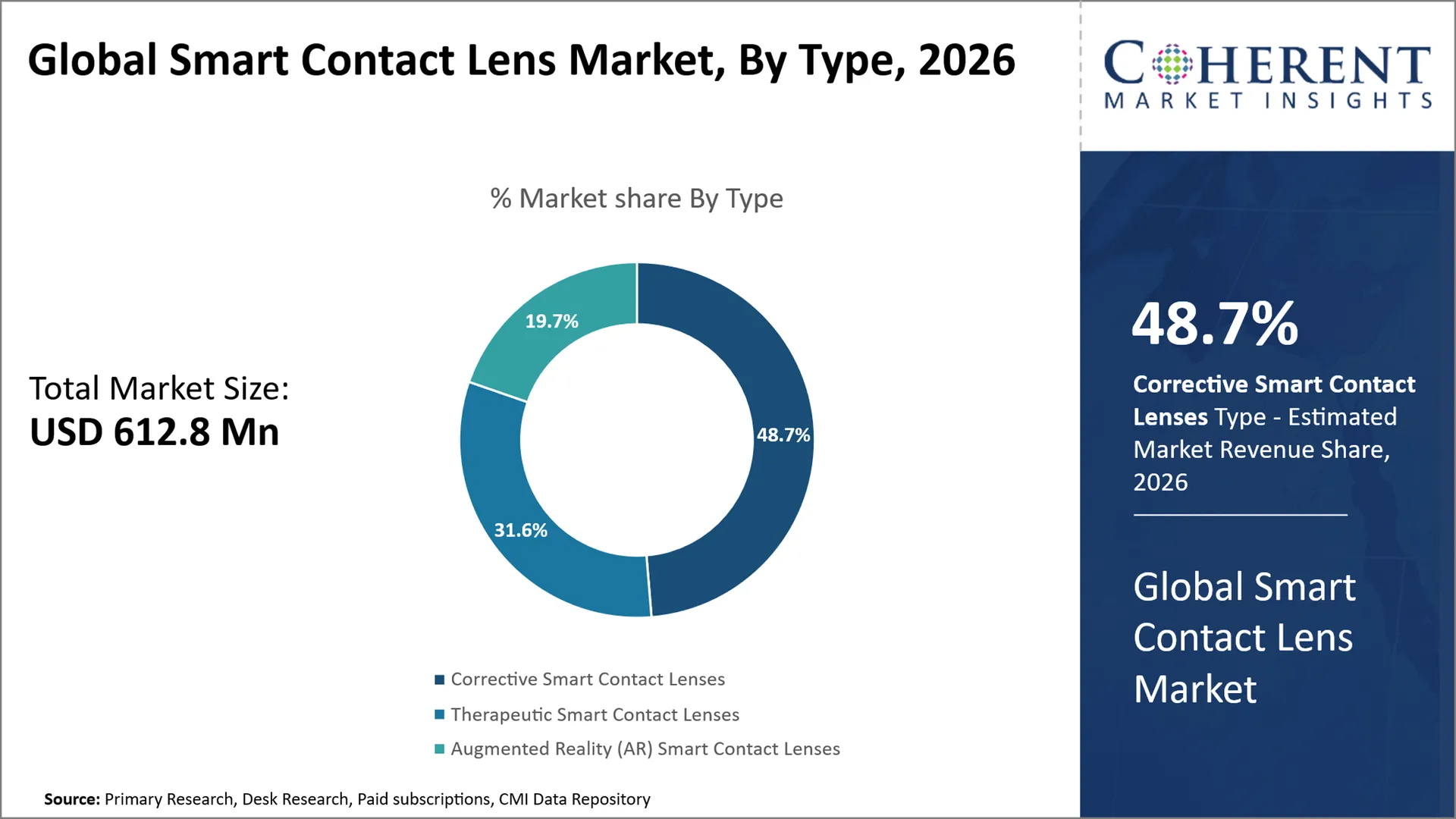
Why Do Corrective Smart Contact Lenses Dominate the Global Smart Contact Lens Market?
Corrective smart contact lenses are projected to hold the market share of 48.7% in 2026, owing to vast potential in refractive errors, including myopia, hyperopia, astigmatism, and presbyopia. Surging demand for lenses that address multiple refractive conditions while improving visual clarity and comfort supports continued segment adoption. For instance, in June 2025, Johnson & Johnson announced the release of ACUVUE OASYS MAX 1-Day MULTIFOCAL for ASTIGMATISM, a 1-Day replacement lens that combines multifocal correction with astigmatism correction to provide patients an advanced choice of their vision-correction options.
- Current Industry Events of 2026
- Market Size Estimation
- Regional Breakdown
- Competitive Landscape
- Customer Intelligence
- Segmental Analysis
- Pricing Analysis
- Key Market Drivers, Challenges & Future Trends
- Customized Insights Section
Why Does Embedded Sensors Represent the Largest Technology Segment in the Smart Contact Lens Market?
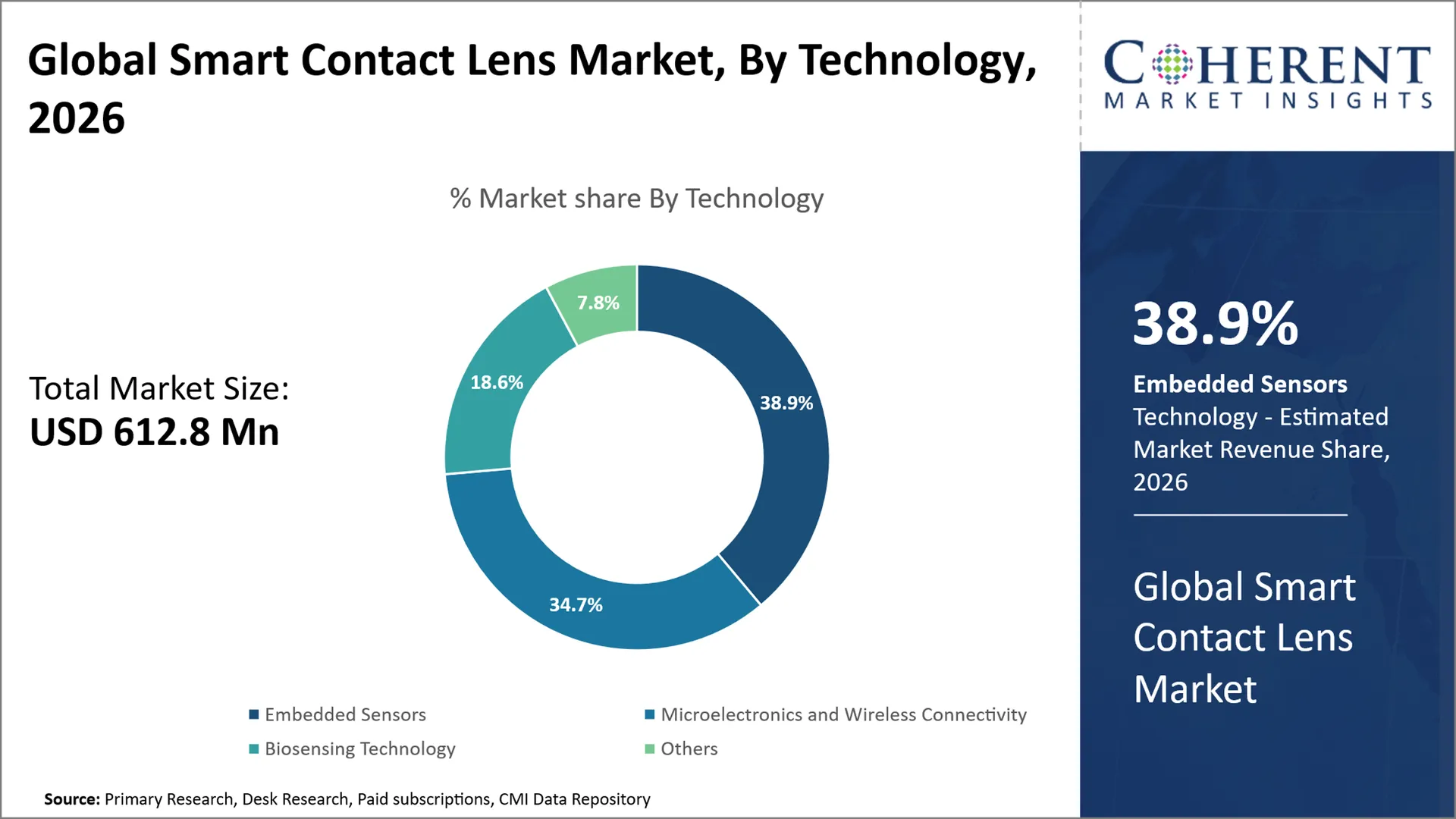
Embedded sensors are projected to hold a market share of 38.9% in 2026, as they facilitate the use of contact lenses to detect and sense eye and body signals for monitoring and interactive purposes. The development of miniature sensing components is facilitating new multi-functional sensors while preserving lens form factors. For instance, in January 2025, InWith Corporation unveiled the first working prototype of its electronic contact lens platform at the 2025 Consumer Electronics Show (CES 2025), providing a glimpse of how microelectronics can be embedded in contact lenses for smart vision and digital systems.
Healthcare and Medical Monitoring Segment Dominates the Global Smart Contact Lens Market
The healthcare and medical monitoring segment is projected to hold a market share of 46.8% in 2026, owing to the potential of smart contact lenses in providing per-day, non-invasive, real-time monitoring of eye and other biological parameters. Combined with wireless connectivity and digital-health frameworks, they can facilitate real-time data transfer and remote diagnosis and disease management. For instance, In January 2026, SEED Co., Ltd. Shipped a smart contact lens prototype paid order with research institute, as well as, at the same time, an open-source Smart Contact Lens Development Platform that consists of biosensing, remote ophthalmology and ophthalmic diagnosis products.
Current Events and their Impact
Current Events | Description and its Impact |
U.S. FDA Recognizes Updated Clinical Investigation Standard for Contact Lenses (December 2025) |
|
European Commission Updates Master UDI-DI Guidance for Contact Lenses (August 2025) |
|
European Commission Issues Master UDI-DI Timeline for Contact Lenses (July 2025) |
|
Smart Contact Lens Market Dynamics
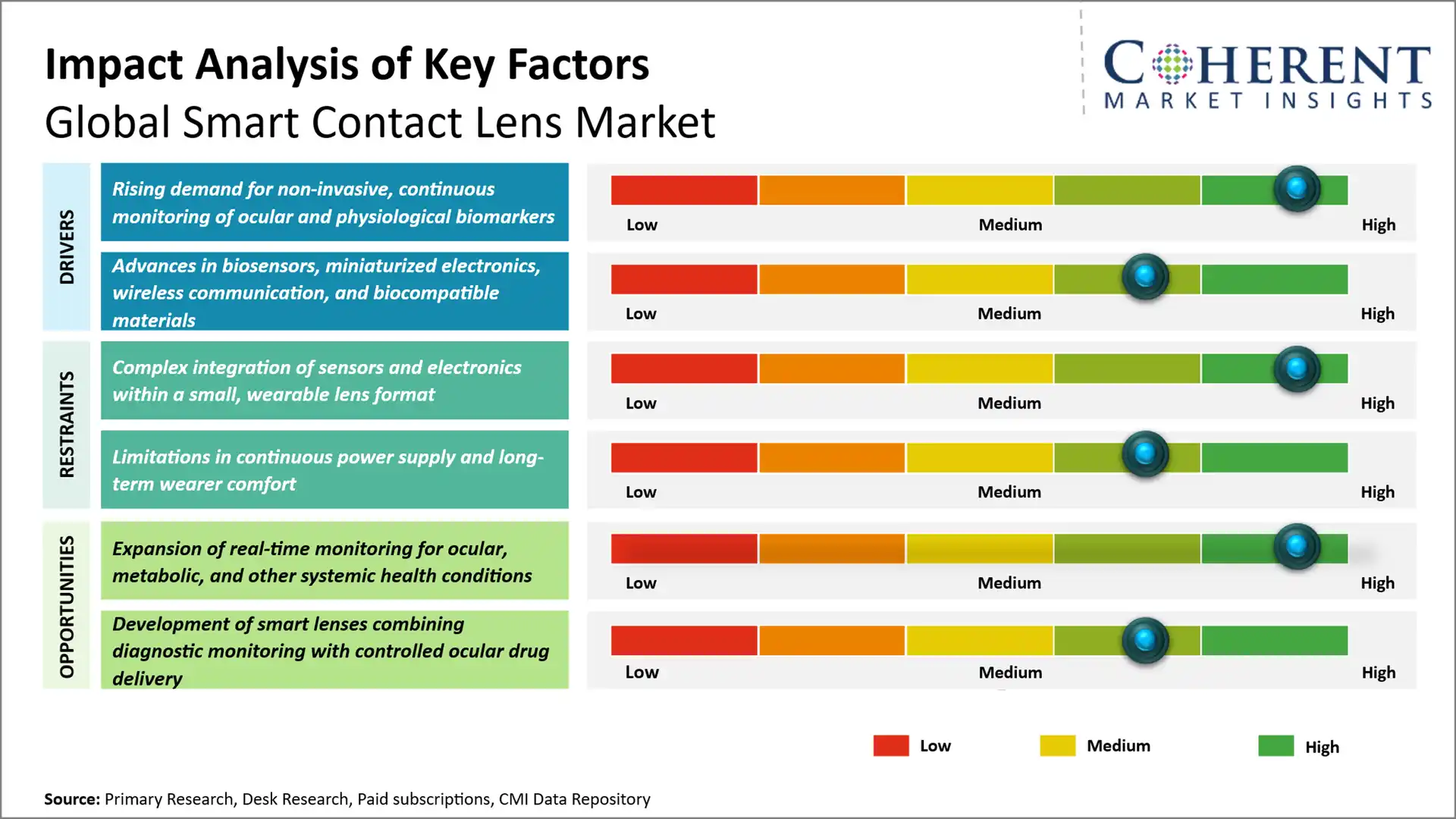
Market Drivers
- Rising demand for non-invasive, continuous monitoring of ocular and physiological biomarkers: The growing need for continuous and non-invasive health monitoring is driving interest in smart contact lenses capable of detecting ocular and physiological biomarkers through tear fluid. Their ability to monitor parameters such as glucose, intraocular pressure, temperature, and other biomarkers can support earlier detection and personalized disease management. For instance, in May 2025, researchers led by Jiaxue Zhu developed a breathable smart contact lens capable of wireless, real-time monitoring of corneal oxygen, humidity, and temperature, demonstrating the potential for continuous monitoring of the ocular microenvironment
- Advances in biosensors, miniaturized electronics, wireless communication, and biocompatible materials: Advances in biosensors, miniaturized electronics, wireless communication, and biocompatible materials are improving the functionality and feasibility of smart contact lenses. These technologies enable greater sensor integration, wireless monitoring, and improved compatibility with the ocular environment, supporting the development of multifunctional wearable platforms. For instance, in April 2025, researchers N. Roostaei and S. M. Hamidi developed a plasmonic smart contact lens based on an etalon nanostructure for non-invasive tear-glucose sensing, demonstrating the integration of biocompatible materials and advanced biosensing technology in smart contact lenses.
- Growing focus on advanced power solutions for smart contact lenses: The development of compact and reliable power systems is becoming increasingly important for enabling continuous operation of smart contact lenses. Advances in energy harvesting and power management can reduce dependence on external power sources while supporting the integration of sensors and electronic components within flexible lens platforms. For instance, in March 2024, researchers at the University of Utah, led by Erfan Pourshaban and Carlos H. Mastrangelo, developed a hybrid power-scavenging system combining flexible solar cells and an eye-blinking-activated metal–air harvester to continuously power smart contact lens components without external accessories.
Emerging Trends
- Shift toward multifunctional smart contact lenses: Smart contact lenses are increasingly being developed as multifunctional platforms that combine biosensing, disease monitoring, drug delivery, and wireless communication within a single lens.
- Advancement of wireless and self-powered technologies: Development is moving toward wireless power transfer, biofuel cells, flexible batteries, and energy-harvesting technologies to enable continuous operation while reducing the need for external power sources.
- Integration of multimodal biosensing and digital health: Smart lenses are increasingly incorporating multiple sensing capabilities for ocular and physiological biomarkers, with wireless connectivity enabling integration with smartphones, cloud platforms, and remote health-monitoring systems.
Regional Insights
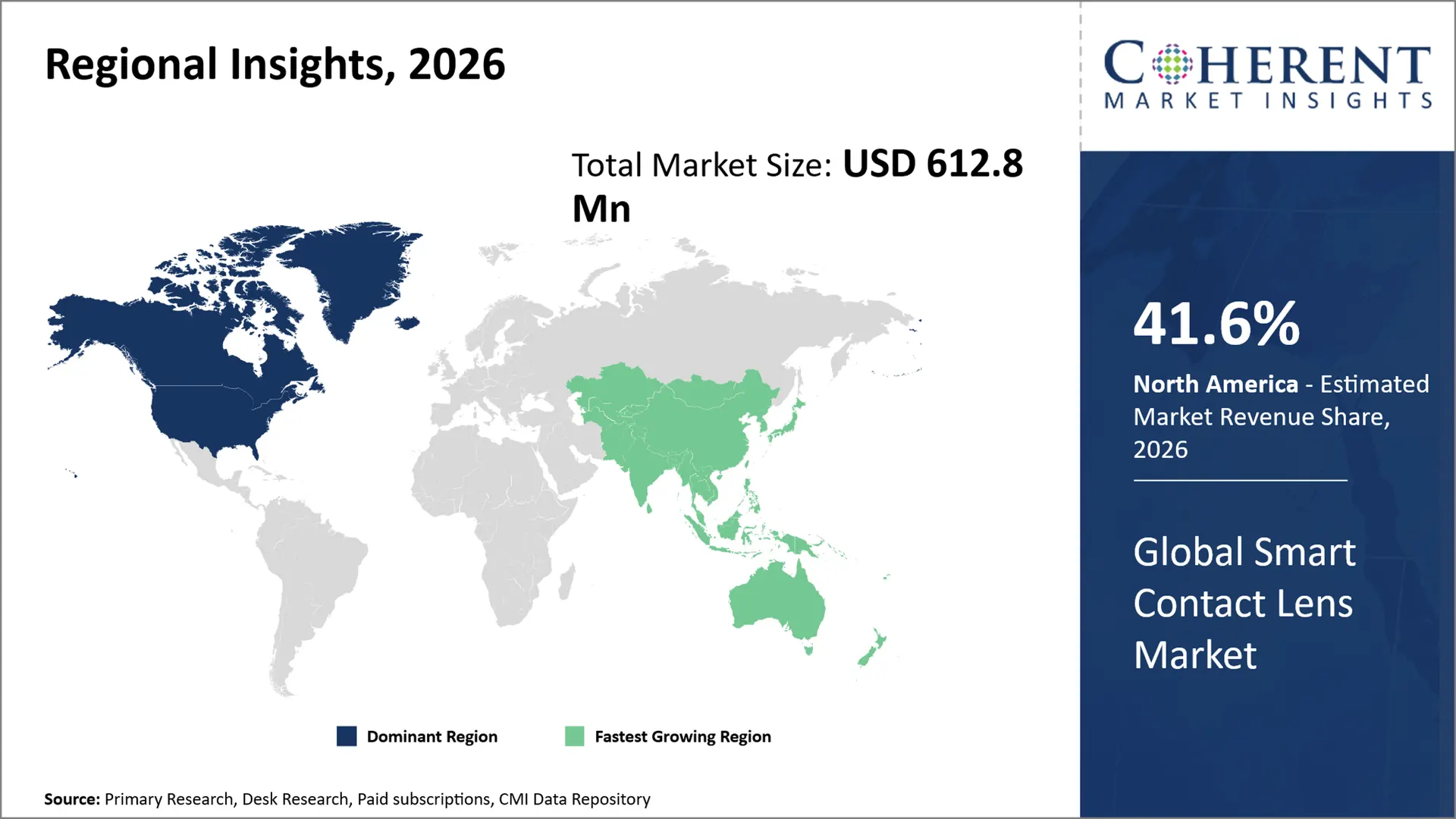
Why is North America a Strong Market for Smart Contact Lens?
North America leads the global smart contact lens market, accounting for an estimated 41.6% share in 2026, attributed to a well-developed healthcare system, extensive R&D investment, and the adoption of cutting-edge digital health technologies. Furthermore, government initiatives towards wearable and medical devices innovation, such as easy regulatory pathways by U.S. FDA, and research center and technology company partnerships for commercialization boost the regional market.
For instance, in July 2024, U.S. FDA broadened its Total Product Life Cycle Advisory Program (TAP) to include ophthalmic devices so that developers and regulators could communicate more often and at an earlier stage to facilitate the development of innovative products.
Why Does Asia Pacific Smart Contact Lens Market Exhibit High Growth?
Asia Pacific is expected to exhibit the fastest growth in the global smart contact lens market, registering an estimated CAGR of 12.8% during 2026–2033. The region is projected to account for approximately 20.9% of the global market in 2026, owing to the rising healthcare awareness, expanding diabetic, and ophthalmic patient base, and strengthening healthcare infrastructure in developing countries. Government initiatives to increase healthcare digitization and wearable technology usage are driving the industry forward.
For instance, in February 2025, China's Ministry of Industry and Information Technology (MIIT) and the National Health Commission announced 274 nationally recognized 5G+ medical health projects and 534 pilot projects completed, that would underpin the broader deployment of connected healthcare products and remote medical service technology. Furthermore, along with a broader smartphone penetration, extensive skilled workforce, affordable manufacturing, growing foreign investments, and increasing global cooperation is enabling advancement in smart contact lens technologies.
Global Smart Contact Lens Market Outlook for Key Countries
Why is the U.S. Leading Innovation and Adoption in the Smart Contact Lens Market?
The U.S. is the leader in adoption and innovation of smart contact lens market because of the presence of the existing ecosystem for advanced ophthalmic devices and digital health related technologies. Also, the availability of extensive clinical research and development of technologies to include sensors, wireless electronics, and diagnostic function in the lens.
Is China a Favorable Market for Smart Contact Lens Market?
China is a promising market for smart contact lenses, with active medical-device regulation pathways for innovative products and a burgeoning market of advanced contact-lens developments. The NMPA has created a fast-track review and approval pathway for innovative medical devices. Furthermore, novel Chinese research has included the development of wireless smart lenses to monitor and treat ophthalmic disease.
Is Japan Emerging as a Key Growth Hub for the Smart Contact Lens Market?
Japan is poised to become the leading growth center for smart contact lens market, with its well-developed contact lens medical-device ecosystem and a mature medical device system for the contact lens and dedicated ophthalmic technologies. The PMDA categorizes contact lenses as well-controlled medical devices and has established review guidelines for contact lens, providing a structured pathway for advanced ophthalmic products.
Why Does Germany Top the European Smart Contact Lens Market?
Germany holds the leading position in the European smart contact lens market due to its healthy, large medical-device infrastructure operating in the EU MDR system and BfArM’s special classification and medical device controlling services. The country is also transitioning to mandatory EUDAMED device registration (from May 2026) with first-rate, governed traceability for sophisticated ophthalmic devices.
Is Smart Contact Lens Market Developing in South Korea?
South Korea smart contact lens market is expected to grow owing to its emerging economy support with the MFDS dedicated framework on digital medical products, and medical-device approvals. In April 2025, the MFDS has devised a framework for approval, certification, notification, review and evaluation of digital medical products, thus paving a better path for the digitally enabled medical devices and treatment options for smart contact lenses.
Key Smart Contact Lens Product Developments By Application
Company | Product / Technology | Primary Function | Key Health / Smart Application | Year |
XPANCEO | Smart Contact Lens Prototypes | Biosensing & IOP sensing | Glucose, hormone and glaucoma monitoring | 2025 |
InWith Corporation | Smart Contact Lens Prototypes | Electronic lens integration | Vision enhancement and digital applications | 2024 |
Azalea Vision BV | Azalea Smart Lens | Light modulation | Treatment of photophobia and ocular disorders | 2024 |
SEED Co., Ltd. | Smart Contact Lens Development Platform | Sensor & electronic integration | Healthcare and smart-lens applications | 2025 |
Innovega Inc. | iOptik Smart Contact Lens System | AR display integration | Augmented reality and vision enhancement | 2024 |
How is the expansion of real-time monitoring for ocular, metabolic, and other systemic health conditions creating new growth opportunities in the smart contact lens market?
The global smart contact lens market offers a great opportunity from rising potential for non-invasive and continuous monitoring of vital signs of both eye and systemic health. Smart lenses equipped with biosensors, wireless electronics and miniaturized devices are capable of tracking health status by detecting various physiological and biochemical signals from the ocular environment and can facilitate health management in real time. Connected device integration can also enable remote monitoring and personalized care, thus broadening the scope of conventional vision correction. For instance, in March 2025, XPANCEO unveiled new smart contact lens prototypes that include lenses for glucose, hormone monitoring and intraocular-pressure monitoring, highlighting the expansion of smart lenses into continuous health monitoring applications.
Market Players, Key Development, and Competitive Landscape
Key Developments
- In February 2025, SEED Co., Ltd. launched its Smart Contact Lens Development Platform, providing a common architecture to accelerate the development and commercialization of smart contact lenses. The platform integrates essential electronics, RFID-based power technology, wireless communication, and connectivity systems, supporting applications including biosensing, ophthalmic diagnosis, treatment, and augmented reality.
- In December 2024, XPANCEO partnered with Park Systems to advance smart contact lens technology through research on two-dimensional materials. The collaboration focuses on miniaturizing optical components, integrating transparent electronics, and improving performance on curved lens surfaces. The initiative supports the development of next-generation smart contact lenses for healthcare, augmented reality, and artificial intelligence applications.
- In March 2024, Azalea Vision secured a USD 2.87 million (€2.5 million) European Innovation Council Transition grant to advance its smart contact lens technology for ocular healthcare applications. The funding supports development of its ALMA smart lens, which integrates liquid-crystal technology, a microchip, RF antenna, and a medical-grade micro-battery. The initiative is expected to accelerate the development of smart contact lenses for vision-related medical applications.
Competitive Landscape
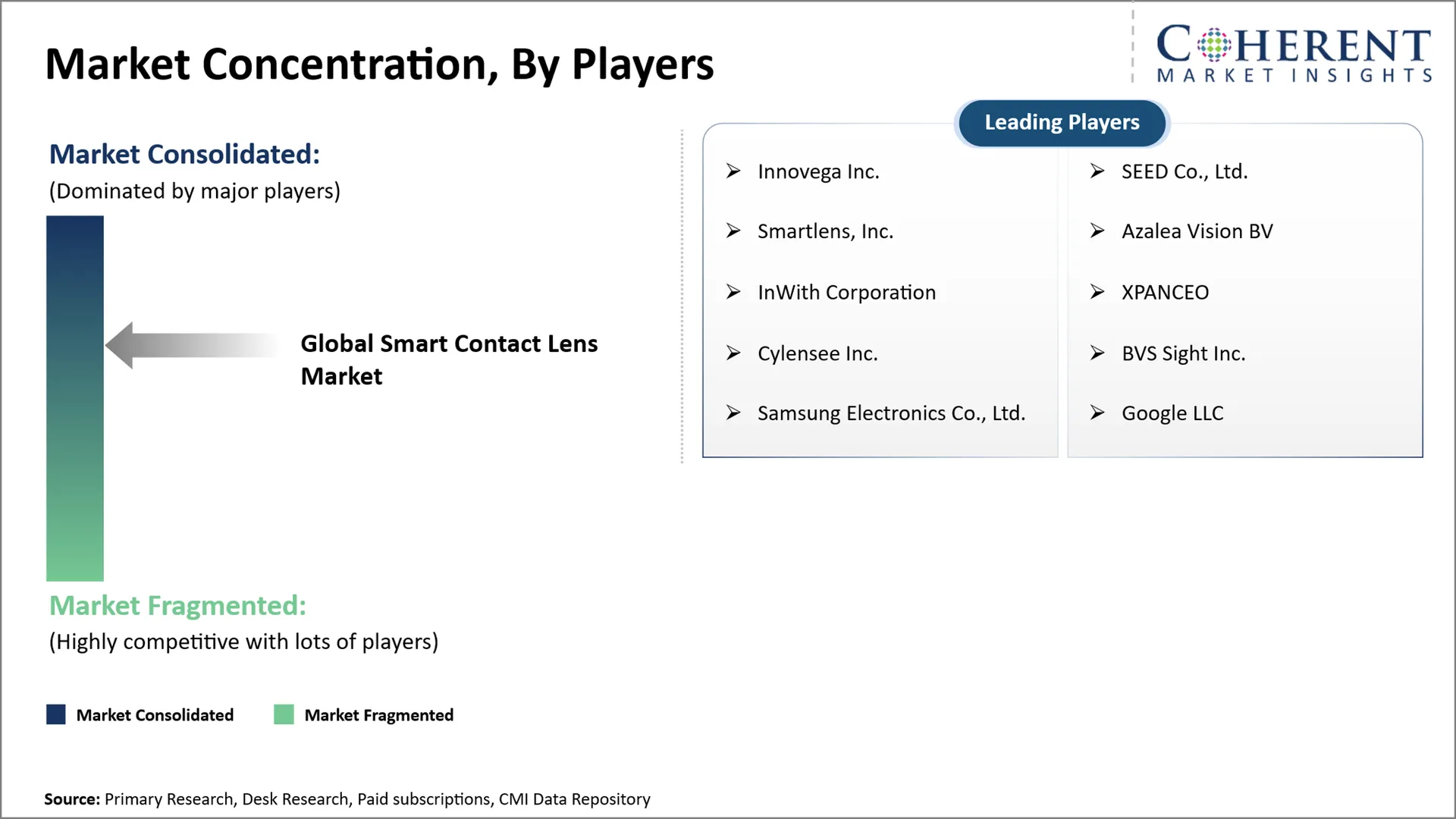
The global smart contact lens market is fragmented yet highly competitive, with market dynamics shaped by advances in biosensing, flexible electronics, wireless communication, miniaturized power systems, and augmented-reality technologies. Market participants are increasingly focusing on improving sensor integration, biocompatibility, power efficiency, continuous health monitoring, and optical performance to support emerging medical and consumer applications. Key focus areas include:
- Development of miniaturized biosensors for continuous health and ocular monitoring
- Integration of flexible electronics, wireless connectivity, and efficient power systems
- Advancement of biocompatible and transparent electronic components
- Improvement of real-time data transmission and connected monitoring capabilities
- Expansion of medical, augmented-reality, and vision-enhancement applications
Market Report Scope
Smart Contact Lens Market Report Coverage | |||
Report Coverage | Details | ||
Base Year | 2025 | Market Size in 2026: | USD 612.8 Mn |
Historical Data For: | 2020 To 2024 | Forecast Period: | 2026 To 2033 |
Forecast Period 2026 To 2033 CAGR: | 17.1% | 2033 Value Projection: | USD 1,850.6 Mn |
Geographies covered: |
| ||
Segments covered: |
| ||
Companies covered: | Innovega Inc., SEED Co., Ltd., Smartlens, Inc., Azalea Vision BV, InWith Corporation, XPANCEO, Cylensee Inc., BVS Sight Inc., Samsung Electronics Co., Ltd., Google LLC | ||
Growth Drivers: |
| ||
Restraints & Challenges: |
| ||
Analyst Opinion (Expert Opinion)
- In the coming years, global smart contact lens market is expected to move toward multifunctional, connected lenses that combine vision enhancement with continuous health monitoring and real-time data exchange. As miniaturized electronics, biosensors, wireless communication, and power technologies advance, smart contact lenses are likely to transition from specialized applications toward broader clinical and digital-health use cases.
- The maximum opportunities are foreseen within therapeutic smart contact lenses for healthcare and medical monitoring in the U.S. The greatest opportunity is expected in therapeutic lenses designed for continuous monitoring and management of ocular and metabolic conditions, particularly in the U.S., where advanced ophthalmic care, digital-health adoption, and demand for non-invasive monitoring can support commercialization.
- In order to gain a competitive advantage, market players should prioritize integrated smart-lens platforms that combine biosensing, wireless connectivity, efficient power management, and comfortable long-term wearability rather than developing isolated technologies. Establishing strong clinical validation, building partnerships across ophthalmology and digital health, and designing scalable platforms that can support multiple applications can help players differentiate as the market develops.
Speak to the analyst
Want personalized insights?
Take the findings above to one of our principal consultants, or have the report rebuilt around the segments, geographies and competitors you actually track.
Market Segmentation
- Type Insights (Revenue, USD Mn, 2021 - 2033)
- Corrective Smart Contact Lenses
- Therapeutic Smart Contact Lenses
- Augmented Reality (AR) Smart Contact Lenses
- Technology Insights (Revenue, USD Mn, 2021 - 2033)
- Embedded Sensors
- Microelectronics and Wireless Connectivity
- Biosensing Technology
- Others
- Application Insights (Revenue, USD Mn, 2021 - 2033)
- Healthcare and Medical Monitoring
- Vision Correction and Enhancement
- Augmented Reality and Entertainment
- Others
- End User Insights (Revenue, USD Mn, 2021 - 2033)
- Hospitals and Ophthalmology Clinics
- Home Care Settings
- Research and Academic Institutions
- Others
- Regional Insights (Revenue, USD Mn, 2021 - 2033)
- North America
- U.S.
- Canada
- Latin America
- Brazil
- Argentina
- Mexico
- Rest of Latin America
- Europe
- Germany
- U.K.
- Spain
- France
- Italy
- Russia
- Rest of Europe
- Asia Pacific
- China
- India
- Japan
- Australia
- South Korea
- ASEAN
- Rest of Asia Pacific
- Middle East
- GCC Countries
- Israel
- Rest of Middle East
- Africa
- South Africa
- North Africa
- Central Africa
- North America
- Key Players Insights
- Innovega Inc.
- SEED Co., Ltd.
- Smartlens, Inc.
- Azalea Vision BV
- InWith Corporation
- XPANCEO
- Cylensee Inc.
- BVS Sight Inc.
- Samsung Electronics Co., Ltd.
- Google LLC
Sources
Primary Research Interviews
- Smart contact lens researchers and principal investigators involved in biosensing, ocular monitoring, and wearable electronics
- Ophthalmologists and optometrists involved in advanced contact lens applications and ocular disease management
- Biomedical engineers developing miniaturized sensors, flexible electronics, and wireless systems for smart lenses
- Wearable technology and microelectronics specialists involved in sensor integration, power management, and data transmission
- Regulatory and clinical research professionals involved in ophthalmic medical-device development and clinical validation
- Research scientists working on ocular biomarkers, tear-fluid analysis, and non-invasive health monitoring
Stakeholders
- Smart contact lens developers and technology companies
- Contact lens manufacturers and ophthalmic device companies
- Hospitals, ophthalmology clinics, and eye-care centers
- Academic and biomedical research institutions
- Wearable electronics, sensor, and semiconductor technology providers
- Digital health and remote patient monitoring providers
- Clinical research organizations and testing laboratories
- End-use Sectors
- Ophthalmology & Eye Care
- Healthcare & Medical Monitoring
- Vision Correction & Enhancement
- Augmented Reality & Human-Machine Interfaces
- Pharmaceutical & Drug Delivery Applications
- Research & Academic Institutions
- Regulatory & Health Bodies
- U.S. Food and Drug Administration (FDA), U.S.
- European Commission – Medical Device Coordination Group (MDCG), European Union
- Medicines and Healthcare products Regulatory Agency (MHRA), U.K.
- Health Canada, Canada
- Therapeutic Goods Administration (TGA), Australia
- Pharmaceuticals and Medical Devices Agency (PMDA), Japan
- National Medical Products Administration (NMPA), China
- Central Drugs Standard Control Organisation (CDSCO), India
Databases
- FDA Devices@FDA – approved and cleared ophthalmic medical devices and contact lenses
- FDA 510(k), De Novo, and PMA Databases – regulatory submissions and device clearances
- ClinicalTrials.gov – registered clinical studies involving ophthalmic devices and contact lens technologies
- Europe PMC – biomedical literature and research publications related to ophthalmology and wearable healthcare
- NIH RePORTER – federally funded research projects involving biosensors, ophthalmic devices, and wearable technologies
Associations
- American Academy of Ophthalmology (AAO)
- American Optometric Association (AOA)
- Association for Research in Vision and Ophthalmology (ARVO)
- Contact Lens Association of Ophthalmologists (CLAO)
- Tear Film & Ocular Surface Society (TFOS)
- International Association of Contact Lens Educators (IACLE)
- International Society for Wearable Technology and related biomedical engineering research communities
Public Domain Sources
- U.S. Food and Drug Administration (FDA) – contact lens regulations, device classifications, clinical standards, and safety information
- National Eye Institute (NEI), U.S. – eye health, contact lens, glaucoma, and ocular disease information
- National Institutes of Health (NIH), U.S. – biomedical research programs and funding information
- National Institute of Biomedical Imaging and Bioengineering (NIBIB), U.S. – biomedical sensors, wearable technologies, and medical-device research
- European Commission – medical-device regulatory framework and research programs
- National Science Foundation (NSF), U.S. – research funding for advanced materials, sensors, electronics, and wearable technologies
- World Health Organization (WHO) – eye health and vision-related public health information
Proprietary Elements
- CMI Data Analytics Tool, Proprietary CMI Existing Repository of information for last 10 years.
Get access to 250+ pages report
Every segment, forecast, competitor profile and data table behind the analysis above — available for instant download.
- ESOMAR Member
- ISO 9001:2015 Certified
- D-U-N-S Registered
- GDPR & CCPA Compliant
Missing comfort of reading report in your local language? Find your preferred language:
Frequently Asked Questions
The global smart contact lens market is estimated to be valued at USD 612.8 Mn in 2026 and is expected to reach USD 1,850.6 Mn by 2033.
Corrective smart contact lenses dominate due to their broad applicability in vision correction and integration with emerging smart functionalities.
A smart contact lens is an advanced wearable lens embedded with miniaturized electronics and sensors to provide functions beyond conventional vision correction.
The CAGR of global smart contact lens market is projected to be 17.1% from 2026 to 2033.
Rising demand for non-invasive, continuous monitoring of ocular and physiological biomarkers, and advances in biosensors, miniaturized electronics, wireless communication, and biocompatible materials are the major factors driving the growth of the global smart contact lens market.
Complex integration of sensors and electronics within a small, wearable lens format, and limitations in continuous power supply and long-term wearer comfort are the major factors hampering the growth of the global smart contact lens market.
In terms of technology, embedded sensors are estimated to dominate the market revenue share in 2026.