
Global Stroke Rehabilitation Technologies Market Size and Forecast – 2026 To 2033
The global stroke rehabilitation technologies market is expected to grow from USD 1,080.0 Mn in 2026 to USD 2,200.2 Mn by 2033, registering a compound annual growth rate (CAGR) of 10.7% from 2026 to 2033. The market for global stroke rehabilitation technologies is poised for significant expansion, fueled by the rising global burden of stroke and the growing need for long-term functional recovery.
According to the World Health Organization’s latest Global Health Estimates, stroke remained the second-leading cause of death globally in 2023, accounting for approximately 6.8 million deaths, highlighting the continued need for effective post-stroke rehabilitation and recovery services.
Key Takeaways of the Global Stroke Rehabilitation Technologies Market
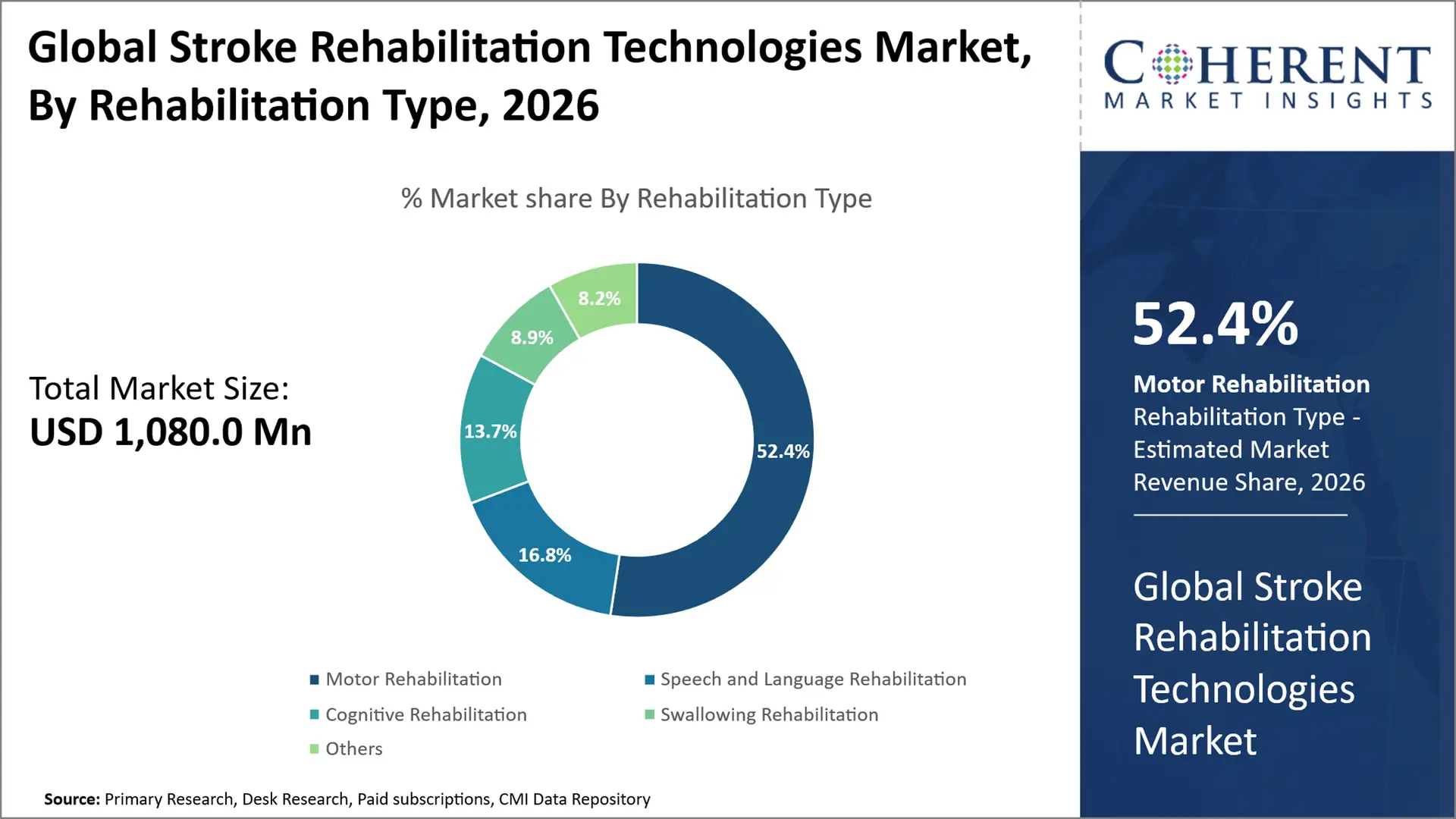
- Motor rehabilitation is projected to hold 52.4% of the global stroke rehabilitation technologies market share in 2026, making it dominant rehabilitation type segment, across Europe due to stronger guideline-driven adoption of intensive motor recovery. For instance, the European Stroke Organisation (ESO) issued its 2025 guideline on motor rehabilitation, specifically recommending additional repetitive upper-limb and walking practice and high-intensity gait training after stroke, strengthening the clinical basis for technology-assisted motor rehabilitation.
- Robotic rehabilitation systems are projected to hold 31.6% of the global Stroke rehabilitation technologies market share in 2026, making it dominant technology segment, with Asia Pacific positioned as a key growth market due to regulatory prioritization of medical robotics. For instance, in October 2025, China’s National Medical Products Administration (NMPA) announced that it would formulate specific classification guidelines for rehabilitation robots, accelerate standards for medical exoskeleton robots, and strengthen their post-market safety oversight, directly supporting the development and commercialization of rehabilitation robotics.
- Upper limb rehabilitation is projected to hold 35.7% of the global stroke rehabilitation technologies market share in 2026, making it dominant application segment, across North America due to established regulatory pathways for technology-assisted arm and hand recovery. For instance, in August 2021, U.S. FDA authorized the Vivistim System specifically for use during rehabilitation therapy to reduce upper-extremity motor deficits and improve motor function in chronic ischemic stroke patients with moderate-to-severe arm impairment, providing a direct regulatory precedent for advanced upper-limb rehabilitation technologies.
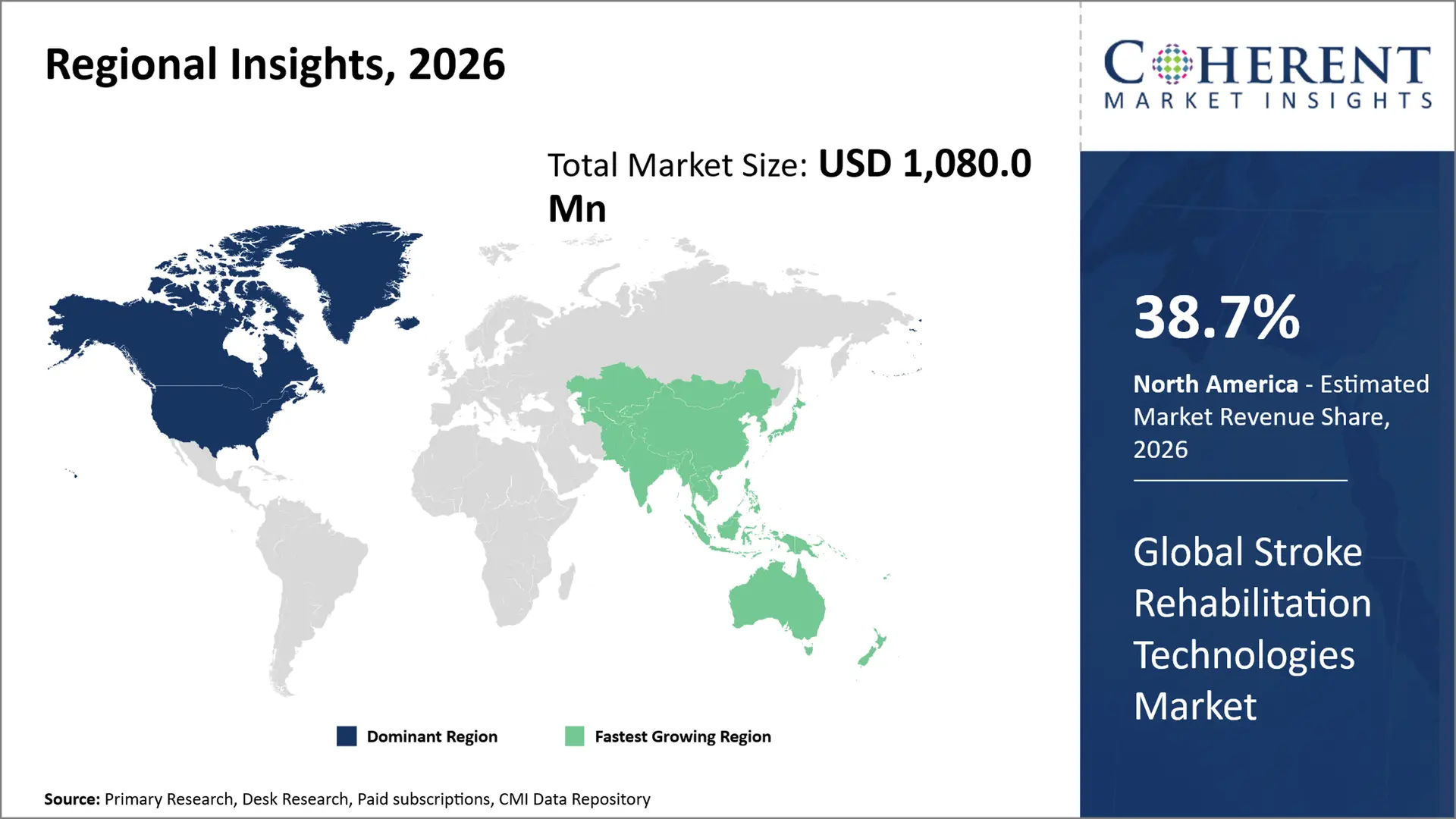
- North America market maintains dominance with an expected share of 38.7% in 2026, bolstered by strong government-backed research and clinical infrastructure for technology-enabled stroke recovery. For instance, the U.S. NIH StrokeNet funding program supports multicenter clinical trials focused specifically on stroke recovery, providing a government-backed framework for advancing and validating new rehabilitation interventions.
- Asia Pacific is expected to exhibit the fastest growth in the global stroke rehabilitation technologies market, registering an estimated CAGR of 10.9% during 2026–2033, driven by the region’s increasing integration of intelligent rehabilitation technologies into healthcare delivery. For instance, in December 2024, the Shanghai Municipal Government issued its Working Plan for the Development of Medical Artificial Intelligence (2025–2027), which calls for the deployment of exoskeleton rehabilitation robots and other intelligent rehabilitation equipment, real-time monitoring of patients’ recovery, and intelligent rehabilitation services across specialized rehabilitation hospitals and rehabilitation departments.
Segmental Insights
Why Do Motor Rehabilitation Devices Dominate the Global Stroke Rehabilitation Technologies Market?
Motor rehabilitation is projected to hold the market share of 52.4% in 2026, as movement and functional independence are highly valued within stroke recovery. The surging need is driven by the strong focus on structured and intensive rehabilitation programs as well as by targeting individual needs. For instance, in October 2026, UK Government updated its Modern Service Framework for Cardiovascular Disease, emphasizing the importance of stroke rehabilitation by the provision of more access to specialist stroke rehabilitation through integrated community stroke services to support continued investment in the functional recovery after stroke.
- Current Industry Events of 2026
- Market Size Estimation
- Regional Breakdown
- Competitive Landscape
- Customer Intelligence
- Segmental Analysis
- Pricing Analysis
- Key Market Drivers, Challenges & Future Trends
- Customized Insights Section
Why Do Robotic Rehabilitation Systems Represent the Largest Technology Segment in the Stroke Rehabilitation Technologies Market?
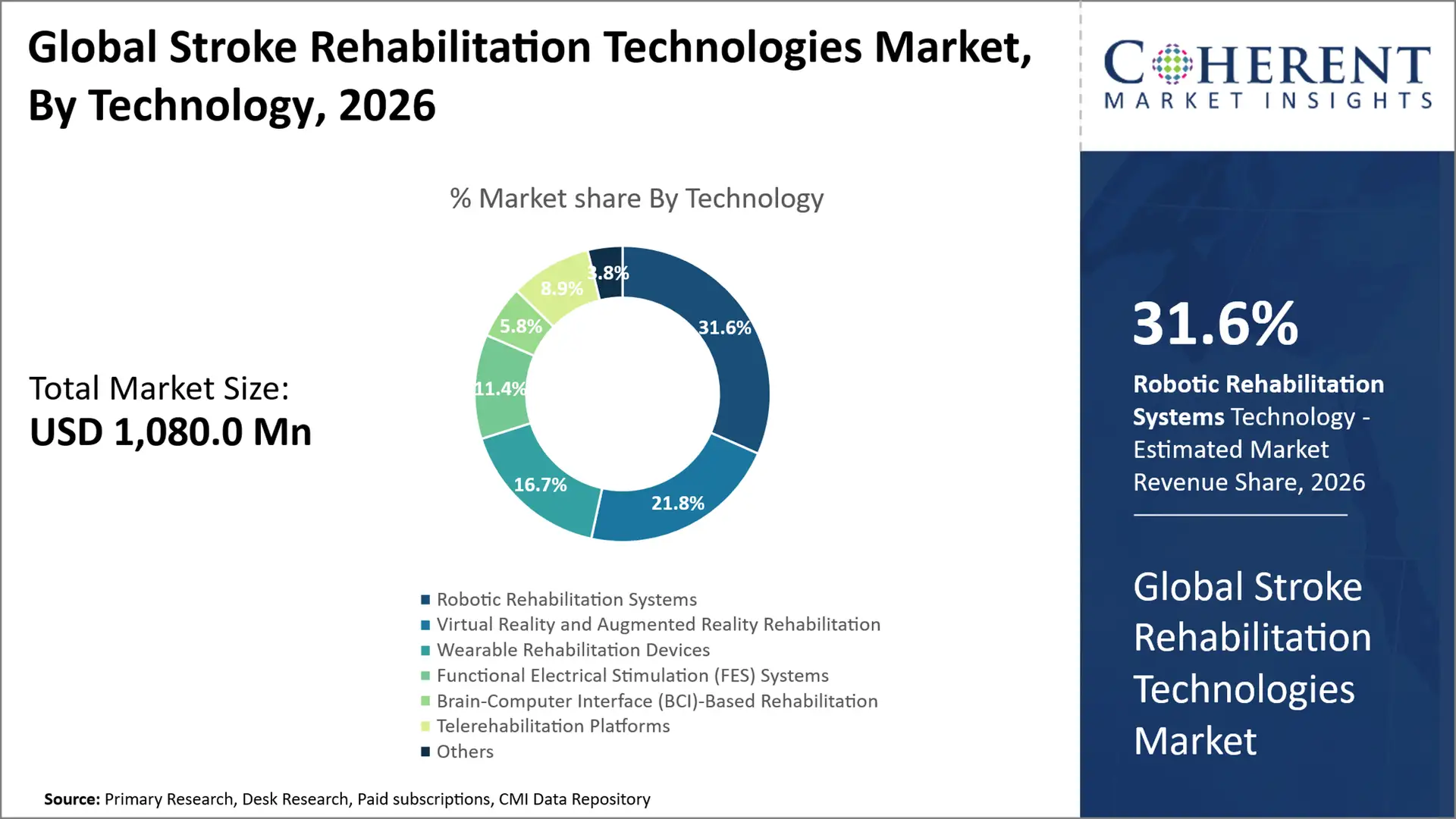
Robotic rehabilitation systems are projected to hold a market share of 31.6% in 2026, due to their ability to deliver variable, repetitive, and patient-specific movement therapies and ability to eliminate prolonged therapist assistance. Integration of sensors, adaptive assistance, and digital feedback is expected to help track the improvement of motor recovery. For instance, in September 2026, the U.S. Food and Drug Administration (FDA) approved the powered exoskeleton, Trexo Theo by Trexo Robotics, Inc. in the area of physical medicine, reinforcing the regulatory advancement of robotic technologies for rehabilitation applications.
Upper Limb Rehabilitation Segment Dominates the Global Stroke Rehabilitation Technologies Market
The upper limb rehabilitation segment is projected to hold a market share of 35.7% in 2026, driven by a large impact of arm and hand disability on post stroke independence and daily living activities. The segment is expected to benefit from the increasing adoption of technology-based therapy interventions providing repetitive task-specific training and quantifiable motor feedback. For instance, in May 2025, the U.S. Food and Drug Administration (FDA) approved Synapse Biomedical’s Synchrony System (K242704), an external functional neuromuscular stimulator designed to support hand function and active range of motion in patients with stroke-related hemiplegia, supporting the development of technology-assisted upper-limb rehabilitation solutions.
Current Events and their Impact
Current Events | Description and its Impact |
NIH Funds Human-Robot Learning Research for Stroke Neurorehabilitation (August 2026) |
|
NIH Supports Fully Immersive VR Gait Rehabilitation Research for Stroke Survivors (June 2026) |
|
UK Government Funds Wearable and Home-Based Rehabilitation Technologies (February 2025) |
|
Stroke Rehabilitation Technologies Market Dynamics
Market Drivers
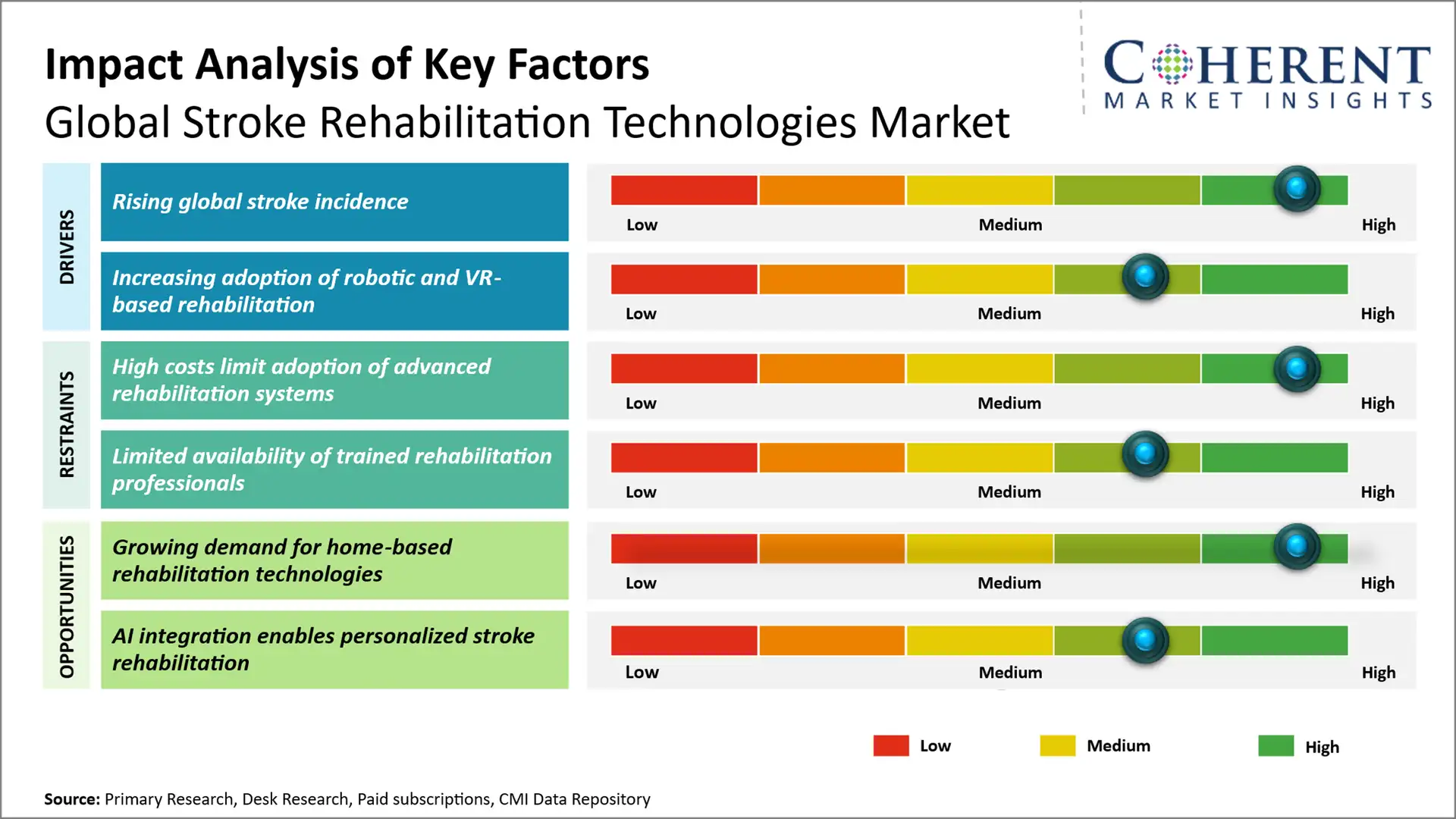
- Rising global stroke incidence: The increasing incidence of stroke is expanding the population requiring long-term rehabilitation and functional recovery. The growing number of stroke survivors is therefore strengthening demand for technology-enabled rehabilitation solutions that can support motor, speech, and cognitive recovery. For instance, according to the World Stroke Organization’s Global Stroke Fact Sheet 2025, nearly 12 million new strokes occurred globally in 2021, while the absolute number of incident strokes increased 70% between 1990 and 2021, highlighting the expanding need for rehabilitation services and technologies.
- Increasing adoption of robotic and VR-based rehabilitation: Robotic and VR-based rehabilitation is gaining traction as these technologies enable intensive, repetitive, and task-specific therapy while providing real-time performance feedback. Their ability to standardize therapy and support measurable motor recovery is encouraging wider use across stroke rehabilitation settings. For instance, in October 2025, a pilot randomized controlled trial published by the National Library of Medicine evaluated VR-based upper-limb robotic rehabilitation in patients with subacute stroke and found that changes in sensorimotor brain activity were accompanied by improvements in upper-limb motor function, supporting the growing clinical application of combined VR and robotic therapy.
- Increasing adoption of wearable and remote monitoring technologies: Wearable sensors and remote monitoring systems are increasingly being incorporated into stroke rehabilitation to track movement, therapy adherence, and functional recovery outside clinical settings. These technologies provide clinicians with continuous patient data, supporting timely assessment and more personalized rehabilitation programs. For instance, in March 2025, a randomized controlled trial in China published by the National Library of Medicine, evaluated an intelligent rehabilitation system using wearable devices for stroke patients and found significantly greater improvements in motor function and activities of daily living compared with conventional rehabilitation.
Emerging Trends
- AI-enabled personalized rehabilitation: AI is increasingly being integrated with rehabilitation platforms to analyze patient movement and therapy performance. These systems can adapt exercise intensity and treatment plans based on individual recovery progress.
- Home-based and remote stroke rehabilitation: Telerehabilitation, wearable sensors, and mobile platforms are enabling patients to continue structured therapy at home. Remote monitoring allows clinicians to track progress and provide therapy adjustments without frequent hospital visits.
- Integration of robotics with neurostimulation and wearables: Rehabilitation systems are increasingly combining robotic assistance, functional electrical stimulation, and wearable sensors to deliver coordinated, repetitive therapy. This integrated approach supports more precise movement training and real-time feedback.
Regional Insights
Why is North America a Strong Market for Stroke Rehabilitation Technologies?
North America leads the global stroke rehabilitation technologies market, accounting for an estimated 38.7% share in 2026, owing to the strong healthcare infrastructure, excellent medical research facilities and well-established reimbursement scenario. The higher penetration and adoption of robotics, neurostimulation and virtual reality-based rehabilitation systems will support the market growth. Additionally, government initiatives such as funding from National Institute of Neurological Disorders and Stroke (NINDS) and reimbursement support from Medicare trigger innovation as well as patient access to rehabilitation technologies.
For instance, NIH StrokeNet is a national initiative supported by National Institute of Neurological Disorders and Stroke (NINDS) that conducts clinical trials and research focused on stroke recovery and rehabilitation, including technology-enabled approaches. The network links 30 regional centers and more than 400 stroke hospitals across the U.S., supporting translation of rehabilitation innovations into clinical practice. Moreover, strong patent laws and healthcare distribution system ease the commercialization of novel solutions.
Why Does Asia Pacific Stroke Rehabilitation Technologies Market Exhibit High Growth?
Asia Pacific is expected to exhibit the fastest growth in the global stroke rehabilitation technologies market, registering an estimated CAGR of 10.9% during 2026–2033. The region is projected to account for 22.4% of the global market in 2026, attributed to the rising prevalence of stroke, growth of healthcare infrastructure, and rising healthcare spending. Strategic government policies directed towards digital health and universal healthcare coverage are likely to facilitate the availability of technology-enabled rehabilitation.
For instance, in October 2025, the National Medical Products Administration (NMPA) of China issued the Measures to Optimize Whole Life-Cycle Regulation in Support of the Innovative Development of High-End Medical Devices (2025 No. 63), which explicitly calls for classification guidance documents of rehabilitation robots and accelerated standards of medical exoskeleton robots. Furthermore, large patient base and rising accessibility of rehabilitation technologies, both in urban and semi-urban areas, are expected to propel the market growth.
Global Stroke Rehabilitation Technologies Market Outlook for Key Countries
Why is the U.S. Leading Innovation and Adoption in the Stroke Rehabilitation Technologies Market?
The U.S, is expected to be at the forefront of innovation and uptake due to strong concentration of robotic rehabilitation, neurostimulation, brain-computer interface (BCI), and wearable rehabilitation technologies in the region. Additionally, the market is supported by well-established rehabilitation centers and post-stroke rehabilitation programs. An existing ecosystem for the integration of digital & device-based technologies in clinical rehabilitation also indicates higher adoption.
Is Japan a Favorable Market for Stroke Rehabilitation Technologies Market?
Japan is one of the largest markets for stroke rehabilitation technologies owing to its aging population, and large unmet need for post stroke function. Patient engagement with robotic rehabilitation and exoskeletons, wearable devices, and neurostimulation technologies in Japan has been shown to be very promising and their well-developed health care system and advanced rehab ecosystem will probably facilitate continuous adoption.
Is China Emerging as a Key Growth Hub for the Stroke Rehabilitation Technologies Market?
China is gradually emerging as the newest growth driver for the stroke rehabilitation technologies market acknowledged by the improving healthcare infrastructure and growing adoption of robotic rehabilitation, digital therapy platforms and wearable devices. Also, the large patient pool of stroke and growing emphasis on technology enabled rehabilitation are expected to offer major growth opportunities for the market.
Why Does Germany Top the European Stroke Rehabilitation Technologies Market?
Germany leads the European stroke rehabilitation technologies market owing to the high penetration of robotic and technology-enabled therapies as well as the dynamic rehabilitation infrastructure it offers for stroke patients. Germany has a large number of specialized rehabilitation centers as well as an advanced medical device sector to provide innovative stroke recovery therapies.
Is Stroke Rehabilitation Technologies Market Developing in UK?
The U.K. represents an emerging stroke rehabilitation technologies market driven by the adoption of digital rehabilitation, wearable devices, robotic therapy and remote rehabilitation technologies. Furthermore, the increasing presence of the existing NHS rehabilitation network and the focus on technology-based stroke recovery at the community level, are expected to propel the market further.
Technology Adoption by Rehabilitation Setting, 2026
Rehabilitation Setting | Key Technologies Used | Adoption Trend | Key Opportunity |
Hospitals & Rehabilitation Centers | Robotics, FES, VR/AR, BCI | High | Advanced intensive rehabilitation |
Outpatient Rehabilitation Clinics | Robotics, VR/AR, wearables, FES | Increasing | Personalized therapy and remote monitoring |
Homecare Settings | Telerehabilitation, wearables, mobile apps, VR | Rapidly increasing | Continuous and accessible rehabilitation |
Research & Academic Institutions | BCI, robotics, neurostimulation, AI | Emerging | Clinical validation and technology development |
How is the growing demand for home-based rehabilitation technologies creating new growth opportunities in the stroke rehabilitation technologies market?
As the demand for accessible, continuous stroke care increases, there are new opportunities for both home-based rehabilitation technologies and devices including telerehabilitation and wearable-enabled therapy. These devices and applications have the potential to remove barriers to travel and access, and allow for frequent, personalized care in the home. Digital health platforms and remote monitoring capabilities are also increasing the ability of therapists to monitor and alter patient care. For instance, in August 2026, a randomized trial published by the National Library of Medicine, demonstrated that at-home BCI rehabilitation significantly improved upper-extremity function in chronic stroke survivors over standard home exercises, and supported the potential of technology-enabled home rehabilitation.
Market Players, Key Development, and Competitive Landscape
Key Developments
- In October 2026, NeuWire Medical received FDA Investigational Device Exemption (IDE) approval for its STROKE-REWIRE pivotal study evaluating the ReWire Vagus Nerve Stimulation System in patients with chronic ischemic stroke and upper-limb dysfunction. The wireless, battery-free implant uses closed-loop stimulation paired with rehabilitation movements to support arm and hand function recovery
- In February 2026, Lifeward Ltd. announced an agreement to acquire powered upper-body exoskeleton technology from Skelable Ltd., incorporating AI capabilities for stroke survivors. The technology is designed to support upper-limb movement, muscle re-education, and improved range of motion. Lifeward expects commercialization within approximately 18–24 months, subject to development and regulatory approvals.
Competitive Landscape
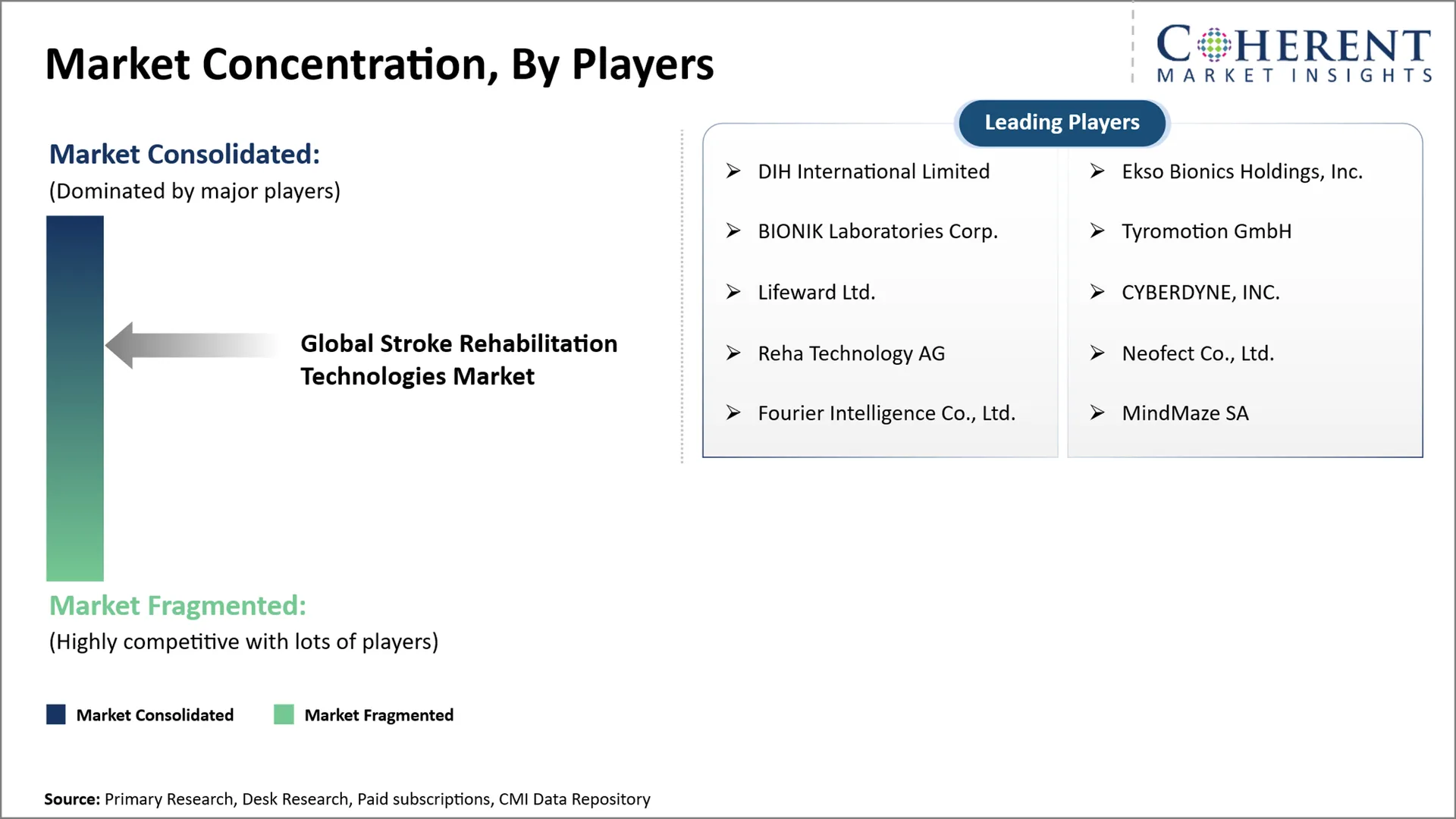
The global stroke rehabilitation technologies market is moderately competitive, with market dynamics shaped by advancements in robotic rehabilitation, wearable devices, virtual and augmented reality, neurostimulation, and brain-computer interface technologies. Market participants are increasingly focusing on improving rehabilitation precision, expanding clinical applications, and enabling personalized and home-based stroke recovery. Key focus areas include:
- Development of advanced robotic and exoskeleton-based rehabilitation systems
- Integration of AI, sensors, and adaptive feedback for personalized therapy
- Advancement of VR/AR-based and gamified rehabilitation platforms
- Development of wearable, portable, and home-based rehabilitation technologies
- Enhancement of neurostimulation and brain-computer interface technologies
- Expansion of clinical validation and evidence-based rehabilitation protocols
Market Report Scope
Stroke Rehabilitation Technologies Market Report Coverage | |||
Report Coverage | Details | ||
Base Year | 2025 | Market Size in 2026: | USD 1,080.0 Mn |
Historical Data For: | 2020 To 2024 | Forecast Period: | 2026 To 2033 |
Forecast Period 2026 To 2033 CAGR: | 10.7% | 2033 Value Projection: | USD 2,200.2 Mn |
Geographies covered: |
| ||
Segments covered: |
| ||
Companies covered: | DIH International Limited, Ekso Bionics Holdings, Inc., BIONIK Laboratories Corp., Tyromotion GmbH, Lifeward Ltd., CYBERDYNE, INC., Reha Technology AG, Neofect Co., Ltd., Fourier Intelligence Co., Ltd., MindMaze SA | ||
Growth Drivers: |
| ||
Restraints & Challenges: |
| ||
Analyst Opinion (Expert Opinion)
- In the coming years, global stroke rehabilitation technologies market is expected to shift toward technology-enabled, personalized, and home-based recovery, with robotics, AI, wearables, VR, and neurostimulation increasingly working together rather than as standalone solutions. The market is likely to move from device-centric rehabilitation toward continuous, data-driven therapy that adapts to individual patient progress.
- The maximum opportunities are foreseen within robotic rehabilitation systems for upper-limb rehabilitation in China, where demand for technology-assisted stroke recovery can support greater deployment of advanced rehabilitation solutions. Within this opportunity, affordable robotic and wearable systems designed for use beyond specialized rehabilitation centers are likely to have the greatest commercial potential.
- In order to gain a competitive advantage market players should focus on clinically validated, interoperable, and cost-efficient platforms that combine multiple rehabilitation capabilities rather than offering isolated technologies. Building partnerships with hospitals and rehabilitation networks, developing home-use versions, and using AI to personalize therapy and demonstrate measurable patient outcomes can provide a competitive advantage.
Speak to the analyst
Want personalized insights?
Take the findings above to one of our principal consultants, or have the report rebuilt around the segments, geographies and competitors you actually track.
Market Segmentation
- Rehabilitation Type Insights (Revenue, USD Mn, 2021 - 2033)
- Motor Rehabilitation
- Speech and Language Rehabilitation
- Cognitive Rehabilitation
- Swallowing Rehabilitation
- Others
- Technology Insights (Revenue, USD Mn, 2021 - 2033)
- Robotic Rehabilitation Systems
- Virtual Reality and Augmented Reality Rehabilitation
- Wearable Rehabilitation Devices
- Functional Electrical Stimulation (FES) Systems
- Brain-Computer Interface (BCI)-Based Rehabilitation
- Telerehabilitation Platforms
- Others
- Application Insights (Revenue, USD Mn, 2021 - 2033)
- Upper Limb Rehabilitation
- Lower Limb Rehabilitation
- Gait and Balance Training
- Speech and Communication Rehabilitation
- Others
- End User Insights (Revenue, USD Mn, 2021 - 2033)
- Hospitals and Rehabilitation Centers
- Clinics and Outpatient Rehabilitation Facilities
- Homecare Settings
- Research and Academic Institutions
- Others
- Regional Insights (Revenue, USD Mn, 2021 - 2033)
- North America
- U.S.
- Canada
- Latin America
- Brazil
- Argentina
- Mexico
- Rest of Latin America
- Europe
- Germany
- U.K.
- Spain
- France
- Italy
- Russia
- Rest of Europe
- Asia Pacific
- China
- India
- Japan
- Australia
- South Korea
- ASEAN
- Rest of Asia Pacific
- Middle East
- GCC Countries
- Israel
- Rest of Middle East
- Africa
- South Africa
- North Africa
- Central Africa
- North America
- Key Players Insights
- DIH International Limited
- Ekso Bionics Holdings, Inc.
- BIONIK Laboratories Corp.
- Tyromotion GmbH
- Lifeward Ltd.
- CYBERDYNE, INC.
- Reha Technology AG
- Neofect Co., Ltd.
- Fourier Intelligence Co., Ltd.
- MindMaze SA
Sources
Primary Research Interviews
- Stroke neurologists and neurorehabilitation specialists involved in post-stroke recovery
- Rehabilitation physicians, physiotherapists, and occupational therapists using technology-assisted stroke rehabilitation
- Clinical researchers specializing in stroke recovery, neuroplasticity, and motor rehabilitation
- Specialists in rehabilitation robotics, wearable devices, neurostimulation, and brain-computer interfaces
- Hospital and rehabilitation-center decision-makers responsible for adopting rehabilitation technologies
Stakeholders
- Stroke rehabilitation technology developers and medical-device manufacturers
- Robotic rehabilitation and exoskeleton system providers
- VR/AR, wearable, and sensor-based rehabilitation technology companies
- Neurostimulation and brain-computer interface technology developers
- Hospitals, rehabilitation centers, outpatient clinics, and home-care providers
- End-use Sectors
- Hospitals & Rehabilitation Centers
- Outpatient Rehabilitation Clinics
- Home Healthcare & Home Rehabilitation
- Research & Academic Institutions
- Long-Term Care & Skilled Nursing Facilities
- Other Healthcare Facilities
- Regulatory & Health Bodies
- U.S. Food and Drug Administration (FDA) – rehabilitation devices, BCI systems, neurostimulation devices, and medical-device clearances
- European Medicines Agency (EMA) – medical technologies and applicable rehabilitation-related products
- Medicines and Healthcare products Regulatory Agency (MHRA), UK – medical devices and rehabilitation technologies
- Pharmaceuticals and Medical Devices Agency (PMDA), Japan – medical devices and rehabilitation technologies
- National Medical Products Administration (NMPA), China – medical devices and rehabilitation equipment
- Central Drugs Standard Control Organisation (CDSCO), India – medical devices and rehabilitation technologies
Databases
- ClinicalTrials.gov – clinical trials involving stroke rehabilitation, robotics, neurostimulation, VR, BCI, and telerehabilitation
- FDA 510(k) Premarket Notification Database – cleared rehabilitation and assistive devices
- FDA De Novo Database – novel rehabilitation and neurotechnology devices
- WHO International Clinical Trials Registry Platform (ICTRP) – global clinical-trial information
- EU Clinical Trials Information System (CTIS) – clinical research involving rehabilitation and medical technologies
Journals
- Neurorehabilitation and Neural Repair
- Journal of NeuroEngineering and Rehabilitation
- Archives of Physical Medicine and Rehabilitation
- Clinical Rehabilitation
- Topics in Stroke Rehabilitation
- Journal of Rehabilitation Medicine
- Frontiers in Neurology
- Journal of Neurologic Physical Therapy
- Disability and Rehabilitation: Assistive Technology
Associations
- American Stroke Association (ASA)
- World Stroke Organization (WSO)
- American Congress of Rehabilitation Medicine (ACRM)
- American Physical Therapy Association (APTA)
- American Occupational Therapy Association (AOTA)
- European Stroke Organisation (ESO)
- European Society of Physical and Rehabilitation Medicine (ESPRM)
- International Society of Physical and Rehabilitation Medicine (ISPRM)
Public Domain Sources
- U.S. Food and Drug Administration (FDA) – rehabilitation-device clearances and medical-device regulatory information
- National Institutes of Health (NIH) – stroke recovery, neurorehabilitation, and rehabilitation-technology research NICHD
- National Institute of Neurological Disorders and Stroke (NINDS) – post-stroke rehabilitation and technology research NINDS
- National Center for Biotechnology Information (NCBI) – stroke rehabilitation and neurorehabilitation scientific literature
- World Health Organization (WHO) – stroke, disability, rehabilitation, and health-system data
- ClinicalTrials.gov – publicly accessible clinical-trial records for stroke rehabilitation technologies
Proprietary Elements
- CMI Data Analytics Tool, Proprietary CMI Existing Repository of information for last 10 years.
Get access to 250+ pages report
Every segment, forecast, competitor profile and data table behind the analysis above — available for instant download.
- ESOMAR Member
- ISO 9001:2015 Certified
- D-U-N-S Registered
- GDPR & CCPA Compliant
Frequently Asked Questions
The global stroke rehabilitation technologies market is estimated to be valued at USD 1,080.0 Mn in 2026 and is expected to reach USD 2,200.2 Mn by 2033.
Motor rehabilitation dominates due to its broad application in restoring limb movement, gait, balance, and functional independence after stroke.
Stroke rehabilitation technologies are technology-enabled tools and systems that support functional recovery and independence in stroke survivors through personalized rehabilitation interventions.
The CAGR of global stroke rehabilitation technologies market is projected to be 10.7% from 2026 to 2033.
Rising global stroke incidence, and increasing adoption of robotic and VR-based rehabilitation are the major factors driving the growth of the global stroke rehabilitation technologies market.
High costs limit adoption of advanced rehabilitation systems, and limited availability of trained rehabilitation professionals are the major factors hampering the growth of the global stroke rehabilitation technologies market.
In terms of application, upper limb rehabilitation is estimated to dominate the market revenue share in 2026.