

Robotic Rehabilitation and Assistive Technologies Market Size Analysis - 2026 To 2033
The robotic rehabilitation and assistive technologies market is anticipated to grow at a CAGR of 11.9% with USD 3.27 Bn in 2026 and is expected to reach USD 7.15 Bn in 2033. The market is expected to grow due to the rising elderly population (According to the World Health Organization (WHO), the global population aged 60 years and older is projected to increase from 1.1 Bn in 2023 to 1.4 Bn by 2030) and improved survival rates from conditions such as stroke. The increasing demand for physical therapy services is also supporting market growth.
Key Takeaways
- Rehabilitation segment is expected to account the largest share of 45.0% in 2026, rehabilitation robots dominate due to the rising number of stroke cases, neurological disorders, spinal cord injuries, and aging-related mobility issues. Hospitals and rehabilitation centers are highly adopting robotic systems including exoskeletons, robotic arms, gait training devices, etc., to improve patient recovery and reduce dependency on manual therapy. According to the State of Robotics 2026 report published by the Robotics Center of Silicon Valley (SVRC), the global robotics market is projected to reach USD38 Bn in 2026, representing a 34% year-over-year increase.
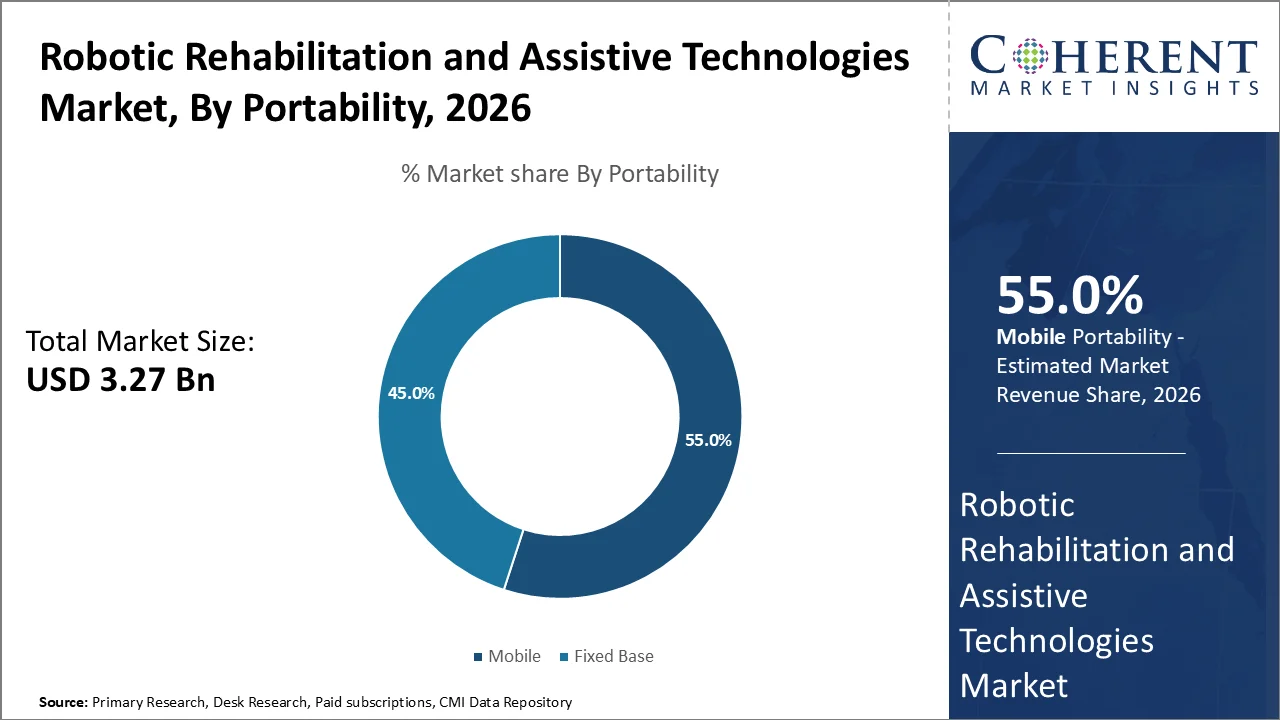
- Mobile segment will dominate with 55.0% in 2026, mobile robotic systems are gaining higher adoption because they offer flexibility, easy movement between therapy areas, and better suitability for hospitals, clinics, and home-based rehabilitation. Portable robotic solutions also support remote as well as personalized rehabilitation programs. According to the World Health Organization (WHO), an estimated 3.5 Bn people globally will require one or more assistive technologies by 2050
- Stroke segment will dominate with 35.0% in 2026, stroke rehabilitation is the leading application due to the high global burden of stroke and the increasing need for long-term physical and motor recovery solutions. According to the Centers for Disease Control and Prevention (CDC), stroke was the underlying cause of 162,639 deaths in the United States in 2023, compared with 165,393 deaths in 2022.
- North America is expected to acquire the dominant share of 35.00% in 2026, due to high adoption of rehabilitation technologies, strong presence of medical robotics companies, favorable reimbursement policies, along with increasing demand for advanced neurological as well as orthopedic rehabilitation solutions. According to International Federation of Robotics (IFR), the United States has the largest number of service and medical robot manufacturers worldwide, with 199 companies headquartered in the country, highlighting its leading position in robotics innovation and healthcare automation.
Segmental Insights
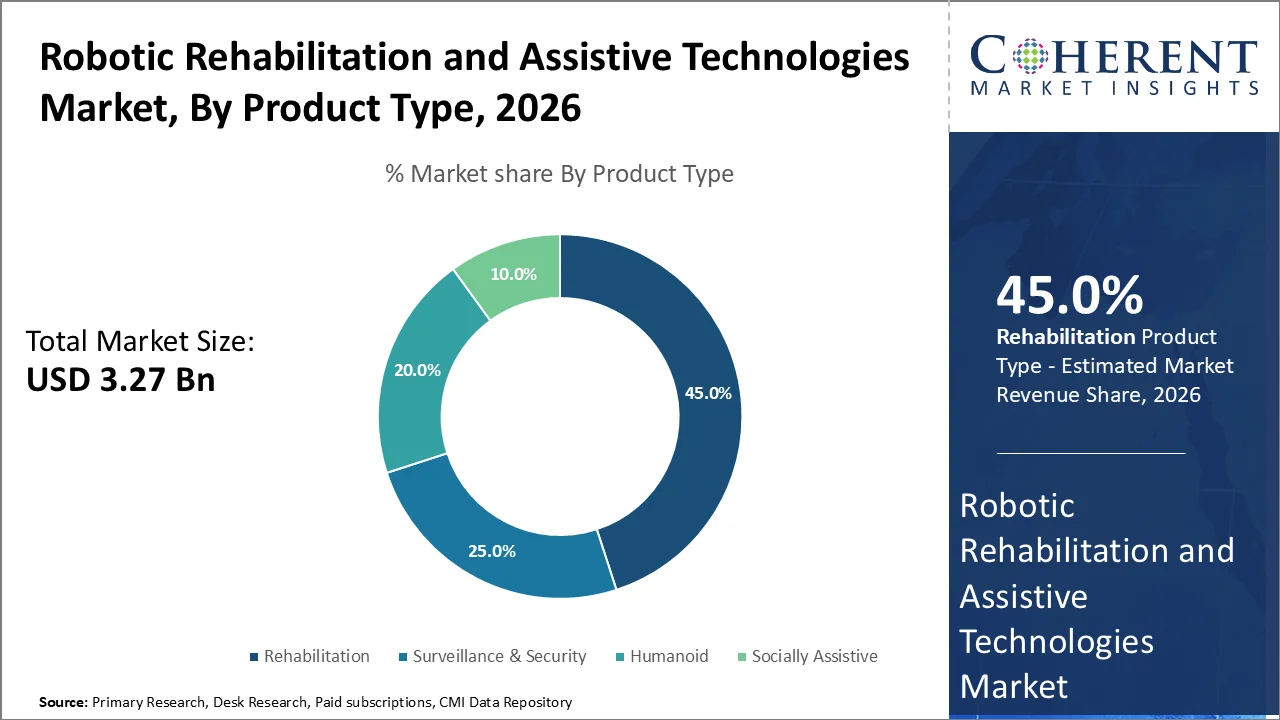
Why is Rehabilitation Segment Acquiring the Largest Market Share?
Rehabilitation segment is projected to account for the largest share of procedure in 2026, representing approximately 45.0% of the total volume. Owing to the high prevalence of neurological disorders, musculoskeletal injuries, as well as age-related disabilities across the globe. The rising institutional push from healthcare systems to integrate advanced robotic technologies into standard therapeutic protocols is further propelling the market. According to the World Health Organization (WHO), approximately 1.71 billion people worldwide live with musculoskeletal conditions.
The critical unmet need to improve patient recovery outcomes while simultaneously lowering the burden on healthcare professionals as well as caregivers is augmenting the market.
The World Health Organization (WHO) has identified rehabilitation as a critical health strategy, noting that over 2.4 billion people globally live with a health condition that may benefit from rehabilitation, and this vast population base directly fuels the sustained demand for robotic rehabilitation devices such as exoskeletons, robotic-assisted gait training systems, upper and lower limb rehabilitation robots, and end-effector-based therapy platforms.
- Current Industry Events of 2026
- Market Size Estimation
- Regional Breakdown
- Competitive Landscape
- Customer Intelligence
- Segmental Analysis
- Pricing Analysis
- Key Market Drivers, Challenges & Future Trends
- Customized Insights Section
Mobile Segment holds the Largest Market Share
Based on portability, mobile segments dominates the market, accounting for a significant 55.0% share in 2026. Owing to its inherent capability to deliver continuous, patient-centric rehabilitation support more than the controlled environments of clinical settings.
The escalating demand for rehabilitation solutions that accompany patients throughout their daily living activities has fundamentally made mobile robotic systems as the dominant force.
Mobile robotic rehabilitation devices are made to integrate easily into home environments, community spaces, as well as ambulatory care setups, which majorly expands the addressable patient population that can benefit from robotic-assisted rehabilitation interventions.
Stroke Segment holds the Largest Market Share
Based on application, stroke segments dominates the market, accounting for a significant 35.0% share in 2026. Owing to the global burden of cerebrovascular disease, the complex and extended nature of post-stroke rehabilitation, as well as the well-established clinical evidence supporting robotic-assisted therapy in restoring motor function among stroke survivors. According to the Centers for Disease Control and Prevention (CDC), stroke was responsible for 166,852 deaths in the United States, with a mortality rate of 49.1 deaths per 100,000 population, ranking as the fourth leading cause of death.
The World Health Organization (WHO) recognizes stroke as one of the leading causes of long-term adult disability worldwide, with survivors frequently experiencing upper and lower limb motor impairments, spasticity, as well as gait abnormalities that demand intensive, repetitive rehabilitation interventions precisely the kind that robotic systems are excuisitely designed to deliver at scale and consistency.
The sheer volume of individuals requiring long-term neurological rehabilitation creates a sustained and deeply rooted demand for robotic rehabilitation solutions that far exceeds what any other application segment currently generates.
Market Drivers
AI-Driven Adaptive Rehabilitation Systems is transforming the Robotic Rehabilitation and Assistive Technologies Industry
One of the most significant current trends is the integration of machine learning algorithms into rehabilitation robots. Unlike conventional therapy robots that followed pre-programmed motion trajectories, modern systems continuously analyze patient biomechanics, fatigue levels, muscle activation patterns, as well as neurological responses in real time. These adaptive systems advance resistance levels, movement patterns, as well as therapy intensity dynamically without requiring manual clinician intervention.
Companies like Ekso Bionics, ReWalk Robotics, etc., have advanced their exoskeleton platforms to incorporate AI-based gait analysis engines that personalize therapy sessions based on cumulative patient performance data. This makes a feedback loop where the robot becomes progressively more attuned to individual patient recovery trajectories.
Current Events and Their Impact on the Robotic Rehabilitation and Assistive Technologies Market
Current Event | Description and its Impact |
Expansion of Regulatory Approvals for Medical Rehabilitation Robots (2025–2026) |
|
Government Support for Stroke Rehabilitation and Disability Care Programs |
|
Robotic Rehabilitation and Assistive Technologies Market Trends
- The most popular trend building the market is the deep integration of artificial intelligence and machine learning into rehabilitation robotics platforms. Modern systems are no longer static, protocol-driven machines they are adaptive therapeutic partners capable of analyzing real-time biomechanical data, neurophysiological signals, and patient performance metrics to dynamically adjust therapy parameters. In February 2026, Lifeward Ltd. acquired AI-enabled robotic upper-body orthotic technology from Skelable Ltd. through a milestone-based agreement valued at USD480K in equity, strengthening its portfolio of assistive as well as rehabilitation technologies for people with mobility impairments.
- The change from rigid, bulky exoskeletal frameworks to lightweight, soft robotic architectures represents a watershed moment in assistive technology design. Soft exoskeletons constructed from compliant textile-based actuators, pneumatic artificial muscles, as well as flexible electronics are making wearable rehabilitation devices more comfortable, accessible, and suitable for community-based use beyond the clinic.
- Companies including ReWalk Robotics, Ekso Bionics, etc., along with emerging startups are racing to commercialize devices that patients can wear during activities of daily living, enabling continuous, real-world motor learning rather than isolated therapy sessions.
- One of the prominent trends is the integration of brain-computer interfaces with robotic rehabilitation systems. BCI-driven rehabilitation where patients use neural signals to initiate as well as control robotic movement of paralyzed limbs is demonstrating remarkable efficacy in promoting neuroplasticity and motor recovery in stroke and spinal cord injury patients. 2025: EEG-based wearable BCIs are advancing toward real-world device control, while implantable BCIs are emerging as a transformative technology for restoring communication and mobility in people with neurological disabilities.
Regional Insights
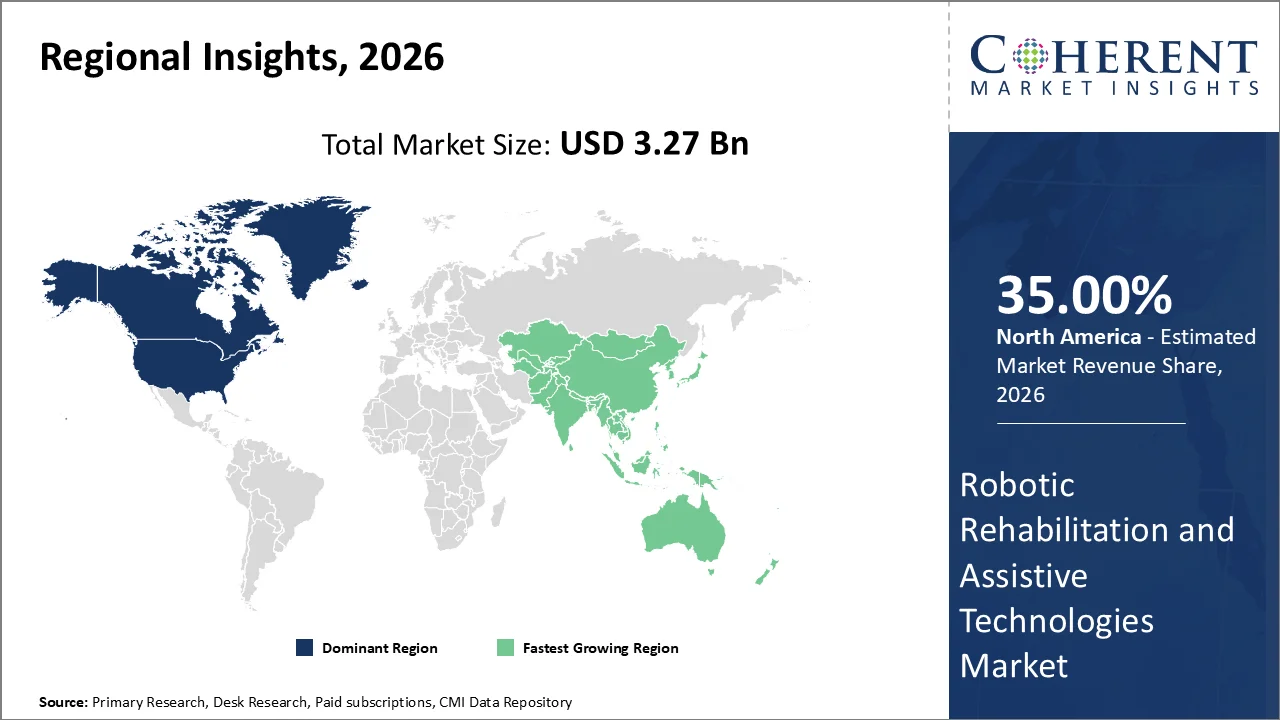
North America dominates owing to robust government funding mechanisms
North America account 35.00% market share in 2026, owing to its well-established healthcare infrastructure, robust government funding mechanisms, as well as a rapidly aging population that continues to drive unprecedented demand for robotic rehabilitation and assistive technologies. According to the U.S. Census Bureau, median age increased in 85% of the nation’s 387 metropolitan areas between 2020 and 2024, with nearly half of metro areas reporting a median age above the national median of 39.1 years, reflecting the continued ageing of the U.S. population.
The United States, in particular, has positioned itself as a global leader in rehabilitation robotics, supported by federal initiatives including the National Institute on Disability, Independent Living, and Rehabilitation Research (NIDILRR), which consistently allocates funding toward developing as well as deploying advanced assistive technologies across rehabilitation centers, veterans' hospitals, as well as long-term care facilities.
The Veterans Affairs (VA) healthcare system has been instrumental in expanding access to robotic exoskeletons and assistive devices for wounded veterans, with the VA actively integrating devices such as powered exoskeletons into physical therapy programs across its nationwide network of medical centers. Furthermore, the Americans with Disabilities Act (ADA) compliance requirements made a sustained institutional demand for assistive technologies across public and private healthcare settings.
Asia Pacific Robotic Rehabilitation and Assistive Technologies Market Trends
The Asia Pacific region is poised to be the fastest-growing region through 2026-2033, expanding at a CAGR of approximately 7.2%. Driven by government-led modernization initiatives, as well as a highly maturing domestic manufacturing base across countries such as Japan, China, South Korea, Australia, etc.
Japan, confronting one of the most acute aging crises in world, has institutionalized robotic assistive technologies through national policy frameworks, with the Ministry of Economy, Trade and Industry (METI) designating nursing care robots as a strategic priority sector as well as actively subsidizing their adoption across certified care facilities under the Robot Introduction Demonstration Project. and Ory Laboratory collaborated to promote disability inclusion through avatar robot technologies, showing the growing application of robotics in enabling remote participation as well as accessibility for individuals with disabilities in Japan.
The National Health Commission of China has incorporated rehabilitation robotics into its Healthy China 2030 blueprint, pushing rehabilitation services into county-level hospitals and community health centers, thereby dramatically expanding the addressable user base beyond metropolitan centers. Ministry of Science and ICT of South Korea has invested heavily in exoskeleton research clusters under its Bio-Health Innovation Strategy.
In May 2026, NHG Health (Singapore) and Fourier Rehab (China) entered into a five-year Memorandum of Understanding (MOU) to advance rehabilitation and robotic technologies, strengthening collaboration in the Asia-Pacific region. The agreement was announced during the Global Rehabilitation & Assistive Technology Summit 2026 in Shanghai, China.
Robust Federal Funding Mechanisms is Accelerating the Robotic Rehabilitation and Assistive Technologies Market Demand in U.S.
The U.S. contributes the highest share in the robotic rehabilitation and assistive technologies market in North America, owing to its deeply entrenched healthcare infrastructure, robust federal funding mechanisms, and an exceptionally high prevalence of neurological and musculoskeletal disorders that necessitate advanced rehabilitative interventions.
The United States Veterans Affairs (VA) system has been a pioneering force in deploying robotic assistive technologies, particularly for veterans returning with combat-related limb loss and spinal cord injuries. According to the U.S. Department of Veterans Affairs, there are approximately 40,000 veterans living with limb loss in the country, and the VA actively funds procurement and clinical testing of exoskeletal and prosthetic robotic systems across its rehabilitation centers nationwide.
Furthermore, the National Institutes of Health (NIH) consistently allocates significant research grants toward neurotechnology and robotic rehabilitation through programs such as the National Institute of Neurological Disorders and Stroke (NINDS), accelerating translational research into clinical deployment.
China Robotic Rehabilitation and Assistive Technologies Market Trends
China contributes the highest share in the market in Asia Pacific owing to its robust national policy frameworks, advanced manufacturing ecosystem, and rapidly aging population that collectively drive unprecedented demand for robotic rehabilitation and assistive technologies.
China's National Development and Reform Commission has actively prioritized intelligent rehabilitation equipment under successive Five-Year Plans, with the 14th Five-Year Plan (2021–2025) explicitly identifying rehabilitation robotics as a strategic emerging industry requiring accelerated domestic development.
The country's aging demographic crisis is a fundamental demand driver, as the National Bureau of Statistics of China reported that by 2023, individuals aged 60 and above constituted over 280 million people, representing approximately 19.8% of the total population, a figure projected to expand substantially in coming decades.
Furthermore, the China Disabled Persons' Federation estimates that approximately 85 million people in China live with some form of disability, creating an enormous addressable user base for assistive robotic technologies.
Who are the Major Companies in Robotic Rehabilitation and Assistive Technologies Industry
Some of the major key players in robotic rehabilitation and assistive technologies market include, Mazor Robotics Ltd., Intuitive Surgical Inc., Accuray, Inc., Health Robotics S.R.L., Kinova, AlterG inc., Ekso Bionics, and Interactive Motion Technologies, Bioxtreme Robotics Rehabilitation, Instead Technologies.
Key News
- In July 2026, Rymo Technologies, based in Navi Mumbai, Maharashtra, India, has developed three robotics-based mobility support solutions aimed at improving rehabilitation and mobility assistance for Indian patients, reflecting the growing adoption of assistive robotics technologies in emerging healthcare markets.
- In July 2026, Wandercraft, a global robotics company specializing in AI-enabled self-balancing mobility solutions, received regulatory clearance from Ecuador’s health authority (ARCSA) for the use of Atalante X, an advanced rehabilitation exoskeleton, in individuals with spinal cord injuries (C4–L5), stroke-related hemiplegia, and multiple sclerosis. The approval represents a significant step toward expanding access to robotic rehabilitation technologies across Latin America.
Market Report Scope
Robotic Rehabilitation and Assistive Technologies Market Report Coverage
| Report Coverage | Details | ||
|---|---|---|---|
| Base Year: | 2025 | Market Size in 2026: | USD 3.27 Bn |
| Historical Data for: | 2020 To 2024 | Forecast Period: | 2026 To 2033 |
| Forecast Period 2026 to 2033 CAGR: | 11.9% | 2033 Value Projection: | USD 7.15 Bn |
| Geographies covered: |
| ||
| Segments covered: |
| ||
| Companies covered: | Mazor Robotics Ltd., Intuitive Surgical Inc., Accuray, Inc., Health Robotics S.R.L., Kinova, AlterG inc., Ekso Bionics, and Interactive Motion Technologies, Bioxtreme Robotics Rehabilitation, Instead Technologies | ||
| Growth Drivers: |
| ||
| Restraints & Challenges: |
| ||
Analyst Opinion
- The robotic rehabilitation and assistive technologies market is experiencing a transformative phase, driven by the convergence of advanced robotics, artificial intelligence, and healthcare innovation.
- Rising prevalence of neurological disorders, musculoskeletal injuries, and age-related disabilities is substantially accelerating the adoption of these technologies across clinical and home-based rehabilitation settings. According to the World Health Organization (WHO), neurological conditions are the leading cause of overall disease burden and disability worldwide, affecting more than 1 in 3 people globally.
- The growing geriatric population worldwide is creating unprecedented demand for assistive robotic solutions that can enhance mobility, independence, and overall quality of life for elderly individuals. According to demographic estimates, Monaco has the oldest population in the world, with approximately 36.2% of its population aged 65 years and older, highlighting the increasing demand for age-related healthcare, assistive technologies, and long-term care solutions.
- Technological advancements in exoskeletons, robotic prosthetics, and smart rehabilitation devices are significantly expanding therapeutic possibilities for patients recovering from strokes, spinal cord injuries, and traumatic brain injuries.
- Integration of machine learning algorithms and real-time biofeedback mechanisms is enabling highly personalized rehabilitation protocols, thereby improving patient outcomes considerably.
Speak to the analyst
Want personalized insights?
Take the findings above to one of our principal consultants, or have the report rebuilt around the segments, geographies and competitors you actually track.
Market Segmentation
- By Product Type (Revenue, USD Bn, 2021-2033)
- Surveillance & Security
- Humanoid
- Rehabilitation
- Socially Assistive
- By Portability (Revenue, USD Bn, 2021-2033)
- Fixed base
- Mobile
- By Application (Revenue, USD Bn, 2021-2033)
- Stroke
- Orthopedics
- Cognitive & Motor Skills
- Sports
- Others
- By Region (Revenue, USD Bn, 2021-2033)
- North America
- U.S.
- Canada
- Latin America
- Brazil
- Mexico
- Argentina
- Rest of Latin America
- Europe
- Germany
- U.K.
- France
- Italy
- Spain
- Russia
- Rest of Europe
- Asia Pacific
- China
- India
- Japan
- Australia
- South Korea
- ASEAN
- Rest of Asia Pacific
- Middle East
- GCC
- Israel
- Rest of Middle East
- Africa
- South Africa
- Central Africa
- North Africa
- North America
Sources
Primary Research Interviews
- Robotic Rehabilitation Device Manufacturers
- Physical & Occupational Therapists
- Rehabilitation Center Directors
- Healthcare Technology Procurement Specialists
- Others
Databases
- GlobalData Healthcare Database
- IQVIA Medical Device Database
- Clarivate Analytics
- WHO Global Health Observatory
- Others
Magazines
- Medical Device & Diagnostic Industry (MD+DI)
- Robotics Business Review
- Rehabilitation Management Magazine
- IEEE Spectrum (Robotics Edition)
- Others
Journals
- Journal of NeuroEngineering and Rehabilitation
- IEEE Transactions on Neural Systems and Rehabilitation Engineering
- Journal of Rehabilitation Research and Development
- Others
Newspapers
- The Wall Street Journal (Health & Technology Section)
- Financial Times (MedTech Coverage)
- Modern Healthcare
- Others
Associations
- American Physical Therapy Association (APTA)
- International Federation of Robotics (IFR)
- Rehabilitation Engineering and Assistive Technology Society of North America (RESNA)
- World Federation of Neurorehabilitation (WFNR)
- Others
Public Domain Sources
- U.S. Food and Drug Administration (FDA) Device Database
- World Health Organization (WHO) Disability Reports
- National Institutes of Health (NIH) Research Publications
- ClinicalTrials.gov
- Others
Proprietary Elements
- CMI Data Analytics Tool
- Proprietary CMI Existing Repository of information for last 10 years
Get access to 250+ pages report
Every segment, forecast, competitor profile and data table behind the analysis above — available for instant download.
- ESOMAR Member
- ISO 9001:2015 Certified
- D-U-N-S Registered
- GDPR & CCPA Compliant
Missing comfort of reading report in your local language? Find your preferred language:
Transform your Strategy with Exclusive Trending Reports
Frequently Asked Questions
The robotic rehabilitation and assistive technologies market is expected to reach USD 7.15 Bn in 2033.
Major players operating in the global robotic rehabilitation and assistive technologies market include Mazor Robotics Ltd., Intuitive Surgical Inc., Accuray, Inc., Health Robotics S.R.L., Kinova, AlterG inc., Ekso Bionics, and Interactive Motion Technologies, Bioxtreme Robotics Rehabilitation, Instead Technologies.
Stringent regulatory frameworks and lengthy approval processes for medical robotic devices are the major factors that is expected to hamper growth of the market over the forecast period.
Increasing government funding and healthcare investments in rehabilitation technologies is driving growth of the global Robotic Rehabilitation and Assistive Technologies market.
The robotic rehabilitation and assistive technologies market is anticipated to grow at a CAGR of 11.9% between 2026 and 2033.
Among regions, North America is expected to account for a largest market share in the global robotic rehabilitation and assistive technologies market over the forecast period.
Type of rehabilitation therapy: In passive rehabilitation therapy, the robot guides the patient's limb through a range of motions without the patient exerting any effort. This approach is essential in the early stages of rehabilitation when the patient has limited mobility or reduced muscle strength.