

Global Synthetic Lubricants Market Size and Forecast – 2026 To 2033
The Global Synthetic Lubricants Market is estimated to be valued at USD 20.42 Bn in 2026 and is expected to reach USD 26.51 Bn by 2033, growing at a compound annual growth rate (CAGR) of 3.80% from 2026 to 2033. This steady growth is supported by increasing demand across automotive, industrial lubricants, and manufacturing sectors, where synthetic lubricants offer improved thermal stability, wear protection, and longer service life compared to conventional lubricants.
Industrial operators are also adopting specialized formulations to improve equipment reliability and reduce maintenance requirements. In January 2026, Repsol lubricants introduced Maker Synthetic Compressor, a fully synthetic PAO-based industrial lubricant designed for rotary and reciprocating compressors operating under demanding conditions. The product offers improved oxidation resistance, thermal stability, and equipment protection, highlighting the growing commercial importance of high-performance synthetic lubricants in industrial applications
Key Takeaways of the Global Synthetic Lubricants Market
- Polyalphaolefin PAO is projected to register an estimated CAGR of 4.1% during 2026–2033 and account for 55.2% of the global synthetic lubricants market in 2026. Its excellent low-temperature fluidity, oxidation resistance, and formulation flexibility support premium automotive and industrial lubricants. In August 2025, Chevron Phillips Chemical completed its Belgian low-viscosity PAO expansion, doubling production capacity to support advanced lubricant formulations.
- Engine Oil is expected to register an estimated CAGR of 3.6% between 2026 and 2033, accounting for 36.6% of market revenue in 2026. Modern gasoline engines require advanced lubricants that address turbocharger deposits, fuel efficiency, and stricter performance specifications. In August 2025, Shell India launched its upgraded Helix Ultra motor oil, formulated to meet the API SQ standard for modern engines.
- Automotive and Transportation is estimated to expand at a CAGR of 4.0% from 2026 to 2033 and represent 43.8% of synthetic lubricant sales in 2026. Complex vehicle powertrains require specialized engine, transmission, and driveline fluids, supporting sustained purchases across vehicle maintenance networks. In May 2026, TotalEnergies and Stellantis expanded their partnership and introduced co-branded engine oil ranges aligned with Stellantis specifications.
- Asia Pacific is expected to grow at an estimated CAGR of 3.5% through 2033, accounting for 47.2% of global synthetic lubricants revenue in 2026. Extensive two-wheeler ownership, automotive manufacturing, and industrial operations support diverse lubricant requirements across regional markets. In February 2025, Motul introduced its fully synthetic GP Ultimate 4T motorcycle lubricant for distribution through authorized dealers across Asia Pacific.
- North America is projected to achieve an estimated CAGR of 4.9% during 2026–2033, making it the fastest-growing region while holding 23.8% of the global synthetic lubricants market in 2026. Advanced engine specifications and consumer interest in premium vehicle protection create opportunities for higher-performance formulations. In June 2026, Honda Racing Corporation introduced its Formula R full synthetic motor oils through authorized U.S. Honda and Acura dealerships.
Segmental Insights
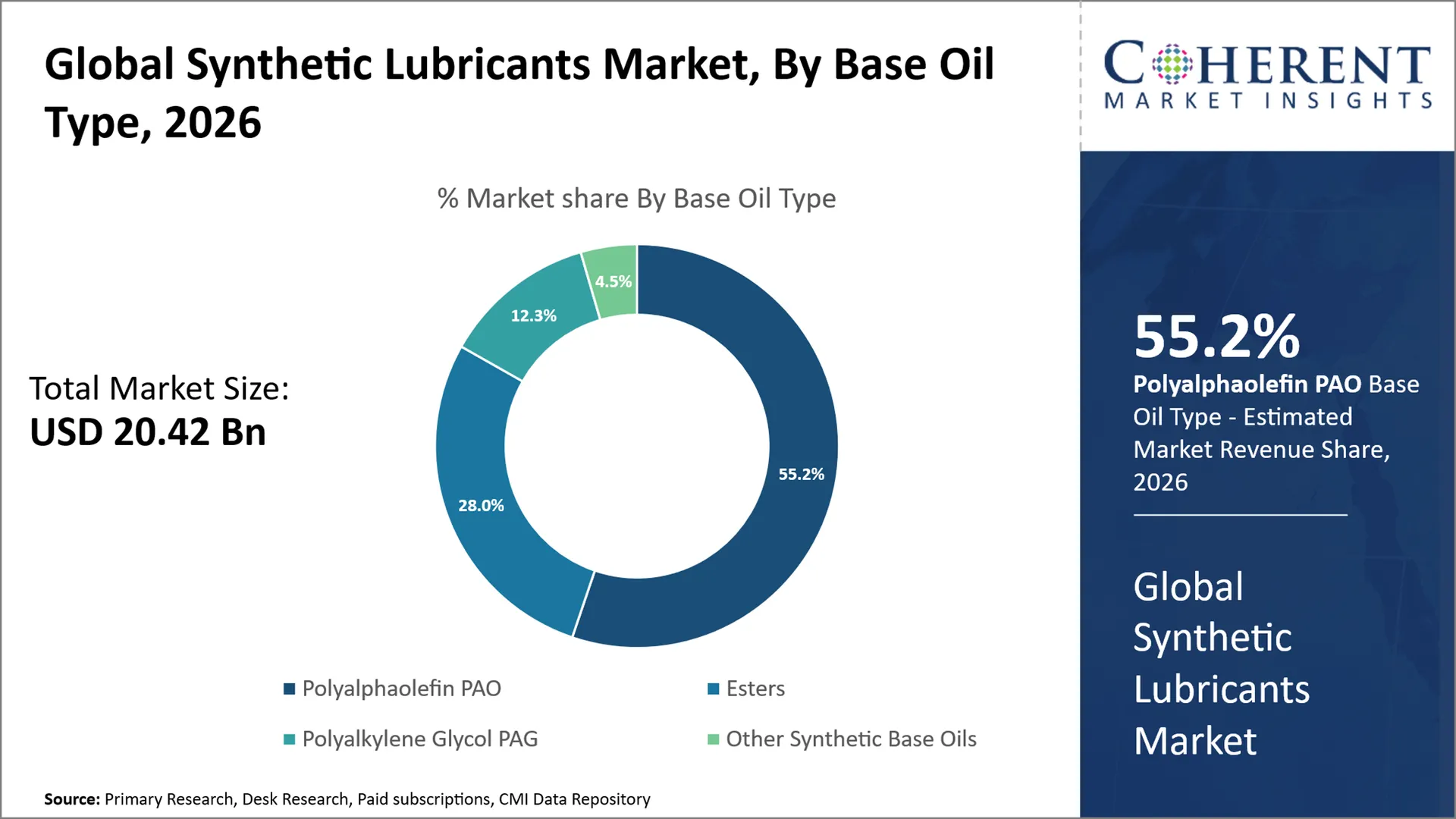
Why Does Polyalphaolefin PAO Dominate the Global Synthetic Lubricants Market by Base Oil Type?
Polyalphaolefin PAO is expected to hold 55.2% of the global synthetic lubricants market by base oil type in 2026. Its leadership reflects the ability of formulators to combine different PAO viscosity grades into products that meet tightly defined equipment specifications. Unlike narrower specialty chemistries, PAO offers a familiar blending platform across turbine, compressor, gear, and automotive lubricants, allowing suppliers to reuse formulation expertise while serving several buyer groups. Established alpha-olefin feedstock chains and dedicated PAO production facilities also support consistent commercial supply. In April 2024, INEOS Oligomers opened a solar farm at its Feluy site in Belgium, which manufactures Durasyn PAO base oils, strengthening the site's access to renewable electricity. This investment illustrates how upstream producers are improving manufacturing resilience and supporting customers seeking more transparent sourcing of synthetic base stocks.
- Current Industry Events of 2026
- Market Size Estimation
- Regional Breakdown
- Competitive Landscape
- Customer Intelligence
- Segmental Analysis
- Pricing Analysis
- Key Market Drivers, Challenges & Future Trends
- Customized Insights Section
Why Does Engine Oil Represent the Largest Product Type in the Global Synthetic Lubricants Market?
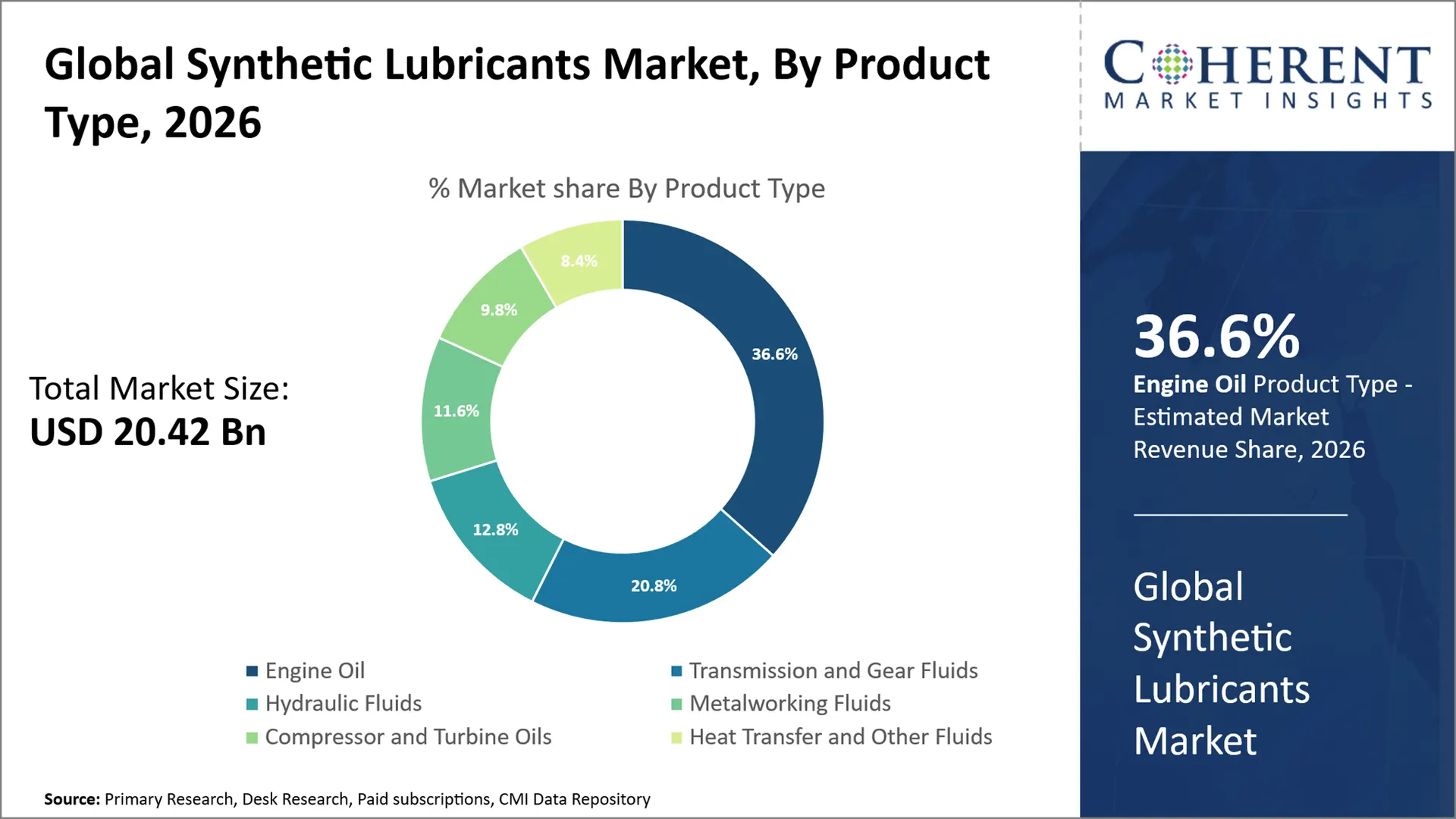
Engine Oil is expected to account for 36.6% of the global synthetic lubricants market by product type in 2026. Engine oil purchases extend across scheduled servicing, top-ups, and workshop maintenance, creating more frequent replenishment opportunities than most enclosed industrial fluid applications. The broad mix of gasoline and diesel vehicles also requires viscosity grades and compatibility options, encouraging retailers and service centers to maintain extensive product ranges. For lubricant suppliers, this translates into repeat customer contact, shelf-space competition, and opportunities to differentiate convenient pack sizes and vehicle-specific recommendations. In September 2025, LIQUI MOLY made its synthetic-technology Top-up Oil 5W-30 available worldwide for gasoline and diesel engines, including vehicles equipped with particulate filters. Its launch highlights how brands can address routine oil-level maintenance beyond scheduled oil changes while expanding their aftermarket reach.
Why Do Automotive and Transportation Dominate the End-Use Industry Segment of the Global Synthetic Lubricants Market?
Automotive and Transportation is expected to represent 43.8% of the global synthetic lubricants market by end-use industry in 2026. The segment benefits from the breadth of lubricated components within road vehicles, from engines and differentials to increasingly specialized automatic transmissions. Unlike single-process industrial buyers, vehicle operators require compatible fluids across different models, duty cycles, and servicing conditions. This creates opportunities for lubricant manufacturers to develop targeted grades while supporting distributor networks with clear application guidance. In January 2026, Eaton announced the introduction of two fully synthetic drivetrain lubricants, EverTough transmission fluid and XFE 75W-80 axle lubricant, for commercial vehicles and aftermarket fleets. These products address transmission durability, fuel efficiency, and maintenance costs, highlighting how specialized synthetic lubricants support the evolving requirements of automotive and transportation operators.
Current Events and Their Impact
Current Event | Description and Its Impact |
September 2024 – U.S. EPA Finalizes Vessel Incidental Discharge Standards |
|
December 2024 – European Commission Extends EU Ecolabel Criteria for Lubricants |
|
January 2025 – ECHA Adds Lubricant-Related Chemicals to the REACH Candidate List |
|
Global Synthetic Lubricants Market Dynamics
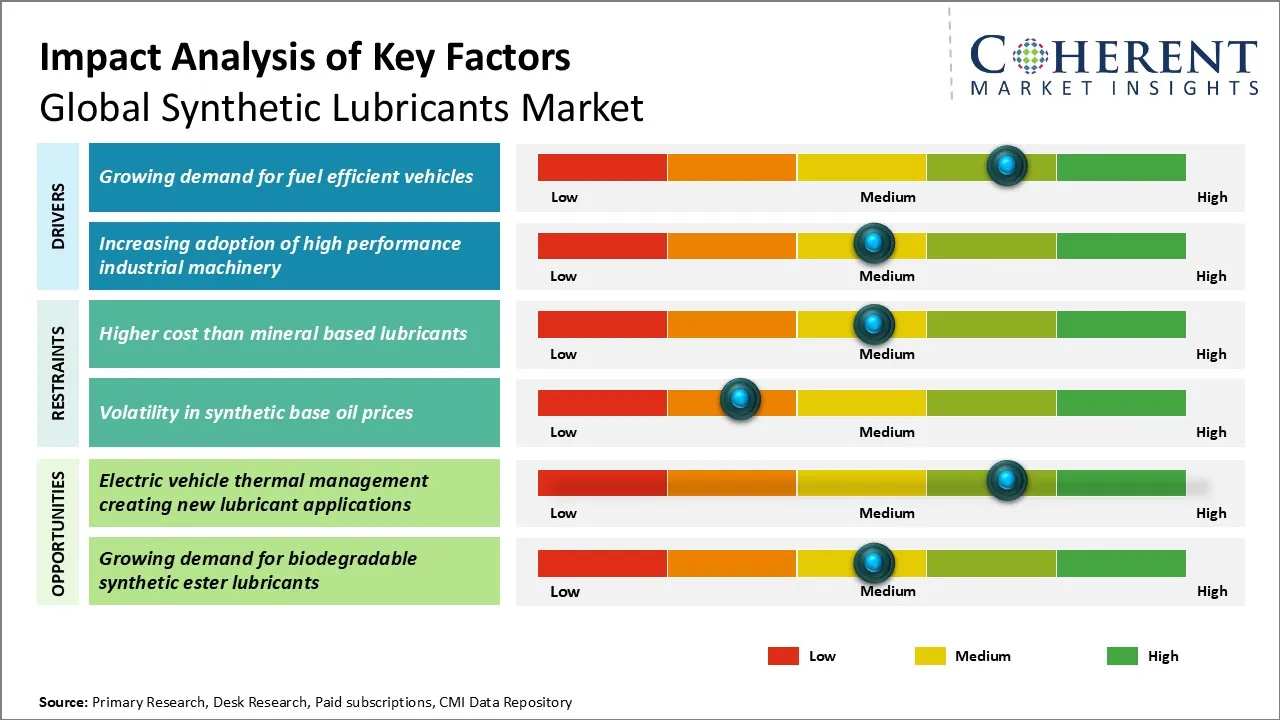
Key Market Drivers
- Growing demand for fuel efficient vehicles: Growing demand for fuel-efficient vehicles is encouraging automotive manufacturers to adopt advanced synthetic lubricants that reduce friction and improve engine efficiency. Low-viscosity formulations help minimize mechanical energy losses while maintaining protection under demanding operating conditions. This creates commercial opportunities for lubricant manufacturers supplying premium engine oils that meet evolving automotive performance specifications. In March 2025, Valvoline Global Operations launched new passenger car motor oil formulations in the U.S. and Canada that exceeded ILSAC GF-7 standards, supporting improved engine protection and performance.
- Increasing adoption of high performance industrial machinery: Increasing adoption of high-performance industrial machinery is strengthening the need for synthetic lubricants that operate reliably under heavy loads and continuous production cycles. Advanced gear oils help minimize friction, control operating temperatures, and protect critical mechanical components. Manufacturers benefit from improved equipment efficiency without requiring extensive machinery modifications. In May 2025, Klüber Lubrication reported that its Klübersynth GEM 4-320 N synthetic gear oil delivered independently verified energy savings of 4–6% in tyre manufacturing extruder gearboxes, demonstrating the commercial value of specialized lubrication.
Emerging Market Trends
- Growing Emphasis on Sustainable Synthetic Lubricant Formulations: Synthetic lubricant development is increasingly moving toward products that combine established performance standards with verifiable environmental characteristics. Industrial buyers are paying closer attention to feedstock origins, environmental impact, and product lifecycle documentation. This shift is encouraging formulators to explore renewable feedstock pathways while maintaining oxidation stability and equipment compatibility. Manufacturers with transparent sourcing and validated performance data may strengthen their premium positioning. Over the forecast period, sustainability credentials are expected to become more influential in supplier selection and industrial lubricant procurement decisions.
- Shift Toward Regionalized Lubricant Production and Supply Chains: Synthetic lubricant manufacturers are increasingly reconsidering how specialized products are formulated, blended, and distributed across international markets. Dependence on centralized production can expose suppliers to transportation delays, currency fluctuations, and inconsistent product availability. Regional blending capabilities and flexible manufacturing arrangements can improve delivery reliability and customer responsiveness. This shift may benefit suppliers with localized technical expertise and diversified sourcing networks. During the forecast period, supply-chain flexibility is expected to become an important competitive consideration, particularly for customers requiring consistent lubricant specifications across multiple facilities.
Regional Insights
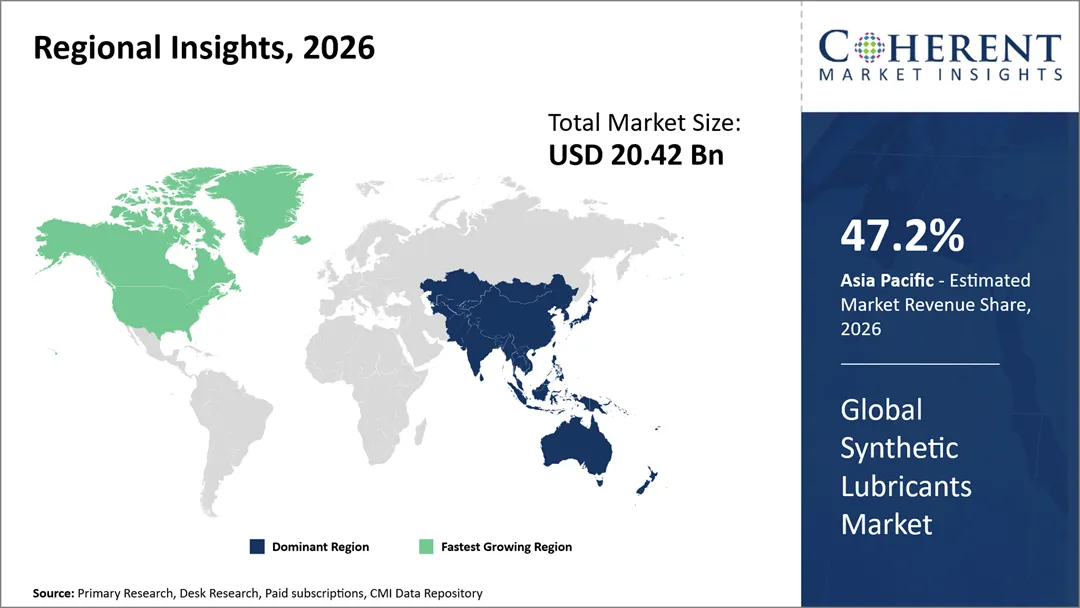
Why Does Asia Pacific Dominate the Global Synthetic Lubricants Market?
Asia Pacific is expected to account for 47.2% of the global synthetic lubricants market in 2026, reflecting its combination of large vehicle-producing economies and diversified lubricant-consuming industries. Automotive assembly clusters generate factory-fill requirements, while established machinery, shipping, and manufacturing operations purchase specialized compressor, gear, and hydraulic fluids. Climatic differences across the region also require suppliers to offer formulations suitable for contrasting operating temperatures and duty cycles. Importantly, local specifications create opportunities for regional distributors and international manufacturers to customize premium lubricant ranges rather than rely on standardized products. In January 2026, PETRONAS Lubricants International introduced JASO-certified Syntium Supreme grades in Japan, including 0W-16 and 0W-20 products designed for modern engines. Their availability through a Japanese distributor illustrates how market access increasingly depends on locally relevant specifications and established channels.
Why Is North America Emerging as the Fastest-Growing Region in the Global Synthetic Lubricants Market?
North America is projected to be the fastest-growing region in the global synthetic lubricants market, with a 23.8% share in 2026. Its growth outlook reflects a gradual shift toward lubricant formulations supported by documented performance testing, certification, and technical differentiation. Established vehicle service networks offer a practical route to commercialize upgraded grades, while demanding operating conditions in transport and industrial applications reward reliable product qualification. For suppliers, the opportunity lies less in expanding basic oil volumes than in earning approval for premium formulations that workshops and fleet buyers can confidently specify. In March 2025, the American Petroleum Institute began permitting qualifying ILSAC GF-7A and GF-7B engine oils to display its corresponding certification marks. This updated licensing framework provides a clear route for lubricant brands to differentiate newer formulations through independently governed performance standards.
Global Synthetic Lubricants Market Outlook for Key Countries
Why Is the U.S. a Key Market for the Global Synthetic Lubricants Market?
The U.S. remains a key country in the global synthetic lubricants market because extensive highway use creates recurring maintenance requirements for passenger cars, delivery vehicles, and commercial fleets. Long-distance road transport makes lubricant selection commercially important for operators balancing service intervals, equipment reliability, and vehicle downtime. Suppliers can address these requirements through approved synthetic engine oils, gear fluids, and application-specific servicing recommendations. A broad network of repair workshops, fleet maintenance contractors, and parts retailers also gives manufacturers several routes to reach end users. In August 2026, the Federal Highway Administration estimated that vehicles traveled 294.1 billion miles on U.S. roads during the month. This scale of vehicle use supports a substantial installed base requiring periodic lubrication, although travel statistics alone do not measure synthetic lubricant sales.
Why Does China Support Growth in the Global Synthetic Lubricants Market?
China holds strategic importance in the global synthetic lubricants market because its industrial ecosystem includes precision manufacturing, transportation equipment, energy systems, and electronics production. These applications generate requirements for specialized lubricant grades with controlled friction, material compatibility, and thermal performance. For suppliers, proximity to equipment manufacturers helps shorten product evaluation cycles and enables technical teams to respond to plant-specific operating problems. Regional manufacturing also reduces dependence on imported finished specialty products, although advanced formulations must still meet demanding customer qualifications. In November 2025, DuPont began construction of a MOLYKOTE specialty lubricants plant in Zhangjiagang, Jiangsu Province, with operations targeted for early 2027. The planned facility highlights the commercial importance of local technical collaboration and faster fulfillment for Chinese industrial customers.
Why Is India Important in the Global Synthetic Lubricants Market?
India is becoming a commercially important market for synthetic lubricants as buyers across manufacturing and mobility seek products matched to demanding operating conditions and service budgets. Two-wheelers and commercial transport create varied viscosity and maintenance requirements, while industrial plants require dependable lubricants for compressors, gearboxes, and hydraulic equipment. However, suppliers must balance premium performance with affordability and distribution reach beyond major cities. Localized additive supply can help reduce lead times and support blends tailored to domestic fuel, climate, and application conditions. In March 2026, Infineum inaugurated a lubricant-additive blending facility in Patalganga, Maharashtra, operated by LSR Specialty Oils. This investment demonstrates how stronger local supply-chain capabilities can improve formulation responsiveness and support lubricant manufacturers serving Indian automotive and industrial customers.
Why Is Germany a Strategic Country in the Global Synthetic Lubricants Market?
Germany is a strategic market for synthetic lubricants because its automotive and machinery sectors place considerable emphasis on technical specifications, component durability, and manufacturing precision. Lubricant suppliers must serve conventional and hybrid powertrains alongside specialized industrial equipment, rather than assume that electrification will eliminate fluid requirements. Engineering-intensive customers evaluate viscosity stability, gearbox compatibility, and documented equipment approvals before adopting alternative formulations. This favors producers that can work closely with component designers and demonstrate consistent quality across production and servicing applications. In January 2026, the German Association of the Automotive Industry reported that domestic passenger car production reached approximately 4.15 million vehicles in 2025. The continuing production base underpins lubricant requirements across assembly operations, component testing, and the servicing of vehicles equipped with combustion engines.
Why Is South Korea an Important Growth Market for the Global Synthetic Lubricants Market?
South Korea has a distinctive position in the global synthetic lubricants market through its established base-oil capabilities, automotive engineering expertise, and organized lubricant servicing channels. Manufacturers can develop grades aligned with demanding vehicle specifications and use domestic customer feedback to refine products for overseas markets. Commercial vehicle lubrication is especially relevant where operating loads and terrain call for consistent wear protection and dependable servicing access. Competition therefore extends beyond formulation to the availability of appropriate products at authorized maintenance points. In May 2026, SK Enmove reported that its ZIC Station network for heavy-duty commercial vehicle oil changes had expanded to more than 300 locations nationwide. This model demonstrates how technical lubricant portfolios can gain wider adoption when supported by a purpose-built service network.
Synthetic Lubricant Innovation and Technology Adoption Landscape
Technology | Key Applications | Adoption Status | Commercial Impact |
Advanced PAO Synthesis and Viscosity Control | Automotive engine oils, industrial gear oils, and compressor lubricants | Established and widely adopted | Enables controlled molecular structures, improved low-temperature characteristics, and formulation consistency for demanding applications. |
Synthetic Ester Engineering | Aviation turbine oils, hydraulic fluids, and high-temperature lubricants | Established in specialized applications | Supports thermal stability, lubricity, and selected biodegradable formulations, creating opportunities for higher-value specialty products. |
Polyalkylene Glycol (PAG) Formulation Technology | Industrial compressors, enclosed gear systems, and specialized equipment | Selective but expanding adoption | Provides opportunities for lubricant differentiation through tailored frictional properties, thermal characteristics, and application-specific compatibility. |
Shear-Stable Viscosity Modifier Technology | Low-viscosity engine oils and automotive lubricants | Commercially established with continued development | Helps maintain required viscosity performance across operating temperatures while supporting lubricant efficiency and durability requirements. |
Advanced Antiwear and Antioxidant Additive Systems | Industrial machinery, turbine oils, and premium automotive lubricants | Widely adopted with ongoing formulation improvements | Improves lubricant resistance to degradation and component wear, enabling suppliers to meet increasingly demanding equipment specifications. |
Digital Oil Condition Monitoring and Analysis | Industrial gearboxes, hydraulic systems, and continuous-operation machinery | Expanding in high-value industrial applications | Enables lubricant condition assessment, more informed maintenance scheduling, and additional technical service opportunities for lubricant suppliers. |
How Are Food-Grade Synthetic Lubricants Creating New Growth Opportunities in the Global Synthetic Lubricants Market?
Food processing and pharmaceutical packaging facilities present a specialized opportunity because lubrication failures can create production interruptions and contamination risks. Many smaller manufacturing facilities still purchase lubricants through routine maintenance channels rather than standardized, facility-wide hygiene programs.
Suppliers can address this gap through synthetic PAO- and ester-based lubricants designed for incidental food contact, resistance to washdown conditions, and reliable operation in conveyors, filling equipment, and compressors. Capturing this opportunity requires appropriate food-grade registration, documented product traceability, equipment compatibility testing, and technical support. Manufacturers can strengthen customer relationships through plant assessments, maintenance training, and application-specific lubricant recommendations.
Regional distributors may benefit from improved access to smaller industrial customers, while established lubricant manufacturers hold advantages in formulation expertise, product certification, and supply reliability. Specialized entrants can compete by targeting underserved equipment applications and offering validated solutions that help manufacturers maintain hygiene standards without compromising operating efficiency.
Market Players, Key Development, and Competitive Intelligence
Key Developments
- In September 2025, FUCHS Lubricants announced a partnership with KCF Technologies to combine its lubricant expertise with equipment condition monitoring and diagnostics. This matters for the global synthetic lubricants market because technical services can help suppliers build deeper industrial relationships and improve maintenance decisions beyond product selection.
- In June 2025, NYCO introduced TURBONYCOIL 940 SE, a synthetic turbine oil designed to address demanding operating temperatures and safer chemical handling in aviation. This matters to the global synthetic lubricants market by showing how specialized formulation capabilities can support technical differentiation in safety-sensitive applications.
- In March 2025, Castrol launched BioStat ST, a marine stern-tube lubricant range formulated with synthetic esters and optimized additives. This matters to the global synthetic lubricants market because it expands options for ship operators seeking biodegradable fluids that also protect components exposed to seawater and corrosion.
Competitive Landscape
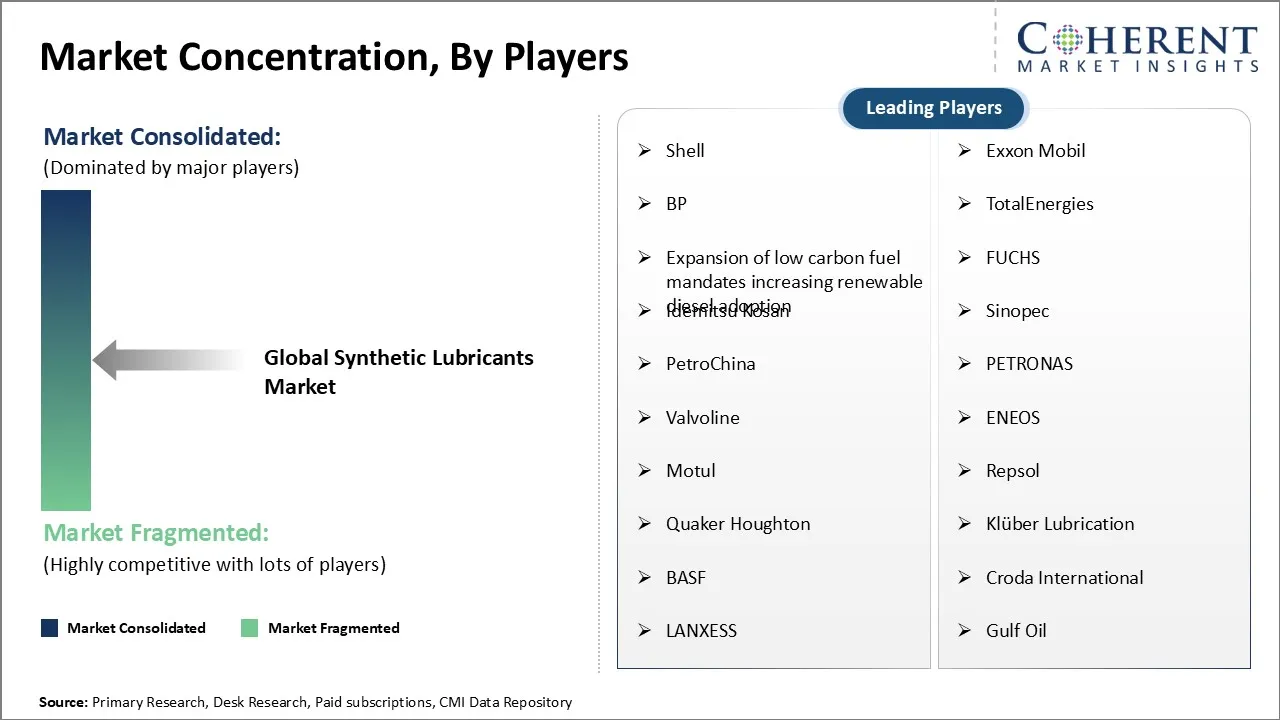
The global synthetic lubricants market is moderately consolidated among major integrated producers and established lubricant brands, although specialty formulations remain accessible to independent manufacturers and regional suppliers. Competition centers on lubricant performance, equipment compatibility, technical approvals, supply reliability, and pricing. Specialist companies differentiate themselves through customized formulations, application expertise, and responsive customer support, particularly in demanding industrial applications.
Key competitive factors include
- Product Performance: Differentiation through oxidation resistance, wear protection, and thermal stability.
- OEM Approvals: Meeting manufacturer specifications to strengthen product acceptance and long-term supply relationships.
- Formulation Capabilities: Developing application-specific lubricant grades for demanding operating environments.
- Pricing Strategy: Balancing premium product positioning with customer expectations for operating cost efficiency.
- Manufacturing Reliability: Maintaining consistent product quality and uninterrupted availability of synthetic base oils and additives.
- Distribution Networks: Strengthening customer access through automotive service networks, industrial suppliers, and direct sales.
- Technical Support: Providing lubricant selection guidance, compatibility assessments, and application troubleshooting to strengthen customer retention.
Market Report Scope
Global Synthetic Lubricants Market Report Coverage | |||
Report Coverage | Details | ||
Base Year | 2025 | Market Size in 2026: | USD 20.42 Bn |
Historical Data For: | 2020 To 2024 | Forecast Period: | 2026 To 2033 |
Forecast Period 2026 To 2033 CAGR: | 3.80% | 2033 Value Projection: | USD 26.51 Bn |
Geographies covered: |
| ||
Segments covered: |
| ||
Companies covered: | Shell, Exxon Mobil, BP, TotalEnergies, FUCHS, Idemitsu Kosan, Sinopec, PetroChina, PETRONAS, Valvoline, ENEOS, Motul, Repsol, Quaker Houghton, Klüber Lubrication, BASF, Croda International, LANXESS, Gulf Oil | ||
Growth Drivers: |
| ||
Restraints & Challenges: |
| ||
Analyst Opinion (Expert Opinion)
- The global synthetic lubricants market is likely to shift toward more structured, application-specific product portfolios. Suppliers that develop flexible formulation platforms and maintain comprehensive technical qualification records could introduce specialized products more efficiently. Market leadership may increasingly depend on the ability to adapt formulations to different equipment specifications while maintaining consistent manufacturing quality and commercially viable production costs.
- Product authentication and digital supply-chain traceability could reshape how synthetic lubricants reach end users. As buyers place greater importance on product authenticity, traditional distribution models may face pressure to provide verifiable batch histories and secure handling practices. Suppliers capable of integrating traceability into packaging, inventory management, and customer verification could gain a stronger position in premium lubricant distribution.
- Manufacturers should prioritize formulation research, application testing, and diversified sourcing of specialty base oils and additives. Particular attention should be given to securing reliable raw material supplies and developing pricing arrangements that account for feedstock volatility. Investment in technical partnerships and regional customer support can strengthen competitiveness. Companies should avoid excessive capacity expansion in standardized grades where price competition may restrict margins.
Speak to the analyst
Want personalized insights?
Take the findings above to one of our principal consultants, or have the report rebuilt around the segments, geographies and competitors you actually track.
Market Segmentation
- Base Oil Type Insights (Revenue, USD Bn, 2021 - 2033)
- Polyalphaolefin PAO
- Esters
- Polyalkylene Glycol PAG
- Other Synthetic Base Oils
- Product Type Insights (Revenue, USD Bn, 2021 - 2033)
- Engine Oil
- Transmission and Gear Fluids
- Hydraulic Fluids
- Metalworking Fluids
- Compressor and Turbine Oils
- Heat Transfer and Other Fluids
- End Use Industry Insights (Revenue, USD Bn, 2021 - 2033)
- Automotive and Transportation
- Industrial Manufacturing
- Power Generation
- Aerospace and Marine
- Construction and Mining
- Chemical and Other Industries
- Vehicle And Equipment Type Insights (Revenue, USD Bn, 2021 - 2033)
- Passenger Vehicles
- Commercial Vehicles
- Industrial Machinery
- Construction and Mining Equipment
- Aerospace and Marine Equipment
- Other Equipment
- Sales Channel Insights (Revenue, USD Bn, 2021 - 2033)
- OEM and Factory Fill
- Automotive Aftermarket
- Industrial Direct Sales
- Distributors and Specialty Suppliers
- Regional Insights (Revenue, USD Bn, 2021 - 2033)
- North America
- U.S.
- Canada
- Latin America
- Brazil
- Argentina
- Mexico
- Rest of Latin America
- Europe
- Germany
- U.K.
- Spain
- France
- Italy
- Russia
- Rest of Europe
- Asia Pacific
- China
- India
- Japan
- Australia
- South Korea
- ASEAN
- Rest of Asia Pacific
- Middle East
- GCC Countries
- Israel
- Rest of Middle East
- Africa
- South Africa
- North Africa
- Central Africa
- North America
Sources
Primary Research Interviews
- Synthetic lubricant manufacturers and base oil suppliers
- Automotive OEMs, industrial equipment manufacturers, and lubricant formulators
- Lubricant distributors, fleet operators, and industrial maintenance professionals
Stakeholders
- PAO, ester, PAG, and lubricant additive manufacturers
- Synthetic lubricant producers, blenders, and specialty chemical suppliers
- Automotive OEMs, industrial equipment manufacturers, distributors, and service providers
End-use Sectors
- Automotive and transportation
- Industrial manufacturing and power generation
- Aerospace and marine
- Construction, mining, and chemical processing
Regulatory and Industry Bodies
- American Petroleum Institute (API)
- U.S. Environmental Protection Agency (EPA)
- European Chemicals Agency (ECHA)
- European Commission
- International Organization for Standardization (ISO)
- SAE International
Databases
- Company annual reports and investor presentations
- UN Comtrade and Eurostat trade databases
- OICA automotive production statistics
- U.S. Energy Information Administration (EIA)
- Lubricant pricing, production, consumption, and trade databases
Magazines and Journals
- Tribology International
- Wear
- Lubrication Science
- Tribology & Lubrication Technology
- SAE International journals
- Lubes'n'Greases
Associations
- Society of Tribologists and Lubrication Engineers (STLE)
- Independent Lubricant Manufacturers Association (ILMA)
- Union of the European Lubricants Industry (UEIL)
- Technical Association of the European Lubricants Industry (ATIEL)
- European Automobile Manufacturers' Association (ACEA)
Public Domain Sources
- Automotive production and vehicle fleet statistics
- Industrial machinery production and maintenance data
- Synthetic base oil production and capacity developments
- Lubricant consumption, pricing, and import-export data
- OEM lubricant specifications and technology developments
Key Standards and Regulations
- API engine oil performance standards
- SAE J300 engine oil viscosity classification
- ILSAC GF-7 engine oil specifications
- ACEA European Oil Sequences
- ISO 6743 lubricant classification
- EU REACH chemical regulations
- EU Ecolabel criteria for lubricants
Proprietary Elements
- CMI Data Analytics Tool
- Proprietary CMI repository containing 10+ years of synthetic lubricant market intelligence covering base oil demand, product segmentation, pricing, technology adoption, automotive and industrial consumption, production capacity, regulatory developments, regional demand, and competitive intelligence.
Get access to 250+ pages report
Every segment, forecast, competitor profile and data table behind the analysis above — available for instant download.
- ESOMAR Member
- ISO 9001:2015 Certified
- D-U-N-S Registered
- GDPR & CCPA Compliant
Frequently Asked Questions
The CAGR of global synthetic lubricants market is projected to be 3.80% from 2026 to 2033.
The global synthetic lubricants market is estimated to be valued at USD 20.42 Bn in 2026 and is expected to reach USD 26.51 Bn by 2033.
Manufacturers can explore opportunities in premium lubricant formulations, specialized industrial applications, sustainable base oils, and OEM-approved products that improve equipment performance and operational efficiency.
The transition toward electric and hybrid vehicles is creating demand for specialized transmission fluids, thermal management fluids, and lubricants compatible with advanced electric drivetrains.
Customers primarily evaluate lubricant performance, OEM approvals, equipment compatibility, product pricing, service intervals, supplier reliability, and total maintenance costs when selecting synthetic lubricants.
Manufacturers face challenges related to fluctuating base oil costs, stringent performance specifications, raw material availability, price competition, and the need to develop formulations compatible with evolving machinery and vehicle technologies.
Growing demand for fuel-efficient vehicles and increasing adoption of high-performance industrial machinery are the key factors supporting the growth of the global synthetic lubricants market.