

U.S. Medicare Technology-Supported Chronic Care Market Size and Forecast – 2026 To 2033
The U.S. Medicare technology-supported chronic care market is expected to grow from USD 2.85 Bn in 2026 to USD 8.65 Bn by 2033, registering a compound annual growth rate (CAGR) of 17.2% from 2026 to 2033. The U.S. Medicare technology-supported chronic care market is estimated to grow at a significant rate during the forecast period owing to the rising burden of chronic disease in the geriatric population. This is expected to foster the growing demand for continuous monitoring and long-term management.
According to the U.S. Centers for Disease Control and Prevention (CDC), 93.0% of people aged 65 and older suffer from one or more chronic illnesses in 2023, and 78.8% of older adults had multiple chronic conditions in 2023. Rising disease burden rates are accelerating the demand for remote patient monitoring, digital care coordination, and continuous technology-enabled disease management solutions for Medicare patients.
Key Takeaways of the U.S. Medicare Technology-Supported Chronic Care Market
- Remote patient monitoring solutions are projected to hold 34.6% of the U.S. Medicare technology-supported chronic care market share in 2026, making it dominant technology type segment, driven by the rising demand for monitoring vital signs and early identification of deterioration in older patients with chronic conditions. For instance, U.S. Centers for Medicare & Medicaid Services (CMS) covers remote patient monitoring for chronic conditions by connected medical devices that can communicate patient health data to healthcare providers, enabling clinicians to take an appropriate action.
- Remote monitoring and patient tracking are projected to hold 32.8% of the U.S. Medicare technology-supported chronic care market share in 2026, making it dominant service type segment. Medicare support for remote monitoring provides coverage for the device set-up and data transmission, clinical review and management of treatment. For instance, U.S. Centers for Medicare & Medicaid Services (CMS) recognizes dedicated RPM billing codes-such as CPT 99453, 99454, 99457, and 99458-that allow appropriate providers to bill for different aspects of remote monitoring.
- Cardiovascular diseases and hypertension are projected to hold 27.8% of the U.S. Medicare technology-supported chronic care market share in 2026, making it dominant chronic condition segment, driven by the need for long-term blood pressure measurement, medication management, and avoiding future cardiovascular complications among the geriatric population. For instance, U.S. Centers for Medicare & Medicaid Services (CMS) states that connected blood pressure cuffs for hypertension management are a remote patient monitoring service covered by Medicare; wherein patients transmit their readings to providers to guide treatment decisions.
Segmental Insights
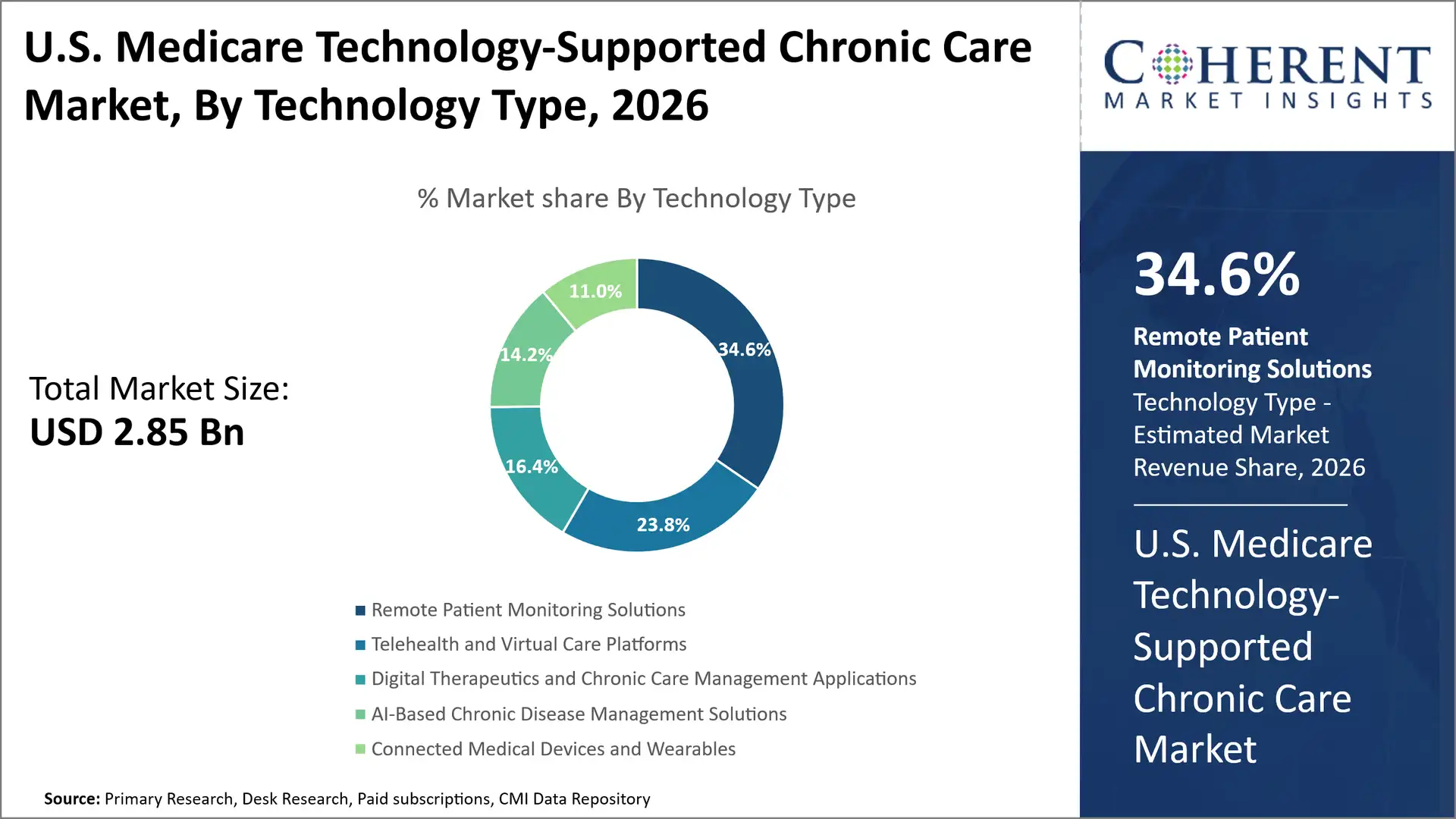
Why Do Remote Patient Monitoring Solutions Dominate the U.S. Medicare Technology-Supported Chronic Care Market?
Remote patient monitoring solutions are projected to hold the market share of 34.6% in 2026, owing to its ability to conduct non-invasive surveillance of key vital signs like blood pressure, heart rate and sugar levels, facilitating early diagnosis, intervention and management of chronic conditions. Furthermore, Medicare reimbursement policies for remote patient monitoring solutions will propel demand. For instance, the U.S. Centers for Medicare & Medicaid Services (CMS) 2026 ACCESS Model recommends outcome aligned payment for technology-supported chronic care. It creates a pathway for RPM providers to integrate ongoing remote patient monitoring with individual clinical services.
- Current Industry Events of 2026
- Market Size Estimation
- Regional Breakdown
- Competitive Landscape
- Customer Intelligence
- Segmental Analysis
- Pricing Analysis
- Key Market Drivers, Challenges & Future Trends
- Customized Insights Section
Why Do Remote Monitoring and Patient Tracking Represent the Largest Service Type Segment in the U.S. Medicare Technology-Supported Chronic Care Market?
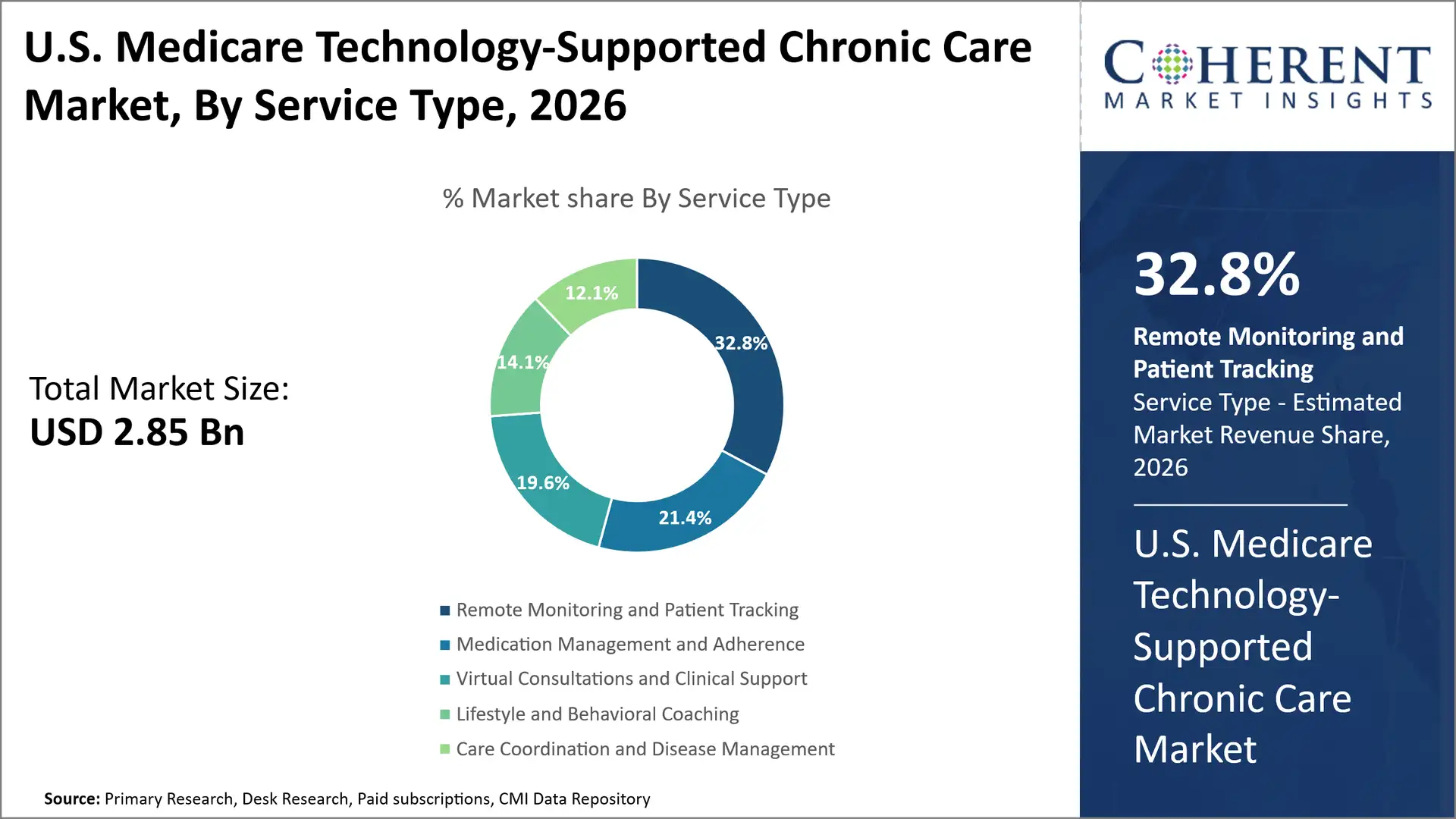
Remote monitoring and patient tracking are projected to hold a market share of 32.8% in 2026, due to their ability to constantly provide a comprehensive picture of patient’s condition, including the compliance with medication and changes in vital signs. This points to the plausibility of early clinical action being taken and reducing the need to visit more frequently. For instance, the Medicare Remote Physiologic Monitoring (RPM) framework of the Centers for Medicare & Medicaid Services (CMS) recognizes the value of treatment-management services by recognizing treatments that require interactive communication between clinicians and patients, supporting ongoing monitoring and clinical follow-up.
Cardiovascular Diseases and Hypertension Segment Dominates the U.S. Medicare Technology-Supported Chronic Care Market
The cardiovascular diseases and hypertension segment is projected to hold a market share of 27.8% in 2026, owing to the high prevalence in the older population and the continued management of blood pressure control, cardiac function, and associated risk factors. For instance, the Million Hearts program from the Centers for Disease Control and Prevention recommends the assessment and management of risks related to cardiovascular disease. The Target: BP program recommends that clinicians to improve the management of blood pressure with routine follow-up and monitoring.
Current Events and their Impact
Current Events | Description and its Impact |
CMS Issues New Medicare Reimbursement Rules for Remote Monitoring (Jully 2026) |
|
CMS and FDA Announce RAPID Pathway to Speed Coverage and Access for Medical Devices (April 2026) |
|
U.S. Medicare Technology-Supported Chronic Care Market Dynamics
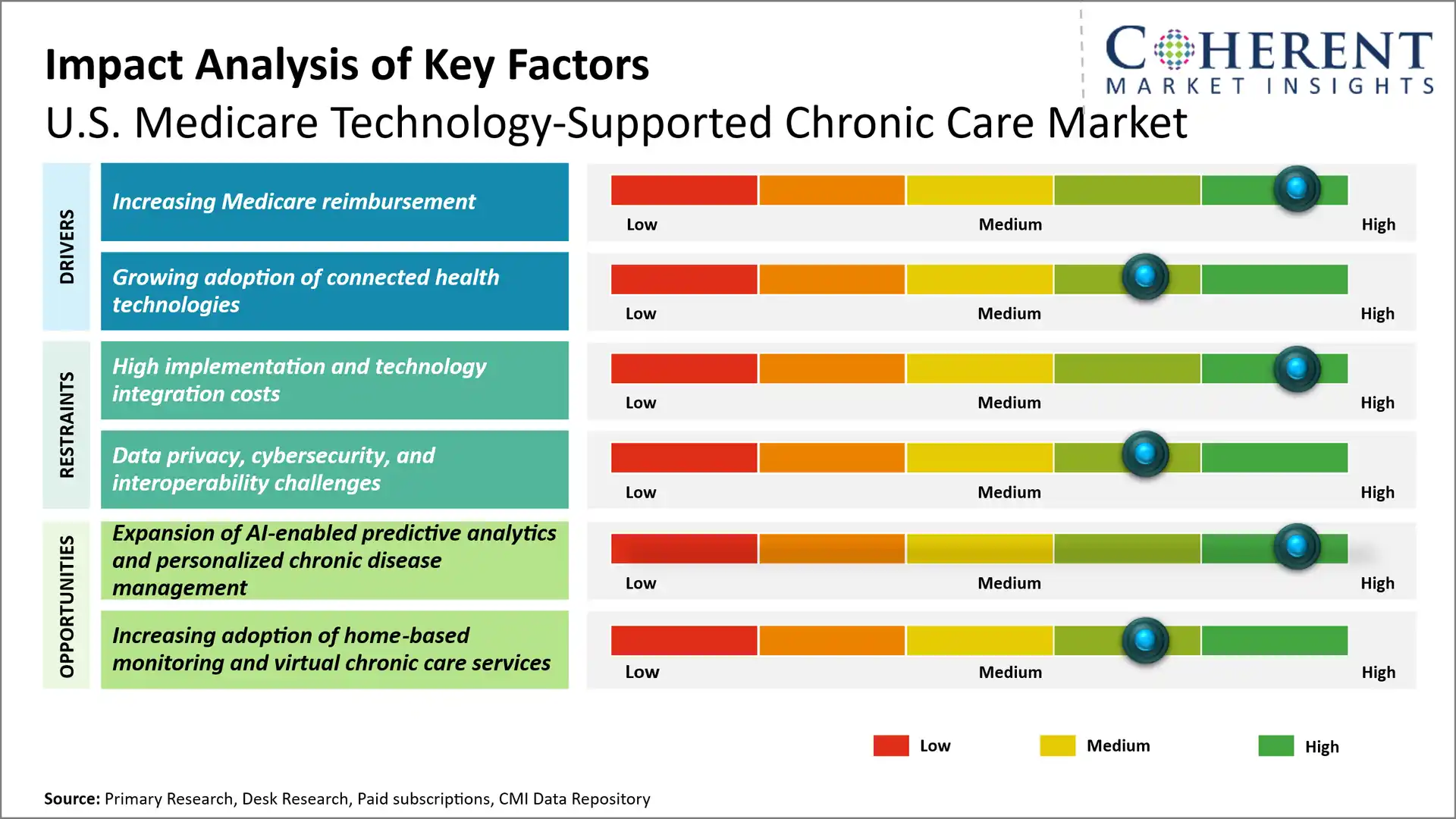
Market Drivers
- Increasing Medicare reimbursement: The growing reimbursement from Medicare for remote patient monitoring, remote therapeutic monitoring services, and chronic care management is prompting healthcare professionals to adopt technology-enabled chronic care management solutions. For instance, CMS's Calendar Year (CY) 2026 Physician Fee Schedule has policies, including new billing codes that support new current plans for remote patient monitoring with shorter periods of remote patient monitoring, and new payment rates that improve reimbursement.
- Growing adoption of connected health technologies: The growing use of the connected health technology such as, wearable devices, connected blood pressure monitors, glucose sensors, and digital health platforms, supports ongoing monitoring of chronic conditions among Medicare beneficiaries. For instance, the Centers for Medicare & Medicaid Services (CMS) has announced that 92% of community dwelling Medicare beneficiaries have internet access by 2025, creating a wider base of consumers for technology-enabled healthcare.
- Growing adoption of telehealth-based chronic care services: The increased use of telehealth services is expanding access to care by enabling Medicare beneficiaries to receive virtual visits, follow-up visits and ongoing clinical support for chronic conditions without the need for repeated in person appointments. For instance, the U.S. Department of Health and Human Services (HHS) has reported sustained growth in telehealth utilization by Medicare beneficiaries, demonstrating its growing importance in enhancing access to care.
Emerging Trends
- Utilization of AI-driven predictive analytics in chronic care management: AI driven predictive analytics is being adopted into chronic care platforms to help Medicare patients with potential risks, to proactively forecast disease development utilizing patient health records and ubiquitous monitoring data.
- Impact: It supports earlier clinical decision making, more tailored care approaches and more optimal use of medical resources. It also supports the reduction of avoidable hospitalizations and long-term management of diseases like heart disease and diabetes.
- Market Relevance: The AI-enabled platforms that harness predictive analytics along with remote patient monitoring and clinical decision-support, is expected to be an area of increased demand. Providers of technology solutions that demonstrate quantifiable patient outcomes are expected to have a competitive advantage.
- Growth of outcome-driven digital chronic disease care models: Healthcare delivery is increasingly shifting to technology-enabled chronic care programs that link reimbursements for providers to the health outcome improvements of patients, instead of the volume of services.
- Impact: These models encourage providers to enable real-time monitoring, utilize virtual consults, and use tailored disease management programs. They also promote accountability for clinical outcomes, and allow more coordinated care outside of the traditional healthcare setting.
- Market Relevance: CMS’s implementation of the ACCESS Model in July 2026 is an illustration of this trend. The ACCESS Model would create outcome-based payments for technology-enabled chronic care in Original Medicare. These changes will open the door for digital health organizations and care providers to develop more holistic and outcome-based solutions to chronic care.
U.S. Medicare Policies and Regulatory Frameworks Supporting Technology-Supported Chronic Care
Policy / regulatory framework | Implementing authority | Key provision / market relevance |
Remote Patient Monitoring (RPM) Coverage | U.S. Centers for Medicare & Medicaid Services (CMS) | Includes Medicare reimbursement for connected-device monitoring of physiological data, such as blood pressure, weight, and glucose. |
Chronic Care Management (CCM) Reimbursement | U.S. Centers for Medicare & Medicaid Services (CMS) | Supports reimbursement of non-face-to-face care coordination and continuous management of individuals with multiple chronic conditions. |
Remote Therapeutic Monitoring (RTM) | U.S. Centers for Medicare & Medicaid Services (CMS) | Covers eligible remote monitoring services involving respiratory and musculoskeletal conditions, therapy adherence, and treatment response. |
ACCESS Model (2026–2036) | CMS Innovation Center | Introduces outcome-aligned payments for technology-supported chronic disease management under Original Medicare. |
HIPAA Privacy and Security Rules | HHS / Office for Civil Rights | Establishes privacy, security, and safeguards requirements for handling Medicare beneficiaries' electronic health information. |
How is the expansion of AI-enabled predictive analytics and personalized chronic disease management creating new growth opportunities in the U.S. Medicare technology-supported chronic care market?
The U.S. Medicare technology supported chronic care market provides lucrative growth potential by the inclusion of artificial intelligence driven predictive analytics and tailored chronic disease management solutions. These technologies have the potential to evaluate the patient records, along with the real-time monitoring data, to detect the high-risk beneficiaries, trigger early actions and reduce avoidable hospitalizations. For instance, the U.S. Office of the National Coordinator for Health Information Technology (ONC) through its promulgation of the HTI-1 Final Rule, has introduced transparency rules for AI based predictive algorithms in certified health information technology to encourage the integration of this technology into clinical decision making.
Market Players, Key Development, and Competitive Intelligence
Key Developments
- In September 2026, the U.S. Centers for Medicare & Medicaid Services announced the expansion of ACCESS Model to cover heart failure, chronic obstructive pulmonary disease, substance use disorders, and nicotine dependence. New tracks of care are expected to launch in spring 2027. The program seeks to increase access to technology-supported care, such as virtual visits, remote patient monitoring, and connected medical devices for Medicare beneficiaries.
- In December 2025, the American Medical Association (AMA) endorsed the Centers for Medicare & Medicaid Services’ (CMS) move to launch the voluntary ACCESS Model to improve technology-enabled chronic care for Original Medicare beneficiaries. This program intends to promote telehealth, remote patient monitoring, digital health, and wearable technology, along with tying provider reimbursements to measurable patient health outcomes.
Competitive Landscape
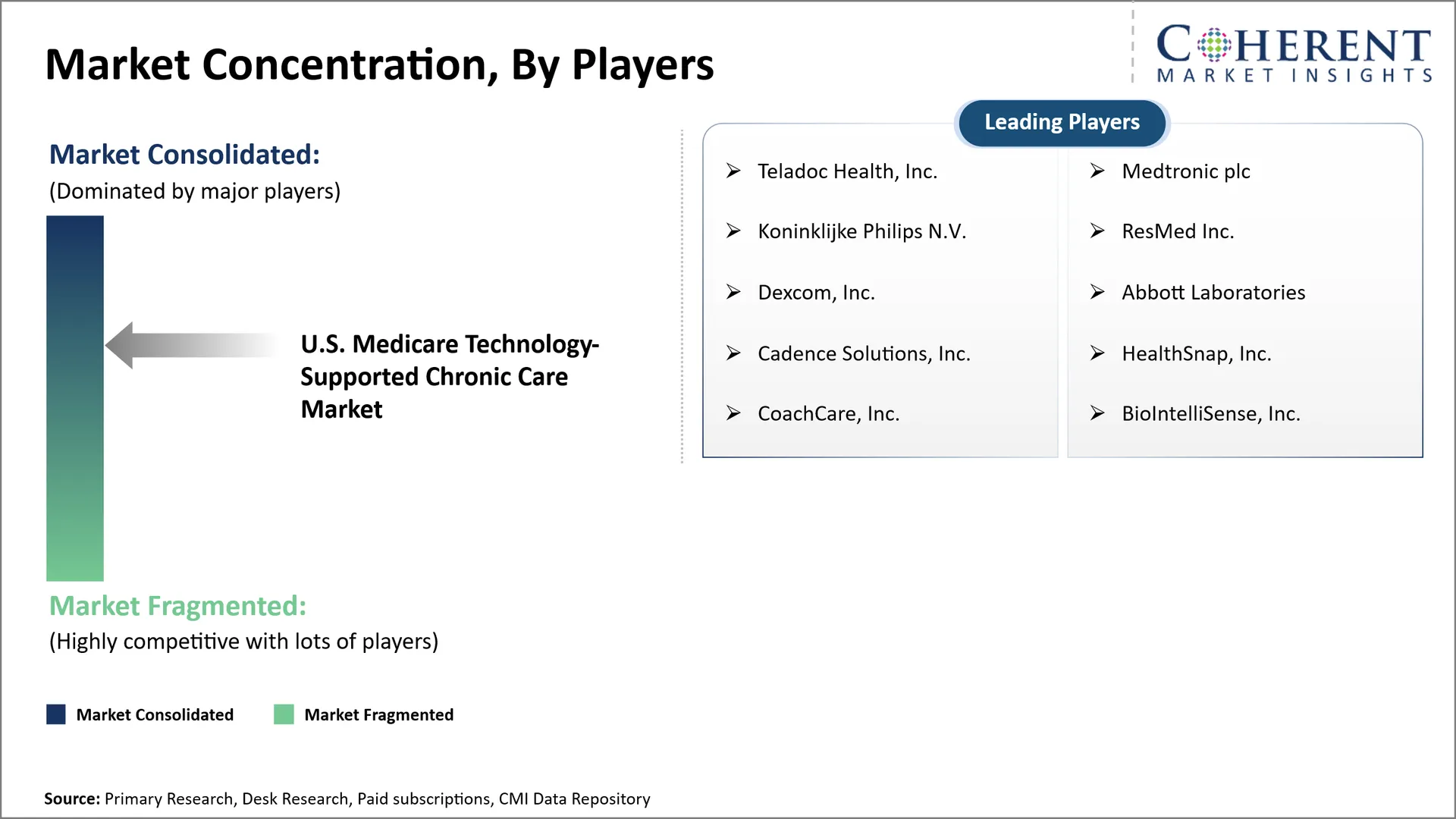
The U.S. Medicare technology-supported chronic care market is a highly fragmented and evolving market, with players including remote patient monitoring vendors, digital health companies, connected medical device manufacturers, and virtual care providers. Competition is driven by innovation, service integration, and the ability to deliver better chronic disease outcomes.
Key focus areas include
- Development of integrated remote patient monitoring platforms and connected medical devices
- Strengthening of telehealth and virtual care capabilities
- Expansion of AI-enabled chronic disease management and predictive analytics
- Alignment with CMS reimbursement frameworks and outcome-based care models
- Integration with electronic health records and clinical workflows
Market Report Scope
U.S. Medicare Technology-Supported Chronic Care Market Report Coverage | |||
Report Coverage | Details | ||
Base Year | 2025 | Market Size in 2026: | USD 2.85 Bn |
Historical Data For: | 2020 To 2024 | Forecast Period: | 2026 To 2033 |
Forecast Period 2026 To 2033 CAGR: | 17.2% | 2033 Value Projection: | USD 8.65 Bn |
Segments covered: |
| ||
Companies covered: | Teladoc Health, Inc., Medtronic plc, Koninklijke Philips N.V., ResMed Inc., Dexcom, Inc., Abbott Laboratories, Cadence Solutions, Inc., HealthSnap, Inc., CoachCare, Inc., and BioIntelliSense, Inc. | ||
Growth Drivers: |
| ||
Restraints & Challenges: |
| ||
Analyst Opinion (Expert Opinion)
- In the coming years, U.S. Medicare market will move away from episodic, hospital-centered care to continuous, technology supported disease management. Pervasive monitoring powered by AI, connected medical devices and integrated virtual care platforms will increasingly underpin bespoke treatment plans and early intervention. The market will increasingly demand outcome-based, continuous care for chronic diseases and minimization of hospitalizations.
- Major growth prospects are expected in artificial intelligence-enabled remote patient monitoring for cardiovascular diseases, hypertension and diabetes. Providers that combine connected blood pressure monitors, glucose monitors, predictive analytics and virtual clinical support could address the need for ongoing disease management for Medicare beneficiaries. Home care providers that combine home health and home care services may see even more momentum.
- In order to gain a competitive advantage market players should focus on creating a scalable and interoperable platform that integrates the data from wearable devices, patient health information, and clinical workflows into an integrated chronic care continuum. Adoption will be accelerated by building partnerships with Medicare-participating providers and enhanced capabilities to comply with reimbursement. To differentiate, companies need to demonstrate clear and measurable improvement in patient experience, compliance and cost of care.
Speak to the analyst
Want personalized insights?
Take the findings above to one of our principal consultants, or have the report rebuilt around the segments, geographies and competitors you actually track.
Market Segmentation
- Technology Type Insights (Revenue, USD Bn, 2021 - 2033)
- Remote Patient Monitoring Solutions
- Telehealth and Virtual Care Platforms
- Digital Therapeutics and Chronic Care Management Applications
- AI-Based Chronic Disease Management Solutions
- Connected Medical Devices and Wearables
- Service Type Insights (Revenue, USD Bn, 2021 - 2033)
- Remote Monitoring and Patient Tracking
- Medication Management and Adherence
- Virtual Consultations and Clinical Support
- Lifestyle and Behavioral Coaching
- Care Coordination and Disease Management
- Chronic Condition Insights (Revenue, USD Bn, 2021 - 2033)
- Cardiovascular Diseases and Hypertension
- Diabetes and Metabolic Disorders
- Chronic Kidney Disease
- Chronic Respiratory Diseases
- Musculoskeletal Disorders
- Behavioral Health Conditions
- Others
- End User Insights (Revenue, USD Bn, 2021 - 2033)
- Hospitals and Health Systems
- Physician Practices and Primary Care Providers
- Home Healthcare Providers
- Medicare-Enrolled Chronic Care Management Organizations
- Others
- Key Players Insights
- Teladoc Health, Inc.
- Medtronic plc
- Koninklijke Philips N.V.
- ResMed Inc.
- Dexcom, Inc.
- Abbott Laboratories
- Cadence Solutions, Inc.
- HealthSnap, Inc.
- CoachCare, Inc.
- BioIntelliSense, Inc.
Sources
Primary Research Interviews
- Medicare-enrolled primary care physicians and chronic care specialists
- Remote patient monitoring and telehealth service providers
- Digital health and AI-based chronic care technology experts
- Healthcare administrators and Medicare reimbursement specialists
Stakeholders
- Remote patient monitoring technology providers
- Connected medical device and wearable manufacturers
- Digital therapeutics and chronic care management companies
- Healthcare technology and EHR platform providers
- End-use Sectors
- Hospitals and health systems
- Physician practices and primary care clinics
- Home healthcare providers
- Medicare-enrolled chronic care management organizations
- Regulatory & Health Bodies
- Centers for Medicare & Medicaid Services (CMS)
- U.S. Food and Drug Administration (FDA)
- Office of the National Coordinator for Health Information Technology (ONC)
- U.S. Department of Health and Human Services (HHS)
Databases
- CMS Chronic Conditions Data Warehouse (CCW)
- Data.CMS.gov
- CDC Behavioral Risk Factor Surveillance System (BRFSS)
- Healthcare Cost and Utilization Project (HCUP)
Associations
- American Medical Association (AMA)
- American Telemedicine Association (ATA)
- American Heart Association (AHA)
- Healthcare Information and Management Systems Society (HIMSS)
Public Domain Sources
- Centers for Disease Control and Prevention (CDC)
- National Institutes of Health (NIH)
- Agency for Healthcare Research and Quality (AHRQ)
- U.S. Census Bureau
Proprietary Elements
- CMI Data Analytics Tool
- Proprietary CMI Existing Repository of information for last 10 years.
Get access to 250+ pages report
Every segment, forecast, competitor profile and data table behind the analysis above — available for instant download.
- ESOMAR Member
- ISO 9001:2015 Certified
- D-U-N-S Registered
- GDPR & CCPA Compliant
Frequently Asked Questions
The U.S. Medicare technology-supported chronic care market is estimated to be valued at USD 2.85 Bn in 2026 and is expected to reach USD 8.65 Bn by 2033.
Remote patient monitoring solutions dominate the market as they help facilitate continuous measurement of the vital signs of a patient, enable early clinical intervention, and help to manage long-term chronic conditions outside of normal care settings.
Technology-supported Medicare chronic care is the deployment of digital health solutions and related care management platforms that include interoperable medical devices, remote monitoring, and virtual care for the treatment of Medicare beneficiaries with chronic diseases in the U.S.
The CAGR of U.S. Medicare technology-supported chronic care market is projected to be 17.2% from 2026 to 2033.
Increasing Medicare reimbursement, and growing adoption of connected health technologies are the major factors driving the growth of the U.S. Medicare technology-supported chronic care market.
High implementation and technology integration costs, and data privacy, cybersecurity, and interoperability challenges are the major factors hampering the growth of the U.S. Medicare technology-supported chronic care market.
In terms of service type, remote monitoring and patient tracking are estimated to dominate the market revenue share in 2026.