

U.S. Remote Patient Monitoring Market Size and Forecast – 2026 To 2033
The U.S. remote patient monitoring market is expected to grow from USD 17.2 Bn in 2026 to USD 49.5 Bn by 2033, registering a compound annual growth rate (CAGR) of 16.3% from 2026 to 2033. The remote patient monitoring market in the U.S. is poised for significant expansion, fueled by the soaring burden of chronic diseases such as cardiovascular disorders, diabetes, and chronic respiratory conditions.
According to the Centers for Disease Control and Prevention, three in four American adults have at least one chronic condition, and over half have two or more chronic conditions. Additionally, over 90% of adults aged 65 and above are affected by at least one chronic disease, reinforcing the need for long-term remote patient monitoring in the U.S.
(Source: Centers for Disease Control and Prevention)
Key Takeaways of the U.S. Remote Patient Monitoring Market
- Devices are projected to hold 46.0 % of the U.S. remote patient monitoring market share in 2026, making it the dominant component segment, through the widespread implementation of monitoring kits across national healthcare programs. For instances, the U.S. Department of Veterans Affairs has a Remote Patient Monitoring – Home Telehealth system, which uses remote monitoring systems for veterans at home that monitor vital signs, such as blood pressure, weight, and blood glucose levels, with data transmitted to care teams for ongoing management. (Source: U.S. Department of Veterans Affairs)
- Real-time monitoring is projected to hold 63.0 % of the U.S. remote patient monitoring market share in 2026, making it the dominant monitoring type segment, driven by its use in continuous patient observation programs. For instance, Mayo Clinic has been using remote monitoring systems to collect information from patients suffering from chronic and post-acute diseases, thereby providing healthcare professionals with continual data and allowing early interventions. (Source: Mayo Clinic)
- Vital sign monitoring devices are projected to hold 38.0 % of the U.S. remote patient monitoring market share in 2026, making it the dominant device type segment, attributed to their incorporation into routine care pathways for chronic disease management. For instance, the American Heart Association emphasize consistent blood pressure check for managing high blood pressure, thus emphasizing the use of these devices in remote healthcare environments. (Source: American Heart Association)
- Expansion of employer-sponsored RPM programs for workforce health management: The companies in North America are increasingly integrating remote patient monitoring systems into their wellness programs aimed at managing chronic diseases in order to reduce medical expenses and increase worker productivity. The target for these programs is to monitor chronic ailments such as high blood pressure and diabetes among working age people. This provides an opportunity for growth in the field of RPMs as the system can be integrated by insurance companies and employers themselves.
- Increasing adoption of RPM in post-acute care and transitional care management: There is an increasing acceptance of RPM services in patient monitoring after discharge from hospitals to lower the rate of patient readmissions and enhance the patient's recovery process. The use of RPM technology by healthcare providers enables them to monitor patients' vital signs after surgical or inpatient treatment, thus ensuring that they intervene when needed during the patient's recovery process.
Segmental Insights
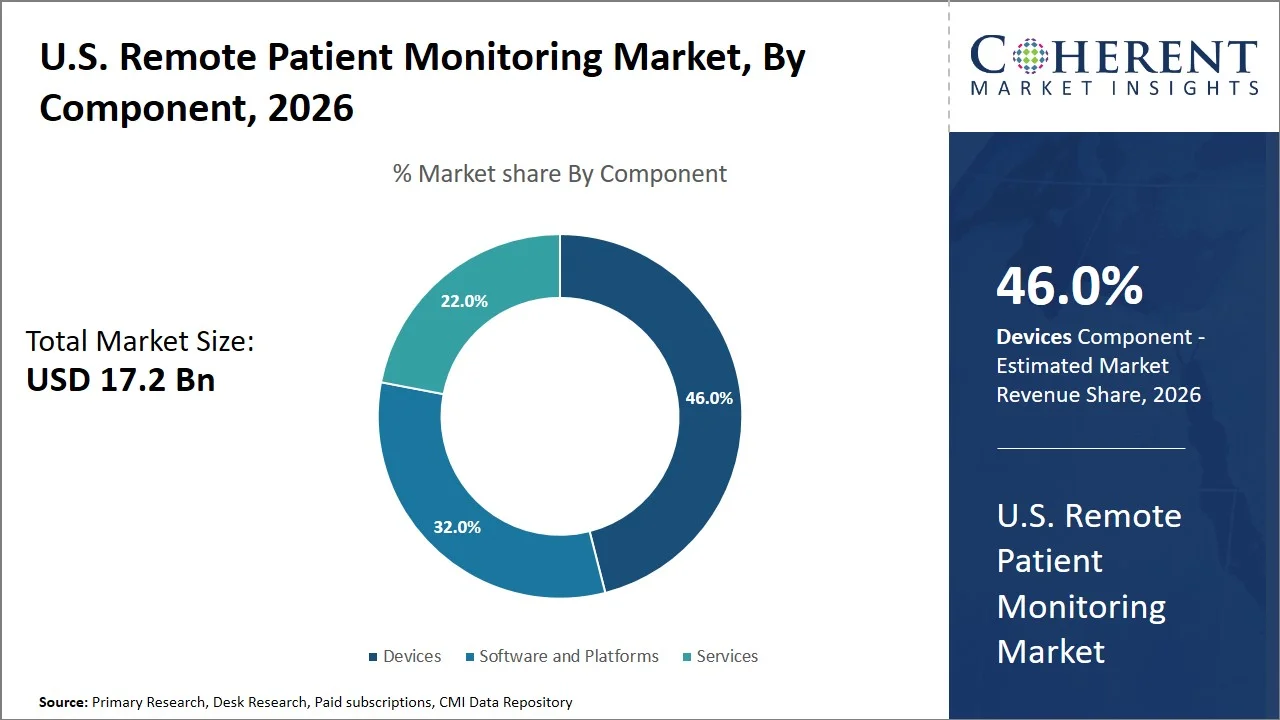
Why Does Devices Segment Dominate the U.S. Remote Patient Monitoring Market?
Devices are projected to hold a market share of 46.0% in 2026, because they are the foundation for acquiring and communicating real-time physiological information, thus making devices essential for any remote patient monitoring initiative. The extensive usage of devices in measuring key vital signs like blood pressure, glucose, and oxygen saturation enables the provision of continuous care, especially from home-based locations. The increasing trend towards facilitating greater access to digital health tools are also evident through the Office for the Advancement of Telehealth, under the U.S. Department of Health & Human Services, which encourages the use of remote patient monitoring devices. (Source: Health Resources & Service Administration)
Furthermore, companies like Dexcom and Masimo have been deploying remote monitoring devices across chronic conditions, which ensures the constant monitoring of patients, and clinical action can be taken in time. In addition, the capability of integration into digital health solutions has made these devices highly procurable and consistently used, hence securing their market share dominance in the U.S. remote patient monitoring market.
- Current Industry Events of 2026
- Market Size Estimation
- Regional Breakdown
- Competitive Landscape
- Customer Intelligence
- Segmental Analysis
- Pricing Analysis
- Key Market Drivers, Challenges & Future Trends
- Customized Insights Section
Why Does Real-Time Monitoring Represent the Largest Monitoring Type Segment in U.S. Remote Patient Monitoring Market?
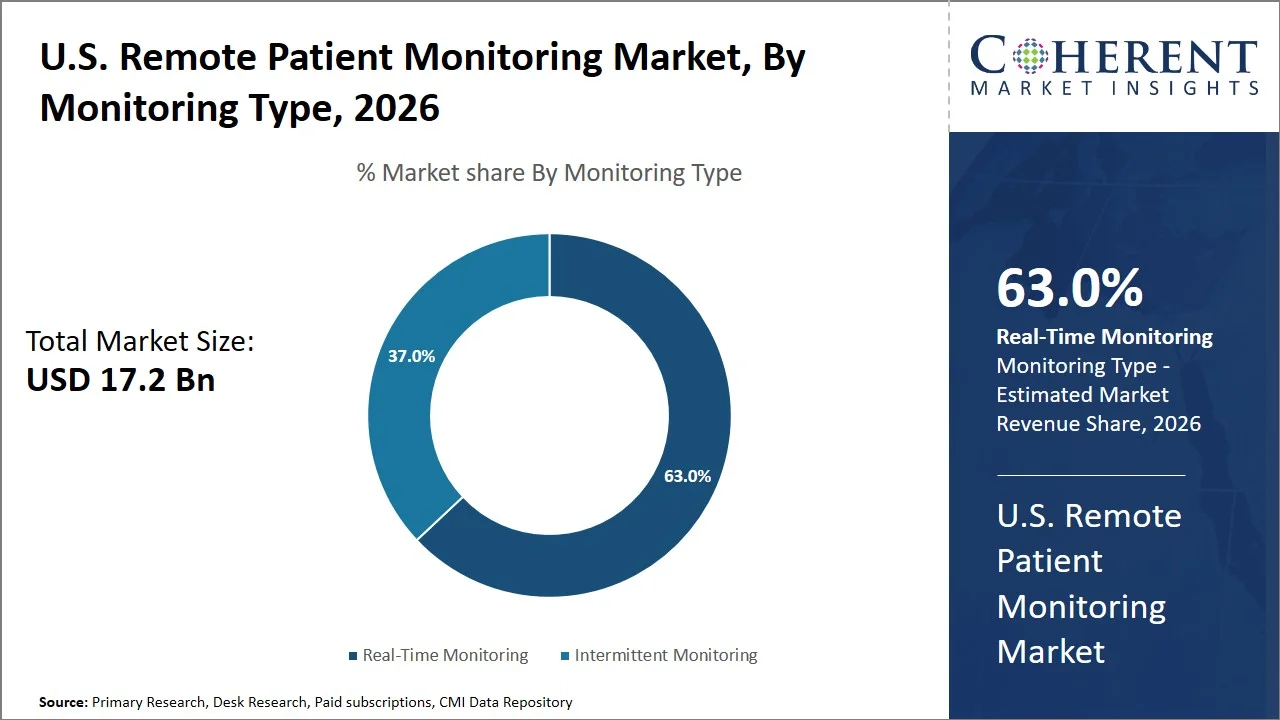
Real-time monitoring is projected to hold 63.0% of the market share in 2026, attributed to its ability to facilitate real-time data transfer and real-time intervention. Periodic monitoring may fail to offer timely information regarding any change in the status of patients. On the other hand, real-time monitoring allows healthcare professionals to receive immediate alerts regarding any unusual measurements, thus preventing any emergency situation. The trend toward being proactive and preventative is encouraged by programs run by the Office of the National Coordinator for Health Information Technology (such as, Trusted Exchange Framework and Common Agreement (TEFCA), United States Core Data for Interoperability (USCDI), Interoperability Standards Advisory (ISA)) that promote interoperability and the ability to exchange health information in real time to improve care coordination. (Source: Office of the National Coordinator for Health Information Technology)
Moreover, major players, such as Philips Healthcare and GE HealthCare, offer real-time data streaming and alerts in order to facilitate critical care services remotely. For example, the Philips eICU Program by Philips allows for the continuous remote monitoring of ICU patients with real-time alerts and clinical decision support (Source: Philips Healthcare). Furthermore, the use of real-time monitoring for hospital-at-home services and intensive care has increased its adoption, making it the leading segment within the U.S. remote patient monitoring market.
Vital Sign Monitoring Devices Segment Dominates the U.S. Remote Patient Monitoring Market
The vital sign monitoring devices segment is expected to lead and hold 38.0% of the U.S. remote patient monitoring market share in 2026, as they play an important role in measuring vital physiological indicators such as blood pressure, blood glucose levels, heart rate, and oxygen saturation levels. These devices have been widely employed in various chronic diseases treatment programs, especially in the cases of hypertension, diabetes, and cardiac diseases requiring constant monitoring. For example, the National Heart, Lung, and Blood Institute, highlights the importance of routine blood pressure monitoring in managing hypertension and reducing cardiovascular risk. (Source: National Heart, Lung, and Blood Institute)
Moreover, companies such as Omron Healthcare and Dexcom are expanding their product lines that incorporate connectivity for measuring blood pressure and glucose levels in order to allow for better data tracking. For example, Dexcom provides the Dexcom G7 Continuous Glucose Monitoring System, which helps in real-time glucose monitoring and allows for easy data transfer to phones and healthcare providers (Source: Dexcom). Additionally, the affordability and scalability of these devices make them very convenient to use at home, thus ensuring their dominance in the U.S. remote patient monitoring market.
Currents Events and their Impact
Current Events | Description and its Impact |
Regulatory Update: CMS–FDA RAPID Coverage Pathway for Medical Devices (April 2026) |
|
Regulatory Update: FDA TEMPO Pilot for Digital Health Devices (April 2026) |
|
(Source: Center for Medicare and Medicaid Services, Food and Drug Administration)
U.S. Remote Patient Monitoring Market Dynamics
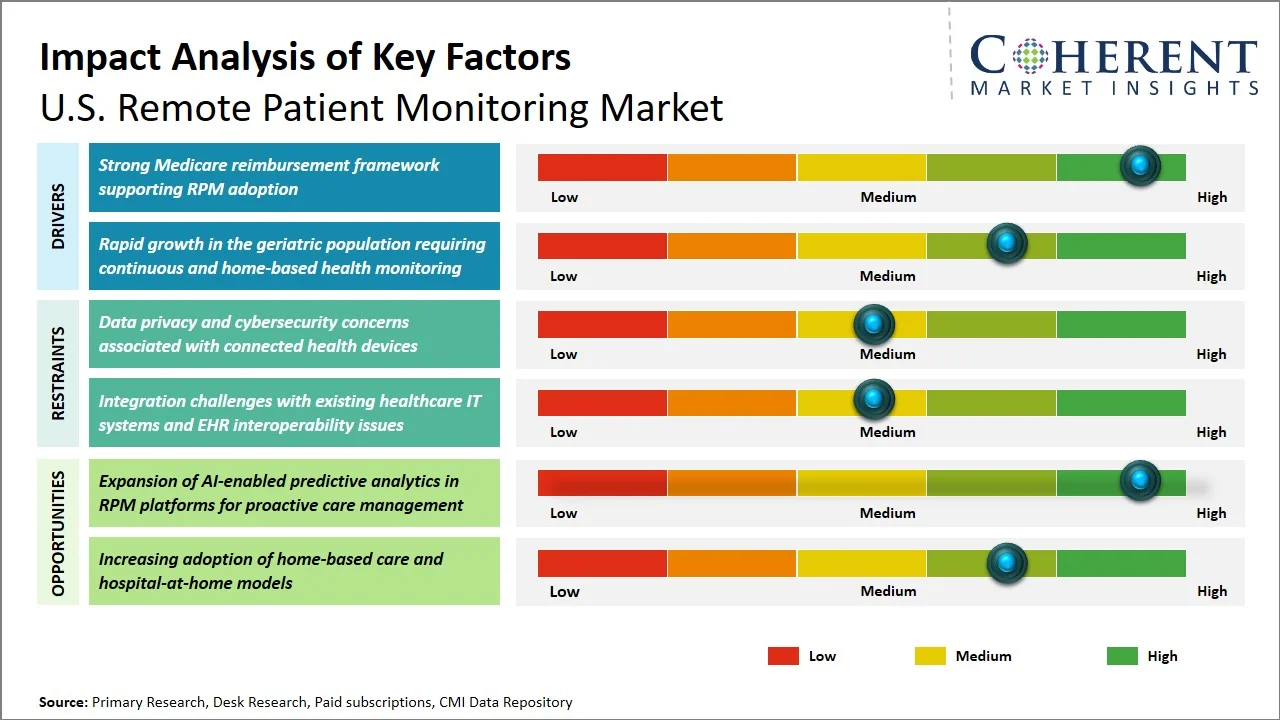
Market Drivers
- Strong Medicare reimbursement framework supporting RPM adoption: The remote patient monitoring services offered in the U.S. are largely impacted by the Centers for Medicare & Medicaid Services reimbursement policy that allows for the use of remote patient monitoring billing codes 99453, 99454, and 99457. The codes correspond to the service of device set up and patient training (99453), providing devices and transferring data (99454), and monthly remote patient monitoring services (99457), facilitating provider’s ability to generate recurring revenue from remote patient monitoring programs (Source: Panacea Healthcare Solutions, LLC.). For instance, continuous monitoring will be covered by Centers for Medicare & Medicaid Services if patients undergo testing for a minimum of 16 days within 30 days, where their health data will be gathered to ensure consistent engagement and clinical supervision (Source: Health Resources and Services Administration). This structure of reimbursement has encouraged healthcare organizations to incorporate remote patient monitoring into their routine operations, making its adoption widespread in the country’s hospitals, physicians' offices, and home health facilities.
- Rapid growth in the geriatric population requiring continuous and home-based health monitoring: The growth of the U.S. remote patient monitoring industry is largely attributed to the fast-growing aging population that is prone to chronic diseases and needs constant medical monitoring. The United States Census Bureau and population estimates indicate that the American population of ages 65 years and above will be estimated at around 78 to 80 million people in 2040, a doubling from past decades (Source: Urban Institute). Moreover, seniors have been identified as a fast-growing demographic group, with more than 55.8 million people belonging to age groups 65 years and above in current census data (Source: U.S. Census Bureau). The shifting demographics are increasing the need for home-based continuous monitoring solutions since older patients prefer home-based monitoring over going to hospitals repeatedly. This has led to a greater adoption of remote patient monitoring technologies by healthcare providers that help in managing chronic diseases effectively while reducing hospital admissions.
Emerging Trends
- Expansion of AI-enabled predictive monitoring: In remote patient monitoring applications, the use of artificial intelligence and advanced analytics is increasingly becoming popular in order to shift from being reactionary to proactive in care delivery. Advanced analytics help predict deterioration in patients’ conditions through analysis of patient data collected continuously.
- Rapid shift toward home-based and hospital-at-home care models: The healthcare practitioners in the U.S. are embracing remote patient monitoring to deliver services beyond conventional healthcare settings. The reasons behind this trend include the pressure of reducing costs, patient preference, and value-based approaches. Home healthcare is one sector that will benefit from remote patient monitoring technologies.
Regulatory & Reimbursement Landscape Shaping the U.S. Remote Patient Monitoring Market
Category | Description | Market Implication |
Regulatory Framework | U.S. Food and Drug Administration (FDA) oversight of RPM devices; digital health and software as medical device (SaMD) guidelines | Ensures safety, reliability, and clinical validation, increasing provider confidence and adoption |
Reimbursement Authority | Centers for Medicare & Medicaid Services (CMS) and private insurers | Establishes structured payment pathways, driving large-scale RPM adoption |
Reimbursement Structure | CPT codes (99453, 99454, 99457, 99458) covering device setup, data transmission, and monitoring services | Enables recurring revenue model and incentivizes providers to integrate RPM into care delivery |
Coverage & Payment Models | Medicare, Medicaid, and commercial payer coverage; integration with Chronic Care Management (CCM) programs | Expands patient access and supports bundled, value-based care approaches |
Operational Requirements | Patient consent, minimum data collection thresholds, and interactive communication mandates | Ensures clinical accountability but adds implementation complexity for providers |
Policy Evolution | Ongoing CMS updates improving flexibility and expanding eligible services | Enhances scalability and encourages wider provider participation |
How is the expansion of AI-enabled predictive analytics in RPM platforms for proactive care management creating new growth opportunities in the U.S. remote patient monitoring market?
The growing adoption of predictive analytics using artificial intelligence models within remote patient monitoring solutions presents substantial opportunities for growth in the U.S. remote patient monitoring market by changing remote patient monitoring from a data collecting technology into a proactive management solution. AI models use continuous monitoring of patients' vital data (such as, heartrate, glucose, and physical activities), analyzing these data to recognize early warning signals and predict adverse health events before they happen, thus allowing for timely intervention on behalf of clinicians, preventing hospitalization. (Source: Prevounce)
For instance, the early signs of heart failure or increased glucose in diabetic patients will be detected weeks before an acute event occurs, allowing for timely intervention and changes in the treatment strategy (Source: Mindbowser Inc.). Such capabilities positively affect patient outcomes, lower readmission rates, and help to improve overall management, making remote patient monitoring a highly valuable proposition for providers and payers. Furthermore, there have been companies like HealthArc and Prevounce, which have been embedding artificial intelligence-based risk stratification and real-time alerts in their platforms to provide population health management at scale, thereby encouraging remote patient monitoring adoption in chronic care initiatives in the U.S.
Market Players, Key Development, and Competitive Intelligence
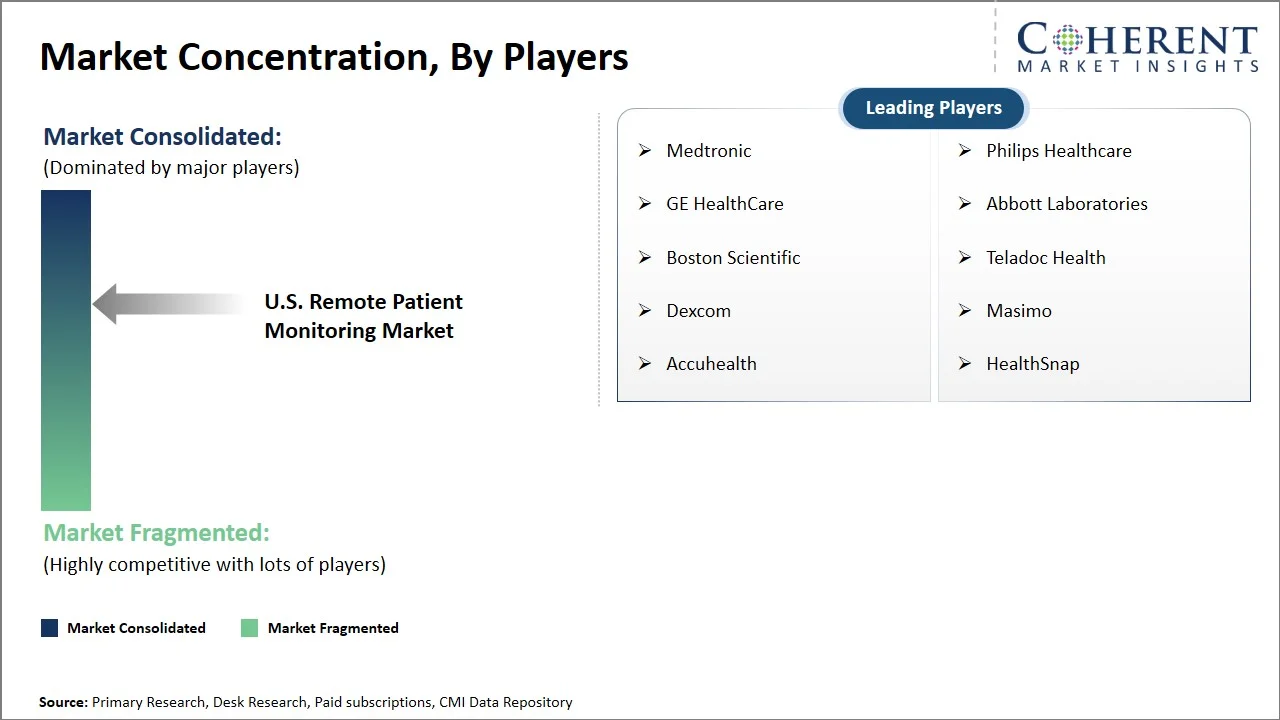
Key Developments
- In September 2025, HealthSnap joined hands with Sentara Health to roll out an enterprise remote patient monitoring and chronic care management solution within their organization. The program is focused on scaling remote patient monitoring for chronic disease patients using integrated digital technology and coordination of care. This demonstrates the growing trend of implementing enterprise remote patient monitoring solutions in healthcare organizations in the U.S.
- In July 2025, TeleMedCare introduced a remote patient monitoring program aimed at chronic patients with diseases including heart failure, COPD, diabetes, and hypertension in collaboration with a prominent American health insurance company. The project involved more than half a million patients, commencing in its pilot stage. This exemplifies the increasing importance of payer and provider cooperation for enhancing the uptake of remote patient monitoring programs in the U.S.
Competitive Landscape
The U.S. remote patient monitoring market is extremely competitive, where companies compete based on the capability of their platform, accuracy of the device, data analytics, and integration into the healthcare system. The players in the market are gradually developing their business models to be in line with the move towards home and value-based care models that provide more effective yet affordable solutions. Some of the key focus areas for players within the remote patient monitoring market include the development of integrated RPM solutions involving devices, software, and service delivery; use of AI technology to provide predictive analysis, home healthcare services and chronic disease management, payer support, and electronic health records (EHRs). Key focus areas include:
- Expansion of integrated RPM platforms (devices + software + care management services)
- Development of AI-driven predictive analytics for early intervention and risk stratification
- Deeper penetration into home healthcare and chronic disease management programs
- Alignment with payer reimbursement models and value-based care frameworks
- Enhancement of data security, interoperability, and EHR integration capabilities
Market Report Scope
U.S. Remote Patient Monitoring Market Report Coverage
| Report Coverage | Details | ||
|---|---|---|---|
| Base Year: | 2025 | Market Size in 2026: | USD 17.2 Bn |
| Historical Data for: | 2020 To 2024 | Forecast Period: | 2026 To 2033 |
| Forecast Period 2026 to 2033 CAGR: | 16.3% | 2033 Value Projection: | USD 49.5 Bn |
| Segments covered: |
| ||
| Companies covered: | Medtronic, Philips Healthcare, GE HealthCare, Abbott Laboratories, Boston Scientific, Teladoc Health, Dexcom, Masimo, Accuhealth, and HealthSnap | ||
| Growth Drivers: |
| ||
| Restraints & Challenges: |
| ||
Analyst Opinion (Expert Opinion)
- The future for the remote patient monitoring market in the U.S. will shift towards the transition of the remote patient monitoring industry from its current focus on devices towards a holistic approach based on software and analysis. In terms of trends in the industry in the near future, the future of the industry will be characterized by predictive monitoring driven by AI, more advanced integrations with EHRs, along with the development of hospital-at-home models based on effective reimbursement programs. The adoption of value-based care models will drive remote patient monitoring as one of its essential elements.
- The most appealing avenue for growth in this industry is within the software and platforms segment since the demand for data analysis, patient interaction, and interoperability will be on the rise. Also, home care health institutions are expected to experience rapid growth since the shift of health services has been experienced from hospitals to individual's homes. Chronic applications, especially those concerning heart-related problems and diabetes, are expected to record the highest demands due to their common nature.
- For gaining an advantage over others in this industry, companies need to ensure that they have comprehensive remote patient monitoring solutions which include both the hardware and software components. It is important for these companies to establish strategic partnerships with healthcare providers and payers to ensure mass acceptance of these devices. Some organizations, like Philips Healthcare, Medtronic, and Teladoc Health, are focusing increasingly on holistic solutions through digitalization. Moreover, data privacy, interoperability, and patient engagement will be critical to develop a successful remote patient monitoring model in the U.S.
Speak to the analyst
Want personalized insights?
Take the findings above to one of our principal consultants, or have the report rebuilt around the segments, geographies and competitors you actually track.
Market Segmentation
- Component Insights (Revenue, USD Bn, 2021 - 2033)
- Devices
- Software and Platforms
- Services
- Monitoring Type Insights (Revenue, USD Bn, 2021 - 2033)
- Real-Time Monitoring
- Intermittent Monitoring
- Device Type Insights (Revenue, USD Bn, 2021 - 2033)
- Vital Sign Monitoring Devices
- Cardiac Monitoring Devices
- Respiratory Monitoring Devices
- Multiparameter Monitoring Devices
- Wearable Monitoring Devices
- Application Insights (Revenue, USD Bn, 2021 - 2033)
- Cardiovascular Diseases
- Diabetes
- Respiratory Diseases
- Neurological Disorders
- Post-Acute and Chronic Care Management
- Others
- End User Insights (Revenue, USD Bn, 2021 - 2033)
- Hospitals
- Clinics/Physician Offices
- Ambulatory Care Centers
- Home Healthcare
- Long-Term Care Facilities
- Others
- Key Players Insights
- Medtronic
- Philips Healthcare
- GE HealthCare
- Abbott Laboratories
- Boston Scientific
- Teladoc Health
- Dexcom
- Masimo
- Accuhealth
- HealthSnap
Sources
Primary Research Interviews
- Chief Medical Officers / Physicians – RPM adoption, chronic disease management, and clinical outcomes (U.S. hospitals & physician groups)
- Directors – Telehealth / Digital Health Departments (health systems & virtual care providers)
- Clinical Specialists – cardiology, endocrinology, pulmonology (RPM use cases and patient monitoring trends)
- Home Healthcare Providers – remote care delivery models and patient engagement insights
- Digital Health & RPM Platform Providers – technology deployment, interoperability, and service models
- Biomedical & Data Analysts – device performance, analytics integration, and patient data utilization
Stakeholders
- Remote Patient Monitoring Providers
- End-use Sectors
- Hospitals (tertiary care & integrated health systems)
- Clinics / Physician Offices
- Ambulatory Care Centers
- Home Healthcare Settings
- Long-Term Care Facilities
- Regulatory & Health Bodies: U.S. Food and Drug Administration (FDA) – device approvals, digital health regulations, and safety monitoring, Centers for Medicare & Medicaid Services (CMS) – RPM reimbursement policies and CPT codes, Office of the National Coordinator for Health Information Technology (ONC) – interoperability and EHR integration frameworks, Federal Communications Commission (FCC) – connectivity and telehealth infrastructure support
Databases
- Centers for Medicare & Medicaid Services (CMS) – RPM utilization, reimbursement, and claims data
- National Center for Health Statistics (NCHS) – chronic disease prevalence and healthcare utilization
- Healthcare Cost and Utilization Project (HCUP) – hospitalization and cost data
- ClinicalTrials.gov – ongoing trials related to remote monitoring technologies
- FDA Digital Health Database – approvals and performance data for RPM devices
Magazines
- Healthcare IT News – digital health and RPM adoption trends
- mHealth Intelligence – remote monitoring and telehealth developments
- MedTech Dive – innovation and regulatory updates in medical devices
- Fierce Healthcare – payer-provider partnerships and RPM initiatives
Journals
- Journal of Medical Internet Research (JMIR) – digital health and RPM clinical studies
- NPJ Digital Medicine – AI and remote monitoring research
- JAMA Network Open – healthcare delivery and RPM outcomes
- Telemedicine and e-Health Journal – telehealth and RPM advancements
Newspapers
- The Wall Street Journal – coverage on telehealth expansion, RPM reimbursement policies, and healthcare investments
- The New York Times – reporting on virtual care adoption, home-based monitoring, and patient outcomes
- The Washington Post – insights on healthcare policy, Medicare updates, and digital health regulations
- USA Today – coverage on consumer adoption of remote monitoring and telehealth services
- Chicago Tribune – regional reporting on hospital systems and RPM program implementation
- The Boston Globe – insights on health tech innovation and partnerships (strong due to Boston’s med-tech ecosystem)
Associations
- American Telemedicine Association (ATA)
- Healthcare Information and Management Systems Society (HIMSS)
- American Medical Association (AMA)
- Advanced Medical Technology Association (AdvaMed)
Public Domain Sources
- U.S. Food and Drug Administration (FDA) – regulatory frameworks and approvals
- Centers for Medicare & Medicaid Services (CMS) – reimbursement and coverage policies
- Centers for Disease Control and Prevention (CDC) – chronic disease and population health data
- National Institutes of Health (NIH) – research and innovation in digital health
- Agency for Healthcare Research and Quality (AHRQ) – patient outcomes and care quality
Proprietary Elements
- CMI Data Analytics Tool, Proprietary CMI Existing Repository of information for last 10 years.
Get access to 250+ pages report
Every segment, forecast, competitor profile and data table behind the analysis above — available for instant download.
- ESOMAR Member
- ISO 9001:2015 Certified
- D-U-N-S Registered
- GDPR & CCPA Compliant
Missing comfort of reading report in your local language? Find your preferred language:
Transform your Strategy with Exclusive Trending Reports
Frequently Asked Questions
The U.S. remote patient monitoring market is estimated to be valued at USD 17.2 Bn in 2026 and is expected to reach USD 49.5 by 2033.
Devices dominate due to their critical role in capturing real-time patient data (vital signs, glucose, cardiac metrics), along with rising adoption of wearables and home-based monitoring systems integrated with digital health platforms.
Remote patient monitoring is the use of connected medical devices and digital technologies to collect and transmit patient health data from outside clinical settings.
The CAGR of U.S. remote patient monitoring market is projected to be 16.3% from 2026 to 2033.
Strong Medicare reimbursement framework supporting RPM adoption and rapid growth in the geriatric population requiring continuous and home-based health monitoring are the major factors driving the growth of the U.S. remote patient monitoring market.
Data privacy and cybersecurity concerns associated with connected health devices and integration challenges with existing healthcare IT systems and EHR interoperability issues are the major factors hampering the growth of the U.S. remote patient monitoring market.
In terms of monitoring type, real-time monitoring is estimated to dominate the market revenue share in 2026.