

Global Ventricular Tachycardia Ablation Market Size and Forecast – (2026 - 2033)
According to Coherent Market Insights, the global ventricular tachycardia ablation market is estimated to be valued at USD 16.21 Bn in 2026 and is expected to reach USD 23.58 Bn by 2033, exhibiting a compound annual growth rate (CAGR) of 5.5% from 2026 to 2033. This growth reflects the increasing adoption of advanced cardiac ablation technologies and rising prevalence of ventricular tachycardia and related arrhythmias worldwide, driving demand for effective treatment modalities within the forecast period.
Key Takeaways of the Ventricular Tachycardia Ablation Market
- In 2026, radiofrequency ablation segment is expected to dominate the global ventricular tachycardia ablation market, capturing 45.4 % share.
- The catheter-based ablation segment is estimated to capture 65.8 % of the market share in 2026.
- Ischemic ventricular tachycardia segment is projected to account for 34.5 % share in 2026.
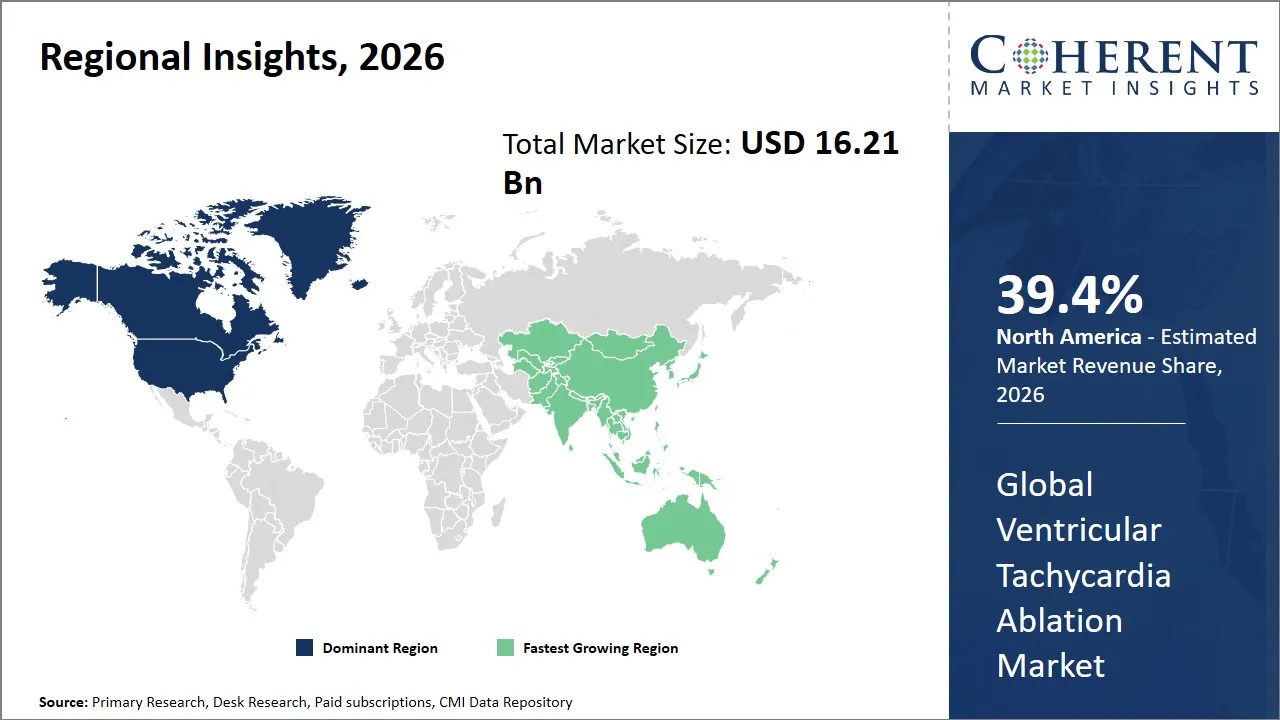
- North America is expected to lead the market, holding a share of 39.4% in 2026. Asia Pacific is anticipated to be the fastest-growing region, with 24.4% share in 2026.
Market Overview
- Market trends indicate a significant shift towards minimally invasive surgery and technology-driven ablation procedures, with innovations such as robotic-assisted ablations and real-time imaging enhancing accuracy and patient outcomes.
- Additionally, the growing awareness of cardiac health and expanding healthcare infrastructure in emerging economies are fueling the market expansion.
- Continuous research and development efforts aimed at improving procedural safety and efficacy further contribute to the market’s dynamic growth trajectory
Currents Events and Its Impact
Current Events | Description and its Impact |
U.S. FDA Approval & Expansion of Radioligand Therapies (RLTs) |
|
Integration of AI in Diagnostic Imaging & Patient Stratification |
|
Segmental Insights
- Current Industry Events of 2026
- Market Size Estimation
- Regional Breakdown
- Competitive Landscape
- Customer Intelligence
- Segmental Analysis
- Pricing Analysis
- Key Market Drivers, Challenges & Future Trends
- Customized Insights Section
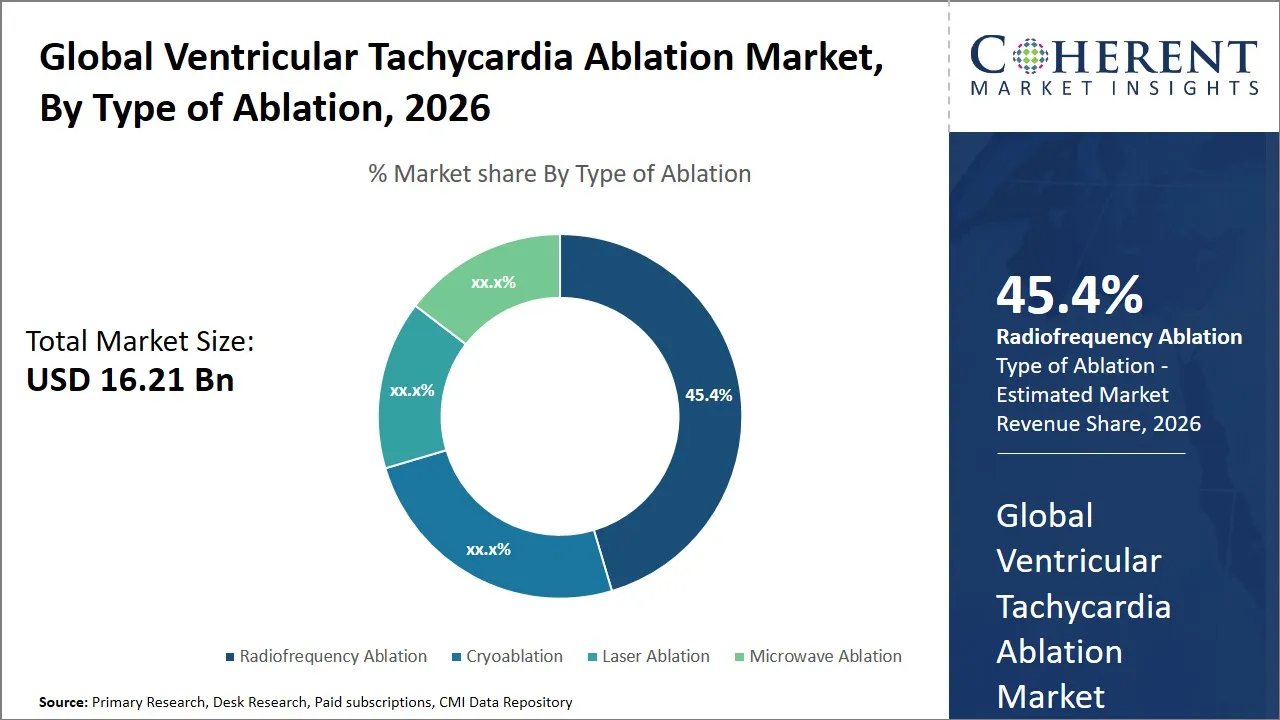
Ventricular Tachycardia Ablation Market Insights, By Type of Ablation - Radiofrequency Ablation Dominates by Efficacy and Versatility
The radiofrequency ablation segment is expected to dominate with 45.4% of the market share in 2026. The main force behind this dominance is its established clinical effectiveness, versatility and wide acceptance amongst cardiologists and electrophysiologists worldwide.
RFA involves the use of high-frequency electrical currents to produce heat which destroys the abnormal tissue in the heart causing ventricular tachycardia selectively. The accuracy with which it localizes the arrhythmic foci makes its use effective in terms of substrate modification and focal arrhythmia management which are some of the main factors that have made it a commonly used treatment.
In November 2025, an abstract presented at the American Heart Association's Scientific Sessions revealed that the incidence of ventricular tachycardia (VT) has risen significantly in recent years. A retrospective study analyzed electronic health records from over 120 million patients, showing a 155% increase in VT incidence in the U.S. and a 114% global increase over the past decade. The study found that VT is more common in older adults and U.S. men, with Native Hawaiian or Pacific Islander populations showing the highest incidence.
How is Catheter-Based Ablation Driving Growth in the Ventricular Tachycardia Ablation Market?
The catheter-based ablation segment is projected to capture 65.8% of the ventricular tachycardia ablation market share in 2026. The increase in this market is mainly driven by the relatively less invasive nature of the catheter-based procedures, which offers great accuracy in mapping and interrupting arrhythmogenic loops in the heart.
Catheter-based ablation makes use of developed electrophysiological mapping systems which allow the physicians to identify and ablate the precise area that causes ventricular tachycardia, which significantly enhances treatment outcomes and minimizes procedural problems.
What Factors are Driving the Increasing Clinical Complexity in Treating Ischemic Ventricular Tachycardia?
Ischemic ventricular tachycardia segment is expected to hold 34.5% of the global ventricular tachycardia ablation market share in 2026, since it is the commonest cause of ventricular arrhythmias that need ablation. The reason behind this dominance is that there are a large number of patients at risk of ventricular tachycardia with ischemic heart disease.
Ischemic heart disease is directly proportional to the occurrence of ischemic ventricular tachycardia, therefore creating the need to seek therapeutic interventions. The scarring that occurs in the post-myocardial infarction provides a substrate on which re-entrant ventricular arrhythmias occur and catheter ablation is an important intervention that helps in minimizing recurrent arrhythmia and enhances the quality of life of the patients.
Role of Artificial Intelligence (AI) on Global Ventricular Tachycardia Ablation Market
- AI is transforming the global ventricular tachycardia ablation market by enhancing efficiency, reducing costs, and enabling data-driven decision-making. AI-powered tools, such as predictive analytics, help identify high-risk patients and personalize treatment strategies.
- Additionally, AI is driving automation in ablation procedures, improving precision and reducing recovery time. For example, Medtronic’s AI technologies optimize catheter placement, leading to more efficient procedures and better patient outcomes while cutting operational costs for healthcare providers.
- AI also opens opportunities for new business models and innovations, helping companies develop advanced diagnostic and treatment tools. By leveraging AI, companies can improve clinical decision-making and gain a competitive edge.
- However, integrating AI into existing systems and ensuring high-quality data for AI models pose challenges. Despite these, the long-term benefits of AI—such as improved outcomes and efficiencies make it a key growth driver in the industry, offering scalability and competitive advantages for forward-thinking companies.
Regional Insights
North America Ventricular Tachycardia Ablation Market Analysis and Trends
North America’s dominance in global ventricular tachycardia ablation market, with an estimated 39.4% share in 2026, stems from a robust healthcare infrastructure, advanced technological adoption, and significant R&D investments. The availability of developed medical device manufacturers, good reimbursement policies and regulatory systems make it easy to penetrate the market. The active attitude of the U.S. Food and Drug Administration (FDA) to the innovative methods of cardiac ablation approvals stimulates the development of new products at the manufacturers.
Also, the demand is encouraged by the broad knowledge of cardiovascular diseases and a significant number of patients. The main industry players, including Abbott Laboratories, Biosense Webster (Johnson & Johnson), and Boston Scientific, have a good presence in the North American market, which provides a complete range of ablation catheter, mapping system and integrated software solutions.
Asia Pacific Ventricular Tachycardia Ablation Market Analysis and Trends
Asia Pacific region exhibits the fastest growth in the ventricular tachycardia ablation market, with a projected share of 24.4% share in 2026, due to rising healthcare investments, improving healthcare accessibility, and increasing incidence of cardiovascular disorders amid burgeoning populations. The governments of such countries as China, India, Japan and South Korea have increased their expenditure in healthcare and embarked on positive reimbursement plans to aid advanced cardiac procedures.
The growth of international medical equipment companies along with the establishment of local ones creates competition and technological dispersion. The availability of the products is facilitated by trade liberalizations and collaboration between multinational corporations and the distributors in the region. The major industry teams like Medtronic, Abbott and an emerging number of local firms are exploiting the rising demand in the region to introduce personalized, affordable ventricular tachycardia (VT) ablation products.
Ventricular Tachycardia Ablation Market Outlook for Key Countries:
What are the Current Growth Dynamics of the U.S. Ventricular Tachycardia Ablation Market?
The U.S. market is ahead because of the developed healthcare system, which makes it easier to implement the most recent technologies of VT ablation. There is a high concentration of cardiac electrophysiologists and cardiac centers which adds to quick uptake of the procedures. The innovation in such leading companies as Biosense Webster and Boston Scientific is supported by the constant product development and clinical collaborations. Medicare and private insurance policies promote the use of ablation treatment and continue to provide clinical trials to support new technologies, which supports the expansion of the market.
How do German Healthcare Reimbursement Policies Influence Access to VT Ablation Procedures?
The healthcare system and institutional support in terms of its advanced healthcare developed over the years in Germany make its market in VT ablation strong. The country is favorable to extensive implementation of sophisticated cardiac ablation devices because of good government funding in healthcare and other infrastructures. Other companies with major presence here include Siemens Healthineers and BIOTRONiK that facilitate the development of mapping and catheter technologies. The focus of Germany on precision medicine and innovation in medical technology makes it one of the primary European centers of VT ablation treatment and research.
Japan Ventricular Tachycardia Ablation Market Trends
The high demand for VT ablation procedures is supported by the ageing population of Japan and the rising rates of arrhythmias. The combination of government programs to enhance cardiovascular health, and a robust base of manufacturing medical devices support the growth of the market. Large organizations such as Medtronic and Abbott have localized products to suit local regulations and clinical behaviors. Moreover, the culture of adoption of new technologies in Japan makes it easy to implement new ablation catheters and electroanatomic mapping systems in clinical practice.
China Ventricular Tachycardia Ablation Market Trends
China is a new ventricular tachycardia ablation market on the rise with an increasing healthcare infrastructure, rising middle-income patients in urban areas and favorable regulatory reforms. The health issue of cardiovascular disease has been the focus of the government in its plan of Healthy China 2030 that will make more intensive treatment choices accessible. Lepu Medical and other multinational companies work together with the local companies to increase the availability of the products. In addition, the growth of cardiologist skills and hyped investments in hospitals would hasten the growth of the market, creating a strong demand to adopt new technologies of VT ablation.
End User Feedback and Unmet Needs - Ventricular Tachycardia Ablation Market
- In the global ventricular tachycardia ablation market, end users, including hospitals, cardiac institutes, and surgical centers, report both positive and negative feedback. Many are satisfied with the precision and efficiency provided by robotic and magnetic navigation systems, which enhance patient outcomes and reduce recovery time. However, concerns about the high cost of advanced ablation technologies remain, limiting access for smaller hospitals, especially in developing regions.
- The primary unmet needs revolve around the affordability of these technologies and the lack of customization in treatment options. High initial costs and limited reimbursement policies hinder widespread adoption. There is a clear demand for more cost-effective, customizable solutions that maintain performance. Addressing these needs can help expand market access, improve patient care, and create growth opportunities for manufacturers.
Market Players, Key Developments, and Competitive Intelligence
Key Developments
- In October 2025, Johnson & Johnson launched the Collaborative Outcomes Registry for Evidence in Ventricular Arrhythmias (CORE-VA) during the International Symposium on Ventricular Arrhythmias in Philadelphia. This registry aims to capture current practices in treating ventricular arrhythmias, including ventricular tachycardia, and ablation procedures.
- In June 2025, Catheter Precision, Inc. and Chelak iECG, Inc. announced a joint venture called Kardionav to advance ventricular tachycardia ablation technology. Catheter Precision holds a 56% stake, while Chelak iECG owns 33%, with management holding the remaining 10%. The venture will focus on using AI and innovative mapping techniques to improve ablation procedures, reduce treatment times, and enhance patient outcomes.
- In December 2024, Field Medical announced that its FieldForce Ablation System earned USFDA TAP Pilot acceptance and Breakthrough Device Designation for the treatment of sustained monomorphic scar-related ventricular tachycardia (VT). The FieldForce system is the first contact force pulsed field ablation (PFA) system designed for VT care, aiming to revolutionize the treatment of life-threatening VT. This FDA recognition highlights the system’s potential to improve patient outcomes compared to existing therapies.
- In August 2022, Medtronic acquired Affera Inc., expanding its cardiac ablation portfolio. Affera, known for its electrophysiology systems, offers advanced solutions like the Sphere-9 pulsed field ablation system. This acquisition positions Medtronic to enter the mapping and navigation markets and strengthen its offerings in treating arrhythmias such as ventricular tachycardia. Affera’s innovative technology, focused on pulsed field ablation, promises less collateral damage to healthy tissues.
Top Strategies Adopted by Global Ventricular Tachycardia Ablation Market Players
Player Type | Strategic Focus | Examples |
Established Market Leaders | Heavy R&D investment in high-performance ablation devices; strategic partnerships and collaborations with major OEMs and industry players; aggressive global expansion into emerging markets. | Established leaders invest in catheter precision, real-time imaging, and AI-based diagnostics; pursue partnerships to strengthen product development and expand in Asia Pacific, Latin America, and the Middle East. |
Mid-Level Players | Focus on cost-effective solutions balancing quality with affordability; collaborations to improve production efficiency, market visibility, and regulatory compliance; cater to price-sensitive segments. | Mid-level players develop reliable and affordable ablation systems; often collaborate with technology providers and regional distributors to enhance production efficiency and market presence. |
Small-Scale Players | Niche-focused innovation with specialized products; adoption of novel technologies; strategic local partnerships for regional market entry and customized solutions. | Small-scale players focus on specialized catheter designs or novel energy delivery methods; establish local alliances to address unique market needs and expand regionally. |
Market Report Scope
Global Ventricular Tachycardia Ablation Market Report Coverage
| Report Coverage | Details | ||
|---|---|---|---|
| Base Year: | 2025 | Market Size in 2026: | USD 16.21 Bn |
| Historical Data for: | 2020 To 2024 | Forecast Period: | 2026 To 2033 |
| Forecast Period 2026 to 2033 CAGR: | 5.5% | 2033 Value Projection: | USD 23.58 Bn |
| Geographies covered: |
| ||
| Segments covered: |
| ||
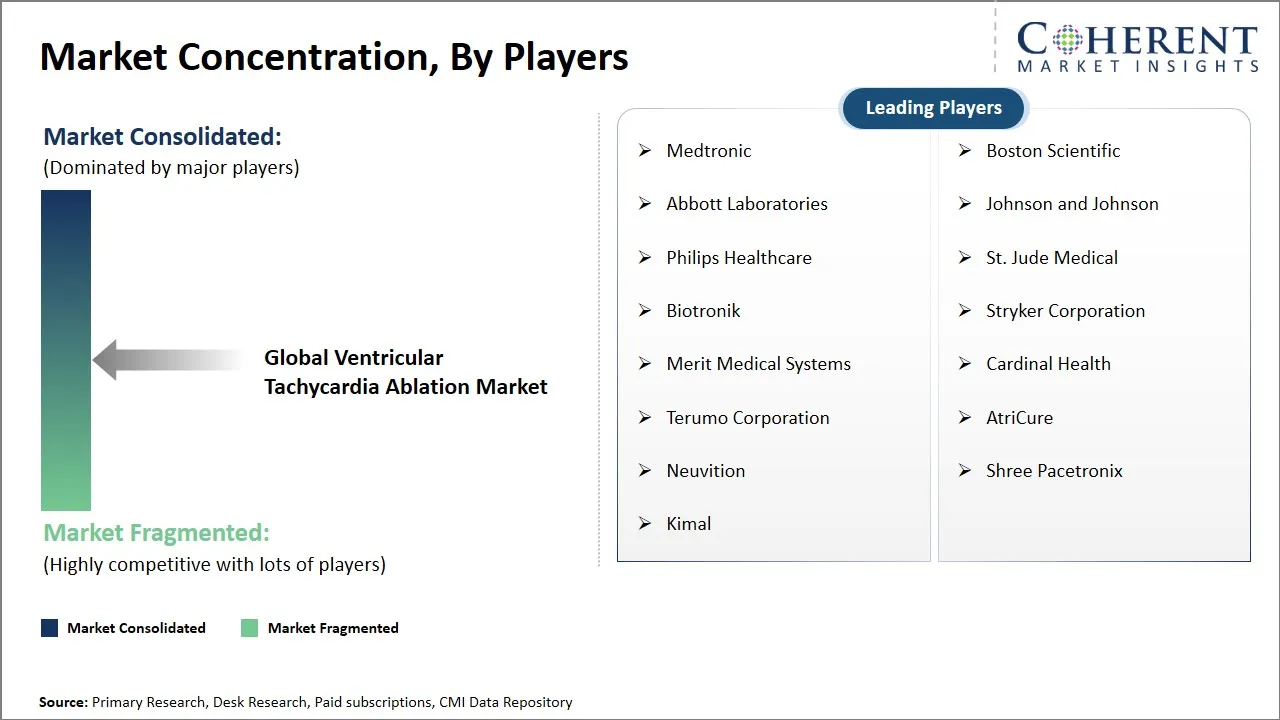
| Companies covered: | Medtronic, Boston Scientific, Abbott Laboratories, Johnson and Johnson, Philips Healthcare, St. Jude Medical, Biotronik, Stryker Corporation, Merit Medical Systems, Cardinal Health, Terumo Corporation, AtriCure, Neuvition, Shree Pacetronix, and Kimal | ||
| Growth Drivers: |
| ||
| Restraints & Challenges: |
| ||
Ventricular Tachycardia Ablation Market Dynamics
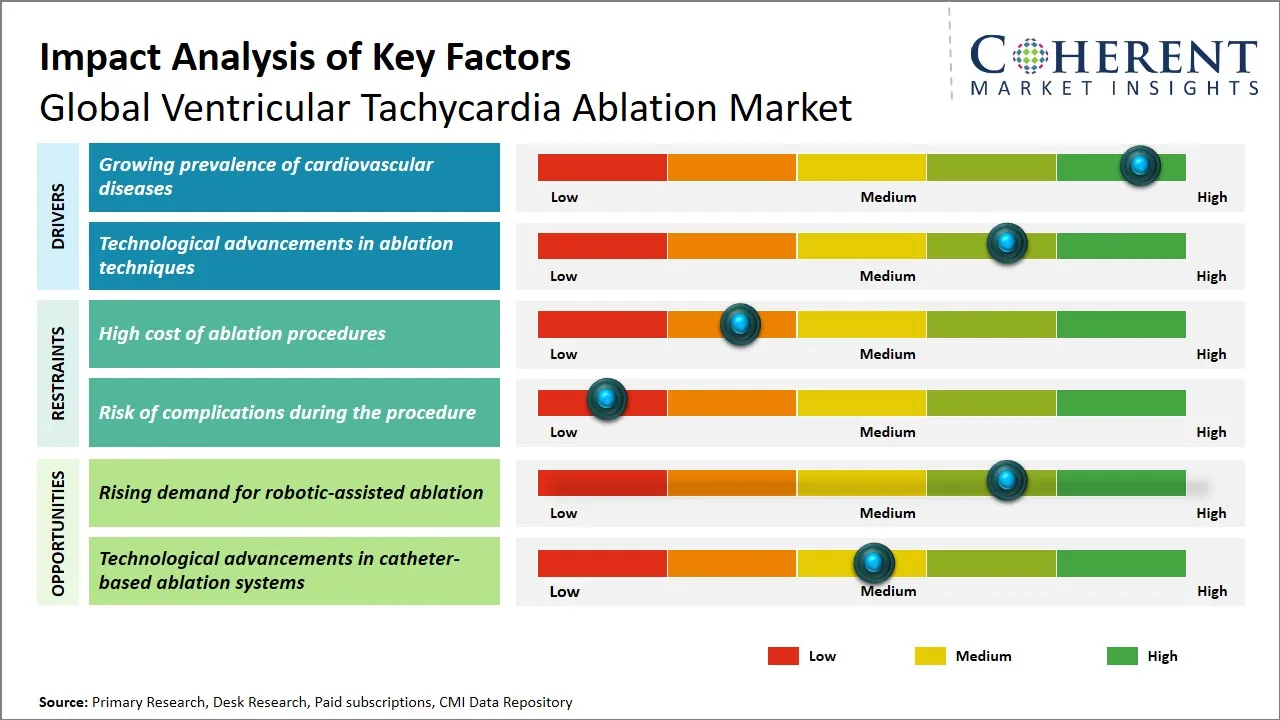
Ventricular Tachycardia Ablation Market Driver - Growing Prevalence of Cardiovascular Diseases
The increasing incidence of cardiovascular diseases (CVDs) worldwide significantly drives the demand for ventricular tachycardia ablation procedures. Factors such as sedentary lifestyles, rising obesity rates, hypertension, diabetes, and aging populations contribute to the surge in cardiac arrhythmias, including ventricular tachycardia, which poses serious health risks if untreated. As these underlying conditions become more widespread, the need for effective treatment options intensifies, positioning ablation therapies as a critical intervention. Ventricular tachycardia ablation offers a minimally invasive approach to manage life-threatening arrhythmias, reducing the risks associated with drug therapies and implantable devices. Moreover, growing awareness among healthcare providers and patients about the importance of early diagnosis and timely management is driving procedural adoption.
In July 2025, World Health Organization, the United Nations global public health authority, reaffirmed cardiovascular diseases as the leading global killer. WHO reported 19.8 million deaths in 2022, increasing demand for early diagnostics including Cardiac Troponin testing.
Moreover, in September 2025, American College of Cardiology, a global cardiology association, reported rising cardiovascular deaths worldwide. Institute for Health Metrics and Evaluation, a population health center, analyzed trends using Global Burden data. Deaths increased from 13.1 million in 1990 to 19.2 million in 2023.
Ventricular Tachycardia Ablation Market Opportunity - Rising Demand for Robotic-Assisted Ablation
The global ventricular tachycardia ablation market is witnessing a significant opportunity driven by the rising demand for robotic-assisted ablation technologies. With advancements in robotic systems, these minimally invasive procedures have become increasingly precise, reducing human error and enhancing procedural outcomes. Robotic-assisted ablation offers improved catheter stability and navigation capabilities, enabling electrophysiologists to reach complex arrhythmogenic substrates more effectively than conventional manual methods. The integration of robotic platforms with real-time imaging and mapping technologies further enhances accuracy, decreasing procedure times and improving patient safety.
Moreover, the rise in prevalence of cardiac arrhythmias, coupled with growing awareness among healthcare professionals and patients about the benefits of advanced ablation techniques, is fueling the adoption of robotic solutions.
In October 2025, Stereotaxis and CardioFocus announced a collaboration to advance robotic Pulsed Field Ablation (PFA) for treating ventricular tachycardia. Stereotaxis, a leader in robotic surgery for minimally invasive interventions, brings its Robotic Magnetic Navigation systems to the project. CardioFocus, known for its innovative Centauri PFA system, has already treated over 9,000 patients in Europe. The collaboration pairs Centauri with Stereotaxis’ MAGiC robotic catheter, combining precision with efficient lesion delivery.
Analyst Opinion (Expert Opinion)
- The ventricular tachycardia ablation market is growing due to advancements in technologies like AI, real-time imaging, and enhanced catheter precision, which are improving procedural efficiency and patient outcomes. Increasing demand for effective treatments and regulatory support are also driving growth. Pulsed field ablation technologies present emerging opportunities by offering more precise treatments with reduced collateral damage to healthy tissues.
- Despite the growth, challenges such as high procedural costs and the need for skilled professionals remain. Conferences like the International Symposium on Ventricular Arrhythmias and the European Heart Rhythm Association congress are key in showcasing new technologies and fostering industry collaborations. Recent initiatives, such as the U.S. FDA’s Breakthrough Device Designation, are expected to expedite access to innovative treatments, reshaping VT care.
Speak to the analyst
Want personalized insights?
Take the findings above to one of our principal consultants, or have the report rebuilt around the segments, geographies and competitors you actually track.
Market Segmentation
- Type of Ablation Insights (Revenue, USD Bn, 2021 - 2033)
- Radiofrequency Ablation
- Cryoablation
- Laser Ablation
- Microwave Ablation
- Technology Insights (Revenue, USD Bn, 2021 - 2033)
- Catheter-Based Ablation
- Non-Catheter-Based Ablation
- Indication Insights (Revenue, USD Bn, 2021 - 2033)
- Ischemic Ventricular Tachycardia
- Non-Ischemic Ventricular Tachycardia
- Idiopathic Ventricular Tachycardia
- Procedure Type Insights (Revenue, USD Bn, 2021 - 2033)
- Epicardial Ablation
- Endocardial Ablation
- Product Type Insights (Revenue, USD Bn, 2021 - 2033)
- Ablation Catheters
- Mapping Systems
- Guiding Sheaths
- Energy Sources
- Others (e.g., Electrodes)
- Age Group Insights (Revenue, USD Bn, 2021 - 2033)
- Pediatric
- Adult
- Geriatric
- Application Insights (Revenue, USD Bn, 2021 - 2033)
- Ventricular Tachycardia Treatment
- Atrial Fibrillation Treatment
- Others (e.g., Conduction Disorders)
- End User Insights (Revenue, USD Bn, 2021 - 2033)
- Hospitals
- Ambulatory Surgical Centers (ASCs)
- Cardiac Specialty Clinics
- Research Centers
- Regional Insights (Revenue, USD Bn, 2021 - 2033)
- North America
- U.S.
- Canada
- Latin America
- Brazil
- Argentina
- Mexico
- Rest of Latin America
- Europe
- Germany
- U.K.
- Spain
- France
- Italy
- Russia
- Rest of Europe
- Asia Pacific
- China
- India
- Japan
- Australia
- South Korea
- ASEAN
- Rest of Asia Pacific
- Middle East
- GCC Countries
- Israel
- Rest of Middle East
- Africa
- South Africa
- North Africa
- Central Africa
- North America
- Key Players Insights
- Medtronic
- Boston Scientific
- Abbott Laboratories
- Johnson and Johnson
- Philips Healthcare
- Jude Medical
- Biotronik
- Stryker Corporation
- Merit Medical Systems
- Cardinal Health
- Terumo Corporation
- AtriCure
- Neuvition
- Shree Pacetronix
- Kimal
Sources
Primary Research Interviews
Industry Stakeholders List
- Cardiac Electrophysiologists
- Medical Device Manufacturers
End Users List
- Hospitals
- Ambulatory Surgical Centers (ASCs)
Government and International Databases
- U.S. Food and Drug Administration (FDA)
- European Medicines Agency (EMA)
- Centers for Disease Control and Prevention (CDC)
- World Health Organization (WHO)
- National Institutes of Health (NIH)
- Global Health Data Exchange (GHDx)
Trade Publications
- Heart Rhythm Journal
- Journal of the American College of Cardiology
- Circulation
- The Lancet Cardiology
- Cardiology Clinics
- European Heart Journal
Academic Journals
- American Journal of Cardiology
- Journal of Cardiovascular Electrophysiology
- Journal of Clinical Investigation
- The New England Journal of Medicine
- Circulation Research
- European Heart Journal – Digital Health
Reputable Newspapers
- The New York Times
- The Wall Street Journal
- The Guardian
- The Financial Times
- USA Today
- Bloomberg News
Industry Associations
- American College of Cardiology (ACC)
- Heart Rhythm Society (HRS)
- European Society of Cardiology (ESC)
- American Heart Association (AHA)
- International Society of Electrocardiology (ISE)
- American Medical Association (AMA)
Public Domain Resources
- National Library of Medicine
- ClinicalTrials.gov
- Cochrane Library
- Open Access Cardiology Journals
- MedlinePlus
Proprietary Elements
- CMI Data Analytics Tool: Proprietary analytics tool to analyze real-time market trends, consumer behavior, and technology adoption in market
- Proprietary CMI Existing Repository of Information for Last 8 Years
Get access to 250+ pages report
Every segment, forecast, competitor profile and data table behind the analysis above — available for instant download.
- ESOMAR Member
- ISO 9001:2015 Certified
- D-U-N-S Registered
- GDPR & CCPA Compliant
Missing comfort of reading report in your local language? Find your preferred language:
Transform your Strategy with Exclusive Trending Reports
Frequently Asked Questions
The global ventricular tachycardia ablation market is estimated to be valued at USD 16.21 Bn in 2026 and is expected to reach USD 23.58 Bn by 2033.
The CAGR of global ventricular tachycardia ablation market is projected to be 5.50% from 2026 to 2033.
Growing prevalence of cardiovascular diseases and technological advancements in ablation techniques are the major factors driving the growth of the global ventricular tachycardia ablation market.
High cost of ablation procedures and risk of complications during the procedure are the major factors hampering the growth of the global ventricular tachycardia ablation market.
In terms of type of ablation, radiofrequency ablation is estimated to dominate the market revenue share in 2026.
Medtronic, Boston Scientific, Abbott Laboratories, Johnson and Johnson, Philips Healthcare, St. Jude Medical, Biotronik, Stryker Corporation, Merit Medical Systems, Cardinal Health, Terumo Corporation, AtriCure, Neuvition, Shree Pacetronix, and Kimal are the major players.
North America is expected to lead global ventricular tachycardia ablation market in 2026.