

Global Ventricular Tachycardia Market Size and Forecast – 2026 to 2033
The Global Ventricular Tachycardia Market is estimated to be valued at USD 16.37 Bn in 2026 and is expected to reach USD 23.82 Bn by 2033, reflecting a compound annual growth rate (CAGR) of 5.5% from 2026 to 2033. This steady growth reflects increasing prevalence of cardiovascular diseases, advancements in diagnostic and therapeutic technologies, and rising awareness about ventricular tachycardia management globally. Expansion in healthcare infrastructure and rising patient population also contribute to market growth over the forecast period.
Key Takeaways of the Global Ventricular Tachycardia Market
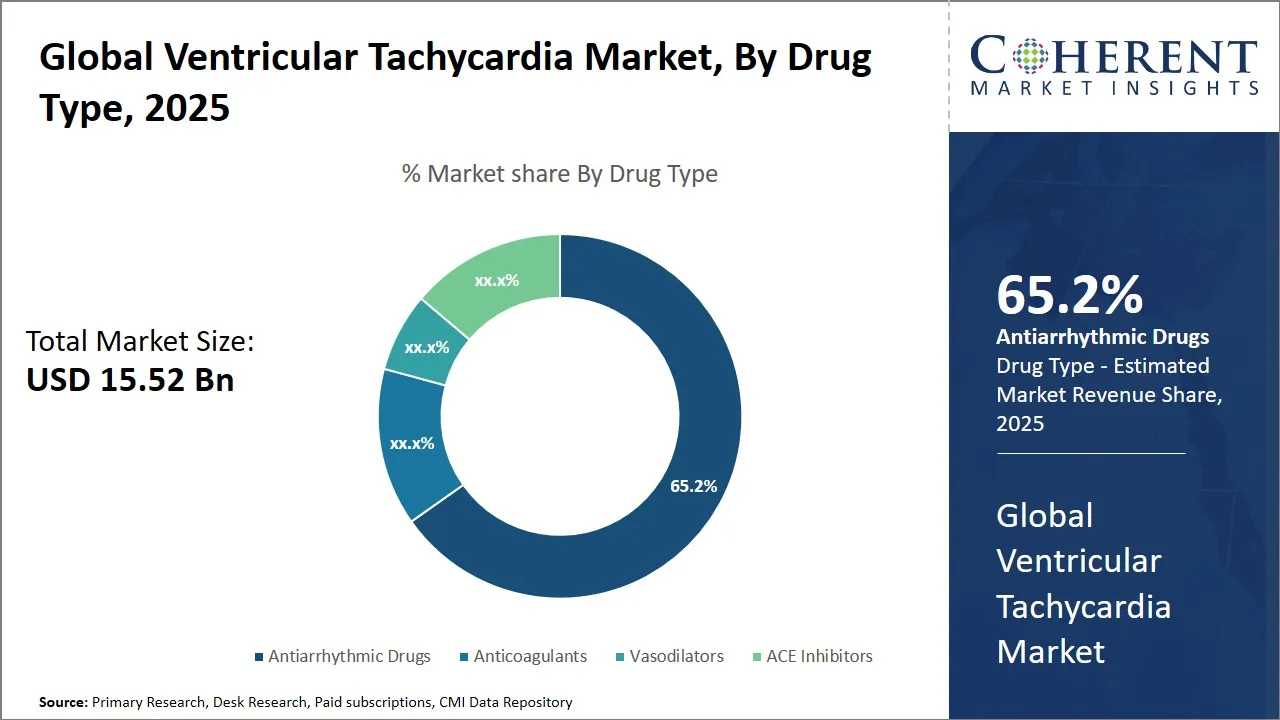
- Antiarrhythmic drugs segment is expected to account for the largest share of the global ventricular tachycardia market, representing 66.2 % share in 2026.
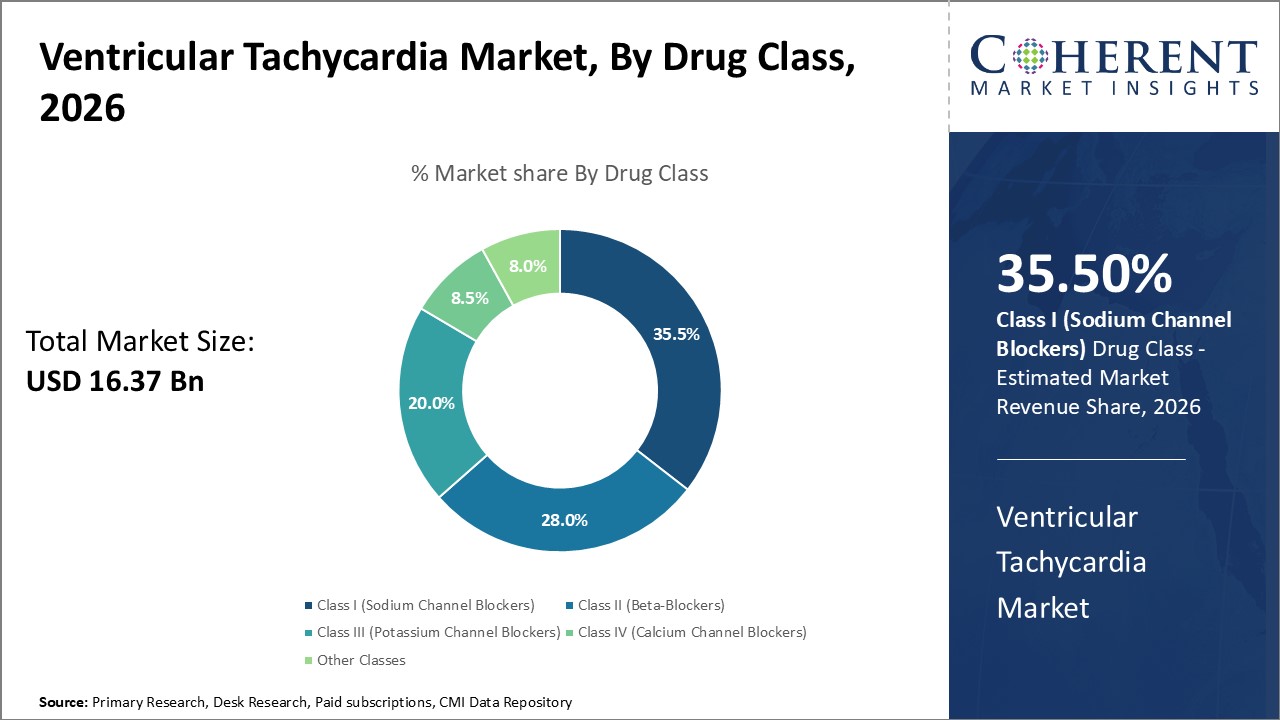
- Within drug class, Class I (sodium channel blockers) segment is estimated to dominate with a 35.5 % of the market share in 2026.
- The non-ischemic ventricular tachycardia segment is projected to lead the market with a 56.7 % share in 2026.
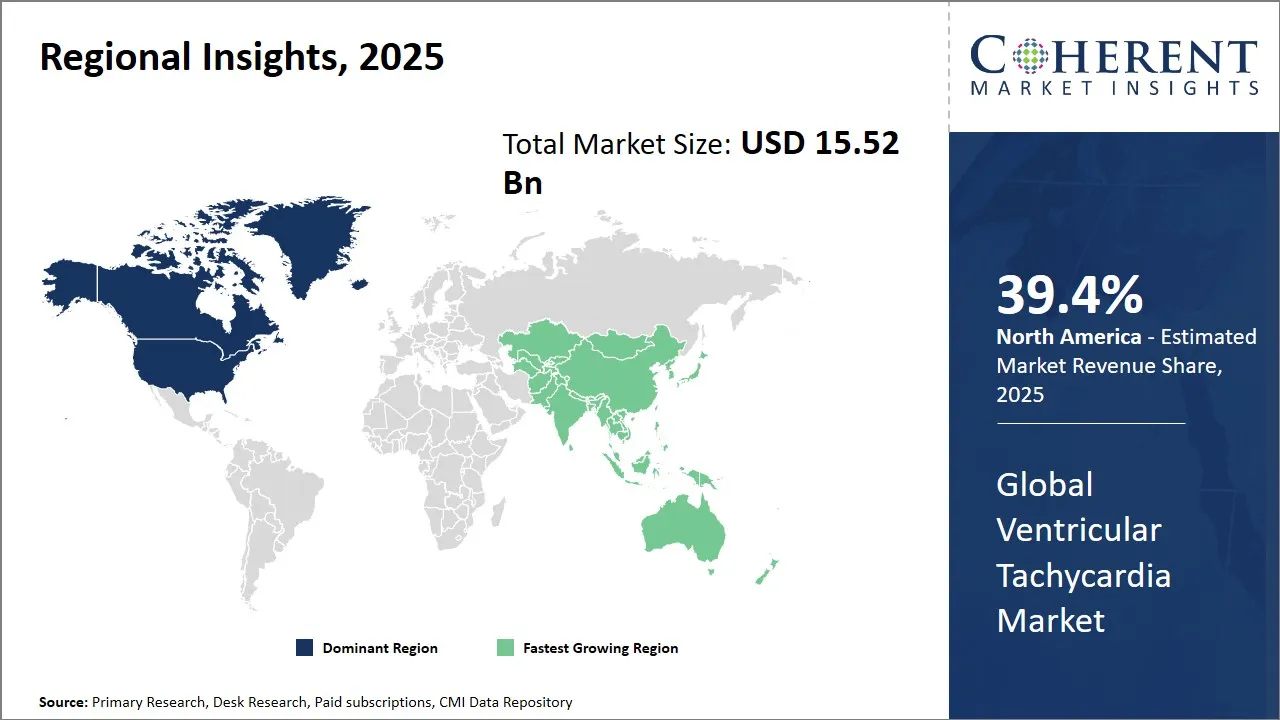
- North America is expected to lead the market, holding a share of 39.4 % in 2026.
- Asia Pacific is anticipated to be the fastest-growing region, with 23.5 % share in 2026.
Market Overview
- Current market trends highlight the growing reliance on advanced antiarrhythmic drug therapies, including next-generation formulations of amiodarone, sotalol, and lidocaine, aimed at improving rhythm control, reducing recurrence rates, and enhancing safety profiles in ventricular tachycardia management.
- Technological advancements, including AI-driven diagnostics and minimally invasive surgeries, are enhancing patient outcomes and driving market demand.
- Additionally, growing investments in research and development, along with expanding healthcare access in emerging economies, are shaping the landscape of the ventricular tachycardia market, promoting improved patient care and treatment options.
Current Events and Its Impact
Current Events | Description and its Impact |
Clinical Trials for Novel & Targeted Antiarrhythmic Agents |
|
Shifting Treatment Guidelines and Drug-Device Paradigms |
|
Segmental Insights
- Current Industry Events of 2026
- Market Size Estimation
- Regional Breakdown
- Competitive Landscape
- Customer Intelligence
- Segmental Analysis
- Pricing Analysis
- Key Market Drivers, Challenges & Future Trends
- Customized Insights Section
Why Do Antiarrhythmic Drugs Dominate the Global Ventricular Tachycardia Market in 2026?
Based on drug type, the antiarrhythmic drugs segment is expected to hold 66.2% share in 2026. This is mainly because of their direct and specific action of intervention to regulate abnormal heart rhythms that are the central focus of regulating ventricular tachycardia.
Antiarrhythmic drugs are medicines which are specifically needed to restore and maintain normal heart beat by altering electrical signals which control the heart contractions. This renders them essential during acute and chronic treatment of VT.
For example, Sanofi leads with amiodarone for acute and chronic ventricular arrhythmia and VT control. Pfizer remains strong in emergency arrhythmia care through injectable lidocaine. Bristol Myers Squibb supports long-term arrhythmia rhythm management with sotalol, reinforcing clinician trust and sustained antiarrhythmic drug demand.
(Source: https://www.sanofi.com/assets/countries/singapore/docs/Cordarone-IV-SG.pdf)
Why are Class I (Sodium Channel Blockers) Driving Growth in the Ventricular Tachycardia Market?
Class I (sodium channel blockers) are expected to dominate the market with a share of 35.5% in 2026. This supremacy has been attributed to their special capacity to prevent influx of sodium ions during cardiac action potential, which plays a central role in the initiation and propagation of abnormal ventricular depolarizations, which are characteristic of VT.
The reduction in excitability and slowness of conduction velocity in cardiac cells caused by Class I agents promptly causes disruption of reentrant loops that cause arranged arrhythmias, and as a result, Class I drugs have become a fundamental part of acute VT treatment.
Why is the Non-Ischemic Ventricular Tachycardia Segment Driving Market Growth?
The non-ischemic ventricular tachycardia segment is the most common segment of the disease type in the global ventricular tachycardia market with an estimated share of 56.7% in 2026. The trend is motivated by the growing awareness of the non-ischemic cardiomyopathies and other structural heart diseases which provoke VT regardless of the ischemic heart conditions.
Improvement of diagnostic imaging and electrophysiological testing has led to an increased rate of detection of VT due to non-ischemic etiologies including dilated cardiomyopathy, hypertrophic cardiomyopathy, arrhythmogenic right ventricular cardiomyopathy and idiopathic VT.
Reimbursement Landscape and Regional Coverage Variability in Ventricular Tachycardia Care
- Reimbursement and regional coverage variance significantly influences adoption of ventricular tachycardia diagnostics and therapies, as VT management depends on high-cost devices and procedures. Regions with strong payer support typically reimburse ECG monitoring, advanced imaging, electrophysiology studies, catheter ablation, ICD implantation, and post-procedure monitoring, enabling guideline-driven care. In contrast, limited or fragmented reimbursement restricts access to advanced interventions, increases out-of-pocket burden, and slows adoption of ICDs, mapping systems, and complex ablation technologies.
- Regionally, North America leads in coverage depth for VT devices and procedures, though approvals are tightly managed. Western Europe offers broad public reimbursement but faces country-level budget constraints and procedural delays. Japan benefits from structured national reimbursement once coding is established. Emerging markets show uneven access, where private hospitals adopt advanced VT solutions while public systems focus on basic diagnostics and acute care, creating significant within-region variability.
Regional Insights
North America Ventricular Tachycardia Market Analysis and Trends
The North America region is projected to lead the market with a 39.4% share in 2026, due to high incidence of cardiac arrhythmias and extensive investment in cardiovascular research. The advantage of having a developed healthcare ecosystem in North America is that it facilitates the quick uptake of sophisticated ventricular tachycardia management solutions. The region has a strong market leadership through the presence of such leaders as Medtronic, Boston Scientific, and Abbott, which is supported by the strategic collaborations and expansions.
In October 2026, Johnson and Johnson MedTech, a global cardiac device and technology leader, launched the CORE VA registry. The initiative will collect real world data on ventricular tachycardia ablation practices and outcomes. The registry aims to improve procedural standards, training, and patient access to ventricular tachycardia care. Data will support benchmarking of evolving ablation technologies across global electrophysiology centers.
Asia Pacific Ventricular Tachycardia Market Analysis and Trends
The ventricular tachycardia market in Asia Pacific is projected to have the highest growth because of the increased knowledge about cardiac health with a share of 23.5% in 2026, the provision of improved healthcare infrastructure, and the increment in governmental support on the management of cardiovascular diseases. The high rate of urbanization and increasing numbers of geriatrics contribute to the increased need to find effective treatment of ventricular tachycardia.
Further, multinationals are aggressively joining and increasing in the region and local manufacturers are emerging with cost effective solutions that are specific to regional demands. Such firms as MicroPort Scientific Corporation in China and Sundy Medical in India play significant roles, promoting innovation and availability.
Ventricular Tachycardia Market Outlook for Key Countries
What is Driving Growth in the U.S. Ventricular Tachycardia Market?
The U.S. ventricular tachycardia sector is characterized by high levels of adoption of highly sophisticated pharmacotherapy of antiarrhythmics and a swift pace of adoption of new formulations. Pfizer, Bristol Myers Squibb and Viatris are working to reinforce the supply of major drugs like amiodarone, lidocaine and beta-blockers in both acute care and chronic care units.
There is extensive insurance coverage, cardiac centers that are well established and ongoing NIH-supported cardiovascular research which helps in quick clinical assessment and optimization of VT drug interventions leading to long term expansion in the market.
What Factors are Shaping the Germany Ventricular Tachycardia Market?
The ventricular tachycardia market is advantaged by the high level of organization of the healthcare system and by the strict regulatory control of the healthcare sector that guarantees the presence of the proven antiarrhythmic drugs in Germany. Popular medications like amiodarone, sotalol and procainamide are regularly incorporated into both hospital and outpatient treatment regimens.
Powerful domestic pharmaceutical strength and government-funded cardiovascular initiatives help to build confidence among clinicians, which leads to a consistent demand of VT pharmacological management.
How is Japan’s Ventricular Tachycardia Market Evolving?
The demographic profile of Japan is aging and it has created huge demand on effective management of ventricular arrhythmias through the use of drugs. Universal health coverage facilitates wide access of patients to antiarrhythmic drugs such as amiodarone, class I and III drugs in both acute and long-term care.
The partnership of both multinational pharmaceutical companies like Sanofi and the domestic players, like Daiichi Sankyo, enhances localized production, regulatory congruence and sustained ventricular tachycardia drug therapy innovation.
India Ventricular Tachycardia Market Trends
The ventricular tachycardia market of India is influenced by the growing knowledge about cardiac arrhythmias and the growing dependence of the pharmacological intervention as a primary method of treatment. The generic drug companies like Sun Pharma, Cipla and Lupin are the key players in providing low cost antiarrhythmics like amiodarone, beta-blockers, and calcium channel blockers.
The access of drugs is enhanced by the government health programs, and the increase of tertiary cardiac care hospitals, the growth of the market in the long run is supported by the training of physicians and the adoption of therapy on a guideline basis.
Ventricular Tachycardia Diagnostic Pathway and Clinical Assessment Framework
- Symptom recognition including palpitations syncope dizziness or sudden cardiac arrest triggers immediate clinical evaluation
- First line diagnosis relies on 12-lead ECG to confirm ventricular tachycardia and differentiate it from supraventricular arrhythmias
- Hemodynamically unstable patients undergo continuous cardiac monitoring and rapid ECG-based decision making
- Laboratory testing assesses electrolytes cardiac biomarkers drug toxicity and reversible metabolic causes
- Etiology assessment uses echocardiography and cardiac MRI to detect structural heart disease scarring and ventricular dysfunction
- Ambulatory ECG monitoring captures intermittent or non-sustained VT episodes
- Electrophysiology studies define arrhythmia origin and guide ablation planning
- Diagnostic outcomes drive downstream therapy decisions including ICD implantation catheter ablation and long-term monitoring investments.
Market Players, Key Developments, and Competitive Intelligence
Key Developments
- On December 12, 2025, Milestone Pharmaceuticals, a cardiovascular drug developer, received U.S. FDA approval for Cardamyst nasal spray. Cardamyst, containing etripamil, treats acute paroxysmal supraventricular tachycardia and related ventricular tachycardia episodes in adults. The therapy allows patients to self-administer treatment outside hospitals, reducing emergency visits and care costs.
- In July 2025, Solid Biosciences, a U.S.-based precision genetic medicine company, received U.S. FDA Fast Track designation. The designation covers SGT-501, its AAV gene therapy for catecholaminergic polymorphic ventricular tachycardia. SGT-501 targets calcium regulation defects to prevent life threatening ventricular tachycardia episodes. The therapy already holds FDA IND clearance and Health Canada trial approval. Solid plans to begin a Phase 1b human trial later in 2025.
- In July 2025, AOP Health, a Europe based specialty pharmaceutical company, launched Rapiblyk in the United States. Rapiblyk is an intravenous landiolol therapy for supraventricular tachycardia and ventricular tachycardia related rate control. The FDA approval followed randomized trials showing rapid heart rate reduction within minutes. Rapiblyk is intended for intensive care, emergency, and perioperative hospital settings.
- In July 2025, AltaThera Pharmaceuticals, a hospital specialty drug company, received U.S. FDA approval for new Sotalol IV indications. The approval enables one-day outpatient initiation for atrial fibrillation and ventricular tachycardia patients. The updated dosing pathway reduces hospital stays from three days to one day. This change lowers costs while accelerating safe sotalol initiation for eligible patients.
Top Strategies Followed by Global Ventricular Tachycardia Market Players
Player Type | Strategic Focus | Examples |
Established Market Leaders | Heavy R&D investment in advanced ICDs, catheter ablation systems, and mapping technologies; integration of AI-enabled precision and reliability; strategic partnerships with OEMs, hospitals, and tech firms; aggressive global expansion via subsidiaries and alliances in Asia Pacific, Latin America, and the Middle East | Medtronic advances high-end ICDs and ablation platforms while expanding across emerging cardiac care markets; Abbott leverages partnerships and global distribution to scale electrophysiology and VT treatment solutions |
Mid-Level Players | Cost-optimized VT solutions balancing performance and affordability; collaboration with contract manufacturers and technology partners to improve efficiency; gradual feature upgrades; regional distributor and hospital partnerships to grow presence in price-sensitive markets | Biotronik focuses on competitively priced cardiac rhythm management devices with strong regional partnerships; MicroPort CRM expands VT-related device offerings through localized manufacturing and distributor alliances |
Small-Scale Players | Niche innovation in wearable VT monitoring, minimally invasive ablation tools, and remote diagnostics; adoption of AI/ML and digital health platforms; local alliances with startups, research institutes, and regional manufacturers to offset scale constraints | iRhythm Technologies develops wearable cardiac monitoring solutions targeting arrhythmia niches; AliveCor leverages AI-driven ECG monitoring and partnerships to penetrate specialized VT-related diagnostics segments |
Market Report Scope
Ventricular Tachycardia Market Report Coverage
| Report Coverage | Details | ||
|---|---|---|---|
| Base Year: | 2025 | Market Size in 2026: | USD 16.37 Bn |
| Historical Data for: | 2020 To 2024 | Forecast Period: | 2026 To 2033 |
| Forecast Period 2026 to 2033 CAGR: | 5.5% | 2033 Value Projection: | USD 23.82 Bn |
| Geographies covered: |
| ||
| Segments covered: |
| ||
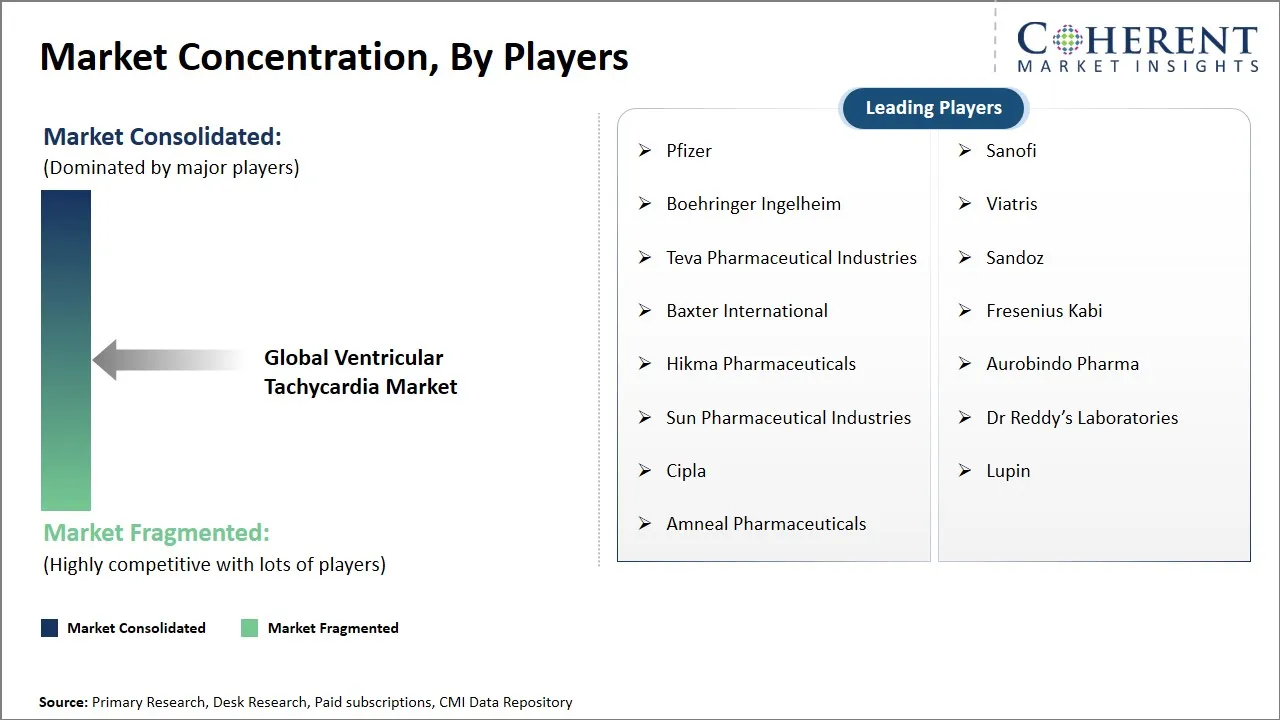
| Companies covered: | Pfizer, Sanofi, Boehringer Ingelheim, Viatris, Teva Pharmaceutical Industries, Sandoz, Baxter International, Fresenius Kabi, Hikma Pharmaceuticals, Aurobindo Pharma, Sun Pharmaceutical Industries, Dr Reddy’s Laboratories, Cipla, Lupin, and Amneal Pharmaceuticals | ||
| Growth Drivers: |
| ||
| Restraints & Challenges: |
| ||
Ventricular Tachycardia Market Dynamics
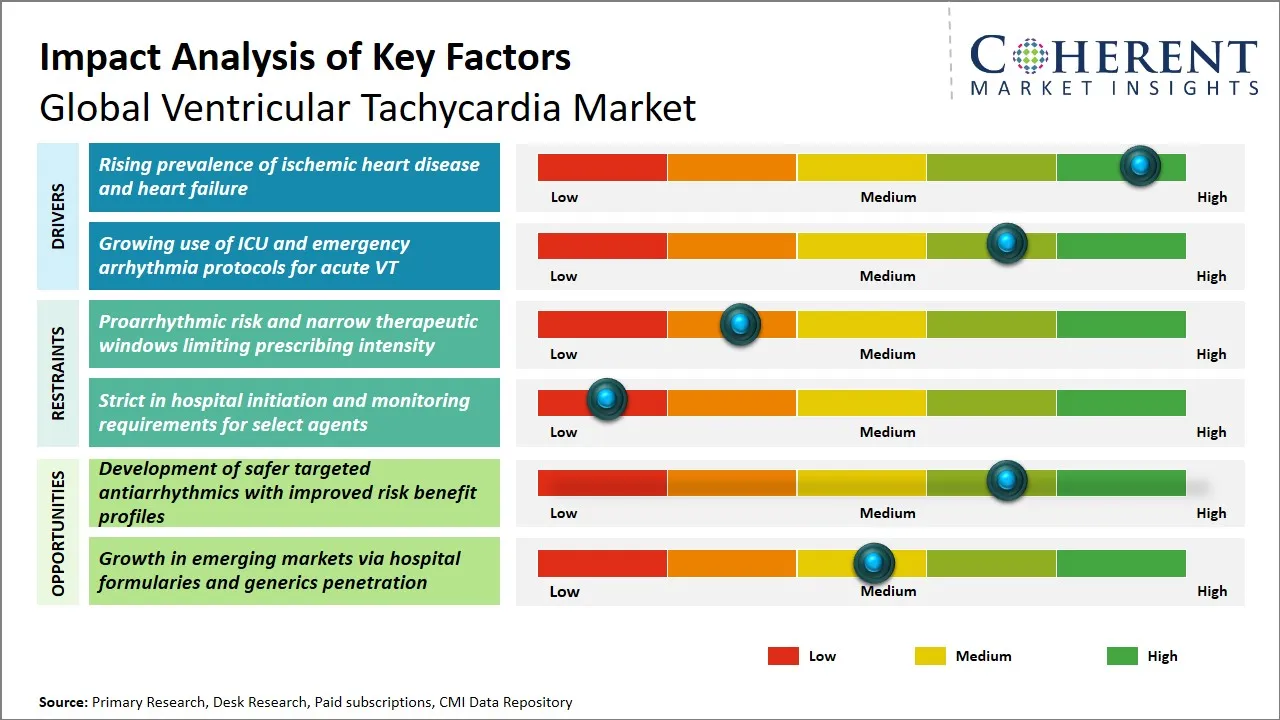
Ventricular Tachycardia Market Driver - Rising Prevalence of Ischemic Heart Disease and Heart Failure
The rising trend in the rate of ischemic heart disease (IHD) and heart failure globally is a major cause of the escalating need of more sophisticated ventricular tachycardia (VT) diagnostic and treatment models. Myocardial scarring and electrical instability frequently result because of the ischemic heart disease, which is a decreased blood flow to the heart muscle, thus providing an environment in which ventricular arrhythmias including VT develop.
Likewise, cardiac remodeling both structural and functional takes place in the patients with heart failure that renders them susceptible to life threatening ventricular tachycardias. This increased number of patients requires an improved clinical intervention to control and reduce the risks of VT. Increased use of catheter ablation systems, implantable cardioverter defibrillator (ICDs), and antiarrhythmic drugs are being used to treat these diseases.
In July 2025, World Health Organization, a global public health agency addressing noncommunicable diseases, highlighted rising cardiovascular disease deaths including ventricular tachycardia. WHO reported nearly 19.8 million global CVD deaths, driven by heart attacks, strokes, and life-threatening arrhythmias like VT. The organization stressed early detection, affordable medicines, and device access to manage ventricular tachycardia and other cardiac disorders.
(Source: https://www.who.int/news-room/fact-sheets/detail/cardiovascular-diseases-(cvds))
Ventricular Tachycardia Market Opportunity - Development of Safer Targeted Antiarrhythmics with Improved Risk-Benefit Profiles
The global ventricular tachycardia market has a huge future due to the innovation of safer targeted antiarrhythmic therapy with better risk-benefit situations. The existing modality of treating VT such as traditional antiarrhythmics, tend to have significant side effects and safety implications, limiting their extended regimen and medication compliance by patients. The development of molecular biology and pharmacogenomics has led to the development of next-generation antiarrhythmic medications, which directly strike abnormal atrial ion channels and signaling pathways that cause arrhythmogenesis. The goal of these targeted therapies is to minimize off-target effects, decrease the risk of proarrhythmia, and enhance the overall patient outcomes.
For example, several biopharmaceutical companies are actively pursuing safer, targeted antiarrhythmic therapies for ventricular tachycardia. Xention, a U.K.-based ion channel drug discovery company, is developing highly selective sodium and potassium channel modulators to reduce proarrhythmic risk. Bayer, a global life sciences company, continues advanced research on cardiac ion channel selectivity within its cardiovascular pipeline.
Analyst Opinion (Expert Opinion)
- Ventricular tachycardia market is developing in terms of quicker diagnosis, acute care preparedness and controlled administration of antiarrhythmic drugs in the hospitals. Increasing incidences of ischemic heart disease and heart failure remain as a source of demand and better emergent response mechanisms and ICU guidelines facilitate uniform drug use. Simultaneously, the problem of safety, the low therapeutic index, and the growing popularity of catheter ablation in the course of the long-term treatment are critical issues. These forces are providing the chance of safer formulations of drugs, ready-to-use injectable drugs in hospitals and more tailored pharmacological approaches to match the risk patterns of patients.
- Industry development has been strengthened by the international cardiology conferences like the European Society of cardiology Congress, Heart rhythm Society scientific sessions, and American college of cardiology annual meeting among others where ventricular arrhythmia management is a fundamental theme. The sites have increased the pace of guideline congruency and sharing of real-life evidence. New hospital-based VT care pathway initiatives and pharma investments in lifecycle management and real-world studies are defining a more integrated, results-based market perspective of the marketplace instead of volume growth in its purest sense.
Speak to the analyst
Want personalized insights?
Take the findings above to one of our principal consultants, or have the report rebuilt around the segments, geographies and competitors you actually track.
Market Segmentation
- Drug Type Insights (Revenue, USD Bn, 2021 - 2033)
- Antiarrhythmic Drugs
- Anticoagulants
- Vasodilators
- ACE Inhibitors
- Drug Class Insights (Revenue, USD Bn, 2021 - 2033)
- Class I (Sodium Channel Blockers)
- Class II (Beta-Blockers)
- Class III (Potassium Channel Blockers)
- Class IV (Calcium Channel Blockers)
- Other Classes
- Disease Type Insights (Revenue, USD Bn, 2021 - 2033)
- Non-Ischemic Ventricular Tachycardia
- Ischemic Ventricular Tachycardia
- Route of Administration Insights (Revenue, USD Bn, 2021 - 2033)
- Oral
- Intravenous
- Subcutaneous
- Therapy Line Insights (Revenue, USD Bn, 2021 - 2033)
- First-Line Therapy
- Second-Line Therapy
- Rescue/Refractory Therapy
- Patient Age Group Insights (Revenue, USD Bn, 2021 - 2033)
- Pediatric
- Adult
- Geriatric
- Type Insights (Revenue, USD Bn, 2021 - 2033)
- Brand
- Generic
- Distribution Channel Insights (Revenue, USD Bn, 2021 - 2033)
- Hospital Pharmacies
- Retail Pharmacies
- Online Pharmacies
- End User Insights (Revenue, USD Bn, 2021 - 2033)
- Hospitals
- Cardiac Care Centers
- Emergency Care Units
- Ambulatory Care Settings
- Regional Insights (Revenue, USD Bn, 2021 - 2033)
- North America
- U.S.
- Canada
- Latin America
- Brazil
- Argentina
- Mexico
- Rest of Latin America
- Europe
- Germany
- U.K.
- Spain
- France
- Italy
- Russia
- Rest of Europe
- Asia Pacific
- China
- India
- Japan
- Australia
- South Korea
- ASEAN
- Rest of Asia Pacific
- Middle East
- GCC Countries
- Israel
- Rest of Middle East
- Africa
- South Africa
- North Africa
- Central Africa
- North America
- Key Players Insights
- Pfizer
- Sanofi
- Boehringer Ingelheim
- Viatris
- Teva Pharmaceutical Industries
- Sandoz
- Baxter International
- Fresenius Kabi
- Hikma Pharmaceuticals
- Aurobindo Pharma
- Sun Pharmaceutical Industries
- Dr Reddy’s Laboratories
- Cipla
- Lupin
- Amneal Pharmaceuticals
Sources
Primary Research Interviews
Industry Stakeholders
- Cardiac Electrophysiologists
- Interventional Cardiologists
- Hospital Pharmacy Heads
- Cardiology Department Directors
- Clinical Trial Investigators – Arrhythmia Programs
- Medical Affairs Professionals – Cardiac Drugs
End Users
- Tertiary Care Hospitals
- Cardiac Specialty Hospitals
- Emergency Care Centers
- Intensive Care Units
- Outpatient Cardiology Clinics
- Ambulatory Surgical Centers
Government and International Databases
- World Health Organization (WHO)
- U.S. Food and Drug Administration (FDA)
- European Medicines Agency (EMA)
- Centers for Disease Control and Prevention (CDC)
- National Institutes of Health (NIH)
- OECD Health Statistics
Trade Publications
- Cardiovascular Business
- MedTech Dive
- Pharmaceutical Technology
- Drug Discovery Today
- BioPharma Dive
- Clinical Leader
Academic Journals
- Journal of the American College of Cardiology (JACC)
- Circulation
- European Heart Journal
- Heart Rhythm
- Journal of Cardiovascular Electrophysiology
- The Lancet Cardiology
Reputable Newspapers
- The New York Times
- Financial Times
- The Wall Street Journal
- The Guardian
- The Washington Post
- Bloomberg
Industry Associations
- American Heart Association (AHA)
- European Society of Cardiology (ESC)
- Heart Rhythm Society (HRS)
- World Heart Federation
- International Society for Holter and Noninvasive Electrocardiology
- Asian Pacific Society of Cardiology
Public Domain Resources
- ClinicalTrials.gov
- MedlinePlus
- OpenFDA
- Eurostat Health Database
- National Health Service (NHS) Data
Proprietary Elements
- CMI Data Analytics Tool: Proprietary analytics tool to analyze real-time market trends, consumer behavior, and technology adoption in market
- Proprietary CMI Existing Repository of Information for Last 8 Years
Get access to 250+ pages report
Every segment, forecast, competitor profile and data table behind the analysis above — available for instant download.
- ESOMAR Member
- ISO 9001:2015 Certified
- D-U-N-S Registered
- GDPR & CCPA Compliant
Missing comfort of reading report in your local language? Find your preferred language:
Transform your Strategy with Exclusive Trending Reports
Frequently Asked Questions
The global ventricular tachycardia market is estimated to be valued at USD 16.37 Bn in 2026 and is expected to reach USD 23.82 Bn by 2033.
The CAGR of global ventricular tachycardia market is projected to be 5.5% from 2026 to 2033.
Rising prevalence of ischemic heart disease and heart failure and growing use of ICU and emergency arrhythmia protocols for acute VT are the major factors driving the growth of the global ventricular tachycardia market.
Proarrhythmic risk and narrow therapeutic windows limiting prescribing intensity and strict in hospital initiation and monitoring requirements for select agents are the major factors hampering the growth of the global ventricular tachycardia market.
In terms of drug type, antiarrhythmic drugs are estimated to dominate the market revenue share in 2026.
Yes, many ventricular tachycardia cases are effectively controlled with long-term antiarrhythmic drug therapy.
Diagnosis relies on ECG findings, Holter monitoring, and electrophysiology studies.