

Blood Molecular Biology Tubes Market Size and Forecast – 2026 to 2033
The Blood Molecular Biology Tubes Market is anticipated to grow at a CAGR of 6.7% with USD 2.7 Bn in 2026 and is expected to reach USD 3.8 Bn in 2033. Key drivers of the Blood Molecular Biology Tubes Market include increasing demand for molecular diagnostics, rising rates of cancer and genetic disorders, higher healthcare spending, and greater adoption of advanced blood-sample preservation technologies. Global cancer incidence is projected to increase by 67% to 34.4 million new cases annually by 2050, primarily due to population growth and aging.
Key Takeaways
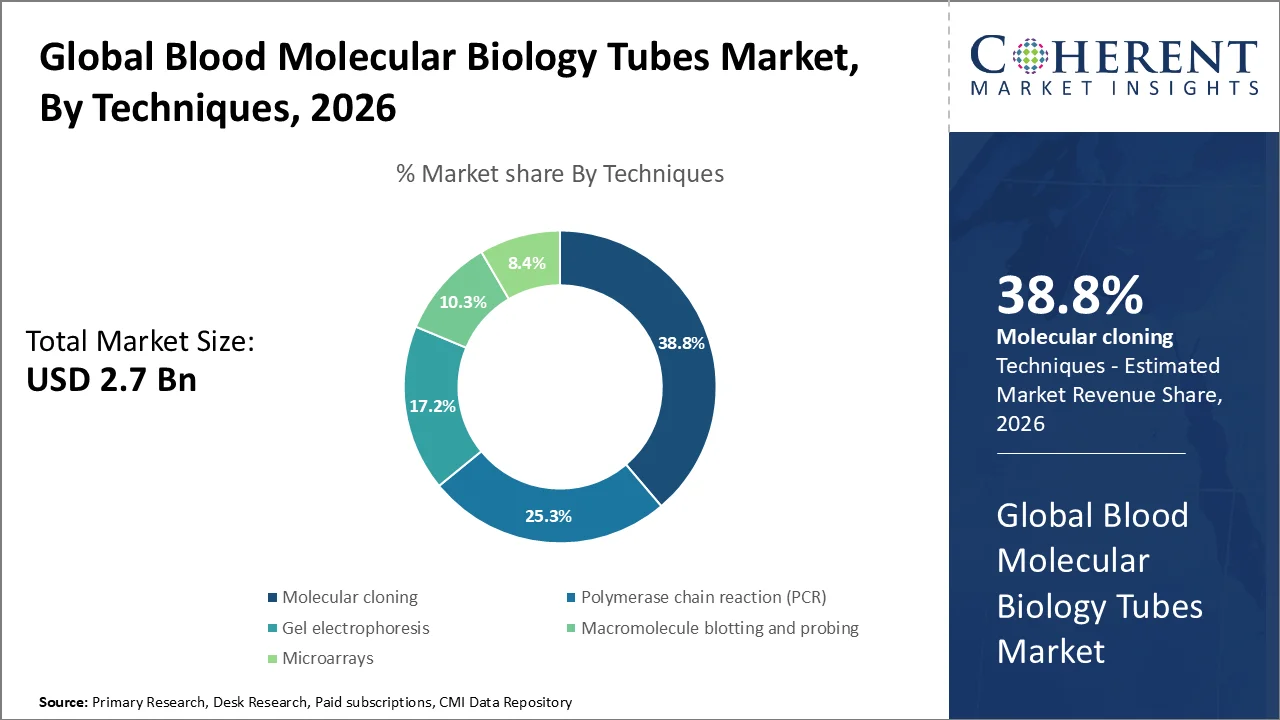
- Molecular cloning holds the largest market share of 38.8% in 2026 owing to the expansion of genetic research and genomics. Molecular cloning enables scientists to amplify and modify target genes and insert them into plasmids for replication and protein expression.
- Hospitals expected to hold largest market share of 39.8% in 2026 owing to its rising hospital diagnostic testing volumes. Diagnostic volumes in these areas are growing by approximately 25% annually, compared with 10% in metropolitan areas, and smaller cities already contribute around 40% of total revenue.
- North America is expected to acquire the dominant share of 43.6% in 2026 owing to the strong adoption of precision medicine.
Current Events and Their Impact on the Blood Molecular Biology Tubes Market
Current Event | Description and its Impact |
U.S. FDA Classification of Blood Collection Tubes for Cell-Free Nucleic Acids |
|
U.S. FDA Classification and 510(k) Requirements for DNA Blood Collection Devices |
|
Segmental Insights
- Current Industry Events of 2026
- Market Size Estimation
- Regional Breakdown
- Competitive Landscape
- Customer Intelligence
- Segmental Analysis
- Pricing Analysis
- Key Market Drivers, Challenges & Future Trends
- Customized Insights Section
Why is Molecular cloning Acquiring the Largest Market Share?
Molecular cloning holds the largest market share of 38.8% in 2026. Researchers increasingly use blood-derived genomic DNA for genetic research, PCR amplification, sequencing, and biomarker studies, driving demand for molecular cloning applications. Specialized blood molecular biology tubes help researchers preserve high-quality, intact nucleic acids during collection, transport, and storage. Advances in direct PCR and cloning workflows simplify DNA amplification from blood samples and encourage adoption. Meanwhile, expanding genomics, personalized medicine, and molecular diagnostics increase the need for reliable blood specimens that support efficient downstream cloning and molecular analysis. Revvity Inc. announced that its Revvity Signals Software business has launched Signals BioDesign, a cloud-native molecular cloning solution designed to streamline workflows for biologics research.
Which End User segment dominates the market?
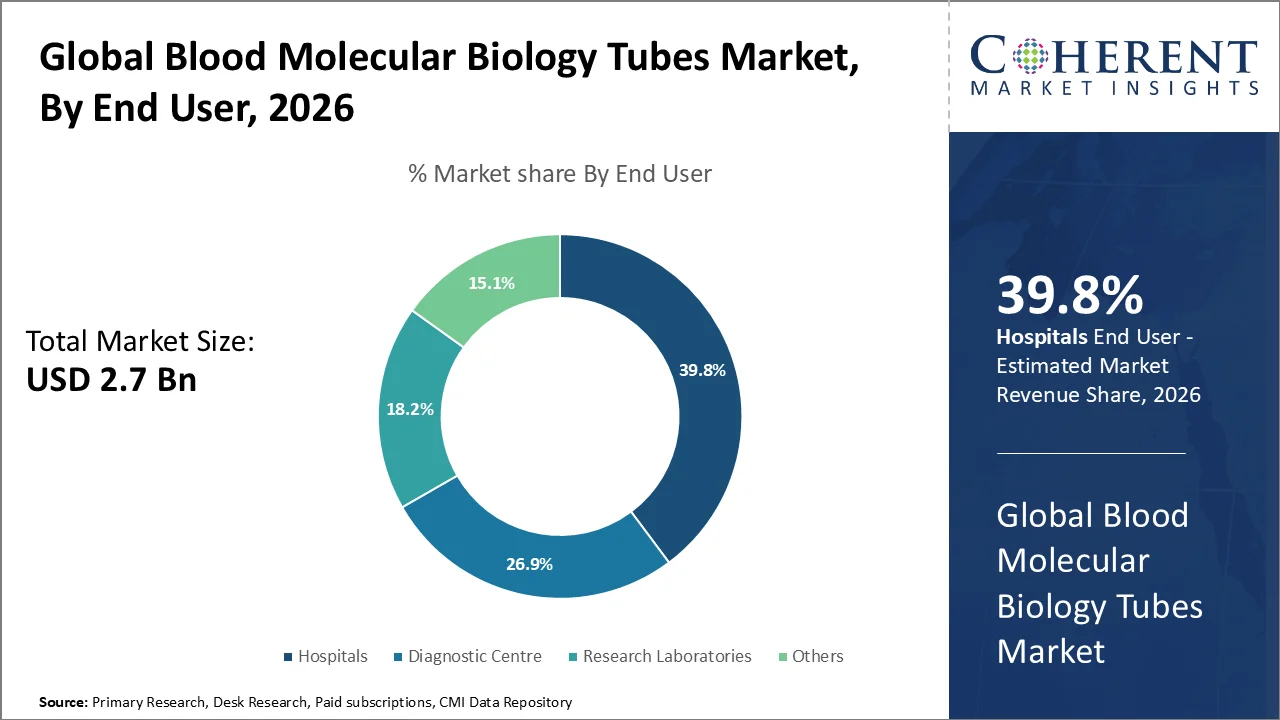
Hospitals expected to hold largest market share of 39.8% in 2026. Hospitals strengthen the Blood Molecular Biology Tubes Market by increasing diagnostic testing, managing higher patient volumes, and adopting molecular assays for chronic and infectious diseases. More than 90% of adults aged 65 and older have at least one chronic condition. Healthcare facilities use reliable tubes to collect, preserve, and transport blood samples for PCR, genetic testing, biomarker analysis, and other laboratory applications. Hospitals also adopt automated laboratory systems, creating demand for standardized, high-quality tubes that support efficient sample processing. Furthermore, advances in precision medicine, laboratory modernization, and improved specimen quality management continue to drive market demand.
Blood Molecular Biology Tubes Market Trends
- Growing adoption of molecular diagnostics: The increasing use of genomic and molecular testing is creating demand for blood collection tubes capable of preserving DNA, RNA, and other molecular analytes for PCR, sequencing, and genetic testing. A strong indication of this trend is the UK Biobank’s whole-genome sequencing dataset covering 500,000 participants, with blood samples serving as the source of genetic material.
- Increasing laboratory automation: Large-scale genomic and biobank programs demonstrate the importance of standardized, automation-compatible sample tubes. UK Biobank reports that its repository currently holds around 17 million containers containing blood, urine, and saliva samples, including approximately 11 million samples at its main laboratory. Its automated −80°C freezer uses robotics capable of retrieving approximately 250,000 samples per year.
- Expansion of precision medicine and genomics: The growth of precision medicine is increasing the need for high-quality blood specimens for genomic profiling and pharmacogenomic testing. The U.S. National Human Genome Research Institute reports that more than 98% of people may carry at least one genomic variant that could affect their response to commonly prescribed medications, while pharmacogenomic testing can analyze DNA obtained from blood, saliva, or cheek swabs.
- Expansion of biobanking and population genomics: The scale of modern population biobanks provides a major demand base for specialized blood collection and preservation systems. UK Biobank recruited 503,317 participants, with approximately 50 mL of blood collected from each participant at the baseline visit.
Regional Insights
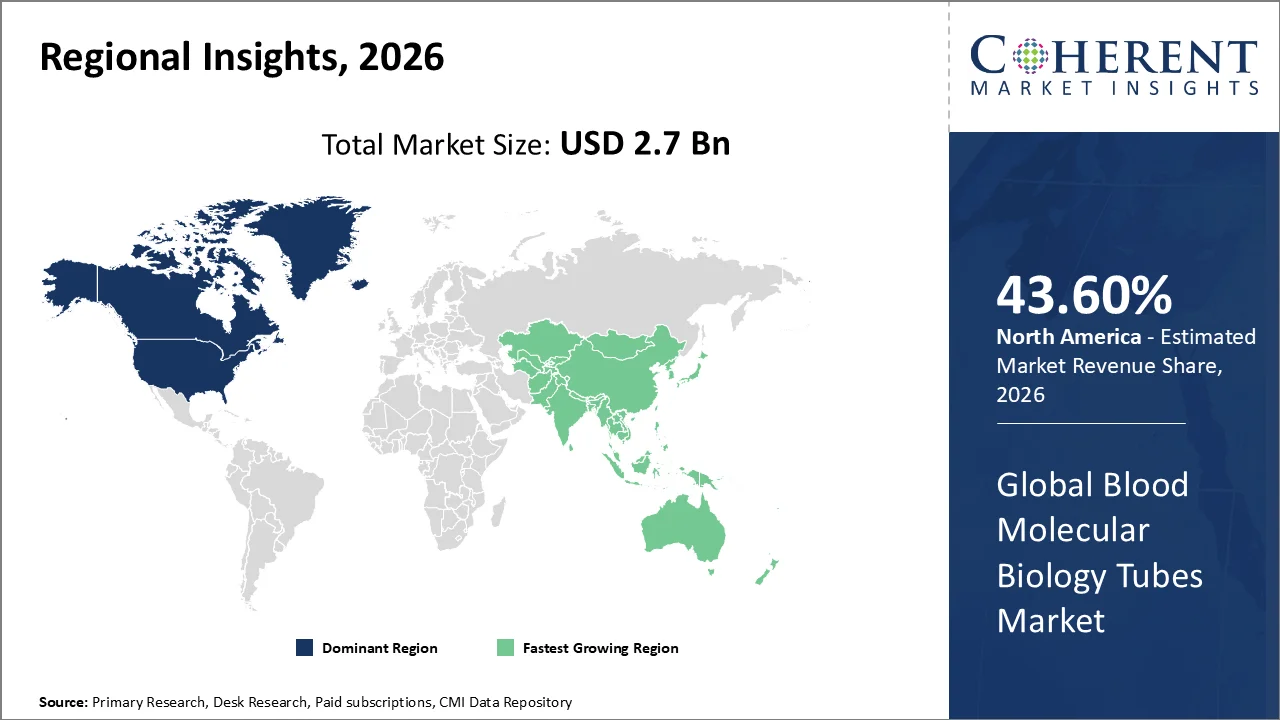
North America dominates owing to stringent quality and safety requirements
North America is expected to acquire the dominant share of 43.60% in 2026. North America drives the Blood Molecular Biology Tubes Market by expanding molecular diagnostics, strengthening healthcare infrastructure, and increasing genetic and infectious-disease testing. Healthcare providers use PCR, sequencing, and biomarker analysis more widely, increasing demand for dependable blood specimen collection and preservation. Precision-medicine programs, liquid-biopsy applications, laboratory automation, and biomedical research further stimulate demand. In addition, growing cancer and chronic-disease testing encourages frequent blood-based molecular analysis, prompting healthcare facilities to adopt specialized tubes that preserve sample quality throughout collection and processing. In 2026, the United States is projected to record approximately 2.11 million new cancer cases and 626,140 cancer-related deaths. In July 2026, YD Bio Limited and Numia Health Inc. launched a six-month pilot in British Columbia to evaluate physician-ordered, blood-based cancer testing and expand access to advanced molecular diagnostics.
Asia Pacific Blood Molecular Biology Tubes Market Trends
Asia Pacific’s blood molecular biology tubes market benefits from expanding diagnostic infrastructure, increased healthcare investment, and rising demand for molecular testing. The growing prevalence of cancer, diabetes, cardiovascular diseases, and infectious diseases drives healthcare providers to adopt more blood-based diagnostic and monitoring procedures. India has more than 100 million people living with diabetes and approximately 136 million with prediabetes, placing the country among the nations most affected by the diabetes burden. Laboratories increasingly use specialized tubes to maintain sample integrity for PCR, sequencing, liquid biopsy, and precision medicine applications. Government healthcare initiatives, expanding hospital and laboratory networks, increased research activities, and wider adoption of advanced diagnostic technologies across China, India, Japan, South Korea, and Southeast Asia further strengthen market growth. Azooka Labs launched mWRAPR, India’s first indigenous biological transport and storage medium for research use in genomic sequencing labs, biobanks, and molecular research facilities.
United States Blood Molecular Biology Tubes Market Trends
The United States blood molecular biology tubes market benefits from growing demand for molecular diagnostics for infectious diseases, cancer, genetic disorders, and personalized medicine. Hospitals, clinical laboratories, and research institutions increasingly conduct diagnostic tests, creating greater demand for reliable blood-sample collection and preservation. Advances in PCR and sequencing technologies encourage laboratories to adopt specialized tubes. Laboratory automation, strict sample-quality standards, preventive healthcare initiatives, and the country’s well-developed healthcare infrastructure further drive the adoption of high-quality molecular blood collection tubes. Caris Life Sciences launched Caris Detect, a multi-cancer early detection blood test that uses ultra-deep whole-genome and whole-transcriptome sequencing with AI to identify cancer signals earlier.
China Blood Molecular Biology Tubes Market Trends
China’s blood molecular biology tubes market is growing as healthcare providers expand molecular diagnostics, chronic disease screening, and precise specimen collection. Government programs are strengthening healthcare infrastructure and preventive testing, enabling hospitals and laboratories to increase diagnostic capacity across major cities and emerging regions. Biotechnology companies, pharmaceutical researchers, and precision medicine initiatives are driving demand for specialized tubes that maintain nucleic-acid integrity. Laboratories are adopting automation and standardized testing protocols, while domestic medical-device manufacturers are developing advanced tubes to meet rising demand. In July 2026, Shanghai launched China’s first AI-driven laboratory designed for fully unmanned scientific research, marking a significant advancement in AI-enabled materials science R&D.
Who are the Major Companies in Blood Molecular Biology Tubes Industry
Some of the major key players in Blood Molecular Biology Tubes are BD, Greiner, Ajosha Bio Teknik Pvt. Ltd., Narang Medical Limited., Goldwin Medicare Ltd., Beijing Hanbaihan Medical Devices Co., Ltd. and Gosselin.
Key News
- In July 2026, YD Bio Limited partnered with Numia Health Inc. to launch a six-month pilot in British Columbia, Canada, evaluating a cross-border clinical workflow for physician-ordered, blood-based cancer testing. The program integrates physician access, certified mobile blood collection, cross-border specimen transport, and laboratory testing.
Market Report Scope
Blood Molecular Biology Tubes Market Report Coverage
| Report Coverage | Details | ||
|---|---|---|---|
| Base Year: | 2025 | Market Size in 2026: | USD 2.7 Bn |
| Historical Data for: | 2020 To 2024 | Forecast Period: | 2026 To 2033 |
| Forecast Period 2026 to 2033 CAGR: | 6.7% | 2033 Value Projection: | USD 3.8 Bn |
| Geographies covered: |
| ||
| Segments covered: |
| ||
| Companies covered: | BD, Greiner, Ajosha Bio Teknik Pvt. Ltd., Narang Medical Limited., Goldwin Medicare Ltd., Beijing Hanbaihan Medical Devices Co., Ltd. and Gosselin. | ||
Analyst Opinion
- Molecular testing is becoming the decision point for more clinical pathways. In my view, the strongest demand driver is not simply higher laboratory volumes but the shift toward tests that require high-quality nucleic-acid preservation. China’s National Health Commission reported more than 4.1 billion medical laboratory tests performed in public hospitals in 2023, illustrating the enormous specimen-processing base that can support continued adoption of specialized blood collection tubes.
- China’s oncology burden makes molecular blood collection increasingly difficult to ignore. China recorded approximately 4.8 million new cancer cases in 2022, according to the International Agency for Research on Cancer. This creates particularly strong underlying demand for tubes used in circulating tumor DNA, liquid biopsy, and molecular oncology workflows, where sample stability can directly affect downstream sequencing and diagnostic reliability.
- The rise of precision medicine will favor tubes engineered for molecular workflows rather than conventional collection alone. China has built a substantial sequencing and genomic-testing ecosystem, while liquid biopsy studies increasingly demonstrate the clinical value of detecting tumor-derived DNA from blood. For example, ctDNA testing can support mutation profiling and treatment monitoring without requiring repeated tissue biopsies. In my assessment, this will push laboratories toward collection tubes that better protect cell-free DNA and reduce pre-analytical variability.
- China’s aging population will reinforce demand for molecular diagnostics. More than 216 million people in China were aged 65 or above in 2023. This demographic shift as a structural catalyst because older populations generate greater demand for cancer screening, chronic-disease monitoring, and complex diagnostic testing. Consequently, laboratories will increasingly prioritize standardized blood collection systems that deliver consistent molecular-quality specimens.
Speak to the analyst
Want personalized insights?
Take the findings above to one of our principal consultants, or have the report rebuilt around the segments, geographies and competitors you actually track.
Market Segmentation
- By Techniques (Revenue, USD Bn, 2021-2033)
- Molecular cloning
- Polymerase chain reaction (PCR)
- Gel electrophoresis
- Macromolecule blotting and probing
- Microarrays
- By End User (Revenue, USD Bn, 2021-2033)
- Hospitals
- Diagnostic Centre
- Research Laboratories
- Others
- By Region (Revenue, USD Bn, 2021-2033)
- North America
- U.S.
- Canada
- Latin America
- Brazil
- Mexico
- Argentina
- Rest of Latin America
- Europe
- Germany
- U.K.
- France
- Italy
- Spain
- Russia
- Rest of Europe
- Asia Pacific
- China
- India
- Japan
- Australia
- South Korea
- ASEAN
- Rest of Asia Pacific
- Middle East
- GCC
- Israel
- Rest of Middle East
- Africa
- South Africa
- Central Africa
- North Africa
- North America
Sources
Primary Research interviews
- Clinical laboratory directors and pathologists
- Molecular diagnostics laboratory managers
- Phlebotomy and specimen-collection specialists
- Hospital procurement and laboratory purchasing managers
- Biotechnology and genomic-testing professionals
- Blood collection tube manufacturers and product-development specialists
- In-vitro diagnostics regulatory and quality-assurance professionals
- Biobank and biorepository managers
Databases
- PubMed
- National Center for Biotechnology Information (NCBI)
- ClinicalTrials.gov
- U.S. FDA Medical Device Databases
- WHO Global Health Observatory
- OECD Health Statistics
- World Bank Data
- Eurostat
- National health and laboratory statistics databases
- China National Health Commission databases and statistical releases
Magazines
- LabMedica
- Medical Device Network
- Diagnostic Products
- Laboratory Equipment
- MLO: Medical Laboratory Observer
- Genetic Engineering & Biotechnology News (GEN)
- BioSpectrum
Journals
- Clinical Chemistry and Laboratory Medicine
- Clinical Biochemistry
- Journal of Clinical Laboratory Analysis
- Clinical Chemistry
- Molecular Diagnostics & Therapy
- Journal of Molecular Diagnostics
- Biopreservation and Biobanking
- Transfusion
- Journal of Clinical Microbiology
- Nature Biotechnology
- BMC Medical Genomics
- Frontiers in Molecular Biosciences
Newspapers
- China Daily
- Xinhua
- People's Daily
- South China Morning Post
- The Guardian
- The New York Times
- Financial Times
- Reuters
Associations
- Clinical and Laboratory Standards Institute (CLSI)
- American Association for Clinical Chemistry (AACC)
- American Society for Clinical Pathology (ASCP)
- Association for Molecular Pathology (AMP)
- International Federation of Clinical Chemistry and Laboratory Medicine (IFCC)
- European Federation of Clinical Chemistry and Laboratory Medicine (EFLM)
- International Society for Biological and Environmental Repositories (ISBER)
- International Organization for Standardization (ISO)
Public Domain sources
- U.S. Food and Drug Administration (FDA)
- Centers for Disease Control and Prevention (CDC)
- World Health Organization (WHO)
- National Institutes of Health (NIH)
- National Center for Biotechnology Information (NCBI)
- U.S. National Library of Medicine (NLM)
- China National Health Commission
- National Medical Products Administration (NMPA), China
- National Bureau of Statistics of China
- European Medicines Agency (EMA)
- European Centre for Disease Prevention and Control (ECDC)
- International Agency for Research on Cancer (IARC)
- U.S. National Cancer Institute (NCI)
- Centers for Medicare & Medicaid Services (CMS)
- OECD
- World Bank
- Clinical laboratory and medical-device regulatory filings
Proprietary Elements
- CMI Data Analytics Tool
- Proprietary CMI Existing Repository of information for last 10 years
Get access to 250+ pages report
Every segment, forecast, competitor profile and data table behind the analysis above — available for instant download.
- ESOMAR Member
- ISO 9001:2015 Certified
- D-U-N-S Registered
- GDPR & CCPA Compliant
Missing comfort of reading report in your local language? Find your preferred language:
Transform your Strategy with Exclusive Trending Reports
Frequently Asked Questions
The Blood Molecular Biology Tubes Market is anticipated to grow at a CAGR of 6.7% with USD 2.7 Bn in 2026 and is expected to reach USD 3.8 Bn in 2033.
Blood molecular biology tubes are specialized collection tubes designed to collect and preserve blood specimens for molecular testing.
The increasing use of PCR, genomic testing, liquid biopsy, infectious-disease testing, and personalized medicine is driving demand.
DNA and RNA can degrade or change during transportation and storage, potentially affecting downstream molecular results.
Hospitals, diagnostic laboratories, research laboratories, biotechnology companies, pharmaceutical companies, and biobanks represent important end users.