

Global Electron Microscope Market Size and Forecast – 2026 to 2033
The global electron microscope market size is expected to reach USD 6.13 Bn by 2033, from USD 3.17 Bn in 2026, exhibiting a CAGR of 9.9% during the forecast period.
Key Takeaways
- Based on Type, the Scanning Electron Microscope (SEM) segment is expected to lead the global electron microscope market, account for the largest share in 2026, driven by SEMs’ versatility in surface imaging, ease of sample preparation, and widespread applications.
- Based on Application, the Life Sciences segment is expected to dominate the market with the highest share in 2026, driven by the widespread adoption of electron microscopy in biological research, drug discovery, and medical diagnostics.
- Based on End User, the Academic and Research Institutes segment is projected to stand as the greatest contributor to the market in 2026, driven by extensive use of electron microscopes in fundamental research, materials science studies, and nanotechnology development.
- Based on Region, North America is expected to lead the market, holding a share of 42.1% in 2026. While, Asia Pacific is anticipated to be the fastest-growing region, with an estimated market share of 31.2% in 2026.
Market Overview
The global electron microscope market demand is growing rapidly, driven by advancements in nanotechnology, materials science, and life sciences. Increasing R\&D investments in pharmaceuticals, semiconductors, and academic research are fueling adoption. High-resolution imaging needs in nanotechnology and industrial applications, along with expanding use in life sciences and materials analysis, are further boosting market growth globally.
Current Events and their Impact on the Electron Microscope Market
Current Event | Description and its Impact |
US-China Technology War and Export Controls |
|
Semiconductor Supply Chain Disruptions and Reshoring Initiatives |
|
AI Revolution and Microscopy Automation |
|
Advancements and Innovation in the Electron Microscope Market
- Cryo-Electron Microscopy (Cryo-EM): Enables imaging of biomolecules at near-atomic resolution, revolutionizing structural biology.
- Integration with AI & Machine Learning: Enhances image processing, anomaly detection, and automated analysis for faster results.
- Improved Resolution & 3D Imaging: Next-gen microscopes provide sub-angstrom resolution and advanced 3D visualization for nanomaterials and life sciences.
- Compact & Hybrid Models: Portable and cost-efficient designs are making electron microscopy accessible for smaller labs.
- Automation & Remote Operation: Robotics and digital platforms support high-throughput analysis and remote collaborations.
- Current Industry Events of 2026
- Market Size Estimation
- Regional Breakdown
- Competitive Landscape
- Customer Intelligence
- Segmental Analysis
- Pricing Analysis
- Key Market Drivers, Challenges & Future Trends
- Customized Insights Section
Role of AI (Artificial Intelligence) in Electron Microscope
Artificial intelligence (AI) plays a transformative role in electron microscopy by enhancing speed, accuracy, and efficiency in data acquisition and analysis. In modern electron microscopes, AI algorithms automate complex tasks such as image alignment, noise reduction, and feature recognition, significantly reducing the need for manual intervention. Machine learning models can quickly identify patterns in large datasets, enabling faster and more precise characterization of materials at the atomic level. AI also supports adaptive imaging, optimizing settings in real-time for better image quality.
Thermo Fisher Scientific introduced the Metrios 6, a next-generation automated scanning transmission electron microscope (S)TEM designed for high-volume semiconductor manufacturing. Equipped with advanced hardware, AI, and machine learning algorithms, it enhances productivity by enabling fast, automated metrology and high-quality data acquisition from complex devices and new materials.
Segmental Insights
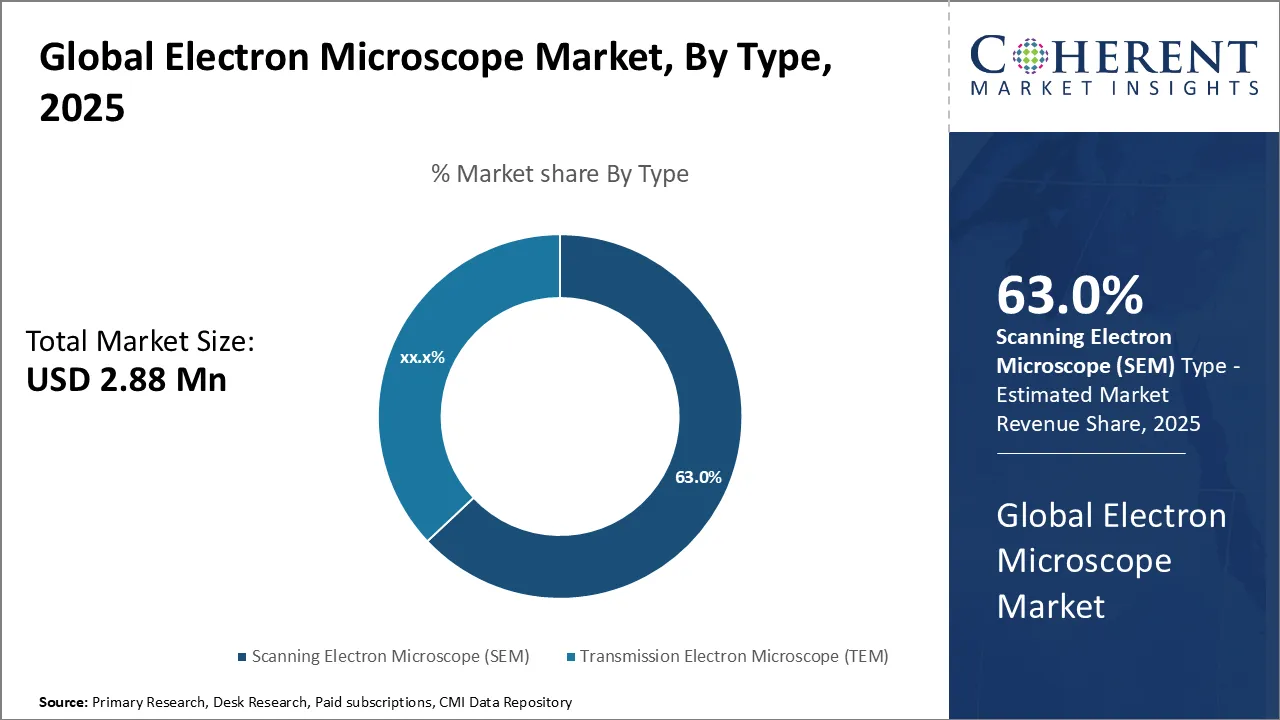
Global Electron Microscope Market Insights, By Type: Scanning Electron Microscope (SEM) is Dominating Due To Their Versatility in Surface Imaging and Broad Industrial and Research Applications
In terms of type, the Scanning Electron Microscope (SEM) segment is projected to account for the largest share in 2026, driven by SEMs’ versatility in surface imaging, ease of sample preparation, and widespread applications across materials science, semiconductors, nanotechnology, and industrial quality control. Their ability to provide detailed 3D surface morphology and elemental analysis makes SEMs the preferred choice for research and industrial applications.
For instance, in March 2025, Shimadzu Corporation launched two models of the SUPERSCAN SS-4000 scanning electron microscope in Japan, marking the debut of its joint brand with TESCAN, “Shimadzu by TESCAN.” Optimized for low-acceleration and low-vacuum observation, the SS-4000 enables high-resolution imaging of non-conductive samples without pretreatment.
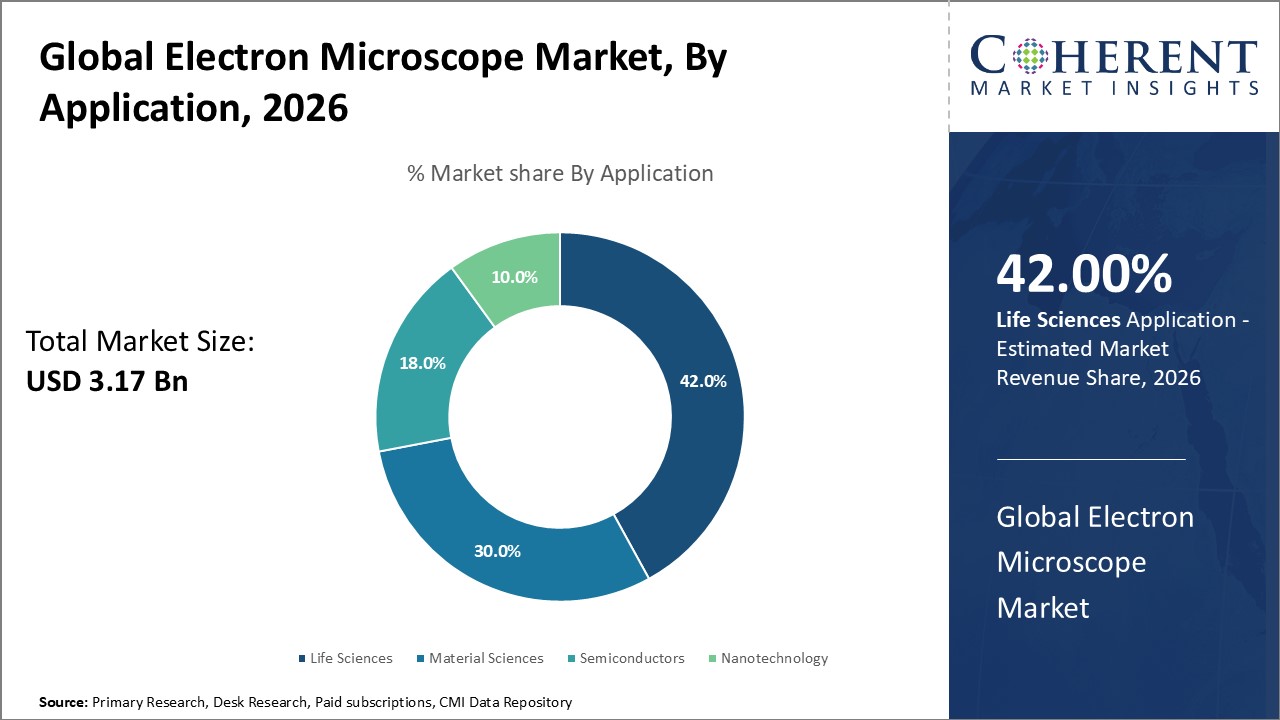
Global Electron Microscope Market Insights, By Application: Life Sciences is Driven by High-Resolution Imaging Needs in Biological Research, Drug Discovery, And Medical Diagnostics
In terms of application, the life sciences segment is projected to hold the greatest share in 2026, driven by the widespread adoption of electron microscopy in biological research, drug discovery, and medical diagnostics, including imaging of cells, viruses, and biomolecules. The growing demand for high-resolution imaging in pharmaceuticals, biotechnology, and academic research further strengthens the segment’s leading position.
For instance, in July 2025, Thermo Fisher Scientific unveiled two advanced electron microscopes at Microscopy & Microanalysis (M&M) 2025 in Salt Lake City. The Scios™ 3 FIB-SEM enhances site-specific quality control for industry and academia, while the Talos™ 12 TEM provides high-resolution, user-friendly imaging for life sciences, including biological research, pathology, and drug development, expanding accessibility to advanced microscopy.
Global Electron Microscope Market Insights, By End User: Academic and Research Institutes is Leading Due To Extensive Use in Research, Nanotechnology, and Materials Science Studies
In terms of end user, the academic and research institutes segment expected to capture the greatest share of the market in 2026, driven by extensive use of electron microscopes in fundamental research, materials science studies, and nanotechnology development. Academic and research institutions invest heavily in advanced TEM and SEM systems for detailed imaging, analysis, and experimentation, making them the primary end-users of electron microscopy equipment worldwide.
For instance, in October 2024, AMOLF unveiled its new Transmission Electron Microscope (TEM) during the Sustainable Energy Materials symposium. This advanced instrument enables real-time observation of materials at the atomic scale under light exposure. The event featured keynote talks from experts like Dr. Sophie Meuret and Prof. Ulrich Lorenz, highlighting TEM's role in advancing sustainable energy research
Regional Insights
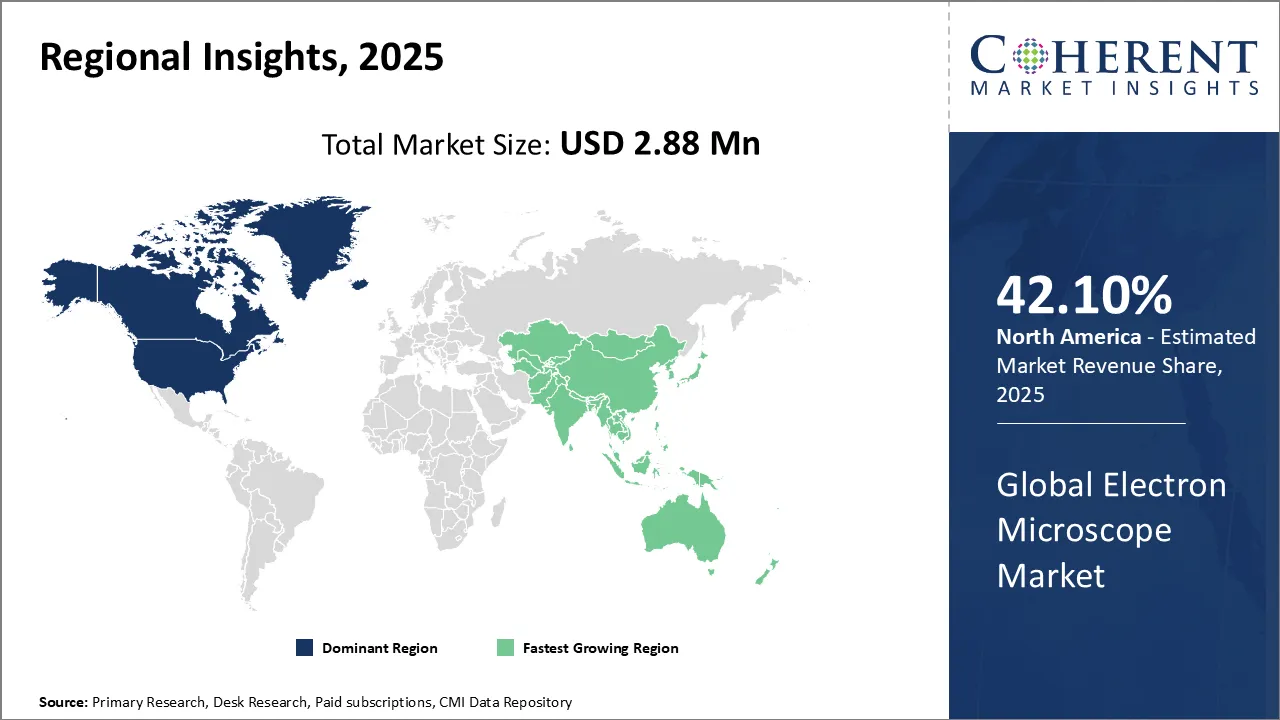
North America Electron Microscope Market Analysis & Trends
North America region is projected to lead the market with a 42.1% share in 2026, driven by the presence of leading manufacturers like Thermo Fisher Scientific and Zeiss, substantial R&D investments in pharmaceuticals, semiconductors, and materials science, and widespread adoption of advanced imaging technologies in academic, industrial, and biotech research institutions across the U.S. and Canada.
For instance, in March 2026, Thermo Fisher Scientific unveiled its Iliad platform, a cutting-edge scanning transmission electron microscope (STEM) designed to advance materials discovery. Featuring innovations in optics, automation, and data acquisition, the Iliad enhances resolution and simplifies complex workflows.
Asia Pacific Electron Microscope Market Analysis & Trends
Asia Pacific region is expected to exhibit the fastest growth with a share of 31.2% in 2026, driven by rapid industrialization, growing investments in nanotechnology and semiconductor research, and expanding academic and pharmaceutical R&D. Countries like China, Japan, and India are increasingly adopting advanced TEM and SEM systems for materials analysis, life sciences research, and electronics development, fueling regional market growth.
For instance, in July 2026, the Research Institute of Tropical Medicine (RITM) launched a news field emission-transmission electron microscope and upgrade electron microscopy laboratory through its Pathology department. The aim of the launch is to enhance capabilities on processing of samples for routine diagnostics, research, and surveillance, it will also leverage the Institute’s responsiveness to emerge pathogens of pandemic potential.
Electron Microscope Market Outlook Country-Wise
The U.S. Electron Microscope Market Trends
The United States is a major contributor to the electron microscope market demand in 2026, driven by strong adoption across universities, research institutes, and industrial R\&D centers. Leading sectors such as semiconductors, life sciences, and advanced materials rely heavily on electron microscopy for precision imaging and analysis. Additionally, robust federal funding and private investments in nanotechnology and biotechnology research further boost market growth.
For instance, in August 2026, A new core facility, Feinberg Advanced Cryo Electron-Microscopy and Tomography (FACET) has opened at Northwestern, offering a state-of-the-art Glacios-2 Cryo-Transmission Electron Microscope along with grid preparation equipment and expert training. The facility aims to accelerate research into protein structures, disease mechanisms, and drug design.
China Electron Microscope Market Trends
China is a key growth driver in the electron microscope market due to rapid industrialization and advancements in nanotechnology and semiconductor research. Expanding academic and research institutions are heavily investing in high-resolution imaging tools to support innovation in materials science, electronics, and biotechnology. Government-backed R\&D initiatives and growing demand from industrial sectors further accelerate adoption across the country.
For instance, in September 2026, Zeiss, doubled local revenue at its Suzhou plant in the first year, now leading global electron microscopy shipments. The facility combines advanced optical manufacturing and R&D, serving both domestic and international markets, underscoring Zeiss’ commitment to localization and strengthening China’s role in high-end scientific equipment.
Market Report Scope
Electron Microscope Market Report Coverage
| Report Coverage | Details | ||
|---|---|---|---|
| Base Year: | 2025 | Market Size in 2026: | USD 3.17 Bn |
| Historical Data for: | 2020 To 2024 | Forecast Period: | 2026 To 2033 |
| Forecast Period 2026 to 2033 CAGR: | 9.9% | 2033 Value Projection: | USD 6.13 Bn |
| Geographies covered: |
| ||
| Segments covered: |
| ||
| Companies covered: | Carl Zeiss AG, Hitachi High-Technologies Corporation, Advantest Corporation, JEOL Ltd., Nikon Instruments, Inc., tescan orsay holding, a.s., Oxford Instruments plc, Bruker Corporation, Thermo Fisher Scientific, Inc., and Delong Instruments AS. | ||
| Growth Drivers: |
| ||
| Restraints & Challenges: |
| ||
Global Electron Microscope Market Drivers
- Advancements in nanotechnology and material science: Advancements in nanotechnology and material science have played a pivotal role in driving the growth of the electron microscope market in recent years. As materials are engineered at an increasingly granular scale, there is a growing need to observe and characterize them at high magnifications and resolutions. Researchers across various sectors, such as semiconductors, life sciences, and nanomaterials, are leveraging electron microscopes to gain valuable insights into microscopic structures and processes. Recent innovations in materials like graphene and two-dimensional crystals have opened up new frontiers. These atomically thin materials exhibit unique properties and functionalities that depend greatly on their atomic structure, bond orientations, and defects. Detailed visualization and analysis provided by high-end electron microscopes have become indispensable for advancing research and development of such novel materials.
Analyst Opinion (Expert Opinion)
The electron microscope market value is undergoing a significant transformation, driven by technological advancements and evolving industry demands.
A notable trend is the increasing adoption of artificial intelligence (AI) integration in electron microscopes. This integration enhances automation, accelerates data analysis, and improves image quality, thereby streamlining workflows in research and industrial applications. For instance, advancements in scanning electron microscopes (SEMs) have led to the development of systems capable of automatic image collection, live energy dispersive X-ray spectroscopy (EDS) analysis, and rapid 3D imaging.
Regionally, North America continues to dominate the market, accounting for over 42.1% of the global share in 2025. The presence of leading manufacturers such as Thermo Fisher Scientific and JEOL, coupled with substantial investments in research and development, bolsters this dominance.
However, challenges persist, including the high cost of acquisition and maintenance of advanced electron microscopes, as well as the need for specialized training to operate these complex instruments. Addressing these issues is crucial for sustaining growth and expanding the accessibility of electron microscopy technologies.
In conclusion, the electron microscope market is poised for continued growth, propelled by technological innovations and strategic investments, despite existing challenges.
Speak to the analyst
Want personalized insights?
Take the findings above to one of our principal consultants, or have the report rebuilt around the segments, geographies and competitors you actually track.
Recent Developments
- In June 2025, Cuba’s Center for Genetic Engineering and Biotechnology (CIGB) installed a new LVEM 25E all-in-one low-voltage electron microscope under the Probiocuba initiative to enhance its biotech and pharmaceutical research capabilities. The device supports TEM, SEM, STEM, ED and EDS imaging, and aims to improve diagnostics, drug-development and molecular analysis in Cuban health sciences.
- In June 2025, TESCAN, a Czech-based electron microscope manufacturer, is advancing in the semiconductor sector with AI-enhanced failure analysis solutions tailored for advanced packaging. Their integrated workflow combines scanning electron microscopy (SEM), focused ion beam (FIB) systems, and 4D STEM technology to expedite defect detection and improve yield outcomes.
- In May 2024, Hitachi High-Tech Corporation launched SU3900SE and SU3800SE series high-resolution Schottky field emission scanning electron microscopes. These advanced instruments enable efficient observation of large and heavy specimens—up to 5 kg and 300 mm in diameter, at the nano level.
Market Segmentation
- By Type (Revenue, USD Bn, 2021 - 2033)
- Transmission Electron Microscope (TEM)
- Scanning Electron Microscope (SEM)
- By Application (Revenue, USD Bn, 2021 - 2033)
- Life Sciences
- Material Sciences
- Semiconductors
- Nanotechnology
- By End User (Revenue, USD Bn, 2021 - 2033)
- Academic and Research Institutes
- Pharmaceutical and Biotechnology Companies
- Industrial Users
- By Region (Revenue, USD Bn, 2021 - 2033)
- North America
- U.S.
- Canada
- Latin America
- Brazil
- Argentina
- Mexico
- Rest of Latin America
- Europe
- Germany
- U.K.
- Spain
- France
- Italy
- Russia
- Rest of Europe
- Asia Pacific
- China
- India
- Japan
- Australia
- South Korea
- ASEAN
- Rest of Asia Pacific
- Middle East
- GCC Countries
- Israel
- Rest of Middle East
- Africa
- South Africa
- North Africa
- Central Africa
- North America
- Top Companies in the Global Electron Microscope Market
- Carl Zeiss AG
- Hitachi High-Technologies Corporation
- Advantest Corporation
- JEOL Ltd.
- Nikon Instruments, Inc.
- tescan orsay holding, a.s.
- Oxford Instruments plc
- Bruker Corporation
- Thermo Fisher Scientific, Inc.
- Delong Instruments AS
Sources
Primary Research — Interviews from the following stakeholders
- Interviews with instrument OEMs, microscope service & maintenance providers, university core-facility managers, materials characterization labs, semiconductor fab metrology leads, life-sciences imaging core managers, clinical pathology lab directors, pharmaceutical R&D heads, electron microscopy training providers, procurement heads at research institutions, and equipment distributors across leading global markets.
Specific stakeholders
- Product and R&D leads at electron microscope OEMs
- Service, calibration and spare-parts managers at instrument service houses and authorized service centers.
- Directors and managers of university/core imaging facilities
- Metrology and process engineers at semiconductor fabs and advanced packaging sites
- Materials science and failure-analysis engineers at automotive and aerospace OEMs and suppliers.
- Clinical pathology lab directors and histology/imaging leads at large hospital systems
- Structural biology and cryo-EM group leaders in pharmaceutical and biotech R&D
- Procurement heads at government research labs
- Instrumentation and microscopy trainers at specialist training centers and continuing education providers.
- Distributors and channel partners focused on scientific instruments and laboratory equipment.
- Heads of shared-instrumentation cores at large corporations and contract research organizations (CROs).
Databases
- World Trade Organization (WTO) Trade Statistics
- UN Comtrade Database
- OECD Statistics (science & technology; trade in advanced instruments)
- Eurostat (industrial equipment & high-tech trade datasets)
- China Customs Statistics / General Administration of Customs (imports/exports of precision instruments)
- Korea Customs Service Data Portal
- Japan External Trade Organization (JETRO) trade and industry data
- Directorate General of Commercial Intelligence & Statistics (DGCIS), India
- U.S. International Trade Commission (USITC) data portal
- Clarivate (Web of Science) and Scopus for publication and citation analytics (proprietary academic databases)
- National patent databases (USPTO, JPO, CNIPA, EPO Espacenet) for technology trends
Magazines & Trade Publications
- Microscopy Today
- Microscopy and Analysis (and Microscopy & Analysis magazine)
- Imaging & Microscopy (industry trade titles)
- Analytical Scientist (industry features)
- Nature Methods — Instrumentation & Methods section (magazine/journal crossover)
- The Scientist — Methods and Technology coverage
- Lab Manager — Equipment & Facilities features
- Semiconductor Engineering — metrology & inspection coverage
Peer-Reviewed Journals
- Journal of Microscopy
- Ultramicroscopy
- Micron
- Microscopy Research and Technique
- Journal of Structural Biology
- Journal of Electron Microscopy
- Journal of Microscopy and Microanalysis (Microscopy & Microanalysis journal)
- Journal of Materials Science (instrumentation & characterization papers)
Newspapers & Business Press
- The Wall Street Journal — Tech & Industry sections
- Financial Times — Electronics / Technology & Markets coverage
- Nikkei Asia — Electronics manufacturing & supply chain
- South China Morning Post — Technology & manufacturing reporting
- The Economic Times — Industry & Manufacturing (India)
- The Hindu Business Line — Technology & Industry reporting
Associations, Societies & Standards Bodies
- Microscopy Society of America (MSA)
- Royal Microscopical Society (RMS) / British Society for Microscopy
- European Microscopy Society (EMS)
- International Federation of Societies for Microscopy (IFSM)
- Japan Society of Microscopy / Japanese Society for Microscopy
- Electron Microscopy Society of India (or national microscopy societies)
- International Union of Crystallography (IUCr) — instrumentation and methods overlap
- ASTM International and ISO committees relevant to microscopy sample prep and metrology standards
Public-domain government & institutional sources
- National Institute of Standards and Technology (NIST), U.S. — measurement science, calibration, and standards for electron microscopy and metrology
- National Institutes of Health (NIH) — biomedical imaging infrastructure and funding databases
- U.S. Department of Commerce / Bureau of Economic Analysis — relevant manufacturing & trade statistics
- Ministry of Science & Technology / Department of Science & Technology (DST), India — research infrastructure and capital equipment policies
- Ministry of Economy, Trade and Industry (METI), Japan — instrumentation industry reports
- European Commission research & innovation reports (Horizon programmes, major facility funding)
- U.S. International Trade Commission (USITC) tariff and trade investigations (instrument imports/exports)
- National research facility inventories (e.g., national synchrotron and imaging facility reports)
Proprietary / Internal Elements
- CMI Data Analytics Tool, and Proprietary CMI Existing Repository of information for last 8 years
Get access to 250+ pages report
Every segment, forecast, competitor profile and data table behind the analysis above — available for instant download.
- ESOMAR Member
- ISO 9001:2015 Certified
- D-U-N-S Registered
- GDPR & CCPA Compliant
Missing comfort of reading report in your local language? Find your preferred language:
Transform your Strategy with Exclusive Trending Reports
Frequently Asked Questions
The Global Electron Microscope Market is estimated to be valued at USD 3.17 Bn in 2026, and is expected to reach USD 6.13 Bn by 2033.
High costs associated with acquisition and maintenance of advanced electron microscopes and lack of skilled professionals for operating electron microscopes are the key factors hampering the growth of the global electron microscope market.
Rising demand from the healthcare sector and advancements in nanotechnology and material science are the major factors driving the global electron microscope market growth
Scanning Electron Microscope (SEM) is the major type segment in global electron microscope market.
The major players operating in the global electron microscope market are Carl Zeiss AG, Hitachi High-Technologies Corporation, Advantest Corporation, JEOL Ltd., Nikon Instruments, Inc., tescan orsay holding, a.s., Oxford Instruments plc, Bruker Corporation, Thermo Fisher Scientific, Inc., and Delong Instruments AS.
North America is expected to lead the global electron microscope market and account for over 42.1% of the market share by 2033.
The CAGR of the Global Electron Microscope Market is projected to be 9.9% from 2026 to 2033.