

Food Intolerance Products Market Size and Forecast – 2026-2033
The Food Intolerance Products Market size is estimated to be valued at USD 24.48 Bn in 2026 and is expected to reach USD 39.31 Bn by 2033, exhibiting a compound annual growth rate (CAGR) of 7.0% from 2026 to 2033. The market has been witnessing steady growth over the past few years driven by the rising prevalence of food intolerance disorders among consumers and growing awareness about the availability of specialized food products.
Key Takeaways
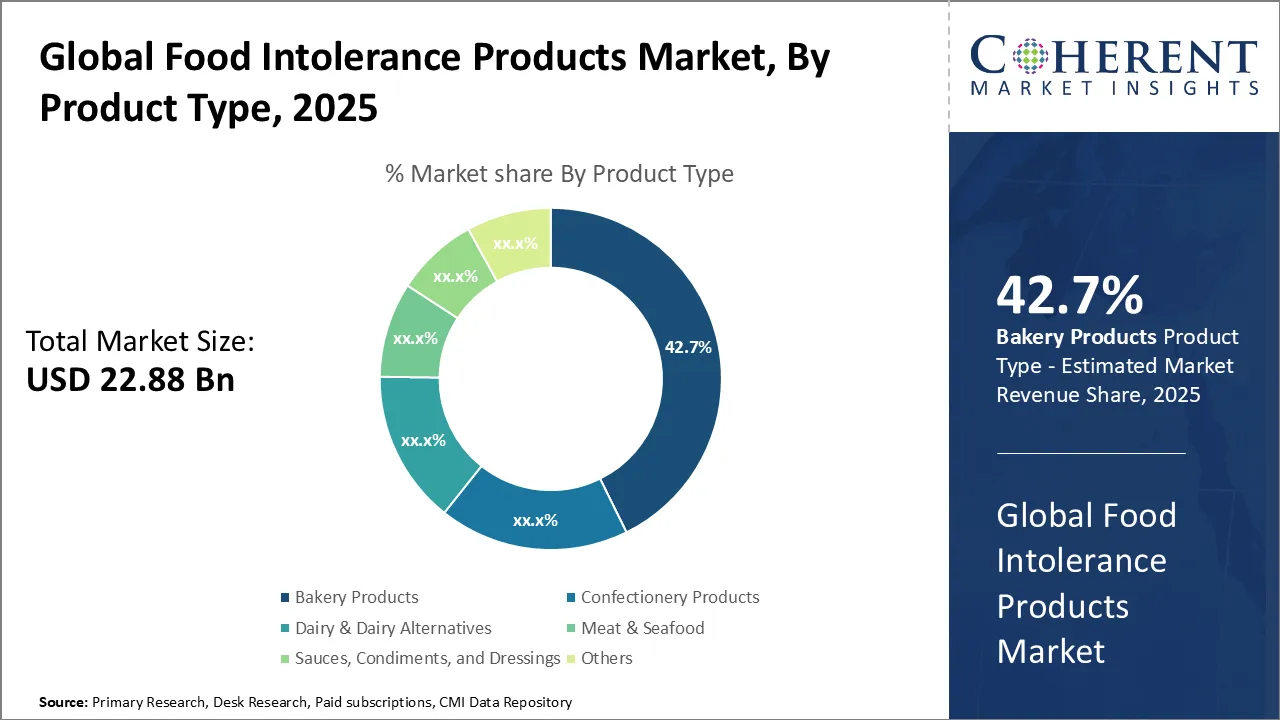
- By Product Type, Bakery based Food Intolerance Products Markets will be the most active with a hefty 43.7% share by 2026 because the availability of gluten-free and allergen-free baked goods is gradually increasing.
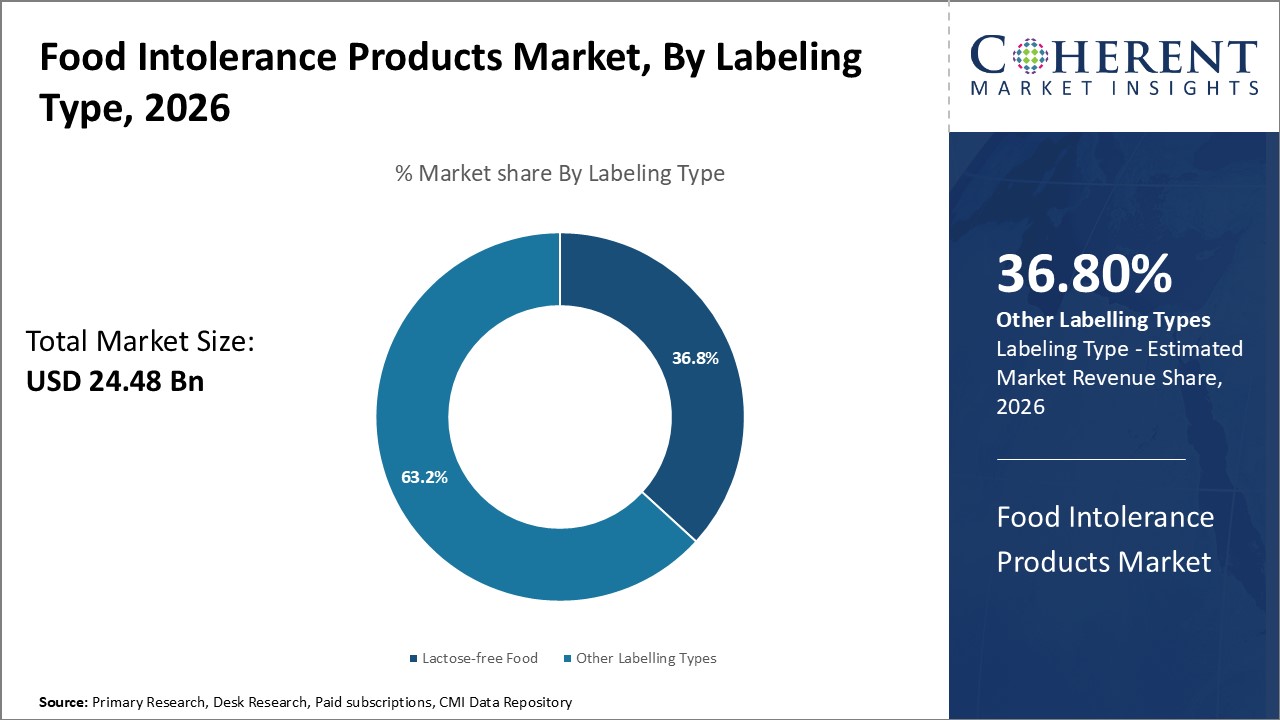
- By Labeling Type, with a predicted minimum share of 36.8% in 2026, the Lactose-Free Food Category is expected to outperform all segments because the strongly increasing rates of lactose intolerance have created a demand for clearly branded, dairy-free substitution products that consumers prefer.
- By Distribution Channel, The Online Segment is expected to capture the biggest share at 56% in 2026 because of the convenience, access, and abundant choice offered by e-commerce.
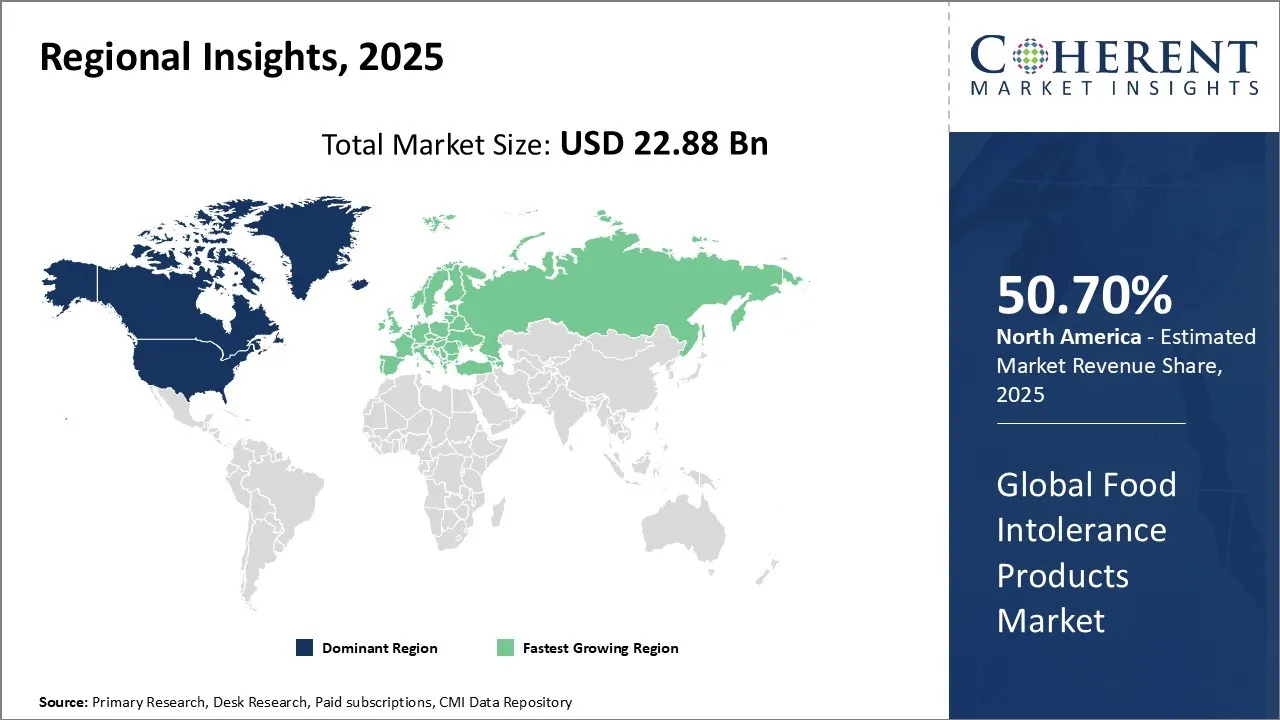
- By Region, North America is expected to dominate with an approximate 50.7% Food Intolerance Products Market Share in 2025 due to strong understanding of food intolerances, developed healthcare and retail systems, and food labeling policies.
- Fastest Growing Region, Asia Pacific is expected to experience the highest growth during the forecast period, driven by rising shifts towards urban living, increasing access to diagnostic tools for intolerance, and growing influence of Western diets.
Market Overview
Factors such as increasing self-diagnosis of food intolerances, the availability of a wide range of food products without major allergens, and expansion of product portfolios by key companies such as General Mills Inc. and Chobani LLC are expected to contribute to the positive market trends. The emphasis on clean label and organic ingredients will also drive the growth of the Food Intolerance Products Market Demand through 2032.
Current Events and Its Impact on the Food Intolerance Products Market
Event | Description and Impact |
Increasing Prevalence of Food Allergies and Intolerances |
|
Changing Consumer Preferences and Lifestyle Trends |
|
Technological Advancements in Food Manufacturing |
|
Segmental Insights
- Current Industry Events of 2026
- Market Size Estimation
- Regional Breakdown
- Competitive Landscape
- Customer Intelligence
- Segmental Analysis
- Pricing Analysis
- Key Market Drivers, Challenges & Future Trends
- Customized Insights Section
Food Intolerance Products Market Insights, By Product Type: Consumer Preference Drives Bakery Products Segment Growth
In terms of product type, the bakery products segment is estimated to hold the highest Food Intolerance Products Market Forecast share of 43.7% in 2026 owing to strong consumer preference. Different types of sweet baked goods such as bread, cookies, and cakes form an integral part of many people’s dietary intake. Glucose, dairy free sweet bakery products, gluten free sweet bakery products. Compound diabetic sweet bakery products. Granulated sugar contains glucose, which many intolerant customers find difficult to manage with. Bakery items with reduced amounts of gluten compounds are growing immensely due to the sharp rise of demand. Basic elements in gluten free and lactose free bakery products make it possible for many intolerant customers to relish these popular edibles. Based on current trends, people are now becoming more weight conscious, preferring breads made out of millet to wheat. Popular brands sell a broad spectrum of products, from protein enriched breads to satisfy as many customers as possible. Chicken breasts sweeter than sugar Benefits, chicken breasts market with transformed formulation technologies assist in obtaining flavor and feel similar to traditional ones. It’s, therefore, the presence of these well engineered new bakery products satisfies these intolerant customers in a most delightful and crucial way. This segment is growing rapidly due to ease of intake and focus on taste coupled with addressing habitual consumption of products.
Food Intolerance Products Market Insights, By Labeling Type: Consumer Trust in Lactose-Free Labeling
In terms of labeling type, the lactose-free food segment is estimated to hold the highest Food Intolerance Products Market Growth share of 36.8% in 2026 owing to strong consumer trust in the label. A large part of the population struggles with some form of lactose intolerance. Because of this, the lactose free label makes this category of consumers think that a lot of dairy nutritious foods like milk, yogurt, and cheese are available without the chance of major digestive issues later on. With regard to this, modern product development replaces lactose in cow’s milk with plant or goat milk which offers the same nutritional value. Hence, the barriers to consuming calcium, proteins, and other important body nutrients are removed. Such consumers will always be satisfied as long as the packages boast a prominent ‘lactose free’ label. This type of advertising will always encourage brands to keep investing into less popular and more innovative product lines. Alongside building brand trust, such advertising ensures these brands won’t be abandoned as new and unfamiliar product ranges get launched.
Food Intolerance Products Market Insights, By Distribution Channel: Benefits of Online Shopping for Food Intolerances
In terms of distribution channel, the online segment is estimated to contribute the highest Food Intolerance Products Market Outlook share of 56% in 2026 driven by supreme convenience it offers consumers. Research shows people with food intolerances particularly appreciate the accessibility and comfort of online shopping. They can shop from the safety of their homes without worrying about accidental cross-contamination risks at stores. Online retailers stock specialized products from a vast assortment under one virtual roof. Product samples and reviews assist finding perfect options. Contactless delivery furthers peace of mind during pandemic times.
Regional Analysis: Food Intolerance Products Market
North America Food Intolerance Products Market Analysis and Trends
North America is expected to account for the greatest Food Intolerance Products Market Value share, with 50.7% in 2026. Several North American countries have enacted policies promoting awareness about food intolerances. This supportive ecosystem has encouraged pioneering companies to launch versatile product lines catering to diverse needs.
Europe Food Intolerance Products Market Analysis and Trends
The Europe region is experiencing the most rapid growth in Food Intolerance Products Market Trends, particularly in countries like the U.K. and Germany. Factors such as increased urbanization, rising disposable incomes, and a growing awareness of health issues are motivating consumers to gravitate towards specialized food products. Local firms are leveraging the demand by creating affordable options. International brands are also expanding their footprints across the region.
Food Intolerance Products Market Dominating Countries
United States Food Intolerance Products Market Analysis and Trends
The U.S. market for food intolerance products remains highly dynamic, driven by innovation from both major food corporations and emerging startups. Customization, clean-label transparency, and consumer education play central roles in product development and marketing strategies. Increasing awareness around food sensitivities, combined with strong demand for gluten-free, lactose-free, and diabetic-friendly options, supports continuous product expansion. Regulatory guidance from bodies like the FDA also helps ensure quality and labeling consistency, fostering consumer trust.
Germany Food Intolerance Products Market Analysis and Trends
Germany leads the European market with a strong focus on product quality and safety in the food intolerance sector. Its long-standing legacy of pioneering specialty food brands, combined with strict regulatory standards, positions it as both a major importer and exporter. German consumers prioritize health and ingredient transparency, prompting brands to maintain high manufacturing standards and invest in innovation, especially in lactose-free and gluten-free segments.
United Kingdom Food Intolerance Products Market Analysis and Trends
The U.K. market benefits from robust collaboration between academic institutions and the food industry, leading to scientific advancements in intolerance-specific food formulations. Ongoing research in nutrition and food allergies has supported the development of credible, clinically backed products. Consumer adoption is further supported by a strong retail presence, including both mainstream and specialty brands that cater to evolving dietary needs.
India Food Intolerance Products Market Analysis and Trends
India presents significant untapped potential in the food intolerance products market, fueled by a diversifying middle class and rising health awareness. The government's investment-friendly policy environment, including initiatives supporting the food processing sector, encourages innovation and foreign investment. Although consumer demand is still emerging, increasing diagnoses of food intolerances and urbanization are creating new market opportunities.
China Food Intolerance Products Market Analysis and Trends
China is witnessing growing momentum in the food intolerance sector, propelled by rising health consciousness among urban populations and supportive trade policies. The government’s push for improved food safety and consumer education has contributed to increased demand for lactose-free, gluten-free, and other specialized products. Enhanced e-commerce infrastructure and cross-border trade reforms are opening new channels for both local and international brands.
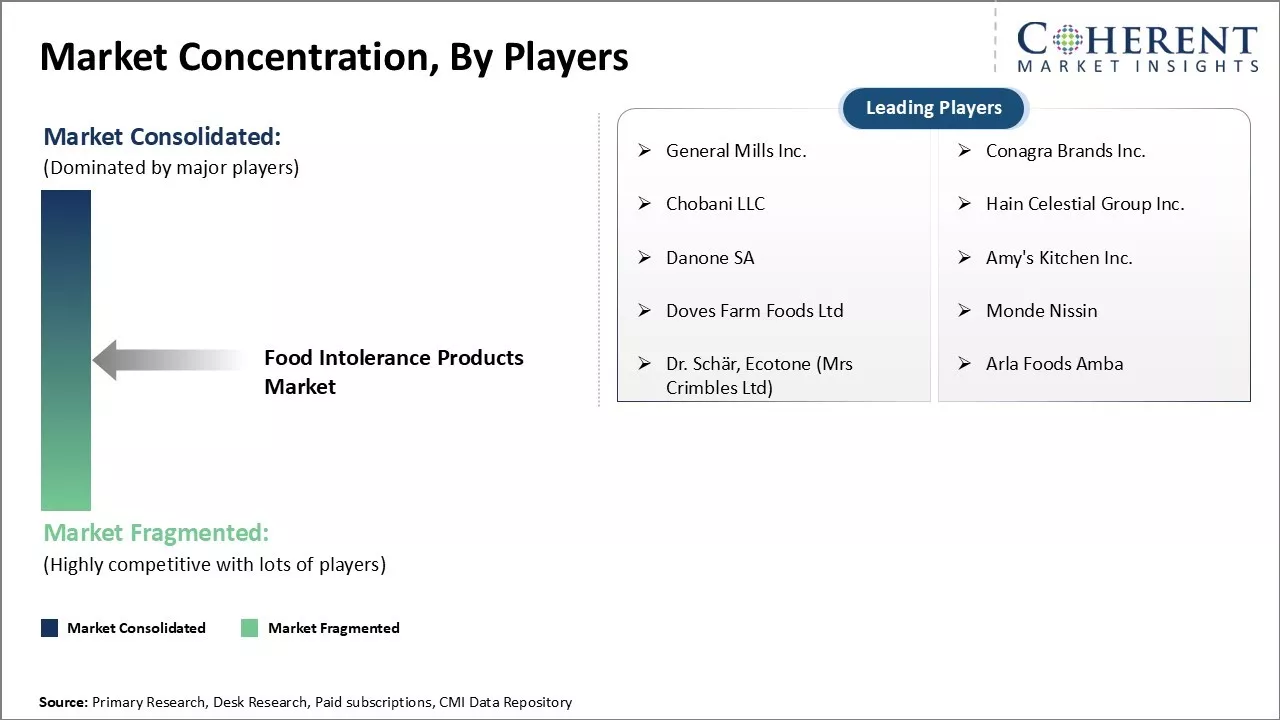
Market Concentration and Competitive Landscape
Food Intolerance Products Industry News
- In May 2024, Singapore-based startup Jiro-Meat expanded its production of plant-based meat from soy pulp. The company aims to commercialize the product by the end of 2024.
- In May 2024, a U.S.-based brand-named Sola launched new bakery offerings with zero sugar, non-GMO ingredients and zero artificial flavors and additives. The product categories launched in the market include kids’ bread, classic bread in white & multigrain varieties, and rolls.
- In January 2022, India-based company Continental Greenbird, launched plant-based meat alternatives in the market. The new product variants include chicken-like nuggets, chicken-like seekh kebab, chicken-like sausage, and mutton-like keema, all of which are made of chickpeas.
Market Report Scope
Food Intolerance Products Market Report Coverage
| Report Coverage | Details | ||
|---|---|---|---|
| Base Year: | 2025 | Market Size in 2026: | USD 24.48 Bn |
| Historical Data for: | 2020 To 2024 | Forecast Period: | 2026 To 2033 |
| Forecast Period 2026 to 2033 CAGR: | 7.0% | 2033 Value Projection: | USD 39.31 Bn |
| Geographies covered: |
| ||
| Segments covered: |
| ||
| Companies covered: | General Mills Inc., Conagra Brands Inc., Chobani LLC, Hain Celestial Group Inc., Danone SA, Amy's Kitchen Inc., Doves Farm Foods Ltd, Monde Nissin, Dr. Schär, Ecotone (Mrs Crimbles Ltd), and Arla Foods Amba | ||
| Growth Drivers: |
| ||
| Restraints & Challenges: |
| ||
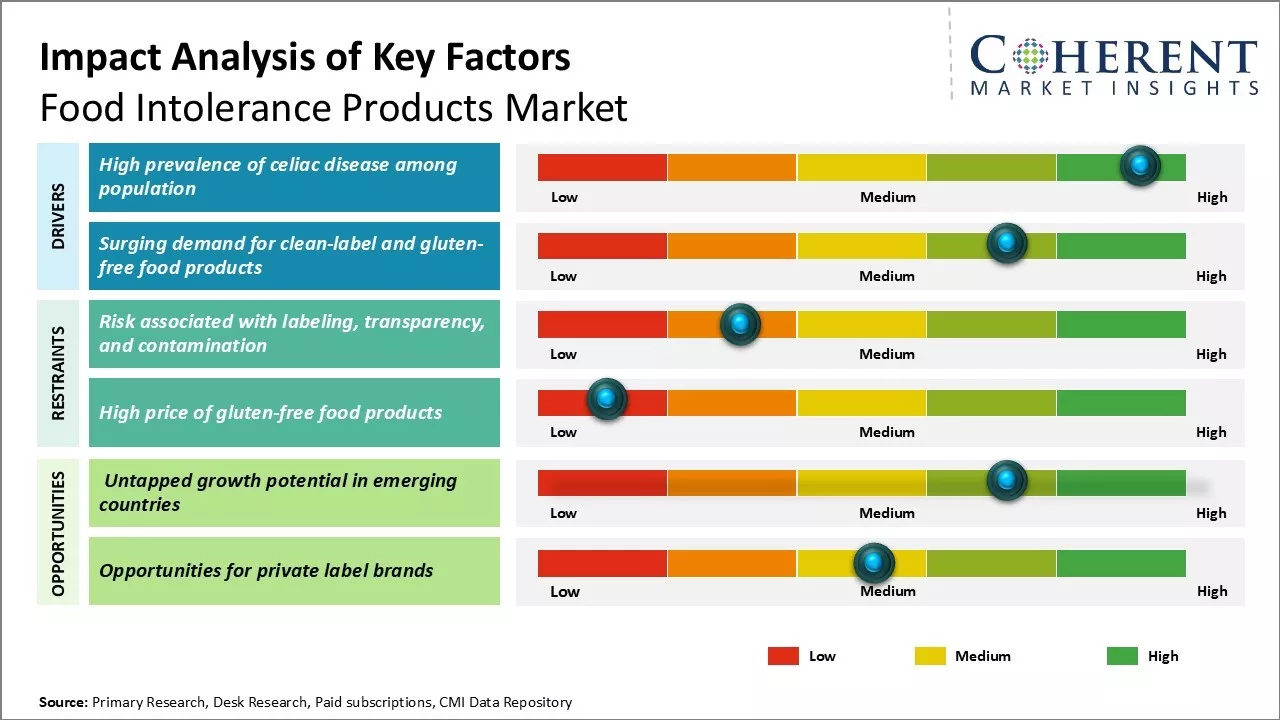
Market Driver - High prevalence of celiac disease among population
Celiac disease, also referred to as gluten-sensitive enteropathy, is characterized by the small intestine’s reaction to gluten through destruction upon its consumption. In striking changes, cryospheric disease is one of the conditions that have fascinated clinicians across the world over the past two to three decades. Approximately 1% of the global population suffers from Celiac disease, with a majority of them either partially diagnosed due to lack of information or due to slow progression of symptoms that leads to diagnosis at later stages within their lives. For instance, the Celiac Disease Foundation based on the National Institute of Diabetes and Digestive and Kidney Diseases stated that 1 in 100 people in the United States have an underlying celiac disease without awareness of the ailment. These statistics indicate that the rate of determining the spread of celiac disease compared to the actual figures is much lower than currently provided.
Market Opportunity: Untapped growth potential in emerging countries
The market of food intolerance products has ample opportunities for growth within developing countries. On the other hand, Western developed markets have experienced growing acceptance for almost a decade now, but there are many developing countries that have yet to reach this stage. Countries such as India, Brazil, and Indonesia are observing an amply rising middle class that is poised to spend more due to an increase in income—this is creating a buzz around health-consciousness. This group will likely need specially designed food products that do not contain allergenic and intolerable ingredients. Manufacturing these products locally serves this purpose but does not raise costs for developing countries. First mover brands can expand as the developing markets are in need of awareness and growth, and this will allow them to gain volume in the longer run. Moreover, global companies can enter these regions as strategic partnerships and contract manufacturing via these market opportunities.
Consumer Survey on Consumption and Usage
A global consumer survey of 5,000 participants revealed key trends in the consumption of food intolerance products. About 63% of respondents actively seek lactose-free or gluten-free options while shopping, and 48% consume these products despite lacking a formal diagnosis, largely due to perceived health benefits. Product labeling and certifications influence purchasing decisions for 72% of consumers, while 54% prefer buying online to access a wider variety and niche brands. The top motivations for using intolerance-specific products include digestive comfort (70%), allergy management (62%), and lifestyle or dietary preferences (40%).
Analyst Viewpoint
- The food intolerance products market is set to accelerate in the foreseeable future. The growing prevalence of food allergies and intolerances such as lactose intolerance, gluten sensitivity, nut allergies, etc. is boosting the demand for specialized food products.
- With the advanced diagnosis rates and early adoption of food intolerance brands in North America, there is a food intolerance products market available. Europe is also a considerable regional market due to widespread lactose intolerance, growing gluten free trend, and aging population in Europe. The rest of the world will show impressive growth regarding intolerance diagnosis. There is abundant untapped potential in the Asia-Pacific region where allergies to food are rising.
- Some leading manufacturers are making new products with specific ingredients for lactose containing, gluten containing, and nut containing foods. There is a sharp rise in the production of lactose free, gluten free, and nut free forms of mainstream food products. This includes dairy products, bakery products, snacks, and more.
Market Segmentation
- By Product Type Insights (Revenue, USD, 2021 - 2033)
- Bakery Products
- Confectionery Products
- Dairy and Dairy Alternatives
- Meat and Seafood
- Sauces, Condiments, and Dressings
- Others
- By Labeling Type Insights (Revenue, USD, 2021 - 2033)
- Lactose-free Food
- Other Labelling Types
- By Distribution Channel Insights (Revenue, USD, 2021 - 2033)
- Online
- Offline
- By Regional Insights (Revenue, USD, 2021 - 2033)
- North America
- U.S.
- Canada
- Latin America
- Brazil
- Argentina
- Mexico
- Rest of Latin America
- Europe
- Germany
- U.K.
- Spain
- France
- Italy
- Russia
- Rest of Europe
- Asia Pacific
- China
- India
- Japan
- Australia
- South Korea
- ASEAN
- Rest of Asia Pacific
- Middle East
- GCC Countries
- Israel
- Rest of Middle East
- Africa
- South Africa
- North Africa
- Central Africa
- Key Players Insights
- General Mills Inc.
- Conagra Brands Inc.
- Chobani LLC
- Hain Celestial Group Inc.
- Danone SA
- Amy's Kitchen Inc.
- Doves Farm Foods Ltd
- Monde Nissin
- Schar, Ecotone (Mrs Crimbles Ltd)
- Arla Foods Amba
Sources
Primary Research Interviews
- Industry Experts from Leading Food Intolerance Product Manufacturers
- Key Opinion Leaders from Healthcare & Nutrition Industry
- Senior Managers & Executives from Online Retail Platforms
- Dietary & Nutrition Consultants
- Others
Databases
- Industry-recognized Commercial Databases
- Government and Institutional Data Repositories
- Business Intelligence Platforms
- Financial and Consumer Behavior Archives
- Others
Magazines
- Food Business News
- Nutraceuticals World
- Specialty Food Magazine
- Prepared Foods Magazine
- Others
Journals
- Journal of Nutrition & Food Sciences
- International Journal of Food Science & Nutrition
- Food Science and Technology Journal
- Others
Newspapers
- The Guardian (Food and Health Section)
- The Economic Times (Consumer Insights Section)
- Financial Times (Retail & E-commerce Section)
- The Wall Street Journal (Health and Lifestyle Section)
- Others
Associations
- International Probiotics Association
- American Nutrition Association (ANA)
- Food Allergy Research & Education (FARE)
- Specialty Food Association (SFA)
- Others
Public Domain Sources
- U.S. FDA (Food & Drug Administration)
- World Health Organization (WHO) Nutrition Section
- European Food Safety Authority (EFSA)
- Food Standards Agency (FSA), UK
- Others
Proprietary Elements
- Internal Data Analytics Tools and Exclusive Repository of Market Intelligence Maintained for Over 8 Years
Get access to 250+ pages report
Every segment, forecast, competitor profile and data table behind the analysis above — available for instant download.
- ESOMAR Member
- ISO 9001:2015 Certified
- D-U-N-S Registered
- GDPR & CCPA Compliant
Missing comfort of reading report in your local language? Find your preferred language:
Transform your Strategy with Exclusive Trending Reports
Frequently Asked Questions
The Food Intolerance Products Market is estimated to be valued at USD 24.48 Bn in 2026, and is expected to reach USD 39.31 Bn by 2033.
The CAGR of the Food Intolerance Products Market is projected to be 7.0% from 2026 to 2033.
High prevalence of celiac disease among population and surging demand for clean-label and gluten-free food products are the major factors driving the growth of food intolerance products market.
Risk associated with labeling, transparency, and contamination and high price of gluten-free food products are the major factors hampering the growth of food intolerance products market.
In terms of product type, bakery products segment is estimated to dominate the market revenue share in 2026.
General Mills Inc., Conagra Brands Inc., Chobani LLC, Hain Celestial Group Inc., Danone SA, Amy's Kitchen Inc., Doves Farm Foods Ltd, Monde Nissin, Dr. Schär, Ecotone (Mrs Crimbles Ltd), and Arla Foods Amba are the major players.
North America is expected to lead the food intolerance products market.