

Congestive Heart Failure Drugs Market Size and Forecast — 2026 - 2033
The Global Congestive Heart Failure Drugs Market size is estimated to be valued at USD 14.2 billion in 2026 and is expected to reach USD 23.8 billion by 2033, exhibiting a compound annual growth rate (CAGR) of 7.5% from 2026 to 2033.
Overview
The Congestive Heart Failure (CHF) drugs market is driven by the rising global prevalence of cardiovascular diseases, particularly among the aging population. Increasing incidences of hypertension, diabetes, obesity, and coronary artery disease are key risk factors contributing to heart failure cases. Growing awareness regarding early diagnosis and long-term disease management is further boosting treatment adoption. Advancements in pharmacological therapies, including ARNI, beta-blockers, SGLT2 inhibitors, and novel combination drugs, are improving patient outcomes and survival rates. Additionally, rising healthcare expenditure, improved access to cardiac care, and strong pipeline development by pharmaceutical companies are supporting market expansion. Expanding clinical guidelines also promote early intervention.
Key Takeaways
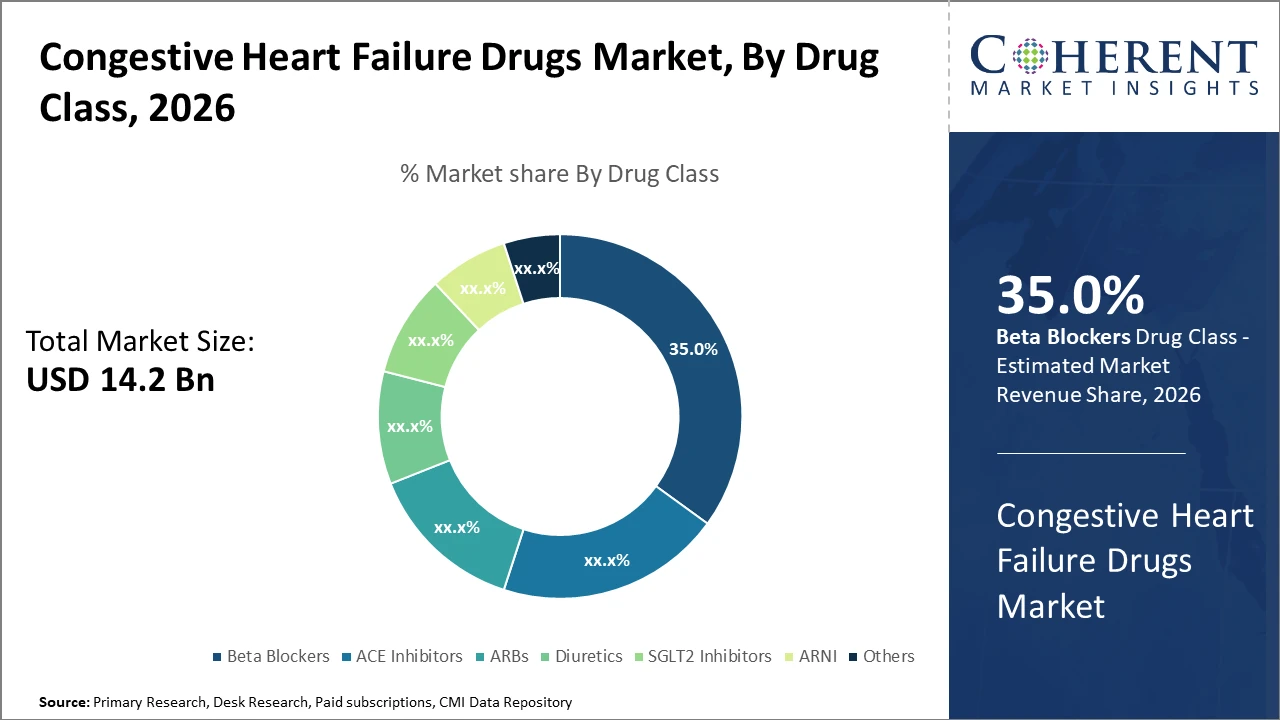
Beta-blockers hold the largest share of the congestive heart failure drugs market at approximately 35%, supported by strong clinical evidence, established treatment guidelines, and widespread physician acceptance in heart failure management.
SGLT2 inhibitors are the fastest-growing drug class, driven by positive outcomes in both Heart Failure with Reduced Ejection Fraction (HFrEF) and Heart Failure with Preserved Ejection Fraction (HFpEF), leading to increased adoption globally.
The HFrEF segment dominates the application landscape due to its high prevalence and well-established treatment protocols, while HFpEF is witnessing rapid growth as new therapies gain regulatory approval and clinical acceptance.
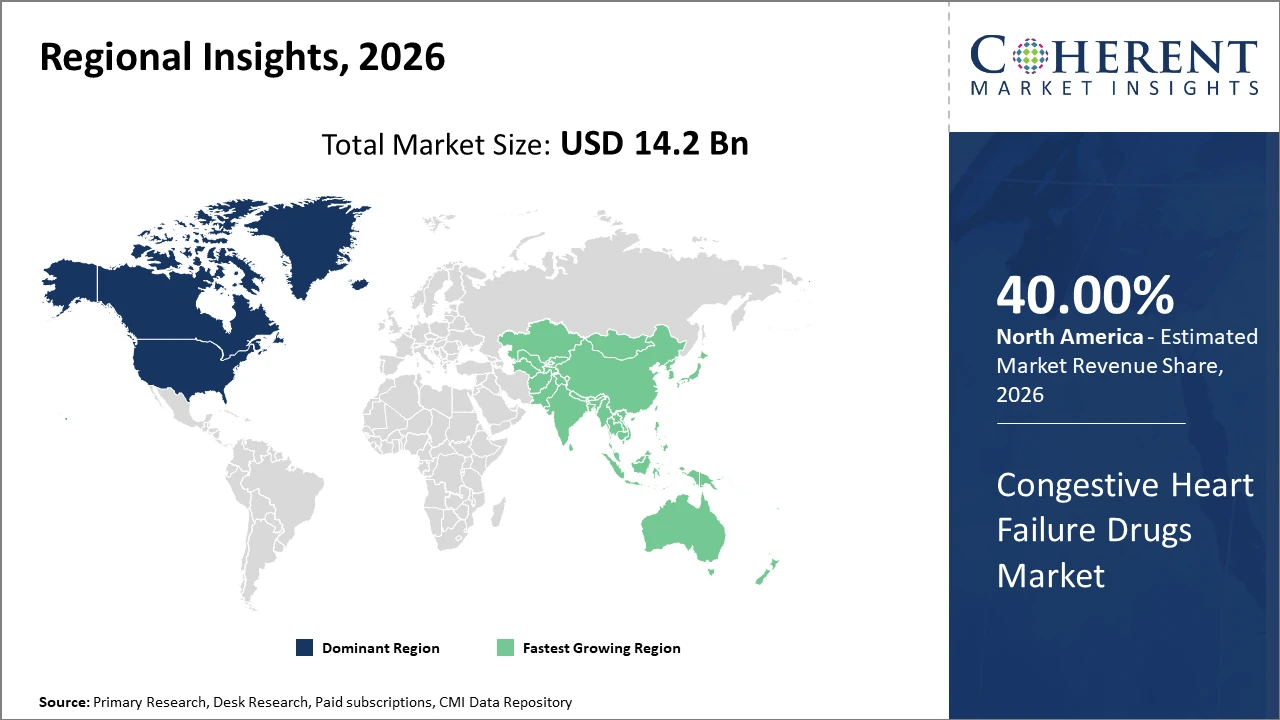
North America accounts for around 40% of the global market share, benefiting from advanced healthcare infrastructure, favorable reimbursement policies, strong awareness, and high utilization of innovative cardiovascular therapies.
Asia Pacific is the fastest-growing regional market, fueled by increasing cardiovascular disease burden, expanding healthcare access, rising healthcare expenditures, and growing pharmaceutical manufacturing capabilities across countries such as China and India.
Congestive Heart Failure Drugs Market Segmentation Analysis
Congestive Heart Failure Drugs Market Insights, By Drug Class
Beta-blockers dominate the congestive heart failure drugs market with a share of 35% due to their proven ability to reduce mortality, improve cardiac function, and lower hospitalization rates in heart failure patients. Their long-established clinical efficacy, favorable safety profile, and widespread availability have made them a cornerstone of heart failure treatment worldwide. SGLT2 inhibitors are the fastest-growing drug class, driven by expanding indications across multiple heart failure phenotypes and strong cardiovascular benefits demonstrated in recent clinical trials. ACE inhibitors and ARBs continue to hold substantial market share because of their cost-effectiveness and established therapeutic value. Diuretics remain essential for symptom control, while ARNIs and other emerging therapies are gaining traction through ongoing clinical advancements.
Congestive Heart Failure Drugs Market Insights, By Application
Reduced Ejection Fraction (HFrEF) dominates the congestive heart failure drugs market due to its high prevalence and the availability of well-established treatment guidelines supporting the use of multiple drug classes, including beta-blockers, ACE inhibitors, ARNIs, and SGLT2 inhibitors. Strong clinical evidence and widespread physician adoption continue to drive demand within this segment. Heart Failure with Preserved Ejection Fraction (HFpEF) is the fastest-growing application area, benefiting from recent therapeutic advancements and increasing research attention aimed at addressing previously unmet clinical needs. Acute Heart Failure remains a smaller but important segment, with consistent demand for rapid-acting therapies used in emergency and hospital settings to stabilize patients and relieve symptoms.
Congestive Heart Failure Drugs Market Insights, By Distribution Channel
Hospital pharmacies dominate the congestive heart failure drugs market due to the severity of the condition, which often requires inpatient care, continuous monitoring, and direct physician supervision for drug administration and dosage adjustments. These settings ensure timely access to critical cardiovascular medications and adherence to clinical treatment protocols. Online pharmacies represent the fastest-growing distribution channel, driven by the expansion of telemedicine, digital health platforms, and increasing patient preference for convenient home delivery services, especially after 2024–2026 healthcare digitalization trends. Retail pharmacies maintain a stable presence due to their accessibility and widespread network in urban and semi-urban regions.
Congestive Heart Failure Drugs Market Trends
The congestive heart failure drugs market is increasingly influenced by combination therapies, particularly ARNI and SGLT2 inhibitor regimens, which have demonstrated improved clinical outcomes, including a 25% reduction in mortality in 2025 compared to monotherapy approaches.
Digital health integration is emerging as a key trend, with AI-powered remote monitoring and digital therapeutics improving patient adherence and contributing to reduced hospitalization rates through enhanced disease management.
The introduction and growing adoption of biosimilars are reshaping pricing structures, especially in Europe and Asia Pacific, improving affordability and expanding patient access to essential heart failure medications.
Congestive Heart Failure Drugs Market Insights, By Geography
North America Congestive Heart Failure Drugs Market Analysis and Trends
North America dominates the congestive heart failure drugs market, with a share of 40% due to its advanced healthcare infrastructure, strong clinical research ecosystem, and comprehensive reimbursement frameworks that support widespread access to innovative therapies. Continuous investment in clinical trials by leading pharmaceutical companies accelerates the development of novel therapies, including SGLT2 inhibitors and ARNIs. Additionally, government and public health initiatives focused on cardiovascular disease awareness, early diagnosis, and preventive care further strengthen market growth. The region also benefits from strong physician awareness and rapid integration of guideline-based treatment protocols across healthcare institutions.
Asia Pacific Congestive Heart Failure Drugs Market Analysis and Trends
The Asia Pacific region is the fastest-growing market for congestive heart failure drugs, registering a CAGR surpassing 9%. Growth is driven by rising cardiovascular disease prevalence, aging populations, and rapid improvements in healthcare infrastructure across emerging economies. Countries such as China and India are major contributors, supported by expanding hospital networks, increasing healthcare expenditure, and government initiatives aimed at improving access to affordable medicines. Additionally, the region’s growing pharmaceutical manufacturing capabilities and increasing adoption of generic and innovative cardiovascular therapies further strengthen market expansion. Rising awareness of early diagnosis and treatment adherence also plays a key role in accelerating demand for congestive heart failure drugs across Asia Pacific.
Congestive Heart Failure Drugs Market Outlook for Key Countries
USA Congestive Heart Failure Drugs Market Analysis and Trends
The United States congestive heart failure drugs market is characterized by rapid adoption of advanced therapies, including angiotensin receptor-neprilysin inhibitors (ARNIs) and SGLT2 inhibitors, supported by strong clinical evidence and timely regulatory approvals. Widespread integration of guideline-directed medical therapy has further strengthened treatment outcomes across healthcare systems. Leading pharmaceutical companies continue to engage in strategic collaborations and partnerships to accelerate drug development and commercialization. Expansions in Medicare and insurance coverage have improved patient access to high-cost innovative therapies, boosting overall treatment rates. Sustained biopharmaceutical research and development investment reinforces the country’s position as a global leader in cardiovascular drug innovation and significantly contributes to global congestive heart failure market revenues.
Germany Congestive Heart Failure Drugs Market Analysis and Trends
Germany represents one of Europe’s leading markets for congestive heart failure (CHF) drugs, supported by a high prevalence of cardiovascular diseases, an aging population, and a well-established healthcare system. The country has witnessed increasing adoption of advanced therapies, particularly SGLT2 inhibitors and angiotensin receptor-neprilysin inhibitors (ARNIs), which have demonstrated improved clinical outcomes in heart failure management. Government-backed healthcare coverage and strong reimbursement policies facilitate patient access to innovative treatments. Market trends include a growing emphasis on personalized medicine, early diagnosis, and integrated disease management programs. Ongoing clinical research and collaborations between pharmaceutical companies and healthcare institutions continue to drive therapeutic advancements in Germany.
Analyst Opinion
Rising approvals of SGLT2 inhibitors and ARNI therapies increased by over 18% in 2025, indicating strong innovation-driven supply expansion in congestive heart failure drugs.
High comorbidity burden, with nearly 68% of patients affected by diabetes or hypertension in 2024, is driving greater adoption of combination therapies and expanding overall market demand.
Pricing pressure from biosimilars and generics led to a 12% reduction in ACE inhibitor prices in key markets like the U.S. in 2026, improving treatment accessibility.
Asia Pacific strengthened its role in global trade, accounting for around 33% of heart failure drug exports in 2026, highlighting its growing pharmaceutical manufacturing and export capabilities.
- Current Industry Events of 2026
- Market Size Estimation
- Regional Breakdown
- Competitive Landscape
- Customer Intelligence
- Segmental Analysis
- Pricing Analysis
- Key Market Drivers, Challenges & Future Trends
- Customized Insights Section
Market Scope
| Report Coverage | Details | ||
|---|---|---|---|
| Base Year: | 2025 | Market Size in 2026: | USD 14.2 billion |
| Historical Data for: | 2020 To 2024 | Forecast Period: | 2026 To 2033 |
| Forecast Period 2026 to 2033 CAGR: | 7.5% | 2033 Value Projection: | USD 23.8 billion |
| Geographies covered: |
| ||
| Segments covered: |
| ||
| Companies covered: | Novartis AG, Pfizer Inc., Johnson & Johnson, Bayer AG, Merck & Co., Sanofi SA, Amgen Inc., Mylan NV, AbbVie Inc., Cipla Limited | ||
| Growth Drivers: |
| ||
Congestive Heart Failure Drugs Market Growth Factors
Widespread adoption of guideline-directed medical therapy is significantly driving growth in the congestive heart failure drugs market, with 2026 clinical data showing a 22% reduction in hospitalizations through optimized combination treatments. Increasing research and development investment in heart failure with preserved ejection fraction (HFpEF) is expanding the therapeutic landscape, addressing a historically underserved patient population and supporting future pipeline-driven revenue growth. Government initiatives and favorable reimbursement frameworks, particularly in North America and Europe, are improving treatment accessibility; for example, expanded Medicare coverage in 2025 contributed to a 10% increase in therapy adherence. Additionally, aging populations and rapid urbanization, especially in Asia Pacific, are accelerating cardiovascular disease prevalence and strengthening long-term market expansion.
Congestive Heart Failure Drugs Market Development
In June 2026, Cronus Pharma launched a generic pimobendan chewable tablet in the U.S. veterinary market for the treatment of congestive heart failure (CHF) in dogs.
In June 2026, Viatris Inc. launched Inpefa (sotagliflozin) in the United Arab Emirates, marking the first commercialization of the therapy within its territories. The company plans to expand availability to additional international markets over the coming years as part of its strategy to broaden access beyond the U.S. and Europe.
Key Players
Leading Companies of the Market
Novartis AG
Pfizer Inc.
Sanofi SA
Amgen Inc.
Mylan NV
Johnson & Johnson
Cipla Limited
Bayer AG
Merck & Co.
AbbVie Inc.
Leading pharmaceutical companies in the congestive heart failure drugs market are increasingly focusing on innovative combination therapies, strategic alliances, and portfolio expansion to strengthen their competitive positions. For instance, Novartis advanced its angiotensin receptor-neprilysin inhibitor (ARNI) therapy initiatives through key collaborations, significantly improving market penetration and contributing to an estimated 15% revenue growth in 2025. This success reflects strong clinical adoption and expanding guideline-based use in heart failure management. Similarly, Pfizer has expanded its presence in emerging markets by scaling generic ACE inhibitor production and leveraging localized manufacturing capabilities. This strategy has enabled cost-effective access to essential therapies while maintaining competitive positioning and supporting sustained growth across price-sensitive regions.
Congestive Heart Failure Drugs Market Future Outlook
The Congestive Heart Failure (CHF) Drugs Market is expected to witness strong growth over the coming years, driven by the increasing prevalence of cardiovascular diseases, aging populations, and rising awareness of early heart failure management. Continued adoption of advanced therapies such as SGLT2 inhibitors, angiotensin receptor-neprilysin inhibitors (ARNIs), and novel combination treatments will improve patient outcomes and expand market opportunities. Ongoing clinical research is expected to deliver innovative therapies targeting unmet medical needs and personalized treatment approaches. Additionally, improvements in diagnostic capabilities, healthcare access, and reimbursement policies will support broader treatment adoption, fostering sustained market expansion across both developed and emerging healthcare markets.
Congestive Heart Failure Drugs Market Historical Analysis
The Congestive Heart Failure (CHF) Drugs Market has evolved significantly over the past decades, driven by advances in cardiovascular medicine and improved understanding of heart failure pathophysiology. Early treatment primarily relied on diuretics and vasodilators to manage symptoms, while the introduction of ACE inhibitors, beta-blockers, and angiotensin receptor blockers substantially improved survival outcomes. Over time, evidence-based treatment guidelines promoted broader adoption of combination therapies, reducing hospitalization rates and mortality. In recent years, the emergence of angiotensin receptor-neprilysin inhibitors (ARNIs) and SGLT2 inhibitors has transformed heart failure management. Growing disease prevalence, aging populations, and continuous pharmaceutical innovation have further supported sustained market growth worldwide.
Sources
Primary Research Interviews:
Cardiologists, heart failure specialists, internal medicine physicians, hospital pharmacists, healthcare administrators, pharmaceutical manufacturers, drug distributors, and specialty pharmacy professionals involved in congestive heart failure treatment and drug delivery.
Cardiovascular researchers, clinical trial investigators, regulatory consultants, biotechnology experts, healthcare economists, reimbursement specialists, and R&D directors specializing in heart failure therapeutics, cardiovascular drug development, precision medicine, and patient outcome management.
Magazines:
Pharmaceutical Executive – Coverage of pharmaceutical industry trends, drug commercialization, and cardiovascular therapy developments.
MedTech Outlook – Insights into healthcare innovations, cardiovascular care technologies, and treatment advancements.
Drug Discovery & Development – Updates on clinical research, drug pipelines, and emerging cardiovascular therapies.
Journals:
Journal of the American College of Cardiology (JACC) – Research on heart failure management, clinical outcomes, and therapeutic innovations.
European Heart Journal – Studies on congestive heart failure, treatment guidelines, and cardiovascular disease management.
Circulation – Research covering heart failure therapies, clinical trials, and cardiovascular health outcomes.
Newspapers:
Financial Times – Coverage of pharmaceutical investments, healthcare policy developments, and drug market trends.
Reuters – Reporting on drug approvals, clinical trial results, pharmaceutical partnerships, and regulatory updates.
Bloomberg – Insights into pharmaceutical company strategies, cardiovascular drug markets, and healthcare industry developments.
Associations:
American Heart Association (AHA) – Clinical guidelines, research data, and educational resources related to heart failure and cardiovascular disease.
European Society of Cardiology (ESC) – Treatment guidelines, scientific research, and cardiovascular healthcare standards.
Heart Failure Society of America (HFSA) – Clinical recommendations, disease management resources, and research initiatives focused on heart failure treatment and patient care.
Get access to 250+ pages report
Every segment, forecast, competitor profile and data table behind the analysis above — available for instant download.
- ESOMAR Member
- ISO 9001:2015 Certified
- D-U-N-S Registered
- GDPR & CCPA Compliant
Missing comfort of reading report in your local language? Find your preferred language:
Transform your Strategy with Exclusive Trending Reports
Frequently Asked Questions
The market is led by major pharmaceutical companies such as Novartis, Pfizer, Johnson & Johnson, and Merck & Co., which maintain strong market positions through diversified cardiovascular drug portfolios and continuous investment in research and development pipelines.
The market is projected to reach approximately USD 23.8 billion by 2033, expanding at a CAGR of 7.5% from 2026 to 2033, driven by rising disease prevalence and adoption of advanced heart failure therapies.
Reduced Ejection Fraction (HFrEF) represent the largest growth opportunity, supported by increasing heart failure cases and improved access to long-term treatment.
Future trends will focus on personalized pharmacotherapy, integration of digital health solutions for patient monitoring, and sustainable pharmaceutical manufacturing practices to improve treatment outcomes and efficiency.
The market is highly competitive, driven by innovation in branded therapies alongside strong generic drug penetration. Key challenges include pricing pressures, regulatory complexities, and the need for continuous clinical innovation and differentiation.
Common strategies include expanding product portfolios, forming strategic collaborations, strengthening localized manufacturing capabilities, and targeting emerging markets to improve patient access and capture unmet therapeutic demand.