

Disposable Medical Sensors Market Size and Forecast — 2026 - 2033
The Global Disposable Medical Sensors Market size is estimated to be valued at USD 4.8 billion in 2026 and is expected to reach USD 10.7 billion by 2033, exhibiting a compound annual growth rate (CAGR) of 11.4% from 2026 to 2033.
Overview
The Disposable Medical Sensors market is primarily driven by the increasing prevalence of chronic diseases such as diabetes, cardiovascular disorders, and respiratory conditions, which require continuous patient monitoring. Rising demand for infection prevention and improved patient safety in hospitals is accelerating the adoption of single-use medical sensors. Technological advancements in wearable devices, biosensors, and wireless monitoring systems are further supporting market growth by enhancing diagnostic accuracy and real-time data tracking. Additionally, expanding home healthcare services, growing use of remote patient monitoring, and increasing healthcare expenditure worldwide are contributing to market expansion. The rising elderly population and demand for cost-effective healthcare solutions also strengthen market growth globally.
Key Takeaways
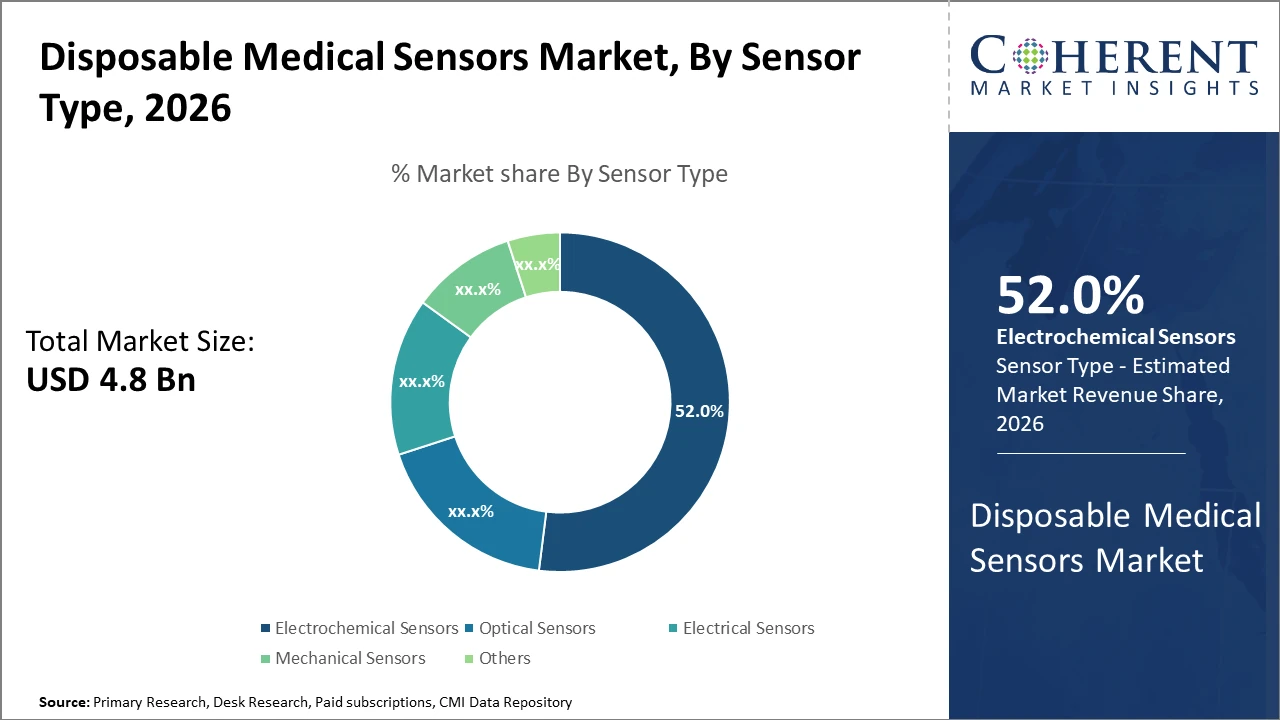
The electrochemical sensor segment dominates the Disposable Medical Sensors market with approximately 52% share, supported by its high sensitivity, rapid response capabilities, and cost-effectiveness in continuous patient monitoring applications.
Hospitals represent the leading end-user segment, accounting for nearly 55% of market share due to increasing preference for disposable devices that reduce infection risks and support compliance with strict healthcare safety regulations.
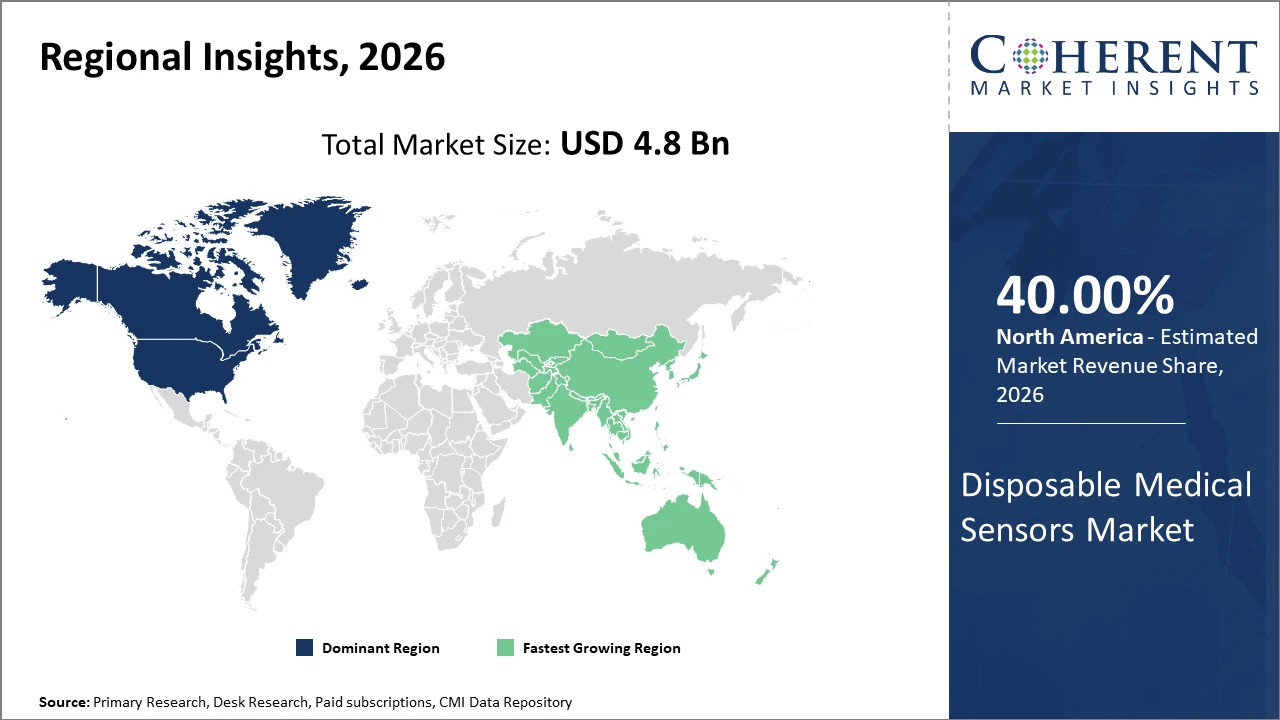
North America holds the largest regional market share, contributing around 40% of total revenue owing to advanced healthcare infrastructure, widespread adoption of digital healthcare technologies, and favorable regulatory frameworks.
Asia Pacific is projected to witness the fastest growth rate, driven by rising healthcare spending, expanding telehealth and remote patient monitoring infrastructure, and increasing prevalence of chronic diseases in countries such as China and India.
Disposable Medical Sensors Market Segmentation Analysis
Disposable Medical Sensors Market Insights, By Sensor Type
Electrochemical Sensors lead the Disposable Medical Sensors market with approximately 52% share due to their high sensitivity, affordability, and broad applicability in patient monitoring and diagnostic procedures. Their widespread use in glucose monitoring, cardiac assessment, and critical care settings continues to support strong market demand. Optical Sensors represent the fastest-growing subsegment, driven by advancements in photonics, miniaturization, and non-invasive monitoring technologies increasingly used in wearable devices and surgical applications. Electrical Sensors maintain stable adoption across therapeutic and monitoring equipment, while Mechanical Sensors serve specialized applications involving pressure and motion detection. Market growth is further supported by improved sensor materials, digital healthcare integration, and expanding remote patient monitoring adoption globally.
Disposable Medical Sensors Market Insights, By Application
Patient Monitoring dominates the Disposable Medical Sensors market with nearly 48% share, fueled by increasing demand for continuous monitoring of vital signs across hospitals, emergency care units, and home healthcare environments. Disposable sensors are widely adopted to improve patient safety, reduce infection risks, and support real-time clinical decision-making. Therapeutic Devices represent the fastest-growing application segment, particularly in diabetes management and respiratory therapy, where disposable sensors enable accurate dosage monitoring and treatment assessment. Diagnostic applications continue to expand due to the need for rapid biochemical and physiological analysis in clinical settings. Additionally, disposable sensor integration in surgical instrumentation is increasing because of enhanced infection control, precision, and growing adoption of minimally invasive procedures.
Disposable Medical Sensors Market Insights, By End User
Hospitals account for the largest share of the Disposable Medical Sensors market, representing approximately 55% of total revenue due to the strong emphasis on infection prevention, patient safety, and compliance with stringent healthcare regulations. Disposable sensors are widely used in intensive care, surgical procedures, and continuous patient monitoring applications. Home Healthcare is emerging as the fastest-growing end-user segment, driven by expanding telehealth adoption, aging populations, and increasing demand for remote patient monitoring solutions. Ambulatory Care Centers continue to support outpatient diagnostics and short-term monitoring services, while Research Laboratories utilize disposable sensors for clinical research and experimental diagnostics. Ongoing healthcare digitalization and remote monitoring initiatives are further accelerating market growth globally.
Disposable Medical Sensors Market Trends
The Disposable Medical Sensors market is increasingly integrating with artificial intelligence and Internet of Medical Things (IoMT) platforms, enabling predictive diagnostics, enhanced remote patient monitoring, and reduced hospital readmission rates across advanced healthcare systems.
Growing environmental concerns and stricter sustainability regulations in Europe and Asia Pacific are accelerating the development of biodegradable and eco-friendly disposable sensor materials to reduce medical waste generation.
Rapid advancements in wearable sensor technologies for fitness tracking, sports medicine, and consumer health monitoring are creating new growth opportunities, with rising adoption driven by increasing health awareness and digital wellness trends.
Disposable Medical Sensors Market Insights, By Geography
North America Disposable Medical Sensors Market Analysis and Trends
North America dominates the Disposable Medical Sensors market with nearly 40% market share, supported by advanced healthcare infrastructure, strong adoption of telehealth technologies, and stringent regulatory standards promoting the use of disposable medical devices. The region benefits from high healthcare spending, widespread implementation of remote patient monitoring systems, and increasing focus on infection prevention in hospitals and homecare environments. Presence of major industry participants, including Medtronic, further strengthens regional leadership through continuous investments in research, development, and healthcare digitization initiatives. Government programs encouraging expansion of home healthcare technologies and connected medical devices are also contributing significantly to sustained market growth across North America.
Asia Pacific Disposable Medical Sensors Market Analysis and Trends
Asia Pacific is projected to witness the fastest growth in the Disposable Medical Sensors market, registering a CAGR exceeding 13% during the forecast period. Growth is driven by increasing healthcare expenditures, rapid urbanization, and the rising prevalence of chronic diseases across emerging economies such as China and India. Expanding telemedicine and remote patient monitoring deployments are significantly improving adoption of disposable sensor technologies in both clinical and home healthcare settings. Supportive government initiatives focused on healthcare infrastructure modernization and digital health expansion are further strengthening regional market growth. In addition, major companies are investing in regional manufacturing facilities, strategic partnerships, and distribution networks to improve accessibility and meet rising demand efficiently.
Disposable Medical Sensors Market Outlook for Key Countries
USA Disposable Medical Sensors Market Analysis and Trends
The United States represents the largest market for disposable medical sensors globally, supported by strong investments in healthcare innovation and rapid adoption of advanced medical technologies. Increasing expenditure on remote patient monitoring and connected healthcare systems has significantly accelerated demand for disposable sensors integrated with artificial intelligence and digital diagnostics platforms. Major companies such as Abbott and Philips continue to introduce IoMT-compatible sensor products designed for chronic disease management and acute patient care. In addition, supportive regulatory frameworks and safety validation initiatives from the U.S. Food and Drug Administration are encouraging innovation, product approvals, and increased research investments across the country.
Germany Disposable Medical Sensors Market Analysis and Trends
Germany represents a significant market for disposable medical sensors in Europe due to its advanced healthcare infrastructure, strong medical device manufacturing capabilities, and growing emphasis on patient safety and infection prevention. Increasing adoption of remote patient monitoring systems, wearable healthcare technologies, and digital health platforms is driving demand for disposable sensors across hospitals and homecare settings. The country is witnessing rising utilization of electrochemical and optical sensors in diagnostics, chronic disease monitoring, and minimally invasive procedures. Government support for healthcare digitization and expanding telemedicine services further strengthen market growth. Additionally, growing investments in sustainable and biodegradable medical sensor technologies are shaping future market trends in Germany.
Analyst Opinion
Manufacturers of disposable medical sensors significantly expanded production capacities during 2024 to address rising demand from hospitals, homecare providers, and telehealth programs, while increasing exports to North America and Europe strengthened global supply dynamics.
Pricing trends stabilized in 2025 due to improvements in sensor materials and manufacturing automation, making disposable medical sensors more affordable and increasing adoption across emerging healthcare markets and outpatient care applications.
Integration of disposable sensors with AI-powered diagnostic and monitoring systems is improving patient monitoring accuracy and increasing adoption across intensive care and general healthcare settings.
Advancements in nano-scale sensor technologies and miniaturization are supporting development of next-generation wearable and implantable disposable sensors, creating new opportunities in personalized healthcare and remote monitoring applications.
- Current Industry Events of 2026
- Market Size Estimation
- Regional Breakdown
- Competitive Landscape
- Customer Intelligence
- Segmental Analysis
- Pricing Analysis
- Key Market Drivers, Challenges & Future Trends
- Customized Insights Section
Market Scope
| Report Coverage | Details | ||
|---|---|---|---|
| Base Year: | 2025 | Market Size in 2026: | USD 4.8 billion |
| Historical Data for: | 2020 To 2024 | Forecast Period: | 2026 To 2033 |
| Forecast Period 2026 to 2033 CAGR: | 11.4% | 2033 Value Projection: | USD 10.7 billion |
| Geographies covered: |
| ||
| Segments covered: |
| ||
| Companies covered: | Medtronic, Abbott Laboratories, Philips Healthcare, GE Healthcare, Honeywell International Inc., Siemens Healthineers, Becton Dickinson, NXP Semiconductors, Omron Corporation, Analog Devices | ||
| Growth Drivers: |
| ||
Disposable Medical Sensors Market Growth Factors
The Disposable Medical Sensors market is witnessing strong growth due to the increasing prevalence of chronic diseases such as diabetes and cardiovascular disorders, which require continuous and accurate patient monitoring solutions. Expanding adoption of telehealth and home healthcare services is further accelerating demand for disposable sensors that support remote diagnostics and real-time monitoring. In addition, stringent healthcare regulations focused on infection prevention and cross-contamination control are encouraging wider use of single-use sensor technologies across hospitals and clinical environments. Technological advancements including improved biocompatibility, wireless connectivity, and miniaturized sensor designs are also expanding application areas. Rising aging populations and healthcare digitization continue to strengthen long-term market growth globally.
Disposable Medical Sensors Market Development
In December 2025, Medtronic launched its MiniMed 780G system in the U.S., integrated with Abbott’s Instinct continuous glucose monitoring sensor. The sensor provides up to 15 days of wear and delivers real-time glucose readings, enabling the MiniMed 780G system to automatically adjust insulin delivery every five minutes.
Key Players
Leading Companies of the Market
Medtronic
Abbott Laboratories
Philips Healthcare
GE Healthcare
Honeywell International Inc.
Siemens Healthineers
Becton Dickinson
NXP Semiconductors
Omron Corporation
Analog Devices
Companies in the Disposable Medical Sensors market are increasingly focusing on innovation-driven partnerships, acquisitions, and advanced technology investments to strengthen competitive positioning. Philips collaborated with Sensirion in 2025 to improve disposable sensor accuracy and optimize manufacturing efficiency, supporting broader adoption across patient monitoring applications. Additionally, Medtronic invested heavily in sensor miniaturization technologies during 2026, enabling expansion into highly sensitive optical sensors for critical care monitoring. These strategic initiatives are helping market participants enhance product performance, reduce production costs, and strengthen revenue growth across digital healthcare and remote patient monitoring segments.
Disposable Medical Sensors Market Future Outlook
The future outlook for the Disposable Medical Sensors market remains highly promising, driven by rapid advancements in digital healthcare, increasing adoption of remote patient monitoring, and rising demand for infection-control solutions across healthcare facilities. Growing prevalence of chronic diseases and expanding aging populations will continue to accelerate demand for wearable and disposable monitoring technologies. Integration of artificial intelligence, Internet of Medical Things (IoMT), and wireless connectivity into disposable sensors is expected to improve real-time diagnostics and personalized healthcare delivery. Additionally, innovations in miniaturized and biodegradable sensor materials will create new growth opportunities. Expanding telehealth infrastructure and supportive healthcare policies across emerging economies will further strengthen long-term market expansion globally.
Disposable Medical Sensors Market Historical Analysis
The Disposable Medical Sensors market has experienced substantial historical growth driven by increasing emphasis on infection prevention, patient safety, and advancements in healthcare monitoring technologies. Initially focused on basic disposable biosensors and temperature monitoring devices, the market evolved significantly with the introduction of electrochemical, optical, and wearable sensor technologies for real-time patient monitoring. Rising prevalence of chronic diseases such as diabetes and cardiovascular disorders accelerated adoption across hospitals and home healthcare settings. Over the years, improvements in miniaturization, wireless connectivity, and sensor accuracy enhanced clinical efficiency and expanded application areas. Growing investments in digital healthcare, telemedicine, and remote patient monitoring infrastructure further contributed to sustained global market development.
Sources
Primary Research Interviews:
Disposable medical sensor manufacturers, wearable medical device companies, biosensor developers, hospital procurement managers, telehealth providers, and distributors involved in patient monitoring and diagnostic technologies.
Biomedical engineers, healthcare technology analysts, clinical researchers, regulatory experts, and R&D directors specializing in sensor miniaturization, remote patient monitoring, IoMT integration, and digital healthcare innovations.
Magazines:
Medical Device and Diagnostic Industry – Insights into medical sensor technologies, wearable healthcare devices, and diagnostic innovations.
Healthcare IT News – Coverage of telehealth, digital healthcare infrastructure, and remote patient monitoring trends.
Sensors Magazine – Updates on biosensors, optical sensors, electrochemical sensing technologies, and medical device advancements.
Journals:
Biosensors and Bioelectronics – Research on biosensor technologies, wearable diagnostics, and biomedical sensing applications.
Journal of Medical Devices – Studies focused on disposable medical devices, sensor integration, and healthcare engineering innovations.
IEEE Sensors Journal – Research related to miniaturized sensors, wireless healthcare monitoring, and smart medical technologies.
Newspapers:
Financial Times – Coverage of healthcare technology investments, digital health expansion, and medical device market developments.
Reuters – Reporting on medical sensor innovations, regulatory approvals, and healthcare industry advancements.
Bloomberg – Insights into mergers, acquisitions, wearable healthcare technologies, and strategic initiatives among medical device companies.
Associations:
Association for the Advancement of Medical Instrumentation – Research standards, regulatory guidance, and medical device technology updates.
Healthcare Information and Management Systems Society – Insights into digital healthcare transformation, IoMT adoption, and remote monitoring technologies.
Medical Device Manufacturers Association – Industry intelligence, policy developments, and advancements in disposable medical device technologies.
Get access to 250+ pages report
Every segment, forecast, competitor profile and data table behind the analysis above — available for instant download.
- ESOMAR Member
- ISO 9001:2015 Certified
- D-U-N-S Registered
- GDPR & CCPA Compliant
Missing comfort of reading report in your local language? Find your preferred language:
Transform your Strategy with Exclusive Trending Reports
Frequently Asked Questions
Leading companies in the Disposable Medical Sensors market include Medtronic, Abbott, Philips, GE Healthcare, and Honeywell, which maintain strong market positions through continuous product innovation, digital healthcare integration, and strategic collaborations.
The Disposable Medical Sensors market is projected to reach USD 10.7 billion by 2033, growing steadily due to increasing adoption of remote patient monitoring, wearable healthcare technologies, and advancements in sensor miniaturization and connectivity.
Hospitals remain the leading end-user segment because of stringent infection prevention requirements and widespread patient monitoring needs, while home healthcare is emerging rapidly due to growing telehealth adoption and aging populations.
Future trends are expected to include rapid expansion of IoMT-enabled disposable sensors, increased development of biodegradable sensor materials, and broader adoption of wearable monitoring devices across chronic disease management and personalized healthcare applications.
The market is highly innovation-driven, with companies competing through advanced sensor technologies, AI integration, and digital healthcare solutions. Key challenges include pricing pressures, supply chain disruptions, regulatory compliance requirements, and manufacturing complexities.
Companies commonly adopt strategies such as strategic partnerships, mergers and acquisitions, technology licensing agreements, manufacturing expansion, and geographic diversification to strengthen market presence and capitalize on growing healthcare technology opportunities.