

Practice Management System Market Size and Forecast — 2026 - 2033
The Global Practice Management System Market size is estimated to be valued at USD 3.2 billion in 2026 and is expected to reach USD 7.8 billion by 2033, exhibiting a compound annual growth rate (CAGR) of 13.5% from 2026 to 2033.
Overview
Practice management systems are software solutions that streamline the administrative and operational aspects of healthcare practices. These products include appointment scheduling, patient registration, medical billing, claims processing, electronic health record (EHR) integration, reporting dashboards, and financial analytics. Practice management systems improve workflow efficiency, reduce administrative burdens, and enhance revenue cycle management for clinics, physician groups, and outpatient services. They may also include patient communication tools, reminders, and portal access features, supporting overall practice productivity and patient engagement.
Key Takeaways
The Patient Scheduling application subsegment is projected to continue dominating market revenue due to growing demands for efficient appointment management, while Billing & Claims Management will register the fastest growth, driven by increasing complexity of reimbursement processes.
Small and Medium Healthcare Providers presently hold nearly half the practice management system market share, reflecting their rising digitization focus.
Regionally, North America dominates with around 42% of the market share, driven by extensive healthcare IT adoption and regulatory incentives supporting digital transformation.
Asia Pacific emerges as the fastest-growing region with a CAGR exceeding 15%, largely due to expanding healthcare infrastructure and significant government investments in health digitization initiatives, led by India and China’s rapidly advancing markets.
Practice Management System Market Segmentation Analysis
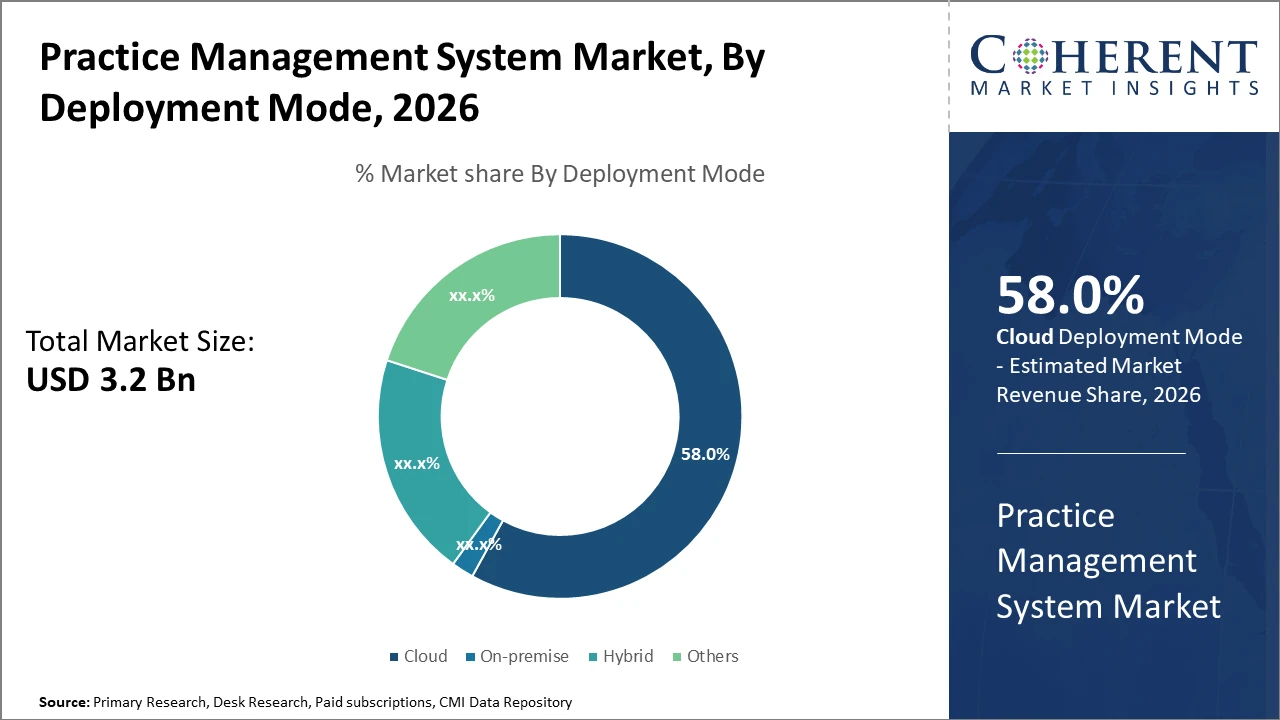
Practice Management System Market Insights, By Deployment Mode
Cloud dominates the market share at 58%. The cloud deployment model leads primarily due to its scalability, ease of access, and reduced upfront costs, making it preferable for large-scale healthcare organizations and smaller clinics alike. Providers leveraging cloud systems have reported up to 25% faster system implementation times and a 30% reduction in IT maintenance costs. Hybrid systems serve as a transitional solution, enabling providers to balance legacy system retention with cloud advantages, growing steadily in markets requiring data localization. On-premise systems, though declining in share, remain vital for organizations with stringent data privacy requirements, particularly in some European countries.
Practice Management System Market Insights, By End-User
Small and Medium Healthcare Providers dominate with a significant 48% market share, as they increasingly digitize operations to address administrative complexities and regulatory compliance. This segment's rapid adoption is supported by cost-effective cloud-based practice management options and growing healthcare IT budgets. Hospitals hold a sizable share at 38%, driven by their need for integrated, large-scale patient scheduling and billing systems. Specialty Clinics and Ambulatory Centers focus on customized modules catering to specific medical fields, such as oncology or cardiology, supporting diverse workflows.
Practice Management System Market Insights, By Application
Patient Scheduling commands the highest market share at 44%, due to the critical role it plays in optimizing appointment flows and reducing operational inefficiencies. However, the subsegment Billing & Claims Management is witnessing the fastest growth, fueled by increasing complexity in insurance reimbursements and regulatory billing requirements. Providers report a 22% improvement in claims processing rates with advanced billing modules introduced in 2025. Reporting & Analytics tools are gaining importance as healthcare organizations leverage data insights to drive value-based care models. Patient Communication applications, including automated reminders and patient portals, are growing steadily, enhancing patient engagement and adherence to care plans.
Practice Management System Market Trends
The market continues its strong trajectory, led predominantly by cloud technology migration and AI-powered functionalities.
Notably, cloud deployments account for over 58% market share as healthcare organizations seek scalable, secure, and interoperable solutions.
AI integration has been instrumental in reducing patient no-shows by automating scheduling reminders, seen in a 2025 case where major U.S. hospitals reported a 12% improvement in patient attendance rates.
Additionally, telehealth’s rise has catalyzed demand for unified platforms accommodating remote consultations, with Asia Pacific markets accelerating adoption due to increasing smartphone penetration and government digital health policies.
Practice Management System Market Insights, By Geography
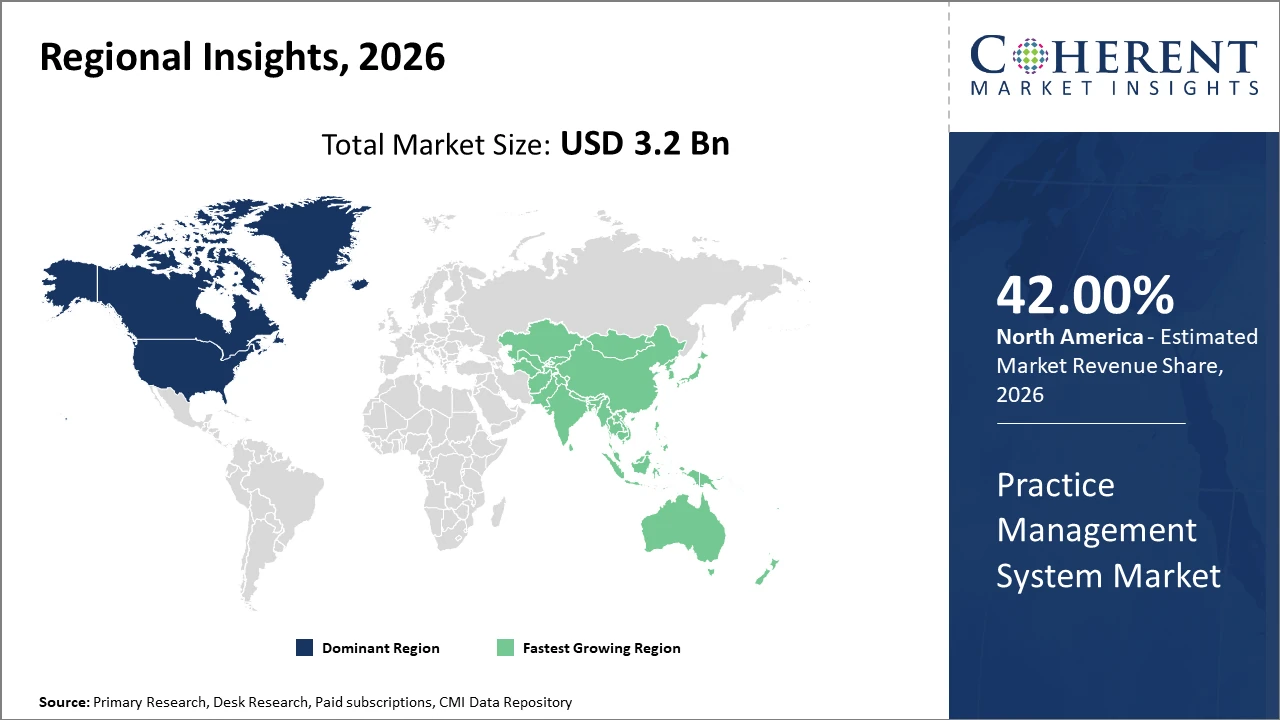
North America Practice Management System Market Analysis and Trends
In North America, the dominance in the market stems from a mature healthcare ecosystem, robust IT infrastructure, and stringent government mandates fostering electronic practice management adoption. The U.S. accounts for over 35% of the global market share, supported by leading companies such as Epic Systems and Cerner driving innovation and extensive client bases. North America's leadership is further strengthened by continuous healthcare IT investments and emphasis on interoperability and data security.
Asia Pacific Practice Management System Market Analysis and Trends
Meanwhile, the Asia Pacific region exhibits the fastest growth with an estimated CAGR exceeding 15%. Expanding healthcare infrastructure, affordable technological deployment options, and increasing awareness of practice management benefits propel growth. Government initiatives, notably India’s Digital Health Mission launched in 2024, have accelerated adoption. Noteworthy market players are collaborating with regional providers to tailor solutions compatible with diverse healthcare settings, catalyzing broader uptake.
Practice Management System Market Outlook for Key Countries
USA Practice Management System Market Analysis and Trends
The USA's Practice Management System market is pioneering innovation with accelerated cloud adoption and integration with EHRs. The country witnessed a 29% increase in cloud-based practice management system revenue in 2025, reflecting the shift towards digital transformation. Companies like Athenahealth expanded services by integrating AI-powered billing and scheduling modules, resulting in 18% improved operational efficiency for medium-to-large healthcare providers. Government incentives such as the Health IT for Economic and Clinical Health (HITECH) Act continue to enable widespread adoption, solidifying the USA’s position as the market leader.
India Practice Management System Market Analysis and Trends
India's market has rapidly expanded due to growing private healthcare investments and emerging demand among small and medium provider segments. Between 2024 and 2026, practice management adoption grew by 38% as providers sought cost-effective cloud solutions to manage billing and patient communications amid rising outpatient visits. Collaborations between technology vendors and regional healthcare chains have produced localized modules addressing language diversity and regulatory compliance, enhancing accessibility and market penetration.
Analyst Opinion
Adoption of Cloud-Based Systems is a Major Growth Catalyst – The shift from traditional on-premise solutions to cloud-based practice management systems is evident, with more than 60% of healthcare facilities integrating cloud platforms by 2025, improving accessibility and reducing IT overheads. This trend was supported by a 2024 Health IT survey indicating a 25% year-over-year increase in cloud deployments across the U.S. healthcare providers.
Integration with Electronic Health Records (EHR) Enhances Market Growth – Seamless interoperability between practice management systems and EHRs has become a key demand driver. Approximately 72% of practices reported using integrated systems by 2026, facilitating better data flow and improving patient care outcomes. Notably, clinics employing these integrated solutions observed a 15% reduction in claim denials in recent years.
Rising Demand for Telehealth Practice Management Solutions – With telehealth appointments surging by 40% in 2024, demand for specialized practice management features supporting remote patient scheduling, billing, and compliance has accelerated. Market participants focusing on telehealth-capable systems have seen average revenue growth rates of 18% in 2025.
Expanding Small and Medium Healthcare Providers Adoption – Smaller practices and specialty clinics, accounting for nearly 48% of the market share in 2026, are rapidly adopting practice management systems to automate billing and patient records management. This segment’s adoption rate surpassed 35% growth between 2024 and 2026, showcasing its rising contribution to overall market dynamics.
- Current Industry Events of 2026
- Market Size Estimation
- Regional Breakdown
- Competitive Landscape
- Customer Intelligence
- Segmental Analysis
- Pricing Analysis
- Key Market Drivers, Challenges & Future Trends
- Customized Insights Section
Market Scope
| Report Coverage | Details | ||
|---|---|---|---|
| Base Year: | 2025 | Market Size in 2026: | USD 3.2 billion |
| Historical Data for: | 2020 To 2024 | Forecast Period: | 2026 To 2033 |
| Forecast Period 2026 to 2033 CAGR: | 13.5% | 2033 Value Projection: | USD 7.8 billion |
| Geographies covered: |
| ||
| Segments covered: |
| ||
| Companies covered: | Practice Fusion, Greenway Health, McKesson Corporation, Kareo, Medisoft, CureMD, PracticeSuite, Netsmart Technologies, DrChrono, ChartLogic | ||
| Growth Drivers: |
| ||
Practice Management System Market Growth Factors
The primary growth drivers include the rapid adoption of digital workflow solutions in healthcare and the increasing need for operational efficiency in medical practices. Enhanced focus on revenue cycle management automation is driving demand as providers seek to reduce billing errors and payment delays—evidenced by hospitals reporting 22% faster claims processing post-adoption in 2025. Regulatory initiatives mandating data security and compliance are also catalyzing market growth through the adoption of specialized practice management modules. Furthermore, increased telemedicine penetration is expanding market scope as providers require integrated scheduling and billing systems to support hybrid care models. Lastly, rising healthcare IT budgets globally, especially in developed markets, underpin sustained investments into next-gen practice management systems
Practice Management System Market Development
In June 2025, Athenahealth launched its next-generation Practice Management System (PMS), a cloud-based platform embedded with AI-driven tools to automate claims management, eligibility checks, and patient engagement workflows. The solution was designed to reduce administrative burden on physician practices by improving revenue cycle efficiency, minimizing claim denials, and enabling seamless digital interactions between providers and patients across care settings.
In January 2025, Simplify Healthcare introduced SimplifyDocs.AI, an AI-powered documentation automation solution developed to handle mandated healthcare documents with high accuracy. The platform leverages natural language processing to ensure error-free language translations, regulatory compliance, and faster turnaround times, helping health plans and providers reduce manual effort while improving consistency and audit readiness.
In January 2025, Zaala AG launched Swiss MediCloud under its MediCloud Med line, a cloud-based practice management system tailored specifically for physicians in Switzerland. The platform focuses on secure data hosting, compliance with Swiss healthcare regulations, and streamlined administrative workflows, enabling doctors to manage scheduling, billing, and clinical documentation within a locally compliant digital ecosystem.
Key Players
Leading Companies of the Market
Practice Fusion
Greenway Health
McKesson Corporation
Kareo
Medisoft
CureMD
PracticeSuite
Netsmart Technologies
DrChrono
ChartLogic
Several market players have executed competitive strategies centered around product innovation and strategic acquisitions. For instance, Athenahealth expanded its cloud-based portfolio by acquiring a major telehealth provider in 2025, boosting its service offerings and capturing new client segments. Similarly, Epic Systems intensified its focus on interoperability by launching enhanced APIs in 2026, leading to more than a 20% increase in client retention rates.
Practice Management System Market Future Outlook
The future outlook for the Practice Management System Market is closely tied to integrated healthcare delivery and value-based care initiatives. Next-generation PMS platforms will incorporate artificial intelligence and predictive analytics to optimize scheduling, revenue cycle management, and patient engagement. Enhanced interoperability with EHRs, telehealth platforms, and payer systems will streamline workflows and support real-time decision-making. Patient self-service capabilities such as online check-in, appointment booking, and mobile billing will increase throughput and satisfaction. Cloud-based solutions will offer scalability and lower total cost of ownership for practices of all sizes. As healthcare practices focus on improving operational efficiency while enhancing quality of care, PMS solutions will continue to evolve into comprehensive practice orchestration platforms.
Practice Management System Market Historical Analysis
The Practice Management System Market developed in parallel with the broader digitization of healthcare administrative processes. Before the widespread use of electronic systems, medical practices relied on paper records and manual workflows for scheduling, billing, and patient communication, often leading to inefficiencies and errors. The introduction of practice management software in the late 20th century automated many of these functions, enabling digitized appointment scheduling, patient registration, and claims processing. Early systems were standalone, with limited integration with clinical documentation. As electronic health records (EHRs) became more prevalent, demand grew for PMS platforms that could seamlessly integrate administrative and clinical data, improving care coordination and financial performance. Over time, additional features such as patient portals, automated reminders, and analytics dashboards further expanded the role of PMS in supporting practice efficiency.
Sources
Primary Research Interviews:
Practice managers
Healthcare IT consultants
Physicians
Databases:
CMS Health IT Data
HIMSS Analytics
OECD Digital Health Data
GlobalData Health IT
Magazines:
Healthcare IT News
Modern Healthcare
HealthTech Magazine
Medical Economics
CIO Healthcare
Journals:
Journal of Medical Internet Research
BMJ Health & Care Informatics
JAMIA
Health Informatics Journal
Journal of Healthcare Management
Newspapers:
Financial Times (Digital Health)
Reuters Health IT
The Guardian (Technology)
Bloomberg Technology
The New York Times (Health)
Associations:
Healthcare Information and Management Systems Society
American Medical Informatics Association
Medical Group Management Association
HIMSS
HL7 International
Get access to 250+ pages report
Every segment, forecast, competitor profile and data table behind the analysis above — available for instant download.
- ESOMAR Member
- ISO 9001:2015 Certified
- D-U-N-S Registered
- GDPR & CCPA Compliant
Missing comfort of reading report in your local language? Find your preferred language:
Transform your Strategy with Exclusive Trending Reports
Frequently Asked Questions
The dominant players include Epic Systems Corporation, Cerner Corporation, and Athenahealth Inc., all of which boast broad portfolios and strong customer bases across multiple regions.
The market is expected to grow from USD 3.2 billion in 2026 to USD 7.8 billion by 2033, reflecting a CAGR of 13.5%, indicating substantial expansion driven by healthcare digitization.
Small and Medium Healthcare Providers hold the largest growth opportunity due to increasing adoption of automated solutions to streamline administrative and billing functions.
Trends will center on cloud adoption, AI-enabled automation, telehealth integration, and enhanced interoperability with electronic health records, fueling efficiency and care outcomes.
The competitive landscape is fragmented with innovation-led rivalry. Challenges include data privacy concerns, integration complexities, and adapting to changing healthcare regulations.
Companies primarily pursue strategic acquisitions, product innovation, and partnerships with EHR providers to enhance solution offerings and increase market reach.