

Gouty Arthritis Market Size and Forecast — 2026 - 2033
The Global Gouty Arthritis Market size is estimated to be valued at USD 3.1 billion in 2026 and is expected to reach USD 5.6 billion by 2033, exhibiting a compound annual growth rate (CAGR) of 8.3% from 2026 to 2033.
Overview
The gouty arthritis market is driven by the rising prevalence of Gout and Hyperuricemia, largely linked to aging populations, sedentary lifestyles, and dietary habits rich in purines and alcohol. Increasing awareness, improved diagnostic rates, and growing access to healthcare services are supporting early treatment adoption. Advancements in therapeutics, including novel urate-lowering drugs and anti-inflammatory biologics, are expanding treatment options. Additionally, higher healthcare spending, strong research and development pipelines, and supportive government initiatives are accelerating market growth. The increasing burden of comorbidities such as obesity and kidney disorders further contributes to the demand for effective gout management solutions.
Key Takeaways
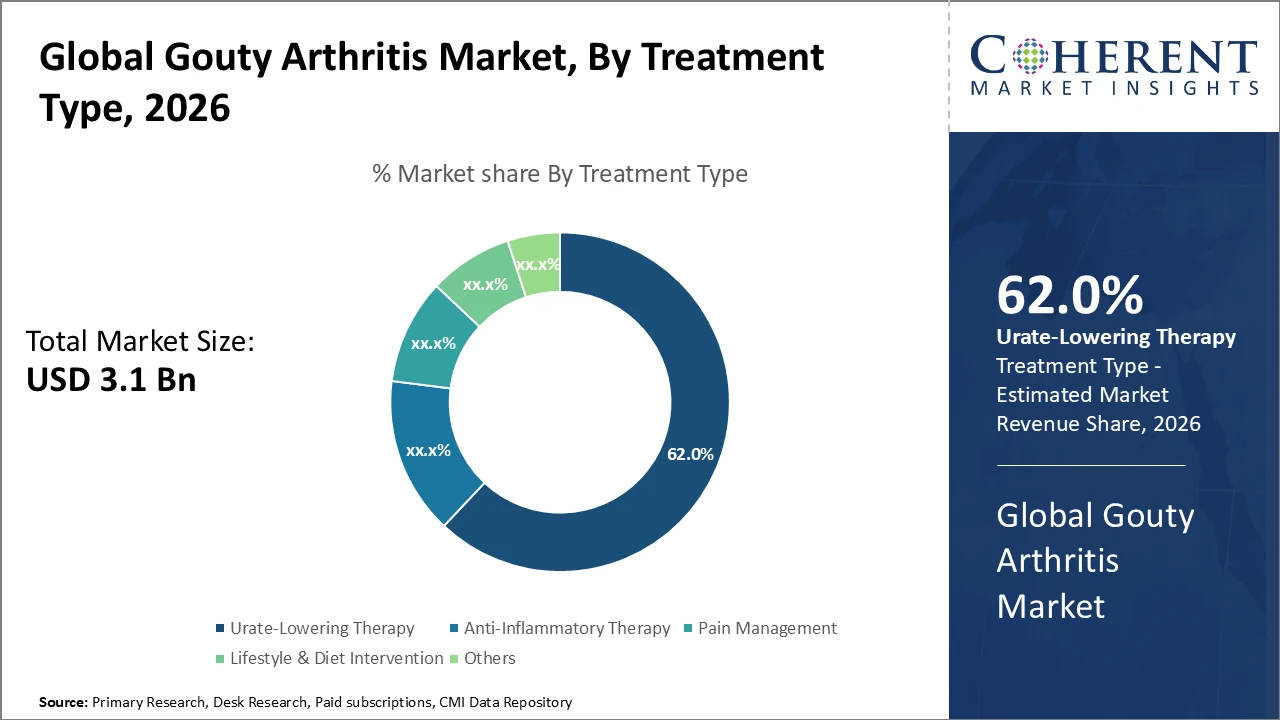
In the urate-lowering therapy segment, which holds 62% of the market share, consistent innovation and expansion of the drug pipeline act as key growth drivers, helping the segment maintain dominance and generate significant revenue.
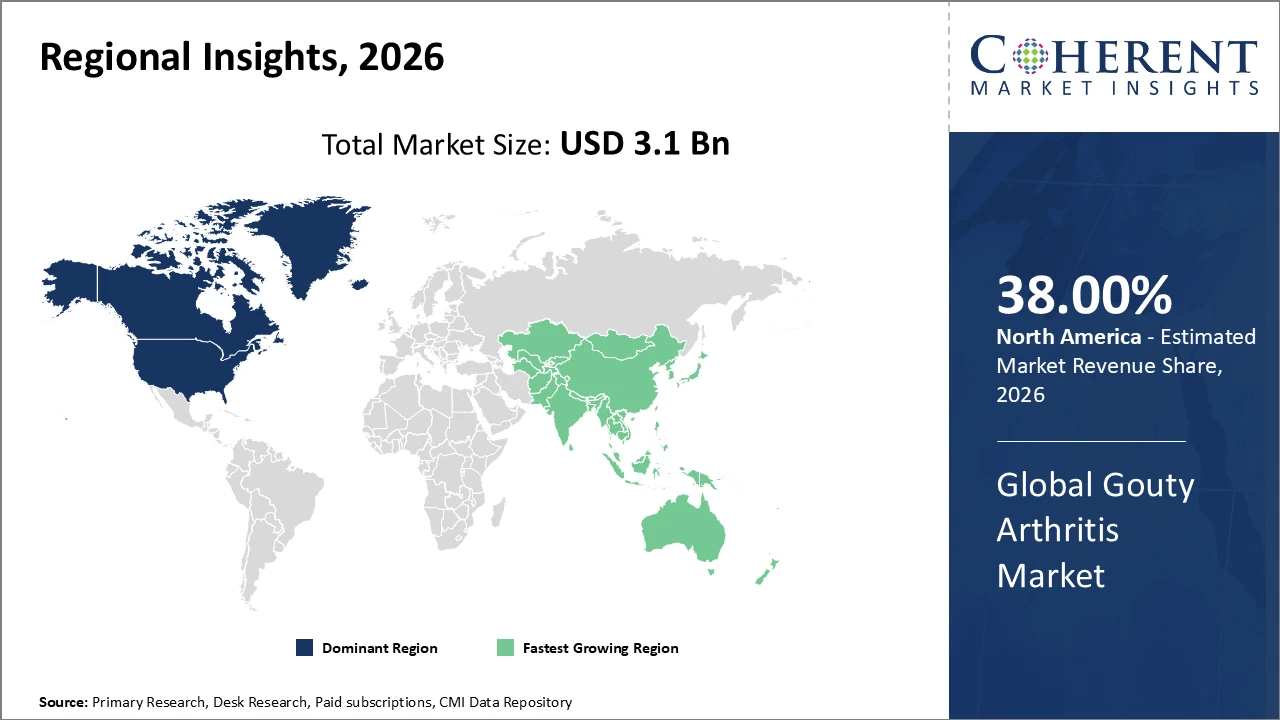
Geographically, North America accounts for over 38% of the market share, supported by strong healthcare infrastructure and favorable reimbursement policies that contribute to steady business growth.
Asia Pacific represents the fastest-growing region, with a CAGR exceeding 9%, driven by increasing patient awareness, rising healthcare spending, and improved access to treatment in rural areas.
Gouty Arthritis Market Segmentation Analysis
Gouty Arthritis Market Insights, By Treatment Type
Urate-lowering therapy dominates the market share due to its direct role in reducing hyperuricemia, the primary cause of gouty arthritis progression. Strong research pipelines and increasing regulatory approvals have expanded treatment options, boosting adoption rates. Anti-inflammatory therapy is the fastest-growing segment, driven by advancements in targeted biologics and combination treatments that enhance inflammation control. Pain management focuses on providing relief during acute gout attacks, ensuring patient comfort. Lifestyle and diet intervention, while smaller in share, is gaining importance for prevention.
Gouty Arthritis Market Insights, By Drug Type
Xanthine oxidase inhibitors occupy the largest market share due to their proven ability to reduce uric acid production effectively. Widely used drugs such as allopurinol and febuxostat have strong clinical acceptance and form the backbone of long-term gout management. This segment continues to benefit from ongoing research, patent activity, and expanded use in patients with related conditions. Uricosurics represent the fastest-growing segment, driven by newer agents with improved safety and effectiveness in resistant cases. Colchicine remains important for managing acute inflammation, while NSAIDs provide supportive pain relief.
Gouty Arthritis Market Insights, By End User
Hospitals dominate the market due to their central role in managing both acute and chronic gout, supported by advanced diagnostic capabilities and comprehensive treatment infrastructure. High patient inflow and multidisciplinary care approaches further strengthen their position. Specialty clinics are the fastest-growing segment, driven by rising demand for focused chronic disease management and specialized treatment pathways. Retail pharmacies play a key role in ensuring easy access to prescribed medications. Home care is gaining momentum with the growth of telehealth and remote monitoring solutions.
Gouty Arthritis Market Trends
Recent market trends show increasing integration of real-world evidence and artificial intelligence to enhance gouty arthritis management and treatment outcomes.
In 2025, AI-based diagnostic platforms improved early-stage gout detection accuracy by approximately 18%, enabling faster diagnosis and timely treatment initiation.
The growing availability of biologics and biosimilars is intensifying competition, leading to more affordable treatment options and improved global accessibility.
Pharmaceutical companies are placing greater emphasis on patient education programs to boost medication adherence, addressing a long-standing challenge in effective disease management.
Gouty Arthritis Market Insights, By Geography
North America Gouty Arthritis Market Analysis and Trends
North America dominates the gouty arthritis market due to its well-established healthcare infrastructure, high per capita healthcare spending, and supportive reimbursement framework. The United States accounts for over 30% of global revenue, driven by a large patient population and strong focus on research and innovation. Advanced diagnostic capabilities and early treatment adoption further strengthen regional leadership. Additionally, the presence of major pharmaceutical companies and ongoing strategic collaborations accelerate product development and commercialization. Favorable regulatory policies and widespread awareness programs also contribute to improved disease management, ensuring consistent market growth and sustained dominance across the region.
Asia Pacific Gouty Arthritis Market Analysis and Trends
Meanwhile, the Asia Pacific region demonstrates the fastest growth in the gouty arthritis market, with a CAGR exceeding 9%. This rapid expansion is driven by rising awareness about gout management, improving healthcare infrastructure, and increasing access to medical services across urban and rural areas. The growing geriatric population, which is more susceptible to gout, further supports market demand. Additionally, government initiatives aimed at controlling non-communicable diseases are accelerating diagnosis and treatment rates. Countries such as India and China are key contributors, supported by expanding pharmaceutical markets, increased healthcare spending, and ongoing efforts to enhance patient education and early intervention strategies.
Gouty Arthritis Market Outlook for Key Countries
USA Gouty Arthritis Market Analysis and Trends
The USA market holds a significant share, contributing over 25% of total gouty arthritis market revenue in 2026. This is largely due to the high prevalence of the disease, with more than 8 million diagnosed cases reported in 2024. Strong presence of leading pharmaceutical companies such as Horizon Therapeutics and Pfizer supports continuous innovation through the launch of advanced therapies and patient assistance programs. Additionally, improved insurance coverage enhances treatment accessibility, while ongoing clinical trials drive the development of more effective solutions, reinforcing the country’s critical role in shaping global market trends and future growth opportunities.
Germany Gouty Arthritis Market Analysis and Trends
Germany plays a significant role in the European gouty arthritis market, driven by a strong healthcare system and high adoption of advanced therapeutics. The market is growing steadily due to rising prevalence of hyperuricemia, aging population, and lifestyle-related risk factors such as obesity and metabolic disorders. Urate-lowering therapies, particularly xanthine oxidase inhibitors, dominate treatment patterns, while NSAIDs remain widely used for acute management. Increasing awareness, early diagnosis, and favorable reimbursement policies further support market expansion. Additionally, strong pharmaceutical R&D activity and clinical trial participation position Germany as a key hub for innovation and sustained growth in gout management solutions.
Analyst Opinion
Rising prevalence of gout worldwide is a key driver of market expansion, with 8.3 million adults diagnosed in the U.S. in 2024, reflecting a 3.5% year-over-year increase and supporting growing treatment demand.
Therapeutic innovations in urate-lowering therapies are accelerating market activity, with next-generation selective xanthine oxidase inhibitors launched in 2025 leading to a 15% global increase in prescriptions and improved patient adherence.
Expanding indications of gout in comorbid conditions such as chronic kidney disease (CKD) and cardiovascular disorders are increasing demand, with 30% of CKD patients in 2026 showing gout symptoms, boosting combination therapy use.
Improved pricing strategies and enhanced insurance coverage in North America and Europe have increased accessibility, contributing to a 12% rise in market revenue in 2025 across these regions.
- Current Industry Events of 2026
- Market Size Estimation
- Regional Breakdown
- Competitive Landscape
- Customer Intelligence
- Segmental Analysis
- Pricing Analysis
- Key Market Drivers, Challenges & Future Trends
- Customized Insights Section
Market Scope
| Report Coverage | Details | ||
|---|---|---|---|
| Base Year: | 2025 | Market Size in 2026: | USD 3.1 billion |
| Historical Data for: | 2020 To 2024 | Forecast Period: | 2026 To 2033 |
| Forecast Period 2026 to 2033 CAGR: | 8.3% | 2033 Value Projection: | USD 5.6 billion |
| Geographies covered: |
| ||
| Segments covered: |
| ||
| Companies covered: | Horizon Therapeutics, Takeda Pharmaceuticals, Novartis AG, Pfizer Inc., AstraZeneca plc, GlaxoSmithKline plc, Amgen Inc., Sanofi SA, UCB S.A., Ironwood Pharmaceuticals | ||
| Growth Drivers: |
| ||
Gouty Arthritis Market Growth Factors
Market growth is primarily driven by the rising epidemiological burden associated with lifestyle changes, including increasing obesity rates and dietary shifts, with 2026 data indicating a 7% annual rise in gout cases linked to these factors. Advancements in diagnostic technologies, such as advanced imaging techniques and biomarker-based assays, are enhancing early detection and improving treatment outcomes, thereby boosting demand for effective therapies. Expansion of healthcare infrastructure in emerging economies like India and China is further supporting market penetration. In addition, awareness initiatives and favorable government reimbursement policies are reducing treatment barriers and accelerating adoption of advanced gout therapeutics globally.
Gouty Arthritis Market Development
In July 2025, Eisai Co., Ltd. unveiled URECE for the treatment of Gout in China, following its approval by the National Medical Products Administration in December 2024 for gout patients with hyperuricemia.
Key Players
Leading Companies of the Market
Horizon Therapeutics
Takeda Pharmaceuticals
Novartis AG
Pfizer Inc.
AstraZeneca plc
GlaxoSmithKline plc
Amgen Inc.
Sanofi SA
Ironwood Pharmaceuticals
UCB S.A.
In 2024–2025, key pharmaceutical players strengthened their positions in the gouty arthritis market through distinct strategic initiatives. Horizon Therapeutics gained a significant competitive advantage in 2025 by aggressively expanding its portfolio of urate-lowering therapies, leading to a 20% increase in its North American market share. Takeda Pharmaceutical Company pursued targeted acquisitions of niche biotech firms specializing in gout treatments in 2024, which enhanced its pipeline and contributed to a 14% rise in global revenue. Meanwhile, Novartis implemented innovative pricing strategies and patient-access programs across Europe, improving treatment adoption in outpatient clinics and specialty hospitals and driving regional growth.
Gouty Arthritis Market Future Outlook
The gouty arthritis market is expected to show steady growth in the future, driven by rising prevalence of hyperuricemia, obesity, aging populations, and unhealthy dietary habits. The market is projected to grow at a CAGR of around 6–7%, reaching over USD 5 billion by 2030. Demand is increasing for advanced therapies such as urate-lowering drugs, biologics, and combination treatments. Improved diagnosis rates and awareness are also boosting market expansion. However, high treatment costs and patient non-compliance remain key challenges. Overall, the outlook is positive, with strong R&D and personalized medicine shaping future growth.
Gouty Arthritis Market Historical Analysis
Historically, the gouty arthritis market has experienced steady growth driven by increasing disease prevalence and improved awareness of hyperuricemia management. Early treatment mainly relied on generic anti-inflammatory drugs such as NSAIDs and corticosteroids, with limited long-term urate-lowering options. The introduction of drugs like allopurinol and febuxostat marked a significant advancement, improving chronic disease control. Over the past decade, rising obesity rates, aging populations, and lifestyle changes have increased patient burden globally. Pharmaceutical companies gradually expanded research into targeted biologics and combination therapies. Improved diagnostics and wider healthcare access further contributed to market expansion, particularly in developed regions such as North America and Europe.
Sources
Primary Research Interviews:
Rheumatologists, orthopedic specialists, and internal medicine physicians treating gouty arthritis patients
Hospital pharmacists and clinical researchers involved in urate-lowering therapy management
Healthcare administrators and payers evaluating treatment adoption and reimbursement policies
Pharmaceutical R&D scientists working on biologics and novel gout therapeutics
Magazines:
The Lancet Rheumatology – Clinical updates and treatment advancements in gout
Medscape – Physician insights, treatment practices, and clinical guidelines
PharmaVoice – Pharmaceutical industry strategies and pipeline developments
Nature Reviews Rheumatology – Research developments in uric acid metabolism and therapies
Journals:
Arthritis & Rheumatology – Clinical trials, gout pathophysiology, and treatment efficacy studies
Rheumatology (Oxford Academic) – Evidence-based management of gout and related disorders
Journal of Rheumatology – Epidemiology and therapeutic advancements in gout
Clinical Rheumatology – Drug performance, safety profiles, and patient outcomes
Newspapers:
The Wall Street Journal – Pharmaceutical market strategies and drug pricing trends
Financial Times – Healthcare sector growth and biotech investments
Reuters – Drug approvals, clinical trial updates, and market developments
Bloomberg – Pharma company performance and healthcare market analysis
Associations:
American College of Rheumatology (ACR) – Clinical guidelines and gout management standards
European Alliance of Associations for Rheumatology (EULAR) – Treatment recommendations and research
International League of Associations for Rheumatology (ILAR) – Global rheumatology research collaboration
Get access to 250+ pages report
Every segment, forecast, competitor profile and data table behind the analysis above — available for instant download.
- ESOMAR Member
- ISO 9001:2015 Certified
- D-U-N-S Registered
- GDPR & CCPA Compliant
Missing comfort of reading report in your local language? Find your preferred language:
Transform your Strategy with Exclusive Trending Reports
Frequently Asked Questions
The Gouty Arthritis market is predominantly led by Horizon Therapeutics, Takeda Pharmaceutical, Novartis AG, and Pfizer Inc., supported by innovative therapies and strategic expansions in key regions.
The Gouty Arthritis market size is projected to grow from USD 3.1 billion in 2026 to approximately USD 5.6 billion by 2033, driven by rising disease prevalence and therapeutic advancements.
Hospitals represent the largest end-user segment, accounting for the majority of market revenue due to integrated care models and advanced treatment availability.
Market trends will evolve towards personalized medicine, digital health integrations, and environmentally sustainable drug development, with increasing emphasis on early diagnosis and combination therapies.
The competitive landscape is marked by robust R&D expenditure, mergers, and acquisitions. Challenges include pricing pressures, regulatory complexities, and barriers in emerging markets.
Companies are leveraging patient-centric drug development, collaborations with healthcare providers, and market access programs to improve therapeutic adoption and market penetration.