

Osteoarthritis Treatment Market Size and Forecast – 2026 to 2033
The Osteoarthritis Treatment Market is estimated to be valued at USD 6.78 Bn in 2026 and is expected to reach USD 12.94 Bn by 2033, exhibiting a compound annual growth rate (CAGR) of 9.2% from 2026 to 2033.
Key Takeaways
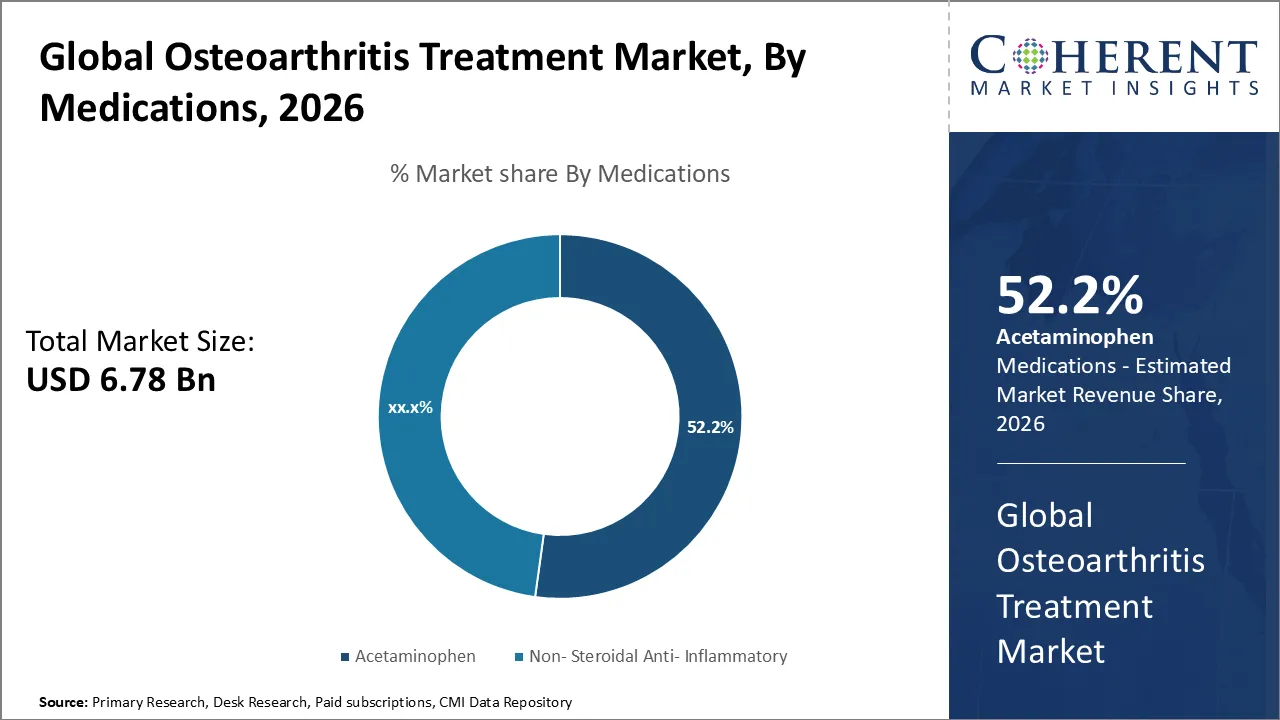
- By Medications, Acetaminophen hold the largest market share of 52.2% in 2026 owing to its Growing Prevalence of Osteoarthritis.
- By Therapies, Surgical Treatment expected to hold largest market share of 36.4% in 2026 owing to the technological advancements in surgical techniques.
- By End User, Hospitals acquired the prominent market share of 33.6% in 2026 owing to its high patient inflow and severe case management.
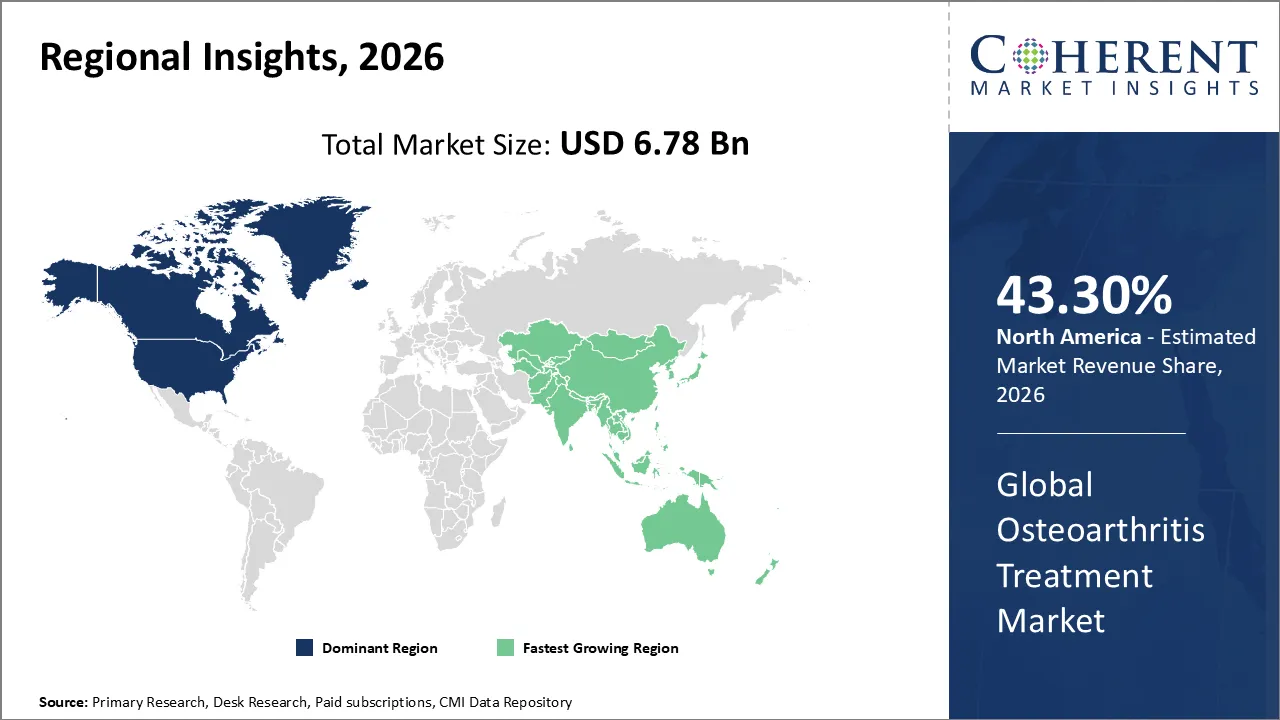
- By Region, North America dominates the overall market with an estimated share of 43.3% in 2026 owing to the advanced healthcare infrastructure & access.
Market Overview
The Osteoarthritis Treatment Market is expanding as more people develop osteoarthritis, especially within aging and lifestyle-affected populations. Patients are becoming increasingly aware of treatment options, while advancements in diagnostic techniques and the introduction of innovative therapies—including pharmacological, surgical, and biologic solutions—are driving market growth. Hospitals and specialized clinics provide comprehensive care, leveraging advanced healthcare infrastructure and supportive reimbursement policies. Ongoing research, improved treatment access, and rising demand for effective pain management and enhanced quality of life continue to strengthen the market.
Current Events and Its Impacts on the Osteoarthritis Treatment Market
Current Events | Description and its impact |
Aging Global Population |
|
Advances in Regenerative Medicine and Biologics |
|
Healthcare Policy Reforms in North America and Europe |
|
Segmental Insights
- Current Industry Events of 2026
- Market Size Estimation
- Regional Breakdown
- Competitive Landscape
- Customer Intelligence
- Segmental Analysis
- Pricing Analysis
- Key Market Drivers, Challenges & Future Trends
- Customized Insights Section
Osteoarthritis Treatment Market Insights, By Medications: Acetaminophen contribute the highest share of the market owing to its well-known safety and tolerability profile.
Acetaminophen hold the largest market share of 52.2% in 2026. The demand for acetaminophen in osteoarthritis treatment is growing as healthcare providers rely on its proven safety and ability to manage mild-to-moderate pain, particularly in older adults and patients who cannot use other analgesics. Its easy over-the-counter availability and strong recommendation in clinical guidelines position it as a preferred first-line option. Rising osteoarthritis cases, greater patient awareness, and the need for affordable pain relief drive its use, while the development of combination and extended-release formulations further strengthens its adoption.
Osteoarthritis Treatment Market Insights, By Therapies: Surgical Treatment contribute the highest share of the market owing to its technological advancements in surgical techniques.
Surgical Treatment expected to hold largest market share of 36.4% in 2026. The demand for surgical treatments in osteoarthritis is rising as more patients with advanced joint damage seek lasting pain relief and better mobility. Minimally invasive procedures, robotic-assisted surgeries, and durable implants improve recovery and outcomes, making surgery increasingly attractive. Aging populations, growing obesity rates, and higher patient expectations for quality-of-life further increase adoption. Hospitals and clinics with advanced infrastructure, experienced orthopedic specialists, and supportive insurance options actively facilitate more patients opting for surgical interventions over conservative approaches. For instance, in July 2025, Overture Orthopaedics, a U.S.-based medical device company, has launched the OvertureTi Knee Resurfacing System® nationwide to treat early osteoarthritis and cartilage defects, offering surgeons innovative joint preservation solutions.
Osteoarthritis Treatment Market Insights, By End User: Hospitals contribute the highest share of the market owing to its skilled healthcare professionals.
Hospitals acquired the prominent market share of 33.6% in 2026. Hospitals actively shape the osteoarthritis treatment market by delivering comprehensive care to patients with complex or advanced conditions. They utilize advanced diagnostic equipment, multidisciplinary teams, and surgical facilities to manage the entire care process from evaluation to rehabilitation. Increasing patient awareness, higher demand for specialized treatments, and the need to manage comorbidities drive more patients to hospitals. Furthermore, supportive insurance coverage, expanding healthcare infrastructure, and access to innovative therapies and clinical trials reinforce hospitals as key centers for effective osteoarthritis management. For instance, Up to 18% of ACL reconstruction patients experience graft failure, raising their risk of post-traumatic osteoarthritis (PTOA). A new trial by HSS and Emory University will test whether concentrated bone marrow aspirate (cBMA) can improve healing and prevent PTOA after revision surgery.
Regional Insights
North America Osteoarthritis Treatment Market Trends
North America dominates the overall market with an estimated share of 43.30% in 2026. The North America osteoarthritis treatment market is expanding as more people develop osteoarthritis due to aging and lifestyle factors. Patients are increasingly opting for advanced therapies, including biologics, injectables, and surgical procedures, supported by robust healthcare infrastructure and experienced specialists. Growing patient awareness, early diagnosis, and the adoption of innovative treatment technologies actively drive market growth. In addition, comprehensive insurance coverage, continuous research, and strong pharmaceutical and medical device development encourage wider use of both established and emerging osteoarthritis treatments throughout the region.
For instance, in October 2025, NEXTBIOMEDICAL Co., Ltd. announced the enrollment of the first patient in its U.S. pivotal trial of Nexsphere-F™, a fast-resorbable microsphere for musculoskeletal pain embolization, designed to accelerate review and Medicare coverage.
Asia Pacific Osteoarthritis Treatment Market Trends
The Asia Pacific osteoarthritis treatment market is expanding as urbanization, lifestyle changes, and longer life expectancy increase the prevalence of osteoarthritis. Patients are actively seeking both conventional therapies, like pain medications and physiotherapy, and advanced options, including surgical procedures. Expanding healthcare infrastructure, improved access to hospitals and specialized clinics, and rising awareness of early diagnosis drive treatment adoption. Governments, enhancing insurance coverage, and ongoing investment in pharmaceuticals and medical devices further promote the growth of osteoarthritis care across the region. For instance, in December 2025, Cipla launched Ciplostem, an innovative allogeneic mesenchymal stromal cell (MSC) therapy for knee osteoarthritis, approved by India’s Drug Controller General (DCGI).
United States Osteoarthritis Treatment Market Trends
The United States osteoarthritis treatment market is expanding as aging populations and lifestyle-related risk factors raise osteoarthritis cases. Patients increasingly choose a mix of pharmacological treatments, advanced injectables, and surgical procedures to relieve pain and preserve mobility. Well-developed healthcare infrastructure, broad access to specialized orthopedic care, and growing patient awareness actively support early diagnosis and effective management. Furthermore, continuous research, robust pharmaceutical and medical device innovation, and comprehensive insurance coverage encourage widespread adoption of both traditional and advanced osteoarthritis therapies across the country. For instance, in January 2026, 4Moving Biotech (4MB), developing next-generation osteoarthritis therapies, announced that the US FDA cleared its 4P004 therapy, enabling the Phase 2a INFLAM MOTION trial to expand in the United States.
China Osteoarthritis Treatment Market Trends
The China osteoarthritis treatment market is growing as rapid urbanization, shifting diets, and an aging population increase the prevalence of osteoarthritis. Patients are actively turning to a combination of traditional therapies, including herbal remedies and physiotherapy, alongside modern pharmacological and surgical treatments. Expanding healthcare infrastructure, the rise of specialized clinics, and greater public awareness of early diagnosis are boosting treatment adoption. Moreover, government healthcare programs, broader insurance coverage, and investment in pharmaceutical and medical device innovation are accelerating the availability and use of osteoarthritis therapies throughout China.
End-user Feedback and Unmet Needs in the Osteoarthritis Treatment Market
- Pain Management Effectiveness: Patients report that while current medications and therapies relieve mild-to-moderate pain, many struggle with persistent discomfort in advanced stages. There is a need for treatments that provide long-lasting relief without adverse side effects, particularly for older adults with comorbidities or those intolerant to NSAIDs and other analgesics.
- Accessibility and Affordability: Many patients face challenges accessing advanced therapies, including biologics, injectables, and surgical interventions. High costs, limited insurance coverage, and uneven healthcare infrastructure in certain regions restrict timely treatment. End-users express demand for more affordable, widely available treatment options that can reach both urban and rural populations effectively.
- Personalized and Targeted Therapies: Patients and clinicians highlight the lack of personalized treatment options tailored to disease severity, lifestyle, or comorbid conditions. There is a growing need for therapies that can adapt to individual patient profiles, including precision medications, regenerative therapies, and customized rehabilitation programs, to improve outcomes and minimize side effects.
Osteoarthritis Treatment Market Trend
Shift Towards Advanced Therapies
The market is moving beyond traditional pain medications toward advanced therapies, including biologics, stem cell treatments, and regenerative medicine. Patients and clinicians increasingly prefer treatments that not only relieve pain but also target disease progression. This trend is driven by innovations in pharmacology and biotechnology, growing patient awareness of treatment options, and the demand for long-term solutions that improve joint function and quality of life rather than providing only temporary symptom relief.
Growth in Surgical Interventions
Surgical treatments, particularly minimally invasive procedures and joint replacements, are gaining traction as effective solutions for severe osteoarthritis. Advances in robotic-assisted surgery, 3D-printed implants, and faster recovery protocols have increased patient acceptance. Hospitals and specialized centers are expanding their surgical capabilities, offering integrated post-operative rehabilitation programs. Rising patient expectations for restored mobility, reduced pain, and enhanced quality of life are driving the adoption of surgical options over prolonged conservative management.
Osteoarthritis Treatment Market Opportunity
Development of Regenerative and Biologic Therapies
The growing interest in regenerative medicine, including stem cell therapy and platelet-rich plasma treatments, presents a significant opportunity. These therapies aim to repair or regenerate damaged cartilage rather than only alleviating pain. Pharmaceutical and biotech companies can focus on developing safe, effective, and scalable solutions. Early adoption of biologic interventions offers differentiation for market players and meets the unmet need for long-term, disease-modifying treatments that enhance joint function and improve patient quality of life.
Market Report Scope
Osteoarthritis Treatment Market Report Coverage
| Report Coverage | Details | ||
|---|---|---|---|
| Base Year: | 2025 | Market Size in 2026: | USD 6.78 Bn |
| Historical Data for: | 2020 To 2024 | Forecast Period: | 2026 To 2033 |
| Forecast Period 2026 to 2033 CAGR: | 9.2% | 2033 Value Projection: | USD 12.94 Bn |
| Geographies covered: |
| ||
| Segments covered: |
| ||
| Companies covered: | Johnson & Johnson Ltd., Abbott Laboratories, Pfizer, Inc., Novartis AG, Eli Lily and Co., Abiogen Pharma, Ampio Pharmaceuticals, Halyard Health, and BioDelivery Sciences International, Inc. | ||
| Growth Drivers: |
| ||
| Restraints & Challenges: |
| ||
Osteoarthritis Treatment Market News
- In January 2025, OPTM Healthcare opened its flagship clinic in South Extension, New Delhi, offering muscle-focused natural pain care and specializing in treating knee osteoarthritis and spine degenerative disorders.
Analyst Opinion (Expert Opinion)
- The current trajectory of the osteoarthritis treatment market reflects a decisive pivot from symptomatic management toward targeted, minimally invasive, and regenerative therapeutic strategies. Traditional NSAIDs still constitute a significant share of prescriptions globally, but their limitations are stark: safety concerns such as elevated cardiovascular and gastrointestinal risk have materially constrained long-term use, with up to 41 % of cardiovascular events in osteoarthritis cohorts attributed to NSAID usage in certain analyses and substantial rates of gastrointestinal bleeding reported in routine practice. This clinical reality is accelerating the adoption of intra-articular agents and next-generation formulations that extend relief while reducing systemic exposure, a trend evidenced by the rapid uptake of single-injection hyaluronic acid products that streamline care pathways and improve adherence compared with multi-dose regimens.
- Market evidence underscores that innovation is not merely incremental but structurally transformative. Injectable solutions, particularly advanced viscosupplements and extended-duration corticosteroids, are reshaping practice patterns, capturing substantial revenue share and displacing older pharmacotherapies. Moreover, biologics and regenerative modalities—once niche—are making meaningful inroads; emerging data show biologic therapies achieving superior anti-inflammatory effects over traditional agents in key segments, while stem cell and cartilage repair approaches are demonstrating functional benefits not attainable with conventional drugs.
- Competitive dynamics illustrate strategic repositioning among both legacy pharmaceutical players and smaller biotech innovators. Partnerships and acquisitions—such as orthopedic device firms absorbing regenerative assets—indicate an industry response to declining volumes in conventional joint replacement procedures by hedging toward biologics and injectables with higher clinical differentiation. This repositioning aligns with payer and provider incentives to defer costly surgical interventions through ambulatory treatments that demonstrate measurable improvements in pain and mobility, while healthcare systems in key regions adjust reimbursement frameworks to prioritize long-term outcomes over episodic symptom control.
Speak to the analyst
Want personalized insights?
Take the findings above to one of our principal consultants, or have the report rebuilt around the segments, geographies and competitors you actually track.
Market Segmentation
- By Medications
- Acetaminophen
- Non- Steroidal Anti- Inflammatory
- By Therapies
- Non- Pharmacological Therapy
- Pharmacological Therapy
- Surgical Treatment
- By End-user
- Hospitals
- Clinics
- Household
- By Regional Insights
- North America
- U.S.
- Canada
- Latin America
- Brazil
- Argentina
- Mexico
- Rest of Latin America
- Europe
- Germany
- U.K.
- Spain
- France
- Italy
- Russia
- Rest of Europe
- Asia Pacific
- China
- India
- Japan
- Australia
- South Korea
- ASEAN
- Rest of Asia Pacific
- Middle East
- GCC Countries
- Israel
- Rest of Middle East
- Africa
- South Africa
- North Africa
- Central Africa
- North America
- Key Players Insights
- Johnson & Johnson Ltd.
- Abbott Laboratories
- Pfizer, Inc.
- Novartis AG
- Eli Lily and Co.
- Abiogen Pharma
- Ampio Pharmaceuticals
- Halyard Health
- BioDelivery Sciences International, Inc.
Sources
Primary Research interviews
- Orthopedic surgeons specializing in knee and hip osteoarthritis management
- Rheumatologists involved in long-term osteoarthritis patient care
- Hospital pharmacy heads and formulary decision-makers
- Executives from pharmaceutical and biologics manufacturing organizations
- Clinical researchers engaged in osteoarthritis drug development and trials
Databases
- World Health Organization (WHO) Global Health Estimates Database
- U.S. Food and Drug Administration (FDA) Drugs@FDA and Clinical Trial Databases
- European Medicines Agency (EMA) public assessment reports
- National Institutes of Health (NIH) and ClinicalTrials.gov
- OECD Health Statistics Database
Magazines
- Nature Reviews Rheumatology
- The Lancet Rheumatology
- Pharmaceutical Technology
- Drug Discovery Today
Journals
- Osteoarthritis and Cartilage
- Annals of the Rheumatic Diseases
- Arthritis & Rheumatology
- Journal of Orthopaedic Research
- BMJ Musculoskeletal Disorders
Newspapers
- The New York Times – Health Section
- The Wall Street Journal – Healthcare and Pharmaceuticals
- The Guardian – Health and Science
Associations
- Osteoarthritis Research Society International (OARSI)
- American College of Rheumatology (ACR)
- European League Against Rheumatism (EULAR)
- International Society for Pharmacoeconomics and Outcomes Research (ISPOR)
Public Domain sources
- Government health department publications and statistical releases
- National healthcare reimbursement and treatment guideline documents
- Publicly available clinical trial results and regulatory filings
- Peer-reviewed academic and institutional research publications
Proprietary Elements
- CMI Data Analytics Tool
- Proprietary CMI Existing Repository of information for last 8 years
Get access to 250+ pages report
Every segment, forecast, competitor profile and data table behind the analysis above — available for instant download.
- ESOMAR Member
- ISO 9001:2015 Certified
- D-U-N-S Registered
- GDPR & CCPA Compliant
Missing comfort of reading report in your local language? Find your preferred language:
Transform your Strategy with Exclusive Trending Reports
Frequently Asked Questions
The Osteoarthritis Treatment Market is estimated to be valued at USD 6.78 Bn in 2026 and is expected to reach USD 12.94 Bn by 2033.
The CAGR of the Osteoarthritis Treatment Market is projected to be 9.2% from 2026 to 2033.
High treatment costs, limited reimbursement in many markets, and stringent regulatory requirements constrain the uptake of advanced biologics and regenerative treatments.
There is pronounced strategic activity around next-generation therapies and delivery mechanisms.
North America is expected to lead the global Osteoarthritis Treatment market.