

Medical Radiation Detection, Monitoring, and Safety Market Size and Forecast — 2026 - 2033
The Global Medical Radiation Detection, Monitoring, and Safety Market size is estimated to be valued at USD 2.8 billion in 2026 and is expected to reach USD 5.1 billion by 2033, exhibiting a compound annual growth rate (CAGR) of 9.1% from 2026 to 2033.
Overview
The Medical Radiation Detection, Monitoring, and Safety market is driven by the growing use of diagnostic imaging and radiation therapy procedures worldwide. Rising incidences of cancer and chronic diseases are increasing demand for X-rays, CT scans, PET scans, and radiotherapy, necessitating effective radiation monitoring and protection systems. Stringent regulatory requirements from healthcare and nuclear safety authorities are encouraging healthcare facilities to adopt advanced radiation detection and dosimetry solutions. Technological advancements, including real-time radiation monitoring, wearable dosimeters, and AI-enabled safety systems, are further supporting market growth. Additionally, increasing awareness of occupational radiation exposure and patient safety is driving investments in radiation protection infrastructure.
Key Takeaways
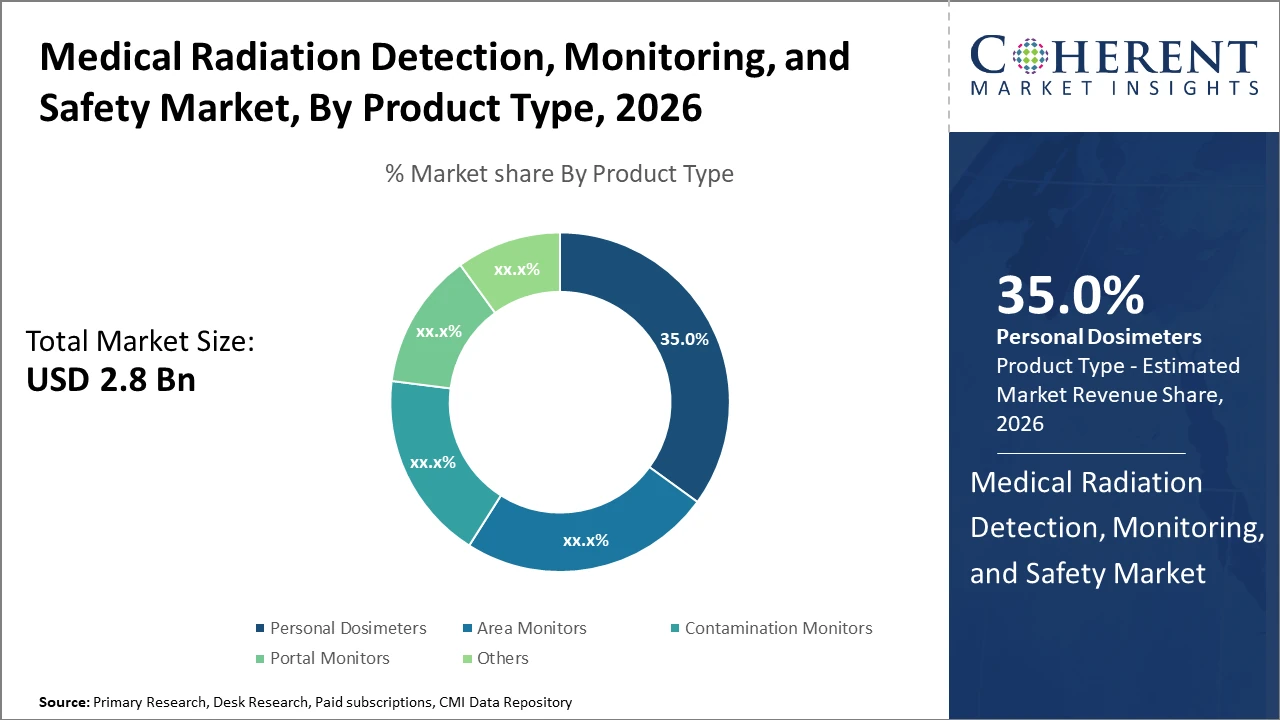
The Personal Dosimeters segment leads the product category with around 35% market share, driven by their portability, accuracy, and ability to provide real-time radiation exposure monitoring for healthcare professionals.
Hospitals represent the largest end-user segment, accounting for approximately 42% of the market, supported by high volumes of diagnostic imaging and radiation therapy procedures along with strict safety regulations.
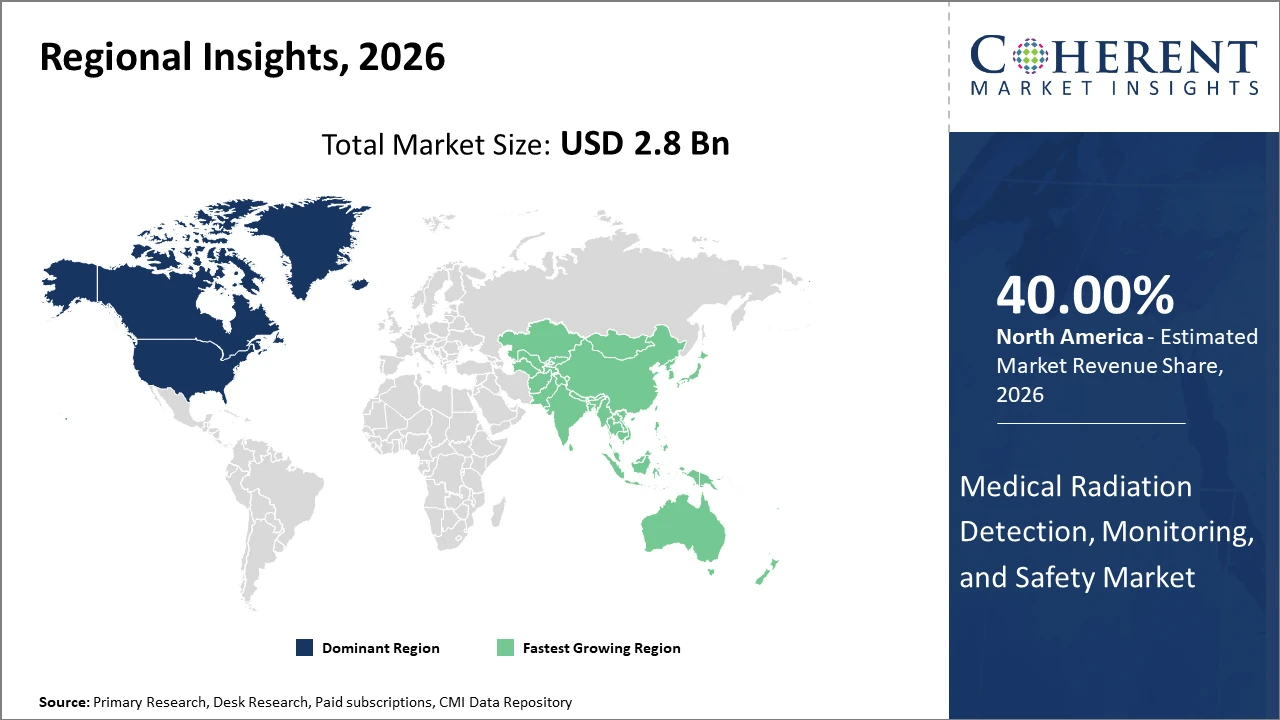
North America holds the dominant regional share due to its advanced healthcare infrastructure, strong regulatory framework, and presence of major radiation safety technology providers.
Asia-Pacific is the fastest-growing region, supported by rapid healthcare infrastructure expansion, increasing awareness of radiation safety, and strong government investments in medical technology.
Growing adoption of digital dosimetry and real-time monitoring systems is further enhancing market efficiency and driving global demand for advanced radiation safety solutions.
Medical Radiation Detection, Monitoring, and Safety Market Segmentation Analysis
Medical Radiation Detection, Monitoring, and Safety Market Insights, By Product Type
Personal Dosimeters dominate the Medical Radiation Detection, Monitoring, and Safety Market with a 35% share due to their portability, high accuracy, and ability to provide continuous real-time monitoring of occupational radiation exposure. Integration with cloud-based platforms further enhances data tracking and safety compliance. Area Monitors represent the fastest-growing subsegment, driven by increasing deployment in hospitals, operating rooms, and imaging facilities to monitor ambient radiation levels and improve workplace safety. Contamination Monitors are widely used for detecting surface contamination in clinical environments, while Portal Monitors help screen personnel and materials at controlled entry points.
Medical Radiation Detection, Monitoring, and Safety Market Insights, By Application
Diagnostic Imaging holds the largest share at 34% in the Medical Radiation Detection, Monitoring, and Safety Market, driven by the widespread use of X-rays, CT scans, and fluoroscopy procedures that require precise radiation monitoring to ensure patient and staff safety. Radiation Therapy is the fastest-growing subsegment due to increasing cancer incidence and the shift toward advanced, targeted treatment techniques requiring accurate real-time dose monitoring. Nuclear Medicine plays a crucial role in tracking radiopharmaceutical use, while Interventional Radiology is expanding with minimally invasive procedures requiring continuous radiation control.
Medical Radiation Detection, Monitoring, and Safety Market Insights, By End User
Hospitals dominate the Medical Radiation Detection, Monitoring, and Safety Market with a 42% share, driven by extensive use of radiation across diagnostic imaging, radiation therapy, and nuclear medicine departments. Their high patient volumes and strict regulatory compliance requirements create consistent demand for advanced monitoring and safety solutions. Diagnostic centers are the fastest-growing end-user segment, supported by rising outpatient imaging services and increased preventive health screening programs requiring accurate dose management. Research institutes contribute specialized demand for radiation-based studies and experimental applications.
Medical Radiation Detection, Monitoring, and Safety Market Trends
The market is increasingly adopting IoT- and AI-enabled dosimetry systems, enabling real-time radiation monitoring, predictive analytics, and improved safety compliance in healthcare facilities.
Healthcare systems in the United States have integrated connected radiation monitoring platforms to streamline workflow efficiency and strengthen regulatory adherence in 2025.
Expansion in Asia-Pacific is driving demand for cost-effective and scalable radiation safety solutions, supported by rapid healthcare infrastructure growth and rising diagnostic imaging volumes.
Growing focus on non-ionizing radiation monitoring is emerging in interventional cardiology and minimally invasive procedures, expanding application scope beyond traditional radiology.
Overall, technological integration and regional expansion are reshaping the market toward smarter, more comprehensive radiation safety management systems.
Medical Radiation Detection, Monitoring, and Safety Market Insights, By Geography
North America Medical Radiation Detection, Monitoring, and Safety Market Analysis and Trends
North America dominates the Medical Radiation Detection, Monitoring, and Safety Market due to its advanced healthcare infrastructure, strict radiation protection regulations enforced by bodies such as the Nuclear Regulatory Commission (NRC), and strong investments in research and development. The region accounted for over 40% of the global market share in 2026, supported by widespread adoption of advanced radiation safety systems across hospitals, diagnostic imaging centers, and cancer treatment facilities. Leading companies such as Landauer Inc. and Mirion Technologies maintain a strong presence, offering innovative dosimetry and monitoring solutions. High awareness of occupational safety and technological advancement further reinforce regional market leadership.
Asia Pacific Medical Radiation Detection, Monitoring, and Safety Market Analysis and Trends
Asia Pacific is the fastest-growing region in the Medical Radiation Detection, Monitoring, and Safety Market, projected to register a CAGR exceeding 11%. Growth is driven by rapid expansion of healthcare infrastructure, increasing adoption of advanced diagnostic and therapeutic radiation technologies, and stricter government regulations on radiation safety standards. Rising cancer incidence across major economies such as China and India is further boosting demand for radiation monitoring and protection solutions. Significant investments in radiation therapy centers and imaging facilities are strengthening market adoption. Additionally, the presence of regional manufacturers along with collaborations from global players is accelerating technology transfer, innovation, and overall market expansion.
Medical Radiation Detection, Monitoring, and Safety Market Outlook for Key Countries
USA Medical Radiation Detection, Monitoring, and Safety Market Analysis and Trends
The United States holds a dominant position in the Medical Radiation Detection, Monitoring, and Safety Market, supported by strong regulatory oversight from the Nuclear Regulatory Commission (NRC) and the Food and Drug Administration (FDA). These agencies enforce strict radiation safety standards across healthcare facilities. Advanced hospitals and diagnostic centers have widely adopted modern dosimetry and monitoring systems, contributing to over 25% of global market revenue in 2026. Leading companies such as Landauer Inc. and Mirion Technologies continue to drive innovation through AI-enabled radiation monitoring platforms, significantly improving dose management efficiency, patient safety, and compliance across the country’s healthcare ecosystem.
Germany Medical Radiation Detection, Monitoring, and Safety Market Analysis and Trends
Germany’s Medical Radiation Detection, Monitoring, and Safety Market is growing steadily due to its advanced healthcare infrastructure, strong regulatory framework, and high adoption of diagnostic imaging and radiation therapy procedures. Increasing use of X-ray, CT, PET, and nuclear medicine applications is driving demand for accurate radiation monitoring and safety solutions. Hospitals and diagnostic centers prioritize strict compliance with EU radiation protection standards, boosting adoption of dosimeters, area monitors, and shielding equipment. Key trends include integration of digital dose tracking systems, real-time radiation monitoring, and AI-enabled safety management platforms. Rising awareness of occupational safety and continuous hospital modernization further support market expansion in Germany.
Analyst Opinion
Growing adoption of wearable radiation dosimeters in healthcare settings is enhancing real-time exposure tracking, improving worker safety, and strengthening regulatory compliance across hospitals and oncology centers.
Advancements in solid-state radiation detectors are reducing device costs while improving sensitivity and accuracy, expanding their use beyond radiology into dental, veterinary, and other clinical applications.
Rising use of minimally invasive and fluoroscopy-guided procedures is increasing demand for radiation monitoring systems, with steady growth observed across hospitals due to higher procedural volumes.
Increasing exports of radiation safety equipment to Asia-Pacific reflect strong regional demand, driven by expanding healthcare infrastructure, stricter safety regulations, and global market expansion strategies.
- Current Industry Events of 2026
- Market Size Estimation
- Regional Breakdown
- Competitive Landscape
- Customer Intelligence
- Segmental Analysis
- Pricing Analysis
- Key Market Drivers, Challenges & Future Trends
- Customized Insights Section
Market Scope
| Report Coverage | Details | ||
|---|---|---|---|
| Base Year: | 2025 | Market Size in 2026: | USD 2.8 billion |
| Historical Data for: | 2020 To 2024 | Forecast Period: | 2026 To 2033 |
| Forecast Period 2026 to 2033 CAGR: | 9.1% | 2033 Value Projection: | USD 5.1 billion |
| Geographies covered: |
| ||
| Segments covered: |
| ||
| Companies covered: | LD Technology, Fluke Corporation, Canberra Industries, RADOS Technology Ltd., SITEK Ltd., HARSHAW LLC, DMC Radiation Products, Radcal Corporation, Thermo Fisher Scientific Inc., Mirion Technologies Inc. | ||
| Growth Drivers: |
| ||
Medical Radiation Detection, Monitoring, and Safety Market Growth Factors
The Medical Radiation Detection, Monitoring, and Safety Market is strongly driven by the rising global burden of cancer, which is increasing the adoption of precision radiation therapy and boosting demand for accurate monitoring systems. Growing oncology cases, rising by over 12% in developed regions in 2024, further reinforce this trend. Strict regulatory frameworks from authorities such as the U.S. NRC and EURATOM are encouraging continuous upgrades in radiation safety infrastructure, supporting market expansion. Technological advancements like AI-enabled dose optimization and miniaturized sensors are enhancing safety and efficiency. Additionally, rapid healthcare infrastructure growth in Asia-Pacific and Latin America is driving increased investment in radiation safety solutions.
Medical Radiation Detection, Monitoring, and Safety Market Development
In November 2025, Metrasens launched Metrasens Vantage at the annual meeting of the Radiological Society of North America in Chicago. The MRI Zone IV entry control system enhances MRI safety through early ferromagnetic threat detection, intelligent alert management, and AI-powered analytics, helping healthcare facilities improve risk prevention and operational oversight.
Key Players
Leading Companies of the Market
LD Technology
Fluke Corporation
Canberra Industries
RADOS Technology Ltd.
SITEK Ltd.
HARSHAW LLC
DMC Radiation Products
Radcal Corporation
Thermo Fisher Scientific Inc.
Mirion Technologies Inc.
Notably, Landauer Inc. strengthened its market position by expanding its portfolio with strategic investments in cloud-connected dosimetry solutions, enabling real-time data analytics, improved radiation exposure tracking, and higher customer retention across healthcare facilities. Similarly, Mirion Technologies reinforced its competitive footprint through the acquisition of regional distributors, significantly improving access to emerging markets such as India and Southeast Asia. These strategic moves have enhanced product penetration, expanded distribution networks, and supported overall market revenue growth. Together, these initiatives reflect a broader industry trend toward digitalization, localization, and stronger global expansion strategies in the Medical Radiation Detection, Monitoring, and Safety Market.
Medical Radiation Detection, Monitoring, and Safety Market Future Outlook
The Medical Radiation Detection, Monitoring, and Safety Market is expected to witness steady growth driven by the increasing use of diagnostic imaging, nuclear medicine, and radiation therapy in healthcare. Rising concerns over radiation exposure among patients and healthcare professionals are accelerating the adoption of advanced safety and monitoring solutions. Future developments will focus on digital dosimetry, AI-based radiation tracking systems, and real-time monitoring technologies that enhance accuracy and compliance. Growing investments in hospital infrastructure and stringent regulatory standards for radiation protection will further support market expansion. Additionally, integration of smart healthcare systems will improve safety management and operational efficiency in medical facilities.
Medical Radiation Detection, Monitoring, and Safety Market Historical Analysis
The Medical Radiation Detection, Monitoring, and Safety Market has evolved significantly over the past decades alongside the expansion of diagnostic imaging and radiation therapy in healthcare. Initially, basic radiation detection tools such as film badges and simple Geiger counters were widely used for exposure measurement. Over time, advancements in nuclear medicine, CT, and X-ray technologies increased the need for more precise and continuous monitoring systems. The introduction of digital dosimeters, real-time radiation monitoring devices, and advanced shielding materials marked a major shift in safety standards. Growing awareness of occupational radiation risks and stricter regulatory guidelines have consistently driven market development historically.
Sources
Primary Research Interviews:
Radiologists, nuclear medicine specialists, radiation oncologists, medical physicists, and hospital safety officers involved in radiation-based diagnostic and therapeutic procedures.
Biomedical engineers, clinical researchers, medical device specialists, regulatory affairs experts, and R&D directors specializing in radiation detection technologies, dosimetry systems, and radiation safety equipment.
Magazines:
Medical Device & Diagnostic Industry (MD+DI) – Coverage of radiation detection systems, medical imaging safety technologies, and diagnostic equipment advancements.
Health Imaging – Insights into radiology safety, radiation dose monitoring, and imaging technology developments.
Radiology Today – Updates on radiation protection standards, monitoring systems, and clinical imaging safety practices.
Journals:
Health Physics – Research on radiation protection, dosimetry, and occupational exposure safety.
Journal of Radiological Protection – Studies on radiation safety standards, monitoring systems, and exposure risk assessment.
Medical Physics – Research covering imaging technology, radiation detection systems, and safety innovations in healthcare.
Newspapers:
Financial Times – Coverage of healthcare technology investments, medical imaging growth, and radiation safety market developments.
Reuters – Reporting on medical device innovations, regulatory updates, and healthcare safety advancements.
Bloomberg – Insights into medical technology companies, radiation safety innovations, and global healthcare market expansion.
Associations:
International Atomic Energy Agency (IAEA) – Global radiation safety standards, guidelines, and nuclear medicine safety initiatives.
Health Physics Society (HPS) – Research, education, and standards in radiation protection and dosimetry.
American Association of Physicists in Medicine (AAPM) – Clinical guidelines, research, and advancements in medical radiation safety technologies.
Get access to 250+ pages report
Every segment, forecast, competitor profile and data table behind the analysis above — available for instant download.
- ESOMAR Member
- ISO 9001:2015 Certified
- D-U-N-S Registered
- GDPR & CCPA Compliant
Missing comfort of reading report in your local language? Find your preferred language:
Transform your Strategy with Exclusive Trending Reports
Frequently Asked Questions
The Medical Radiation Detection, Monitoring, and Safety market is led by key players such as SITEK Ltd., Mirion Technologies Inc., Thermo Fisher Scientific Inc., Fluke Corporation, and HARSHAW LLC. These companies maintain strong positions through continuous innovation, strategic acquisitions, and expansion into emerging healthcare markets, shaping the competitive landscape globally.
The market is projected to grow from USD 2.8 billion in 2026 to USD 5.1 billion by 2033, registering a CAGR of 9.1%. This growth is driven by rising cancer incidence, increasing diagnostic imaging procedures, and stricter radiation safety regulations worldwide.
Hospitals represent the largest growth opportunity, accounting for around 42% of the market share. Their dominance is supported by high volumes of imaging procedures, radiation therapy usage, and strong compliance requirements for radiation safety.
Market trends will increasingly focus on AI-driven dose optimization, IoT-enabled real-time monitoring systems, and expanded adoption in emerging regions such as Asia-Pacific, improving safety, efficiency, and regulatory compliance.
The market is highly competitive, with players focusing on innovation, acquisitions, and regional expansion. Key challenges include regulatory complexity, high equipment costs, and uneven adoption in developing regions.
Companies primarily adopt strategies such as partnerships with healthcare providers, development of smart connected devices, and expansion into emerging markets through localized manufacturing and distribution networks.