

Sports Medicine Devices Market Analysis & Forecast: 2026-2033
Sports Medicine Devices Market is estimated to be valued at USD 8.34 Bn in 2026 and is expected to reach USD 14.29 Bn in 2033, exhibiting a compound annual growth rate (CAGR) of 8.0% from 2026 to 2033.
Key Takeaways
- By Product Type, the Orthopedic Products segment is projected to lead the sports medicine devices market with an estimated 36% share in 2026, driven by increasing demand for joint repair and injury management solutions.
- By Region, North America is expected to dominate the global sports medicine devices market with a forecasted 41% share in 2026.
- Europe is anticipated to be the fastest-growing market for sports medicine devices, capturing a 19.9% market share in 2026, fueled by rising awareness of injury prevention and favorable healthcare policies.
Market Overview
Sports medicine devices help athletes and active people treat and prevent injuries that result from sports or exercise. There are several types of products available that serve different purposes. Brace and support devices are extremely common, helping protect weakened or injured muscles, joints, and bones. Examples include knee braces, ankle braces, and wrist supports. These devices promote healing and prevent reinjury. Another important category is therapeutic devices. These include laser therapy machines, magnetic therapy devices, and electrical stimulation devices that help reduce pain and swelling. They work by applying controlled doses of energy to encourage cellular repair.
Current Events and Its Impact
Event | Description and Impact |
Accelerated Market Growth and Regional Expansion |
|
Strategic Mergers and Acquisitions |
|
Regulatory and Compliance Shifts |
|
Pipeline Analysis
The sports medicine devices pipeline includes innovations across key categories aimed at improving injury treatment, recovery, and diagnostics. Current development focuses on orthopedic implants such as advanced joint replacements, fracture fixation devices, and ligament repair systems designed to enhance surgical outcomes. Arthroscopic equipment improvements involve minimally invasive tools and enhanced visualization technologies for better precision and reduced risks.
In rehabilitation, wearable technology and recovery technologies are being developed to support remote patient management and personalized therapy. Diagnostic innovations include advanced imaging systems and point-of-care tools for faster, more accurate injury assessments.
For detailed and current pipeline information, authoritative sources like ClinicalTrials.gov, FDA 510(k) database, GlobalData Healthcare, and Evaluate MedTech provide valuable insights. Industry reports from MedTech Breakthrough and other market research firms offer additional perspectives.
Engaging with medical device consultants, company investor relations, and specialized publications is recommended to access the latest developments and validate pipeline data.
- Current Industry Events of 2026
- Market Size Estimation
- Regional Breakdown
- Competitive Landscape
- Customer Intelligence
- Segmental Analysis
- Pricing Analysis
- Key Market Drivers, Challenges & Future Trends
- Customized Insights Section
Patent Landscape
The movement in the sports medicine devices sector displays an active patent framework with a focus on innovation and integration of new technologies. Most recent patents emphasize wearable sensors for motion, biometrics, as well as injury detection and real-time feedback systems indicative of a growing industry shift towards preemptive injury management and performance optimization.
There is also considerable patenting activity dedicated to the development of advanced bioengineering materials for orthopedic implants and bioactive scaffolds designed to improve tissue regeneration and healing processes. Other surgically minimally invasive, precision, and faster recovering arthroscopic instruments are equally popular subjects of intellectual property protection.
Patents concerning integrated AI and machine learning into diagnostic and rehabilitation devices focus more on intelligent data dealing structures which indicates a move to advanced sports medicine technologies. Major market participants defend their competitive position by holding wide patent portfolios, whereas new developing companies target niche markets in connected devices or regenerative therapies.
The constant disputes over issued patents demonstrate fierce competition while enforcing tailored strategies based on evolving documentation shifts shows direct attention towards technological improvements alongside personalized care capabilities within this region. Innovation hotspots require seamless navigation through intellectual property dilemmas having clearly defined hurdles that influence scope identifying prioritizing monitored guidance for patented innovations.
Reimbursement Scenario
The global sports medicine devices market functions under a complicated reimbursement system, which differs between regions. In the United States, reimbursement is based on retrieval coding systems such as CPT for arthroscopic and reconstruction surgeries, HCPCS for orthotic devices, anchors and braces and hospital billing through use of DRGs.
Medicare pays out approximately 80% orthopedic and sports medicine claims under its Parts A and B split and with Medigap insurance covering the remaining balance. Policies pertaining to coverage determination as well as reimbursement ceilings are set by entities like CMS while regulatory supervision concerning device clearances via 510(k), PMA, De Novo and other pathways falls under the FDA’s jurisdiction.
On an international level, reimbursement follows icd 10 pcs for coding of procedures as well as CE marking signifying compliance with EU Medical Device Regulation for Europe. Pre-authorization involving documentation of treatment progress, imaging studies, comparing functional limitations to preset benchmarks, evaluation by specialists also termed prior consultation is required For most types of procedures, Coverage decisions undergo multi-step technology assessments which look at clinical and economic aspects over several months. In emerging markets, access to sophisticated devices is constrained due to nonuniform policies in place regarding reimbursement. Overall the trend is moving towards incentive based frameworks wherein focus shifts on patient outcome improvement alongside reduced costs that accelerate market adoption subsequently contributing high value growth greatly influencing shaping masters of adoption strategy.
Prescribers’ Preference
The sports medicine devices market is shaped by the prescriber's preferences based on clinical results, adherence metrics, and technology integration at various levels of device application. An orthopedic surgeon, sports medicine physician, physical therapist, and rehabilitation doctor will make decisions based on the level of injury and how far along the patient is in their recovery process. Initially, for conservative treatment goals, prescribers will choose to treat pain and inflammation with more conservative non-invasive methods including TENS units, ultrasound therapy, cold compression systems, and functional orthoses.
Their widespread use stems from remarkable ease of use coupled with robust success such as the DJO Iceman Clear3 or Omron TENS unit. For second-line treatments chronic conditions that are more persistent often respond better to advanced physiotherapy like NormaTec pneumatic compression massage boots and shockwave therapy as well as PRP prep systems tailored for stubborn cases. Dynamic bracing combined with resistance training aids guided rehabilitation routinely employed by physical therapists.
Operative care typically falls under third line treatment strategies. In these cases surgeons lean towards arthroscopies together with radiofrequency ablation units and suture anchors due to their minimal invasiveness while offering precision alongside speedy healing post-surgery.
All in all devices that are clinically validated while friendly to the patient take priority from the provider who aims to achieve streamlined functional recovery within a defined timeline along sequenced treatment phases creating efficiency within repetitive tasks through automated workflows grids that align automation paths at key decision nodes using dynamic algorithms that compute for optimal routes across branches .
Such automation greatly cuts down manual work needed allowing healthcare providers focus on higher value tasks without sacrificing outcomes which is a desired goal where automation alleviates strain on essential direct expensive human resources needed for deep professional skills by reconciling workload peaks standing out effortlessly from repetitive bottlenecks attached busy work.
Integrating new cutting edge technologies adds layers to patient safety but onboarding comes at costs thus weight applications must be just right since excessive costs introduce their own challenges hence best practice principles dictate simplicity combining GP-sanctioned mandates ensures reputation protection without redundancy burnishing standards while meeting change proofs avoiding depreciation.
Segmental Insights
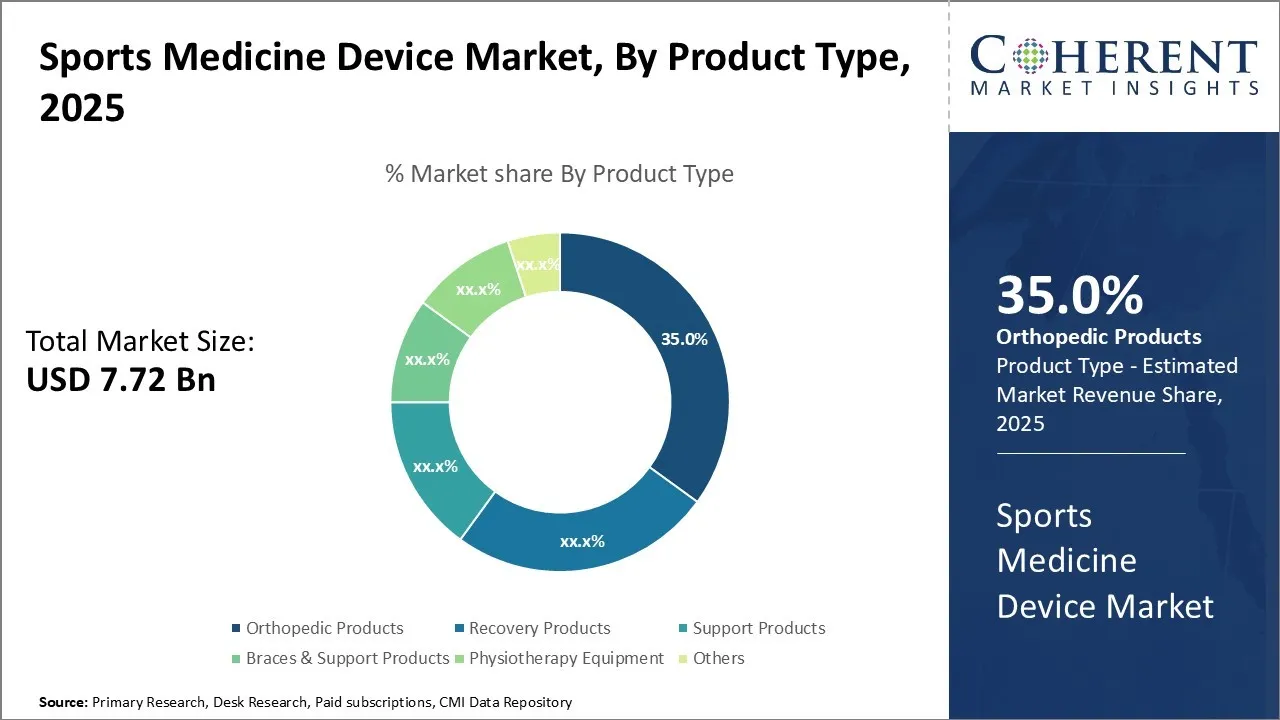
Global Sports Medicine Devices Market Insights, By Product Type
In terms of product type, the orthopedic products segment is estimated to contribute the highest market share of 36% in 2026, driven by increasing demand for advanced treatment solutions in sports injuries and musculoskeletal disorders.
The orthopedic products segment includes a wide range of devices such as braces, supports, joint reconstruction implants, and fixation devices designed to aid recovery and improve mobility for athletes and active individuals.
Growing awareness about sports-related injuries and the rising adoption of minimally invasive surgical techniques have fueled the demand for orthopedic devices. Additionally, innovations in materials and design that enhance patient comfort and recovery outcomes are attracting significant attention from healthcare providers.
Increasing participation in professional and recreational sports, along with an aging population prone to orthopedic conditions, is expected to sustain the growth of this segment. Furthermore, expanding healthcare infrastructure and rising investments in sports medicine facilities globally contribute to higher adoption rates of orthopedic products.
Global Sports Medicine Devices Market - Regional Insights
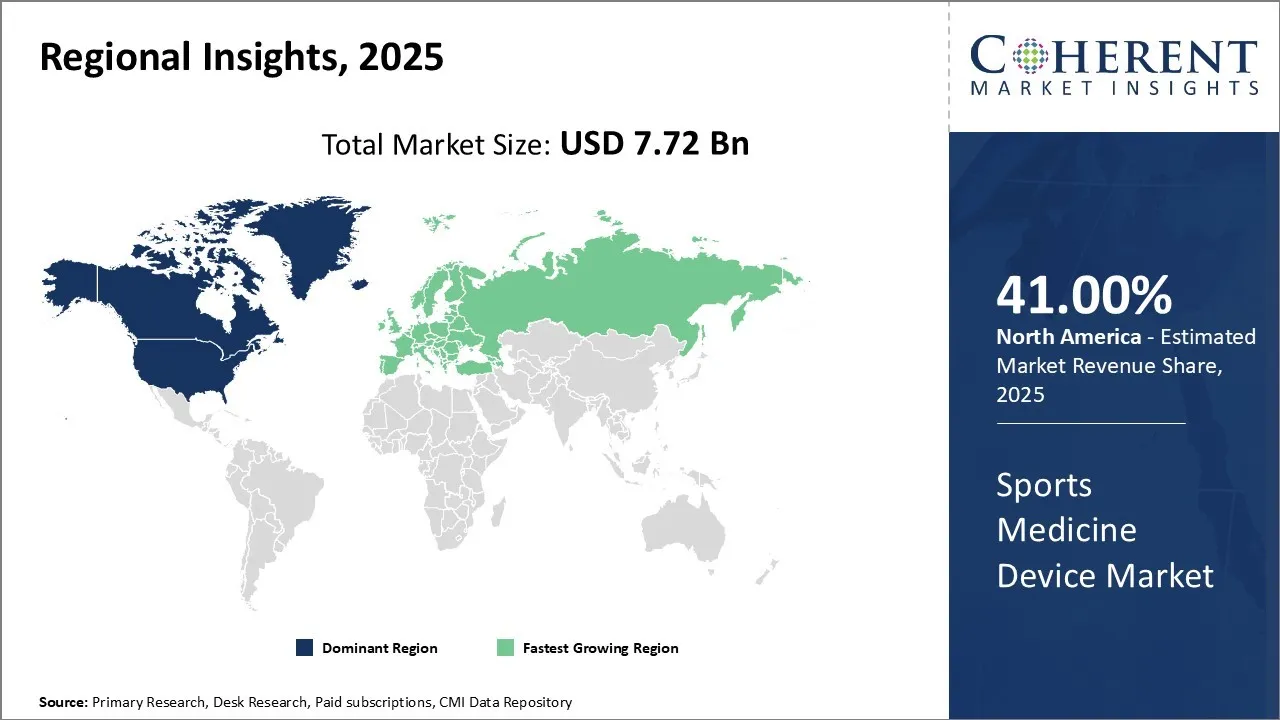
North America Sports Medicine Devices Market Analysis and Trends
North America is set to dominate the global sports medicine devices market with an estimated 41% share in 2026, driven primarily by the rising incidence of osteoarthritis and joint disorders such as knee injuries. The U.S. market benefits from increased healthcare awareness and strong support from organizations like the Arthritis Foundation, which reports that over 30 million adults suffer from osteoarthritis — the most common form of arthritis in the country.
This number is projected to grow further due to an aging population and rising obesity rates. Additionally, widespread participation in contact sports such as basketball, football, and baseball contributes to a high prevalence of knee-related sports injuries, further fueling demand for advanced sports medicine devices.
Europe Sports Medicine Devices Market Analysis and Trends
Europe ranks as the fastest growing market for sports medicine devices, holding a 19.9% market share in 2026. The region’s market growth is mainly fueled by the high incidence of orthopedic injuries among its highly active population. Popular contact sports such as soccer, rugby, and volleyball contribute significantly to the demand for joint reconstruction implants and other orthopedic devices.
According to a study by ESSKA (European Society of Sports Traumatology, Knee Surgery & Arthroscopy), over 3.5 million ACL and meniscus surgeries are performed annually across Europe, underscoring the critical need for advanced sports medicine solutions. Increasing investment in sports medicine research and rehabilitation facilities across European countries is further supporting this market expansion.
Dominating Countries in the Sports Medicine Devices Market
United States Sports Medicine Devices Market Analysis and Trends
The United States leads the North American sports medicine devices market, supported by a mature healthcare infrastructure, extensive research in orthopedic treatments, and high sports participation rates. The country’s strong focus on developing innovative recovery and rehabilitation technologies, coupled with supportive insurance policies and government initiatives, propels market growth. Major hubs like Boston, Chicago, and San Francisco are centers for sports medicine research and product innovation, hosting leading medical device manufacturers and research institutions.
Germany Sports Medicine Devices Market Analysis and Trends
Germany stands out as the largest sports medicine devices market in Europe, benefiting from its well-established healthcare system and high sports participation rates. The country’s emphasis on orthopedic research, combined with significant government funding for medical technology development, fosters innovation in the sector. Increasing cases of sports-related injuries and a strong culture of physical fitness are driving the demand for sports medicine devices, especially implants and rehabilitation products.
Market Report Scope
Sports Medicine Devices Market Report Coverage
| Report Coverage | Details | ||
|---|---|---|---|
| Base Year: | 2025 | Market Size in 2026: | USD 8.34 Bn |
| Historical Data for: | 2020 To 2024 | Forecast Period: | 2026 To 2033 |
| Forecast Period 2026 to 2033 CAGR: | 8.0% | 2033 Value Projection: | USD 14.29 Bn |
| Geographies covered: |
| ||
| Segments covered: |
| ||
| Companies covered: | 3M Company, Arthrex, Inc., ArthroCare Corporation, Biomet, Inc., BREG, Inc., Conmed Corporation, DePuy Mitek, Inc., DJO Global, Inc., Mueller Sports Medicine, Inc., Ossur hf, and OttoBock Healthcare GmbH | ||
| Growth Drivers: |
| ||
| Restraints & Challenges: |
| ||
Global Sports Medicine Devices Market - Drivers
- Rising prevalence of sports injuries:
Sports injuries have been on the rise globally due to increasing participation in sports and recreational activities. Strenuous training regimes along with competitive pressures have increased the risk of accidents and injuries among both amateur and professional athletes. According to data from the WHO, around 30 million people suffer from sports related injuries requiring medical assistance annually worldwide.
Football/soccer accounts for the largest number of injuries followed by other contact sports like rugby, American football, etc. Running and other individual sports have also witnessed higher injury rates as more people take up active lifestyles. Injuries to knees, shoulders, lower back, and ankles are most common, requiring treatments like physiotherapy, joint replacements, or reconstructive surgeries.
- Growing demand for minimally invasive surgeries:
The growing demand for minimally invasive surgeries is a major factor fueling the expansion of the global sports medicine devices market. Minimally invasive procedures offer several benefits over traditional open surgeries such as less pain, smaller incisions, lower risk of surgical site infections, lesser scarring, shorter hospital stay, and faster recovery.
As patients are increasingly preferring these procedures to get back to their normal activities quickly, the demand for sports medicine devices is surging. Minimally invasive techniques allow surgeons to perform complex joint reconstruction and repair surgeries through small incisions as opposed to conventional open approaches. This has boosted the uptake of small joints reconstruction, fracture repair, and soft tissue repair devices among orthopedic surgeons.
- Technological advancements in sports medicine devices:
Technological advancements are revolutionizing the field of sports medicine and driving significant growth of the global sports medicine devices market. Various advanced devices and implants are helping athletes perform better and recover faster from injuries. New materials for implants allow faster healing times and better integration with the body.
Wearable sensors and monitors allow the real-time tracking of vitals, biomechanics, potential for injuries, etc. For example, sensors in shoes or on body can analyze running patterns and identify postures that put undue stress on joints. This predictive analysis helps coaches and medical staff develop personalized training regimens and injury prevention strategies.
Global Sports Medicine Devices Market - Opportunities
- Emerging economies present lucrative growth prospects:
Emerging economies present lucrative growth prospects for the global sports medicine devices market. With a rising middle-class population and growing awareness about health and fitness, countries like India, China, Brazil, and others are witnessing significant participation in sports and recreational physical activities. This has increased the risk of sports injuries which was earlier confined to developed nations.
Emerging economies present lucrative growth prospects for the global sports medicine devices market. With a rising middle-class population and growing awareness about health and fitness countries like India, China, Brazil and others are witnessing significant participation in sports and recreational physical activities. This has increased the risk of sports injuries which was earlier confined to developed nations.
As per International Sports Federation (ISF) reports, countries like India saw a 40% increase in the number of people participating in recreational sports from 2018 to 2020. Similarly, National Bureau of Statistics China reported a 30% increase from 2015 to 2020 in the number of people taking part in indoor and outdoor sports on a regular basis. This surge in participation rates has led to growing demand for advanced sports medicine devices for quick recovery and injury prevention. Some of the devices seeing high demand are arthroscopy equipment, fracture management systems, implants, prosthetics, and others.
- Adoption of biomaterials in the production of medical devices:
The use of biomaterials in production of medical devices holds huge potential for driving innovation and growth in the global sports medicine devices market. Biomaterials are already being extensively researched and tested for applications in ligament and tendon repairs, cartilage regeneration, and meniscus replacement therapies. Their biocompatible and bioabsorbable properties allow for minimal rejection and enhanced healing of injuries.
Research shows that biomaterials such as collagen-based scaffolds, plastics, and bioceramics have helped facilitate new cell-based therapies and tissue engineering solutions for sports medicine. Their adoption in areas, such as musculoskeletal soft tissue repairs, can help address the high incidence of sport injuries involving knees, shoulders, ankles, and other joints.
- Untapped opportunities in professional and amateur sports sectors:
The professional and amateur sports sectors present untapped growth opportunities for the global sports medicine devices market. With increasing popularity of various professional and amateur sports globally such as football, cricket, basketball, and others, the number of athletes both at professional and grassroots levels has ballooned. This has led to a rise in the incidence of various sports-related injuries.
According to data from the WHO, sports injuries accounts for nearly 30% of all recreational injuries worldwide with knee, lower leg, and ankle being the most common sites of injury among athletes. At the same time, there is greater emphasis on improving athletic performance and aiding quicker recovery from injuries. This has fueled the demand for advanced products in areas such as orthopedic bracing and support, physiotherapy, and rehabilitation equipment.
Devices supporting areas, such as injury prevention, muscle/tendon/ligament repair, and reconstruction, are gaining widespread adoption. The unmet needs as well as insufficient medical infrastructure and skilled professionals in emerging nations present lucrative prospects. Manufacturers have responded with innovative smart devices, 3D printed implants and customized braces/supports. Technologies, such as robotics and virtual reality, are also being integrated into recovery programs.
Global Sports Medicine Devices Market - Trends
- Usage of robotics and AI in rehabilitation:
The usage of robotics and artificial intelligence in rehabilitation is having a significant influence on the global sports medicine devices market. Robotics and AI assisted technologies are enabling new rehabilitation methods that are more effective at recovering from injuries and returning athletes to play. These advanced methods are being widely adopted by hospital physical therapy departments and standalone sports medicine clinics.
Robotic devices like exoskeletons and gait trainers are allowing physical therapists to push patients harder and cover a wider range of motion during recovery sessions. The robots can accurately support uneven weight distribution, closely monitor biomechanics and adjust in real-time to prevent re-injury. Additionally, AI technologies like computer vision and motion tracking are providing therapists data-driven insights into patients' progress.
Systems like Motek Forced Motion can precisely measure improvements in range of movement, strength and control over time. Some systems even develop personalized digital therapy programs tailored to the individual's recovery needs.
- Advent of 3D printing technology:
The rise of 3D printing technology is greatly impacting the global sports medicine devices market. 3D printing is allowing for the customization of devices to meet the specific needs of individual athletes. Rather than a "one size fits all" approach, 3D printing enables devices to be tailored for each person's physiology, injury, and activity level. This level of customization improves healing outcomes and speeds up recovery times.
Sports medicine professionals are increasingly making use of 3D scans and body mapping to digitally design customized implants, braces, and internal and external fixtures for injured athletes. For example, 3D printed vertebrae implants perfectly match a person's spinal curves and dimensions to provide optimal support and stability.
Athletes who would otherwise be sidelined for months can resume training and competition much sooner with implants tailored precisely for their bodies using 3D printing. Personalized devices facilitate a closer fit and greater comfort, improving compliance with prescribed use.
Analyst’s Viewpoint
- The global sports medicine devices market is poised to grow substantially in the coming years. The rising popularity of sports and physical fitness activities among both young and elderly population is a key growth driver.
- Furthermore, increasing awareness about the benefits of exercise and sports is also fueling the demand for sports medicine devices globally. With rising health consciousness, many countries are focusing on preventive healthcare, which provides opportunities for companies in this market.
- The Orthopedic Products sub segment dealing with biologic substances and technologies used to promote the regeneration of injured or damaged tissues is expected to witness the fastest growth due to increasing success of stem cell therapies.
- Among regions, North America dominates currently, however Asia Pacific is likely to overtake other regions owing to rising medical tourism and growing healthcare spending in China and India. High cost of surgeries may have a negative impact on the market especially in developing countries.
- Stringent regulatory approval process also poses restraints on new market entrants. Companies need to invest significantly in R&D to innovate new products and technologies continuously in order to remain competitive.
- Those who are able to launch minimally invasive surgical devices and solutions, which lead to quicker recovery time for athletes, will have an edge over others. With an aging population prone to sports injuries, the joint reconstruction segment will witness additional growth momentum in the future.
Speak to the analyst
Want personalized insights?
Take the findings above to one of our principal consultants, or have the report rebuilt around the segments, geographies and competitors you actually track.
Recent Developments
New product launches/investment
- On May 23, 2023, Stryker, a medical device company, announced the launch of its Ortho Q Guidance system, enabling advanced surgical planning and guidance for hip and knee procedures, easily controlled by the surgeon from the sterile field.
- On January 26, 2023, Orthofix US LLC., a medical device company, announced the full commercial launch of the Mariner Deformity Pedicle Screw System.
- In On June 29, 2023, Acuitive Technologies, Inc., a medical device company, announced the first surgical application of its Citrelock ACL Tendon Fixation Device.
- On March 28, 2023, Mueller Sports Medicine, a provider of sports medicine, announced the third year partnership with the Professional Football Athletic Trainers Society Foundation, Inc., in cooperation with the Korey Stringer Institute and additional guidance from National Athletic Trainers Association to further provide awareness of exertional heat stroke among athletes, school boards, parents, boosters, athletic directors, coaches, teachers, and local first responders.
Market Segmentation
- By Product Type (Revenue, USD Bn, 2021 - 2033)
- Orthopedic Products
- Recovery Products
- Support Products
- Braces & Support Products
- Physiotherapy Equipment
- Others
- By Application (Revenue, USD Bn, 2021 - 2033)
- Knee Injuries
- Shoulder Injuries
- Foot & Ankle Injuries
- Elbow & Wrist Injuries
- Back & Spine Injuries
- Others
- By End User (Revenue, USD Bn, 2021 - 2033)
- Hospitals
- Physiotherapy Centers
- Sports Franchises & Teams
- Ambulatory Surgery Centers
- Others (Wellness & Fitness Centers, among others)
- By Region (Revenue, USD Bn, 2021 - 2033)
- North America
- U.S.
- Canada
- Latin America
- Brazil
- Argentina
- Mexico
- Rest of Latin America
- Europe
- Germany
- U.K.
- Spain
- France
- Italy
- Russia
- Rest of Europe
- Asia Pacific
- China
- India
- Japan
- Australia
- South Korea
- ASEAN
- Rest of Asia Pacific
- Middle East
- GCC Countries
- Israel
- Rest of Middle East
- Africa
- South Africa
- North Africa
- Central Africa
- North America
- Company Profiles
- 3M Company
- Arthrex, Inc.
- ArthroCare Corporation
- Biomet, Inc.
- BREG, Inc.
- Conmed Corporation
- DePuy Mitek, Inc.
- DJO Global, Inc.
- Mueller Sports Medicine, Inc.
- Ossur hf
- OttoBock Healthcare GmbH
Sources
Primary Research Interviews
- Sports Medicine Device Manufacturers
- Orthopedic Surgeons and Sports Medicine Physicians
- Hospital Procurement Managers
- Sports Medicine Clinic Administrators
- Others
Databases
- IBISWorld Industry Research Database
- Global Trade Atlas
- Others
Magazines
- Sports Medicine Today
- Medical Device & Diagnostic Industry (MD+DI)
- Orthopedics This Week
- Sports Medicine Weekly
- Others
Journals
- American Journal of Sports Medicine
- Clinical Journal of Sport Medicine
- Sports Medicine International Open
- Others
Newspapers
- Modern Healthcare
- Medical Device Daily
- Healthcare Finance News
- FierceBiotech
- Others
Associations
- American Medical Society for Sports Medicine (AMSSM)
- International Association of Healthcare Central Service Materiel Management (IAHCSMM)
- Medical Device Manufacturers Association (MDMA)
- American Orthopedic Society for Sports Medicine (AOSSM)
- Others
Public Domain Sources
- FDA Medical Device Database
- World Health Organization (WHO) Reports
- National Institutes of Health (NIH) Publications
- Centers for Disease Control and Prevention (CDC) Data
- Others
Proprietary Elements
- CMI Data Analytics Tool
- Proprietary CMI Existing Repository of information for last 8 years
Get access to 250+ pages report
Every segment, forecast, competitor profile and data table behind the analysis above — available for instant download.
- ESOMAR Member
- ISO 9001:2015 Certified
- D-U-N-S Registered
- GDPR & CCPA Compliant
Missing comfort of reading report in your local language? Find your preferred language:
Transform your Strategy with Exclusive Trending Reports
Frequently Asked Questions
The Sports Medicine Devices Market size is estimated to be valued at USD 8.34 Bn in 2026, and is expected to reach USD 14.29 Bn by 2033.
High cost, lack of standardization, High Competition In Market, reimbursement issues, and limited awareness are the key factors that can hamper the market growth.
Rising prevalence of sports injuries, growing demand for minimally invasive surgeries, and technological advancements in sports medicine devices are expected to drive the market growth
The leading product type segment in the market is orthopedic products.
The major players operating in the market are 3M Company, Arthrex, Inc., ArthroCare Corporation, Biomet, Inc., BREG, Inc., Conmed Corporation, DePuy Mitek, Inc., DJO Global, Inc., Mueller Sports Medicine, Inc., Ossur hf, and OttoBock Healthcare GmbH
North America dominated the market as the key market players are focusing on the launch of new products in the region.
The CAGR of the Sports Medicine Devices industry is projected to be 8.0% from 2026 to 2033.